Episode 42 - Theo Lucier: This Entrepreneur Shifted Gears, Healed His Cells, And Realigned Himself
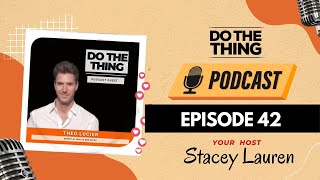
Episode 42 of the Do The Thing podcast features host Stacey Lauren interviewing Theo Lucier. Theo recounts building and scaling a multifamily real estate business in San Diego, experiencing severe burnout, and then intentionally stepping away to heal physically, emotionally, and spiritually. He emphasizes cellular-level health (mitochondrial energy), arguing that psychological stress causes inflammation which drains cellular energy and impairs willpower. Theo describes interventions that helped him recover: sunlight exposure and grounding, walking/movement, cellular nutrition (cod liver oil for vitamins A/D and DHA, vitamins A/D/K synergy, iodine/Lugol's, magnesium chloride, vitamin C), and detox protocols (high-dose vitamin C flush, sauna+niacin, humic/fulvic acid, EDTA, and more). He also explains why he left real estate for an online health-focused business aligned with his core values.
Chapters
I do really believe 100% from every part of me that everyone has the capacity to be able to do the things that they want and not to be held back by the mental baggage that's in our head that we want to push through.
Welcome to the do the Thing podcast. In each episode, we get down and personal with people who go after the things they want to make all their wildest dreams come true. Join us as we unveil and dissect a formula for what it takes to do the thing. Here is your host, Stacy Lauren.
Hey, everyone. Welcome to the do the Thing podcast. This is your host, Stacy Lauren. So today you guys are going to get to meet someone so cool. I met him officially last year. We've been part of the same marketing groups for a while and sort of met each other, but we got to know each other beginning of last year and oh, my gosh, he is unbelievable. He had a career in real estate, changed careers, and went into health. He even did a health summit a few months ago that was unbelievable and just really has been just an amazing part of my own journey. He helped me normalize my identity crisis I had after I exited my business. And he's just so knowledgeable and real with the way that he's able to communicate how he feels about certain things and being able to listen and just been amazing to get to know him. And he's the type person that you could tell him anything and he doesn't judge you. And so anyway, so I'm excited to bring him on and have him share his story, so.
Hey, Ted, what's going on?
How are you doing?
Awesome. I am enjoying a Minnesota summer for the next couple weeks before I return to San Diego. And it's just. It's beautiful here.
Oh, yeah, I know. So you're actually coming back?
Yay. I am, yeah. No, it was good to be here. It's. It was a nice little nervous system reset and kind of helping. Helping out with some family stuff around here. You know, my mom's gotten older and all that, but yeah, it's been beautiful. And I'm on 70 acres too, so can't argue with that.
Yeah, it's gotta be amazing just to go into a whole nother experience, you know, and almost like probably disconnect and recharge and just kind of get back to. To. To nature.
It's so wild. I mean, San Diego is amazing, but there's 3 million people jammed in there, you know, between an international border, the coastline, you know, Camp Pendleton to the north, the desert to the east. And there's just a lot going on, and you come to a part of the country like this, and it's like, wow, full nervous system reset.
So cool. Well, I'd love to start off and have you just tell everybody who you are and what you're all about.
Cool. Yeah. I mean, I'll try to keep this short because I want to try to add as much value to the people listening as possible. But long story short, I grew up on a farm in Minnesota, and after college, I relocated to California, San Diego, and I started a real estate business from scratch. Um, and anyone who has done real estate, especially real estate sales in Southern California or San Diego, knows it's a hyper competitive environment. And if you're not from there, you didn't go to high school there, you don't have any, you know, connections. It's super hard to get going. But I did it and eventually built up a pretty successful company.
And the office is still there in La Jolla, but I did multifamily investment. So what basically what that means is I sold people apartment buildings, and then I vertically integrated the company. So we did the property management, the maintenance, the remodels, and also the sales. So there's a lot going on. And eventually I had just a spectacular case of burnout from that. I mean, it was.
It was wild. I mean, it was just. I burned out really, really bad. And we can talk about that in a bit. And through healing that burnout, which really was two parts, you know, one was physical and the other was spiritual.
I completely switched gears and started a business that I'm in alignment with.
Which is in the natural health business. So I own two different supplement brands now, and occasionally, as Stacy mentioned, I'll do an online summit on some health topics. So last year's was Underground Health Summit, which was kind of about different things in quote, unquote, alternative health that have been suppressed or just not well known over the years. And that one was. That was a lot of fun. Had a good time doing that. And so that's. That's pretty much it.
Yeah. And I love the word you use, finding a business in alignment, because that's one of the things I'm really trying to focus on with this podcast is so many people. People are, you know, preaching, you know, do the thing. Not necessarily those words, obviously, because that's my nose kidding. But, you know, do do the thing and then hustle, hustle, hustle. But what I'm really trying to add into this podcast is doing the thing and doing what you want, but doing it out of your own personal alignment. And so I love that you. That you mentioned that, because I think that's so important.
Yeah. You know, it's funny, there's two sides to that coin, right? Because, like, there's a lot of popular advice which is follow your passion and you know the money will find you. And as most of us know, that's not necessarily true. It doesn't always find you if you follow your passion. Like, sometimes my passion is sleeping in till 11 and reading all day. No one's going to pay me for that. That's my passion. Right. And sometimes it is. On the other hand, if you're just very mercenary about what you do for work and compensation, and you're chained to this golden treadmill, which is what I like to call it. That was my old real estate business.
That's not good either because I was making a lot of money pretty easily, but I couldn't get off the treadmill. It was a nightmare.
Yeah. And I definitely want to get into what you're doing now, but I thought we could talk first about the real estate business. So you came from a farm on ministry, Minnesota, went to college, and then you started this business. So how did, how did you. How did you basically get the courage to start. To start that business?
Well, that's super easy. I had a liberal arts degree and nobody will hire you.
I mean, it's literally Even in the 90s, you know, I'm 44 now, but even in the 90s or 2000 when I graduated, it wasn't worth anything. Right. Um, so. And I went to school for a sport, so I had a partial scholarship for what is called Olympic style Taekwondo. So there's two martial arts in the Olympics, Judo and Taekwondo. And Taekwondo, is this the hitting one where you punch and kick people? So that's the one that I did. And I had some bad injuries. I never made it to the international level, but I was a national level competitor for.
Four years. And through that, you know, we traveled all over the country doing tournaments. And so I came to California quite often and I really liked it. And the only thing I knew was the further south I went in California, the more I liked it because most of our tournaments were in Berkeley, in the Bay Area, at UC Berkeley. And then I would. We go to la. And I'm like, oh, man, this is, this is great. And you know, San Diego must be even better. And so I just, through the lack of, you know, I grew up in the same system that a lot of People do, which is more education is better. And if you get good grades and you follow orders and you do what you're told, you're going to be fine. And the truth is, especially for nowadays, it's gotten even worse. That's not true. If you have a university degree, it really doesn't mean anything because everybody has one. And that was the case even back in 99, 2000. So.
I was just like, all right, well.
What do you do here? And I originally was working on boats. I literally was in San Diego because I picked the location I wanted to be in before the job, which I could do because nobody would hire me. Right. And so I was like, all right, I'll go to San Diego and I'll figure it out. And yeah, I literally was working at Knight and Carver shipyard like hacking barnacles off of boats.
Oh, wow.
And then of course, like most people do that don't have a lot of opportunities. You think, oh, I can get into real estate. You can sell a couple properties a year and you're rich. Right. You're set for the year. That's just. If you've never done it, that's kind of how you think about it. And me being 21 or 22 or whatever I was at the time, I'm like, that makes sense. I know some people have made some money in it. So I just went and did it. And it's not necessarily an industry I'd recommend for anyone. But what was cool about real estate is that when I started, that was a sales position. And if you are selling something to somebody, you can't really have any like weird pathological things going on in your unconscious, like huge self doubt or lack of confidence or you're afraid of money or like all these things that can kind of come up for people. Like any sales position anywhere is like a big mirror for that stuff. And so through that I was, I found out there's all these like, success resources, like, you know, you can learn how to sell. And like back then it was like guys like Tom Hopkins or Zig Ziglar or, you know, some of the, some of the people that were teaching, you know, how to sell back then. And then you get into mindset stuff and Tony Robbins and all that. And that was kind of, that was a trajectory.
Yeah.
And so with your risk assessment when you said, I just went ahead and did it.
So.
So when you decided to open up your real estate company and then to overcome a lot of your, your own stuff to be able to, to be successful at it, And I was just wondering if there was any other kind of risk assessment that you did to actually be able to do it.
That's a good question. Um, yeah, I mean, there was constant risk assessment all the time. Um, you know, there's an interesting statistic.
I forget the exact numbers, so I'm going to paraphrase it, but most people have gone through a bankruptcy. They make their money back four times as fast. And the reason why is because they realize and their unconscious realizes that didn't kill them.
So they lost everything and they didn't die. If that's never happened to you before, everything seems deathly serious, especially with finances. And back then, I mean, it got pretty grim at times. I had to borrow money to eat or put gas in the car to go show a property, or taking out loans from friends to try to keep this thing going. And.
I had been through so many kind of boom and bust cycles, by the time I decided to start a company, I was like, oh, this is. Yeah, I mean, I've already lost and made money so many times, even on a micro scale, like, this can't be that bad, you know?
Yeah, I love that you brought that up because, like through these interviews, I've actually talked to several people that have gone bankrupt and they went through their bankruptcy story and they did make four times more of their money, but I hadn't connected together like why they were successful and. Right, you're right. It's like that uncertainty of what's going to happen, what's going to happen. It became certain, well, I didn't die.
You didn't die. Yeah, yeah, you didn't die. I mean, and that I had that at a young age because I didn't, I didn't have any family support, I didn't have any, I didn't have anything. It was like every day it was make it or break it. Like, how am I going to pay rent this month? How am I going to find food to eat? How am I going to pay the expenses that my business requires so I can keep functioning and doing this? I also graduated right when 911 happened. Right, right in that era. And so that takes a liberal arts degree and doubles down on how useless it is because maybe a lot of people don't remember or weren't old enough, but you know, the economy was not good at that time. And so coming out of university with that already, you just kind of know, you just, you just go for it, you know, because my mindset was, you know what, Like, I don't have the financial success yet. But I do live in this awesome place, and that was usually more than enough payoff for all the pain, you know.
Oh, totally. And so as you were going through this with the real estate business, what do you think was the hardest thing for you as you were building it and scaling it and all that stuff?
That's a really good question. And an easy one would be uncertainty, because of course it's uncertain. You don't.
There's this thing where a lot of people think that you, you should plan and then you should execute on that. And then, you know, and the hardest thing for me to learn was act, then no, then decide. And another way to say that is ready, Fire, aim. A guy named Michael Masterson, he's the owner of Agora. They do like 3 billion a year in newsletters. No one's ever heard of him, but he wrote a book called Ready, Fire, Aim. And I think it's easier to understand act, then know, then decide. And that was probably the hardest thing because coming out of a academic environment as well as an athletic environment where I had coaches and I did exactly what they told me to, I had to deconstruct that mindset. And it's a little bit like the wild west in business, like where you're just throwing shit against the wall and you're seeing what sticks. Right. And then based on that information, then.
You take your next action. So for real estate, I realized that I was in a red ocean. My ocean was just filled with blood from all the sharks, but I wanted to be in the blue ocean. And so through Dan Kennedy style direct response marketing, I learned about niching your business down. And so at first I didn't want to do it because I'm like, oh, I'm limiting myself.
But as soon as I niche my business down, it dramatically increased. And then I built a hole company around that. So, yeah, I would, I would, I would say that it's. It's like, it's adopting, like abandoning the old mindset of, like being really cautious and planning everything and then executing the plan and just focusing on action and seeing what happens.
Yeah, I love, I love that. I love act, know, and decide. I think that's so cool. And actually, it's funny, I had Scott on last. Was it last. Last week, and he was talking about that concept of as an entrepreneur, like, we jump off the building and we're building the parachute, you know?
Yes.
And that's what that makes me think.
Of a hundred percent. Yeah. Yeah. And, you know, deconstructing that mindset Is is challenging for a lot of people. And it was challenging for me. I would say the other biggest challenge I had was starting that company. And you know, I know this is common, but.
I thought I could avoid it, but I didn't. And it's, you know, I had a lot of challenges with my business partner. And.
You know, when you're in this high stress environment and there's, and you start making money and it's a lot of money coming in and if you don't get along with your business partner, and more importantly than that, if your business partner does not share the same core values that you do, you're going to have problems. And we did. And you know, it's funny because we had been, you know, we'd known each other for forever and we had so much strife, you know, and it was just not necessary. And the thing that was kind of hard for me to accept and it took me years to figure this out, is different people start businesses for different reasons and those don't always match your reasons. My reason to start a business was it was really simple. I wanted to make as much money as possible and I wanted to do that by adding value to whoever I was doing business with. I really believe in doing that.
And then if you really add a lot of value to people, you really bend over backwards to solve their problem. Like you're going to be compensated adequately. And my business partner did not think like that. He got into business. I know this sounds crazy, but he got into business for ego reasons. To look cool, to have an office, to, to be able to boss people around and have a receptionist and like do all that kind of stuff. And it was just stunning to me. And that caused a lot of problems in our business. Yeah.
And what a great learning for you too is to understand that differential, you know, that differentiation between values and passion and knowing what's really. It really probably got you even more in tuned with what you want. By getting to see what he wanted.
Yeah, yeah. You know, and yeah, I'll never forget when I, when I figured that out, you know, because I, we got into an argument about something. I think it was, you know, because I would, I would generate the business, right. So I did the, I did the lead generation and then I would sell them a building and then I would hand it off to him to do the remodel and the management and he wasn't returning one of my clients phone calls. And this is a guy that, you know, had spent millions of dollars with us, like high level dude. And so Then I start getting blown up by him all the time because my partner wasn't responding to any of his texts, none of his emails, none of his calls. And we were talking like days. And so then I finally confronted my, my ex partner about it and it was, it was just all ego. He's like, well, I just didn't feel like taking the calls. You know, he calls me at inappropriate times and this and that and I'm like, no, dude, the buck stops with us. Like, it doesn't matter if it's 9:30 at night. It doesn't matter if it's like 6:30 in the morning. Like, you gotta respond to these guys. Like these clients are dealing with are not. I mean, like this particular guy was like a high powered corporate attorney. They're not the type of people you want to mess with because you'll get sued and they'll take you for all you got. And we got into that and he threw his phone at me out in the parking lot after yelling. And I said, you know what? You got into business just to look cool and for your ego. And he was quiet for a while and he said, you're right.
Wow. Really?
Yeah.
Oh my gosh. Wow.
It was just nuts. Yeah.
So, okay, so this is perfect. So now. Well, not that perfect, but perfect lead in for you getting off this golden treadmill, right?
Yeah.
To the point where, I mean, now it even, I can understand even more with the burnout where that would come from because you're in this sort of, I don't know, you didn't say this, but toxic kind of situation also of the hustle of real estate and what that had to be like. So let's, let's talk about that, this next phase where you're burnt out and you're kind of going into that healing journey.
Yep. Well, I think you can identify with this, Stacy, is that, you know, if you really go hard in business, a lot of times your entire identity is sort of attached to that business. And my identity was attached to being this commercial real estate guy that had success. And like I had a cool office in La Jolla and it was really modern and I was a big fish in a small pond. My niche of real estate wasn't huge, but everybody in that niche knew me. And you know, I got referrals all the time and felt important and you know, my identity was, was kind of hooked to that. That's how everybody knew me. That's how I knew myself. And so it took longer than I, I wanted to unhook my identity from the business and start to build a new one. Is that something that kind of resonates with you a little bit?
Oh, my God, yeah, for sure. I mean, I'm still going through it, honestly.
Yeah. Yeah.
So I had to kind of deconstruct that. So it's. And you know, this might sound trite, but like. So this is, this is, it's kind of funny. Maybe some people identify this with this, maybe not. Maybe it'll inspire some people to give it a shot. But. So basically, here's what happened at the, at the end of this journey. I was, you know, I was making more money more easily than, you know, I ever would have guessed and had everything you would want at that age as a guy. And, and it's kind of the analogy I use. It's like I climbed this mountain that I always wanted to climb in life and then I got to the top and I looked around and then I realized I climbed the wrong fucking mountain.
Oh, yeah, right.
Because I didn't. I got to the top and I'm like, this sucks. Like, I don't want to do this for rest of my life. And in fact, all the people I know that are doing this, that are in their, you know, mid to late 40s to 50s and beyond, they have major health problems, they hate it, and they're just resigned to doing it. Like, I didn't meet one person that liked doing it. Not one. And in fact, I knew a few people. I knew one guy committed suicide, I knew several that had heart problems, cancer. I knew a lot of drug and alcohol use because it's just, it just breaks people. And so I got to the top of the mountain, I looked around, I'm like, shit, I climbed the wrong one. So I basically.
Right at that time, my friend and I think, you know, Brad, you know, Brad was a very, very successful real estate investor in the late 90s, early 2000s. And he personally owned something like 38 properties. And he lost them all during the crash of 08 because he was over leveraged. And Brad went through his own healing journey, but a big part of it for him was Tony Robbins. He went to four Tony Robbins events a year for two years. I mean, it was something crazy. And he's like, hey, Tony Robbins is doing an event called Unleash the Power within in la. You're going to go. You need to go. Because I was just depressed, sad, weird.
But still in real estate, but just not expanding the business. I was just reacting to what came in and just not really knowing what to do. And so I bought a ticket. And then the time came and I was like, dude, I don't want to go. Like, this is stupid. I don't want to go to a motivational seminar. And he's like, no, just go. So he convinced me to go. So we drive up there to LA and I see the registration line and it literally wraps around the block. And you know, the blocks in LA are huge. So it's like this massive sidewalk full of people, and it goes all the way around the corner. And I'm like, dude, I'm not waiting in line. This is ridiculous. Like, I don't wait in lines. I'm going to go to the hotel and just work and hit the bar. Like, whatever, I don't care. And he said, no, let's get in line. So we get in line to try to leave a couple times, convince me to stay, finally get registered, and we go there the next morning. And I'm like, this is this dumbest thing ever, because, you know, it was like, motivational. And I tried to leave early, got me to stay. You got to give Brad credit here. And then we go into day two. And then by the end of day two, something in me just finally broke. And I think it was like, if something Tony said from the stage, actually it was. He said, if your business, if. If you own a business and it's not growing, then it's dying. And there's a reason for that. And I hadn't expanded my business in, like a few years. I was just reacting to what came in. And that really resonated with me because I'm like, man, I don't want to be in my late 30s or whatever and resigned to doing this for the rest of my life because I never gave it a shot. And then he did this. I think it was day three. I can't remember. It all blends into one now. But he did this exercise. I think he does this at most of his events. It's called the Dickens exercise. And it's kind of like just working with your unconscious to see what's in alignment with your unconscious and what's not. And, you know, for me, what came out of doing that exercise was, you know, I need to get off this golden treadmill. This sucks. Like, I don't want to run a service business anymore. I don't want to deal with these people. I don't want to deal with my business partner. Like, it's just everything is toxic. Like, and it create my toxicity in my business. Created toxicity in me. Both On a spiritual level and physical, you know, like I was physically pretty wrecked from the burnout and that would leak out into my personal relationships too. You know, I was, had been in a relationship for five years and thought that was all right. But you know, that, that ended, you know, mainly because of, you know, a lot of the way that I was from that and my business wasn't just was kind of over it. And so that's when I decided to make a change. It was there. And then after that was the first thing I focused on was was getting physically healthy. Is that. And eliminating the burnout, starting physically. Is that something you want to hear a little more about or.
Oh, absolutely. Yeah, please.
Okay. Let me grab a sip of water here.
Yeah. And yay for Brad, man, that guy. Are you still friends with him?
Oh yeah, I talk to Brad all the time. Yeah.
That's awesome. He's like what Chrissy is for me. I think probably to you.
Yeah, yeah. He, he, he really inspiring guy. I mean he had so much stress.
It's like that balance right. With your friends because that is one piece of the formula of doing the thing is surrounding yourself with like minded people. And it's like having those people in your life that don't just let you, you know, stand in the registration line. Right. Like they actually can challenge you, but not in a way that's like judgmental or disrespectful.
Yeah, he was just positive.
Yeah, yeah. So it's cool. But yeah, no, definitely. Yeah. Let's, let's talk about the physical part because I'm excited to hear more.
Yeah, yeah, let's talk about this. So for people listening who are burnt out, this is a core concept that, that I didn't know about at first and it just, it really blew me away. So psychological stress causes inflammation in your body and a lot of people don't know that. And I'll repeat it again. Psychological stress or mental stress creates physical inflammation in your body. And inflammation is a root cause. And a lot of experts will say it's, it's the root cause of all disease. And where it causes inflammation in particular is your brain. And that's a huge problem. Depression is linked to brain inflammation. There's dozens and dozens of studies on this. So my brain was really inflamed and what I was doing for as a lifestyle wasn't helping it. Like I was, you know, I would have a tremendous amount of caffeine during the day and yerba mate and stimulant drinks and then I couldn't sleep at night. And so then I'd have drinks. And it was also because, you know, I was working so much, you know, I had crazy work hours and so, you know, 6pm Would roll around and that's when I could finally start the real work of responding to emails and doing research and stuff. And so I would have drinks to wind down and then eventually that turned into having a lot of drinks and then I would need the stimulants to wake up. And it's just a self reinforcing feedback loop and it just gets worse and worse over time. And you know, my diet wasn't great. I didn't even have time to work out and I was just dealing with tons of stress all the time, which is creating systemic inflammation in my body. So psychological stress also creates a leaky gut and that means what is supposed to be inside your gut can leak out into your interstitial fluid and then it's circulated throughout your whole body and that doubles down on the amount of inflammation. So I was inflamed and I had an inflamed brain. And so what that means is I had mild cognitive disorders. So like my short term memory was terrible. I would pay for groceries and walk out of the grocery store, leave an entire bag of groceries at the checkout, get my car, drive home, not even remember that I was at the grocery store. I'd like remember it the next morning. I mean, just crazy stuff like that. That's just an example of how inflamed I was. I was short tempered, I would get frustrated really easily. Had a couple road rage incidents.
Just.
Couldn'T focus. That's a big symptom of an inflamed brain is lack of ability to focus. So I'd have to ritualize my work. I would have to have the music just right, the lighting just right, door closed, you know, headphones on. I'd have to use a pomodoro timer. I'm sure a lot of people listening know about the, the 255 or 555 Pomodoro method where you, you know, you work for 25 minutes straight, can't do anything except work, and then you take a five minute break and you get right back on it. Those are just coping mechanisms. If your brain is working well and it's well regulated, you don't need to do that. You just sit down and work. It's not a big deal. And so the first thing I focused on was my brain. And just to make a long story short, I found out that there basically is a Cellular model of health. So a lot of people focus on treating their muscles or they just treat their brain or they try to treat their liver, just their skin. And.
That'S too big of a level. You got to go all the way down to the, the basics. And the basic is the cell. So if you can fix one cell, you can fix them all. And then your body's own native healing intelligence will take over. So I focused on essentially like cellular detox and cellular nutrition. And through that I was able to increase the energy output of my cells. And in particular, your cells have little rechargeable batteries in them. They're called mitochondria. And your brain has the most of those. Your heart has the second most amount of mitochondria. And so I basically fed those, you know, mitochondria, those little rechargeable batteries, everything I could to recharge them, detox them, keep them fueled up. And that turns stuff around like really fast. Like in, in the first interventions I did, I mean we're talking like hours. Like I felt different in like literal hours. And then I, you know, I quit caffeine, alcohol, nicotine, sugar, all on the same day. I don't recommend doing that.
Thing, baby.
Yeah, it's went all in. And, and then, you know, I. So of course I could go on a whole podcast about, you know, what I did for the health stuff. But basically I started feeling a lot better really fast and my body was detoxing, I had way more energy, my sleep was, was fixed, my brain started to become more regulated. And then I had to turn my attention to what am I doing for work. And I'll tell you what, I don't regret doing this. If I could do it over again, I probably change a couple things, but I was so burnt out, like so burnout on a physical, but also kind of a spiritual level. I just, I lived in this, this three bedroom place with a two car garage by myself for like a year and a half. I just, two years, I just, I basically just. It sounds crazy but like, you know, because I'd accumulate enough capital to be able to do this basically just took a year, year and a half off. And all I did is focus on getting healthy and figuring out what I was going to do for work. And I would just get up at like 5:30 in the morning and just research health topics of interest, learn, apply to myself and like kind of find yourself. If I could do it over again, I would, I would compress that timeframe down a lot more. But I think at the time I kind of needed it, you know, it was like it was alone time. I was able to explore all these different healing modalities because I went all in. I didn't just do physical stuff. I did emotional stuff, I did psychedelics, I did. Did all the cellular health stuff, I did crazy brain stuff like neurofeedback and all the things, right. And just basically did a complete reset. And, you know, one of the things that came to me is, you know, once I got past the physical burnout, I realized that you have to do something that is in alignment with your core values. And real estate was not in alignment with my core values.
It's just not. It's just not the healthiest of industries, we'll put it that way. There's a lot of fraud.
It's just not good. And just the type of people it attracts. There are some wonderful folks in it for sure, but. But the majority of people, especially in the sectors that I worked in, it's just not good people to be around and they don't share the same values as I do. So I decided I wanted a health business and that I wanted to run online. And so what that would give me is I wanted to be geo independent. So I no longer wanted to be tied to a small geographic area. Because one of the problems with real estate is if you leave, business would always come up and you have to physically be there. You have to be able to go see the property, you have to inspect it, you have to do all these things and people freak out. And so you can lose three months, six months, a year's worth of work in somebody if you happen to go on vacation that week. And so I no longer wanted to deal with that. And then real estate is one of those industries that's been around for a long time in its current form. And one of the issues with it is the amount of regulation. It is actually crazy that I had to pay something like four different associations for the right to do business. So I had to pay a national association, I had to pay a state one, I had to pay a county one, and I had to pay a local association, and then I had to pay all their subscriptions for other tools that they force you to use just for the right to do business. And that never sat well with me. Like, why do I have to pay the government? There's actually a fifth fee. Yeah, you have to be licensed by the state to do real estate. And why should I have to pay them for the right to do business? Why are they telling Me how to run my business. It doesn't make sense, like these associations and stuff. I'm like, hang on a second. So I'm the one that pays for all the marketing. I generate the client, I sell them the property, I generate the data. And I have to pay you for the right to access my own data that I generated. It doesn't, it doesn't make sense. So I want to be in a business where there is still a lot of blue ocean. You know, it's like you can do anything if you have an online business, really. I mean, it's up to you what offer you want to offer and how you implement that and how you charge people for it and how you get to decide how you want to add value to people. And so that was kind of that evolution.
Yeah. And I love that you used your annoyance in the real estate industry to really fine tune, you know, like what you actually wanted to do and then do something that's truly coming from that place of alignment, you know. And I also, it's so cool that like you had these things happening to yourself, you know, with the short term memory and the not being able to focus and the short tempered and all of this stuff. And then you were able to figure out like, oh, it's my brain, you know, I don't, I don't, a lot of people would have gone there first. And I just think that's so like, it just shows the amount of education and knowledge that you had to get to even start there.
Well, here's something that I think could resonate with a lot of people who own businesses or want to own a business or in some sort of entrepreneurial pursuit is that.
You know, what's crazy is.
I would blame, I would have this lack of willpower, right? So I would see this stack of emails, I'd be like, oh man. And I just couldn't just sit down and do them. I'd have to have a drink or I'd have to have a bunch of caffeine or some nicotine or something. And then that was my crutch to get through it. And I would be so hard on myself, I'd say, well, you just don't have the willpower. And originally, long before I went to Tony Robbins, I went to, I was reading self help books and going to seminars. And like they had a very western approach, which I call a top down approach. So they, what they do is they say, well, it's all in your head. So if you change your mindset, if you change your beliefs, Then your life's going to change. And that is true to a certain extent. But what happens with most people that go to a motivational seminar like that, they're super jazzed for like two or three days and they go completely back to normal and they're back to their same habits because nothing really changed.
What I realized is that I didn't have a procrastination problem. I had a willpower problem. And the willpower is not generated from what you think, it's generated from the little rechargeable batteries in your cells. So I didn't have. I didn't have a. Here's an easy way to sum it up for people listening. I didn't have a procrastination problem. I had an energy problem.
And it was not a mental problem as a physical energy. So just to restate, I didn't have a procrastination problem. I didn't have a willpower problem. I had a physical energy problem. Because willpower is generated from the amount of energy your cells produce. It's that simple. So why do you choose or when do you choose to sit down with your phone and idly scroll through stories on Instagram? It's probably when you're tired and you want to relax. When do you sit down and read a self help book or a business article or kind of a more difficult thing to read is when you have energy. Right? And so I just decided to focus on having more energy all the time. Like literally that was my sole focus. Like how do I get my cells to produce more energy? And then that in turn took care of the procrastination problem. It evaporated. It also increased my mood. And so that went away, my inflammation went down. And it costs a tremendous amount of energy for your body to address inflammation. So when you bring inflammation down, it releases more energy for other things like your brain. And so it really comes down to that. You don't even need to focus on a specific organ. You just need to focus on giving your cells as much energy as possible. Yeah.
So what have been your best, your best ways to. To get more energy?
That's a great question. And I want to give people some stuff they can take and use and some resources too that you could literally do right after the podcast. So there's all kinds of things, right. And so I'm going to start with the basic free ones and then I'll. We'll scale up a little bit into, you know, stuff you can hop online and order.
So kind of the, the biggest needle movers for cellular energy is really two things. So you have to detox your cells and there's, there's a whole, we can do a whole podcast on why this is important. But basically you have to look at toxins as these things that drain energy from your cells and they quite literally drain energy from your cells. Most people don't know this, but fundamentally we run on an electron transport chain. So we run on tiny microcurrents of electricity. That is what is underneath the chemical ATP cycle that is commonly quoted as our cellular energy source. But there is no chemical reaction without the movement of electrical charge first. So fundamentally, those little rechargeable batteries that are inside our cells, the mitochondria, they run on electricity quite literally. We're electrical beings. And so toxins, what they do is they drain those batteries down really fast. And so you have to remove toxins. And then most people are really nutrient deficient, which means that the batteries, imagine the batteries have wires and they're really corroded or the wires are non existent. That's the same way you could look at it as, you know, lacking certain nutrients at a cellular level. So let's just start easy and then we'll, we'll kind of scale up. So.
Here'S some really good free ones. You should at a minimum be getting 20 minutes of sunshine on 60% of your body or.
Your skin, believe it or not, is.
It generates electrons from sunlight hitting it. This is what Einstein actually won a Nobel prize for. It was not his theory of relativity, but it was the fact that sunlight can strike certain materials and stimulate the flow of electrons. And that's what sunlight does for us. Another thing you can do, and this is basic, but it's necessary. You don't have to do it for 30 minutes, but you need to go outside at least once a day and put your bare feet on the ground. And that's going to drain all the bad electrical charges built up on your body from emf.
It'll dump it into the ground. That's what's called earthing or grounding. And so that's going to allow your body's own electrical system to normalize once you dump that excess. Not helpful charge that you build up on your body from using touch screens and being in front of wi fi all day.
Are you on your your feet on the ground like anything outside? Or does it have to be grass.
Or what's your grass is best? Concrete will work because concrete is, has a lot of water in it. Blacktop doesn't work because it's Insulated to petroleum product.
Bare feet, right?
Yep, bare feet, yep. So your, your feet actually are packed with something like 200 sweat glands per square inch or something more than any other area in the body. And that is one of the reasons why it's so. Can make a good electrical contact with the earth. And so that's. Those are. Those two are free, super easy. And if you're disciplined about them over time, you will notice a shift from that. And then, of course, exercise is super important, and I include walking and exercise. And walking is dual purpose. So let's just start with movement in general. We have this tissue throughout our body. It's still not that well understood today. It's called fascia. Fascia is piezoelectric. That means that when it's stressed or compressed or stretched, the mechanical action that creates electrons actually generates electrons in your body. Your body will take those electrons and it'll route them to where they're needed. So if you have an area of inflammation, let's say it's your brain or your gut, it'll actually route them straight preferentially to that area to bring the inflammation down. So any sort of exercise helps recharge your cellular batteries. That's why sometimes people feel kind of high or they feel really good after exercising is because they've literally internally generated all these electrons. And if you exercise outside in the sunlight, you're doubling down on that effect. Walking is really what our bodies were designed to do, you know, for. For hundreds of thousands of years, you know, humans have been walking to pretty much do anything. And so our whole bodies are kind of designed around walking. It's. You have to look at movement. And especially walking is like a missing micronutrient for the body.
Yeah. And I saw this incredible video I don't know if you've heard of. I think his name is Gil Hadley, and he has a video on fascia and how it builds up the fuzz in your body when you don't move it and it can lock and tighten. And I don't think I ever was able to, like, understand why it was so important for you to move your body, even if you're sore or not feeling good, until I saw that video. But, yeah, I just thought I'd mention that.
Yeah, fascia is. It's incredible. I mean, there's all kinds of fascial techniques and things you can do. But what is neat about fascia is that it's a communication network inside the body. It also routes water, which has microtubules in it, and it Routes, exclusion zone, or structured water to different areas in the body as well. Um, but walking does two things. So one, it generates electrons by moving your fascia around, and then it pumps your lymph. And so lymph is a detox system, and it helps eliminate toxins. I mean, it's not like super hardcore, but if you walk often, you do help detoxify your body. And so those are like what I would call, like, the bare kind of minimum basics to try to get in daily. So just a quick recap. Try to get 20 minutes of sunshine on 60% of your body or more once a day. Go outside at least once a day and bare feet on concrete or grass or dirt to dump excess bad electrical charge that accumulates in your body from EMF into the ground, allowing your electrical systems to normalize. And then exercise generates electrons from the movement of the fascia, and then walking does that. Plus it moves your lymph around, which helps detox. Now, to get into stuff that people can do right away for the micronutrient side, these are really common ones that nearly everyone is deficient in, and they're super cheap, easy to get, doesn't cost anything. You're. You're golden. So vitamins AD and K, these are huge. And the last two years, I've seen so much in popular media telling everybody to get vitamin D. And so you have these people taking like 50,000 IU of vitamin D in isolation, which is just crazy because it's going to cause a lot of heart disease in the next few years. So vitamins AD and K, they work together. So the thing about vitamin D is that when you take it, it liberates calcium in your body. And most people's calcium metabolisms are messed up. That's why we have so much heart disease. Without vitamin K2, the calcium doesn't know where to go. So K2 is like a traffic cop at a busy intersection, pointing at cars, telling them where to go and when to go. That's K2. So when you take vitamin D, it liberates all this calcium from your tissues, it dumps it in your bloodstream, and then if it doesn't have K2 along with it, it settles in your arteries. And that is why in older people, particularly men 60 or over, their freaking vascular system, especially around their heart and those big arteries, it shows up on an X ray. Like, think about that. Like, this is supposed to be soft, flexible tissue, and it shows up on a freaking X ray. Oh, it doesn't make sense, right? Yeah, because they're calcium. And that's also why a lot of older guys have E.D. erectile dysfunction is because they had calcium accumulate in the really tiny complex web of blood vessels in their penis. And they, it, it blocks. It literally blocks blood flow. And that's like a common problem of ED for, for older guys. So whenever you take vitamin D, you need to take a vitamin K2 especially. And you also need to take it with A, because vitamin D depletes A. What does vitamin A do? It's vitamin A is the vitamin that if you ever had dry or itchy eyes, that means you're deficient in vitamin A. And it's the, it's the, it helps heal like the membranous tissue in your body. So like the inside of your mouth or the inside of your nose or like the inside of your intestines, like, it helps repair that. And you know, vitamin D, K and A, they're also substrate for healthy female and male hormones. And so they're like the building blocks. You need to have a good ratio of these and an amount of them in your body so your hormones don't get messed up. And just speaking from a male perspective, like, think how many guys you see even in their twenties now that look, they look like old men. You know, they have this. They have these estrogenic fat deposits around their abdomen. They have man boobs. They're balding already, like in their 20s. It's crazy. You didn't see that when I went. Even when I was in college, you know, in the 90s, it wasn't as prevalent. Now it's everywhere. Yeah.
Is there anything that combines them all together?
Well, so there is. So, yeah. I'm going to give you how to execute on this right now. Yeah. This is not just theory. This is. Listen to this and, and then you can go and take action on it. So here's, here's what I do. So.
With vitamin D, the free source is sunlight, but I do realize that's not. You're not always able to do that. So I get vitamin D and vitamin A from cod liver oil. They exist in perfect ratio to one another in cod liver oil. And cod liver oil has this crazy benefit, especially for business owners, especially for entrepreneurs, especially for people that use their brains a lot. It has DHA in it. DHA is this amazing, amazing molecule that has not changed in millions of years of evolution. It has stayed the same, which means that it's perfect the way it is and our body's responses to it have not changed over that period of time. Too. DHA increases electrical conductivity in your brain. It's amazing. And it helps remyelinate your brain, it helps make it more electrically conductive, and it does it fast and it does it on the long term as well. Basically, it just helps protect your brain. Your brain incorporates it. And so as an entrepreneur, as a business owner, as somebody that is thinking a lot, you need DHA and you need it every day. So Codleroyle has D, it has a, and it has dha. It's a no brainer. The trick with collar oil is that most of it that is sold in capsules is rancid. It's already oxidized. That's why it's in capsules, because you can't smell or taste it. So avoid capsules. And there's only a handful of brands that are trustworthy. So for people listening, Green Pastures is one of the best. Green Pastures cod liver oil, that's like top tier, really good stuff. If you're just running to the store and you're looking for something, you get off the shelf. Most places will have Garden of Life. That's a, that's a decent one. And Nordic Naturals is decent. But the two top tier would be Green Pastures. And then if you're brave enough and you got to be brave for this, but I'm telling you, if you want to turn your brain on and have the best day ever, go get yourself some Rosita Real Foods. Raw fermented cod liver oil. It tastes horrible, it is awful, but you will feel your brain turn on like it hasn't in probably years. Wow. It's incredible. So just quick recap. Rosita Real Foods is the raw fermented cod liver oil. Then there's, then there's Green Pastures. Those are the two top tier. And then if you go down a couple levels and you just want to run into the store and grab something that was Garden of Life and Nordic Naturals. So the next question is great. Where do I get my A? Well, synthetic A is, is not very good. And in fact, synthetic vitamin D isn't good. Synthetic vitamin D is made from something called cholecalciferol, which is actually used in rat poison. It's made from sheep wool lanolin. Last time I checked. You know, sheep wool lanolin is not something that we're supposed to be eating. Yeah, it's the, it's the major ingredient in rat poison.
Oh, my gosh.
That's insane. Yeah, so. And that is. So if you buy a vitamin D pill, it has cholecalciferol in it. And if you go look up the main ingredient in rat poison, it's the same thing, kind of blows people away. So I use cod liver oil for that. If you don't want to use cod liver oil, you can buy mushrooms if they're fresh. And if you lay them out in the sunlight for 20 minutes, it'll dramatically increase their vitamin D content like a hundredfold. It's a lot. But the mushrooms have to be fresh. So that is another option to get your vitamin D. Vitamin A you get from grass fed dairy. So for me, I use a grass fed butter for that. So when I have my morning tea, sometimes once in a while I have coffee, I'll blend up a tablespoon of butter in that and just drink it down. But you know, if you have breakfast in the morning, just make sure you get a tablespoon of grass fed butter and there's your A for the day. Super easy.
These are the most bioavailable methods to get AD&K. The synthetic stuff can work in a pinch, but.
Long term it's just not good for your liver and kidneys.
So that, that's kind of my take. Sometimes people say, well, if I'm traveling, what do I do for my AD&K? You can get some synthetic versions.
There's one that comes in a dropper bottle from a company called health natura, healthnatura.com.
And they make a good ADK. That's the one that I use when I travel.
So that's a good company to use as well. That's a compounding pharmacy. Basically the people that own that and they have some good stuff on there. So.
Now let's get into the other, other nutrients because I realized I went pretty deep into AD&K. But I mean, I just want people to take action on this because you will feel different within hours once you start adding this to your diet. Iodine is a big one. So iodine is used by your brain a lot. Most people are very iodine deficient, especially people who sweat. So go get yourself some Lugol's iodine. Dr. Lugol was, he was around over 200 years ago in France. He figured out that you can make potassium much more bioavailable or cell available by mixing it with potassium. And so Lugol's iodine is a type, it's not a brand. You can get it, you know, pretty much anywhere.
Just look for Lugol's iodine and make sure that it is kind of brownish in color. And what those labels say is not accurate. It'll say two or three drops. You need a dropper full day, and you want to take it in the morning because it's going to make you very alert at first, especially.
Once your brain's topped off, your thyroid starts using it. Most people's thyroids are messed up because they've been exposed to so much fluoride through drinking water. And chlorine, too, is a halide. They, they attach to the iodine receptor sites in your thyroid. And your thyroid releases something called thyroid stimulating hormone that controls the energy levels of all of the cells in your body. It's kind of like a variable light switch. You know those switches on the wall, you can grab the little plastic circle and you turn it to the left or the right and the lights get dimmer or more bright. That's your thyroid. That's that thyroid hormone for every cell in your body. And so when you start taking iodine, it selectively attaches to those receptor sites and starts pushing out the fluoride and the other synthetic halides that we're exposed to. And you'll feel your energy levels go up. So just quick recap. And iodine is brain function and it's your energy levels in your body. And of course it helps with your immune system a lot. And these are super cheap, by the way. Like, all of this stuff's not that expensive. Especially iodine's like really cheap. There's no reason not to take it every day. Yeah.
Do you have a link to, also in addition to like talking about it here, do you have a link to these on your, on your website?
No, these are, I don't, I don't sell any of these. These. I do have some specific supplements. They're more kind of on the specialty or niche end. Okay, I can provide a link for one of them we're going to talk about here, but it's like a higher dose program, but. And then just to get into the, the next ones, I don't recommend taking synthetic B vitamins. Most of them are pretty toxic. They've been linked to cancer quite a bit actually. And B vitamin research stopped after World War II. So people think there's only like 12 B vitamins and B3, B6, B12. Right. There's actually hundreds. And they're really only found in their natural form in meat. So if you eat, you know, a decent amount of meat semi regularly or regularly, you're going to have more than enough B vitamins in their most bioavailable form. So that's where you go for your B vitamins and then getting into the last two that you definitely, definitely need to have. So magnesium, huge. Most people have kind of heard of magnesium at this point. It's been hyped a lot the last few years. It's something like 96% of people in North America are deficient in it.
Wow.
And stress burns magnesium like crazy. So stress burns up magnesium in your body at a really fast clip. And there's many different forms of magnesium, but probably the one that you should start with is a form called magnesium fluoride. So magnesium chloride is by far the most bio available. And when you first start using it, you might feel a, like literally a sense of mild euphoria and your focus is going to be really good. And so magnesium chloride, it's not one of the easiest ones to find. It's difficult to manufacture. There's basically two different forms of it. There's an ionic form. There's one company I know of that I recommend that's good. They're called remag. So R E M A G. That's the product name. And the name of the company is RNA Reset. That's by Dr. Carolyn Dean. She was the first to really write a book on magnesium and talk about how everyone was deficient in it way back in the day. So that's an ionic one. You take a little shot of it in water and then the other forms of magnesium chloride are going to come in like sprays or lotions you apply to your skin after a shower, which actually is a really good way to do it because it skips digestion and it just goes straight into your bloodstream. It's instant.
Other forms, you. If you start getting crazy with it, there's like 16 different forms. You just want to make sure they're elemental forms of magnesium. Elemental basically means they're more bioavailable. And one of the issues in the magnesium industry is, you know, most. I mean, I hate to say this, but it's true. A lot of supplement companies are pretty shady and they literally just give you a chelated form of the metal. So, like you're ingesting this metal in your body and your body can only use like less than 1% of it, and then the rest just accumulates in your fatty tissue as a toxin for elimination. It's really not good.
So just keep in mind if you're going to go different, look for elemental ones. Elemental magnesium. There's. There's magnesium citrate, there's magnesium L3 on 8. There's orotate, there's different forms of elemental, but if you can find it, get magnesium chloride. It'll change your life. And then the final one I'll finish on is vitamin C. This is one of the most studied vitamins on the planet. It's been extensively studied for over a hundred years. Yeah, it was first discovered, I think in 1927 and it's been studied quite a bit ever since. Vitamin C is kind of like a Swiss army knife. It does everything in your body. But at a fundamental level, if you just want to get right down to what it does, is that's a very strong electron donor to your cells. So imagine vitamin C is like a big battery charger and it recharges your cells, little batteries. That's what it does. And because it does that at such a base level, it eliminates a lot of other problems. And in a particular note, to people who own business businesses or want to or in sales positions.
You might be experiencing excess cortisol. Cortisol is a stress hormone. It causes proc, weight gain, irritability, low mood.
Fascinating thing about vitamin C is it actually pulls excess cortisol out of your body. Literally just cancels it out. And a German study was done where they put people in stressful situations. God knows what the Germans were up to, but in this case it was public speaking and they were doing live blood sampling. And the people that had a pretty low dose of vitamin C, I think it was only like 2000mg or something.
They had like less than half the amount of cortisol as the control group. So if you experience stress and you're taking a decent sized dose of vitamin C every day, you'll. You'll consciously be like, oh, this is a stressful situation. But you don't feel it in your body. Like that feeling of stress that you get in your body, that's the cortisol. You just don't have it. You're like, oh, okay, I guess this is stressful, but whatever, I'm going to handle it. And you know your vitamin C, you should get that as pure ascorbic acid and it should be non GMO. Over 90% of vitamin C is made from fermented corn. Corn is one of the most genetically modified crops on earth. The reason why they do that is so they can spray it with glyphosate, which is a really nasty herbicide that causes leaky gut cancer, systemic inflammation in the body, all kinds of things. So if you just run into a grocery store and you buy vitamin C, it's probably has Glyphosate in it. It's really hard to find stuff that doesn't. And it's a huge bummer because it's supposed to be this healthy thing and then it just has a bunch of herbicide in it. I mean, isn't that crazy?
It is, yeah. You think you're doing something good for yourself and then you don't know what to look for. So you something off the shelf, thinking it' good, not realizing that it's the knot.
Yeah, it's wild. So I created a whole program based on high dose vitamin C. You know, back in the 1960s, there's a doctor named Dr. Cathcart in California and he worked with Linus Pauling, the Nobel prize winner. He's a big fan of vitamin C. And together they, they figured out how to precisely dose vitamin C to hit something called bowel tolerance. Which means you have full plasma saturation of vitamin C and anything your body doesn't need then just flushes out. That's how you know you've reached full cell saturation. And then it just fixes like whatever your body needs fixing with it just gets, it just gets handled when you have that much vitamin C in you. So if you're dealing with all kinds of stress or that that goes away, like you feel really good, you'll have energy.
You know, if you've been getting sick often or you have a persistent kind of weird illness, or you're always feeling under the weather and it's just not going away, this can support your body healing from that. Because now you basically just, you flood your body with energy and then your body's going to take and use that energy to fix whatever's in front of it. It's kind of like your body's own native healing intelligence. So I created a program around that. It comes with the program that walks you step by step how to do a vitamin C flush. And I think, yeah, I do still have the, the free offer up. So if you, if you cover shipping, I'll send you the program and 20,000 milligrams of glyphosate, glyphosate free non GMO vitamin C. I think the shipping's still, it's only like 5.95. I need to raise that because inflation and all the other shipping companies coming up. But you can reach that at pure vitamin C flush dot com. So again, that's pure vitamin C flush dot com and you get the program plus 20,000 milligrams of vitamin C. And that one's, that one's been cool. I mean, I. I do one of those a month to kind of reset my body's levels of vitamin C and to flush out anything. And then I take 8,000 milligrams a day. Vitamin C?
Yeah. And I remember when I think I did was on my first or second flush that I did. And Chrissy and I normally we go walking. I don't know if I ever told you this story. We go walking at least like six miles. We were really consistent about it last year during COVID when you couldn't do anything else. But. And then one time it was like right after the flush, I'm like running up the. You know, there's like a hundred steps that I never even look at. But then this time I just was like running up those steps and down. And you're right when you said it's a big battery charger, because that's what it felt like. I had this spurt of energy.
That's so cool you had that experience. Yeah. And that's why health can get so complicated and people over complicate it. And no wonder we do. It's not your fault if you've overcomplicated it because you're like, oh, I should be plant based, or oh, I should do yoga, or oh, I should do carnivore. Oh, I need to take 37 supplements, or I need to just be a fitness fanatic. But what ties all of that together? What ties it together? There's got to be something at a base level that ties it together. Right? Like what makes yoga the same as detox, the same as eating animal products or eating, you know, plants or taking supplements. At a base level, if something is healthy, it gives your cells electrons. That's it. And if something is unhealthy, it steals electrons. So if something is healthy, it charges your cell batteries up. If something is unhealthy, it discharges your cell batteries. It steals voltage from them. So, you know, if you go out and you eat a bunch of processed food, that food is not donating electrons, it actually is stealing them. And that is the process of inflammation. Inflammation steals electricity from your cells. It takes. And then your immune system has to give electricity back to damp down the inflammation. And that robs you of energy. That's how that whole thing works. So, like an easy way to explain it. Most people have heard of antioxidants like vitamin C is an antioxidant. There's even an alcohol brand called Truly now that has vitamin C in it. Well, what is an antioxidant what is oxidation? Oxidation is inflammation. Oxidation is taking electrons, taking electrical charge from your body. Antioxidants are electron donors. They're anti oxidation. So they're giving electrical current, they're giving electrons back. So our job as humans is to catch as many electrons as we can and do that. Does that kind of help?
Oh, yeah, totally. Yeah. And I love that you went a few different ways with this where you talked about that. Gosh, what was it? The psychological. Looking back at my notes, you talked about like psychological stress and how your body keeps.
Yes.
Stores that stuff. And then even talking about with the vitamin C and how that helps release cortisol in your body.
Yes.
For me, like with my kind of healing journey, I got into like Body Keeps the Score. That book's a little crazy. So for me, I like. I don't know if you read Personality isn't Permanent.
I haven't.
Oh my gosh, it's so good. And that one was like the biggest one for me to see how your body really does keep in all this stuff and how important it is to release it. So I think this was a really great way for people to see not only how to release all of this stress that we hold onto, you know, but then also how to recharge, you know, your body with energy.
Yeah, yeah, yeah. And I know we've been talking for a while. I do want to.
Finish up because this is really important for folks listening, especially people experiencing burnout, is that, you know, nutrient replenishment, which is what we just covered, is that's half of the coin. The other side of the coin is detox because your body over time accumulates materials in it that drain your batteries down. And it's a real problem. And I will say the biggest needle movers in my case were detox. It was just freaking massive. The difference in my mood, my energy levels, like my focus at work, you know, when I'm doing cognitive, high demand cognitive activities is huge. So let's, let's talk about that. So super easy concept. Let's take a common toxin. Let's take any toxin. So like most people have heard of heavy metals. So that's like lead.
Cadmium, mercury, we're all full of that, unfortunately. And I'll give you a super easy way to get that out. Those go into your mitochondria and they mess with the electrical conductivity of them. And so the current is not flowing around in your cells, in your body as it should. And also they cause a lot of inflammation or they steal electrons and then your Body has to donate electrons to keep the inflammation down. And that's just heavy metals. But then if you look at these other things like the plastics you get. And by the way, when something says BPA free, all they did is change the molecule one step. And so now there's bpc, bpp, bpd, bpe. It does the same damage in your body. It's just a marketing thing. No plastic is safe. But what do those molecules have? Well, they have the wrong electrical charge. They also steal electrons from your body. Okay, so you live next to a busy road. What's going on there? Well, the tires are aerosolized and they release a toxin called 6ppD. 6ppD is known in the Pacific Northwest to kill large vertebrate fish and streams next to busy roads. What do you think it's doing to us? You inhale that, but at a base biophysics level, what's going on? It has the wrong electrical charges, steals electrons from you. So how do you, how do you get rid of this stuff? Well, you know, one way to do it. And this. Well, I'm going to start most hardcore and then I'm going to work my way backwards because I think this will be entertaining for people. So the first way is free is also super hardcore and I'm actually starting one tomorrow. So the first thing you can do is a seven day dry fast. And that's exactly what it sounds like. You don't eat or drink water for seven days. And I know it sounds insane. However, I'm going to tell you there's a book on this called the Phoenix Protocol. It's written by a guy named August Dunning. August Dunning wasn't just some random dude. He was a engineer for NASA and he was tasked with the problem of solving radiation damage for astronauts on a Mars mission. And basically he determined you can't. There's not enough shielding that you can get up there to handle this issue. But what you can do is you can fix radiation damage after it happens by doing a dry fast. And so there's 50 years of Russian research on this concept and good old August Dunning took that research and he wrote a book on it for us in English. And you can find that book. He also has a YouTube channel, but it's kind of interesting. He only started dry fasting in 2019. And when you first see him in 2019, you look at this guy's YouTube channel and you're like, oh man, I, I don't know if I want to take advice from this guy. Kind of based on his appearance. And then when you get to 20, 22, because he does two dry fasts a year, he, he literally dages in front of your eyes. It's kind of wild, but that's super hardcore. Not for everyone and you really gotta plan around it. But and it basically what happens is your body rips apart all the fat cells in your body and the fat cells release a lot of water and more than enough. And because you keep urinating the whole time and then that water pushes toxins out from your cells. The second method, and I've done this four or five times at this point, is a sauna and niacin detox. So niacin is vitamin B3. Vitamin B3 combined with heat breaks down your fat cells. Your fat cells are where most toxins are sequestered in your body. It seals them off from active circulation. So when you do a sauna and niacin detox, you are breaking apart all your fat cells. And then when you're in the sauna, you excrete all of the toxins that go into your bloodstream through your sweat. And I would say if you have access to an infrared sauna, do it. It's, it's a no brainer. The recommended length is 21 days and you're supposed to do it 21 days in a row. But I've had fantastic results doing, doing them for eight days, 10 days, something like that. And you know, vitamin B3, niacin is, it's super cheap and it really helps improve your mood a lot too if you're deficient in it. So that's the sauna. And I detox now getting down to kind of more of the gentle ones. Well, cool thing about vitamin C is vitamin C is an antitoxin. So vitamin C has been used for decades. Rattlesnake bites, radiation toxicity, some heavy metals exposure. It's a very good antitoxin. So I take two teaspoons, one teaspoon is 4,000 milligrams. But I take two of those per day. And that just is a good general daily detox. I also.
Take humic and fulvic acid. So humic and folic acid used to be really prevalent in our soils. It's now gone through commercial farming practices. And Hemican Folvic is particularly good at removing glyphosate. So remember we're talking about that nasty herbicide that's, it's basically in everything that causes a leaky gut and crazy inflammation. Well, this removes that and it helps seal a leaky gut shut. And it also is pretty good at removing heavy metals. So that's humic and fulvic acid. I actually manufacture one because I couldn't find a clean one that was high high enough dose. And that's@getbiorecharge.com I have that and use a boutique manufacturer. So most of the time it's in stock, but sometimes it sells out and it takes me a little while to refill it. And then a really cool thing you can do that hardly anybody knows about. And I do recommend you to be cautious with this one because at first it can be overwhelming for people. But there is an amino acid made from vinegar called EDTA E D T A and EDTA is amazing for getting lead, mercury and cadmium out of your body. It's really strong. It's also super cheap. You can go to bulk supplements.
More from Stacey

From 262 Women to 8 Million Media Impressions: Deborah Drummond Built a Global Women’s Movement


From Notes App to Published Author: Avery Brenna Crumrine on Turning Intention Into Action


How Stacey Lauren's Billion Dollar Impact Marketplace Will Raise Billions for Charities and Causes

What Happened When Allison Maslan of the Pinnacle Global Network Ran a Challenge with Stacey Lauren




Leaders Share How Stacey Lauren Sparks Action, Clarity, and High-Impact Collaboration

Sandi Masori Announced as Emcee | The Billion Dollar Impact Event Returns to San Diego