Episode 6 - Deborah Sherman Went From Career Investigative Reporter To Charitable Elf To PR Guru
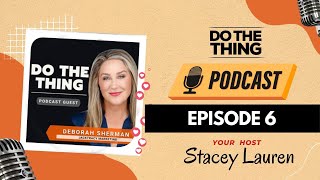
Transcript of a Do the Thing podcast episode (host Stacey Lauren) featuring Deborah (Deb) Sherman. Deb describes her career as an investigative reporter for major US networks, why she transitioned to PR, and the habits that made her successful (reading, curiosity, listening, preparation, organization). She also recounts founding the nonprofit Kids Giving to Kids, its operations and lessons learned, and her eventual decision to step away and start a PR firm in Denver.
Chapters
I do really believe 100% from every part of me that everyone has the capacity to be able to do the things that they want and not to be held back by the mental baggage that's in our head that we want to push through.
Welcome to the do the Thing podcast. In each episode, we get down and personal with people who go after the things they want to make all their wildest dreams come true. Join us as we unveil and dissect a formula for what it takes to do the thing. Here is your host, Stacy Lauren.
Hey, everyone. Welcome to the do the Thing podcast. My name is Stacy Lauren. So the thing I'm loving about doing this podcast is I'm getting new epiphanies each time I interview someone. And wow, I really have a treat for you today. We have Deb Sherman from Jack Tracy Marketing. Um, she's located in Colorado. She's someone that I met last year at a fitness camp. The best part was when we met, neither of us spoke about work or what we did. We just enjoyed the power of being active and the outdoors. She is so positive and fun to be around. Since then, even though we live across states, we've been able to keep up our friendship through our virtual peloton bike rides. They're so much fun. She opened a public relations firm after being one of the best investigative reporters in the country, and she also co founded a volunteer organization called Kids Giving to Kids. She goes into the habits that have been the keys to her success and also her learning lessons from running the nonprofit she started. It was so much fun to be able to dissect how she's become so successful and how she does the thing with everything she does. She shares so many nuggets in this interview. I just can't wait for you to hear this.
Hey, Deb. Hi, Stacey. Thank you. I am really glad to be here because, you know, I always hear that people say, oh, just work hard and you'll be successful, but, you know, there's always more to it, and I want to hear details. And so I'm really thrilled that you've taken the time to get a podcast together where we can hear people really talk about what they do exactly when they work hard to make them successful. So when I was very young, I was a. I wanted to be a reporter. And so I was lucky enough to be able to follow my dream and do that. So I ended up working, doing that as a career. I was an investigative reporter for abc, cbs, Fox, and mostly NBC News around the country. And an investigative reporter is different than a general assignment reporter in this way. It's almost like if you can think of a beat cop walking around, being called to domestic violence or stuff like that, that's a beat cop and that's a general assignment reporter. So they're gonna respond to the daily murder, the daily press conference, maybe the fire, something like that. Whereas an investigative reporter really sort of works either alone or with a group of people, and they dig into information and they get documents and they crunch the numbers and they follow the paper trails. And so that was my passion. And I was lucky enough to be able to do that for most of my career. I ended up getting out of the business and going into public relations now, but most of my career was as an investigative journalist. Wow, that's amazing.
So what had you going from wanting to be able to dig into information and then switching gears and going into public relations?
Well, so that's a great question. You know, I think. And that was really hard. I had just had a baby and.
In order to work at the. And play at the level I was playing at, which is one of the best investigative reporters in the country, I had to work all the time. And so I was constantly on the phone working sources, meeting sources, gathering information.
And I remember looking down at this little four year old one night, I think it was at 10 o' clock and he's pulling on my leg and I should have put him to bed already. And he wanted a story. And I thought, this isn't who I want to be anymore. I don't want to raise my child this way. I want to be present because I was never really present with him. I was always thinking about work. And so I realized it was time to move on, it was time to do something else. And that's okay because I was fortunate enough to cover presidents being inaugurated, you know.
Interview people dying, being born astronauts, you know, medical miracles, all kinds of amazing stories. And so it was time anyway to kind of pass the baton on and let another reporter do it. Wow.
It sounds like an amazing, unbelievable experience though, being able to interview all those people and just really being able to dig in.
Yeah. And you know, and I guess it's like maybe any profession. Stacy. So I really looked to mentors and others to learn how they were so successful. So reporters from the New York Times or the Wall Street Journal, Washington Post and other, even 60 Minutes, that I am a huge fan of 60 Minutes. And so I would actually talk to their producers and talk to the reporters. And I kind of came up with an outline of things I needed to do and ways I needed to be, to be successful. And I wanted to share some of those with you, if that's okay. These are some of my habits. And it really kind of came down to what somebody's habits were. Can I share those with you? Oh, we would love it. Okay. So the first habit that I had to develop was to read more and read the news every day and throughout the day. And back then it was just newspapers.
So I would get my hands on as many newspapers as I could. And when the Internet came out, then of course I was reading stuff online all the time too. But it was read, read, read. And that's so that you can be informed and so that no matter who you're talking to, you can ask them. Let's say it's about Ukraine. You can say, okay, the Russians just seized one of your cities in the east, you know, and talk to them about that because you're up to date with what's happening. So that was a big thing. The second one was to lesson that I learned from these wonderful investigative reporters around the country was to ask questions all the time. You know, why, why did that happen? Or why is that happening? It could be as simple as one day I was literally driving to the airport and I saw all of these light fixtures down, all. I mean, hundreds of them on the way into the airport. And I thought, oh, maybe a storm did that. And I'm like, well, maybe not. So with just a few calls, I got a lot of information. And it turned out to be a really big story about this chain event reaction that they had had the night before. And processes failed. And so they lost this whole lighting system, but nobody had reported it, even though probably, you know, thousands of people had gone to the airport that morning. And I'm the only one who picked up the phone and said, why is that happening? I remember another guy at the Washington Post, his dad, let's see if I can remember this correctly, got a negative test on something. And then a week later, they got. He got a call, his dad got a call and he said, oh, actually, I think it was a cholesterol test. It's positive. And so the reporter said, gee, how come that happens? And how often does that happen? And so we just started making some calls. And it led to this huge story about cholesterol tests that were false across the country and how the whole system needed to be changed and they needed to improve this testing. And people like his dad were really being misinformed every time they got one of those, either positive or negative because the results were so bad all the time. So it's just really simple stuff and basic curiosity. So I always tried to remember, be curious no matter what it is or how small it is because it could blow up into something. Right.
So so far your habits are reading more and then asking questions. And I love what you said about like staying in curiosity. I think that's good in life, right?
In general, yes. Staying curious, I think that's going to keep you young your whole life if you're constantly wanting to know how something works or learn about something new. And then the other thing is really carefully listening, you know, talking to everybody that you can, whether it's the cab driver or whether it's the, the clerk at the courthouse. Right. Not just the big officials, but the rest of us too, because those are the people who really hear all the dirt and see everything and they're there day in and day out. And so they've got a lot of information and it's important to remember to listen to them and to take what they have very seriously to say and to look into that as well. So listen to everybody and again, ask questions, ask follow up questions. Oh, so that happened really? Why, when, how, where, etc. And then the other habit I really learned from the other reporters was I to decide what I really wanted to learn about and tell people about as a reporter. And my focus at the time was Homeland Security because I worked in that as an investigative reporter around 9 11. And so it became very, very important to me to continually file information requests about how our money is being spent by the government. It drives me nuts because I will file a freedom of information request and I'll say to somebody, okay, we'd like these records to know, you know, how much money you spent on this and that. And they'll fight to protect that information, which is insane because I'm paying you to collect the information to and then now you have to share it with us. It's like our money you're spending now. Just tell us how you're spending it. All of the states got a ton of money, millions, multimillions of dollars after 9 11. We wanted to know how that money was spent. And the first problem we encountered was they, they tried saying, oh, sorry, we can't tell you how we just spent your money on vehicles and guns and weapons because of homeland Security. So the first thing we had to do then was to get lawmakers to change the law to say, well that crap, if it's just basic Financial stuff. You have to release that information. And then, of course, we. So after they passed a new law, then the state finally complied, saying, okay, here's the information. And then, of course, is where we found the huge waste. Oh, my gosh. And the mismanagement and the misspending. And I just think that that's critical to know as a human being on this planet. I mean, we pay so much in taxes. It's maddening. And it's like, okay, how are you spending that money? And so, again, one of my habits became to constantly file information requests, because I know most of them are going to. They're going to fight to release the information, and it's going to take. I mean, I remember it took two years for Boston when I lived there, to release their FAA records about what was being snuck through security. It took a year. And then when I got the documents, most of them had been blacked out. Right. Just all blacked out by the faa, claiming that they couldn't share this, couldn't share that.
So that became a story in itself. How it was a joke. I mean, they must have sent 1,000 pages and nine of them were blacked out.
Yeah.
But that way you keep getting information coming in the pipeline, and it can be really simple stuff. Like, you know, how many people are now.
Oh, when we had in Colorado the marijuana, first it was legal to have if you had some kind of a medical issue. Well, just with a simple records request that finally came back, we could determine and report that all of these young men in Colorado had serious back problems because, like, 90% of the applications for pot were young men with back problems, which was sort of a farce in itself. But you just learned so much. Yeah.
So you really just got ingrained with these habits, and that's how you were able to get through everything that you were doing. I love the, like, I love each one. As I'm, like, thinking about what you're saying, I'm loving them just all in really, in regards to how it relates to life. Right. Like reading more, asking questions all the time, being curious, and then listening to everyone without having any kind of ego story, you know?
Yeah.
That's unbelievable.
You know, and it's interesting you said without having an ego story. So a couple things about that. So I learned early on as a reporter that if I was ever. If I was going to be able to talk to a president or a homeless person, then I had to really sort of shed any ideas and preconceptions that I think I knew about them. Because if you try to talk to a homeless person and you're sort of asking questions that are very judgmental.
You're going to quickly see how fast that person shuts down. And what is the point anyway? You're sort of talking to them and criticizing them and shaming them because oh, what, you don't have a job or you have mental illness or you've got a, you have an alcohol problem or drug problem, you know, so you can't ask questions that contain shame or guilt or any kind of emotion like that. They have to be very, very objective. And I remember once I was with a photographer and in fact we were doing a story on the homeless. It was years ago and there were these new camps set up and I had asked, I think, the pretty predictable questions of some of these people. You know, why are you here? How long have you been here?
You know, why do you live here? Where's your family? What happened to you? Right. Just objective questions. But then my photographer took it to a whole new level and he looked at this guy and he said, hey man, who's better off? Me. I go home at night with my family and sleep in my bed or you sleeping out here. And the guy said, I am, I am so much better off than you. I sleep under the stars. I am beholden to nobody. I am a free person. I can come and go as I please. I don't have all these bills to pay. Nothing holds me down. I am much better off than you. And I will never forget that question. Right. And the answer was fabulous. And it just constantly reminds me, you don't think you know everything you think you know. And you really have to just ask every question you have in a non judgmental way in order to get those people to open up to you.
I love that. And in that way it keeps you open, right? Open to whatever the possibilities are that you're finding when you're asking those questions too.
Yeah, yeah. And people say the funniest things when you're being honest with them and you're not being judgmental and you're really just interest, truly interested. You know, you'll learn about all kinds of, you know, talents, hidden talents maybe that they have that they would have never ever told you about or true loves or loves lost. Really amazing life lessons. So. So yeah, I love that. And, and another lesson that goes with that is preparation. So, and organizing, getting organized. So that was a big part of my life as an investigative reporter too, with if you're working 10 stories at once, which reporters do, and some are about to be published or go on the news and others. You're waiting for information requests to come back a year from now. You have to really be highly, highly organized to keep track of all that. And I also, what that made me do is I'm a great note taker because.
You don't dare rely on your memory, right, for all those tiny, tiny little facts that are very important to people in people's lives. So I am a big fan of writing everything down, of keeping it organized, updating it, and using my calendar, my Outlook calendar, to check on this FOIA request. And then you check on it that day. And then I'm like, okay, checked on it on this date. And then I move it forward a month and I say check on it again. See the notes inside, you know, so that I'm constantly following up and nothing falls through the. Falls through the loop. So organization is a big thing, too.
Okay, so how, how on earth did.
You go up to, like, were you nervous? Like, how I'm thinking mindset or something with mindset has to be one of your things, too. Like, how did you actually get yourself.
To do these things? You mean to interview people or you mean to, like, present the stories live on television? I guess all of the above.
And it's so funny you say that because it's like, I think I'm still learning more about you, right? Like, when we first met, we didn't even talk business, which was funny, like, for a while. And I didn't even know what you did, I think, recently. And so I think just like, I'm like, gosh, I thought we were going to talk about your public relations company, but I'm so fascinated by this investigative reporter side that I'm like, we have to dive into that a little bit more. But yeah, I mean, it's like that you had to have. You had to overcome something, you know, to be able to. To do, to do that. So I was just wondering, like, where did that come from, you know, inside of you?
So you mean, okay, here's something funny. So I think it's my experience that a lot of reporters are actually very shy people and we hide behind our.
Journalism hat, our reporter title, in order to break out of our shell and learn stuff about people, you know? So it's funny, in my real life, I might be a little bit more shy and not be so inquisitive about something. But, boy, with that reporter hat on, I'll ask anybody anything. Because you know what? It's my job. And what happens is, you know, there's a 5 o' clock deadline, or what it was actually 4 o' clock deadline, 5 o' clock deadline, then 6 o' clock deadline, the 9pm and then 10pm deadline. And so each time you have to report out the news and you have to find a new nugget to give the next audience. Right. Because if the 4 o' clock audience. Here's one thing. Well, the 5 o' clock audience doesn't want to turn in and hear the same thing that the 4 o' clock audience just heard. And maybe the 4 o' clock audience is still listening. So you want to constantly be calling and asking questions, and it sort of just becomes out of necessity. You have to get over your shyness or insecurities and just stick your neck out and ask the questions and get the information, because time is ticking. And, you know, there's no time to be shy. There is just no time to be shy.
I love this so much, Deb, because I just have this huge epiphany, just in general, because this podcast was originally started from a book, Right. It was do the Thing, but the book was originally going to be a sales book because that's my background of sales. And I was an introvert forever. And then when I learned how to sell, it was the same concept where I was like, I almost learned to talk to people through sales. Like, when I was younger, people would ask my mom if I even spoke. That's how, like, shy I was, you know.
Wow.
Like, through the power of sales that I, like, learn to, you know, like.
Communicate in a way.
And so hearing you say that about the reporter thing, it's like, wow. It's like everything. And I was thinking about that, like, if you're a doctor, then you have these other ingrained skill sets that, like, you know, like, where you're. You've learned now how to handle this, like, stress level. And, like, there's different kinds of skills that you learn. Or your server, you're going to be really outgoing. And it's like, you know, sales, you have another set of unspoken skills. And the reporter, the same thing. So, yeah, this is, like, it's fascinating. I never considered that a reporter could actually be shy. And then it's the same concept as with sales.
Yeah. Isn't that funny? And I never thought about sales, but you mentioned doctors, and I can think of so many doctors who have terrible bedside manners.
So I guess their real skill is operating.
Yeah, some of them. Yeah.
I'm thinking like an emergency. Yeah. In an emergency. That might be a Helpful?
Yes. And I would rather them be better at that than bedside manner. Absolutely.
Oh, for sure. So would you say then. So how you would overcome. It was like you would just. It was kind of like your. It was basically because it was your job, you kind of had a different way of looking at it. So of course you're going to talk to this person because you already know what you're saying. You're going to say like you already have an idea of how you're approaching the situation. Is that what kind of took any kind of fear away, or were you still scared when you were approaching a different person or different situation?
Okay, so that's such a great question. So what you learn is if you focus on what you're saying and the importance of what you're saying. So, for example, we've discovered this group of dentists have been abusing minority children and, you know, putting 12 caps and crowns on their teeth in one sitting, then you can really put focus on the subject. And you're not afraid because you're talking about something that's really important. But the moment you get into your own head and you start thinking about, you know, people are looking at you, what are you going to say? What do you sound like? What do you look like? That's when you can really kind of spin out of control. And that actually happened to me once.
I was interviewing. It was Tipper Gore, so Al Gore, the vice president's wife, and she was making some kind of tour around the country about some subject. I'm going to guess education. I don't remember, because this is what happened. It was a live interview, and we were out in the public area, and this crowd started to gather around us, and they got closer and closer and closer. And so now, like, hundreds of people are surrounding us and they're moving in on us, and I'm broadcasting live. Well, I could not. Could not focus on what I was saying. I got so nervous, I forgot my questions. I had them written down, thank God. But my knees actually started to knock. I don't know if you've ever heard of the phrase knocking knees, but there was so much adrenaline pumping through me that my knees were knocking.
And I was just. I was off my game. It was a terrible interview. I mean, again, I had to look down and at each and every question because I was just so concerned that somebody was going to hit me on the head or grab the microphone or grab me or grab her, you know, and she probably had security there. But I didn't see it because I was trying to focus. But yeah, so there's times like that. Yeah. Because I think that's what I want to tap into.
It's like so many people, that's their, like, you know, where they're, they're stuck, right. And being able to do the thing. And I found from talking to most people, it's coming from fear. And so any kind of an example that you have of how you were able to get through the fear, and I love, I love that you were able to talk about getting out of your head because I think that's such an important piece that people need to understand is like, you know, we all go through that, you know, and out of your head is such an important key principle, you know, and being able to do the thing, you know.
Yeah. And I think for me and other reporters who I know, it all comes down to preparation. If you're prepared for that live shot and prepared for the interview. And that means if you know the subject, you've read about it and then you've written yourself a script, even if you don't read the script word for word, at least you know what it contains because you've written it. And if you're prepared and you've written down really good questions, then the nerves go way down, like, way down. I mean, yes, you're still going to be pumped up a little bit, but now you can kick back, relax, really look the person in the eyes connect and have a great conversation because you're so prepared. So you know, the hardest live shots I've ever done are the ones where I don't know what's going on. And you're like, why would you not know what's going on if you're a reporter? Well, what happens is.
So you will. So let's say you're covering a tornado, somebody's seen a tornado, this has actually happened. So they're like, they call you on the two way or your phone and they say, hey, you know, forget the tornado, the mayor's holding a press conference. Can you get over to the press conference instead? It's about a really new important law that he wants to pass. So you start heading over there and as you're heading over there, you get another. So now you're trying to read on your phone about background information about this new law that he might pass, see if anything's been written about it at all. And if not, well, what, what is the subject? So that you can ask some semi intelligent questions. So then they call, they say, this is, this has happened. So Many times. Oh, I'm so glad I'm not in this business anymore. But they say, look, we really need your help because there's been a tragic accident in this, you know, at the edge of the state. Can you guys drive out there as fast as you can? You're going to be live in two hours. So. So you're driving then as fast as you can. They don't. When you keep calling back to the newsroom, they're like, have you. You know, I can't get hold of the police. Have you gotten hold. You know, the police aren't answering their phone. I don't have any information. So they're like, well, sorry, you don't have any information, but you're live in 30 seconds. So even though you're not there yet, we know you're. I said, but we're still driving. They're like, yeah, well, we got to have something about this. I'm like, but I don't know anything. We're still driving. I can't get older. The cops, they're like, can you just do something? And so there you are. Drive. You know, your report, your photographer is driving, you know, 90 miles an hour to get to this place. All of a sudden, you're live. They're like, well, what do you see? You have to say, well, I'm still driving to the scene, but I'm told there is a huge accident and that several people might have died. But I've not been able to release the. Get the police department on the phone yet. We're not there yet. We'll let you know as soon as we can. But you've got a tap dance because I want you to fill a minute. So when you're not prepared, even with the basic stuff, that's when it gets really hard, because then you do start thinking, oh, my God, I sound stupid. Because you do something stupid.
Yeah. And so if you're not prepared, so in that case, you really. It's hard to be prepared. So, like, what would you do to, like, get through it? Is it just, like, suck it up and, like, do it, or is there any kind of strategy that you would have to be able to get it done?
You go back, you just literally write down basic journalism from college. Who, what, why, when, where? I write that on a piece of paper, and I look at it and I'm like, you know who? We think there could be as many as five people involved in this. And then I see the word where and I say, you know, in eastern Colorado at this location, near a River, you know, and so you just go down your list, and that's what you. Who, what, where, when, why, how, and you try to get through it. Those are not the best live shots.
I actually love that. Like, how do you think you can apply that to your life? You know, in general, I'm like, that's interesting. You know, just. Even the concept of who, what, when, you know, if you're. Let's say you're in a stressful situation or you're scared to do something, you know, and you want to, like, do it, you know, is there that same. You know, to be able to do the thing? Is there that same philosophy?
There is. It's. Yeah. That's a great question, because you. Do you fall back on basic rules? Well, what is. You know, maybe, like you said, maybe you're really stressed out. You know, big sales meeting or something, or you have to close the deal. What's really happening here and why? Why did it happen or why is it happening? You know, what. What fell apart or what worked the way it should work to make this happen. And then once you get the facts down, then you can sort of start making, you know, assumptions and putting things together. But you really can't do that until you just get the facts. And that's what I think good journalism is anyway. It's just reporting the basic facts so that the person listening can then say, okay, well, that probably means, you know, my stock is going to go up or my stock is going to go down or whatever, but you sort of let the other person draw those.
Analyze it and draw those conclusions instead of giving them the conclusions. I think that's the best kind of journalism. Just. Yeah, just get the facts down. And then I think it's also very comforting if you're nervous in a situation. It's like, okay, this is what it is right here in writing. I have this. This is all I'm dealing with. It sort of takes all those extra fears that your mind has run away with away from you.
Well, yeah, I'm picturing a storm in your head, and then those questions, like, kind of almost get you out of the storm, you know, like, you're able to focus on. On what matters and what's the. And it looks like basic focus. Yeah. Like, releases the pressure.
So.
Yeah, I love that. Okay, so now I'm excited. Thank you for sharing that, by the way. That was amazing.
To hear about your. So you have your son. You're like, okay, I'm kind of over this. I want to be here more for him. And then is that when. Is that when the idea came to open up your business?
Or what was the step there? Well, it's funny. So before. Before that. So, yeah, I was trying to teach my son all, you know, all these things, like we all do as moms while we're working. So what I did is I created a nonprofit before.
Before I got into my own business. And that was just from Jack asking questions. He was about 4 years old, and like, mom, I want this. I want this, I want this, I want this. And it was a week before Christmas, and.
So I was like, how, as a mom, am I ever going to teach him to value what he has? Are we wealthy? No. Are we poor? No. But we have stuff that other people in other countries, Ukraine in particular, would die to have right now. Stability, a roof over our head, food, electricity. Right. Security, safety. And so I came up with this idea where I'm like, okay, I know what we're gonna do. We're gonna go to the store. Even though he's four, he's gonna choose the gift. He'll pay. Like, I'll put a nickel in his pocket, he'll pay a nickel toward it, and then we'll buy it for a child, and then he'll wrap it if, you know, and I'll help him wrap it, and I'll draw a picture, and then we'll go find a child who needs this. And I wanted him to give the gift to the child face to face. Okay? Because I wanted him to see and feel the reaction and see the joy on the other child's face in order to see and feel the, you know, experience giving instead of taking every year. So I actually told some friends about it. They're like, oh, can we do this, too? Well, literally, on Christmas morning, I opened my door and there were 40 people.
With trucks and cars full of gifts. I had already called around and found out that the neediest part in our state is in the Denver housing projects in the city of Denver. So that's where the poverty is greatest. And I connected with them, and they said, yes, this is a great idea. Please come down. You can go. We'll give you the addresses of the people who are in need, most of gifts, who may not actually have anything to give their kids on Christmas. And you can go give gifts to those houses. So we did that. And it was life changing. I mean, one father just, like, dropped to his knees and started crying and said, I had nothing else for my kids today. Thank you so, so much. It was just, you know, the Kids were excited. They were excited. We met people we would have never met in a million years. So a friend of mine turned to me and said, you know, I love the idea, but can I get you organized?
And I said, yes, please. So with her help, we started this charity, it's called Kids Giving to Kids. And we got volunteers to help us. I mean, she was truly like, I was the big organizer person. I got us on TV and on radio and wrote stories and built the website. But she.
Organized it down to the detail like she was a project manager. And she got people to help for free volunteer because none of us were paid, of course. And so her brother built a website which is like match.com and you go to the website and you choose. We would put. First we got the list of every child who needed a gift for the next year. We put it in this database. Their age, their first name, what they actually want for Christmas. So they don't get five basketballs, their favorite colors, their shoe sizes, their. Their clothing sizes. And then we. You choose who you want to give to. We made an appointment. So you met that family on this particular day at 9am and then we had waves of people go through each person with an appointment to meet their family. And long story short, it. What? We helped 3,000 of the poorest children in Denver every year. And of course had 3,000 givers, right? Children giving to children. We had bands, we had companies like Crocs and the Denver Broncos get, you know, to show up and start giving stuff away. It was. It was amazing.
It was amazing. And then my friend and I were both full time workers. Full time moms were so exhausted after seven years of doing this that we finally decided we needed to give it away. Either shut it down or give it away. Because we were. I mean, one Christmas after this event, we were both so sick. It's like, we actually can't keep doing this. We're going to die. Like, we were working now 247 our jobs and trying to raise kids. So after that, I really step back. I realized how much I really kind of.
Yeah.
Put my health at Jeopardy.
What amazing gift, though, for the time that you did it, I mean, and the ripple that had to have created.
It was so fun. It was so fun. And I mean, people, literally, we met these people we would have never met in a million years. So I had never done anything like that before. And when we finally decided to give away our dream to another organization, a nonprofit that could pay their people to make this continue.
I wrote a letter to all of our givers and receivers. And there's some lessons that I learned through this experience about working in a nonprofit. We all called ourselves elves, and so can I share some of the lessons I learned? Love it. Yes, please.
Okay.
So it says, I'm saying this isn't goodbye. It's just a new chapter of Santa's elves with another organization at the helm. And then I said, I want to sign off by leaving you some things I learned being an elf. Number one, no elf can make all the toys. Elves need other elves. And that was a big lesson I learned to lean on other people. Lesson 2. One elf and one toy can change a child's life. Number three. When things go wrong, wait and watch. A different answer will present itself. Number four. Yeah. Number four. In the darkest of hours, don't play it safe. Go all in. Santa delivers miracles when you need them most. We actually learned that lesson a few times. We thought we didn't have enough toys to help every child who needed it. And at the last minute, the last hour, we had some anonymous donors come through and help choose the remaining children. It was incredible. Lesson 1, 2, 3, 4, 5. An elf can be a friend for life. Number 6. It feels really good to give. Number 7. When you're unsure about what to do, trust the smart, talented elves around you. They have the answers. Let go of the reins.
Number eight, Stuff stockings with gratitude, wonder, compassion, and adventure.
And then two more. Give children toys that will spark imagination and movement. And then, finally, my last lesson. After giving a gift, don't expect anything in return. Not a smile, not a thank you letter, not a token of appreciation. The act of kindness is your reward. And that's all.
That's amazing. Oh, my gosh.
Yeah. That was a great experience. Wow. Yeah.
And I love that you realized when it was time to end, too.
Right.
I think there's so many people that.
Keep doing things too long, and then it.
Then. And then it almost like, would inhibit you from doing your next thing in a way. You know, you kind of, like, saw when it was time to finish that, and then you were able to, like, formalize it with this beautiful lesson learning, you know, and. And then that helped you be able to dive into the next thing that then probably had to get a bigger ripple, you know?
That's true. Yeah. And, I mean, I would have never guessed it, but there came a point in time when I knew I had to leave journalism to accomplish other things. And I thought I was going to be a reporter till the day I died. And then with same thing the charity, we never imagined stepping away because it was. We started it. Right. We started it. So. And yet it was so clearly time. I mean, it was just. I was beyond exhausted and not spending time with my son again.
So it was like, yes, we had.
And it was scary and it was sad, but it was clearly time. So, yeah, we had to step away from that. And then that's when I opened up my own publicity company, my own PR firm in Denver. Well, thank you so much, Deb.
This has been amazing. I feel like I got another level of learning just from even understanding this concept of how you got through this time period of being an investigative reporter to opening up your nonprofit and then your business.
Pretty incredible on the habits that you've been able to build up and continue and streamline throughout everything that you've been.
Able to do, you know? Thank you, Stacy, so much. And I think probably if I were to say the greatest lesson of all through my journalism career and nonprofit and even my PR business is you never do it alone. I have always had a photojournalist beside me or a partner beside me in the nonprofit and a ton of volunteers. Amazing people. And maybe the real lesson about doing the thing is to accept and welcome help so that things can be 20 times or 100 times greater than you ever personally imagined they could.
Wow. That's power.
And. Yeah. And. And I think you. You go further with others.
Yeah, I think that's amazing.
Amazing.
Yeah. It's that power of community to being.
Able to work towards something. Yeah.
Yeah.
If you can just, you know, let go of the reins and trust others and. Because ideas just bounce around like fire when you're with other people. And so much more is accomplished with other people. And it's more fun. It's way more fun to do stuff with people and to win with others. So do your thing with other people. I love it. Well, thank you so much. You are amazing.
And you are just. It has been just so amazing to know you over the past year, and I appreciate you being able to share your wisdom with.
With the listeners, and I thank you for all of your time and your friendship, and I'm very grateful to have met you. So thank you.
Stacy.
Thanks for listening to the do the Thing podcast. We hope you enjoyed the show, but even more, we hope you'll be inspired to do the thing. Do you have a burning question on doing the Thing that you'd like answered? How about an inspiring do the Thing story of your own that you'd like to share? We'd love to hear all about it. Just leave us a voice message at do the thing.callcast co or email us@helloothethingpodcast.com.
More from Stacey

From 262 Women to 8 Million Media Impressions: Deborah Drummond Built a Global Women’s Movement


From Notes App to Published Author: Avery Brenna Crumrine on Turning Intention Into Action


How Stacey Lauren's Billion Dollar Impact Marketplace Will Raise Billions for Charities and Causes

What Happened When Allison Maslan of the Pinnacle Global Network Ran a Challenge with Stacey Lauren




Leaders Share How Stacey Lauren Sparks Action, Clarity, and High-Impact Collaboration

Sandi Masori Announced as Emcee | The Billion Dollar Impact Event Returns to San Diego