Episode 75 - Chris Preston Registered Dietitian & Personal Trainer Believes Consistency Is The Key
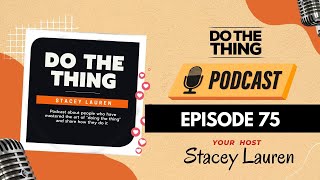
Episode 75 of the Do the Thing podcast (Nov 2, 2023) features host Stacey Lauren interviewing Chris Preston, a retired 22-year Navy veteran, registered dietitian, personal trainer and youth football coach. Chris describes how personal experience (helping his aunt with thyroid/diabetes-related weight issues) led him into nutrition, explains core nutrition concepts (macronutrients, insulin, metabolic flexibility) and his individualized, non-cookie-cutter approach to client programs. He emphasizes motivation, finding a clear "why," family-support dynamics, and—above all—consistency as the key to sustained change. He notes results (having transformed over 1,200 bodies and helping clients lose large amounts of weight, e.g., one client lost 70 pounds) and offers remote coaching via 360 Wellness and Consulting (website listed).
Questions this video answers
November 2, 2023.
22 years.
Over 1,200 bodies transformed ("as of today").
Approximately five years (coaching 5th–8th graders for NFL Flag San Diego).
A client lost 70 pounds (referenced by the host as a prior episode subject).
Chapters
I do really believe 100% from every part of me that everyone has the capacity to be able to do the things that they want and not to be held back by the mental baggage that's in our head that we want to push through.
Welcome to the do the Thing podcast. In each episode, we get down and personal with people who go after the things they want to make all their wildest dreams come true. Join us as we unveil and dissect a formula for what it takes to do the thing. Here is your host, Stacy Lauren.
Hey everyone. Welcome to the do the Thing podcast. This is your host, Stacy Lauren. So, okay, this is exciting. We have a guest on today that I have been having the honor to work out with and work with directly for the last few months. And I actually recently did an episode with one of the people he had a transformational experience with and helped her lose 70 pounds. And it's been amazing to get a chance to talk to him in the morning many times at 5:30 when the, when the sun is just coming out. And he's not only a personal trainer, but he's also a dietitian and a football coach and so many other things. So I wanted to bring him on to talk about how he does the thing and then also how he helps others do the thing. So welcoming Chris Preston to the show. Hey, Chris.
Hey, Stacy.
How are you?
I'm doing well, Doing well. Good.
Long time no see. I know we saw each other at 5:30 this morning.
Yes, ma'. Am.
I'd love you to start off and just tell everybody about you and your background.
Well, as you said, I'm a registered dietitian. I retired from the military after 22 years. I was Explosive Ordinance Disposal, which is bomb, basically connoisseur, But Navy was 22 years. I got my, I trained a lot of people in the Navy. I was a SEAL instructor for a long period for probably about three years. I was a military police officer for three years. I did a lot of jobs in the military. I, I got my certification when I went overseas and lived in Japan for six years. And that's where I got my massage certification and finished up my bachelor's degree for being a dietitian. Once I got here stateside, I board certified here in California and I am a football coach. I coach seventh and eighth graders and fifth and sixth for NFL flag San Diego. And I've been doing that for approximately five years. And that's basically me in a nutshell.
So, gosh, it's funny, I didn't Even know. I didn't know you retired from the military. I thought I knew you were in the Navy, but I didn't realize you actually were there for so long.
Yes, ma'. Am. 22 great, glorious years.
And so you said you were a SEAL instructor also?
Yes, at the time it was a part of our nec, which was Naval Enlisted Codes. And then they made it a rating to SEAL as a rating and eod, which is, was the rating that I went under classification in the military.
Wow. And what made you want to get your dietitian certification while you're still in the military?
I, back east, where I'm from, from Pennsylvania, I had an aunt that was overweight and obese, but when growing up, she was her. It was my aunt, but her name, her nickname was Birdie. And the reason why everybody called her Birdie, my mom called her that, is because she ate like a bird. And ever since I was a kid, she was always maybe 110, 115 pounds. And then I went into the military. And then probably about a year or so after me being in the military, I got a phone call from my mother and she said, your, your aunt has really, you know, gained a lot of weight. Can you help her? And I was like, I. I really don't know that much about the nutrition aspect from, from what I learned in boot camp and everything. But then I started doing some reading and research and everything on it, so I decided to help her. Anyway, so we fast forward 30 plus years now and my aunt's still living and she's probably about 118 pounds. So I just got really good at nutrition, especially for women, just doing what, what I do in dealing with them on a daily basis in the military and for our command fitness assessments. So I just got really good at being able to transform bodies.
Yeah, that's amazing. So pretty much your aunt was always thin, and then when you're in the military, she had just gained a lot of weight and your mom realized that she needed help, reached out to you, and then you kind of took it upon yourself to learn more about nutrition. Yeah, yeah.
Basically she, what happened is she had a really bad thyroid condition and she also was diabetic. So dealing with her nutrition and what was going on with her body, she didn't really know. So she did a lot of get skinny quick weight loss things, which caused her body to work in reverse, and it just did really, really bad things to her metabolism. Not only, not only her metabolism, but her hormonal system.
And so what did you do that helped Her.
I gave her the guidelines on, you know, on how to eat better. Basically, she was. Basically, her body was in a standstill, which her body was very, I guess, insulin sensitive or insulin resistant, if that's what you want to say. And by dealing with her nutrition, with her macronutrients and the insulin resistance level that she had because she was diabetic, I just worked with her nutrition and worked with her on an exercise program and things happened. Got her metabolism working again. She was on the right medications, she was on the proper dosage for her thyroid, which really helped. And with her diabetes, she would. Her glucose and things, all they meshed. So that's what I did. Basically. That's it.
Yeah, that's it. You're so funny. And then fast forward to now where you're helping hundreds of people lose weight, get in shape. And then also with coaching your son's football team, it's such a. Like, that's what I really think is so cool about you. It's like this unique mixture of all these superpowers, talents that are all combined into one. And I just think it's really neat to. To get to see that.
Yeah.
I was wondering, so with the people you're helping now, what is the most common thing that they. Or what is the thing that they have in common? That for the people that are successful in either losing weight or getting in.
Shape, they comprehend the nutrition and they learn more about their body than what they really know. You know, your body is a unique machine, basically, and you can make it do whatever you want, but you have to have the know how and to be able to change and to make it do what you want it to do. So once you learn about your body and what's going on with it and know the right things to put in it, the right exercises to do, and with the right person, you know, training you and motivating you, you can, like I said, you can do anything.
I'd love to talk more about that because this is the education, like getting educated piece of the formula. And there's so many people that want to lose weight, but something's holding them back, whether it's them not knowing enough information or them not having the right motivation. And actually, if you don't mind, let's kind of go through that a little bit with. We were talking about this this morning, which is cool, because I'm learning about this stuff right now, and when I'm hearing you talk, I'm like, gosh, this would be cool for people to be able to understand this in the way that you're explaining it from a dietitian, because a lot of times you're hearing it from someone that I don't want to talk negatively about other people, but someone that's not actually like certified, essentially.
Yeah. I mean, and I tell a lot of people there's a lot of influencers on social media today that might be giving out the wrong information. Things that work for them, but they don't always work for everybody else. As far as being a dietitian, I do. What's going to work best for you? That specific person I'm not going to base it off of, hey, one of my clients lost £400. So I'm going to, I'm going to go ahead and reinvent that chemical program to make her lose £400. I'm going to give it to all my clients and make them do the same thing. And I don't do that. Everybody's different and everybody eats differently and everybody breathes differently. So you have to treat it like that. And a lot of times an influencer or somebody that's on social media use programs that work well for them and maybe one or two friends. So I mean, for me, I've trained and transformed over 1200 bodies as of today. And so I'm using a formula that works best for that person.
Yeah, that's so cool. And I love that you have the number. That's really amazing. So cool. So do you mind kind of sharing that macro like with the macro stuff and just kind of giving an idea of what someone can do to. And obviously they have to check with someone to figure out the direct needs for themselves. But just the general nutrition rules you were giving me this morning, I thought were really was really great.
Well, a lot of times people put their self into what, what is called an insulin resistant state and that's what causes people to gain weight or stay stagnant. What? There's basically three macronutrients out there. There's your carbs, there's your proteins, and then there's your fats. And then there's a hormone called insulin. You have to have a balance of what every and the note and knowledge to know what each one does. Carbs and fats are fuels. Protein is the building block of, of your body. It's what builds muscle, your bone, teeth, hair, the whole nine yards. And it would help you heal. So insulin is the hormone that's produced that works between what burns carbohydrates and your fats. Now when you, when I say burns or displaces fat or carbohydrates, your body is, has to determine what it wants to burn carbs or fat. That term is called metabolic flexibility. Okay, which. If your insulin level, which the hormone insulin level is very high, you'll burn carbs. If your insulin level is very low, you'll burn fat. So during the day, a lot of people, in the morning you might have high carbs like pancakes and waffles and all those things in maybe for an afternoon snack you might go grab a donut or a pastry or something. So it's still high carbs. So your insulin level is going to be high because that's what it's going to taste to burn those carbs. And then when you get to the lunch and snack and dinner, well, lunchtime most people grab a potato and some protein or however, or maybe some chicken and something else. And then in the evening, you know, most people are like, hey, let's go get pizza or you know, nachos or whatever. And then you're hitting carbs again. So which is keeping your body at a high insulin level. Therefore it's your body over time periods. If you keep doing that every day, it makes your body insulin resistant, which basically it makes you have a hard time burning fat. So what ends up happening is a lot of people get fatigued, they get excessive amount of fat, they increase in visceral, they increase in fatty liver, or they become diabetic with such a high insulin resistance. And that's why people sometimes can't lose weight or sometimes get into that, that sticking point or plateauing because they, they don't know what to do. And sometimes when people starve their self or lower their calories and create too great of a caloric deficit, they'll cause their self to binge eat. So when they get a little taste of pizza or something sweet, it will cause them to binge eat, which that puts them back behind the power curve. I hope that kind of sums it.
Yeah. Is that, is that what happens? I've noticed that because if I eat something even bread related, I then want a bunch more bread. But if I don't have bread, then I'm like not craving the bread. Is that kind of where that's coming from?
Yeah, it happens to everybody. If you starve your metabolism, it causes you to binge. And that's where people end up getting kind of screwed, screwed up in their journey or diet. And a lot of people, and a lot of trainers, a lot of people out there, well, you have to have a cheat day or a cheat weekend or a cheat meal or whatever it is. But I don't like people to feel like they're cheating. If you're. If you have a goal out there, you're not going to cheat. And as I told you before, fitness is like a marriage. If you cheat on it, how do you expect it to work?
Totally. So what would you suggest? What. What's a good suggestion then for people in terms of the carbs, the proteins, the fats to. To be able to keep that insulin low?
I would go and go and seek out a dietitian or somebody that really has a good grasp of the human body and the anatomy to help you point you in the right way. There's a lot of programs on there, on the Internet that can help you define how. What your macros gives you a baseline percentage of what your macros should be. That's probably the base start. But if you don't know how much your body fat percentage is or your visceral fat and how much muscle you have, it's hard. It's really going to be hard to get on a good journey and set a goal for yourself. It can be done, but it's just going to be a little bit harder.
And what would be the best way for people to find someone that in their area?
I would look up a lot of people. Sometimes you. You look up. You look on Yelp or however, and look for a dietitian. And the reason I say a dietitian and not a nutritionist is because a nutritionist is somebody that has a piece of paper that says they know about food. Okay. A dietitian has usually a bachelor's degree and has four years of schooling and has, especially here in California, you have to do clinical hours, 1800-2000 clinical hours in a hospital with people that are either diabetic or people that have Crohn's or sometimes working with people that have eating disorders, and they would be best helped to recognize certain problems and things that are going on, whether you might have, you know, a thyroid condition or however a nutritionist can't look at you and say, hey, you have a thyroid condition. So it's like if. If you have a really bad cut on your leg, you're not going to go ahead and say, hey, I'm going to go to a veterinarian. They've sewn up animals tons of times. Let me go ahead and get them to help me with this cut on my leg. So you got to get somebody that. That's their expertise. I would never go to the social media and platform and look for somebody that's not qualified, but that at least can help you. And a lot of my clients, you know, before coming to me, they've tried all. You know, sometimes they're in the mindset where they're not ready to change yet because they've been through numerous personal trainers or nutritionists help or herbalists or people that just really don't. That's not their forte. For me, being a personal trainer and also being a dietitian really helps me hone my craft into being an expert in my field. And it takes 10,000 hours for somebody to master something, and that's the way I look at it. So you got to really sit down and talk with somebody and see if their best interest is for you and not just taking you at face value. And you're a number.
Yeah. And so what with all the people that you've worked with, there's so many people out there that they'll say, I want to go to the gym. Right. And they pay money. And then. Or even whatever it is they want to do, Weight Watchers or whatever program they've decided to do, they'll pay the money, they'll go, and then they usually quit. What is the difference between the people that actually stick with you and stay consistent with. With you in the program?
And you know what? That is the best question that I think. That's a great question. The. The reason why is because people that come to me are sick and tired of being sick and tired, and they want to change. That's one thing that before you get yourself into a weight loss program or any type of program is you got to ask yourself, am I ready to make? Because not only being a financial expense, but you have to make a spiritual commitment to yourself. A financial commitment is definitely going to happen, But a spiritual commitment to yourself that you're going to actually go through, that you're not going to talk yourself out of it and you're not going to quit, that you really want to change. That's the biggest thing that you really want to do. This. That this is something that's going to be. I always say for a lot of people, if you have kids, grandkids, nephews, nieces, or your own kids, that should be your motivation. Not always looking about doing it for yourself, but doing it for them. Because without you, you can't see all these things or fulfill all these goals and things that you want to do. So that's why I think you have to have a reason why you want to change. Not just because I want to look great in my Halloween costume or I want to look good at my family reunion or my high school reunion, but I actually want to change and, and.
Make it a lifestyle and then what have you. So they've, they've really been identifying what their why is why they want to lose the weight. And I know when I interviewed Lisa, she was really clear on her why, which I thought was really powerful. When her dad got sick, she mentioned realizing that it was because of health and then she didn't want to basically have that same thing happened. So it really impacted her. And I know that you've helped so many other people just even that I'm working around that have lost 50, 60 plus pounds. What do you think is on top of the why the difference between them being able to stick with it?
I think a lot of people just like, like in the very beginning you asked me what basically inspired me to do it is family. People don't want to be without their family or they don't want to fall. A lot of people go, there's a lot of diabetes in my family and it's hereditary and it's actually not. It's a word I come up with. It's habitary. Because we all see the bad habits that our family members do, and sometimes we emulate them. And those are the bad habits that we, we pick up. And then, hey, if your grandmother was a chain smoker and then your mom was a chain smoker, why can't you break that vicious cycle and say, hey, I don't want to do that no more? And I think some people, like I said, are sick and tired of being sick and tired and actually want to make a change. So when people say, hey, I really want to do this because I don't want to end up like my mom or my dad who's an alcoholic, or my mom who is overweight, or however I want to break this chain. So all those good habits that you, that I instill into the people that I help them learn, that they instill it into their kids. So now they start something that's now generational to being healthy, and they're creating a different and different relationship with their food and with their kids and the relationship that their kids have with food and. And then everybody sees, hey, my aunt or my uncle, he's in great shape. I want to be just like him. Well, now they've started a new habit. Now they've started a new generational thing. So that's. I Think a lot of people just don't want to end up their parents or, or maybe family members or their friends that they see all the time. I think they've actually, some people legitimately are like seeing it happen to themselves so they get it's a wake up call.
And then what about for the people that you're focused on with the fitness side of it also? Because I know that's a big, I mean you're doing some serious workouts where, where I know people have thrown up the first time they've worked out with you, especially when they're not eating right and you're definitely not. It's not a, what is the word? A Pollyanna workout.
I mean, well, like I said, some people on the fitness side, sometimes you, each person, like I said, are so used to seeing things on TV or seeing stuff on social media or saying, you know, hey, I used to do CrossFit, but now you know, I want to do your workout or hey, I used to do this, now I want to do that. And it's not as easy unless you're actually in the midst of doing it. And basically by, when I do all my analysis and assessment of a person, I look at where their strengths and weaknesses are to better put together a workout that's either going to challenge them because that might be one reason why they might be in this rut or plateauing, or I'm going to expose their bad diet. So that's why all the workouts are different. That's why all the nutrition diagrams are different. That's why the whole program is different for each person. So that's, that's the basis. There's no magic in there. There's no cookie cutter to it. It's me putting, instilling and looking at each person as an individual and designing their workout as such.
And then what do you think helps that person get through the workout? Especially someone that maybe hasn't been used to being active. Because I mean, I know you have a lot of people that went from being, I don't know if it's couch potato, is that, that's the word you want to use. But to being really fit. What do you think is the thing that helps them kind of game up for it?
The motivational is the scene that they can actually make it through to work out. But most the thing that's my, my bread and butter that actually makes, that sells me, that sells my program is the results. When people see results, when they look in the mirror, when they see that they're in they're wearing those. Put this way, when Lisa went From a size 24 down to size 8, that was eye opening, you know what I mean? When her husband came home after a deployment and saw his wife at a size 5 or size 8 or however, and he's so used to seeing her at a 24 and a 26, that was like rekindling their relationship again. And that's what, and that's. Results sell a lot of people, you know, I mean, when people see that results, they're not going to go ahead and, and try to go out and ruin those results.
Now, as far as like your son's football team, what's your best way to motivate the kids on the team? Because I mean, that's a lot to do. Be a football coach. I know what that takes. It's, especially with that age group, I feel like that's got to be a big, a big thing in terms of you being able to motivate them.
The best thing about kids is they love winning. And me giving them the tools to win is probably a big, big, big determining factor in making them successful. You know, I have 18 championships under my belt right now and out of 18 championships, eight of those championships are undefeated. So I think the aspect of being on a winning team and being with people that the camaraderie with the rest of their teammates is one thing that drives them people to be successful.
What do you think is the hardest thing for people on doing the thing, what do you think gets in the way the most?
Sometimes depending on if it's. Sometimes if you're a woman coming into it. But if you're, you have a significant other, the self sabotaging of the significant other because you're trying to do something for yourself, sometimes the significant other feels left out and it's hard to maintain a good eating regimen when the other person is not eating as well and is not on board with you. And it depends on what type of support system you have besides the significant other. If your family members are like, oh well, he or she's doing another weight loss gimmick thing. So those are big contributing factors on if a person is going to make it or not.
And then if you had one piece of advice for people and doing the thing, what would it be?
Consistency. Stay consistent. That would be my best piece of advice because the more you stay consistent and focus in on your goals, the better you will be.
And do you know the. Do you have any thoughts on what's the best way for someone to stay consistent and focus on their goals.
Journaling. I also recommend the Dream Boards. I don't know if a lot of people do those. The collages of dreams of what you expect that you want to look like or places that you want to go or something. Or a person's body that you you idolize but you want your body to look better than that. Things like that.
Definitely. Well, how about you share with everyone where they can learn more about you and if there's. So if someone. Do you only work with local people or can you work with anyone outside.
Of the I do. I have a lot of people and especially my morning clients are from Idaho, Utah and Arizona and basically they were referred to me by their aunts, uncles or whatever relatives that are working with me currently. And if somebody wanted to find me, they could. You could Google 360 wellness and consulting or you could go to my website at www.360wellness and consulting.com. you can look at up my reviews on Yelp and you can get a hold of me that easy.
That's great. So if they are in another city or state and they can't come locally to visit and they do want to lose weight and want to work with a dietitian or even a trainer, you're able to do that remotely?
Yes ma'. Am. They can give me a call. I can set up a online zoom consultation, design a program that's going to help them keep track and accountability, and we can go from there.
That's great. Well, thank you so much for doing this with me, Chris.
You're definitely welcome.
And I will see you tomorrow at 5:30.
Yes ma'. Am. All right, have a great day.
All right, you too.
Bye Bye bye.
Thanks for listening to the do the Thing podcast. We hope you enjoyed the show. But even more, we hope you'll be inspired to do the Thing. Do you have a burning question on Doing the Thing that you'd like answered? How about an inspiring do the Thing story of your own that you'd like to share? We'd love to hear all about it. Just leave us a voice message at do the Thing callcast co or email us@helloothethingpodcast.com.
More from Stacey

From 262 Women to 8 Million Media Impressions: Deborah Drummond Built a Global Women’s Movement


From Notes App to Published Author: Avery Brenna Crumrine on Turning Intention Into Action


How Stacey Lauren's Billion Dollar Impact Marketplace Will Raise Billions for Charities and Causes

What Happened When Allison Maslan of the Pinnacle Global Network Ran a Challenge with Stacey Lauren




Leaders Share How Stacey Lauren Sparks Action, Clarity, and High-Impact Collaboration

Sandi Masori Announced as Emcee | The Billion Dollar Impact Event Returns to San Diego