Exit Story, Stacey Lauren, Cofounder of Go-Staff
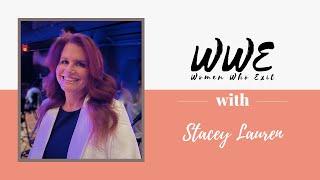
Interview with Stacey Lauren (cofounder of Go-Staff) about her entrepreneurial journey: early sales jobs (door-to-door book sales, custom clothing), founding and growing Go-Staff with her then-husband (CEO/CFO split), running it for ~20 years to roughly $25–30M in revenue with ~60 internal and ~600 external regular staff, then selling her half around the end of COVID. She describes the emotional/identity challenges after exit (severe breakdown, identity crisis), lessons about exit planning and role-definition for family businesses, and her post-exit reinvention — creating the Do The Thing podcast/community, running challenges (Two Hour Cocktail Party), giving a TED talk, and inviting people to connect via Facebook (Stacy Lauren) and dothingcollaboration.com.
Questions this video answers
About 60 internal employees and about 600 external regular employees.
Approximately $25–30 million.
They ran it for about 20 years; they divorced after 18 years.
She sold her half of the business to her ex-husband (not a third-party M&A deal).
Chapters
Honestly, I had, like, one of my worst, like, breakdowns, like, in my life after my exit, and I have a whole episode on my podcast about it. I'll share with you. Yeah, but, yeah, I think it's like, you work so hard and you think, like, the money is gonna be the thing that's like, okay, I just, like, earned this prize, you know? But, I mean, on one hand, I, like, felt like I lost my family, you know, because I had all these employees that I, like, was up at night thinking about when all of that, like, stopped. And then you no longer have all the calls and all the things that you have to do. It's like all the noise stops and you're suddenly, like, left alone with yourself. It was a huge identity kind of crisis for a little bit. It was not good. And then it took me quite a bit to get around. And then it's hard because you really don't have many people you can talk to about that, you know, because people are just going to think you're annoying, you know, because they don't. You're like, you just have all this money now, and now you're, like, unhappy. Like, really, you know, and so you have to be careful, kind of like who you're sharing that stuff with, because it didn't make sense to somebody that hadn't gone through it themselves.
Well, Stacy, thank you so much for joining me today. I really appreciate your time and really excited to talk about the staffing firm that you built over the course of 20 some odd years and sold. But before we get into that, I know you're originally an east coast girl, New York and Florida. And you mentioned to me, which I want to start with, that you used to sell books door to door in college. Talk about your first entrepreneur venture.
Yeah. Thank you so much, and I'm so glad to be here. I. I've just admired what you've been doing for so long, so it's exciting to. To get this chance to do this with you. But, yeah, the. It. It was like the best thing that ever happened to me was that I did not have money to pay for college, you know, because that's what. That's what got me to take this job, which was selling bookstore to door, which has now paved the way for everything that I'm doing, which basically I went to college at Florida State, so in Tallahassee, Florida, and was looking for money to put myself through school. And I was torn between this job that was in Alaska, basically like scaling fish, you know, that was. You could make a Lot of money in a summer or this other job, which is selling books door to door. And I happened to. I didn't think I would be good at scaling fish, so I went and took the door to door job. And it's kind of cool because it was like my first. My people, this is what my whole world is now is like being with people with a shared goal. It was my first expression of that before I even knew what it was, where basically they, they send you to another state, you know, and so the first summer I went to Michigan and then the second summer I went to Iowa, because they want you to like be with all the people that are doing it too. They don't want you being with your normal friends and family who will like bring you back into reality.
Because that sounds like a missionary assignment.
Yeah, you know, it probably, it's probably similar because you're working a lot. You're working, you know, from like, like 12 hour days. So it was pretty long days and you're just going door to door. And that's. Yeah, it was a really amazing experience because that's where I learned a lot of my positive thinking, goal setting, really perseverance and things like that.
That's awesome. That's great. And so what brought you then to the west coast after that?
Yeah, so I had graduated college and my mom had moved out here and so I just was like, oh, I guess I'll check out San Diego. And so then I just came, I had my trash bags for my suitcases and just, you know, I was in that like vagabond state and just pretty much came out and lived with her originally while I was kind of figuring out what I wanted to do.
Awesome. And then you had a stint in clothing as well?
Yeah, so the company that was like a sister company of the book company, which is great, they have all these sister companies and once you're in, they kind of know what your like mental fortitude is. Right. So it's easier to, to get a job with them. And so it was basically these custom clothing company, but not like what you would think like at Bloomingdale's or something. You're actually like, picture downtown San Diego with all the big buildings. You know, you're going into those buildings and you're getting to meet with the C level executives and attorneys and. And so, yeah, I did that job for four years. I think the most amazing part about that job is it gave me a different perception of wealth because I had never been around money before, you know, and so, I mean Maybe a little bit with the book job, But I was always intimidated by those, like, bigger. We called them big brick houses.
Yeah.
But when I was doing clothing for people, and sometimes this clothing would be like, $20,000 a year, you know, so it's pretty significant because they're using it for their. Like, that's before we were wearing, you know, shorts to work. You know, like, it was back in.
The old days when people actually dressed up to go to places.
Yeah. And so, yeah, just the people were so cool, you know, like, and they're wealthy, and it was like, oh, my gosh, the rich people are nice. You know? And so it, like, opened my mind up to, like, kind of just like, understand that they're just like us, you know? And. And it just gave me a whole new perception of what that was about, so.
That is amazing. Okay, so how did you go from door to door? Book sales, Door to door, Clothing sales to staffing.
Yeah. Great.
Found the company.
Yeah. So, actually, so is my ex husband. Before we had actually even been married, he was working for a company where he was doing, like, kind of, like, labor, staffing.
And he would always. He was my boyfriend at the time, but he would always tell me about, like, what he got to do, you know, And I'm like, man, that would be so cool. You get to get people jobs, you know, And. And so anyway, I was always, like, fantasized about what his role was, and we ended up moving to Texas when I still was with the Tom James, the suit company, and he ended up, like, opening offices for that other company there. And then I moved my Tom James business, the clothing business there, and we were about to get married, and I. We ended up moving to Austin, and I ended up working for him for that business as a salesperson. And because I was waiting for. We. We were waiting to get married, and so I didn't want to get another job. You know, it was like, a whole thing where I didn't want to get another job. There was that leeway. So I work for him for the month and did sales. And because I have the sales background, you know, with the selling and the books and the suits, and I have this, like, money grows on trees mentality where, like, once you kind of know what the numbers are, you know, then everything is possible. Yeah, he pretty much was like, what in the world?
Because, like, I got, like, 20 new clients.
You.
Right, yeah. Because I worked there for a month, and I got 20 new clients that month. And he never had. Never in a million years had ever seen anything like that, you know, and, and so when he saw that, you know, then all of a sudden, I don't even know. Like, it was soon after that was when we decided to open up our own business. And so we opened it together. And so he was the back end of the business with like workers comp and accounting and all that stuff. And then I was the front end, which was like the sales, the recruiting and the operations and the managing of the people. And so we ended up moving to San Diego and then that's where go staff was pretty much created.
Amazing. And how long did you run that business with your husband?
Yeah, so. So he ended up being cfo. I was CEO. And in the beginning it was just like messy, you know, it's just me and him kind of figuring it out. And then it just, it grew so fast that we constantly were having to like clean up, you know, the back end because it was just so massive with like the growth, you know, and having to keep up with things. And so, yeah, we ended up running it for 20 years. We ended up getting divorced at 18 years. And then we had this fantasy that we'd be able to, you know, still keep the business going because we did have very separate parts.
But.
Yeah, but after. Yeah, it just. After a couple of years, it just did not.
I don't want you in my life anymore.
Yeah. So that was so it's not a sexy exit. We actually had, we had, we had tried to. We had looked into different things and we were going to exit a few times like with a M and A company and different things. And I have a lot of advice on that if you want that. But like. Yeah, but it ended up being. Yeah, pretty much I just sold him my half is how it ended up being the exit. And so it ended up. It was interesting though because it was like right as we're coming out of COVID and you know, thankfully Covid was great with being able to like give a lot of relief to businesses and things like that. And so it just helped the whole process be a little bit easier.
Yeah, yeah, yeah. Well, you had a built in buyer, so that. That makes it easy.
Yeah, yeah.
Maybe not easy, but easier.
Yeah, yeah.
So let's, let's touch on that over the course of time, you know, working with M and A firms. Any advice you have of, of that process.
Yeah, so it's funny. So, chrissy, the Christy McDaniel, our common mutual friend. I'm actually, I think I'm the seed. Or I know I am. I'm the seed. That helped her start the Magnolia Firm. Because. Yeah, because I had. We had. We had tried to exit a few times, you know, like, as we kind of saw what was happening. And it's messy. You know, when you're married and you have a business and you are, like, constantly trying to grow as you're trying to clean up your processes. And so even though we had these, like, really good systems, you know, we were still, like, very much in the business. Right. And so Christine McDaniel, for those of you don't know, she's the founder of Magnolia Firm. We're really good friends. And she was just like, oh, let me help you out, you know, and that was when she helped me and. And actually got me to, like, I don't know if it was fall in love with the business again, but just at least, like, feel good again about, like, what I was doing. Because at that point I was just so over it, you know, and I just wanted out.
And so. Yeah, so that's kind of like where. That's what happened with M and A companies. I mean, before Chrissy, it was, like, miserable. It was miserable just because you constantly are having to explain, you know, what your business is and then. And I don't. But it was. It's because you. If you wait too long, then it's not fun. You know, if you get to do it when you're still, like, liking it. Yeah. Then I think it would be exciting. Right. But by the end, I was just, like, over it. You know what I mean?
Like, I am not explaining this to one more person.
Yeah, yeah, I can see that.
I can see that. That's great. Well, it's awesome that you were able to work with her and. And she helped you through that process. Any advice? Because to be honest, I haven't interviewed anyone who has sold their business to a spouse. So advice for others that perhaps are in business with their spouse and find themselves in the same situation.
Yeah, I would just always have an exit plan. That was one of the biggest issues was we didn't have an exit plan going into it. So if you're already in a business with your spouse now or any kind of partner, just already have an idea of, like, okay, let's just say this doesn't work out. What are we going to do and how are we going to make it work? Because that was the biggest issue we had is I had tried to buy him out for a while, and then it didn't work. And then finally I just decided to just do what I did. But so that Would be number one piece of advice.
Yeah. And would you. Would you advise, I would imagine to. To get that in writing too. Right? Like that in a contract.
Yes. And then the other thing which we did this too late, but I would do this now is. And this is with any partner. I would really come up with like a clear roles of like, what you're responsible for and what they're responsible for. Because when you're working in a family owned business, the roles are so like blended. And so when it came to a divorce, that's kind of what happened. If we could have kept it the way we were when we were married, like, oh, I trust you, you trust me. I think we would have been okay. But the trust kind of got lost, you know, and so. And so then it like blended all of those roles. And so if we would have had more clearly defined roles, I think it would have been a lot better for the business. So I would definitely recommend that is like, okay, what are you responsible for? Like, what don't you need to check with me on? And like, what. And then the same to keep it a little bit cleaner.
Yeah, absolutely. Let's touch on the business itself. How big was the business? Team wise, revenue wise, and what were the specialties in the business as it evolved?
Yeah, so we had 60 employees internally and then 600 external employees because it was a staffing company. But we would hire like thousands of people a year. It was just 600 regular people that would work pretty regularly. And it ended up being, it was between 25 to 30 million dollars, depending on what was going on. But I mean, we got through recession fires, we had a lawsuit, we had all kinds of stuff that happened that you just kept having to like, overcome. Right. And then the divorce was a big thing because when the divorce happened, it went down again, you know, and then you have to bring it back up. And then there was Covid. It was just like this constant mountain climbing. Yeah, but it's lucky. Yeah, it's lucky. I guess going back to the sales experience with south with the, the book company, you know, it was just like always being able to like, look at it, you know, and say, okay, how do I bring the revenue back up? What's the quickest way to the revenue? And always knowing, like, if I could focus on even though the people were like, primary importance. Right. And making sure they were happy, but, like, knowing that as long as I could maintain my eye on the revenue, then all of that would end up working itself out.
Good advice. Absolutely. And the type of staffing that the firm.
Yeah, we started off only construction and then as we. Which is great here in California. Right. But as we grew, what would happen was we would staff because we're different. It was like very relational, you know, like we actually think about construction. A lot of times. People. I mean, when I, when we started, it was like 2001, people were calling them people bodies, you know. And so that was one of my goals in the very beginning was I want them to know their names, you know, and. And they did. And not only did they know their names, like they would give them raises, you know, and then we would just like mark up the raise and it was like the coolest thing and hire them on and things like that. So we really changed the perception of the way staffing was, you know, in the way the market would treat people. But what would happen is people would get to work with us and because we were so different, they're like, well, what else can you guys do? And so that's when we started to expanding into other roles. So we did have a percentage of our business, especially once the recession happened. And we didn't really have much of a choice, but we had to expand our verticals. We got into, you know, industrial and administrative and then the higher level construction positions as well. And we did end up even doing like, I mean, for a stint we even did like SAP, which is like software roles. And it was really more about the customized approach to hiring people based on what the company's values were and what they were wanting from a culture perspective and then being able to tie in people that way as well. Because I think when you're so in the middle of it, it's hard for you to even like take a day off, you know, because you're so consumed. And so that would be. My advice is just to be able to like know that it's going to be still there. What is the worst that's going to happen, really? You know, um, and so being able to just take that little step away and, and just give a little bit extra time for yourself. And I'm giving that advice for myself now because I. It's so easy to get consumed, you know, and so, yeah, so that's really, that's. I would think that would be a really big piece because especially when you're in the middle of the fire, right, and all the different things that can happen, it's like you got to step away just so you can kind of like be self aware of what's happening and even kind of fall into the gratitude of what you've built too. Because I think there needs to be more of that. And Christine was really good with helping me see that as well.
Yeah. Helps you see the forest for the trees. Right. Of being able to, to really step back and get that perspective on what you've done.
Totally. And then I think one more piece would be like, already thinking about your exit, you know, because I, I, we hadn't even thought about our exit. I don't even know if, I don't even know if you. I knew, like, I was so naive. I was 20. I don't even know how old I was, but I was in my 20s when we started that business, you know, and so I don't even know if I knew you could sell a business. You know what I mean, when I started it. And so, yeah, I would already be like, kind of planning the exit before you even want to exit. So you kind of like, see it from that perspective too.
You signed the paperwork, You've got the check in the bank.
How did it feel the next day? You've been doing this for 20 plus years, grinding it out as a business owner. How did it feel the next day?
Yeah, I feel like the next day I was okay. I think it was relief that it was over because it was a hard fight from the, from the, what we were going through.
But talk to us about what you're up to now. How did you reinvent after.
Yeah, yeah. So I wasn't even really, I didn't really. I knew I wanted to start another business, but I thought it was just going to be something just to keep my mind busy. I didn't think it was going to be like a business like what it's doing now, you know? And so, so I was like, looking at E commerce. I was looking at retreat center, was looking at doing a dating app. I was looking at doing, like, I was exploring a lot of things. I was really lucky at the time where I had a coach that had basically told me, like, not to start a business for a year after my exit. So then I could like, kind of calm down that impulse that we have as entrepreneurs, right. To constantly be building. And so that was really great advice. And so, yeah, I was looking at all these things. And then while I'm exploring these things, I had met a book strategist who had said, why write a book? And so I'm like, great, that sounds great. So that's when I was starting to write a sales book, because that's my love is sales. And, you know, knowing that money grows on trees concept, I'm like, man, if more people could understand, you know, like, how this works. And I noticed with my staffing company, how many people had, like, blocks up for, like, doing sales, even though they wanted the money, but they weren't willing to, like, take the job. But I was like, if they could just understand what it is, you know, I think they would do it. So the book was going to be a sales book. And then I started dating around that time, and that was when I realized it was, like, dating was, like, the same mindset that I had with sales, and not from, like, charisma or, like, conversations. It was just from, like, being able to handle rejection, you know, being able to have a positive mindset and goal setting. And so I was in a mastermind at the time and pretty much had said, I just want to help people do the thing. And so that's where pretty much do the Thing was started in. And the book strategist had basically asked me for my struggle story of when I haven't done the thing. And at the time, I really didn't have one. Every time I've wanted to do the thing, I did it, you know? And so it wasn't until, I think, like, the 11th. Oh, I started a podcast was basically what happened. So to get other people's stories of what they struggled with. With doing the thing. And I was going to just use that for the book. But it wasn't until, like, the 11th episode when I realized my do the thing story wasn't that I didn't do the thing. It was that I didn't do the thing. Like, for me, you know, like, I was still, like, doing the thing based on what I thought people wanted or needed or expected of me. And so it was finding my own voice with my thing. And so that's what it ended up being. And then through the podcast, I ended up dissecting this formula for how people achieve their goals. And that's when I wanted to test the formula and then started this community and ran a challenge. And that's what I'm doing now. I'm just, like, having so much fun, like, loving. And it's. It turned into a business. I think, like, only a year ago, I was just doing it for fun for the first year and just putting people through these fun, like, dare challenges. And then a year ago, I was like, okay, I think I need to turn this into a business, because I. It got so big, I would have had to either slow it down, you know, or turn it into A business. Because it was just. You're putting the resources out at that point.
Yeah, amazing. Okay, so what is the two hour cocktail party challenge?
Oh, yeah, this was so fun. I ended up. Oh, my goodness. So what happened? I. I interviewed someone on my podcast who told me that she had, like, she had gone to this, like, party that was amazing. And she told me about Nick Gray, who's the author of the two Hour Cocktail Party. And. And it's basically where. Which maybe, oh, I'd love you can come sometime since you're local, because I do them occasionally, but basically to. Our cocktail party is like a no frills party where it's not focused on the food or the drinks even, it's just focused on the conversations. And so I ended up interviewing him on my podcast, the author. And we, I had mentioned lately, oh, maybe we could do a challenge sometime. And then he had reached out to me a few months later saying, let's do it. And so, yeah, we ran this challenge and we basically helped people run their own two hour cocktail party. So we used his book as the guide and then we just brought it to life through my community. And people did it. It was so fun. On the first day, you know, I'm like, set the date for your party, you know, and like, because it's hard if you don't have a group of people that are wanting to do something. It's hard to just get that motivation to want to do it on your own, you know, and so that's what it was. It was just this, like, group experience of us all doing our own to our cocktail parties.
That's amazing. That's awesome. And congratulations on your ted. Talk about that briefly.
Yeah, so that pretty much came from all of this stuff that I've been doing. And it's funny because, like, when I think about, I mean, the original seed of the idea that came was from that college experience, because I did feel really connected to the people that as I'm selling books door to door, because you're going through the same struggles, you're having these wins together that no one can understand. Right. When you go home and you tell people you just sold books and you made all this money, they like, they can't even understand. But the people in the room that are also selling books, they get it. And so that's pretty much what I ended up uncovering through my podcast and through the community. One of the pieces of my formula is called my people, and it's being with people who share the same goal as you and so it's a really beautiful thing when, regardless of what your goal is, whether it's to our cocktail party, whether it's a business, whether it's exiting a business, it's like going with the people that have the same goal. And so that's what the talk was basically about. It's like not relying on just your friends and your family and your support network to reach your goals. Like, you've also got to join a community of people who have the same goal as you.
Stacy, if people want to follow you, engage with you, what are the best platforms for them to do that on?
Yeah, so Facebook is the best. So I'm under Stacy Lauren. And then I have a community. I have a few communities, but the one for your show would probably be the do the Thing collaboration network. It's so fun. We get to swap podcasts and go live in each other's communities, and just all kinds of collaborations get created from there. And that is dothingcollaboration.com awesome.
Well, Stacey, thank you so much for your time. What an amazing story you have. I'm really excited to share it with our community.
Thank you so much for having me. This was so much fun.
More from Stacey

From 262 Women to 8 Million Media Impressions: Deborah Drummond Built a Global Women’s Movement


From Notes App to Published Author: Avery Brenna Crumrine on Turning Intention Into Action


How Stacey Lauren's Billion Dollar Impact Marketplace Will Raise Billions for Charities and Causes

What Happened When Allison Maslan of the Pinnacle Global Network Ran a Challenge with Stacey Lauren




Leaders Share How Stacey Lauren Sparks Action, Clarity, and High-Impact Collaboration

Sandi Masori Announced as Emcee | The Billion Dollar Impact Event Returns to San Diego