Expert Panel: Follow Your Heart Challenge #modernprairie
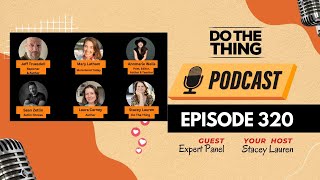
Five practitioners share how heart-led projects built connection: Mary Latham drove 43,000 miles through all 50 states staying with strangers; Jeff Truesdell visits towns named Nelson after losing his husband; Sean Zetlin wrote Emotional Fitness. They offer small dares to start: ask prepared questions, find a companion, practice visualization.
Questions this video answers
February 25, 2025
Over 43,000 miles and 154 strangers
2020, 2022, 2023, 2024, and 2025
Chapters
Hey, everyone. Welcome to the do the Thing podcast. This is your host, Stacy Lauren. Well, you guys, this is. I don't even know if the word exciting can put that into words. But what we're about to put you guys through is a gathering of expert minds of people that are doing truly amazing things in the world and getting at the guts of how they're doing it so that we can inspire a community of women to follow their heart through a place of love, service, and the things that they're able to do for the world. And how this came to be is. I met Laura Carney. Gosh, it's been a year. Oh, my gosh, a year. It's been a year ago. I can't even believe it's only been a year.
No, almost two years, actually. Yeah.
Oh, right. Yes. A year since we did the first Bucket List Challenge.
And.
Yeah. And so we met and we did a. We'd done a few expert panels where I. She wrote this amazing book, My Father's List, and I got so inspired by her book, I was like, can we please do a Do the thing challenger on your book? We did that. And then she got asked to do something for the modern prairie community and then brought me in with her where we did the Bucket List Challenge in that community. Then they did the Find your Voice challenge. And then Laura, on her own, basically was like, I love this idea of doing a follow your heart challenge. And she has just gathered the most amazing experts to be able to really talk about this challenge, and not just talk about it, but we're going to be bringing it into action. And so, Laura, I'd love for you to introduce each of the people that are here and then also talk about what Follow youw Heart means to you.
Okay, well, follow your heart what it means to me. And as you always say, these challenges are always organic, so we're always sort of figuring them out as we go. But what it means to me is that I was blessed enough to have a calling enter my life that I chose to answer. And it forced me out of my comfort zone, and it forced me out into the world and meeting strangers and meeting new people and connecting with new people, and. And I gradually found that the more I was open to that and celebrating acts of kindness and embodying acts of kindness, consciously speaking, the more I was able to follow my true path, the more I connected with my heart and what my heart wanted, as opposed to what my head wanted, because that's who I had been prior to that. So I'm just almost overwhelmed with the warmth that I feel in this room because every single person who's here today is, is here because they're a person who has taught me and guided me in that effort because they do it in their own lives. And to be a little bit more literal, I'm going to introduce each of them. Right. Okay. So we have Jeff Truesdell. Jeff Truesdell is a seasoned journalist and until recently a staff writer for People magazine. With 20 years of experience at the magazine, Jeff has a talent for writing about human interest stories, breaking news and crime features. His work has been featured in the People Magazine Investigate series on investigation discovery and he has also executive produced an award winning documentary. Jeff's dedication to shedding light on important issues and telling stories that make a difference has made him an invaluable addition to today's expert panel. Then we have Mary Latham. Mary Latham is a remarkable person who embarked on a mission across all 50 United States to collect stories of human kindness. Her journey took her over 43,000 miles in her mother's Subaru where she stayed with 154 strangers and collected heartwarming stories of more good to share with the world. Mary used local media and radio to promote her journey and visited various community gatherings to spread her message of kindness. Her experiences and stories are being compiled into a book that she plans to donate to hospital waiting rooms. Mary's passion for spreading positivity and inspiring others to live a fulfilling life makes her a great fit for today's expert panel on following youg Heart. Then we have Annmarie Wells. Ann Marie Wells is an award winning poet, playwright, memoirist and oral storyteller. She's the author of Survived A Memoir and Verse and Other Poems and Mother Verb, her current work in progress, Happy Iceland, a finalist for the 2022 Wild Dog Press Travel Book Contest, is about her adventures visiting all the sources of strangers happy memories on a trip to Iceland a few years ago. And that is why she's here with us. When she's not writing, she's reading a book for one of her many book clubs, enjoying long walks in the outdoors, completing the New York Times crossword puzzle or doggy paddling in the shallow end of the public pool. And last but not least, we have Sean Zetlin, who is a master trainer, author, motivational speaker and CEU provider to other fitness professionals. He has run his health and fitness business in the NYC metro area for the past 21 years and is a five time best of Brooklyn. And just recently it got named again, right?
Correct yeah, this week.
Congratulations, Sean.
Thank you, thank you.
He's a five time Best of Brooklyn Best personal trainer winner. So, okay, 2020, 2022, 2023, 24, and 2025. Sean is the author of the Push Up Progression series and Emotional Fitness. He has been featured in books, articles, magazines, television, radio, and podcasts and can be contacted via zetlinfitness.com Sean helps people find emotional wholeness through exercise, and that's the reason we've asked him here today.
Okay, so do you mind? Can I do yours?
Everybody knows who I am.
Oh, that is. I'm gonna do it really quick. Okay. So Laura Carney is a writer and copy editor in New York. She's been published by the Washington Post, the Associated Press, the Hill Runner's World, People Magazine, Guideposts, Good Housekeeping, the Fix, and her book, My Father's How Living My Dad's Dream Set Me Free, basically. It's so funny because since your book has come out, there's so much more. Do you want to just share? Just because I feel like this is important for people to know kind of now that your book has been published and you've done all these book clubs and these meetups, just kind of what that part of the process?
Well, I would say it's. I think probably what you would say is that I'm developing a movement from a work of art that I've made. And I guess. I guess you could say that. I think the way it's felt for me is I read these books for new authors when I started doing this, because I didn't know this was a thing I was ever gonna do. And one of the things they talked about in these books is how you turn publishing a book into a career. What are you gonna do next? Basically, and that's something I struggled with a lot, actually, after the list was over. And I remember Mary and I talked about that after her mission was over. And how do you move forward from something that big in your life? But I think getting the chance to do these interviews and teach panels and classes and challenges, it's given me an outlet for what I experienced in real time. And it's now helping me to almost figure out, okay, maybe the journey with my dad's bucket list isn't over. Maybe the book isn't truly over, because maybe I sort of carry that inside of me. I'm like a container for what happened. And it's been really cool to be able to meet so many new people and help them almost get to live what I experienced Just by doing these challenges and sharing that. That wisdom with them. What little wisdom I have.
It'S so good, and it just shows how pretty much everything can be brought to life.
Right.
Here's a book that you wrote, and now it's like you're doing all of this other stuff from it. And I'd love to just maybe get in the energy also of who we're creating this challenge for. So we're creating it for Modern Prairie. And do you want to just kind of talk a little bit about Modern Prairie and then we'll be able to kind of get into the panel? Who is Modern Prairie? What we've seen from what the transformation has been like for the women that we've been.
Well, I mean, it's interesting. It's interesting that you mentioned that, because I think probably everything I just said in response to you would be something Melissa Gilbert herself might say, you know, about what she's done now. And she was an actress, and then I think she had a stint where she was running for Congress, and she had left Hollywood and was sort of trying to reinvent herself in some ways. And she took this beloved show she was on from the 70s that was still beloved and now heading towards a 50th anniversary, and turned it into a community and found it's not, you know, it's not like a fan page. It's women who grew up with that show and really cherished the values that they got from watching Little House on the Prairie.
And.
And also, most of the time, I think they're of a certain age group. They're at least around 50 to, I don't know, 65, around that age group. So a lot of them also are experiencing an empty nest, and their kids have gone to college or maybe if they don't have kids for other reasons, they're finding that they're in a place in their lives where they want to reinvent themselves, and they're all sort of getting back in touch with who they really are, because whatever it is that they've been doing up to this point is sort of changing. They're all sort of in transition. That's what I tend to find from the women in the group. So what we do is we go in and we sort of ask them questions that nobody has ever asked them before and get them talking about things that they're just now learning about themselves. And we're showing them it's okay to have a bucket list. It's okay to have dreams. It's okay to ask yourself with the Find your Voice challenge. What do I really think about this? And can I say that out loud? And I hope that with Follow youw Heart, we're going to be able to sort of create a practice of kindness, which, you know, I know that all the women in the group are already kind, but this is more about being intentional and choosing to go outside of your comfort zone to reach out and connect with other people every day. And my feeling is that we're living in times right now where, and I think probably everyone in this group would also attest to this, the experiences that we've all had in this group where we did become accustomed to connecting with strangers all the time. And because it was just necessary for what it was that we were doing, it's almost becoming uncommon right now. So I'm hoping that Follow youw Heart is going to make that a common experience for many of these women we've become friends with now. It's really a cool, just group that celebrates all that can be good about social media, I think, don't you?
Totally.
Yeah.
And a lot of them aren't even on social media. And so since Modern Prairie, Nicole Hase and Melissa Gilbert created this app, now these women are getting a chance to play with other people online without having to deal with the negative. You know, sometimes that can be associated with social media. So that's been really great. The other thing that's really cool is this, since this is our third challenge in the community. So the first challenge was the bucket list. The second one, the people that did the bucket list actually ran the groups for the second challenge, which was the Find you'd Voice challenge. And now this is the third challenge, Follow youw Heart. We even have one of the members that's actually running the leaders for the groups that are happening. And so seeing the progression of what's happening has been really fun. So, okay, I'd love to start off with you guys and just. Stephen, I want to hear just what's coming alive for you. I know whenever Laura talks, my whole body goes into this shiver place of like. I mean, it sounds weird, but it really does. She, like, taps it. Your soul, who you are and all the things. I just like to know just kind of what's even coming alive. And feel free to just kind of like, we'll just be messy a little bit here and just feel free to just kind of speak up when you're ready.
Well, I have some questions as well, but. Oh, yeah, let's go with this one first.
Yeah.
So, Anne Marie, I'm Feeling. I'm feeling.
You okay? Yeah. So when Laura said that we're kind of distancing ourselves from interacting with strangers, that really resonated. Just the amount of quiet there is standing in line or people on their phones not interacting with others. I was thinking also about my son. He's 10 months old now, and we go to music lesson or we go to storytime at the library. And how quick parents are to end an interaction between two babies, two very small children, that one child is toddling or crawling over to another and reaching out to say, hi, or I'm curious, or you're a baby just like me. And just how quick parents are to intervene and pull their child away.
No.
Kind of. Yeah. Halting that experience of interacting or learning how to interact with a new individual, even maybe if they're too rough holding onto someone's shirt or their arm, you can say, oh, be gentle. Or have kind of moderating or mediating voice or gestures, teaching them how to interact versus just pulling them away. Essentially, I feel like parents are saying, don't interact. It's not okay to interact with others. And I've. I've been noticing that just with my. My son and trying to encourage that. When I see parents doing that with their child, with my child, I say, oh, it's okay. They're just curious. It's okay if he reaches out and trying to encourage the interaction rather than ending it right away.
It's like we're conditioning people from the beginning. Right. To not be connecting.
Can you speak a little bit about your experience, the mission you were on that informed your book and why that might make you react differently to situations like that?
Sure. So for my 30th birthday, I went on a dream trip to Iceland. I had saved up my money and decided to splurge on a ticket to Iceland. I was not. Not in a place where I could really splurge that money. And I didn't rent a car or reserve hotel rooms. And instead, I hitchhiked and backpacked, finding random strangers happy places. It's where their happy memories took place. And I slept under my tarp. Stealth camping. And most of the time, I was taken in by strangers and allowed to sleep in their backyard or in their home occasionally. And the occasional hostel. I slept in the backyard of a hostel, too, because they charged me, like, a quarter of the price to just camp in their backyard.
So.
So during this process, I talked to a lot of strangers, not just the ones whose happy memories I documented and then went to go find where those happy Memories took place, but also all of the individuals who picked me up as I was hitchhiking around the country or I looked kind of different walking around with a big backpack and I had a wolf genie on and my tattered rain jacket, and I'm a woman alone walking around. People would ask me, what are you doing? Who are you? And I was very happy to talk to them about my. My quest and interact with them. I did rely on the kindness of strangers every single day and also a mutual trust of, I'm not going to hurt you, you're not going to hurt me. We're going to have this pleasant interaction. And it was most of the time like that. I had one creepy interaction, but it didn't end poorly, thankfully. And all of the other times, people were very eager to know who I was and what I was doing, why I was traveling alone, and why. Why I was hitchhiking. Somebody asked if my car had broken down somewhere or something like that. But no, I didn't. I wasn't there with a car. And I found that the. The people who were traveling with the most stuff and the most people were the ones really interested in squeezing me in. I got in a car with two couples from the Netherlands who were driving in a jeep and had all of their stuff and backpacks. And the women in the backseat put their backpacks on their laps just to fit me in. Another couple were going on vacation in the north fjords. Their whole car was packed with camping gear and they moved everything just to fit me in. It was. It was wild. Like, thank you so much for accommodating me when it's kind of inconvenient for you to do so. And I think it was just a different mentality of, well, this. This woman traveling alone clearly needs help. We gotta help her.
Or.
Yeah, or just being interested of. Or we have the space, we can bring this traveler. Wherever they're going, they're going in the same direction as we are. And occasionally I would meet somebody who wasn't interested in talking. If I came up to somebody and said, oh, can I ask you about your happiest memories? They were kind of apprehensive. Am I on candid Camera or is this a prank or is this going to be in the newspaper? Do I need to be careful what I say? A little bit of apprehension, but very, very little. As instead, sometimes when I walk into a cafe or I'm in the waiting line for the grocery store and I just say something, I don't know, pithy or like, oh, you Know the weather outside, something like that, then people are very closed off or not really interested in having any kind of interaction or participate. And not always, but I think more often here in. In the States. I've experienced that in the many places that I've lived in the States, I've experienced.
Well, I mean, you went on such a remarkable journey, and it was such a privilege for me to get to read it. And I think that the thing. One of the things I liked the most about your book was when you described what it was when you would go up to these people and ask them about a time that brought them joy. And it was like they would just soften, you know, and it's like, oh, nobody ever asks me about. About that. You know, it's unusual. And I kind of. I want to. If you don't mind, Annemarie, I'd love to steer the conversation to Mary next because I think Mary has had a lot of experience with that as well. And I know you have to leave at 10:50, Mary, so can you tell us a little bit more about your experiences? And I want to know, too, what it's like for you now on the other side of your mission to go to all 50 states?
Well, I want to bounce off two things that Ann Marie actually said about the children. I actually just went to Wyoming to visit my brother, and I'm considering going there to help work on a house with him that needs a lot of renovating and just kind of being a little bit of support. He's out there on his own with his family, and the rest of us are all on the East Coast. And so I was going to go for two months. And so I was trying to get a feel for the town. So I looked online and I noticed the local bookstore had a Galentine's Day where they were doing a book exchange and, like cheese and crackers. And I was like, perfect. I'll go to that and then I'll get an idea of people in the town. And I went. And it was super cliquey. Clearly every woman that went, went with a friend and they were going to go out after for dinner maybe. No one was talking to me. I was being extreme. Like, I kept just trying anything I could to talk to people, and they're like, who's this weird person over here? And then finally this little girl came over. She's probably 4 years old. And she walked over and she put her hand out. Her name was Prairie. And she said, I'm Pri.
Who are you?
And I was like, oh, I'm Mary. Like, our names kind of rhyme. And we were having a great time. I mean, I finally found a friend here. And the mom came over and was.
Like, okay, Prairie, let's go.
And I was like, oh, no, no, she's not bothering me. And she's like, but she didn't engage with me at all. And it was so interesting. Cause it's like, yeah, we're teaching them so little to lose that. And I don't know where it's coming from. But also when you said how you don't notice it as much in the States, people being as open or talking and stuff like that, I've struggled with that a lot lately too. And I got off the road in 2019 after staying with strangers for three years and found the same kind of thing. I wasn't getting in their car, but I was getting in their house. And it was more so like middle, lower class people that were letting me in didn't have much, but were offering me everything they could. And I got off the road and it wasn't until hearing you talk about it right now that I had this thought of, I wonder if we're feeling this because we were so submerged in having to socialize and do that so much that it was like this extreme. And that now I sometimes even forget nice interactions because I'm like, oh, the east coast are so materialistic over here. Everyone's terrible. And my road trip was so much better. And it's like, I wonder if it's. I haven't balanced out yet, I guess myself since the trip, because it was like people were being so kind and welcoming because we were giving them a reason. Can we camp in your backyard or can we do this? Can you tell me a story? And they were opening up to us, and now we're just some person in the grocery store. They don't know or care who we are. And we're like, hi. And they're like, get out.
Get out of the way.
Got to get home with my Mac and cheese.
But I realized I'm like, it almost.
For me, it almost makes me a little negative sometimes because I'm so quick to be like, gosh, no one's even making eye contact. I can't even go into New York City sometimes because I remember right when I got off the road and I was getting off the subway and there was two young, very in shape men walking up the stairs on their phone, and there was an old woman in between them struggling with her suitcase. She was like 80 years old. She could Barely get her suitcase. And I'm just watching these two guys completely oblivious. I don't think they were terrible. I'm sure they would have helped if they were paying attention, but it was paying attention. So it was just those feelings where I've been trying to reconnect with figuring out a balance and. But, yeah, you. You're in this zone of, like, things are definitely hard and challenging, but people are so good to you that that's like the.
It's like.
Like a toxic relationship. You just remember the good of it. You're like, oh, but people are so kind.
Well, it's interesting that you said that. Marian, I want to. I want to get to Sean and Jeff next, but I want to talk to you. Since you had to leave earlier, did you find at all. When you were in that space of doing the mission to honor your mom, did you find that it was changing you at all? It was changing the way you looked at the world, and it was changing your beliefs and was helping you, as we were talking about earlier, be more true to who you really are because you developed this everyday practice of being open. Like you said, you are a person who now you were paying attention, and that's unusual in this day and age. So did you find during that time that it changed you?
Yeah, I mean, I definitely think that the entire experience was one. I kind of almost started because I wanted to see the world the way my mom did. So I.
Can you tell everybody a little bit more about that? Well, what inspired it?
So my mother and I were extremely close, and she and I had a conversation on the morning of the Sandy Hook Elementary School shooting. I had just gotten to work, and the shooting had just happened. He was still an active shooter. It was back when this was not an extremely popular thing where we just heard about shootings all the time. And so I remember being really horrified, as we all were, and refreshing the news and looking over everything. And as I was doing that, a coworker walked by my desk, and he had a coffee with him, and he was like, oh, you should have come with me to grab coffee. And I was staring at the news, ignoring him. And I was like, yeah, I couldn't afford it. And he was like, no, it was free. And I was like, what are you talking about? And he was like, yeah, some guy was in there earlier because it was right before the holidays, and he was buying gift cards for employees, and he randomly just bought an extra $100 gift card, said, run it out on this line behind me. And so my coworker friend got this free coffee. And he had been having a rough year. He had just turned 30, his wife had left him, his mom had died that year. He was not having a good time. And I just remember it was like he was back for a second. He was glowing, and he was so happy and excited that this person had done this for him.
And.
And I got on the phone and told my mom and I told her about the coffee story and how that had happened for him, and then kind of quickly switched over to the shooting and how could this happen and how is there so much bad in the world? And, you know, my mom listened and then she kind of politely interrupted and was like, mary, you have to remember that coffee story you told me. You know, there's. There's always going to be tragedies and horrible things that will inevitably happen in our lives and in the world, but there'll always be more good out there if you look for it. And then she died a few weeks later from cancer.
And I was like, doesn't feel like it.
But instead I kind of used that last conversation as a life raft to hold onto and just go out there and look for this good that she promised was out there. So I packed up her old car and drove across America to all 50 states to stay with strangers for three years and compile stories of human kindness, of really almost creating my own guidebook for how people move forward and put one foot in front of the other after they go through something so life changing and realize that while your life is totally stopped, everything else is still moving and you have to figure out how to go forward and you don't know how. So I just went and tried to meet people that were doing that. And so a little less of stories of joy, but it turns into stories of joy because of the darkness and finding the light through everything they went through and creating organizations to honor maybe a child they lost or strangers that donate kidneys to other total strangers and all these amazing people. And then it was almost like a. A bitterness when I got off the road too, because people would say such horrible things about our country and the way people are. And I had just been in every state of our country staying with people, learning how they were. So I always compare it to when you're in, like eighth grade and you want to go to a party and your dad said, or your mom says you can't, and your friend calls and they're like, you know, can you come? And you're like, nah, my parents said no, and they're like, oh, what a bunch of punks. And you're like, whoa, I can call them a punk. You can't call them a. But it's my parents.
So I almost felt like that with.
The country, it's like, don't say everyone's bad and everything's terrible.
Do you know everyone?
Do you know this woman that works out of her basement and has no money and is granted 300 wishes for kids 18 to 24 with cancer? No, you don't know her. Don't say everyone's bad. So it became this defensive mechanism. So really, it's been a rollercoaster of emotions, getting off the road and feeling all these different types of things in response to the journey, but always a baseline of that. There are people out there working so hard for the good, and they just really never get the microphone. But they're there, so we have to believe that.
What you're both really making me realize is the good is out there. We just sometimes have to pull the good out of people and how important it is to have a reason sometimes to talk to people. I actually. I really relate to what you guys said because I did these street interviews, and the question was, what is something you've done recently that you're proud of? And no matter what country I was in, it was so cool, because a person that I never would have met before now, I had this really intimate connection with by them answering the question and then almost asking the question was their moment of the day because they either had the courage to say, no, I don't want to answer that question, or the courage to actually answer it and share it and actually realize that they had something really powerful to say. And so there's something about this challenge, Laura, what I'm realizing is encouraging people to ask people those questions, and I know that's in the find your voice challenge. We can maybe pull in some of that stuff and then also asking for help. That's following your heart, because when you ask for help, you're pulling the good out of someone. So, anyway, I just wanted to. Yeah. Share that.
Thanks, Stacey. Yeah. And I think. Well, and I think in addition to going up to the people and asking them questions, one thing about Mary and Ann Marie's journeys that they've experienced that I found really fascinating is that they also were developing friendships. They were taking the steps to develop. I mean, I think you really felt. Anne Marie, by the time you were leaving Iceland, you had developed a second family there, right?
Yeah, I had people that I had maybe, like, three different Households that became kind of my headquarters, that I could just pop in and say, I'm there. And they just welcomed me with open arms. Yeah.
And Jeff, what I was going to ask earlier is I'm really curious if you're starting to find that to be the case as well, because you're more at the beginning of. Of your mission and also, how is it going?
Thank you. I really appreciate what Stacy just said with regard to the idea that you have to have a reason to talk to people. Anna Marie had a reason to travel someplace. Mary had a driving force sending her out into the country. Your observation that people are trying to reinvent themselves or find a new way forward at 50 or 60 or whatever reason, but trying to get them outside of their comfort zone to connect with strangers. You can't just walk into a party unprepared and expect people to gravitate toward you or to be open to you. If you walk up and you got no game and you've got nothing to say and you haven't done your homework and you don't know anything about them or their place. And it's incredibly valuable to anyone who is looking to shake things up a bit, to set themselves up for learning and interaction and connection. I am so lucky that as a journalist of more than 40 years, I'm 65 years old. It's been my job to connect with strangers from the moment I started. But I also know how valuable that preparatory work is. The path that brought you and I together, and the reason I'm here participating in this conversation started when I lost my husband to a heart attack. And I've been together 34 years as like so many people of a certain age, you've built a life. You've set your expectations. You think you know where you're going. You can't wait to get there with this other person, and then suddenly that other person is gone. Who are you? Where are you going? What will you be? How do you start over? Big questions. And they sort of filter through my day to day now. Still very much. But what started me on a unique path is that my husband and I love to travel. And I love to take photographs of my husband when we traveled. And a very quick summary. After he died, I blew up photographs of him and I took them back to places that had a connection. Specifically, my husband's name was Nelson. And for a very specific reason, I began seeking out places named Nelson. Small towns. Thank goodness there are not as many Nelsons as there are Springfields. But there are a lot of NUNELSONS, More than 20, 25 states have Nelson's. And they're all map dots, two and 300 people. And so my interest in going to these places was not just to show up unprepared. I learned after a couple that I needed to do some advance work, make some telephone calls, find someone who I could then meet in person or once I arrived, it gave me a level of comfort and the reason to be there. And of course, once you find one, then you find two, then you find four, then you find eight. They just keep referring you to somebody else. And it has created community in that there are people who are invested now in this journey that I'm on and wants to know what's next. And one needs to know what I've learned and one needs to know how they can be a part of it. And more importantly to me, while it's a very personal journey that I'm doing because I have to do it for myself, there is no goal here. I don't know that Ann Marie or Mary started out with a goal of writing a book or whatever else. I don't know, Laura, that you started out with a goal to write a book. You were all just following your heart to steal from the title of this challenge, doing what you knew you had to do for yourself. And that is what I started doing and that is what I am still doing. But it's been so remarkable to me to see it connect with other people and then to see those other people amplify my story and let that connect with even a wider audience. That is so important to me because it spreads the love. It just simply spreads the love. I am telling a love story that is as intimate and private as it could possibly be. And people are finding themselves in that story, which propels me to keep going forward and keep finding ways to tell it.
That's so beautiful, Jeff. Thank you for sharing that. I love hearing the origins of your mission every time you tell Sean. Oh, are you okay?
No, it's beautiful. You guys are all remarkable people. So please keep.
No, I just. One thing I'm thinking of that I wanted to ask you is what Jeff was talking about is how the thing that keeps going through my head is how discouragement is contagious, but encouragement is contagious too. And he's talking about spreading the love and how the more people he meets, it's like the emotion that he is expressing, they're getting right and it's having almost, I would imagine, and maybe he's been given anecdotal Evidence of this, I would imagine it's affecting their lives as well. So they're bringing what he's brought them to other people. And I guess I'm just curious, as you have met and developed these relationships with your clients, have you seen that effect, whether through fitness or people come to you and they have more of a negative feel about them, and then you've seen growth and the difference. And do you have any expertise to explain why that happens?
Yeah, it's a great question. I mean, so my mission is I want people to think about fitness, about the emotion that how it makes them feel. Not about the aesthetics, not about how, you know, again, if you have a six pack, your life is gonna be better, per se, or if you can just lose those 20 pounds, your life is going to be great. Right now, it's not about that. It's about how can fitness make you feel. When I meet somebody for the first time, whether it's in person or remote, people can be guarded and they can be strangers, whether referrals are still strangers, I find that when I am vulnerable and authentic with them, it's certainly reciprocal, and that's when the real magic starts. And so just a little bit about me where, you know, I'm sort of the least likely person to sort of be in this particular role, just given sort of my childhood and certain traumas that I went through. But when I tell certain new clients, you know, I was pick glass in gym class my entire life growing up, or, you know, I was bullied or there was sexual abuse or whatever, for me to be able to be in a role now where I can guide and lead, it's really remarkable to them because they'll say, oh, well, you know, it probably always came easy to you. And I'll say, no, it actually didn't. And then from there it gets into sort of a grander scope of what they're struggling as. Whether it's something external that they necessarily can't control or something internal. But to get into a deeper dive of the emotions. If they're feeling stress, anxiety, or depression, how can we get them back to their authentic selves? Right. So if somebody's going through certain traumas, you know, they don't necessarily want to be their authentic self right now because they're healing or they're trying to get back to who they used to be. I have taken upon myself to take the emotional and the physical and really mesh it together in the best way. And I say that humbly because somebody can't get into their why if they don't get into the emotional first. So someone could say, well, I wanna lose 20 pounds because it's my daughter's wedding. That's great. And I'll say in a very joking sort of, very kind way still, that emotions don't care about your. Why? Because you'll sabotage yourself, so to speak. So I have found that whether it's a stranger, whether it's somebody I've been working with for a while, the more authentic I am, the more vulnerable I am, it's certainly reciprocated. And then it's like the butterfly effect. If the energy is just amazing and we're reaching our goals in the session and they're just so excited and I'm so excited and we've reached a goal of wherever it is, whether it's emotional or physical, they're going to take that in their session and as they, like, let's say, go throughout their day, they're going to have the strength in other areas of their lives. That's all I can ask for. I want people to feel so strong, not only in our sessions, but outside our sessions, where they'll feel really good about maybe asking for that job promotion or they can connect better with their spouse, whatever it is. So that's something that I just, again, don't take too lightly. I feel very honored and humbled. I can make that change and create the difference in this world because that's certainly what we need right now.
Yeah, I remember when we had our session together and that was interesting in itself. Right. Because I've known you since I was 12 years old, and it's kind of this cool thing for everyone else in the room. Sean and I just reconnected when I was doing my dad's bucket list, and I actually was talking to someone the other day who had something like that happen. My friend Aaron is embarking on this journey to become a filmmaker, and it's. It's her dream. Oh, and you've. You've met Aaron, Jeff. She's the one you met in St. Louis when we had coffee, and she's home in Nebraska right now. And she said, you know, I went into a cafe today and I had a feeling I was going to run into someone I know. And she is almost never in Nebraska anymore because she. She had moved to St. Louis, but she's with her parents in Nebraska. And this woman walked in who she went to high school with, and the woman said, oh, yeah, I'm moving to LA to be a filmmaker. And they just bonded and it was like this faded meeting that happened. And I said, yeah, you know what? You're in flow. And when you start following your heart and going after your dreams, like your dreams unique to you, or as everyone in this room has experienced a heart driven mission where you need to resolve something for yourself. So you're now extending yourself to explore the world in a new way and connecting with new people. But when you let yourself do that, I think instead of allowing your judging brain to stop you from doing it or listening to the judgments of people who don't understand what you're doing, suddenly new people come into your life. And I think we talked about that a little bit when we did our bucket list panel. But it's not always new people. It's also old people. Like, it's also people like Sean, who we knew each other, you know, 30 years ago to age ourselves, and yet here he is again. And it's like, oh, right, we had a connection back then and now we're sort of on similar paths. So it makes sense that you would be back. And I don't know, do you want to talk a little bit about why that happened, Stacey? Because I know that's sort of your expertise with my people.
Yeah.
A lot of people think the friends and the family and our regular support network are enough to keep us going. Right. But when you're able to connect with people that have the same goal as you and they want the same thing, that actually just brings you into a whole nother energy of what you're doing. And that's when things really open up. Doors open up. The people that you want to connect with, people that you want to reconnect, really open up. I call it my people is what the name for it is. And I'm still playing around with if it's because it's not like minded people. A lot of people think my people is like minded people.
But it's like hearted.
Like hearted. Yeah, it's like light hearted, like valued, like gold. I'm still deciding. But the point of that is, is it brings in people of diverse cultures and different beliefs because now you just have the common goal. And then it's almost like all the people that you need to meet or get reconnected with. In your guys's case, it's like they are, oh, I have you. And going back to what Mary and Ann Marie were saying, it's like all of a sudden now because you have a reason. And I love what you said, Laura, with the heart driven mission, it's like opening up and that's following your heart. It really is. Right. Because you're, you're following that inner guidance. And so this brings me to the next question. I'd love to hear what you guys think would be and, well, why don't we say it'll be a dare. What would be a good action that we could have the women in modern Prairie take that could help them follow their heart. And keep in mind what's great about the way these do. The thing challenges are run is it's in a group with a common goal. So you're automatically feeling more courageous because you're in a group and you're seeing other people do. And I have this comfort circle framework that I work them through. So feel free to just say anything now. And that will just get us in the energy of what that is. So, Jeff, do you want to or. Mary, how about you, since you're. Do you want to go?
I'm.
No, give it to Jeff.
He's so.
Everything he says is like a beautiful poem.
Okay. I was just thinking if you were going to. I didn't know if you were going to leave, but yeah, yeah.
Mary, I know you.
I know you need to check out, so I'll let you.
Six minutes, Jess.
So you, you say that poetry.
Well, I would, I would say that the important thing is to think small. You know, we're discussing some wonderful projects that several of us are embarked upon. But they all can sound daunting and scary or prompted by some earth shattering event in your life. The loss of a parent, the loss of a spouse. It does not need to be that weighty. We all know and are familiar with the stories about how difficult it can be at a certain age to make new friends. Some of these interactions might become friends, but that really isn't the goal. The goal of connecting with new people is to learn. The goal of connecting with new people is to draw from them. Things that will help you in your life, in your discovery, will feed your curiosity. Yeah, you're sharing and you're giving as much to them as you're getting from them. But think small. You don't need to have a huge project on your plate in order to reach out and connect with somebody. Sit next to somebody, ask them a question, be prepared with three or four, five questions. You know, favorite place, if you've traveled, where have you been? Oh, I've been there too. Oh, I'd always love to go there. What did you enjoy about it? How did you know where to stay? Families, children, places you've lived These are all conversation starters. Don't be afraid ever to interact with someone you don't know, because you just never know how important your outreach will be or can be to that person who is experiencing the same fears you are about opening that conversation.
I'm really. I'm happy you said that because it made me. Like a light bulb just went off in my head because that made me think. It was when you said to me once, Mary, about how when you started on your mission, you felt alone. And then as you started to meet all of these people who had experienced loss and turned it into something suddenly, would you say that that's still the case? That you just suddenly felt like, oh, my God, I was so wrong in thinking I was alone?
Yeah, I think that. I mean, I think we always. It's so hard to knock that out of our heads when we go through something that we're the only one that's going through it. Like, no one will understand. It's just our trauma only. And it's. In a way, we are all going through our own version of something that someone else has gone through too. But I think that even more so, I was thinking of all the people that would be hesitant to give me stories sometimes because they always thought, like Jeff said, like, that big. Like, I didn't donate a kidney to a stranger. So my story is not important. But yet there's tiny little stories of a moment of kindness someone did for them were some of the most important ones because they were so translatable. It's something we can all do. We can all take the time to just buy someone behind us a coffee or just ask if someone's doing okay if they don't look like. Or, you know, if they're pulled over on the side of the road, checking in on them. You know, just. I think we have one negative experience and it kind of guides the way we are now.
They're. We're.
We pulled over and asked if they needed help, and they're like, no, no, no, we're good. And then now you just think everyone's like that or something. You know, we get a little mixed up by that. But also, just to. For my thoughts, a hundred percent agree with Jeff and, you know, with. With start small and also do it for you. I feel like this is also very, very much to a certain age group, I would say that I fell into. But I think that with this social media world we live in and how we have to put everything out there and all this stuff, when we start doing that, our Focus shifts from the actual mission of what we're trying to do to. Are people looking at this? Are they liking it? Oh, only got five likes. I don't think anyone's interested in this. What am I doing? The first one was like, now it's only got five likes. My tidal wave is over.
Gotta.
I gotta shift.
It's like, no, you know it. I think that when you just focus on doing whatever you want to do for yourself and you put in all the work and the research and everything and then turn it into something later when you're ready. But when you're just putting yourself out there, you're already putting yourself out there with whatever you're trying to accomplish. And now you're putting that version that's not even figured out what you're trying to accomplish or who you're becoming yet into the Internet and then letting them decide who you're becoming. And that's them idea. So just trying to keep your missions in that reminder that you should do it for yourself. Not that you shouldn't share about it, but just share with yourself first and kind of figure out what you want to say before just putting stuff out there. But I do have to, unfortunately go.
I'm so sorry.
So much for coming.
Thank you.
Thank you so much.
It was so nice to meet you.
Mary.
Nice to meet you and to see you again.
Jeff.
Good luck.
Thank you. Mary, thank you so much for calling me today. Hi, guys.
Thanks.
You know what you guys are making me realize is because we're doing this in a group where it's a private community, it's a safe space where people can be open and vulnerable. It's that idea of my people. What I was saying earlier, we're not only helping people take action on these micro steps. And Jeff, I really so appreciate how you worded that. Right. Because people see this big mission that someone's on, but they don't see where it started and how it started, and that it did come from a small action. But also the other thing I'm realizing is we're teaching people how to connect and interact not only with the people out there, but people inside the community. And so I just.
Yeah.
Thank you guys so much.
I have something I wanted to.
I was going to say you had.
Your hand raised, Anne Marie.
Right.
I'm sorry.
Okay.
Well, it's.
It was perfect because I was responding to something Jeff said. But then Mary also kind of added to the same theme of what I wanted to say. Jeff had said that people feel intimidated by their own Goals because it's too big or it's too daunting. But I think part of that goes into. Because they want a certain outcome to come from it. Just like Mary said, oh, it only got five likes. Or this post only. People aren't interested in this and to do it for yourself. But it reminded me of something Elizabeth Gilbert wrote in her book Big Magic that really helped me. And she referenced a coffee mug that was on sale at Starbucks like a decade ago. Maybe even more than that. I remember seeing this mug on sale and it said something like, what would you do if you knew you couldn't fail? Well, she put a spin on that instead of what would you do if you knew you couldn't fail? What would you do if you knew you were going to fail? What is so important to you that in the face of failure, you have to do it anyway? And then just to keep it in your mind, even if this fails, I want to do it anyway. My heart is telling me to follow this path or to do this thing. Even if it's a big failure, I'm going to do it with my project. Happy Iceland. I didn't have a goal. Just like Jeff said earlier, I didn't have a goal. I didn't think to myself, oh, I'm going to write this book and so I'm going to find these people and have this idea. No, I followed my heart. I didn't know why my heart was telling me to do this or where it was going to take me. And then after, when I had a notebook full of stories and notes that I wanted to remember, I said, oh, no, now I have to learn how to write because I have to write a book about what just happened. And even in the face of, oh, I'm going to write this book and it's going to suck. Oh, well, if it doesn't suck and it gets, it'll never get picked up by a publisher. Oh, well, even if it gets picked up by a publisher, then people aren't going to read it. Oh, well, if people are going to read it, they're not going to like it. And you just have this idea that it has to be more than it. Than it is. It doesn't have to be that. It can be a small step and it can be just for you. Just follow your heart and let it all unfold. If it doesn't go anywhere and you aren't a panel on the guest podcast, then that's okay. It can just be a project that you did for yourself. And that is wonderful. In its own right.
Yes, I totally agree with that. That is the most important thing. You're doing something that matters to you. My very small starting point was to give myself a smile. Literally, that's all I was going to do, was come up with something that was going to make me happy. And I'm good. I am happy. I have a wonderful life. I had a wonderful life with my husband. But I'm not wallowing in grief or stuck in grief. But at the time when I went out on the first visit to a town named Nelson with photographs of my Nelson, with the goal that I was going to hold these photographs next to the Nelson town hall and the Nelson city limits sign, the Nelson Graves graveyard and whatever else it was just to just make myself grin and accomplished. And I thought, well, what am I going to say to anybody if I actually encounter them? You know, I'm heading out into rural red state Missouri. I'm a gay man mourning the loss of another gay man. That puts me in a strange, potentially uncomfortable, awkward position. They might not appreciate me as a person or myself as part of a couple. So what am I going to say? And thankfully, I didn't run into anybody. This is a town of 192 people and on a Thursday afternoon in November, and I literally didn't find. I was looking, but I didn't find anybody. And what that taught me is, okay, I'm going to do this again, but the next time I'm going to do it, I'm going to make a couple of advanced telephone calls and I'm going to find somebody. And I found somebody in advance, agreed to meet me and talk to me about their town. And when I go to these places, although I have this mission of taking these photographs, I really do show up wanting to learn about these other towns. I am not there to talk about myself. I am there to talk about them and their stories. And that's where the comfort zone exists for me. Because as a reporter, I know how to ask questions. I know how to scribble notes. I know how to let myself be guided by my own curiosity. But in the second place, I visited Nelson, Georgia, I was still very reluctant to become too revealing about myself. I simply said, with an armful of photographs of someone named Nelson, I'm here paying tribute to a dear person in my life who was lost. And only when I, after I left, when I sent the thank you notes, did I say, here's who I was there celebrating and honoring. And the third one I visited, I had several conversations on the phone in advance. And I told them the story, what I was doing, why I was doing it, who I was honoring. And I was given invitations to supper. I was given invitations to town gatherings. People were suddenly so excited to meet me. And it's just been a continuing evolution in this story and the way that I'm learning that it connects with people and how it's helped me, helped propel me through a period of deep healing and deep grief, but also tremendous joy and recognition of this wonderful person in my life. But again, it started very, very small, just to give myself an excuse to have a great afternoon. Beautiful.
That's beautiful. I really appreciate sharing all that. That's wonderful.
Yeah, Sean.
I was. I'm just so happy you're not muted.
Because you could so see what Sean.
Does in his very compassionate responses to everything everybody's saying. It's beautiful.
I think it's really important to listen. And then I think every time that, you know, I'm with a new client or somebody I've been training for years, it's so important to hear their stories, whether it's something I've heard before or it's new, but to really listen and to really meet heart to heart. I wanted to share, Stacy, about what you're talking about, about a challenge. And this is actually a very. It turned out to be a very fun story, but it didn't start that way, where I went to our local post office in my town, and it was kind of like the DMV was a very long line. And I thought I was sort of being smart by going in the afternoon. But I was maybe one of maybe 10 people in front of me. And, you know, no one's talking to anybody. People are on their phones, but everyone's very impatient. There's only one woman who's working there, and I'll keep her name confidential. We'll just call her Maria. And so Maria's working there. You can see she's stressed. And again, there's 10 people in front of me, and people are very impatient against acting like the dmv. So finally gets to me. And at one point, I really. And I don't. I mean, who really loves confrontation? At one point, I wanted to say something out loud, like give her a break, because people were getting very frustrated. But she's certainly doing the best she can. It's not like she's on her phone. So here's Maria, and we get to each other, and I have two books for her to mail. And I said, you're doing a great job. And she's like, oh, really? And I know you're doing a great job. You should know you're working really hard. And I can only imagine all the stress that you're under right now. Just one person with all these people in line and. And I tell her the address and she's looking at my handwriting and I write really big. But she wanted to make sure that again, address was correct. And she had messed up. It actually wasn't correct. And you know, she felt really badly. She had all this sort of guilt already. And I said, it's totally fine. And I just, you know, I reiterated what the address was. And so she put in the correct address. And she's like, I'm sorry, I'm not wearing my glasses. And. And again, there's probably at this point maybe eight other people behind me. And I just said, you're just doing the best you can. That's all you can do right now, in this very moment. That's all you can do is your very best right now. Don't do your best. What they want you to be, be who you want to be. They want you to be super efficient. They want you to be super fast. They want you to again, see somebody for literally five seconds. They're so impatient. Don't do their best. Do your best. That's what I kept telling her. Do your best right now at this very moment. And I said, you know what? If it was me, I'm, I'm sure I'd be right there with you. I'm sure I'd feel stressed and anxious and all these things. But again, just try to remember again to do your best. We high fived each other. And then I couldn't resist. I was walking out and I said, she's doing a great job, guys. She's doing a great job. And I've seen her probably a couple times since. And we make, depending on who's behind me, we make some really nice, you know, sometimes it's subtle conversation about the weather where sometimes we talk a little bit more in depth if there's time. And I have time, but now I have a friend and she's a complete stranger. She was. And now we're not strangers anymore. So the idea of what Jeff has said and what you said to Ann Marie about sort of starting small, I totally believe in. And then what you also said, Jeff, is. I don't think it's selfish. I mean, I was saying to Laura, even over text of the day, about following my voice and the reason why I wanted to give A very quick bio of again, you know, I was pick last in gym class and I had a club feed and horrible motor skills. Again, you would throw a ball at me, I would want to catch it. I couldn't. But if I didn't follow my heart into fitness, I certainly wouldn't be the person I am today. Fitness has really healed me emotionally and I had the opportunity and I said it's humbly to heal other people. But it would have been really easy for me to just not have taken that path. I mean I was again, I had some Very traumatic bad-80s movies Experiences with kickball or even the counselors laughed at me because I couldn't even kick the ball. So, you know, really sort of ingrained images in my mind where why would I even want to even come close to fitness? But I had to. I had to. It was my calling. Again, you have to sort of sometimes in life. We talked about being outside the comfort zone. I had to face my greatest fears to not only heal myself but to help others. And so it has been well worth it. So I think for some of these women, if there's men also in the group about, it's not selfish. If you're between 50 and 65 and there's something you haven't wanted to do, do it. I encourage you, do it wholeheartedly. And it doesn't have to be again like you know, running a book, it could just be running a poem, right, Anna Marie. Or it could be, you know, or just writing in your journal or experiencing how you really feel, getting back to your authentic self, being vulnerable or meeting somebody new who now you can have a friend with at the UPS store. But anyway, I just think this is a beautiful challenge. No matter sort of what road anybody decides to take, it's so important to just at least get on that road, no matter how big or small.
Yeah, I love this so much. I'm feeling like I have to show you guys something. And for anyone listening, I'll speak through it because I speak in comfort circles and every person I talk to, every challenge, I run every one of these. It's like I get more ingrained into my own heart centered mission which is helping people really just get their voices out in the world. And so I'll show you. Laura. I don't even know if you've seen this latest iteration because it keeps expanding as I meet people. But I'm curious what you guys will say. But basically, yeah. So for anyone listening, I'm actually, I have better words for this now. Laura. Thank You. It's like anyone with a heart centered, driven mission basically goes through this journey of what the horse represents is that time when you don't even have words for what just happened to you. And if you're in a community of people, it means that you're not ready to speak up yet. And so this example came from, I'm actually making a movie right now for someone that settles in service. They help the military combat suicide through equine therapy. And so it came because I got to see a lot of the people there that they didn't even have words yet for what they were going through, but the horse met them where they were. And then the same example happens with kids that are gamers. Maybe the. Another movie that we're gonna be making is gaming for good. And someone had. His dad passed away and he got met with the game, the video game. And then suddenly he's comfortable talking to people and going through that journey. And so the horse, maybe from you, Laura, might have been you actually doing your dad's bucket list and actually performing it. And then you're finding your voice while you're going through that journey. And then you get comfortable sharing your voice, right? So the finding your voice piece, I think that's where follow your heart is right now. And then you get comfortable sharing your voice. Then when you're sharing your voice, then you're finding you're giving people value. And now you're like, wait, can I make money with my voice? Am I going to start charging? And that's why I find your voice at each level. Because at each level you have to find your voice again, right? Because even when you start charging for things, I started at $47 and then eventually you could charge $3,000. And so anyway, there's a lot there under monetize your voice. And then you create your movie. And then I have the movie on there for fun just because I'm doing that now. But then once that person goes through that heart centered mission, now they get to start their own movement. And it starts with letting people be the horse and then letting them find their voice. And some people will never move through all the circles. Some people hopscotch the circles. But I would love to hear just kind of like when I share that, what you guys feel.
It doesn't have to be a movie, right?
It could be.
Oh no, any, any big thing.
The movie is kind of. And again, nothing has to happen. It's all just. It's part of this map. The movie is the vision of like now we're taking this thing that started really grassroots in your heart, and now the world gets to see what that representation is.
I think that's a wonderful thing, Stacy, for you, that worked for you. That shows the progression that you made and are making. I think for someone starting out, I'm going to look at that and think, holy crap, I'm not trying to monetize. I'm not looking to make a movie. I'm just looking to make a change, a small change in my life. So I think that what you have presented is terrific and beautiful, but the folks glancing at that for the first time should not begin a follow your heart challenge with the idea of there's a book, there's a movie, there's a podcast. Those can all be attainable end goals. But don't let that shut you down out of fear that you're not gonna achieve that.
I think I can speak to that too, Jeff, because, you know, you mentioned earlier, I don't know if you all set out to write a book or if that came later, you know, when you were talking about Mary and Ann Marie and myself. And I did set out to write a book originally, I thought I was writing something that was going to bring awareness to distracted driving and the way my father was killed, you know, in a very literal journalistic sense, that's how I was thinking. And. And then as I experienced this incredible life changing thing of exploring what he wanted to do with his life, suddenly I didn't care anymore about that.
Yeah.
Did it turn into a book later? Yes. I managed to somehow turn myself into the kind of writer who can write a book, even though I was much more comfortable with the essay format or journalism. But that stopped being my goal. I used to say all the time, the only reason this is becoming a book is because it's literally on my dad's list, like number three, write and have a few novels published. So he's saying you have to do this basically because I probably would have chickened out otherwise or I wouldn't have trusted myself. I wouldn't have trusted my abilities as a writer. I would have been too intimidated thinking, like, who do I think I am? That's something so many writers go through. So I'm happy you said that because it really did become at some point, and you know what Mary was talking about earlier with the number of likes you get online. And I know some of you in this room know about this. I had an agent who, in year one or year two of working with this guy said to me, go Private. Don't share anything online anymore. If you already have people following my father's list, okay, then keep sharing it with them, but don't allow any new people in, because then, I mean, I think he had kind of this idea that somehow I would be giving the story away for free so they wouldn't feel the need to write a book later. And I didn't know what I was doing, so I just listened to whatever this guy said. But now I'm so happy I did because it helped me to stay true to the fact that I was doing this for my dad. And for me, it was my experience. And, yes, I had, as they put it, I think the phrase is a thousand true fans. I didn't have that. I think I had like 100 or 200 or something. But I had this interaction with them. So that was helpful. It was helpful that I had, as Stacy would say, my people. Like, I had people who were following along and who were excited about what I was doing and wanted to be part of it, like you're experiencing, Jeff. But at the same time, I had this nice balance happening because I wasn't doing it as a performance ever. It was just. This is almost like accountability for me that I'm sharing how the bucket list is going. But really, I was always doing it just as an experiment and just following my heart in this very sincere way. And now. Now that it's over, it's like it.
It isn't.
I think you and I have talked about that a few times, Jeff. Like, is it over? I don't know. It almost feels like it's become something else and it's changed my life. And now I'm doing my own bucket list. And I still see these. I still see these signs of my dad all around me all the time, showing up and in other people in my life. My mom is dealing with an illness right now, and I gave her a teddy bear, and she said she saw my dad and the teddy bear, and it was just so beautiful to see that vulnerability. And, you know, I think what we're talking about when we talk about follow your heart is it's almost like the next level from finding your voice, because we're now. We're not just opening up to strangers, and we're not just connecting with the world in a new way. We're doing it as our full selves, even though we've been through an extreme loss, perhaps, or trauma or something that was very difficult. And it's like the thing that was so hard is helping us to Be more than we thought we could be, or helping us be more than we were before. But you have to, like, as Sean was saying, I had to do this. He had to do this with his life. And I think there's a surrender that happens because you have to start. You have to start connecting in a very vulnerable, real way with people in order to heal yourself. And as you're doing that, it has this effect. So it's almost like, yes, of course, you want to have a community, and you want to have as many people as possible who you're able to share what you've learned with. But at the same time, it develops organically. I guess that's what I'm saying. You have to sort of just let things unfold as they're meant to.
Yeah. And I should have prefaced this with I was gearing off of follower for. For a minute. Cause I felt moved by showing you guys kind of like where it is. Because what I noticed is when you get to the point of finding your voice, then following your heart, then sharing your voice, what happens is now you are obsessed. Right? Where you're like, that's all you want to do. And that's where then you want to. Some people, it makes sense to not have their regular job anymore. Right. And then to actually monetize the mission. But anyway, this has been really helpful to hear what you guys are saying, because what we're talking about is we're helping people take that deepest part of them and tapping in to that and then being able to start to get to know themselves while they're connecting with other people, which I think is. Is really amazing.
Yeah. And I just want to say, Stacey, when you talked about following your voice and your heart, and one of the things that's happened to me, which I didn't think was ever going to happen, I mean, I had some. Maybe some guidance that Laura knows into it. But as I'm presenting these days, and I'm in it, and yes, there are some family and friends, but a lot of these people who are in the audience are strangers. It is so incredibly healing for me. Like, I'm healing parts of. I like to call it little Sean. You know, little Sean at 4 and 5 and 8 and 11 versions of me that experienced all this trauma as a child, but it is so healing. So I'm healing them, but at the same time, I'm healing myself. And it's very interesting, really quickly about the voice, because when I think of everything that you keep saying, Stacey, I go back to when I was a little boy. I was shy. I didn't have the ability to really speak up for myself. I didn't have. And Laura knows, of course, but I didn't have a voice where I wanted to say certain things. But I was so afraid about the repercussions. I was so afraid about somebody else's reactions that I was quiet. And then I wasn't my authentic self. And then you pile all the trauma. And then when I got to high school, a lot of my friends were trying out for the plays, and I said, well, if they can do it, I can do it. And I say this humbly. I got all the lead roles. It was great. And I couldn't believe I was up there and I wasn't even nervous. And I'm like, singing and dancing and acting and, you know, playing on these very cool characters that were not me, you know, like Sky Masterson in Guys and Dolls. That's awesome. He's a cool cat. But that's not me. That's not Sean. But I'm still up there. But again, not me. And so writing, emotional fitness and, you know, again, having the ability and the opportunity to present in front of strangers, this healing aspect, it brings me more back to not only who I used to be, but then there's again, this other version of me that keeps coming out that I didn't even think existed. And so the layers keep, you know, again, getting to the root. The root, the root. And it's so incredibly healing. So now I have this amazing opportunity where, again, as I keep saying, I can heal others, but at the same time, every time I present, I'm healing myself. I just wanted to share that.
And Annemarie, do you want to add anything?
I was thinking about the. The power of healing as well, and how connecting with others and hearing other stories and having them be receptive to me is healing for my. My own self consciousness of, oh, what am I doing? I'm a hack, I'm a whatever. I'm a nobody. And those, you know, the imposter syndrome that you meet other people and they're. They're so kind and wonderful, and maybe they're following their own heart or they need encouragement to follow their own heart. And it's like a circle of healing that, that. That kindness, sharing a story. I think I just, you know, as one. One step in front of the other of healing the world by healing ourselves and healing others.
I have one more question. Are you guys okay with one more question?
Yes.
Okay.
Yay.
Okay, here's the question. How do we help give people the courage to follow their heart?
I think it's really easy to stay in. Let's say somebody is maybe feeling anxious or fearful that just feels comfortable because it's just a very comfortable emotion. I would challenge somebody in a very kind way to say what could actually be on the other side. You're living in fear. It's comfortable, but what could possibly be on the other side? And as Jeff said earlier, you know, starting small, but that's, you know, again, my journey, which again, how could I even go into fitness? How could I even, you know, even enter that realm? Instead? I think if somebody is just so fearful, but at the same time they, there's 1%. If there's 1% of them that is willing to make a change, I'll say to any new client, just give me 1%. I can't do it, Sean. I can't lose the weight or I don't know if I could ever get rid of my anxiety. I don't know if I could ever get rid of my depression. I'll just ask them constantly. Is there 1% of you that has hope? 1%. That's all I need is just 1% and I can work with that. I would challenge somebody who's listening the same thing. The uncomfortable or getting out to the comfort zone is scary. But I would also challenge them to say it's pretty scary to stay where you are too, just to have 1% of hope inside yourself.
I would add to that as well. When I'm afraid of something or nervous about something, and this is something that I've learned in whatever self help book that I've read, they all blur together is a strategy called future rehearsal. And so you imagine yourself in the situation already and then you imagine what will this other person say or how will this other person react? And you, you close your eyes, you try to be in a relaxed state. I do this before I go to bed, when I'm trying to unwind. If there's something that I want to future rehearsal or manifest and you just imagine how it's going to go, it makes it a little bit less scary. So if you want to quit your job or you need to have a hard conversation with somebody, or you want to go to the gym for the first time and you're feeling very self conscious or about the equipment or walking in or how people are going to treat you, whatever it is, you imagine it in your head. Embrace those feelings of discomfort and anxiety so that when they do happen, they don't seem Unfamiliar and that way they're a little bit less scary. It's like you've already gone through it.
So you can go through it again.
And for me, this has been a very helpful strategy. When I don't know, I have new situations come up all the time, or especially when I want to have a hard conversation. I just imagine in my head what I'm going to say. And then when eventually I do say it, it does feel less intimidating. I'm less nervous because I have already had an imaginary experience of what it was going to be like. And science has shown that this is helpful when people need to give a speech or if they're facing a fear. It's a therapeutic technique where you envision yourself. If you have a fear of spiders, you envision yourself looking at a spider. You're not actually looking at it, you're just picturing it in your head of doing it. And it's the first step of kind of like exposure therapy. If you envision your and Olympians do this as well, they envision themselves doing their routine or they envision themselves swimming each stroke across the pool. And having that already in your brain helps with nerves or nervousness or fear.
I would say that idea of the swimmers just touching the wall at each lap is an accomplished goal. And just focus on that next wall and the wall after that and the wall after that. Allow yourself small rewards. I'm afraid to go out of the house. I don't really want to go. But gosh, I saw this thing about a book reading or a speaker that's coming to town or a musical act. I've always wondered if I would like them. Or maybe it's an old favorite that I hadn't seen for years. I'm going to buy that ticket. I'm going to go to this event. And did I enjoy it after I did it? Well, usually the answer is going to be yes, I would think. But if you didn't, don't let that shut you down. Go find something else. I just came back from my very first ski trip. I've never skied in my life. I've always wanted to ski and I took two days of lessons and the lessons themselves were not all that helpful. Just to give you a sense of the humble nature of it all, the first lesson I felt rushed because the 15 year old instructor had to get back to her homework. But my goal was two trips down the bunny hill and that's all I wanted to do. And they weren't pretty and they weren't straight shots. Down the hill, a lot of back and forth, but by gosh, I did it. And when I was done, I could not possibly have felt better about myself and my accomplishments. And with my friends there cheering me on, it was just the best feeling. And am I going to go sign up now for downhill skiing at the Olympics? No. But I have come down the bunny hill and I have achieved something that I always wanted to achieve. And will I ever ski again? I hope I do, but if I don't, I've crossed that off the list. Everything we do in our lives, no matter who we are, how long we've been around, whatever our profession, whatever our personal life, is predicated on a series of confidence building exercises. Everything is trying to get us comfortable with where we are, who we are, what we're doing, where we're going. And everything builds upon the last one in the same way that connecting with strangers builds on the last one, builds toward the next one. If you want to get your courage up, as Sean said, what is the benefit of not trying? There is no benefit. You gotta try. And you can't be afraid to try because the rewards, however small, are nonetheless immense.
Thank you, Jeff. I appreciate you sharing that. One thing I'll do is I'll make a list on the, and I'll take a piece of paper on the left side of the column. I'll say everything that I'm anxious about, like going on this expert panel, you know, am I worthy enough? Or whatever it is. Right. And on, you know, and I'll start the day that way. All the fears that it may have. And then the other column, how I'll look and I'll write down, did they even come true? Let's say I had like eight fears that was going to happen that day. Did any of them even come true? And that's just like a very quick journaling exercise that I continue to do. I'll give that to my clients. Right. All the things that again, you may be afraid to do. We're afraid we're going to say, oh, thank you.
And you wrote about it here too.
I did, yeah. And I talked about visualization too, Anna Marie. So I like the visualization that swimmers theory. And you're a swimmer's analogy too, Jeff. And visualization is so powerful. Absolutely. Because I always make that line. I'm sure everyone has seen it. Right. Whether you think you're right, you're right. And whether you think you're wrong, you're also right. If I go into again, this presentation thinking I'm going to be terrible. They're not going to like me. No one's going to accept me. Then I'm already doomed. But if I go into it thinking, okay, I'm going to do well and they're all going to love me or I'm going to be proud of myself. So, again, how we think about ourselves is truly everything. And I love what you said, too, Jeff, about confidence. Huge. Huge. Every step, every step just brings us again, further to our. Again, our authentic self. Awesome.
And I've learned.
I love that exercise, Sean.
Thank you. Appreciate that.
I've learned this skill, too, where I don't try to be good necessarily. I know whatever ends up happening, it's either gonna inspire someone because it was good, or it's gonna inspire someone because it wasn't good. And so there's something about that that freed me. Even right now, I'm training to be a charity auctioneer. And I have a second. My second time doing it today, actually, this afternoon. And I have a lot of the TEDx speakers that I did the talk with. They're coming. And it's really easy to get into that, like, oh, my gosh, you know, like. And then I'm like, you don't have to be good. It's fine. No one cares. And so anyway, that's just been a little bit freeing. And, Anne Marie, you had your hand up. I'd love to hear it.
Yeah, I wanted to just add an Sean, I'm going to do that exercise that is really helpful. I love. I love that look. Thai is going to take that with you.
Don, Arizona.
Thank you, guys.
One other thing that I wanted to add is that you don't have to go alone, that you can share your fear. And when Jeff was talking about skiing, it reminded me of my first time going to a hot yoga class. And I walked in and I went up the counter. I said, this is my first time here. I'm feeling a little bit nervous. Please give me direction. And they were so nice. And when the instructor found out it was my first time, I felt like she was giving me extra attention. She was walking around the classroom, but demonstrating poses closer to me so I could see better what was going on. She brought me blocks. I didn't know I needed blocks. She brought me blocks to help me, and it was just really helpful. But you can also recruit a friend. Tell a friend that you want to do something and say, but I'm feeling a little bit nervous about it. And maybe they'll have encouragement or maybe they'll just have validation. Or even if it's a stranger and we're giving the dare of have a conversation with a stranger, if you're at the post office or at the ups, you can say, I have this goal of talking to a stranger and I feel a little bit nervous about it. Will you talk to me? And just being open with whatever the fear is. And I feel like when we do admit that, oh, we're feeling a little bit nervous, we're outside of our comfort zone, that people are there, they're ready and willing to say, oh, I can help you with this, or I can direct you to someone or some resource that can help you with this. I think very rarely you're going to maybe go to the gym for the first time or have a personal trainer session and say, I'm feeling really nervous about this and, you know, having X, Y, Z fear that the person that you're talking to is going to say, oh, well, then you're a loser and you shouldn't be here anyway. You know, they're not going to react to you in that way. They're going to be welcoming and comforting to you. So if you are feeling afraid, another strategy is to just tell that, say that to somebody. Say, I want to, I want to accomplish this goal or I want to try this thing, but I feel scared for X, Y, Z reason. And that might open a door to maybe alternatives or extra resources or a little bit of help to get you there, to get you.
Can I answer that too?
Oh, yeah.
I just. You guys are really inspiring me. So I know I'm technically not being interviewed along with you, but it just made me think of something that I learned. So one of the things we're trying to teach the. We call them the pioneers, our prairie pioneer project, One of the things we're trying to teach them is just how to think differently. So follow your heart is about, I'm going to go with what feels like the right thing to do as opposed to what I think is what I would normally do in this situation. So I usually to call it, like, just don't be Laura, you know, like. Or be opposite George, as they would say on Seinfeld, you know, like, don't be the person who wants to be a perfectionist. And Stacy, you've helped me with that so much. Like, I think that is kind of the synergy that I feel with you because you do, as you said, you do do it messy. So I'm allowed to leave all of my very rigid rules for myself behind and just explore and play with what it is that I might like to say or to teach somebody to. But what goes along with that is this a trust in the moment. And that's kind of huge for me, I'm realizing, because my dad was killed in a moment. And I used to be afraid of moments because of that. Because anything can happen at any time, and that was my rude awakening, is that we're not always safe every single day of our lives. Like, really anything could happen in a moment, but also anything wonderful could happen in a moment. And sometimes I developed this faith as I was doing my journey that it wasn't just me creating this, but rather. You know, I love what Sean said earlier. He said I had to do this. There was something pulling me. There was something that was guiding me. So I think that there's something about developing this practice of I'm going to go outside my comfort zone, I'm going to follow what my heart's telling me to do. That helps you to trust a different kind of guidance. And those examples of guidance come to you in a moment. And I would surmise that every person in this room has had this experience. I read this really beautiful quote yesterday that made me think about this. It's from Carolyn Mace, and she said, what it is that you are capable of having faith in sets a climate inside of you and how much you are able to sustain that has a lot to do with whether or not you can sustain the experience of a miracle. And I just thought that was incredible because as Mary said earlier in this conversation, if you look for it. So I think there's something about becoming a person who's saying, I'm going to follow what my heart's telling me to do instead of my usual way of doing things. You all of a sudden realize, well, I need other people and I have to connect with those people. So now you're a person who pays attention. Now you're a person who's more aware of your environment, and you're looking for it. You're looking for those moments of encouragement and hope and love and faith, and that's when the miracles start to find you. So I hope that as the women go through this challenge, they start realizing even though they made a choice to sign up for this, actually something also chose them, and they can connect with that if they believe in it enough.
Wow, you guys, thank you so much for doing this, Laura. I'd love to just maybe hear as the spark that ignited all of this. I mean, when you think about it, it's like the thousands of people you impacted in the do the thing community. Modern Prairie is in that community. We're starting with smaller groups of women, and then it's expanding from there. People that are listening to this episode by being able to gather the experts that are on this panel. How does it feel to kind of be kind of on this next step? How are you feeling now?
I'm excited to be able to take lessons I learned in challenging myself to do new things. But also, at the same time, really, I was honoring my father's dreams and understanding him better. I'm excited that I'm able to take that and turn it into a lesson plan that I'm able to, through your help and our partnership and Modern Prairie, be able to help other people to find who they really are. I mean, I think that's what we do. And, I mean, I saw someone the other day, said, I can't wait to find out more about myself. And I think that that's unusual. It's unusual we have those opportunities in life because at least for me, I always felt like, well, life is more about pleasing everybody else and just finding where I fit in and feeling like I belong, and am I checking off all these boxes of adulthood? So Stacey and I always joke that she's the Ernie and I'm the Bert of the operation is just tell her. I think she's just, like, little. If a little thing happens, it's like, okay, whatever, Stacy. Because I know she's setting me up to lead. But it's true. I identify with Bert, with that introvert type. Like, I'm a writer. I'm comfortable behind the page. I'm not as comfortable as Stacy is with headphones and a microphone on, talking to all of these people. So I really appreciate your lessons in that.
And by the way, Sesame street is so great. Stronger, smarter, kinder. I mean, my girls still love it, and they're seven and five. We watch it pretty much religiously. Still, so many good lessons for all of us still.
Yeah. Thank you so much. And, yeah, Laura has made such a huge difference in my work by getting me to see it even bigger, like, with inviting me into the Modern Prairie community. And then they were the ones that were like, why don't we just call it a do the thing challenge? And then that's now something I'm actually potentially licensing. And it's. There's a lot that has come from just, like, Laura being part of it, which has been really exciting. I'd love to have you guys share just where people can find you. And I'll put it in the show notes as well, if you don't mind just kind of shouting out your stuff and then we'll.
And what are you up to?
I'll go. I'll go first. You can find me at Annmarie Wells Writer, everywhere. That's my website and my social media handles.
So.
Anne Marie Wells writer I'm at Zetlin.
Fitness Z E T l I n fitness.com and my handles are Zetlin Fitness and Sean Zetlin on Instagram and Facebook and Twitter or X I guess we should say.
Now I'm difficult to be found. I mean, I don't use the social media platforms that I'm on. I suppose I should more often, sadly, because I'm old. The only place where I really exist is on Facebook, just under my name on Facebook, if anyone wants to search for me there. I'm working on everything else, but that's it for right now.
Yeah, but those posts that you do on there, they're going to be your book. I mean, you have the most beautiful, poetic posts on Facebook, I think that I've. That I've seen.
Well, that's kind of you. Thank you.
Aren't they.
Are they.
Do you think you're. Are you using them to write your book about your experience?
Social media, Facebook specifically, is something that I view as my emotional bookmarks. I can look back over what I wrote in the immediate aftermath of losing my husband and some very dark dives into grief and struggling and an emergence through that and the backsliding through that and the joy of celebrating what we have and what I am doing and what I have been doing and then the backsliding from that. And yes, I don't write in the moment all the time, Laura. Sometimes I sit on something for months, but I am always writing. And I can look back at what I wrote two years ago or two and a half years ago or six months ago, and I realized that I have already forgotten some of those feelings. So it's incredibly important. I don't journal, I don't keep a diary. Otherwise it is very important for me to have those reference points. And some of those reference points very easily are falling into place as chapters of a potential memoir to which I think I have emotionally committed myself, even as I am still now working through everything. I've only visited seven different Nelsons and the trips to Nelson's are a component of the project I'm working on. There's a lot more. There's some. There's a lot more. And I think I know where it's going. I have a pretty good idea of the end point. I have no idea how I'm going to get there.
Well, I'm sure there's lots of people who want to follow along with you, so I'm happy to do that. And Stacy for Mary, she did that as well when she was on her mission. Her website is moregoodtoday. Com and she's more good everywhere on social media. So you can go back and look through her posts too.
Just want to show you real time how these things help me expand my heart centered mission. When I talk about now the monetize your voice piece, I'm going to mention two things. I'm going to say this could either be monetizing your voice through doing a nonprofit or it could be you changing it to a business. I feel like that's it going to be a more comfortable comfort circle. And then the other thing I'm really excited about is I used to say these challenges are a way to like the do to everyone's thing. They help people do the thing and so they help people take action. But they actually are also teaching people how to connect with each other and so there's a lot here. I'm so grateful for each of you for taking your time And Laura, I don't even have words for what this has meant to have you part of my life and my heart center mission. So thank you so much, each of you for, yeah, just being here and really excited to do this challenge and see what comes from it.
Thanks everyone. You're all part of my found family, so I really appreciate you. Thank you.
Pleasure to be here and thanks so.
Much you guys for listening. Do the thing. Don't wait for opportunity, create it. And hey guys, have you checked out my Facebook group yet? Go to dothethingcollaboration.
More from Stacey

From 262 Women to 8 Million Media Impressions: Deborah Drummond Built a Global Women’s Movement


From Notes App to Published Author: Avery Brenna Crumrine on Turning Intention Into Action


How Stacey Lauren's Billion Dollar Impact Marketplace Will Raise Billions for Charities and Causes

What Happened When Allison Maslan of the Pinnacle Global Network Ran a Challenge with Stacey Lauren




Leaders Share How Stacey Lauren Sparks Action, Clarity, and High-Impact Collaboration

Sandi Masori Announced as Emcee | The Billion Dollar Impact Event Returns to San Diego