Get Booked On Stages
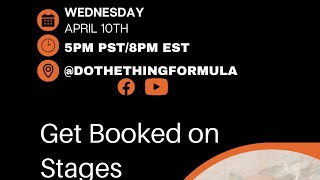
A recorded conversation (YouTube) between Stacey Lauren and professional speaker Corey Poirier about practical strategies for getting booked on stages. Corey shares career background (20+ years), tactics that accelerated his paid bookings (targeting associations, reverse‑engineering speakers’ client lists, leveraging speaker bureaus and podcasts), and services his company Blue Talks provides (staged events, anthology books, media distribution, and an experts bureau).
Chapters
All right, you guys. Well, I'm excited. We have Corey, that speaker guy, with us today. I have so many speakers in the group and people that have been podcasting that want to speak and entrepreneurs that are wanting to open themselves up more. So I figured we would bring Corey on to help us get booked on the stage. So. Hi, Corey.
Hello, Stacey. Thank you so much. Super stoked to be here.
Yeah, I'm so excited. So I'm going to just make sure people see us and I'll just. You could feel free to just kind of say hi and maybe tell them about yourself while I'm. While I'm doing that, if that sounds good.
Yeah, absolutely. So. Well, I guess. Hello, everybody. As Stacey said, my name is Corey Poirier. I've been a professional speaker now for 20 some years. This has been my jam for a long time. And I've been. I started out as the person who did speaking on the side as a side hustle who, you know, was getting bookings but, like, was doing, like, after dinner talks for, like, trading it for dinner, basically. And, you know, I remember somebody saying one time when you're first starting, you'll pay $50 to get to speak. So I started in the trenches, real world, had no mentors, and honestly didn't know where to begin, where to go. And so ultimately, that was way back then. And I eventually. Which I'll share tonight, but I eventually figured out some hacks, I'll call them, or shortcuts that allowed me to start up leveling really, really, really quickly. So that within the second year, maybe by the end of the second year, I had replaced my corporate sales income, which was a pretty decent income. So my first year was a struggle when I went full time. And then the second year I did quite well because I discovered these little hacks that nobody taught me. Excuse me. So one of the things that I was struggled with when I first started was that again, I had no mentors. And back then, by the way, no Facebook, no LinkedIn, none of those things. So I had really no way to reach a mentor unless I wanted to reach out to somebody who was halfway across the world and pay them enough money to fill an armory. And so I had to figure it out in the trenches myself. But, yeah, so I started back then 20 some years ago. And then basically I jumped into speaking, learned in the trenches, and for 20 some years put the food on the table solely by speaking at conferences and events. So for the most part, I preferred, and I think it's a preference, paid speaking where I get basically by the end, you know, the last full year of gigs I did, I basically got paid 100% before I ever showed up. I like that. So, and we're talking thousands of dollars in advance. And the reason is, is because I had the background they could trust. They knew I wasn't going to screw them over for one speaking fee. And so I'd offer them a tiny incentive to pay me early. And so, but basically I say all this stuff to say I've been there, I've been in the trenches, and since that time, I've done four TEDx talks. I'm about to do the fifth one in seven days. And that's my retirement TEDx talk. By the way, I founded a company called Blue Talks where we actually do this. We help people get on stages. Like our events run at places like Harvard, mit, Columbia, Oxford, ucla, Stanford and so on. And we really try to help people become the instant expert by getting them the visibility and exposure they need. And we've been doing that for four and a half years. We've helped 500 and some speakers take our stage, 400 some become best selling authors. And next week we're helping ten get on the New York Times, Billboard, Nasdaq, Billboard. And so this is our world. Like helping speakers up level and helping experts up level, helping people learn how to land TEDx stages and leverage that and then helping people speak on our stages and leverage that and helping people get the right stages. So Stacy, I hope that's a good enough dive through.
That was so good. Yeah. Well, let's just say hi to people that are here and I'm excited. My singles group is here too. I invited everyone over there where we do dating challenges in that group and so I'm loving that you guys are here. So. Hi, Barbara and hey Fern, nice to see you. And then Alex is here and Sarah. And Sarah said, I love your title, that speaker guy. That's so good. So amazing. Well, I'm so glad. Yeah, I'm so glad you guys are here. And then I can't see where this one is, but I've done talks for dinner. Oh, I like that. So, yeah, I'd love to. I'd love to start with.
Just kind of even the hacks. And I know you have like a whole thing we're going to kind of go through, but like what do you think? So there's. So let's kind of talk about who's here. We have some people that have been podcasting that haven't yet spoken. Right. And they're like, what do I even do? And then there's the people that are like, they've been speaking. They've been maybe going through the programs, learning to speak, you know, and learning to, you know, improve all of the things and then actually want to start getting out there. And I'd love to see if we can kind of meld both together or just have different examples for both.
Yeah. I mean, so I guess what I would say is, so, I mean, there's so, like, speaking. There's so much I can unpack. And so I'll give one quick hack. I'll say it this way. Here's a hack for anybody that wants to get into speaking in any way. And it's the hack that if you drop me in the middle of any city and said, you got to start over, build your speaker today, this is the thing that I would do 10 days out of 10. So I'll share that. And I will say the other thing is.
Like, there's. Here's some of the areas we can go to, because I get these questions often is, how do I get paid to speak? Well, one of the things is you have to go to the people that pay people to speak. Now, that sounds logical, but what I mean is a lot of times people now are saying, I'm not getting paid to speak, but they're booked on summits, they're booked on social media conferences. They're booked, let's. Let's say nonprofits that ones that don't book paid speakers. And so there are some areas where if that's what you're focused on, it's going to take you a long time to get paid or even like men or women's conferences. But if you go like a women's conference, you'll see like 120 speakers. The top five are getting paid. Brene Brown's getting paid the rest. And basically what that comes down to is, are you drawing people there? Are you filling the room? The only two choices are to be the name that sells the tickets or sell the crap out of the tickets over and over and over again and be the person that converts so many people that eventually say, well, we'll just, we'll invite her because we know she's going to convert to me. Neither is easier. By the way, it's not easy to become Gary Vee and then be the one that sells the tickets. But I'm just saying, a lot of times people don't understand that's why you can't get paid at those events, is you have to sell the tickets for them to make money to pay you. So the other, and I didn't mean to go down this path but I'll just finish the statement.
This is great.
If you want to get paid the two easiest, in my experience there's three. Okay, there's educational which can be paid or non paid. University, some pay, some don't. So that's one. And then the second one would be corporate. Like corporate events where they the reason they're paying is they have a conference, they have a budget and they want to bring somebody into their staff like a TEDx speaker that they can say we brought a TEDX speaker last year, didn't you love him or her? And so they have a budget usually to pay a speaker. And then the third group, which is my favorite and here's a hack for you, but it's not the one I'm going to share. But here's a hack is associations to me is where the gold's at, which is going to sound strange. So I'm not talking like I say corporate. Corporate usually always pays well. Now does can pay well. Corporate does pay, you know, in other words they usually pay the check. Like all those things are great. Here's where the problem lies. If you do one corporate talk, the hope and best you could have is they refer you to one of their corporate clients or worst case scenario, they loved your talk. Said best speaker we've ever had. Too bad we can never bring the same speaker two years in a row. Thank you for your best client. Just became your last client, you know, not your next client. And so that's a long road. And also when you first start, people are going to say how many gigs have you done? So you have to have done a certain amount. Next thing people are going to say is we need to see some testimonials. So if you've done one corporate talk and you knocked it out of the park, guess how many testimonials you probably have? One like you might have, you could have multiple people from the same conference but at the end of the day you still got to put the name. If it was a Subway franchise or Subway head office, it's still going to be like Bob at Subways event, Jim at Subways event, Lisa franchise owner, might even be the CEO of Subway, but it's still one testimonial from one company. So here's why I say associations are where it's at. And, and by the way this gives me a segue which I didn't plan to the hack. So, like, the hack of if I dropped was dropped in the city. So the reason associations are good is first. So, and I should clarify, association would be anytime a person pays a membership to be a part of a thing, they call them association. So, I. E. A home builders association, funeral service association, which sounds crazy, but I built a niche there for a while. A plumber's association doesn't matter. But these associations, and you can find this stuff out because you can go on their website and see this. But if they pay $1,000 to be in that room, like a yearly $1,000 for personal development, then that means they have a budget because they might have 100 people have paid $1,000. So that means they've raised $100,000 in their membership fees. They now have to allocate some of that to training and the speaker and what have you. So first of all, they have a budget when people don't think they do. But secondly, and here's the bigger one, usually let's say a home builders association, you go deliver this killer talk. 100 home builders in the room, usually 80 of those home builders, depending on the conference, could be run their own, like have their own home builder, like, have their own home building outfit. So.
You could go like the Home Builders association of Atlanta. And in the room there could be the Georgia Home Builders Group, or it could be John Smith Home Building. And so you could have all these separate people in the room. Here's the key thing that could all potentially hire you to speak. So, like, when I talked about funeral, I've done funeral service association conferences, the National Funeral Service association, and in the room where some, like in the, the whole venue were like 3,000 funeral directors. Each one runs their own funeral home, and some of them have 100 employees. So maybe they could hire you and pay you to speak at their event. So the reason the home builder associations are great is you have multiple clients in the room instead of a corporate where you only have employees who can't hire you. But second, and I just have to add this one thing, the second reason it's so powerful is because when you hand out your evaluation form, which, by the way, this is going to tie into the hack, I'm going to give you on that evaluation form, one of the questions is, can we use your comments in conjunction with our marketing? Well, guess what happens if I do an event where I have a hundred different owners of companies in the room that have different names. Whenever they say yes, you can use our comments. And then it asks for Their name and company name. It says John Smith at John Smith Home Building. And the next one says Home builders are us. 80 people filled out your form because 100 loved your talk. And, and 80 said that on the form and said you could use that. That means you would now have 80 testimonials for your website from One Talk, your first talk ever.
This is insane. This is so good because you're basically showing us how to really just like multiply our time in so many different ways by, by what we're doing. Oh, good. You got such great information. Thank you, Stacy and Corey. And then I had a question. There's something here, but I had a question. Let me think about in terms of home builder. Let's just talk about that. So I'm actually, I'm excited about that because I have a construction background to where I staffed in the construction industry. So that's like, really exciting. But if someone doesn't have any construction background, what would, what would be something they would do at a, at an industry like that or an association like that?
Great question. Because I don't have that background. And I picked one of those because of the fact that I've done. Oh, my friend here is here, Elizabeth Hamilton. But yeah, I, so I don't have that background. Interestingly enough, my father, grandfather, and all my uncles are carpenters. My grandfather said after the first few times I worked with them, this is not for you. And so, and so for me, I don't have the background that you even have. So the answer, I mean, and so by the way, one of the things I could do in my stories, though is I can weave in what I just shared with you. Oh, find that funny, right?
Because yeah.
And they're like, I mean, that's an example of something that get laughs at the beginning of your talk. Now that's different because that's constructing your talk and what you say to kick it off and bring people in. But to answer your bigger question is what would you speak at at? And so, for example, with me, I just listed four or five different ones. Mostly I'm listing ones I spoke at. So funeral directors. So let's look at it this way. Home builders and funeral. Funeral directors associations. How could I go to the two of those and speak at those different events whenever? I have never been a part of either of those industries. So the answer, there's, there's, there's bigger answer, shorter answer to this. One of the things I like to do whenever I'm potentially working with a client is get an evaluation form or a questionnaire filled out. And on that questionnaire, I start learning things about their industry. This is even before they hire me. And so what I really need to know is, what's your theme this year?
What's your outcome? What do you want to have as an outcome? What are your challenges? And so here's why I'm bringing this all up is let's say funeral homes. I'll give you the example that they were into, which is why I started getting a lot of bookings, is the funeral homes were into a challenge whenever I was working with them, that they had a younger generation that was starting and working there, and then an older generation that was still running things, and they were running into problems because it was a different way of doing things. Like, they'd have. It couldn't be the son of the director, but like, the son could be there and he's like coming in with his pants hanging down and, you know, he's on his cell phone while a family's grand grieving and just came in and he's like talking loud enough that they can hear him. And so they were running into, like a generational thing. And so what they brought me. And this is both cases that. No, that's not as much the home builders. I'll explain that in a sec. But what they brought me in in that case to talk about, I had two different things that I would talk about. One is personality types. Four different personality types. And that allowed me to go in and help the younger people see it wasn't an attack on them. And the older people seeing. Just because you've always done it this way doesn't mean it always has to be done this way. Because once you see that, we all have there's four different personality types. And just because you think somebody talks too much and they think you don't talk enough, doesn't mean either one's wrong. So I would go on and talk about that as an example. And then another thing I would go on to talk about is how to create an a customer experience. So I called it how to get a standing ovation for every customer. So, interestingly enough, I could go into home builders and a funeral service associations and talk about personality types or customer service without missing a beat. And a real estate is another example. And yet I would customize it to some degree to them. That's. But to do that, I didn't have to work in the industry. I just had to know their pain points and their challenges. When I say real estate, I never sold Real estate. But I would go into real estate and talk about personality types and how do you sit in an open house with a husband and a wife who have different personality types and reply to each of them in their own personality type and adjust on the fly. So that would be an example that I would teach and that was very relevant to them. Yet I never, I didn't know a thing about real estate whatsoever. I knew a thing about sales, not real estate.
Yeah.
It did.
Yeah. And I'm even thinking like, yeah, so if you, let's say you speak about resilience, then you could pretty much go in any, any association and have the same talk with like some minor adjustments. So it's kind of like figuring out what your core message is and then almost, you know, being able to tap into which, which ones that. That goes to.
Absolutely.
Yeah. I love that. This is so good because like the idea of, of going after what's giving you your biggest, biggest buck. Right. I mean, in terms of just your time when you're going into an association, you're having access to all these other people and then all these other testimonials. So what would you say? Like, what's the easiest way to go find the associations? Is it Google or is there some kind of special place that we look?
Yeah, so I'll answer that and, and don't let me forget to come back to the hack later. We still got.
Yeah, I thought that was already the hack. That's so funny. I love it when you're like spilling nuggets and it's like I'm already thinking that's the hack is going to.
We kind of leaned into it a little bit, but so the answer. So this one here is a little hard to explain visually, like without showing. But I'll explain it because it's, it's harder to explain visually, but it's easier than trying to set up and do share screen right now. So I'll explain it as best I can, but basically here's how you find. Okay, here's how I found associations. What a lot of people tell you is do Google alerts. My problem with that is you're going to sift through so many ones that conferences where you have to pay to speak or buy the registration to ever find the ones that pay. Usually you have to dig for any gold and so you have to dig a bit for these. So ultimately here's how you find it. Now there's, there's different websites that list speakers. So if I want to book a speaker, I could Go like, almost like a speaker's bureau. Let's say there's bigger websites, so that list more than just the speaker's bureau amount. But even a speaker's bureau amount would work. If you go into some speakers bureau, so they'll say what the speaker speaks on, that you're looking at, how much they charge, and a whole bunch of other little things you can find out. So what you want to do is find out speakers that speak on what you speak on. So let's say I speak on customer service. I want to go wherever it is on a bureau. Let's say, Paige, my main thing is, my ultimate goal is I'm just trying to find out the name of who speaks on customer service and charges what I want to charge. So let's say I charge 10,000. I speak on customer service, I go on a bureau website, I find Jim Smith, who speaks on customer Service and charges $10,000. Then what I'm going to do. And you might not find it on every website, but a lot of speakers websites, they're going to have a thing that says client testimonials or ray reviews. So what you want to do is you want to go find out who hired them.
And then basically you want to know how. So there's some. There's some science to this because you got to figure out how to reach that person properly, what to say to them when you reach them. But the bottom line is, whatever you do, even if you mix it up, you're still going to have a lot more success because you're reaching targeted people than what 99% of the speakers do, which is just keep, you know, throwing a coin in the water and hoping they get some luck. So what I'm saying is the great part about this is, you know, what they paid this person, you know, what they spoke on, you know they're fit for you. You just have to. And their name is usually there and the company, but it's. How do you find their contact info? That's more of the magic sauce. But what I just shared with you, 70% of it all up to that point, is game changing. Because even if you just did that, nothing else, you could Google their name and even probably find their LinkedIn page and then go on LinkedIn and find them. The only part I won't share with you because it would take me the rest of our call, is how to actually find their name, because that's a science almost. How to find the email, if you're emailing them, how to find their phone Number if you're phoning them, what to say so it doesn't show that you found them on somebody else's website. Now, there's nothing wrong with doing that. It's public. But most people won't like knowing that you found them by creeping them on a website.
Yeah.
So it's what you say, and that's a whole part of it as well. But that's a happy accident that, honestly, Stacy, nobody shared with me. One day I was just like, I kept. I kept for months banging my head against the wall saying, how do I find the person that hired? And then one day it just popped in my head. I'm like, they're sharing it with me publicly. They're putting on. You know, how it came up is that I realized I was sharing it. So I was like, I put the names of all the people that hired me, and I was like, should I hide that? I'm like, wait a minute. Other people put that. And then some of them. But I said. Then I said, well, but I won't know how much they charged, right? Like, they might speak for free. That won't help me. And then I was like, well, how would I ever find their fee? Because they don't usually share it. And then I went, oh, wait, but some bureaus put their fee on the website anyway. You see where I'm getting with this? I love it.
No, this is so. It's so my language. And one of the. I have an audience accelerator program and one of them said, reverse engineering. I love teaching that. The same concept. I just haven't done it with this. And it's. It's so cool. Right? You find out. Yeah. Like, where. Who the people are, where they live, like, what it is. And it's. You're not waiting for an algorithm. That's my point. I think a lot of people are waiting for something to come to them, but you're literally showing people how they. Whether they work with you directly, you do it for them, or they can, you know, go get it on their own. Which I love.
All of it.
It's so good. So good.
Yeah. I mean, like I said, it was game changing for me. It. And that was. So I shared with you, like, hack that. You know, there were some hacks that I started about the second year in, you know, two and a half years in, that basically changed everything and started amplifying my revenue. That's one of those hacks. Like, we basically figure it's responsible for about probably 20, 25% of all my paid bookings. Over the years. Wow. That one thing, it might be higher. That's because that's not including the referrals we got from the people that we get that way and all the other stuff. That's just how we got those people from start.
Incredible. So, so we have go after associations because you're getting access to all the people that are there and that sort of amplifies who you can be in front of. And then the other thing is looking up the speakers bureau, finding out the people that are like you that are speaking under the same topic and then who have they spoken at? Like who's giving them testimonials and going after those people? So I, I mean like, seriously, I don't even know. Like sometimes like three months worth of courses, like learning how to speak. Don't teach what you're teaching now. So thank you. This is like so, so powerful.
Oh well, I mean, thank you. And it's what I wish people would have taught me when I started. And I understand. Like I. And I also, you know, I didn't mind having to invest to learn that stuff. And I always feel it's either you're investing time or money, like you're either going in the trenches and doing it yourself or you're investing with somebody else. But I always said that I wanted to share as much as I could to help people. And I find people find their way to me anyway to work with me sometimes because they're like, I don't want to do this all on my own or what have you. But I shared this with you before we set this up is I'm totally not one of those people that runs a webinar and then shares five case studies about how people did it working with us and then says, sign up for our program and we'll help you do it too. Like, I, I don't. Like I don't. Let's say I say this, I don't like wasting somebody's time. And I. These days I don't have time to go to many webinars. So the only ones I'm going to ever make it to are ones where I know the people and I know that they're going to over deliver. And I just don't go to the ones where I suspect that's what's probably going to happen. So I don't want to be that person is what I'm saying. I don't want to be compared to that person or that person that convinces you to get there only to try to tell you. But wait You've got to sign up here to get more.
No, it's so good. I, like, have that same belief, and I just think it's. I love aligning myself with people, and so I love that you said that even before we got on. So it's so good.
What do you think else? They should know? And I'd love to open this up for questions. And Minnie's here. I'm checking to see if she wants to pop on with us for a minute. But just curious, what else do you think is important for them to know for people that are wanting to really get booked on stages?
You know, one of the things that I didn't know early on and now, because I know it, I've shared so often, is the power of positioning. So when I say the power of positioning, what I mean is.
So I want to. I want to try to be careful with this, because my pet peeve, my rant, and I may have even shared this when we were talking, but my rant is somebody who takes a picture of a Rolls Royce out that they see on the road or does a video that they don't own and then runs a Facebook ad saying, let me show you how to get this car that I never bought and. And make the million dollars to pay for it that I don't. I don't have and I've never made. That's my pet peeve. So I struggle sometimes with the balance between positioning yourself to look like somebody you're not. So it's almost like. It's almost like a superpower. I feel like I scared to share sometimes, because if people. Let's be honest, we can position ourselves to look like we have 70 employees by having a freelance person, you know, having a network that has freelancers and just have different ones that juggle through who answers the call. You go, oh, my God, they're massive. We could. We can create that perception. We can create the perception that we're great at speaking if we lucked our way into a TEDx talk, or a friend convinced us to do one or gave us a talk, and all of a sudden we post that everywhere and say, hey, I knocked out of the park on TedX Talks. What I'm saying is positioning scares me in one way, but it's also a superpower. And so when I say that, as far as positioning, I won't explain that now. So I said it because you're saying, what else would I want people to know? Well, I wish I would have known early on how powerful positioning is and made A more conscious effort to position myself. So how do you do that? An example. So I'll give you a quick example, another one that's a nugget that I wish I would have known was possible. And by the way, it wasn't even possible when I started. It is for everybody listening now. So another thing is, if you want to position yourself as the expert, so let's include speaker. A powerful way to do that is to have an as seen on banner. So they've done studies to show an as seen on Banner. Increase your credibility by up to 70%. And if you doubt that, think about Tony Robbins, Lisa Nichols, Jack Canfield, if you know who I'm talking about. Think about the fact that they could put anything they want, their website. They've studied this stuff for 50 years, in Jack's case, perhaps, and they choose to have an as seen on banner at the top. All of them. And over and over again they have an as seen on banner. Do you think all of these influencers are wrong? They know something that we don't necessarily know. So my point is, as seen on banners work. Just like, remember the TV as seen on TV back in the day, they work and that's why they keep being used. So here's the cool part, Stacy. Even if you're starting to do media now, now you could have your own podcast. And by the way, this, I don't want to go down this path because it's a podcast tip. But I'll just say it's very easy to get other podcasts interviews if you have a podcast, because you knew what we call a podcast swap. I'll bring you my show, you bring me on yours. So what I'm saying is if you do that route or if you go to, there's lots of services now that you can get for free, like radio guestlist.com where you list yourself as an expert for I think eight bucks. And then for free, you can get their newsletter every few days saying how many all these podcasters looking for guests, the takeaway from this is get yourself on 10 podcasts. Even if I've never heard of the name, I don't care. Get yourself on 10 podcasts, ask for their logos, which they're going to be more than happy to do, especially if they're smaller shows. And then now you have an as seen on banner that costs you if you do one a day. If you got like radio guests, I think shares it daily. But let's say they do five shows a day looking for guests. So I'm sure you can lay them one out of five. So. So you land one into five. You do that for 10 business days. You now have 10 logos to put on your podcast. Sorry, your banner on your website, as seen on. And then what the cool part is, is as you get on bigger shows, you just switch out the smaller one for a bigger one. Eventually your banner looks like Forbes entrepreneur, what have you. But when I started, you didn't have that choice. It was either all in or nothing. I had to go for the big name, so I didn't have a banner for years. Now somebody can have an as seen on banner, cost them no dollars, no cents. If they don't know how to design, they can go to like upwork or fiverr and get one for 20 bucks. Design with the 10 logos they just got from the sent to them directly from the podcaster whose interview they just did. And they can then leverage those podcast interviews for clients who say, well.
Speak on the podcast on what you want to speak on. So let's say it was customer service. Then you could go to that client who's thinking of hiring you and say, oh my God, Stacy, you know, you asked me about doing the four tips for whatever. Here's a podcast where I just talked about this if you want to check it out. And now all of a sudden they see you as the expert. So maximize that podcast you're just on.
Anyway, that's, oh my gosh, really good.
Ask for more.
So, yeah, no, it's great. And you guys feel free to ask questions. I've got a question here from Minnie. Do you have any recommendations on how to get the speaking engagement? Like once you find the right group and association? It's a great question.
Yeah, so there's a couple of things I would say there. So one. Okay, I didn't say this one thing I would do. Okay, so this is the big hack, but it answers the question. So. And it's not the big hack. It's a big hack, as I'll say it that way. What I would do if I were starting. So if you drop me in the middle of nowhere today, I would pick up a phone and. Or email. But phone's gonna get you better results. We don't like hearing that because email's easier and you can do that system I mentioned earlier by hiring a va that's probably gonna be via email. But my experience is you. The best way I can say this is you might be 1 out of 100 on email. Finding an opportunity. You might be 1 out of 10 on phone problem is you got to reach the person. But the point is, what I would do is I pick up a phone and I would call a chamber of commerce or something similar. So chamber of commerce is going to talk to you because they need members. So they're going to actually answer the phone and talk to you. So you want to talk to event coordinator, event, whatever their title is, it's going to be a different title, but basically they are responsible for the chamber events they run for members. And what you're going to say is some form of, you know, I normally charge whatever you normally charge, but I love what chambers do believe in it or whatever that. And I don't mean make this up, I mean whatever it is true for you. And so I would be willing to come in and do a no fee talk, remove the word free talk. There's a great. Well, I don't know if this is my quote or if I heard it from somebody else, so I'll say it as mine, but I'll say it could be somebody else's. But there's plenty of good reasons to speak for no fee. But there's never a good reason to speak for free. So you get rid of the word free because then you're going to devalue yourself. Also, people ask me what they should charge, I say either nothing or $1,000. And the reason for that is if you're under a thousand, it's considered an honorarium. Now, I got to make it clear, I'm not saying don't take a talk that you do for no fee. I'm also not saying don't take a talk where you charge a hundred dollars if it's the right audience. I would do talk for free if it's going to get me in front of the right audience. What I'm saying is if you want to start charging and you're asking where should I start besides the ones that you want to do, if it's one that you don't necessarily want to do or you know, it doesn't matter if you do it, $1,000 is where you start. But go to the chamber and say, I normally charge $3,000, whatever the number is, but I'm willing to come in and do a no fee talk. And all I want in return is a testimonial. If you'd like my talk. And I want to be able to hand out my evaluation forms. The key is the evaluation forms. And there's now a thing called talk, a dot you can use to do this digitally. I'M still old school, so I still do print it. But basically you bring your printed evaluation forms. You get permission to do this, you hand them out, and ideally you're there before everybody else. You put them on the seats or under the seat. And then at the end of your talk, you say, hey, I want to ask one favor. You know, the only favor I want to ask today, because if I don't know, I don't grow. And you're also helping the next group. Can you take three to five minutes to fill up my evaluation form that I left there? It'll take you three to five or less. And what I'm going to do in return is if you write your email address on the form and put book, I'm going to send you a free digital copy of my book. What I found that takes me from about 80 to 85% to 95 to 98%. Fill them out. And then the reason for this is you're always going to get the best response when you're in the moment on the spot. Secondly, I go to events and they say, we're going to do it via app. And I'll say, let me know how that works. Because my experience is they get about 5% back, I get 95%. I'll show them that they're like, okay, next year using the printed ones. And so. But the point is you want to get them filled out. And here's the part I can't go into in a short call is what's on that form? There's like eight or nine key questions, but one of them is, do you know of others who could benefit from a similar talk to the one I presented today? And if so, can we follow up with you? That's the question that's responsible for another 25 or 30% of my bookings. Now, I have questions that lead into that question to make it so they answer it. Why? I will say, I think that question works so well is because people have just watched your talk and then they go, oh, I got to get back to the office. I'll get back to her later and hire her. Or she's, there's 10 people in front of her. I can't wait or I'm scared to approach a speaker. But when you have that form and it says optional under name, that's intentional. Almost everybody fills their name out anyway. And then if they don't, but they put, you can reach out to me. They'll, they'll not put their name. And then they'll put Stacy, Lauren, at so I still know what their name is, but it makes me feel more comfortable do it. And what I found is if I deliver a killer talk out of a hundred people, I might get three people that'll come up, say, here's my card, reach out. We might hire you. I might get 30 responses on those forms. People even start thinking like, oh, my cousin works at an association, maybe they could hire him. Or that's right, I'm a part of Red Cross. We pay the speakers. And so then I have 30. And then to finish this off, I would say, then I got to go and qualify and see who's really a client and all that. By the time I'm done, I might have five real clients and three might pay me to speak. I'm just talking out loud. But all I that is one chamber talk. And then here's the great part. Then I go to those three events and I handed evaluation forms again. And then I build a reverse pyramid, like a network marketing thing. But it's not.
The other thing I would do is if you're going to do that, you need video. The number one reason people hire speakers as they've seen them themselves, number three, is that they've been referred. Number two is a video, which is basically they've seen them themselves. It's just they saw them in a video. So you need video. So here's the cool thing in Today's World, grab two of these iPhone 15s or whatever one you're using mostly a 4K cameras now, get your friend to film you on two different angles on tripods. You got high quality footage as well. So that's what I would do to start from scratch. And that's how I kind of built this big thing when it started building. But to answer Minnie's question, because what would I do to get hired? Well, obviously the Chamber, what I mentioned, you're less because you're offering to do it no fee. Now, don't think that means a chamber will hire you because you're. No fee. Because chambers can get in politicians and heads of companies. But what I'm saying is if you have a good enough compelling proposition, then it's easier and you're in front of the right audience. Now, having said that, to get hired, there's a whole bunch of things around this. But one thing I would say is you need to stand out. If you're. If the speak if you're already. Because this is a scenario, let's say you're already talking to the client and they're saying you know why you so obviously, things like having a TEDx talk or a blue talk. You know what we help people with having, like, because the blue talk, you might be at Harvard or something that has a lot of cachet, having that video is going to help because you need to stand out. And them seeing you speak is going to be a thing that lets you stand out. And it doesn't matter to me. Again, if you film this on your own, as long as it's high quality. But you need video to stand out. But that's still probably not going to make you stand out as much if you're competing with five or six other speakers that have maybe really high quality video. You know, if you do a TED Talk, it'll be. Even if it's not high quality, TEDxS have a certain prestige. Our videos are always 4k, so it's that high quality. But even if you don't have that, the other thing I did early on that I found other speakers weren't doing is I offered things that nobody else offered. So if you want to stand out, offer what nobody else will. So, for example, one of the things I said which nobody else ever, ever. I never seen another person ever say, oh, the other person offered us this too, is I would say what we'll do is in 30 days after the event, we're going to do a virtual zoom with all your staff and do a refresher because most of your employees will stop doing what I showed you two or three weeks in. So let's get them back into it again a second time and at least get a second kick at the can. And so I'm gonna do that at no extra cost. It takes me 45 minutes. It's virtual. I don't leave my home or office or wherever you work. So that's one thing. And another thing I used to do often was I would offer them, like, takeaways, like, stuff you can do for free, like a free copy of my digital book to all your attendees. And then another one I used to do was not yet not a thing I did. But another thing I often did was a big thing you're going to get is why would I pay you insert number here, $5,000 for 45 minutes of your time? Why would I pay you $25,000? Why would I pay Tony Robbins $1.1 million to do 45 minute talk? And there's various ways you can answer that one, why you do it. Tony Robbins is he's going to sell 5 million tickets for your event. Like $5 million worth of tickets. I mean, not 5 million tickets. That's why you like Gary Vee. Why does Gary Vee get paid 120,000? Because he makes. That either makes it back in money or the credibility as a company, one of the two. That's why Walmart hires Cindy Crawford to speak. It's because they want to be their staff. Say, we met Cindy Crawford. Like, it's either it's that kind of value or it's the other side, which is that, well, another option is they need your topic desperately. I had association that said we never pay speakers. And I said, sorry, well, I don't speak for free. And we're at a stalemate, I guess, and why they still paid me. And I was the only other speaker beside like John C. Maxwell and two other speakers when I was just early on. It's because I had a topic that they're employed and I knew this. Their association members had voted most they wanted needed to hear over everything else.
Wow.
So, but anyway, back to that point, the one other thing that I did is people would say, well, I'm paying you. I'll just throw a number, $5,000 for 45 minutes. And I would say, no, you're not paying me $5,000 for 45 minutes at all. I'll do the talk for free and I'll let them go. What do you mean you'll do it for free? Yeah, if you can find a way to get me there without any travel, any spent time, you know, and, and, and not doing it virtually. Because of course, that would be their answer. We'll do it virtually, not doing it virtually. If I can be there live and you can find a way to be me there, if you have that technology, I'll do it for free. So let me answer why I say that. What you're paying me for is leaving the family for three days, dealing with airports, airplanes, rental cars, all that other stuff. What you're also paying me for is the 25 years or whatever amount of time, but my case, 20 some years that I spent learning this. And I tell them, you know what, if you paid 50 bucks for me my first speaking talk, you're paying more and wasting more money than you would be paying 15,000 now based on what I know now. So what I'm saying is you're not paying for 45 minutes on stage. You're paying for me to personalize it for you, prep it, travel to get there, travel back home, and so on and so forth. Then the other thing I would Say is, how much did you spend in the cookies? What do you mean? The cookies for your event. Oh, yeah. And they might not get into that detail, but what did you spend for catering or whatever. Right. Thousand dollars. Okay, let me ask you a question. If I can make a difference at your event, are you gonna remember me or the catering more? So. So. And then what I would also do, and I'm not saying I would be like that. Yeah. But just that that's the stuff I would.
You're confident, though. Like, you're going in. You're not like, oh, I wonder if they're going to pay me. You're like, literally, you have your worth before you even go in. Which is probably where it even comes from.
I hope so. And then the other thing a person could do if they want one more tip around that, and it's an easier one than what I just said, like, how much you pay for the cookies? Because that can get. That can. That might not go well, depending on the type of personality you're dealing with. I would say the other one. Like, you're not paying me for that. You're paying me for all the other things. But the cookies one. I only say it to people that I know. I can say it. Yeah, I can read that situation usually. The other thing you can say, though, is let me ask you this, and you want to know this anyway, how many attendees do you have? Oh, a thousand. Okay. And my fee. I'm just talking out loud. My. My fee is $1,000. Let's say it's one of your early talks. So really, if we crunch the numbers, that's a dollar per person.
So let me ask you. It's once a year and you're bringing me in because you think I can make a difference. Do you feel that's worth a dollar a person for your staff? It's like, basically, would you buy a coffee for your staff once a year if it would make them more productive? So to answer Minnie's question, those are the things I would delve into, plus also offering those things I mentioned to try to allow me to stand out from other speakers.
And when you're getting their pain points ahead of time, it's just you looking online. Right. In terms of seeing what that association or that organization struggling with.
It depends. So most of the cate. So when I. So it depends on how the reach would happen. Right. Sometimes people find me online. Some people find me through a bureau. Some people are referred from another client. Some people vote for speakers they've seen in the Past some people, I did reach out. Like I said, outreach. So it depends on scenario, but for the most part, it's kind of a little different. So what happens is 90% of the time, until there's an opportunity there, it doesn't go anywhere. So in other words, if they don't have an event coming up, if they're not looking, they don't have a budget, they don't like the idea of hiring a speaker, all those things, it's probably not going to go anywhere. So by the time I'm finding out their pain points, I already know they're hiring a speaker. The only question is whether or not it's me or not. And so, and by the way, there's a lot of times they don't think I need to know the pain points as much as I do to deliver a great talk for them. So sometimes I might not like when we do that, they might say, we want to hire you. We know you speak in customer service. Three people on our staff recommended you. And then I'll say, that's great, but I'd like to send a questionnaire because I want to make sure I'm hitting all your pain points. And I might not say pain points. I'm hitting all the things you want to make sure you accomplish. And I don't want to go down this rabbit hole off or really too far. But what really gets fascinating is whenever a meeting planner has an agenda that's completely different than all of their staff. And that's where it gets tricky, because you have to make a judgment call of how are you going to deal with that? Like, for example, they could be downsizing and firing people left and right. And so the employees want security and they want to know that there's a comfort here. And we're going to be around tomorrow. And they might say, we want them to know that they need to continue to produce more. That's two different agendas. And so, and then, so then it depends on the meeting planner's personality. But I think it's important to bring it up to them. Like, I just want to let you know, you did a questionnaire, you said this. They did a questionnaire, they said this. I'm okay with taking either approach, but I need to know, is this really the approach you want me to take? Because I think they're going to be unhappy with me and you. Because there's most times the meeting planners.
Like the CEOs, and this is another thing that people get lost on. CEOs very rarely ever hire the Speaker. That makes it hard because when I was in sales selling photocopiers, our thought was always, I need to get to the CEO. Because they make the decision and they can watch any decision. Most cases with a speaker, unless it's a celebrity speaker, if you get to the CEO, they're going to be so pissed off that you found your way there, they're not going to hire you anyway. And I've had people come to me and say, oh, I was told not to go to HR conferences. They don't hire speakers. And I say, well, I guess I better throw my career in the garbage then. Because 20 years says they do. Like, my point is they have people in certain positions and they, if they're looking through 10 speakers, the CEO does not have time to look through 10 speakers on customer service when they're managing maybe eight different departments that don't even affect customer service. So that was again a way to say that the meeting planner, at the end of the day, you have to understand that her goal is to look like the hero. So if you notice a big discrepancy in what she wants and what the staff wants and you can help her show that to the CEO, you become the hero. So that's another way you can stand out. But to answer your. Again, you see, I go further into it than I have to. To answer your direct question. Typically speaking, I don't. The pain points, usually I'm finding those out once I'm either engaged or hired or it's down to me and five other speakers. But it's. I'm not finding them before I reach out to them.
Gotcha.
Often they're not on the website. How many. You know, if you think about it this way, how many companies are, let's say, on the verge of bankruptcy or downsizing that put on their website, we're downsizing, usually something they're hiding and so they don't want people to know on the outside. And sometimes you even have to sign an agreement, a non disclosure agreement, saying you won't say what their pain points are. So usually it's hard to find those elsewhere unless you're talking pain points. Like if I spoke for, let's say at and T and their competitor wants to know what I delivered there.
Mm.
They might say, we'd like to hire you for customer service because they seen that I deliver one for their competitor. Pain point is they just want to, they want to be doing as good as their competitor. But yeah, most pain points, you got to get that directly from them. So I Speak up and say if I'm really going to knock out of the park for you, I got to get at least a feel for what's going on in the company.
So. Good. And Angela just asked how is the survey of the attendees done ahead of time to know what they want or need versus the meeting plan planners agenda.
Yeah, so that's a different survey than the evaluation form I mentioned. The evaluation form is what I hand out at an event. And again, that might not even be employees. So in this case, for the most part we're talking corporate because associations have agendas too. But it's a little harder because it's, you look at home builders, it could be like 50 carpenters that all have their own different agenda. Like it's harder to rein that in. But like corporate is where I really am focused on pain points. To a large degree, the industry, when you come to like a association, usually it's the industry pain points. And that's stuff you can find from a firm. Like in other words, subsidized housing has changed. So now it's going to change how home builders build or whatever. Like that stuff you can figure out beforehand. But as far as the survey of attendees, what I typically do is if I'm working with a corporate company and I'm working with the meeting planner, I'll explain to them why I want the forms done and how I feel it can help me personalize more for them and, and also make us both the hero to the CEO or what have you. So what I'll say is can I get either if it depends how many employees, but if you have 50, can I get a sampling of that or can you send it out to all of them and let's see who fills it out. And basically we send it out digitally. So I send it to them as an attachment. It can be done that you can fill it out online. But I'm just saying old school, we would do it. I would send it as an attachment. They'd send to that person, that person. It's a Word document. So they would just answer their questions in word, send it back and they'd send all the answers back to me. That's typically how we do it. So the meeting planner, I would get them to obviously fill one out. And then if it's a big company and let's say a thousand people are going to be at the event or 3,000, then if we can get 20 answers, it's probably going to be like, you know, Nielsen ratings, whenever they study 100 households to see what a million is doing. Same idea. If we get a sampling of 20 and 18, say, I'm sick of them firing people, that's probably an issue. Answer the question. But I actually work with the client to get them to send out a survey.
Yeah, it's so good. And Minnie asked perfect question. Minnie, can you tell us about his organization? What does he offer? What is his success rate?
Wow. So, okay, so it's funny because.
As Stacy, you and I talked about, we do different things. So it's like I'll tell you about it, but it's, it's one of those things where I can't just say one thin line. But based on what we're talking about today, here's essentially in a nutshell, what we do. So we help people land branded talks like a TEDx talk. And on that side, our success ratio is really, really, really high. So when I say really high, just to put a number on it, since January, So now we're into what, April? Since January, I think we're at 29 people that we've helped lift head now, in fact, the one I deliver next week, we pitched one of our clients. And then the. So I get to know the organizers. There's a whole science behind this too. But I get to know the organizer. But the organizer said, well, we want her, but we want you too. And I wasn't applying. I was supposed to be fired. And I did my third one or my fourth one by accident. I was helping somebody else fill theirs out. But using me as the example, they said, well, you might as well submit. You've done all the work. I said, no, I do this all the time. I'm retired at 3. That's it. And then I press submit. They convinced me as a good friend. And then I got a message three weeks later and said, good news. So I was like, ah, crap, I don't want to stop at four. Four is not my number five or three. And so I didn't plan to. Like, I wasn't planning to do this one right away, but I submitted for a client and then they said, hey, we want you to do one too. So I say that to say on the TEDx side, we've. You've reverse engineered, as you hit the nail on the head earlier, we reverse engineered that whole system again. I've done five. I've only ever applied for, I think six. And so our students, a lot of our clients landed on the first try, which is not. Result's not typical, I have to say that. But we have a lot that landed on the first try. People sometimes have come to us and tried 30 times. And the reason is because. And I won't go into all the things we do, but I'll just say one example is we're going to the organizer. Now most people don't even know how to find the organizer. We're going to the organizer. I'm building a relationship with them, I'm saying the right things, all that kind of stuff. And so the. And as she would say, this Kira is her first name. The person we just helped Lam1. She never seen the application and never heard the person's name until I said, you're in.
Wow, that's incredible.
That's not normal.
I've never heard of that. I've never heard of that.
That's not normal. We have another one recently and unfortunately he didn't follow through. His name was Lawrence and he said, corey, give them my cell number and I'll talk to them about it. And there was like. So they were gonna bypass the application and be on the phone with him, but he never answered his freaking phone, ever. And then he messaged. They never called me. And it just got tiring. But my point is that I've never heard that before and I've never seen this before. The one that I'm speaking at, there's only six speakers and they're so chill. I love it. It's not. It's not good for somebody who wants more support probably, but I love it. But anyway, yeah, they didn't do it the normal way, but it was outreach. I did and I got her book and I. And yeah, anyway, long story short, success ratio on that is pretty high because again, we figured out the process essentially. So that's one thing. The other thing we do, which started four and a half years ago, which is why I don't talk about me speaking daily as much as I used to, is because I switched my focus to founding this company and helping other speakers. So I said, I used to be the surfer, you know, the speaker with the mic, the surfer who said, look at me, I'm doing stuff. And now I'm the guy behind the waves of 250 other surfers creating waves for them. So the wave maker. And so do that. I finally realized I can't do both. I can't be out speaking on the road and also running Blue Talks. So we launched this thing called Blue Talks blu, which stands for Business Life Universe. Which I've said, basically, if you want to know what it's like, it's like if Ted and Chicken Soup for the Soul went off and got married on the honeymoon, had a baby, we'd be the baby. And so what that really means is business Life Universe. We're a mix between the idea that can change the world, the idea we're sharing, the business message that can change everybody's life, the life story we all need to hear, and the spiritual message that isn't shared on many stages. So kind of, you could also mix in mindvalley and Goldcast as well. And so. But what we do. So that's. That's what Blue Talks is. But what we do and why I started is when I started, I had no mentors. I told you guys, I struggled with how to get paid. So what I did was I wanted to launch a platform that would allow me to change that. And so what I wanted to do is launch a platform where we could focus on the speakers and experts first and the audience second. That's calendar. TEDx focuses on the audience. Mindvalley's focuses on the audience.
There's nothing wrong with it, but on TEDx, your name goes on there, but your website doesn't go on there. Nobody knows how to reach you. It's focused on the audience, and it's great because that's part of their motto and their brand. But for us, we wanted to focus on the experts. So there's a great book called Customer Service Book called the Customer Comes Second, Everything, we think. But the idea behind it is if you take care of the employees, they'll take care of the customers better than you could anyway. And so our thing is, let's take care of the experts, and they'll take care of the message. And so what we do, in essence, is we're basically providing the stage. We're providing the anthology book series, I got a bunch over There, the podcast platform, and the virtual stage. So Live Stage in person and Virtual Stage, we're providing those four platforms that feature you. And so we'll run events. The next one we have coming up next week is at Columbia University. One after that is at University of Miami. One after that is at mit. After that, we're at Oxford Cambridge. And so basically, we do everything. It's done for you. So you show up to speak. We have a guy named Tyler now who fills Phil, does all the talks. He works with hbo just to give you an idea of the level. So you show up to speak. You just have to have your talk ready. We run the event. We do everything. Audience in front of you. So it's not like just you and speakers, it's an audience in front of you. Real event. We run the event, we film it, we then broadcast it on platforms like Apple tv, Roku, Amazon, Google Play, United Airlines, C suite network, Connect TV out of Hollywood, AM FM247, syndicated radio, which is 22 FM stations 2 million listeners. And so basically, yes, we're focused on getting you in front of people like TedX, but we're also focused on as branding you as the expert in your industry. So to explain what I mean by that is somebody works with us for four months, it's not abnormal for them to have a video of them speaking at MIT on their website as seen on all those things we talked about earlier. But the big ones, flyer saying they share a co wrote a book with Joe Vitale and then a flyer virtually showing they share the bill with Les Brown and Lisa Nichols. What I would say is imagine your website after four months. Took me 15 years to get that. Imagine your website after four months looking like that. And I describe it like when an Oscar, an actor wins an Oscar, what happens? They get more clients paid more, more sought after. What we're trying to do is make you the Oscar winner of the expert industry. Now, I have to clarify. We don't make you the expert, we don't manufacture that. We don't make you look like you're better at what you do. You bring that stuff, your special sauce. But what we can do is, is help you become the expert. So that when I go to your website versus somebody else, I go, Stacy's my person. Look at all the stuff she's done. Wow. She spoke at mit. Wow. Co authored a book with Joe Vitale. And just to finish that off, our books are always the forwards, always written by a big name thought leader. So I brought up Joe because he's been one. Ken Honda from Mindvalley has been one. James Redfield who wrote Celestine Marie diamond from the Secret and yay. Exciting. The late Bob Proctor is our next one. So all the late Bob Proctor. I interviewed Bob before his passing and got permission from his widow and his son to turn it into a forward for the next book. So it's like a once in a lifetime legacy book. But yeah, so that's what we do with Blue Talks. But ultimately we're helping you with the platforms. Also at the end of our Blue Talks live talks, it'll say to find out Stacy's three tips for writing great books, go here. And then the idea there is we're directing People to build your email list. So the cool part is on the video it actually you're now the expert. You can actually leverage that to drive traffic. And then as if that weren't enough, the last thing that we're doing, not the last thing, the one other thing we do is a thing called the Blue Talks Experts Bureau. And to say that quickly, that's a mix between speakers Bureau and a PR firm on steroids. Basically hire multiple VAs virtual assistants and they outreach to find opportunities media, you know, like Fox, abc, NBC. The newest thing we started doing now is pitching people to a hundred producers. And we're talking like Good Morning America, the View, what have you that I had got the producers info. We're pitching each expert to a hundred of those producers once and then every day we also find shows for you to get on podcasts, speaking opportunities and so on. So the Blue Talks, we get you on the platforms the bureau, we actually help you get other platforms beyond ours and start building your business.
Wow, that's incredible. Oh my God.
I know.
Minnie just said wowza.
How to do this in an hour.
So that was really good. Oh my gosh. Well, you guys feel free to share some love for Corey because that was like beyond. I cannot even imagine. It was so good. And share your, your website and like how they can get in touch with you too, please.
Okay. Yeah. So I guess the probably the easiest path is if there's different answers to that. So people want to learn more about blue talks or TedX, like landing at TedX, what have you. They want to learn more about that stuff. What I just talked about that we do the easiest path. And I know this is different than usually we give a website, but I don't want anybody that's on here. I don't shouldn't say this, but I'll say it. I don't want anybody that's on here to necessarily have to go through our team. So I'm going to give you my email because I'd rather you should come directly to me. And our team's not massive, but we got like 14 people and we have five on our sales team. But I'd rather you go directly through me for this. So it's easy. It's Corey, which is C O R E Y. He's important there@bluetalks.com and the E is not in blue so it's not important there. So coreylu Blutalks with an S on the end dot com. If you send me an email there, I mean no matter what, just to make the connection. But if you do want to know more about the stuff we do to help people become the instant expert, definitely, you know, send that email and I'll circle back. And then I don't want to confuse people because sometimes when you give two links, people don't go to either. But I'll just say we didn't talk about it all today and I'm not shamelessly promoting it. But the newest thing that I'm doing, in case anybody is curious, as I have a book coming out called the Enlightened Passenger, which is a fictional parable similar to the Alchemist or the Celestine Prophecy or Augmentino's books. And it's literally available now for order. But I will say it, but I don't want to confuse people, but there is a website for it, which is this is the book dot com. So this is the book dot com. The cool part about that site is it you'd still go and buy it from your favorite retailer. So you're not buying it from us, but it shows on the site, the steps. But you go and buy from your favorite retailer, you come back and put the order number in. And then what happens is you get five cool bonuses. But if you don't do it that way, you just go buy it off Amazon. You don't get the bonuses to me either way, it doesn't change my sales. I don't get more money. But it's just that it's one place. And like I said, it allows you to get some bonuses. So either send me an email@coreylutox.com or go to this is the book.com and find out more about the Enlightened Passenger.
So good. Thank you so much for doing this with us. I really appreciate it. There's so many people that are just aching to, like, get out there and get their voice out there. And I feel like you gave us an immediate path to move forward.
Well, thank you. And I apologize in reverse for how quickly I had to speak to get all that to you guys. But just know it's from the heart. I wanted to get more out. I could have spoke slower and only shared one hack for the whole hour. But I really, it's important to me because I wish I had these things when I started, so I wanted to share them. And like I say, sometimes it means I have to ramp it up a bit.
Is incredible. Yeah. Thank you. And thank you guys for coming. Good to see you all. And yeah, thank you. Appreciate it. And do the thing. Don't wait for opportunity. Create it.
Absolutely. Hope to hear from you. And thanks so much, Stacy, and thank you.
More from Stacey

From 262 Women to 8 Million Media Impressions: Deborah Drummond Built a Global Women’s Movement


From Notes App to Published Author: Avery Brenna Crumrine on Turning Intention Into Action


How Stacey Lauren's Billion Dollar Impact Marketplace Will Raise Billions for Charities and Causes

What Happened When Allison Maslan of the Pinnacle Global Network Ran a Challenge with Stacey Lauren




Leaders Share How Stacey Lauren Sparks Action, Clarity, and High-Impact Collaboration

Sandi Masori Announced as Emcee | The Billion Dollar Impact Event Returns to San Diego