Grow your business and get your Product/Service/Podcast in the news.
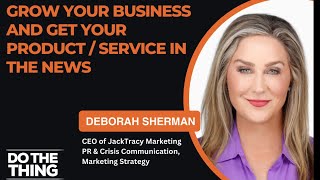
A recorded conversation (live/stream) where Stacey Lauren interviews Deborah Sherman about how entrepreneurs, authors, podcasters, and small businesses can earn media coverage. Sherman — a former investigative TV reporter and FBI spokesperson who now runs Jack Tracy Marketing — explains why earned media matters, distinguishes creating vs. following stories, gives concrete pitching do’s and don’ts, walks through a real example (a baker who left banking), and covers finding reporters, preparing for interviews, and how to leverage coverage afterward.
Chapters
Our guest. Oh, my gosh. With us, because I have to tell you a story about her in a minute because she's actually been a big part of do the Thing and helping me kind of get it started. And now she's going to be helping you guys and talking to you about how to get on the news and all the amazing things. So if you want to say hi to everyone, and then I'll do a couple technical things.
Hi, guys. I am so honored to be here. I just think the world of Stacy. She has inspired me in so many ways, and. And we're all going to do the thing together, and I'm going to help you get on the news and get some publicity for your business.
Amazing. I love it. I'm so excited. Hey, Joyce. Good to see you. So glad you're here. Hi, Bea. Oh, my goodness. This is so fun. Okay, so I'm going to. I got us in the challenge group base. Yes. And let's check the singles group. So there's a lot of people that also, like, want to write books and so many things. So it's, like, kind of perfect for all of these things that's talking today. Okay, here we go. Okay, we are good.
All right. Encourage everybody. You know, if you have a question, if you have something specific, I'd love to use a business as an example as we go through. So, you know, definitely talk to Stacy and I, and I can start throwing in some of those examples.
Amazing. Okay, so just so you guys know the backstory. So Deb and I met, like, a couple years ago, and it was kind of at this fork in the road in my life, and she's one of the people that the universe just sort of, like, meant to have as part of my journey. And you're the one. I don't even know if you remember, but, like, when I was dissecting the do the Thing formula, you're the one that helped me, like, with actually the acronym I'm game. We talking through, like, all of these pieces and all the things. And so you're, like, the one that I go to whenever I, like, need help with, like, things from, like, a higher level and be able to, like, really help me, like, narrow down what I'm even doing. And so, anyway, to have you here is just, like, so exciting.
It's full circle, and I'm so excited. Thank you, Stacy.
Yeah. Okay, so I'm going to go ahead and have you be full screen if you're ready for that, and then I'd love you just to kind of Go in to share who you are, what you do, and then helping people get on the news. If that sounds good, perfect.
So my name is Deborah Sherman, and I'm an expert in the field of getting people on the news, pretty simply because I was on the news. I was an investigative reporter for many years at ABC, CBS, NBC, across the country. And I've won 13 Emmys. I think I've been nominated another 25 times and have three Edward R. Murrow Awards.
After that, when I got out of the business, I went to the FBI and I was their spokesperson in Colorado and Wyoming. And then after that, I started my own business, which is called Jack Tracy Marketing. And basically I wanted to take my storytelling abilities and help others, people with really great businesses tell their stories to journalists. So I. I've worked on both sides, which is really great. Today I have a bunch of clients and I get them on the news, and yet I know exactly how to do that because I was a reporter. Although I do think times have changed a lot. Back then we had a lot of staff, we had a lot of support, and today these poor reporters are running and gunning. So what is the big deal about getting on the news anyway? Well, it's actually more important than you might think. So billionaire Richard Branson. Billionaire, right. He said publicity is absolutely critical. It's much more important than an ad. A good PR story is infinitely more effective, and there's several reasons for that. So the media coverage, and it's called owned media coverage and earned media coverage. It can put a face on your company. It can connect people with you on an emotional, personal level. So that I'm not just buying a. A widget. I'm going to buy a widget because Stacy is selling it. And I know Stacy's story, and I start to care about Stacy and I want to represent Stacy, so I want to carry stuff with her logo on it. It also develops a lot of credibility. You can also get your message out to thousands of people with one story. So right now, let's say you buy an ad on Facebook and you target your audience well, you're going to reach a very small, limited population. But when you get a story on the news, you're going to hit people you didn't even think of, you didn't even know of. And if you're lucky and the story goes viral or the local ABC shares it with national abc, all of a sudden the story could be shown worldwide. So it's a lot of eyeballs. You also become the expert and the thought leader in your field. And that's important because now when as a reporter, if I research how to create a podcast stick, Stacy's name's going to come up on Bean on a particular media. And I'm going to call Stacy, I'm just going to reach out to her. She's already a proven expert, so it furthers more publicity. And finally, it's most important because people don't believe in ads a lot. Think about yourself, right? You see an ad, aren't you saying to yourself, well, that's an ad, I really can't believe it, or I need to research it first. Well, 92% of consumers actually trust earned media and that's because it's a third party objective and usually without bias.
Site. So that's why they trust it more. In fact, the only thing that's more believable than a news story is actually buying the product and using it. Okay? And now I believe it more than a news story. So it's the number two reason people will turn to a product. So that's pretty cool. There is a downside and that is there is little control over the messaging, you know, so if a reporter is a bad reporter.
You really can't control what they're going to say. You can hope that they report all the good things they, they told you, you told them, but they may not do it. Well, there's also no guarantee of success. You can work your fanny off and never get on TV unless you pay for it. Now there are some shows, you've probably seen them, they kind of look like a commercial and ad.
But it always says in the bottom paid advertisement. So you can pay for stuff like that, but that's not the same thing as being on the news. It also requires a I gotta tell you, you gotta find the right reporter, you gotta pitch your story, but you can do it. So how do you do it? How do you make that pitch to reporters? So there are two ways to get on the media. Either create a story or follow a story. Let's start with creating a story. So that is something that would not have happened unless you did it. You can hold an event like a press conference where you would reveal a new product or a new service or a new book that you just wrote. You could have a grand opening, maybe a 10 year anniversary party where you reveal again a new product or a service. Or you can share a personal story that's also creating a story. Share something personal. So for example, let's say you climbed a mountain with no oxygen and you did it to raise money for trans, transgender people. Okay, so there you just created a story, and it's an emotional connection. So in all those cases, you're creating an event and excitement around something that otherwise would not have existed. The second way is to follow a story. So you're going to piggyback off of something that's happening, like the weather, holidays, or calendar days, you know, breaking news like inflation's going up or world events like, you know, the Russian Ukraine war or something. But the holidays are a big deal. So today's December 11th. So what I did is I took a snapshot of just some of the days that have been named on December 11th. So you can see all of those, right? I think it's like National John Day, National Help Feed Needy Animals Day. So all of that stuff then you can tie into that day. So you might say, hey, you know, I have an animal. I sell.
Maybe animal clothing and really cute cookies and make an cakes for animals. So you might say, it's Feed a Hungry Animal day today. So, reporter, I'm going to make a cake, and you can show your viewers how cool it is. So that's also called a news hook. Okay, so here is one thing that I wrote to reporters last week, and it got my client, who was an author, just like many of you on ABC News, and we've also scheduled her a story on Fox News in Houston. And I wrote to them, I said, hey, reporter. And the Wall Street Journal last week, there was an article about colleges needing to create courses to teach young adults how to have small talk. Pretty crazy, right? But it's not just the young who can hold a conversation. Who can't hold a conversation. I wrote, have you ever been to a holiday party where somebody talks about the weather? They go on and on and on about them. Boring, right? I say, well, this season, Karen Donaldson can make you the life of the party with what to say, what not to say, how to listen, and how to engage. So I got a whole bunch of interest from that, again booked on ABC News, which is pretty cool. And one big tip here, when you write this email to a reporter, always answer the question for them, why now? In your pitches. So let them know that it's imperative in your story that they tell this story right now because it's important and it's relevant to their audience. Remember, if you're pitching NBC, for example, they have a younger audience in cbs. So you're, you're going to want to know stuff like that so that when you do pitch cbs, you can Say, hey, your older audience is going to want to know this today because tomorrow is National Retirement Day or whatever. Hey, so Stacy, you jump in if you're reading anything and somebody has a specific question for me.
Okay.
I'm gonna, I, I hoping, I'm hoping you just said okay. All right. So I also have some do's and don'ts for you to get coverage. Okay, cool, thanks. Yeah, just bop on in whenever somebody's got a question. Do's and don'ts to get coverage. This is, this is really important. So journalists are so busy. Back in the day, I had a cameraman, I had a producer, I had a guy doing graphics. And then, but I would still have to go research the story, drive out, interview somebody, come back, edit the story. Well, actually I would write it, give it to the editor, he or she would edit it, and then the producer would help us no longer. Okay. So right now they're called multimedia journalists. They go out with their own camera, they write it, they edit it themselves, they build their own graphics, then they try to go live. They do a live shot from wherever they are. So they are busy. Back in the day, I used to get one email a minute. Okay, that was about 480 emails in an eight hour shift. Imagine today with more people, Facebook.
LinkedIn, looking at your messages on Snapchat, Instagram. And I know I'm missing a whole bunch more because I'm not a millennial, but the point is that they are busy. So this is what you do. Make sure that you target your email and your press release to the exact reporter or outlet or producer who you want to target. So there was a survey recently and reporters said they wish people would take the time to research them and know who their audience is and make their pitch relevant to them. So one reporter said, when I do get that rare pitch that shows me the person has actually viewed my work, they've got my attention. Here's a quote from. Let's see, here's a quote from a Bloomberg writer who says, send me a personalized pitch. That means if you grew up in New York City or love to travel or went to Columbia, I'm gonna read your pitch. You can learn all about me on social media. If you look at what I've been writing, you can send me a similar idea. And so, you know, just to kind of help you out with that, if he wrote a story or she wrote a story about. Designers share their best secrets for dressing. This fall you would write, hey, great story. What about a story about sustainable shoes? That are fashionable and people can wear them knowing that they're 100% recyclable. So right this reporter, then their ears are going to perk up. They're probably going to call you about doing a story. Here's a do make the subject line on the email clear and compelling. Here's some examples for you. Don't worry, be happy. Let's see.
Don't worry, be happy in this economy, save money and kids get stylish clothes this week from. Let's see. I. I'm not reading that right, but the point is local moms tell you how to get good deals. Okay, that's a good example. I'm going to read that. I'm thinking local moms. That's pretty cool. Don't say, please cover my event. Oh, we'd really love it if we could get some media coverage. That's just boring. I'm going to delete that. There are so many emails to read. I'm never going to read that if I'm a reporter. Here's another one. Don't bury your lead.
Keep in mind all those emails we're getting and the phone's ringing and the news stations are all on so you can see that a new war has broken out or somebody's just resigned from the Senate, et cetera, et cetera, et cetera. Right. Get right to the point. Journalists will not continue to read your email if they can't figure out your story in one paragraph. A reporter from TechCrunch said, if I can't understand what you do or if it's not clear what your company, what makes your company unique, I'm going to pass. Okay, so right there, two sentences. Feel free to say, hey, I've got a lot more information. If you're interested, call me. I'll give you all the details. That's a good thing to do. Don't make the email or the pitch about you. This is not the time to say you have a new board of directors or you just won an award like, tell your mom that. But that's not news. Instead, always tell the reporter how your services and products benefit other people. Right. How do you solve their problems? That's good to know. Also, if you really want to increase your chances of getting on the news, provide photos and videos. That's a big deal for reporters these days. They don't have time to track down video. I got a client on the news a month ago. They're like, we don't have an extra photographer. They're so short staffed. The City of Detroit did not have an extra photographer. So I said to the lady at the event, videotape the event horizontally, not vertically, horizontally. Send it to me. And then I put it in a Dropbox links link and I sent it to the station and they covered it. They used our video. It's kind of scary because that could be manipulating the reporters. But they did know me. We had a prior relationship, so they just. But they went ahead and used it. Also, make sure you include stats and links to those stats and your contact information. So in a recent survey of journalists, this is pretty important. More than half say they'd be more likely to cover a story if you provided multimedia. 81% want photos. 40%, 47% want videos. That, of course, will clog up their inbox. So make sure if you do send a video, put a link to the video. Right. That they can easily download. And if you send like one really great photo, which I always encourage, because what a picture speaks a thousand words. Make sure it's very low res and then write in high resolution pictures available upon request. So I wrote some sample emails to reporters for you.
I think this would be a good time for this question. Do you mind if I ask this?
Let's do it.
Okay, cool. So Norris actually had texted me earlier and had said he doesn't have a brick and mortar business, but he basically said, sells this amazing bread and he goes to farmers markets and then he also goes to his kung fu studio and sells it there on Saturdays. So I thought we could just give a real life example of like what that could look like in terms of going on the news for that.
So selling bread. Okay. And he sells it just at local markets. And did he say if it's, you know, homegrown, it's all okay?
Yeah, all natural. All natural. He's baking it at his house in the oven pretty much.
Oh, wow. Okay. That's fun. That is super fun. Now, a couple things I would want to know. You know, charities and feeding people is always a good way in that industry to get on the news, too. That's very helpful when you kind of give back in that way. So here we have a sample email to reporters about an event. Right. And I just want to point out that they've included the link, they've included the details. But for him, what he would write instead is.
You know, maybe there's a new survey out about health and bread. Okay. So that would be one angle you would want to tie that in. Maybe there's a new story about new small Businesses popping up all over the place. And I'm a guy who cooks right out of my own home and I, my neighbors can smell it. People come over every morning, you know, and, and they line up or, you know, they line up at these state, at these fairs on the weekends to get the fresh bread.
I, I would want to tie it around, you know, like maybe even a holiday too. So the point is to know your story. So what makes you baking bread at home so unique? Is it because you're a new small business and they're popping up everywhere and people are leaving? Did you leave a corporation to make bread because that was your true passion? If so, that's your headline, right? That's interesting.
So his was. We actually, I interviewed him on my podcast and what his was, was that he had just had started having kids. Now he has three. But at the time he had just. His first baby was born and he wanted to just change the. His whole life and basically create this new experience. So that would be something then he's incorporating because that's part of his story.
See, I love that. That's really interesting. You know, I would want to know where he left, but like I might. My email subject line might be from corporate to cooking in the kitchen man or, you know, local man.
Discovers, makes money and raises a family. Making a new passion with this new passion, right? And then you can bring in the history of the bread and maybe talk about some obstacles he overcame to get that. That couldn't have been easy. In fact, that was probably really scary. In fact, I could even bet that maybe they had to take out a loan or something. Three kids, you leave a big job. Maybe he had saved up a bunch of money. But I bet you there's a bunch of hardship stories in there. So you want to share, you know, briefly. You know, this wasn't easy. He had to have his mom watch the kids or his wife had to quit her job and watch the kids so he could do this. But now, you know, now they're doing great and try our bread. We're going to give you free bread, right? Like in fact, and then start a little say. In fact, we'd love, if it was tv, for example, we'd love to give out three loaves or whatever to three of your viewers live, right? Like they can cut the first three callers so you can make games out of it. You can encourage the reporters in so many different ways. But what you want to do is connect with the heart. And in this case that's family, and that's your pocketbook. That's money, family, and. And that's just passion about living a meaningful life, which is pretty important. And statistics, like I said earlier, are huge. I know you can find statistics about how much harder people work when they work for themselves or work with passion. And about people, the number of people who have left the corporation and tried to do this, and maybe even a smaller percentage about people who have done it successfully. Right. So there's so many fun ways you can spin that story. And I can imagine a picture with a caption, you know, say, if you could only smell this bread. Homemade.
Right.
I mean, there's so many fun ways. Does that help?
Oh, yeah. That's amazing. And I wanted to also. So that's such a great way to just put a real life situation. I'd love to hear if you guys have any other things you want us to brainstorm while Deborah's here. I'd love to have you share in the comments because I see Norris commenting that he was a corporate child. Chase Banker. Oh, he said thanks for the.
Oh, okay. And here's some other things. So I see that he. Yeah, he came from Chase Banker. That's huge. Locally farmed grains. Okay. Guess what? With so much of food coming from overseas with, you know, it's local, it's fresh, maybe it's pesticide free. Right. Maybe this is gluten free. Like there's all kinds of fun health angles you can go at too, because that's a very big touch point for a lot of people today. The environment, you know, maybe they're growing at net zero. Right. We just don't know. So all of those fun angles, but don't use them all. Just use, you know, one or the one or two best ones. Try, talk to your friends, see what really resonates and connects with them. Use those. And then if that doesn't work, then, you know, during the next. Because we just had a big climate convention right in Dubai. So if we've missed that boat, then go for the next one. Maybe it's Christmas. Maybe this is. Maybe you're now making Christmas tree loaves, huh? Christmas tree loaves or reindeer loaves right out of your home kitchen. Like, so tie in Christmas, this is the greatest gift, especially for gluten free people. Or we've got this flavor or that flavor. So.
There'S all kinds of fun.
Yeah. So I'm loving this and I like, see you.
All right.
Yeah, I had another question too. So let's say he's gonna start to reach out to people Tomorrow. And just so you guys talking about Norris right now, but you could literally take this for whatever it is and just.
Exactly.
Information and put it for you. But like, are you. When they're emailing the news people at like, where are they? How did, how do they even find that info? Or they just.
Okay, that is. We're going to get to that ahead. That's a great question. Don't let me forget that. But it is ahead. So I've got some great tips on how do you find that right, reporter? Because, Stacy, that's the perfect question. Here are some bad pitches. Just to let you know. I wanted you to see these two. I have a master's degree in computational perception and have won numerous awards. Blah, blah, blah. Finally, we're revealing our new ISO 7 and drivers. What? First of all, that hurts my brain. Even if I was the tech reporter, it would hurt my brain. You really need to put it in plain language, not just for this reporter, but think about, you're writing for your website, you're writing for social media, right? You're. You're putting all this information out there. That is not how you sell it. You sell it like this. We're going to reveal a new app tomorrow that will let parents track their kids and make sure they're safe no matter where they go. Right? With one button, you can find out where they are, and with another button, you can call the cops. And then here, like this kind of a pitch. And think about the bread. You know, just translate it here. We'll let you try it out. And interview a mom who has been using the app for her first grader. Right? So. And talk to the engineers behind the idea. So keep in mind this is not about you. Right? This is actually about the piece person you're helping, the problem you're solving. You've helped the reporter here by. You found a mom already. You're going to maybe find some guy who loves your bread. And then you're going to be able to talk to the engineer as well and talk to the cooks. Right? Talk to the cooks as they make the bread. Right? So that's how you get your business in it. But this is really about how the viewer or the reader or listener can benefit. So here is. So how do you follow up with a reporter? And Stacy, I promise we're getting to your question. Don't just send a pitch and then forget about it. I've. I've pitched this one reporter in particular in Miami a few times. I swear to goodness, she must save those ideas because A month later she'll be like, can we have your client on tomorrow for that idea you, you mentioned? And she's like, you know, and, and that's another thing I want to say. Make sure that you are available once you send these pitches. We actually had, we got this lady, a realtor on NBC la and they said, yeah, we can put her on tomorrow. It took me six months to get her on. She said, yeah, I'm not really free. Could they do it Friday? I'm free Friday at 12. Well, guess what? She lost that interview because tomorrow doesn't exist in the news world. When we would leave the station there, a fire broke out somewhere, there was a car crash, there is a plane crash, there was another, like it doesn't exist. And I've already booked somebody for tomorrow. So if you don't seize the opportunity, if you don't make yourself available and really move, you know, heaven and hell to, to make the, the time, the only time window that they have, you're going to miss your opportunity. It's that critical. So follow up with a call, Just be really nice. And then after your call, if you get them, send them the email again so that it's on top of their stack of emails. Go, hey, it was great to talk to you. Here's the idea again. If they say they don't like the idea, make sure you ask why? Is it not visual enough? Does it not meet your audience? Do you not think your audience would like it? Why not? Listen, write that down and then re pitch them in a couple weeks with what they said. Okay, so. Oh, your audience likes gluten free. Therefore we've got a new gluten free line. We want to tell you all about it. When do you pitch the reporter? Maybe you can take a screenshot of this. But the mornings are nuts. Late afternoons are nuts because they've got their deadlines. So mid morning, early afternoon is always good. Mondays are crazy, Fridays are crazy. So I like to send out my pitches, my story ideas midweek, like Tuesday through Thursday.
The time, the exact hour, I really couldn't tell you. It's kind of all over. But do be careful with holidays because journalists are going to take time off now. That being said, they are short staffed. So if you send a terrific idea, we're making reindeer bread and Santa Claus bread and giving them away to kids at the local foster house home.
They will cover that story because it's, it's, you've provided the kids, you've provided the visuals and they're short staff. So it's, we call this not one and done, but I can't remember the exact word now, but it's, it's just add water and mix. It's, it's a one stop shoot. That's what we call it, a one stop shoot. You can get the expert, the, the people involved and the video all at once. So that's good too, on holidays. So don't give up just because it's a holiday. Here is what I'm going to let you read this at your own time. Here's what some reporters say they want from your pitches. So take a look at that and let's move on. What happens if something goes wrong? Let's say that they, you know, keep in mind how busy they are. And, and I will tell you this. I've. In my 18 years as a reporter working all over the country, from Boston to Miami to Great Falls, Montana to LA to Colorado, Virginia, I think I'm missing some Baltimore. Anyway, I never met a bad reporter who deliberately got something wrong. They might have gotten something wrong because they were working so quickly. They made a mistake, they misheard you. But every reporter I've ever worked with has been willing to fix it immediately and are pretty embarrassed about it and apologize all over the place for it. Because nobody wants to make a mistake. It's their reputation, right? So they want you to be happy. They want their viewers to get the right information and they have great pride in their work. So the first thing you would do if they got something wrong, like let's say your URL like, or their business, your business name or something, call the reporter. Don't start with their boss. Call the reporter, say, hey, could you please fix this? And they will, I guarantee you they will. Just make sure you document. If you talk to them, if you email, write it all down.
If that doesn't work, then you would go to their news director or the newspaper editor or magazine editor or the podcast producer. But don't start there again. And I've only had to do that once, once as owning a PR firm because most things are handled with the reporter. And again they, they are embarrassed that they made a mistake. Then you want to really consider, let's say you take all of those actions and they won't fix a mistake, which is, which I can't believe would ever happen. But let's say they won't, then you have a choice. You can make a big deal about it and go all over social media and tell everybody what a rotten station they are and a rotten reporter, rotten Newspaper it is, which will of course burn you in the future or. And would also drive a lot of attention to it. Or you can let it go and just say, you know what, we'll get another story. Maybe they agree to give you another story down the road and you could let it go. Because if you blow up something, you are really focusing on the negative. So you got to kind of weigh that yourself. Anything else you want to jump in? Before I go to the next slide about how to find the right reporter.
I just saw Norris wrote his subject title, which was Banker turned Baker Bank.
Oh, see, there's, there's the headline right there. Banger turns. I would absolutely open that email. I gotta, I gotta be honest.
There you go. We're gonna watch your. You on the news, Norris.
That's right. Okay, so how do you find the right reporter and the media outlet? First of all, you need to know who is your target audience? Are they young? Are they old? Are they women who read books and have cats? Are they men? You know, so you really want to specifically define your audience and then figure out, well, where are those people watching the news or reading the news or getting their information? Are they getting it on NPR Radio? Are they getting it from the BBC? Are they, you know, is it a very intelligent group or is it a group of texts? Right? So then you want to write that down. Maybe in his case. Case it would be probably a family. Well, it's almost everybody, except let's say that the bread's not gluten free. So it's nobody who has gluten. So it's.
Allergies. So it's going to be, it's not going to be young children. They're not going to buy their own bread. So it's going to be families. Maybe it's other bakers, maybe it's restaurants who like to buy that stuff and share it, right? So you start getting your target audience. Then you're like, okay, well, where do they get their news? Well, maybe you want to pitch the restaurant reporters or if you want to sell your bread to them, maybe it's family magazine, maybe it's, oh, there's so many different magazines, right? But you want to go through and you want to create, pull up an Excel spreadsheet, write down the outlet, the position that you want the person to have, and then Google it, right? And write down the reporter who covers covers that and then take, then research them a little bit. Go to their social media or just go to their website. I found so much information on the, the Business website, the media website. What beats and topics do they cover? Write all that down, right? And then on the second page on the Excel spreadsheet, create a tracking sheet. So when did you send the email? You know, basically what was it about? Banker to baker or something else, or holiday breads. Right off. And then when you followed up and their response and pitchy notes. So if the response is, yeah, we don't really like holiday breads, then you know, okay, we're going to pitch them at a different time of year or something. But the point is to keep, to keep tracking all of that. And as you can see up here. Yeah, go look at their websites, go to their bios, look at their social media. You know, there was another study that asked reporters if they cared if somebody pinged them through Facebook. Let's say you can't find their email. Most reporters did not mind getting a message. Dm, I guess it would be called, you know, through X or Facebook or even LinkedIn. So that's an idea. There are other reporters, though, who don't check that as often because they're so busy. So you might want to do both. But definitely research them. Let's see. So what other questions do you have about that?
Yeah, I'm like super excited because I feel like you're just showing us how the world is truly open to us and we can reach out to whoever we want as long as we understand what we're doing. Like, have a general idea. And then I loved what you said. Like, if that doesn't work, then you just do it again. And like, you do it differently.
Do it again and you know, you can re pitch another media. What I'll do a lot is I'll copy and paste into different emails. Like let's say that I want to send something to ABC and cbs, which I did the other day. So I sent one email to abc. It was about the Golden Bachelor and how one of my clients thinks that the Golden Bachelor has really exposed how there's a big problem with ageism in this country and how women and men who after the age of 60, believe it or not, are ignored at the grocery store, you know, in a bar, in line trying to get a drink, right? They're ignored, they're overlooked, they're bumped into people, like, literally don't see them because nobody wants to be old. And so there's this ageism problem. So I wrote one pitch to ABC saying, look, your show, the Golden Bachelor, is number one. It is the most watched show. And you know why? Because it's connecting with seniors. But I couldn't say that same thing to NBC and CBS because they don't have that show. And let me tell you something, if I pitch them a story about a show on another network, they'd immediately delete me. So instead I just say, look, new studies show that seniors feel ignored and invisible, and that's a problem. And we have an expert who will talk to tell seniors a, how to stand up for themselves, how to be heard, how to get out of the house and be active. And then she also talked to people about how we should kind of look at how we treat old people and sort of examine our own.
Blinders in that regard. So I had to pitch them differently. And so before I forget the one thing. So the hardest part of all of this, I think is building your media list, finding the exact right person to pitch who's actually going to listen and care about the story so you don't end up with the sports guy or the weather guy or the traffic person person or the school reporter instead of the business reporter. Right. So my company does for very inexpensively.
We'll.
We'll call you a list and it depends on if you want, you know, the 10 local reporters or 10 national reporters. Or we'll pull 20 names for you. Maybe you want the state of California, maybe you just want LA or San Diego, you know, so we can do that for you for very cheap. And that takes a lot of the work out for you. So just ping me or email me and, and I'll let you know about the cost. It's actually pretty cheap. It's like only $250 for 10 names. But then those are 10 good names of the right people who are gonna, you know, run or print your story.
So, so good. Okay, so let's, I have a few things for you. So.
I noticed there's a few of teachers in here that actually started podcasts, so I thought we would kind of just talk about that. So if I'm a teacher and I started a podcast, is this something that I can also do in terms of being able to message it right. And be able to basically talk about who I'm helping through being able to have my podcast.
Oh, I, I think that's so cool. Now let's just put aside all the. Or your school district let you. Let's just say that, yeah, you can be a podcaster and they don't care. I think that's awesome. I think that makes you credible that you're a current teacher. And now, and I Don't know what you're teaching. Maybe you're teaching kids online. Maybe you're teaching, going more in depth. You know, there is a great guy called Steve Spangler, and I think he was a teacher. He, he's out here in Denver, I'm in Denver. And he gets on the news, I swear, once a month, and he does this super fun science experiment. So if you're doing science experiments or English or teaching math in a creative way or any of that, then not only say what you're doing and, you know, say. And I've even got students who have, you know, now getting A's because of it. But we'll bring this simple formula to you on your newscast live. Like, we will show you the simple math and it will blow your mind, right? And he is wildly popular and has taken that, that little thing that he does. And I've seen him on the NBC Today show a bunch of times. I've seen him on Ellen DeGeneres. She's had him on several times just as this local guy who loves to teach. He was a science teacher. So, yes, if you've got a podcast and you're teaching cool things and new different ways, I could see that that would be very promotable. So definitely work on that because that's. I think that'd be a fun story.
Okay, so now I've gotten on the news. So now what? I'm freaking out. And I'm like, what am I supposed to be doing when I'm on the news?
Okay, well, so you will.
You know, you will work with the producer or the writer. Well, first of all, the writer is going to say, look, I'm really interested in talking to you about your podcast as a teacher and what you're teaching other people now. So how do you do it? How long have you been doing it? How did you think of this? You know what's been your best story? So they're going to ask you those questions anyway, but if they don't, then you want to have some tips in hand. So I saw a guy the other day, true story. He's on ABC and he's a chef. And the reporter, the anchor, anchor says to him, so, chef, famous chef, so, and so tell us about Christmas and what you're doing and what we can do. And I am literally sitting there with my pen and paper, like, I want to write this stuff down because I, I want some fun Christmas ideas for my guests. And he's like, yeah, I'm gonna serve my kids steak, because that's what they like, and like you know, some potatoes.
And I, I thought, okay, well, where is, you know what? You know, so she, it made it really hard for her because.
She had to really pull information out of him and she's like, well, what about other things? He was so unprepared. It was an awful interview. If I were his agent, if he has an agent, I mean, I would have fired him. Because what he should have said is, here are some fun, interesting ideas that your friends and family are gonna love. My kids love it. You can always say that. My kids love it. You, in fact, this is their favorite dish. You know, get some cranberries and mix it with vodka and sprinkle some sugar on the rim and you've got this wonderful drink cocktail for Christmas. And then, you know, you, you get what I'm saying? But actual steps and actual tips to help people because why it's not about you, about your listener. Right. So give them things that are actually helpful and beneficial because now you're the expert and now they're going to come back to you for more information when they want it.
Yeah. And this actually, it's kind of cool how everything is so similar when I think about it. Like even with having a podcast or maybe even writing a book or having a Facebook group, it's like you're like really tapping in. Because normally if you're speaking about something, it's something you've gone through, you know, and come on the other side of. So you're almost like speaking to you like five years ago, two years ago, however long it was that you went through it. And so it's thinking of that, like, what's in it for that, that version of you that was like struggling with that thing that you're doing now.
Yeah. You know, let's go back to the, the bread gentleman.
You know, if they had him on, he could not only talk about, you know, how he makes it in his home, but you know what would be more interesting and how he could really connect with me is if he told me how I could make it with my child. You can make it in your home too. That is not a threat. Nobody's going to set up a, you know, a huge bed breaking company just because you tell a mom or dad how they can interact with their kids this Christmas and make little bread reindeer writer stars for the tree or for the birds or whatever. So it's giving them tips so that to include us and involve us so that we can be creative and learn and do right. It's, it's you're giving me a call to action, if you will. And you also want to make sure you leave a call to action, by the way, in the pitch to the reporter. Speaking of calls to action, you want to say, you know, can I follow up with you? Can I give you a call? Would you like to learn more? So don't just say, and that's it. Bye. You know, say, please call me if you're interested in that.
This. Yeah. And we, a lot of times we assume that people are going to just call you, but you're right, it's like having that actual, like, call to action so they know what to do when they're seeing whatever it is. And I love how, like, to me, this is like the most fun thing in the world is like, how we're having this conversation about Norris specifically, and then all these ideas are, like, populating. And then now once he starts to get into momentum, you know, like, who knows what's going to happen? It's like, literally. And it's starting here in this moment.
That's right, definitely. So let's see. Sourdough at home for the holidays. Okay, so here is the podcast person about resources through life Experience products, community agencies and more.
I would, you know, for that person, the podcast person who's teaching.
There, I'm not really clear if you're offering resources or if you're connecting people, but talk about your wins, you know, talk about.
Somebody you've impacted. So maybe you've changed somebody's life around because you helped teach them to read. And maybe it was through an agency that you're talking about here in the chat.
That's a great story, right? If you can say, my podcast helped this little boy to read, and now he's reading in front of his class for show and tell. Stuff like that is just amazing, amazing stuff. And what happens after you get the interview? I wanted to talk more about that. You did ask that, Stacy. Once you complete your fun, wonderful interview, make the most of it. So share their link on your website and on your social media and in your emails to people and advertisements. And make sure you get that credibility by saying, you know, on your website, as seen on cbs, as seen on Fox News, as seen in Forbes magazine or Entrepreneurs Today, you want to make sure that you really use that publicity to its maximum impact. And then, most importantly, keep in touch with that reporter. Give them more ideas. Now you've got a relationship, right? Say, please say thank you. I don't know what is going on in this world. And this was in my day, but back in the day, something. People would just kind of scream at you as you showed up.
If a reporter were to ever show up, say to them, hi, what's your name? Where are you from? Why are you here? How can I help you? You know, I'm actually not allowed to say anything because I work for this company, but give me your name and information and I'll. I'll call our press person and have them get back to you. What's your deadline? Who else have you talked to about this story? Is there something we should know? Is there bad news that we should know about? Do you need the bathroom? Would you like a glass of water?
So I have stood out in my share of hurricanes and tornadoes and heat waves, and people won't even think to come out and, like, give you a glass of water. And here you are providing information to the entire world, like, leaving your family at home and, you know, ignoring everything that you. Your pets like, trying to get people to take care of your pets. And. And you're trying to convey information from the police department and the fire department or whatever emergency is happening, and people are rude to you. Right? So be nice. Be nice. At least see if they need a bathroom.
You're automatically, like, up, leveling yourself because you assume that, like, everyone's doing that. But it doesn't. It doesn't always happen that way.
Correct. In fact, I don't know if people are afraid of reporters, but it's okay to say, what's your name? Why are you here?
Intimidated. You're right.
And how can I help you? Yeah. Yeah. Okay.
I had another one. Do you have time? Are we good? We didn't talk about how long. You're good. Okay, good. Okay, good. Yeah. In my mind, if we're doing this for an hour, so that's good. Is that good for you? Yeah.
Okay, cool.
I noticed Matt was here, so he. His story is public, so I can share this, but he was living a normal life, and then all of a sudden, he fell at La Jolla Shores and he had a brain injury. And literally, like, nursed that injury for, like, years through meditation and just all of these things. And now he's a coach, helping people really just come out of either traumatic brain injuries or helping them, you know, with their subconscious mind, because he's tapped into that deeply. Is that something where, like, just even doing, like, this virtual coaching, are you able to be able to do the same strategies for something like that?
I think that's an amazing story. I happen to know from another client that there is a shortage of really good treatment for brain traumatic injuries. And they are trying to raise money and build centers in some places, but these, these individuals and there are a lot more brain injuries than you can ever imagine. I mean, first of all, think about all the sports, then think about all the car crashes, then think about just everyday accidents like he had. So there are so many ways to get a brain injury, right. And there's not good treatment and some of the treatments old fashioned. So there are a lot of studies out there that talk about the need for better treatment. And I tell you, if something is holistic, that's even better. But I've heard of people driving states away to get good treatment. And without that and without immediate treatment, you're going to have a lot of problems recovering and coming back to full capacity. So I think that's a great story. I can, I mean especially to do it holistically. Holy cow. Right? That's a whole nother avenue for people because now they don't even have to leave their home if they can maybe find some of that healing through meditation or some of his, his or her other methods. So yeah, so I love like where.
I say something and then you have this like innate gift and ability to be able to just like formulate it into something. What would be something that like the people listening could do like after this is over to like ask themselves the question to kind of like tap in, you know, to that.
That's a great question. The answer is, in my opinion, is.
Write an elevator speech about your story. And as we all know, we've heard about that. And why an elevator speech again? Because when you tell this reporter, you've got, you've got a minute just to catch their interest. So practice on your family and friends. Really hone down your message, right? Really cut to the chase.
I was on a ladder, I fell. They told me I would never be the same again.
Good treatment was inaccessible or is inaccessible for most people with injuries like mine. But I'm healed today.
How?
Through a new kind of meditation or a new formula that I came up with. That's it. That's 30 seconds. You just rode the elevator. Practice something like that with your family and friends. When their eyes start to glaze over, you know, you've given them way too much information. You know, it's just like this is, this is. Watch a movie trailer. The movie trailers show us the most exciting. You know, they don't show the end, but they, they give us the most exciting moments so that we're we're going to that movie. I am so gonna see that movie because I know it's about how we built the nuclear bomb, right? So I'm gonna go see that movie because the trailer was so amazing. And trailers are 15 seconds, folks, some of them, but that's it, 15 seconds. So that's what you've got. Hook somebody like that and. And again, practice on your friends and family, but really know your story and whittle it down. And then you can always be like, want to learn more? I've got all the facts and background. This is a great story that will impact, you know, 20% of the population or whatever percent it is that has brain injuries. It's many more than you would ever imagine type of thing.
So good. And Vicki was just asking a really good question. How long. You mentioned the 15 seconds for the movie trailer, but like for that elevator pitch. Do you think a minute is okay or.
You know, I would get it shorter if you could. You'd be shocked at how long a minute is okay. If I can. I'm going to give you guys a quiz. And Stacy, maybe you'll have to answer for most people, but. So how long do you think the average news story is? The average news story? We're not talking about 60 Minutes. So it's a story about.
Gaza, it's a story about Ukraine, maybe in the Russian war. It's maybe a story about a new medical discovery or maybe.
Somebody in the Senate resigning. How long is that story? One of those stories on average.
Let's see what you guys think.
Okay, so should I give you some. Is it three minutes? Is it two minutes? Is it a minute or is it 30 seconds?
Oh, we got a 20 seconds.
Seconds. Okay, Stacey, what's your guess? How long? I mean, keep in mind it's come like let's say I'm doing, you know, a spacecraft shuttle just went up today, you know, x fifth one. And they talk about how it worked or how it failed. And you got to interview experts, right. So you got expert interviews in it, you know, or somebody makes. How long is that?
Oh, someone else.
20 seconds.
Well, I was gonna say before you said that, before you said, oh, three minutes. Another one. Oh, two minutes. Okay. I love it when you guys play. Thank you.
No, thank you. Okay, Stacy, what's your answer?
I was gonna say 30 seconds before you told me all the other stuff, and now I'm at a minute. Now I'm.
So you've got to have experts and you've got to have the person personal side Right. Not just the doctor, but the cancer patient. Right. And then you got to tell their story, right. About how the doctor saved the cancer patient. The average story is a buck one minute long. I would have to fight to the producer, like, can I have a minute 15? Please can I have a minute 30? I swear, it's a really great story. Please can I have a minute 30? And they'd be like, well, I'm gonna have to cut 15 seconds out of weather and I have to cut 15 seconds from sports, you know, or we'll have to cut back this story. So if you come in and at about 60 seconds, they're thrilled with you. And you've got to get all the experts in and make it personal and try to make the viewer feel something so that they connect with the story and remember it. And so that's all you've got. So a minute is a long time, Stacy. So I recommend that you really hone that down. I mean, look at the banker to Baker.
Yeah.
Three words, right.
Of what that is. Yeah.
Now cooking out of his home and making a million or making six figures. Right? So what was that? Seven, eight words, right? So really keep it tight and short. And you can always say, look, lots more information. Put a compelling picture in that pitch to the magazine or whatever. And trust me, they will absolutely reach out if they want more and just make it, I hate to say, as sexy as possible. And what that means is movie trailer, you know, even if it's a serious subject like the nuclear bomb, that movie trailer I would call sexy because it's interesting, it's exciting. They're giving me the highlights, so give me the highlight and practice on your friends when, trust me, their eyes will glaze over and you will know when you're being boring.
I love that. That's so true. Thank you so much for doing this with us. This was so good.
It is my pleasure. I, you know, it's just, I think reporters need to hear more from people, real people. And you guys know what you're doing and you have the story ideas, right? Like, reporters don't know this stuff. Don't know that you, you're freaking making bread out of your house. How cool is that? Or doesn't know that this guy now can help other brain injured people with meditation, Right? Like, they're never going to know that unless you tell them. So you're the experts. Reach out and they're going to love to hear from you.
So good. And please tell everyone how they can find out about you. I know you mentioned the curated list of reporters that you can.
Yeah. So that's the hardest part. Right. But I have a program that helps me do it. And then, of course, I test, I test the emails for you. I test the phone numbers. I make sure that that person's still working and didn't leave to another media yesterday. You know what I mean? And they're not on vacation, so. But just go to jacktracy marketing.com or you can email me right there and and we can talk and chat. Or if you need any other quick advice, I'd certainly love to do it. If you're a friend of Stacy's, you're a friend of mine.
Oh, so good. All right, you guys, thanks for joining. And don't forget, do the thing. Don't wait for opportunity. Create it.
More from Stacey

From 262 Women to 8 Million Media Impressions: Deborah Drummond Built a Global Women’s Movement


From Notes App to Published Author: Avery Brenna Crumrine on Turning Intention Into Action


How Stacey Lauren's Billion Dollar Impact Marketplace Will Raise Billions for Charities and Causes

What Happened When Allison Maslan of the Pinnacle Global Network Ran a Challenge with Stacey Lauren




Leaders Share How Stacey Lauren Sparks Action, Clarity, and High-Impact Collaboration

Sandi Masori Announced as Emcee | The Billion Dollar Impact Event Returns to San Diego