How Olga Rudnieva Built a World-Class Medical Center in a War Zone
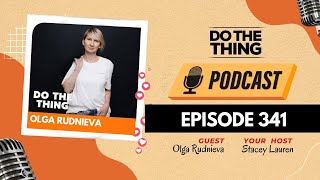
Transcript of a Do the Thing podcast episode (host Stacey Lauren) interviewing Olga Rudnieva about founding the Superhumans Center in Ukraine. Olga describes transitioning from humanitarian logistics to building a 10,000 m² rehabilitation and prosthetics medical center (opened April 2023) that provides free surgery, prosthetics, psychological care and rehabilitation to war victims; the center has scaled rapidly and aims to share clinical protocols and research internationally. The interview also frames the center within Ukraine’s broader wartime civic response and Olga’s lessons on rapid implementation, partnership-building, and resilience.
Chapters
Hey, everyone. Welcome to the do the Thing podcast. This is your host, Stacy Lauren. Well, you guys, the time is here. Wow. So much is going on right now that I am excited about and the people that I'm getting to meet are just blowing my mind. And the person that you are about to meet on this interview is one of those people. I actually got to go to Necker Island a few months ago and really got to spend time with incredible people there that are solving the world's problems on such a big level. And my next guest is one of those people. Her name is Olga and she lives in Ukraine and actually has created a center. It's a specialist clinic called the Superhuman center. And they help war victims recover, providing surgery, prosthetics, and full rehabilitation support with people that are going through the war. And it's absolutely incredible to hear her story. She was one of the speakers at Necker island and she is able to show up in a way that makes you want to be able to do something about everything that you could do. And her story is so much bigger than what anyone could even imagine with the way that she even put the center together. And I'm so excited to have you guys meet her and hear her do the Thing story and how she's helping others do the thing in the world. So.
So.
Hey, Olga, welcome.
Thank you for inviting me. It's my great pleasure to speak about superhumans and about Ukraine, about things that are happening here.
Yeah, I feel like it's so important because, I mean, you know this probably more than anyone. It's so easy for people to get in their own little vacuum, right. Of what you see in the world. And you're like, come on, you guys, look over here. There's so much that you could do to support this whole country and be able to do something that can make a difference.
I cannot blame people for not looking at what's happening in Ukraine. The whole world has lots of problems. Environment, poverty, lots of issues. You cannot keep attention at the war that is happening at the different parts of the world for three years. And we understand that at the beginning of the full scale invasion, we were like, why not everyone is helping Ukraine? Why not every newspaper, every radio channel talk about Ukraine. But then you understand that people have to live their life. They have to cope with their own problems. It's actually the war that we are going through. I would love people to learn more about what is happening just for one reason. History is returning. History is repeating. And it's very important for us to understand the context Ukraine is going through. It's not about the war in Ukraine, it's about the war. And it's not the war between Russia and Ukraine, It's a war between Russia and the rest of the world. It's just happening in Ukraine because what is Russia is trying to do, they're trying to change the world order. How we make decisions, how we perceive power, what is allowed and what is not allowed. So that's why I think what is happening in Ukraine is important for the rest of the world.
Yeah, it's so important. And I remember even right when it happened, I think it was soon after the war happened, I interviewed Anastasia, who also lives in Ukraine and got to hear her story. And that was the first, I think, time that I even heard about how she actually was able to help 130 women find shelter and jobs and everything as the war was breaking out. And she's a customer transformation specialist and she was able to use webinars where she did these first professional development webinars and used the money from that to fund the jobs and the things like that. And it was the first moment that I got to see, wow, right when you're in the middle of the hardest time, we can actually almost show who we are. Right. And I feel like that's exactly what you're doing now, where you are being able to take something that's so impossible for people to even understand what's happening. And now you're saying, look what we could do, how we can help in.
Such a big way, we all can do something. And I always say that you have your own image of yourself if the end of the world happens, if the war happens, if the epidemic starts. And we all think I gonna do that, that and that. And as a matter of fact, you, you never know what you're going to do, whether you're going to fight, whether you want to fly, whether you're going to just pose and do nothing. But in Ukraine, at the moment when the full scale invasion started, some people had to flee from the country because they had children and they had to take care of them. But some people changed their whole life. They turned into action doing something for someone, even if you save one person, one dog or a cat, because it was also very big problem. People were leaving the country. Dogs, cats and other pets were just left on the streets. So you had to take care of number of issues you never thought about. So a lot of people did something in Anastasia. Yeah, she was one of them. And the whole country basically transformed into a big Charitable foundation where everyone helped everyone. And at the very beginning of the full scale invasion, we had a lot of support from people from around the world because everyone was shocked about what happened and people wanted to help Ukraine and send some humanitarian goods, just send money or do something. But with a period of time, of course, people got back to their lives because life goes on. But I think that this experience of the full scale invasion in Ukraine and how we all reacted is always with us and it tells a lot about who we are and what we do when the worst happens.
Yeah, no, it's so important. I'd love to hear your story of how you started Superhuman center and then maybe even when all the stuff around it too, if that's okay.
Sure. I. I wasn't in Ukraine when the full scale invasion started. I left to Madeira at the tiny island in the middle of nowhere to pick up my mom. So basically I went there without any luggage because I had to pick her up and fly back home in two days. So I left without anything, just basically my passport and an empty suitcase. And then I woke up in the morning and I realized that the war started. I called my husband and he said, yeah, the war has started. You are not allowed to come back, so just stay where you are. And I, of course I couldn't stay in Madeira and I could, but I decided that it's not my way and it's not the path I want to take. So in a day after the first shock, I saw a post of my friend in Facebook and he was writing that he is opening a big humanitarian hub in Poland. And I wrote to him immediately, even without thinking, if you need me, I will come and help. He said, yes, please come over. So I bought my tickets, flew to Poland, find out that there is no place to live because all hotels are occupied by Ukrainians who left the country. So we shared one room with several people sleeping on the floor. And we started basically building the humanitarian hub in Poland. And we were trying to solve the biggest problem of all. People from Europe at that time, they collected humanitarian aid and they didn't know where to bring it and how to deliver that to Ukraine. And we gathered all big Ukrainian logistic companies who were out of business at that time, and we asked them for free transportation, big trucks. So basically we collected this humanitarian. We contacted ministries and big charitable foundation and we're delivering this humanitarian aid to Ukraine. And we were pretty successful. We started as five girls and guys and we were kind of. We expanded to 300 people in couple weeks from the moment we started, so it was really a big operation. A lot of Ukrainians who were leaving the country were coming to work with us. And then in April 2022, just two months after the Polska invasion started, Andrei Stavnitzer, the person who actually opened the humanitarian hub, gave me a call and he said, listen, we work today for today. What if we start doing something for tomorrow? It's going to be a lot of people who will be losing claims, who have face trauma. Why don't we open a prosthetic center? That's what he said. I knew nothing at that moment about prosthetics. I really doubt I saw a person on a prosthetic. Of course, maybe, but I never paid attention to that. But I immediately said, yeah, I want to do that. So that was my reason to go back to Ukraine from Poland. And I returned in May and we started searching for location where we can actually build the center. And from the concept of prosthetic center, we grew up into war trauma center where we're going to. We were planning to provide psychological support, rehabilitation, prosthetics and surgical help for those people who lost faces, lost their limbs. It was in May 2022 and in April 2023, we already opened our doors. We built 10,000 square meters, like big, big center, amazing to surgical fetters. We built reputation floor, brought all prosthetics equipment and just started working. And as of now, we grew up from a team of five people in May 2022 to 500 people today. We already provided services to 2500 people in Ukraine, military, civilians and children. We are changing the legislation in Ukraine and we became the model of how the ideal medical entity should look like. All our services are free of charge. Our patient is not paying for anything. Coffee gold classes, musical therapy, art therapy, prosthetics, very expensive high tech surgical surgeries so that the patient basically can walk in and does what exactly what is happening? We are delivering patients from the front lines with our evacuation course and get all services needed. And we will provide him or her with everything, including the toothbrush and toothpaste. And now we are trying to get something good out of this war, if it may exist. Basically, we are trying to accumulate experience in providing medical services to people who got the mind and blast trauma so we can share it with the world. Because it doesn't seem that the world is about to stop fighting. So we expect that this experience will be very needed because the war has changed dramatically during the last two years of three years of Ukrainian war. It's a lot of Drones, it's a lot of mines and it's very different from what we expected to see as a war. So the traumas are very different and we are ready to share it with the rest of the world if needed. I hope it won't ever be needed, but if it's needed, it's here sitting and waiting to be shared.
Wow, I love how it started with you just even asking that question, if you need me, I can come to help. And then your friend said yes.
I was absolutely shocked. Sitting in the safest island in the world. I mean the 38 km of land. No one will ever bomb this island in the middle of nowhere. And I was sitting there and thinking what I'm doing here in a total safety when my whole country is going through what they are going through. My husband is under bullets. My house was occupied. I couldn't get hold of my friends. I didn't know where they are. They were at occupied territories and a lot of Ukrainians were leaving the country. I had only one desire to go back to the country. And I still regret that I wasn't in the country when the war started, but that just my path. And I was thinking, okay, what can I do? I was working at that time. I had a fantastic job. We did something with my bosses at that time. We started buying some tourniquets, some medical equipment to send to the front line. So I was literally, I was busy doing something, but I didn't feel it's enough. It didn't took over all my hours and I still had time to cry to think about what's going on. So basically I had to act. And I was looking at Facebook and thinking, okay, what else can I do? And the post pop up and then I was just like, I, I'll just write if he doesn't answer, he doesn't answer, but I need to try.
And at the moment when he said, what works today or what was it exactly? We work.
Yeah, we work today for today. Let's do something for tomorrow.
Yeah, yeah. And he mentioned opening this and you not having experience or even being around prosthetics and things like that.
How did that y automatically I was like, I have to do that. It's going to be a problem. If you look at the data mining, blast trauma normally brings to more of people with amputations, we couldn't see that at that very moment because it was very early stage. But looking at the data, you would understand it's going to be our future. And I asked myself if I want to keep Doing what I did before. And the answer was no. I want to do something in the context of war, and I definitely want to go back in Ukraine. And that was a great chance for me. I'm a good project manager. So I thought, this is a very good project to go with. And I agreed immediately. It looked challenging, it looked uncertain. I had no idea how to do that. But I was like, I'll figure out. I'll figure out.
Have you done things before in your life that kind of. You had to have that same muscle flexed with figuring things out without knowing exactly what was ahead of you?
I'm Ukrainian. That's what we do all our life. Yeah. I've worked in charitable foundation for 18 years, so I'm very familiar with how charities work and how philanthropy sector is organized. I never built hospitals, of course, and I never managed hospitals in my life before. But I did amazing projects. I was very lucky to work with big names to do big projects. And I definitely knew that I can do that, I can do that. And I wanted to do something in the context of war. If I am not fighting at the front lines, I should do something for those people who are fighting at the front lines. So you are either at war or you are for the war. That's how the war life looks like. Even if you're not at the front lines risking your life, you have to find something to be linked to the war or help those people who are fighting for your life and for your country. So. And I thought that something that I can do, that's a project of my caliber and it's bigger than anything that I've done in my life. But I should try. I should try. I'm not losing anything. I should try.
And how have you been figuring things out? What's kind of your figure things out strategy? As you're almost building it, you're doing it right? Yeah.
We are in life with the partners. And I'm always saying that the right people will take you to the right places. So I have two great partners and Andrej, who is one of our co founders, who actually suggested the idea. He is the idea generator. And Philippe, our third partner, he's more about finances and I'm more about doing things with my hands now. So basically, it's funny, when I talked to them and I banged my phone, I was like, okay, where to start? So I opened Google and I typed in TED Talk prosthetics, what all good managers do. I should say, I will listen to TED Talk about prosthetics. And in 20 minutes, I knew everything about prosthetics. It was a very nice TED Talk of Hugh Herr, who lost both of his limbs. And he then started developing prosthetics because none of those prosthetics that were at the market satisfied his needs to climb the mountains. So 20 minutes later, I was like, wow, I need to meet hur. I know everything about prosthetics. And then I started just watching documentaries, video, just everything that is was about prosthetics. And I realized that it's interesting, it's about the future. It's a lot of room for improvement. They are far from being ideal. And I was like, wow, that's such a great thing. To give people back ability to walk, to give people back ability to hug someone. It's just like, it's close to the miracle. It's just really someone who couldn't walk would be able to walk again. And this idea obsessed me. And then we started kind of digging into details. We started traveling around the world, see different prosthetic companies writing letters. Nobody responded to us because I think the whole Ukraine was writing letters. Nobody wanted to talk to Ukrainians at that time because there was too many requests. But we managed somehow to see the best rehabilitation centers. We were at the Walter Reed. So we were traveling around the world trying to get the best experience and bring that in Ukraine. And that's how we started actually, you know, putting together our financial model, understanding how much money we need, where we should start, where we take the expertise. And we were very lucky to meet Hovert Buffett at a certain point, who agreed to cover all our CapEx expenses, which was like, tremendous amount of money. We were planning to raise this money for the next year. And he just said, okay, I see your financial model, I see how involved you are in this topic, so I'm going to cover your topics. And I couldn't believe my luck. I was like, seriously? And they said, basically his foundation said, yeah, we're going to do that. He does a lot of for Ukraine. But at that time, we barely knew about that. So it was at the very beginning of our acquaintance. So we didn't know Hobart very good. But he is amongst those Americans who keep helping Ukraine. For three years in a row, he's been in Ukraine more than, I don't know, 20 times. But at that time, we knew nothing about that. We were just so happy that someone supported our idea. And I keep telling him, howard, you trusted in us even when we had nothing. We only had an idea. But somehow he is a good investor. I guess in charitable projects is.
So. Did you say it was Howard Buffett?
Yeah, it was Howard Buffett, the son of Warren Buffett.
Oh, okay. Gotcha. That's amazing. So how did that happen?
I know, it's funny. It just happened. We keep telling to everyone that in this project, we feel very instrumental. Things were just supposed to happen, and we were so kind of concentrated and what is needed and how we want it and how we see that we had everything. We had a financial model, we had a plan how we're gonna move. And we were just trying to talk to everyone who were coming to Ukraine, sharing our idea and selling the project. And we knew Richard Branson at that time because he was suggesting his help and he was helping us when we were at our humanitarian hub. Also very accidental conversation, meeting with his team. And I think this was Richard Branson who introduced us to Hobart, and then we continued our conversation. So this is a coincidence of meeting him, but at the same time, I think that we're well prepared and absolutely crazy for him to support us. He saw that we are kind of. We just want that so bad that he couldn't say no to us.
And it's like what you said earlier, where you said, the right people will take you to the right places. It just kind of gets to open up everything for you. The more you're talking to the people, the more you're telling them what you're doing. The more you're getting feedback, the more you're hearing no, the more you're hearing questions, yeses, and all of the things right. It's the ultimate do the thing where you're like, I've got this thing I want to put out in the world. I want to help people with. And now you're not sitting waiting on anyone.
Absolutely. I mean, if what you're doing for whom you're doing and why you are doing that, you will definitely find your partners, your investors, and your donors. But you have to understand what is your motivation, why you're doing that, who will benefit from that, and how are you going to do that? We knew answers to all these questions. We crash tested our elevator beach hundred times. And by doing that, we're learning a lot about the project. And we were meeting with the people who bought their limbs, talking to them, asking about their needs. And we knew exactly what we want to build. We knew exactly what kind of service we want to provide. And we started gathering around us the same crowd of crazy people. Just as crazy as we are. But you can meet the right people. But you want to have the right answers for them. So we had the right answers and we were lucky to meet the right people. But it was just destined to happen. And I'm absolutely sure with a great idea, with devotion to this great idea, and with clear understanding what you want and why you want that and how you're going to do that, you will always find the partners, you will always find money, and you will always find the way how to implement that.
It's funny. So I'm speaking at the United nations next month, and I'm basically, it's going to be about collaboration versus isolation. And I feel like you're really speaking to this right now, because I think a lot of people, when they have a good idea, they want to keep it and figure it out and they're doing something on their computer or whatever they're doing, but you're just like.
Putting it out there. You're not waiting for it to be perfect. I loved how you said you crash tested your elevator pitch a hundred times. That really just speaks to me in a million different ways.
Yeah, I'm telling just say that to Universe. It's my favorite phrase. Just, you have to keep telling that to everyone. And I mentioned Hugh Hare at the very beginning, his stat speech, and we wanted to meet with him and we were trying to find him. So we started basically telling to everyone, we want to meet. Do you know Hugh Herr? And people were like, who's Hugh Herr? And we met with him finally and we were flying through Portugal and was a group of people who asked us what we can do for you. And that was business. People had no relationships to the world of prosthetics. And we kept telling to all of them, we are going to the United States and we want to meet hur. By the time we landed in New York, we already had his contact details. And he responded. And it's not that we didn't have his contact details, he didn't respond us, but we found the right people. And so you just keep asking, keep sharing your idea, holding your idea to yourself. It's nothing. Ideas are overestimated. Everything is about implementation. So I always say, come on, I invented Airbnb. I never did it. I was sitting at home in Switzerland thinking, this is a great concept. And I honestly, I think that the Airbnb idea belongs to me. But I've never done that. I've never been crazy about this idea. I never invested my time, resources, I never searched money for that. And I'm sure millions of people around the world thought about having Airbnb, but it's about implementation. It's not about ideas. It's about how you implement that, how you breathe life into this idea and how you build partnership to make this idea happen. Because we are by ourselves are not powerful enough to make such a huge project as superhumans. So you have to find your crowd, you have to find the partnership, you have to find supporters who will advocate for this project, who will connect you with the right people. So that's how it works.
I want to get back to everything, but I have to stay here for just a minute. This is the land I've lived in for a while. Is this crash testing your thing A hundred times? How did you improve every time as you're getting better and you're trying to explain it? Cause I mean, I've done this thing where I water hose people and they're like, whoa, wait, what? And then I'm still trying. I'm in that place of trying to get it better. So just curious what that looked like for you.
We had lots of meetings and we were basically, I don't know, thousands of conversation over the phone. Some conversations were just with organizations who are working in similar area. We were writing people, would you be able to speak to us? We are from Ukraine, we want to do that, that and that. Some people said no, some people said yes. And we were just basically going on a phone and people were asking, okay, how do you make your project sustainable? How much money are you planning to invest? Where are you going to take money? Where are you going to take the patience? How people will know about you? And by answering these questions or by saying, great question, I don't have an answer. It's also an answer. You shouldn't be afraid. But I will work on that. I'll find the answer. And by listening and hearing these questions, we're like, we don't know that. We don't know that. So the first three or four months of developing the project and putting everything together, I felt like my head is just full of new information and it's a lot of small lamps that all flashing red. And I couldn't sleep. I was waking up during the night and I was like, I need to know that. I need to know that. I need to read that. So because you are stepping into absolutely new sphere after so many years of doing something else and you need to learn really fast because we didn't have time. The war was on our threshold. I mean, the people were injured, they needed help. And we realized that we need to do it now, just like right now. And that's what actually were pushing us to learn more, learn faster, find partners, move forward. And well, a lot of people were saying just, it's not gonna live, it's not gonna work. But a lot of people just ask great questions and great questions that lead to great answers.
Yeah, it's like you're not getting frustrated with people not understanding. You're kind of seeing the question they have and then being able to explain it better, whether it's for that person or somebody in the future.
I mean, not everyone have to understand you. Our concept is not a $100 bill when it's understandable to everyone. So you basically, to some people, it's not relevant. And they basically is like, listen, I don't want to support Ukraine. We also heard answers like that. Some people were telling us, listen, we don't want to even talk about people who lost their limbs. It's frustrating. It makes me feel bad or upset. I don't want to talk about that. Or some people are like, it doesn't look like a business model. It doesn't look like something that is sustainable. And you start talking to people, but as soon as they agree to talk to you, they will talk to you. And there is always lessons learned from every conversation. And it's always important to find something which is similar to your projects already existing, operating somewhere. Write to this person, say, can I see your model? Can I travel, I don't know, thousand kilometers just to see it? And not every time you can travel. But I remember when we found great rehabilitation center somewhere in the United States. I cannot travel there. And I was like, can you do a video tour for me? And this guy was like, yes, I can. And he did one hour video tour explaining me how things work. So if you don't have money to travel, just do the video tour. It's a lot of people who will agree to do that. And we did, I don't know, dozens of these video tours with different people around the world asking them, can you show your prosthetic lab? Can you show you how you do the measurements? Can you show me your swimming pool works, why you have this equipment or not that equipment? And, you know, surprisingly, people were happy to show what they have.
Yeah, it's almost like pride. Right. Where it's good to be able to feel asked. And then they're able to help you even with what you're doing too, by them showing it.
Yeah, now we do that. A lot of people are coming to superhumans asking us to share Our experience and expertise. And we do a lot of video tours, we do a lot of explanations. We share our protocols, we explain how we build that, how we did accessible bathrooms and everything. Now it's our turn to share when we already went through this whole long path. But one day, a long time ago, like, long time ago, three years ago, we were these people who were absolutely naive and knew nothing about it, and somebody opened their doors and showed us how things should look like, and we could kind of take the model out of there.
So what does it feel like now that you've built this amazing hospital and then, not only that, but you've created a movement around it where, I mean, people are fired up, right, about being able to see the impact that you guys are making in the world.
Oh, yeah, it's really a movement. And in Ukraine, if you lost your limb and have a prosthetics, people on the streets will say, hey, look, it's a supercure month. So basically, we changed the connotation to people with disability to superhuman kids. Someone told me that they were going to the mountain, and the small child was walking. It was like, mommy, I can't walk anymore. And she was like, I showed you the video of guy with a prosthetic, the superhuman, and he did climb the mountain, and you cannot do that. So. And somebody told me, because they just heard this conversation. And it's a lot of things happening when superhumans are inspiring other people to do amazing things. And it feels like you're in the right place, doing the right thing in the right time, in the context you are. And it's just what I want to do. I just want to do more, provide services to more people, because our capacities here is 120 patients, and we have 300 patients now. And I want to research how mine and blood strafe might impact the health and quality of life in the long term. After the war. That's what I want to do. I want to do research on ptsd. I want to do research and development of cool prosthetics. But what I'm doing right now, I keep, you know, trying to provide more people with ability to walk, just providing them with the prosthetics. I don't have time to analyze the amazing amount of data I have. I just have to keep doing surgeries, providing people with the prosthetics, and hope that one day it's all going to be over. It's going to be a full stop, and new patients want to be coming to our center, and we'll be working with those people we already provided with prosthetics, trying to kind of enhance their quality of life. Because when you have the prosthetics is for the rest of your life. You lose weight, you gain weight, you need a different mobility. So you're always connected to your prosthetic center. Same with the face trauma. It's a very long stage. Surgeries, you can do 8, 9, 10 surgeries before you have a satisfactory result. So it's not that regretfully, we will never ever be without a job in Ukraine because we have 80,000 people who lost their limbs and we have thousands of people lost their faces and lost hearing. So we're going to have lots of work for the next 10 years. But I just wish we don't have fresh patients coming on a daily basis in vacation cars. I wanted to stop, I want to have a full stop. I don't want to see kids who lost their parents and their limbs entering our center, searching for love, attention. And I don't want to discuss with 80 year old boy in our center what kind of arm he wants to have. I really don't want to do that. Doesn't matter how inspiring it is that Matve is. His name is doing his best to get a prosthetic arm and he is doing a lot of hard work with his occupational therapies, which never happened.
What do you think we can all learn from what you're doing?
I think that if we did that during the war, having massive rocket attacks every day, without electricity, without hot water, if we did that, anyone can do anything. People who are going through the crisis somehow proved to be more efficient and more effective. And as a matter of fact, if you want to do something, nothing will stop you, because we've been in the worst situation ever. I haven't been at my home for more than three days, for three years already. I don't live with my husband now. He lives in Kyiv, I live in Lviv. I basically live in car, airplanes and trains. But I know what I'm doing and I know why I'm doing that. And it gives me a lot of sense. And we just did it. We built two centers in the middle of the war under rocket attacks. We have seen rockets flying over our center several times. And you just look at that and say, gosh, not that time, not now, not that time. You go to bed and you just keep telling that as a mantra, not today, I have so many things to do tomorrow. And I think that if we did that, in spite of all difficulties, anyone can do anything. We just need to be truly motivated. We need to find this motivation, understand what we want to do really deep in our hearts that nothing will stop us from doing that.
And what do you want people to know about Ukraine?
I just want people to know that it's been three years of Ukraine fighting with one of the biggest countries in the world. And when I hear that, don't mess with Russia, nobody can resist Russia. Hey, guys, we are doing that for three years. We are a small country and Russia didn't win. They didn't lose, but we didn't lose either. We are doing that for three years. We're in one of the biggest powerful countries with a lot of financial resources, but we are still standing. And I want people to know about that. It's about the power of minds. It's a desire to live. And I want to tell people that independence costs a lot. And if you get it for granted, you have to be ready to fight for that. And that's what we're doing. We are fighting for our independence. We are fighting for the right to say this is right, this is wrong. Because if Russia wins, there is no right in bonk anymore. How are we going to teach our children what's right, what's wrong if someone is allowed to kill hundreds of civilians per day and then win the war? How can I explain the concept of right and wrong and good and evil to my children? So built more about the situation in Ukraine and see the brave people who are doing amazing things in spite of everything. There is no big huge enemy. It's just the, the values you are fighting for.
Wow. And you mentioned in the beginning and we kind of talked to you about my friend Anastasia after I interviewed her and you saw a lot of that happening and the humanitarian hub basically getting created. I was just wondering, how do you help people see that we don't have to wait for the war for us to be able to do that. Is there anything we could learn from that piece and how everyone was able to just basically start doing what they could to make a difference?
It's an interesting question. I didn't speak Ukrainian before the full scale invasion. I spoke Russian. It took me a war to understand my identity and to say that I'm Ukrainian. I had to have my house occupied. I had to actually go to the funeral of, I don't know, hundreds of my friends.
To understand that. You need to act. I need to speak Ukrainian. I need to fight for independence. I don't know what it takes to start acting now. And I'm afraid that sometimes we have to get into severe crisis before we start acting. And this is bad part about people. We are lazy until we really enter this problem and until this problem is really touching us, it's too far away. I don't want to talk about that. It's upsetting me. But it's not about what can I do to make the world better. You have to find the sense of your life to do something that is important for you and to understand that life is very short. It's not a computer game. We don't have an extra life. And what is it that is going to be after you? What are you living after? Myself, maybe. To think from this egoistic part will help. I don't know. We didn't think like that. We were all ready to die. And this readiness to die tomorrow gives you a lot of power today. Because what if it's my last day? And that's how we live in Ukraine, every day could be my last day because of rocket attacks, because of the drone attack. But it's true for everyone. I mean, it's true for everyone everywhere. You don't need to have a rocket attack every night to lose your life tomorrow in a car accident. But for some reasons, we in Ukraine understand that, because we see a lot of death every day in the news, but the rest of the world think that they are immortal or something. So probably if you. I mean, it's very banal. If you leave your every day, it's the last one, you will try to do more things, more efficient. But it's not banal for Ukrainians, because that's how we live our life. It's very literal. You can be killed every night, and that is happening. You're losing your friends. That is like. You don't have to go to the front lines to be killed by a rocket. It happens every day here, every day, every night.
And what would you say is your biggest piece of advice for people on doing the thing?
Just do the thing. Do not overthink. Just do. It's the most important thing. We are overthinking a lot of things. We are waiting for the right moment, for the right composition of stars above our head. We are testing our ideas. We are thinking that we are not ready. It's not good enough. If you want to do that, just do that. Just start doing that. You will realize, you will figure out as you move, if it's not going to survive, it's not going to survive. If it's destined to leave, it will leave. If it's not going to survive. At least you learn something for this journey and you will know more about yourself and about things you can do and you cannot do mistakes. They are also great teachers. So just do and do not overthink. And not everything will happen from the first time. A lot of things need second, third, fourth, fifth attempt. Just don't give up. But just sometimes it's not the right time, sometimes it's not the right context. It's just a matter of how much you want that and just keep doing what you do. If you have this, this big idea, just realize it.
And is there anything I didn't ask you that you wish I did?
I guess you asked me everything and recovered a lot. And yeah, I think it's. That's it. So it was pretty good conversation.
Oh my gosh, Olga, this is just amazing. Just getting to know you even better. And I'm just so glad that people are going to get to hear your story and what we need to really be paying attention to in the world and how we can really be better humans. And I love the identity of the superhuman. I think that is so brilliant being able to shift an entire conversation in the country by recognizing that. So please share with everyone where they can learn more about you and the Superhuman center too.
The Superhumans Center. You can learn more about going to our website superhumans.com or pages in social media in Instagram and LinkedIn where we share a lot of motivational videos of our super patients. And we never communicate from the victim point of view or we never ask, please feel sorry these people lost their limbs. We say, look how cold they are. They just ran a marathon and won it. And by the way, in three days our superhumans are going to cross Bosphorus and they're going to do it with the normal people during that Big Boss Force competition. And if they can do that, I mean anyone can do anything. And that's type of the content that we are sharing in our social media that basically inspire a lot of people. When you see someone without three, four limbs doing great achievements, you basically like, why don't I do that? What prevents me from just getting up and going for a run? Or you have everything for that. Why not? So that's. You can always watch our Instagram. You don't need to know Ukrainian to understand what we are sharing because it's very clear.
Thank you so much for joining and thanks you guys for listening. Do the thing. Don't wait for opportunity. Create it. And hey guys, have you checked out my Facebook group yet? Go to do the thing. Collaboration.com.
More from Stacey

From 262 Women to 8 Million Media Impressions: Deborah Drummond Built a Global Women’s Movement


From Notes App to Published Author: Avery Brenna Crumrine on Turning Intention Into Action


How Stacey Lauren's Billion Dollar Impact Marketplace Will Raise Billions for Charities and Causes

What Happened When Allison Maslan of the Pinnacle Global Network Ran a Challenge with Stacey Lauren




Leaders Share How Stacey Lauren Sparks Action, Clarity, and High-Impact Collaboration

Sandi Masori Announced as Emcee | The Billion Dollar Impact Event Returns to San Diego