Jeffrey Hellman: Conquer Your Career Fears and Excel
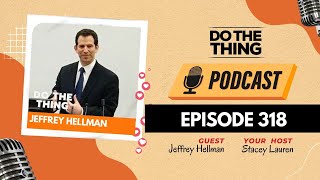
Podcast interview (Do the Thing) between host Stacey Lauren and her cousin Jeffrey Hellman. Jeffrey, an attorney and adjunct professor at Fordham Law School, discusses his career path, teaching experience, building community, encouraging participation, networking strategies (strength of weak ties), and practical advice for starting small to pursue goals. The conversation emphasizes finding supportive people, experiential learning, and iterative progress.
Chapters
Hey, everyone. Welcome to the do the Thing podcast. This is your host, Stacy Lauren. Well, you guys, I am excited because I get to interview my cousin today, who is an accomplished attorney, he is a teacher, he does a lot of things for the world and what we're doing. And it's kind of cool because it was after my TEDx talk came out was when we reconnected and talked about how that's what he does with the things he's doing is really connecting people together with a common goal and things in his life that he's done as well. And so I'm excited to explore that with him. Have you guys hear his story and what he's doing to impact the world. So I'm welcoming Jeff to the show. Hey, Jeff.
Hello, Stacey. Great to be here.
Yeah, I'm so excited. This is so fun. Yeah. So I know I interviewed your sister, my cousin Jill, and for those of you that didn't listen to that episode, definitely check it out because she talks about. It's kind of funny when I think about it, because it's because of her. You actually heard my TEDx talk, most likely because we did a whole episode on how to do public speaking. And a lot of her stories that she helped me with, then helped me get into public speaking, which then got me to get confidence to do the TEDx talk. But anyway, that's kind of funny when you think about it. But anyway, so, yeah, so I'm excited. Now we get to see what comes out of our conversation. I'd love to have you start off and just share about you, your story, what you do, and all the things around that.
Sure. So I am a lawyer at an apparel company here in New York. I've been practicing law for about 25 years. And I think what led to our conversation a month ago or so was seeing your TED Talk and seeing some similarities in the teaching position I have as an adjunct professor at Fordham Law School. And a lot really reverberated with your TED Talk. I think that you talked about this concept of my people. And I look back at when I was approached to teach this class. There was an existing person I knew through work, and he approached me about co teaching a class with him that he had previously taught with somebody else who was retiring and wasn't going to be able to do the class. And I realized it really would be a significant time commitment. I spoke to a couple people who had some teaching experience, and largely they said, don't do it. It's not worth doing. It's a large Time commitment, there's going to be no real upside from doing this from a career standpoint. And it caused a lot of doubts. And fortunately, I had three people who were kind of, as you would say in your TED Talk, my people. The first was my wife. It was a busy time of our lives. Our children were at a stage where they were getting a lot of homework in school. Their lives were becoming very busy. And here I was about to take on an obligation where one night a week, I wasn't gonna get home till 9:30 at night. I was gonna spend a good portion of my weekends preparing for my class, putting together material, and it was gonna be really difficult. But she was very supportive of me doing this. She knew it was something I'd always thought about and was interested in. And I think she had confidence that I could pull this off. There was another friend, a really good friend from my town, who we always shared career advice with each other. And he said, look, I disagree with everybody. I think you're really gonna get a lot out of this. And hey, it's gonna result in great personal growth. You should do it. And then something which really made a very large impact was a very close friend at work who said, look, you have absolutely no idea how this is gonna turn out, and for that reason, you should do it. I love it. And I think really that helped. And to paraphrase the name of a great podcast, I did the thing, and eight semesters of teaching later, I'm here speaking with you. But I don't think it would have happened if I didn't have, as you would say, my people to provide that support at an early stage when was seeking guidance in what I should be doing.
Yeah, because it really is the people that are in our life that help drive us or bring us back from the thing we want to do because it's so easy to get in our head. Right. Or if someone would say, oh, that's ridiculous. Why would you want to do that? All of a sudden that changes the entire trajectory of what you're doing now.
I've actually heard stories. I don't think this happened when any of the people I spoke with. But I've heard that a lot of times when people say, oh, don't go for that goal, don't pursue that. It won't work out, that there's somewhat of a rooting against you because they didn't have the courage to do that. And I don't think that was the case in anybody who said this to me. I think it was genuine Advice, But I've heard that a lot, and it just shows a big impact when you listen to those people, as opposed to have the people, the three people in particular that I mentioned who were very supportive and did encourage me to do this.
Yeah. And so what has that been like for you now since you've been teaching and going through that process with the students?
It's been great. I mean, the first semester was really just survival mode. Just get through each week, provide some materials for the students to read, and find a way of getting through class and presenting it to them. But it's just practice. You do this in each semester, you get a little better. You. In my case, I refined the syllabus to make it a little more friendly. What was good is some colleagues of mine at work and former colleagues and people in the industry started hearing about the class, started offering very generously their time to come to the class. And I think the last three semesters, almost all my guests have been there at least twice, maybe with one exception. Eventually it becomes somewhat of a flywheel, and it just gets easier to do and you get better at it. But it's putting in the work and it's kind of trying to continue to prove yourself and get better.
Yeah. I'm so curious, because one of my goals with my people is to really go back to schools and show people. Well, there's a few different layers to it. One is showing people that when you're leaving school or leaving, really whatever it is you're doing and that you've had a goal with, that you have to then find a new group to be with because you're changing your identity in a way. Right. And so there's a lot of loss that happens when you stop something and then move something new. And then there's another thing I want to do in schools, which is there's. And I think we talked about this before the podcast, which was a lot of times people don't want to speak up. It's hard for them to share their thoughts on things and their advice, which then really makes it hard to be in a my people group, because you're not being open and vulnerable, and you're not like, oh, I have a question. I need help. And I was just curious if you've noticed anything about that with what you're doing now.
Yeah, I think there are a few things. One is when people are young, they are of the view that successful people, the trajectory is, if you look at a graph, is up and to the right. You just have this level of success, you have more success, you have more success. Things work well. If you're at a top law school, it's because you did well in high school, you went to a good college, you did well on the LSATs, which you take for admission to law school. You get to a good law school, you do that. And something that's really relevant for people to understand is, and a lot of the guests that I had demonstrated this and actually discussed this, that it's not always up and to the right. You have a lot of ups and downs, and hopefully over time you're moving up into the right. But there'll definitely be setbacks and there'll be challenges, and how are you going to react to that? It's also this continuous learning process. There's no lifetime achievement award, really. At stages, when you're young, you consistently have to prove yourself. I think what I enjoy being around an academic setting and students, in addition to getting to work with people at a stage of their life where I can make a positive contribution, it's also for me, learning new concepts, digging deeper into subjects I know, connecting with people, saying, hey, you're an expert at this subject. I'd like to have you as a guest at my class and discuss this area, in which case I've got. And I don't want to make it a difficult process for them. So I said, I'll put together some class materials. I'll send you some relevant things that I think would be helpful to discuss at the class. As far as speaking up, I know you had the podcast with my sister about public speaking. I always think of the great quote from Jerry Seinfeld once said, people fear public speaking more than they fear death. So the next time you're at a funeral, just keep in mind that the person giving the eulogy would probably prefer to be in the casket. And it's not an easy thing. There's several people I've asked to be guests at the class, and they've said no. I just don't like speaking in front of people. It's an important skill. You don't have to do it for a living, but it's just important. In fact, part of the class grade is based on class participation. And it doesn't mean you have to come up with insightful, brilliant comments or even get the answers to questions correctly. You just have to participate. And once you participate, you'll participate more. You'll get more comfortable with it, and at least it won't be a foreign situation for you.
Yeah, it sounds like you're really good at meeting them where they are. So you're not forcing them to participate, but you're kind of letting them almost. Well, they're being active in the class. Right. And then as they slowly start to use their voice, then they feel more comfortable using their voice through the process.
Yeah. There is a method of teaching law school called the Socratic Method, where the professor just calls on students and student answers the question. You call on another student, you'll try to build on that. More typical. When law students are in their first year, it's very scary for law students. I remembered early times when I got called on. I try not to do that as much. There was a period of time where I would call on students occasionally, and it was kind of an way of saying, look, you need to read the materials. I don't do it as much. The classes I teach now are usually by 15 students. It's just not something that I think a lot of them feel comfortable with. But I think by making class participation part of the grade, they will be involved and we can have some discussions. And the ones who don't, the theory is it'll cost you a little bit as far as your grade, you know, perhaps. But it's just something I think is important for people to get comfortable doing. And it also just helps the discussion in the class. I don't have to spend two hours talking. I just think back to the. Was it Ferris Bueller's Day Off? The Ben Stein character who's talking about the Great Depression and just boring the students to tears. I just think it makes it more vibrant class and people are giving their thoughts and we're having a dialogue.
Yeah. It's funny. I do this thing now called. I gave it a name. I've been doing it for a while, but it's called a my people party, which is basically, you're gathering people. It could be either virtually or it could be in person. And you're creating a goal for the party. And then all the conversations come around the goal. So it could just even be a question like, what are your goals for 2025? And then everyone's going around the room basically sharing what their goals are. And so technically, it's not the person that's leading it that's talking the whole time. It's actually the whole thing. And it almost sounds like that's a environment that you're promoting, which I love.
Yeah. As I said, I think that communication is something that's a challenge. I remember maybe it was around the year 2000 or so. When I was working at a large law firm, people wouldn't use the phone anymore. People would type an email with a really short question. And in a way, it could be helpful. You weren't bothering someone, for lack of a better word, taking them away from what they were doing. But I think it was taking up a lot more time. Typing a question, typing up a response, asking for clarification, going back and forth. And you also just weren't learning a lot that maybe you could be learning from it. Someone asks you a good question, you give the answer, and then you say, oh, but maybe this could be the case, and you'd have a very good discussion. I think we got away from that, and it hasn't got a lot better.
Yeah. What do you think helps kind of create the space for the kids to be able to participate? I mean, obviously it's. The grade depends on it, but is there anything else that you've noticed that you do that really helps them open up?
Yeah, look, I think what I do is I send materials in advance. They can read it, and sometimes I have discussion points and things I'd like to talk about at class. So if there's maybe one thing they feel more comfortable than another in the materials, we can talk about that. I also say, look, we're always able to discuss about things that happened in the industry and feel free to reach out to me before class. So what happened? A couple times there were students who'd email me about things happening in the industry in the past semester. There was one really large merger which the Federal Trade Commission blocked, and a court case upheld that decision. There was a large retailer where the founding family decided they wanted to buy the retailer. Things like that. Students emailed me beforehand and I said, yeah, let's just discuss it at class. And I think that kind of helps. There's no. There's no one right way to participate. However you want to provide input is always welcome.
And then how are you finding the guests that come in to speak to the class?
They have a blast, and that's really great to see. And I think what I learned early on, I had this format as to what I wanted to cover and how much of time I was going to spend on each subject with the guests. After a while, I said, you know what? It's a successful class if the guest comes away and had an enjoyable time. Felt that they were able to impart wisdom, felt they were able to discuss topics of interest. And I don't think other than a geography issue. I've had very few guests who, after their session, I've asked them back, they've said, no, I don't want to go back. In fact, some guests have really very nicely, after class, said, oh, that was great. I'd love to come back again. So it's really been gratifying. In addition to these guests being very generous with their time, just their enthusiasm that they have about the experience. So all around, everyone benefits. I think the students really like hearing from the guests in the industry. It makes class much more enjoyable from my standpoint. And the guests, I think, have made a very positive contribution on them.
How are you finding the ones that you want to bring in and invite? Is it people you know, or is it just kind of people you're seeing out in the world doing stuff?
Yeah. So early on, it was some people who I'd worked with, maybe some outside lawyers who had done work for my company. I had a co professor, so he had some people we had used in the past. So that was good. As time went on, people were aware of the class. It was easier to approach people and say, hey, I have this class. We discussed these concepts. I think it'd be really good for this session. Or say, hey, I have this class. I think he'd just be really good for the class. Let's talk about things that you can talk about. One guest, who I think has the second longest track record, he actually even said, hey, there's this presentation I really, really like giving, and I think your students will really find it interesting. And I said, sure, come make the presentation. He's made the presentation and he's done it several times. So a lot of times it's just putting people in situations where they feel comfortable and they feel they'll be successful.
And so they're coming in person then for these sessions.
Yeah. So we were virtual for two and a half years. I do remember March. I think it goes Monday, March 8, 2020. I received a call from my wife telling me that one of my children was exposed to someone at the school who tested positive for Covid. And at that point it was like, oh, my God, this is awful. And I called the administrator at the law school I worked with, and she said, I think you're going to have to teach your class virtually today. And I said, okay. And I went home, started figuring out WebEx and Zoom. I'm not sure which format I used for that class, but probably by midday, Fordham had already sent an email saying, we're suspending in person classes, so maybe add an hour or two Ahead. So that was a half semester. We were virtual then we were virtual the next school year. And then I actually hadn't returned to the office yet when the next semester came around. So I've taught the class virtually for two and a half semesters, but I think it's been one, two, three or four semesters that I've taught it in person since then.
I love what you're doing. I love it on so many levels. But we're doing kind of similar things in the way of what I do with communities where we have a group and then we're able to crowdsource value basically by bringing in different experts, having them share their insights. And then you're obviously an expert in your own expert, but you are not. So many people are limiting people to just their own viewpoint. You're now exposing these students to all these other people that they're able to learn from. And I just. I think that's so powerful. That's what I love to do, too. I love having a community. I love bringing in different people. And then we're basically able to get more and more value as each person comes in and shares their experience and the thing that they're really good at.
And one challenge I had is I teach a lot of disparate subjects throughout the semester. There's really not one thing I taught. And early on, I still do this. I had reached out to a couple students who had a very large degree of participation and just sought some feedback from them. And one or two students said, look, I think it can get a little overwhelming because I don't really view this as one class. I view this as 13 different classes. You're teaching something different each time. So then the challenge was, okay, how do I weave everything together? I spoke to a friend of mine in the industry who did a lot of public speaking, and I said, what's the strategy? And he helped me behind. He's like, this is what you'll do. You'll go to the first class and you'll tell them we're creating a fictional apparel company. And you're going to take them through the life stages of the apparel company. So early on, you'll have classes about forming a company, what type of corporate structures you can use. You'll have classes on finding investors for the company. Then you'll go forward and saying, okay, the company's ready to do some acquisitions. The company's ready to become a public company. And at the end it's like, okay, the company is ready to be sold. So at least I was trying a way to blend all of these subjects together, but it took some time. And then I had to come up with the name and the concept of a fictional company. And my son, who at one stage decided he was gonna put together this band, although I didn't really know how to play music at the time, but it was this band. So I actually had my fictional company based upon this band. A group of band members who had success as a band and now wanted to launch an apparel line. So in each class I talk about, I present in the materials a story about what they're doing next. So just trying to combine everything together and then the guests all see their session and they see what the role is.
I love how you're connecting the dots together of everything that you're doing. So it all has a fluidity to it.
And look, it's work. And if you put the work in, it's great. I know that there's a lot of talk in the world about superstars, prodigies, and I think I read something that really had a big impact is we all have the same skill. It's the skill that or the same gift, I should say. It's the gift of finding something that we're interested in, pursuing it and putting in time and getting better. And that's really the magic. It's the good news and the bad news. You can find something you do that you become really good at and that you really enjoy. The bad news is you can't do it overnight. It's going to take time and you've got to put in the work.
What would be your advice to people that maybe are struggling, finding what they're interested in and being able to tap into that.
So I have a quote that I talk about a lot and I said the world is small when you get off your couch. And being on a couch is a great thing. You could have long work weeks, you could have many months of working hard. It's vacation. It's the beginning of the year here. I have to admit, I've spent a lot of time in the last two weeks sitting with my son, watching football, watching old TV shows, it's a good thing. But when you leave the couch, when you go out, when you interact with people, when you try to get involved in some sort of groups, when you see someone maybe in the workplace or in your industry that you have something in common with and you, you get coffee or lunch, you do those sorts of things, the world gets pretty small, in a good way. The story I told you about the beginning of how I became in this position. It was classic this concept, strength of weak ties. How a lot of the good things that happen in your life are not your best friends who put you in job positions and connect you with people having great relationships. It's usually the people you have weaker ties with, but you know a lot more of those people. So the lawyer that I co taught the class with, and we co taught the class for about five semesters and then I've been on my own the last three. I had met him once and what also happened is I had met his brother and when his brother sent me a LinkedIn invitation, I said, oh, are you related to. And he said yeah, that's my brother. Why don't we get together for lunch? I said great. So we had lunch and a number of months later the person who would be my co professor said hey, let's grab drinks. We had drinks. And he wasn't really aggressively looking for work from my company. We didn't have work we could send him, but he seemed like a decent person who we had some things in common and wasn't a bad person to know. Several months later he said, hey, I switch jobs. And I said great, let me take you out for drinks. Let's celebrate. We had drinks and a week later he contacted me and he said would you be interested in helping teach a class? So if I had never done that, I would've never met him. And by the way, the way I met his brother, which is what led to us having lunch, is there was a fashion mentoring program that New York City used to have and someone who worked with me said I'm interested in being a fellow in this program, a mentee. I need someone to submit an application for me. So I submitted the application on her behalf. And when I submitted the application, the organization said, thank you. By the way, we're looking for mentors. Would you like to serve as a mentor? So we had a phone conversation. They told me what would be involved, some time commitment, but nothing significant. Sounded like an interesting to do. I did. And when we were at this initial session where all the mentors and mentees would meet each other, that's when I met the brother of the person who'd be my co professor. So very long story. But as I said, getting off your couch, good things happen. You meet people, you make these connections, they can lead to other things. You don't have to do anything really ambitious. I listened to your podcast about your boating club and from what you said is you started small you basically went, go slow. In fact, I wrote this down. Go slow, get started. Sometimes that's what you have to do.
Yeah. And I'd love to know if you have advice on when you're out and you're meeting these people. How do you. A lot of people are scared to even talk to people. Do you have a strategy or something that you notice that works for you when you're out and about and you're able to make these connections?
Like, one thing, do something that you're comfortable with. I think sometimes people get scared off by having to do something great. Do things you're comfortable with. Even say, hey, I think I can really learn from you, or, hey, some people in common. Hey, I enjoyed talking to you. There was a dinner many years ago. My company had done a large acquisition, and I knew. I found out the night before the closing. We one of the investors that was providing financing. I heard the name of someone at the investor who we were supposed to call regarding the wire instructions, and the name rang a bell. And I said, I think I went to high school with that person. So I went onto the investor's website and I looked and I said, yeah, I went to high school with this person. And when we had the closing dinner, I actually found out what table this person was. And I introduced myself and I said, we went to high school together in Florida, and I think we never really knew each other, but we knew these people in common. We had this whole conversation, and we realized we had all these things in common. He was the parent of Twins. He had worked somewhere where one of his colleagues had left to become the senior CEO of a company I had worked for. He was living in a town that I had lived in when I was very young, all this stuff. And he actually even said to me, let's have lunch. We'd have lunch every once in a while. And he became a person who really provided some great advice to me over the years, and that was really helpful. But I'll go back to another one of your podcasts, the one with cousin Randy where you said, sometimes you got to do things that are challenging. Challenge yourself to do things. If you're not meeting enough people who could be helpful, career, find a way to talk to some more people. And I think that's helpful. You've interacted with people before. You'll interact with people again.
Okay. This is actually kind of perfect timing because I have this challenge that is. I want to say, baby challenge. It's kind of like the seed of everything that I noticed with do the thing. It's this, it's called find your voice. It's 17 days, it's online. And this time around I'm actually positioning it differently, more as like an online party, like a new way of meeting people because we're doing these self reflective dares. Kind of example would be if you were going to write a book, what book would you write? So it's like you kind of are getting to know yourself, but because you're doing it in a group, you're getting to know each other. And that's been the thing that I got to see that when people are in my space, they're getting to know each other so differently in the coolest way. And the relationships are really deep. And it's because of this challenge and it's actually you can then take the online into offline and actually meet people in person. And so I'm just kind of curious if you could help me give some words to the power of meeting people that you don't know and being able to connect more authentically and what that could do in your life and your business.
Yeah, here's really an interesting story. So my company has these business resource groups for different. It's like affinity groups, I guess you can call them. And I've been, I'm not anymore, but I was for several years one of the co chairs of the working parents business resource group. And at one point we had a summit. It was at the office, but we got the leaders of all these groups together and what we were asked to do beforehand is put together. It's like a PowerPoint slide picture type of thing of six ways that we defined ourself. So I remember putting down that I was parent of twins. I was a youth basketball coach. I really enjoyed reading. I think I was teaching my law school class at the time and I put that down and you post it on the wall and there was this exercise where you had to answer these questions like who is the mother of four boys? You'd walk around. But the fascinating thing about that is the stuff you have in common with people who you don't know is significantly more than you would ever think. But the problem is most of the ways we interact with each other, whether it be in the workplace or more casual types of things, you're never going to learn that. And maybe something like that, Stacy, is you say to people, look, you guys have a lot in common and finding that way. And once people have something in common, they're a lot more comfortable to want to interact and build Stronger relationships.
Yeah. And when you're building these relationships, you just have no idea where that's going to lead. Right. When you're with people, my people groups. So when you're with people that have shared goals, it could lead to new opportunities, it could lead to new friendships, anything, right?
Absolutely. Like I said, even the person who was the brother of my co professor, after maybe my second year of teaching, someone approached me, one of my students, and said, oh, the lawyers at my firm are putting together a panel on. And they gave me the subject of topic. Would you like to speak and do you know anyone who can join? And I immediately thought of the brother of my co professor. So yeah, I think those opportunities are out there. The person I told you about, who I met at that dinner, I still keep in touch with him from time to time and think about some advice he gave me many years ago, which now my children are approaching ages that his children were at the time, I think back. And I sent him an email about a month ago and I said, look, I really been thinking a lot about this advice you gave me many years ago and it's kind of coming to comfort me at a time that's kind of a transitional time in my children's life. And he mowed back and he said, oh, I'm glad. I enjoyed the conversation and let's get together again.
Okay, Jeff, the time is here. What is the number one piece of advice that you have for people on doing the thing?
I think start somewhere. My former boss used to have a quote that said, don't let the perfect get in the way of good. And I think that's really. I think it's a Voltaire quote, actually, but I think Voltaire's quote is perfectly the enemy of good or something. I think sometimes when people try to put together a goal and put together a challenge, they do something that is so large that the chances of failing are pretty large commensurately because they haven't done it before. I actually heard a podcast with someone who said he heard of a story about a person who was going to write 10 thank you notes a day for a year. And he laughed and he said, well, you haven't written any thank you notes. So you're going from zero thank you notes a year to 3650 thank you notes. I think that's maybe a problem. People get ahead of themselves. Just start simple. Do something you're comfortable with and you can always build upon that. I do like your idea of the 17 days or 30 day challenges things of that, I think that's really helpful. And when we say challenge yourself, it doesn't have to be something that is uncomfortable or difficult. It just has to be something that's different from what you're doing. There's this great TED Talk that someone basically decided he was going to get rejected a hundred times, so he would find 100 things to do. And the classic is it shows him going. Going to a Krispy Kreme donut store and asking the person at the counter if she can make donuts in the shape of Olympic rings. And she does. And it went viral. It was this great moment. You don't have to do stuff like that. You can just say, okay, I'm gonna go for a walk for 15 minutes for 20 days in a row, or something like that. And you'll do that, and you'll say, hey, I really enjoy this. And then you'll decide what you do next or whether you build upon it. So, yeah, I'd say you wanna be ambitious. You wanna do things that challenge your want to do things that are just so difficult that there's a good chance that after a day, two days, three days, you'll just quit.
Yeah. Such good advice. I actually just had this happen yesterday where I have this big kind of thing I'm working on right now. I'm actually. I'll talk to you about it after, because I have actually questions about that. But I'm doing this movie studio where we're creating movies from these nonprofits and different people's stories. And so we're crowdfunding and doing all kinds of stuff. And it's so big, right? The goal is so big that it's almost like, okay, where do I even start? And so. So I all of a sudden was like, what is the quickest way to get started? And so I'm having a party at my house, and we're doing this live auction, and people are going to say with things that they want to donate to the auction. And it was just a really simple way to get going. And I'm like, man, this really is the key. It's just like, you got to just get started in a really easy way. Now the momentum's going to build right where it'll be easier for me to do the big thing, because I'm already going to have the energy around all these little things.
One of the greatest things I ever read about something like that is many years ago, I was on an airplane, and one of the airplane magazines had an interview. The musician Dave Grohl of the Foo Fighters and of Nirvana. And he had the greatest line about people wanting to embark on challenges, journeys, things of that sort. And he gave the example in the music industry. He said, there's this feeling that to become a great musician you have to try out for the Voice or American Idol and stand online for four hours and go through all these experiences. He said, no, here's what you do. He goes, find some friends for your friends who like music. Buy some beat up guitars, drums, whatever. Find a space in one of your houses and you're going to go and start and you're going to be bad. Not like the teenage term bad, really, just not good. But you'll be with your friends and you'll enjoy being around with your friends and you'll continue doing it and after a while you'll get better and if you enjoy it, you'll spend more time and you'll get better. He goes, and then one day you're gonna be like Nirvana was and he'll be the best band in the world. Maybe there's some. I don't know if that's necessarily the prescription, but there's something to be said for that approach as opposed to the people who said, okay, well where are we gonna rehearse? What days of the week will we rehearse? We need better instruments and they'll just this great. What's the term? Paralysis by analysis? You fall onto that trap. Just start somewhere.
Yeah, it sounds like what I do with community building. I suggest. So there's people that wanna be on social media and they' have to go on Instagram or these really social platforms thinking they have to start there. And my advice is to start with a small, tiny Facebook group or just any kind of group that's really small and intimate and that's where you almost find your voice in that group. And it is okay to be bad because they're part of the journey with you. So yeah, I love that I have to pull up that article because I feel like that'll connect the dots to the work I'm doing too.
I don't think there's ever been a time where is more easier to make impact, to create content, to create music and post it online. To become a writer and get a blog and post it online through LinkedIn, you can write articles. I think it's. What is it? WordPress? You could create a blog really quickly. It's not. You don't need anyone else's permission, you don't need anyone's help. You can do this on Your own. And I don't know if there's ever been a time in history that one has been able to do this so easily. And I encourage that.
Yeah. Because when you get your voice out now, it's like you're sharing the wisdom that you've learned over the years. And maybe there's one thing that you could say that's a shortcut for someone that's going through something similar.
I had a student who, during the pandemic, he was basically locked in his apartment. He was from another country. He didn't know a lot of people here. And at one point he just started writing a blog. And the blog was interesting things he was learning in law school. And he was from Korea, and he'd be interviewing Korean models. And this was his website, and it was great. He interviewed me for one of his posts, and when he was looking for jobs, he would bring the blog to people's attention. And there he had this product, this work that he had put together. And you didn't have to say, hey, these are all of my wonderful skills. This is what I can do. Sent a link to the website, and people saw material that he'd put together.
Okay, is there anything I didn't ask you that you wish I asked you?
I guess you could ask me. What's it like having a sister who flies around the world, gets paid, I'm assuming, large amounts of money to speak. The answer is it's great. She actually teach you mentioned, I think, in your prosecutor. She teaches a class at Cornell every winter for a couple of weekends. She had me and some other people as her guests, which is always fun. And a highlight of that is one year she puts us into these breakout groups. And then afterwards, I guess when the semester is done, she pulls the students and she asks the students what was impactful. And there was one student who said he really enjoyed talking to me.
That's so cool. What's funny hearing you say that is I think she asked me to do that, and I think I said no. That was back when I couldn't do any. I had this whole part of my story where I didn't want to. I was scared to do anything. And so I slowly found my voice, and now I'm comfortable doing. And now I've run to all that stuff. But it's funny, I think I actually said no. It's interesting to see the growth that you can have when you just start taking action right towards the things that you want.
Yeah, I think that's just one of those things. And Anyone who thinks at a young age that they know what they're going to be doing or they know what they want to be doing down the line. I was talking to a son of a friend of mine who just graduated from college and is thinking of law school. And I was talking to him and I said, look, I don't know a single person as a general matter, who's doing what they thought they would be doing the year before they started law school, when they knew they were going to go to law school. Some have some, and I say some of what I do is actually in line with what my interests were at the time. But there's very little of that. And I think that's just this openness to new things and the world changes. I remember certain areas of the law that people are very interested in. There's work out there in those areas, but there's so many of these interesting areas where people are doing all these innovative things that really no one talked about 15, 20 years ago. So just being open to new things, the world changes, careers change and kind of having that mindset of being open to new things, wanting to try new things. There's those great articles about the failure of Kodak as a company, Pan Am, what's another blockbuster? They didn't keep up with the times. I think as an individual you want to try to keep up with the times and always keep your skills current. And as I said, one quote I said in my children is when you compete, the only person you compete with is the person you were yesterday. It's just about self improvement. Just get better each day, each year and you'll always benefit from that.
Okay, so where can people kind of keep up with you and what you're up to? Do you have a place or LinkedIn.
Maybe or so I do have LinkedIn, Jeffrey Hellman and I don't do a lot of posting. I usually will after my classes that I teach. I will post a picture of my guest and thank my guest occasional times throughout the year that I will speak, but that's probably where I can be found.
Thank you. This was so much fun. I love this.
Pleasure was all mine. I really enjoyed it as well. Stacy.
Thanks you guys and I want to.
Commend you for doing the thing I did. Go back and listen to some of your podcasts yesterday. I found very inspiring. It's great to see what you're doing and to see where you've come with this in just a short period of time and doing something totally different from you had been doing. Previously. I think actually that's one of the best examples that your listeners should just take from this. If someone saw this, they'd probably think that you were doing this for decades. You're just putting the time in and building connections, building a community and just getting better at something you enjoy, which everyone has that ability.
Yeah. And it goes back to what you said earlier. It was something all of a sudden, once you find the thing you're interested in and you like doing it, it just is it almost becomes automatic. Right. Where you get to pick up the momentum and keep going.
Absolutely.
Thanks, you guys, for joining. Really loved having you listen in and do the thing. Don't wait for opportunity. Create it. And hey, guys, have you checked out my Facebook group yet? Go to do the Thing collaboration dot com.
More from Stacey

From 262 Women to 8 Million Media Impressions: Deborah Drummond Built a Global Women’s Movement


From Notes App to Published Author: Avery Brenna Crumrine on Turning Intention Into Action


How Stacey Lauren's Billion Dollar Impact Marketplace Will Raise Billions for Charities and Causes

What Happened When Allison Maslan of the Pinnacle Global Network Ran a Challenge with Stacey Lauren




Leaders Share How Stacey Lauren Sparks Action, Clarity, and High-Impact Collaboration

Sandi Masori Announced as Emcee | The Billion Dollar Impact Event Returns to San Diego