Nicole Haase's Proven Formula to Break Free from Corporate Shackles and Thrive
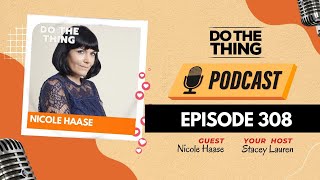
This is a recorded interview on the Do the Thing podcast with Nicole Haase, co-founder of Modern Prairie. Nicole explains why she and Melissa created Modern Prairie—born from her observations about midlife invisibility (inspired by her mother)—and how they built a private app-based community (~30,000 members) that prioritizes psychological safety, member-led programming, and "Trusted Prairie" partners. The conversation covers concrete programs (book club, journaling circle, tea time, cooking/crafts), the brand-business balance (products, funding needs, investor conversations), and practical advice for community builders (know your why, who, and how).
Chapters
Hey, everyone. Welcome to the do the Thing podcast. This is your host, Stacy Lauren. All right, you guys. Well, I don't even know. I'm so excited about this episode because I met my next guest through Laura Carney, who you guys have probably heard of before, but we ran a challenge together last January called the Bucket List Challenge. And you know what? Her book ended up becoming so popular that this unbelievable business, Modern Prairie, ended up hearing about it and then said, hey, I heard about this challenge or this book. Can you do it for our community? And then Laura asked me if I would be involved. And so anyway, we've been getting to work with them now for the last several months. And it is just every time I get to work with them, I mean, the alignment and the aliveness of what they're doing in the world just really blows me away. And so I am so excited to get an opportunity to have you guys meet Nicole, who's one of the co founders of the business and then also has helped bring this whole thing to life with her community. And I just can't wait to hear her story. So I am welcoming Nicole to the show. Hi, Nicole.
Hi, Steve. How are you? Thank you for having me.
I am so glad because we've talked by facilitating this challenge and being able to. To do all the things, but I'm just so blown away just by the level of impact that you guys are having on people's lives and what it's already doing in the world.
It's sort of a labor of love. I mean, I can talk about how it started, and I'm obviously in midlife. Our children in college and a senior about ready to go off or self. I think around the same with yours. As women age, they tend to sort of lose their identities or a lot about. They feel invisible, they feel irrelevant. When in this stage of our lives, with all the experiences we have, we really should be leaning into the conversation. And so my mother, I grew up a really, really strong, powerful mother, maternal figure. She was a single mother, so she worked. She really put herself true and raised through the ranks in her career. And she'd always been sort of a corporate powerhouse. She was VP of HR for really big companies. And she retired at a really young age of 15. She had a very aggressive goal to retire with my. With my father. And as she retired, I started to see her regress a little bit, to start to question herself, to start to not be as active or verbal as she used to be and start to kind of pull away, which seemed very counterintuitive. To me, especially because she had so much knowledge and I revere her as my mother and obviously respect or as she's aging. But to see her pulling away was something that I was sort of self consciously aware of. But it wasn't until sort of changes happened in my career, in my life as well, that I started to identify and feeling in this manner. And that was when I realized, you know, we really need to create a space where women can connect with one another and they can learn from one another and make them feel empowered again. And the power of community, especially in midlife, is it's beyond compare. And I think.
Everything is so immediate nowadays. Everything is digital. People are lacking and really.
Looking for those connections again, those meaningful connections. And that is really what inspired us to create the community and the brand. But it really was an homage to my mother because I knew there were so many women out there that felt the same way, that felt irrelevant. Even certainly talking to many women, they felt invisible. And to me that just seems so counterintuitive, especially at this phase of our lives where a lot of us are transitioning, our children are leaving the house, maybe our spouses are getting sick, friendships are changing. So we want more meaning in this, what we call kind of third phase of our life. And there they wasn't a space out there that we saw that was doing this in a way that was authentic. So it sort of led to us creating Mermaid Prairie.
It's so amazing because when I'm in your community, it just feels like love, right? And I think I mentioned this to you at one of the first meetings where I think there was a hundred people on the zoom and everyone had their camera on.
And the amount of just safety in that container by people being free to share who they are and what they're doing is really powerful. And I love hearing where it started from, you seeing that with your mom and then being able to then identify it within yourself too.
It's really important for us to create a space where women feel safe. Social media in and of itself is a great way to connect. And certainly from a business perspective, it's great to be able to share what's going on in the business, but let's be honest, it's not a safe space. We can't necessarily protect people from who gets to see their comments or how they respond to them. Facebook is a great application, especially for women and men, and so many women utilize Facebook. But there are lots of unsafe elements to that. Men will make comments to women asking to be their friend and we can't necessarily control that. And that is in and of itself a bit concerning to us. And that's why we decided to create our own app, which is where you come and spray, which has been incredible, where we've got 30,000 women in our app and they feel safe to share. It's a space without judgment. Now, we reserve politics and all of those types of things for somewhere else because there are a lot of social media outlets that support that. This community is about women, women connecting with one another, supporting one another, and sharing their journey. And that is of utmost importance to us. And so we do. We offer things and programs like what you do with do the Thing and empowering women through singing. What's happened with other women who've gone through the program and saying, hey, maybe I could do this too. It's just a really. It's a really remarkable place. And to your point, Stacy, we've got a lot of events, and when we first started this company, we do them all virtually. I would say 90% of the people that showed up in resume had their cameras off. So the fact that you acknowledge that the majority have their camera on it is so powerful because they are showing that they deserve to be seen, that they believe that they should be suing and that they're okay being seen. And it's just. I get the chills every time I think about it, because it's. It's a remarkable thing for a woman to live to say, I'm here and I want you to acknowledge them versus that's okay. I'll just kind of let. Let. I'll stand to the back or whatever it may be. So it's cool.
It's so interesting because a lot of people come to me because they want me to help them activate their community, right? Where people aren't engaging or they're not interacting with each other. And then I help them do that. And you guys already have this really vibrant, active community that's already a wealth of just experiencing with each other. And I love that you're seeing the community as also this partnership experience too. Right. I think there's a lot of people, and that's what community is. There's a lot of people that want to hoard the people for themselves, but you're like, no. Who else can come in and add extra value? And I'd love to maybe talk about that because I feel like if I can open more people's minds up to just that partnership plan and how you even thought to bring Laura in originally, which then brought me in and opening that up, because I feel like there's so much power in that.
So thank you. I think for us, we are the stewards to open doors, and I've always been really fortunate in my career to have women open doors for me. Now, of course, it's our job to walk through those doors. We can't push people through. But I think Melissa and I feel very strongly about the fact that we don't have the answer to everything, and we can't pretend that we do. And so by partnering with different individuals who have walked the walk before us, who have taken that step, and then giving. Giving our community and even them the opportunity to share their story, that in turn is going to create growth and change for everyone. So Laura's story about losing her father and the way she lost her father and then discovering his bucket list and then taking that on herself, there's power to that. And I think her sharing her story with the community so many people resonated with, oh, my goodness, this could happen to me or I'm at midlife or VR. What are the things that I want to do? Should I start doing those things? It allows tangibility to add a face to a story and a feeling. And so for us, having what we call trusted prayer, as you are lead and facilitate and even raise their hand and say, I have an idea. I like to share it with the community. It's super powerful because we're showing that that ripple effect or is kind of throwing the stone in the water with her story led to more ripples, led to us being introduced to you and what you're doing, which is incredibly powerful. I mean, find your voice inherently is. There's such synergy between what you're doing and what you're trying to do empowering women. So it's just. It's really surrounding ourselves with. With incredible women and giving them an opportunity to share on our platform. It's pretty. It's pretty. It's. It's remarkable. Again, I mean, the fact that we get to be able to do this every day.
So it's so great because, yeah, I met with the trailblazers, is what we're calling them, the people that did the bucket list challenge, and now they're doing the find your voice challenge. And I ended up coming up with new comfort circles last night. We have the comfort circles for those of you that don't know, which is like most people get stopped at a hard, scary thing. If I'm going to tell you tomorrow, you're going to do a TEDx talk and you've never done any speaking, it's too far outside. Right. But if you start a podcast first, like I did, and have your video off, that's how you start, then that's one step to it. And then you can turn your video on and now you can invite a guest on, and now you do apparently a stand up comedy routine. And then, anyway, that was my path. But the point is these comfort circles, that's the secret, right? And so they helped me actually come up with it. It's great, but it's basically like joining. It's still new because I just did it last night. But basically they joined the group. So they joined the bucket list challenge. So that was the first level. And then they engage because they couldn't just join, they had to engage in the challenge. So they engaged in the challenge and now they're going to be leading a group, Right? And technically they felt like it was better to co lead a group. So they're co leading a group and then maybe next time it'll be leading a group. And then Brittany, your events coordinator, mentioned how much she would love for people to run their own group within your organization. Right. And so it's like now they're finding their voice and then through this experience, they're going to be able to. You're giving them now, like you said, the platform to work themselves up, where if you just said, hey, start a group, that's too far outside. But now they'll remember, oh, wait, I just co led this group and. And then I led this group, so now I can start a group. Isn't that cool?
It's sort of interesting. And as you're sharing the story, I always think about, I want to climb Mount Kilimanjaro, right. So that's a goal. But then it's like, okay, well let's back up, let's start step one. Do you have the gear? Are you in shape for the gear? Let's sort of bring it back to what is the first and second step. And I think the fact that so many of these women joined the first group and did the bucket list challenge and started to, I think about it almost as women are starting to shed their armor a bit, right? Like our community of women is generally they have a lot of armor and metaphorical armor on their bodies, Right. And as we're introducing them to new ways of empowerment, they're starting to shed their layers and they're standing taller. So to your point, we're facilitating these groups and these conversations with amazing Experts and speakers like yourself, and then you're passing the baton to them and then they're passing the baton to others. And so we've got to walk the walk and open the door. We can't just say we're a brand about inclusivity and empowering women as they age if we don't truly give them the opportunity to do that. And so for me to see again, going back to the cameras on or women standing taller, then it has a huge implication for them, the ripple effect. Because.
An individual will say will come across differently. Someone will ask what's going on? You seem so happy. And then they'll talk about the experiences they have and that that ripples. So.
It'S a really amazing thing when we think about passing the baton or holding the door open for someone to walk through. And so many organizations and platforms don't necessarily do that. They speak at her, not with her. And I think that's one of the super. It's one of our differentiating factors. As we speak with her, she's side by side. And so again, Melissa and I, we co founded this business, but this business is bigger than us and you can't do it without the community around you. So it's again, it's fun. And I think what you and Laura have created, it's steps that are leading women to kind of stand taller and be able to share their point of view, which is life changing.
Yeah, it's incredible. And it's funny because I now am seeing this in organizations and companies where I'm able to, where I don't even facilitate it. So I'm going to be training people to be a facilitator, to now run it inside of their company. Because you're right, a lot of people do the talk at and not talk with. And so that's what this whole idea is. And so, yeah, I want to thank you for that because I don't know if I would have seen it before having been given this opportunity. And then seeing what Laura is bringing to it, it's like, wow, that's a facilitator. I don't actually even. I love being there, but I don't to be there. It could be someone else leading it, taking their own unique lens and running it without me, which is actually kind of interesting and exciting all at the same time.
It's great because then you'll have these evangelists beyond you so that you can really focus on the strategy and what's next and referraling the program and, and then bringing these evangelists back to then report out what, what needs to change and it will evolve on its own organically. And I think that's what's so great about one. The community we're building and the events and programs we have is that when we kind of came into the mix, it wasn't like I said, here's a clear cut path of where we need to go. It was, we're going to see where this goes and the community is going to tell us what they're interested in. And fortunately we had the ability to do that. But it's been kind of remarkable to see what they're so excited and passionate about. And what better than having the community raise their hand and say, I want to be involved and I want to be a co leader or I want to do this, because then they're passing it onward and it's authentic. It's not as if we're paying those community members to do something. It's they're doing it because they want to be involved, which so many older women want to be involved. They just don't know where to start.
One of your parents had told us that she's just started her podcast and it's so cool because one of the dares we gave her during the bucket list challenge was to go on Julie Trainor's podcast. Julie Trainor had done my find your voice challenge earlier this year and never even thought she would have a podcast, but now she has one because she did find your voice and she started interviewing on other podcasts and now she has her own. And now Julie is actually going to do a TEDx talk in a few weeks. And so, and I'm excited, I want to bring her in during the challenge so she can come back and talk to people. But now Melissa, who's the one that started her podcast, now we can have her podcast be the dare that people go on. And it's so cool because now you've created the space where the women are getting to know each other and they're able to take these risks and then you have the trusted prayer ends coming in and helping kind of, you're not holding it all in. And I feel like there's so many people that do that where it's like, oh, no, this is ours, right? You're expanding and you're just so open. And I love how you guys are approaching things. And so, yeah, I just, I love any kind of shares there because I feel like if more people can run their business and community the way that you are, I mean, the world will literally be changed.
I will say I think certain groups will want to hold tight to their community because they're scared or they're fearful of what might happen if. And I think for us.
It'S what will happen if it's the possibility, and we will manage that accordingly. And I think the story about Melissa starting her podcast when the focus of the podcast about really caring for aging parrots, and that is a huge, huge thing that is a relevant topic to the community. And so these women have almost become. They have. They've become friends. How remarkable is it at midlife to form new friendships and have those around you say, go for it. We're here for you. You can do it. And it's just again, opening that door and knowing that you have that safety net around you and a supportive environment to say, you can do this. And then they do it. And then others who are fearful see them do it, and they say, I can do it, too. And so it's this snowball effect. And again, our job is just to facilitate the discovery and the platform we're able to do this with. And the women and the trusted aquarians that we bring in, yourself and Laura and others who have raised their hand and said, I want to be involved and they do it for the right reasons is a wonderful thing.
Yeah, could we talk about that trusted prairie and piece? So how does that work? And when did you guys decide to add that piece to what you're doing?
So we started the brand a little over two years ago. We started the brand as more of a content play. Melissa and what she's interested in. And then we did that because we wanted to see what the community responded to. And Stacy, I've been really fortunate my career to work for incredible brands that focus on the consumer. Our guest, our community, it's always been super important to us because if you're not listening to her, then what are you doing? So it's always been surrounded by that foundation of community. And so when we started the brand, we started to see what she was interested in and realizing that Melissa and I have certain focuses and loves of our own and what the community was telling us we were interested in. We needed to go beyond ourselves to start to find individuals out there who could speak to the categories that our community was interested in. Grief, loss, cooking, gardening, crafting. And so we started to reach out to different women that we felt inspired us, but then may have been friends or colleagues. And we started to bring them into the fold and introduce them to our community as a Trusted Prarian. They were trusted on behalf of us for their expertise, and they then can lean in and be our liaison on behalf of the brand to facilitate these conversations and events. And so when people see the trusted Prairie element of a modern prairie community member, they know that it's a badge that we stand behind. We feel strongly and support what the Trusted Prairie has put out in terms of content, that they're kind of our go tos in terms of things that we feel are relevant topically and that they can speak to on our behalf.
I just want everyone to do this.
It is. You mentioned this a lot and I appreciate this. And it's about vulnerability. It's about knowing that you don't have the answers. You do not have the answers. Collectively, we can have the answers. And for communities or stewards of communities that believe that they can control the answer, that they're enlarged as a collective, we're much stronger. And so when we don't have the answer or there's a question that comes up or we've made a mistake, it's simply acknowledging that, you know what? We don't have the answer. But we will seek out someone who does. Or yes, we did make a mistake. We're sorry. That's where the trust comes into play. And that's what's important about building the community, is we'll have to trust you. They have to trust that what and who we're providing.
Is worthwhile to them, that you're not going to turn your back on them, particularly this cohort of women that we target, women in midlife, they've been so burned by so many things that it is really important that those that we bring in as trusted Aquarians, as you know, Stacy, we talk a lot before we talk about what an event looks like for us. We discuss our partners ethos, like yours. What does success look like for you? Does that match success for us? We've had several partners kind of come into the brand that are here really just to name Melissa and. Or make a dollar or two, which is certainly okay. But that becomes really clear to us as we continue conversations that they're not necessarily here for the right reasons. And as you've shown and Laura's shown and so many others, that the right reason is being vulnerable, sharing your story and creating. Creating an amazing journey or an opportunity for these women.
What advice would you have for people on just community in general? So if someone was building a community, what do you think could help them create what you guys have created?
I would say a couple things. One, know your why. Why are you doing this? What is this actually for? 2, know your audience. Who is your audience? Because if you know your why and you start there and you have a very clear picture. Now again, your why could be a house on a hill, which is. And I have a house on the hill, which I. I know what I want our community to be eventually. But knowing the why and then knowing who you're for is important. Because if you don't understand your why and you start to build a community, what will end up happening is as you're listening to that community, your core message may get diluted based on what the community is telling you. So I think it's really important. What is your mission? Is it to monetize a community? Is it to empower a community? Is it to educate a community? You can do all of those things, but you also need to understand in what priority. So those would be the first is the why, the who, and then realistically the how. And I think the how is important because in our instance, women in midlife that they have an issue with technology and there's nothing wrong with that. But I think being able to facilitate that discovery and connection, you have to have the technology that is appropriate to meet people where they are, because we're not going to be teaching these women how to become completely technically savvy. We need to meet them where they are and enable them to do those things.
And when you started, was there a goal for the community that you wanted the people to have? Was it purely the safe space or was there a specific goal that you guys had in mind that the members would go through?
I think it was empowering women with a safe space to share that really was it. And to get them outside of social media to trust us to come in and start to engage with the community that we're having elsewhere. It's incredibly important that that sort of safe environment is created so that women can start to come out of their shell and shed their armor. And from there, as they trust us, we'll start to see the broader halo. I mean, let's be honest, Stacey too. We are a business, we are a brand. We sell product. And I think the products we sell facilitate our ability to do all of the free things that we have in our business to bring experts in. But the products we sell are meant to be experiential, are meant to, as I think about that armor that a woman has, she could find a new dress and she's shedding a piece of her armor. She can learn A new craft, yet another piece she can engage in the find your voice, yet another piece. And she starts blossoming into this new being of herself. And that is what's important, that they all come with all of these elements, work together. So I think starting with that space of it's safe, you can trust us, we want you to share your voice and then bringing them along with us into our brand journey with product and events and other things. You have to start with the community first because that's where you build the loyalty. That's when you build the connection.
Wow.
But again, I mean, these are. I've been really fortunate to work with brands, amazing brands, but I've also seen mistakes that they've made and I've been able to learn through those mistakes. And also the path of people that weren't necessarily stronger leaders. And I've always said to myself, I will not do this or I will do this. And it sort of just led us to where we are now. I personally think we're just leading with the fact that we don't have all the answers. The community will tell us what she wants. And now there are times when our community is saying to us, we want more in person events, we want retreats. Now, yes, that's on the radar, but not now, but soon. That's the House on the Hill.
Oh, can we hear about that? What is that going to look like?
So to me, the House on the Hill is that monorail ferry is a space where women can raise their hand and volunteer, raise their hand to find a job, raise their hand to learn a new technology, raise their hand how to write a resume, meet up together, find resources or events that in their local community that they could meet up with other women, which is happening today. We become that resource for them. I call the House on the Hill, with all the rooms in that house where they feel safe yet connected. And not necessarily. I always say this wrong and that's okay, but a spoke on the cog of a wheel, probably, or a cog on a spoke of a wheel, whatever makes the most sense. But I don't want it to just necessitarily feel like one of men. And that to me is the House on the Hill is that we have resources for this community to engage in whatever way that they want with our trusted prayers and with one another in a safe environment.
And so it's like the way the community works with the business is there's some people that could be in your community and not buy anything. Right. But there's a percentage of your community that buys things. And so it's kind of like it's the coolest thing. That's what I love about building communities, because you're able to give access to everyone, right? And then there's a percentage of people that want to actually also buy the things that you offer.
It was really important to us too with Melissa, since we started the brand. Melissa's the face of the brand. Melissa Gilbert, for those who don't know, AKA the original Lauren Ingalls. And so it was really important to us that there has to be substance to our brand because there are a lot of celebrities out there that give their name or lend their name or start brands. But then when you go beyond them, there's a disconnection. And so she walks the walk. She lives the life. She is all about empowering women. She is all about creating a community of women. And so what we're seeing now is beyond Melissa. We now have this amazing community led by women like you, Stacy, that we don't necessarily have to be there. Marissa doesn't have to be at all of these events to be able to have women connect with one another. And to me, that is the single biggest win that we found. The community is sustaining themselves beyond Melissa. And that's always a concern when we talk to investors is what happens if something happens to Melissa. Of course that's a concern, but the community now is really kind of steamrolling on its own. And that to me, is something I'm really proud of because it means we've brought the right people into the mix and those people are empowering these women and going on and on. But it's important that we have no barriers. You don't charge people and it's okay if they don't want to spend money on the brand. That is completely fine. I think the idea is that we're not forcing them to do like you have to join this community and you have to pay this money or you have to buy this product. There are enough brands out there that do that. If they want to engage with our brand and purchase products, that's up to them, but it's really ultimately their decision. And so we have a really. It's interesting that you mentioned that about our community. We really walk a fine line between even what we post on the day to day is we don't want to make it seem like we're being lecherous to these women and trying to take their money or it's content that's relevant. And yes, the products we sell it is about the experience and what, what you do with them. Unless about you need something else in your life, you need another widget. That's not the way that we operate. And we treat our assortment of products and artisans much like we do our community members. They're part of our family. So everything that we curated and sell on our site has been meticulously reviewed and developed and manufactured to support making women feel amazing. So.
And that's what I love, kind of getting in your head about what you're doing. Because it's like if every business could see the value of being able to do this, then I mean, just so many more people would feel seen and heard in the things that we're doing and we're buying and we're a part of.
It's challenging, right? I mean, a lot of businesses have boards, they have investors, they have people that they report to and they. It is ultimately about profitability. Unfortunately for us, we are privately funded at this point. Now we're taking the next round to go out, seek investor capital because to point to build a community at the rate that we're growing, we need to create an infrastructure. We need to have stewards in the business and heads of community to make sure that as we grow, we're continuing to maintain that level of safety. But that costs money. And so I think as we go out and we raise capital, we need to find the right investors who truly understand the power of community. And as you. That's a really hard thing to quantify to an investor because most of them are saying, well, how do you monetize? Well, that is a function of. But it shouldn't be the only thing that you're asking when you have a community. So it's for me, one of those things I really not wanting to do because I don't want to make it seem as if, especially someone coming in, well, how do you monetize? How do you monetize? Because that is not what this is about. But I also think that's why a lot of brands that say out there they're focused on community really aren't. So it's an interesting balance in terms of how we move forward and it will be an interesting one, as I said, to navigate for sure.
Yeah, it's so interesting hearing you say that, because I'm in the middle of. I help people build online communities. And at first I wasn't doing anything for the money. It was all for fun. I had exited business, I was doing good and I just was literally having fun, testing my Formula, which is the do the thing formula. And then there was a moment, same thing, where it got kind of too big to then still do it. So I then decided I was going to monetize. But it was cool because it started from my own inner love of me wanting to just have fun and learn about the people, right? And so. But now that I've been helping people, I wasn't actually helping them monetize. I was just helping them build the community. But then I realized everyone wants to monetize. And so I ended up creating this wealth experiment, which is what I'm doing now. And it does have a monetization piece in there. It's where they're able to sell my find your voice challenge. Actually, if they want to monetize, they have a product because that's directly connected to building a community. But here's what happened. This morning I had a group call with my program and we're sharing our stories and all of a sudden I'm like, wealth, wealth experiment. Yeah, it's money. But community is so much more than money. It's about we're freeing our voice because we're freeing our knowledge, right? We're safe now to express ourselves, who we are, what we're doing. Not worrying about judgment because we're in a safe space. And so that's where the true wealth comes, right? So it's just interesting hearing you talking about it. Cause that's exactly where I was at this morning, where it's like, yeah, money's important, but the freedom of being able to free ourselves from ourselves in that way, that's where the true community is born.
It's true. Giving people a space where they can free without judgment. I mean, imagine if this world was without judgment. Imagine if everyone could meet people where they are or could share freely and openly. Then I think that there's not enough dialogue out there to dwell. And again, there are certain things in our community that we steer clear from. And that's intentional. But when you kind of remove those things or say very clearly, we're not about this or negativity, it's incredible what happens. And it's things right now. The world is a tough place to digest right now, but giving people a space to sort of just be free of concern and maybe for five minutes in the day or what you're doing with the group, with Laura, giving them an opportunity to take stock in what they want to do. So the challenges that you're giving to these women to find their voice on a day to day or Even week to week basis, you're empowering them to give permission to themselves to focus on what they want to do. And so many of us are focused on what we need to do or what we have to do. And I think that it's. It's a wonderful thing to say to someone, Take those five minutes to focus on yourself. And that also realizing that we get to do this, it's not that we have to. And I'll be honest, there are days, Stacy, I wake up and I looked at my calendar. I have a lot going on. I'll say, oh, I have to do this. And then I'll immediately flip it and say, I get to do this. This is my choice. I get to do this. And it changes the framework of everything. And so the fact that I get to.
Do this podcast with you or I get to meet incredible women like you and authors like Laura, that's amazing. I mean, I'll get to do this for a living. It's really cool.
What gave you the courage to start this business?
I would say, really, my friends, family, and my spouse. It was coming through Covid. I've worked for a lot of big brands in my career. I shifted to the manufacturing side to have a 360 view of the way things worked. And coming through Covid and just seeing what happened to friends and family and businesses, I sort of had a reckoning and I got sick and my kids were getting older and I was working out of the home, spending 14 hours a day working. And it just got to a place for me where I was asking, why am I doing this? Who is this for? Is this what I want to do? And I've had such great experiences with businesses and fortunately, working with amazing brands I've mentioned with leaders that I looked at my husband and I said, I really want. I think it's time. I think it's time to step out on my own. And fortunately, I've met Melissa. She and I were good friends and I presented her with a business plan for Modern Fairy. And she was like, I am all in. Let's go. And of course, I had that imposter syndrome, like, can I even do this? But it's just one foot in front of the other and things happen and you just have to be ready to roll with it and realize you can't control everything. And again, having the support of my friends and family this way that you can do this, that means everything. Now, I'm learning every day.
But it's definitely, to me, it's empowering because.
We'Ve created this brand, this community together. And it's not a function of me, it's a function of we. And I think many brands I've worked through and with before that, the CEO or founders, it was always Row I. And I think having that we mentality is what's made this.
Go where it is today and grow where it is today.
How do you think you were able to kind of keep yourself open to let the community to know what your values were, to know what your mission was. And I love that you were talking about what's really important for you to know when you start a community. But you've let the community sort of tell you what they want. How are you able to listen to that?
Well, part of it was the fact that I'm one person. So in order for this brand to grow, we need more people's input. Right. It was just a function of it needs to be more than me. And I don't have the right answers to everything. And I'm not the expert as it relates to different elements. I can look at a business plan, I can understand what a strategic path for a business will look like and understand what products to buy and think about those events. Right. But how can you be one person and really do what you need to do? And so I think it was just this awareness of this is bigger than me. And the more that people want to give feedback and get involved, this is an amazing space to be. And I always embarked on this journey knowing that that is what needed to happen.
Okay, so what would be your number one piece of advice for people on doing the thing?
To just start to get out of your head and to just take that first step. Because we are always in our own heads all the time. And so to take that step, even if it's small, it's forward. So to just get out of that self doubt or your own head and.
Take that first step, it's my favorite advice. I love that. That's finding your voice. That's what that is. It's getting it on your head.
Yeah, yeah. I mean, we sit there all the time. I can think about this. Once I got a really bad haircut. Really bad. My hair was really long. It was like, I've had it. I was in Wisconsin. Not to say that people in Wisconsin are bad hairdressers, but that was what it was. She literally gave me a mullet stimulus. A mullet. I was destroyed. And so anywhere we'd go, I'd be so self conscious, I wouldn't want to do things. And my husband's like, who cares? No one is even looking at you or concerned about your hair or that they're more concerned about you being in the present or having fun. Right. So I think my point is we all sort of worry about what everyone else is thinking, but in actuality, everyone else is also worried about what everyone else is thinking. So just taking that step and you say it a lot about being vulnerable and your experience. When you were talking your TED Talk, we actually walked into that room of women and you said, I'm really nervous and I'm feeling a little uneasy. And so many of these women were like, whoa, me too. It's amazing what taking that first step will look like.
Feel free to share with people. Yeah. Just about Modern Prairie and if they'd like to join, how they can come along on the journey with you.
Sure. Thanks, Stacey. So you could go to www.modernfairy.com and you can check out our community page, which you'll learn more about our upcoming events and download our app, which is where Stacy and Laura are, and hopefully join the next challenge. It'll be do the thing or do many things or find your voice. There's a lot to do. So thank you, Stancy.
And do you mind just sharing some of your other events? Because I know you have book clubs that you do and just so people get an idea of the liveness of the community.
Sure. So we've got a journaling circle. So we have a journaling class every other Monday. We have heart to heart food lunch on every other Tuesday. That that's where women kind of share and talk about grief and loss. And that's facilitated by a wonderful individual named Sandy. We've got tea time Thursdays with Danielle. We've got happiness hours on Fridays. Once a month, we'll come with bring women together to talk about the good witness of the week. We've got cooking classes. So we've got an upcoming pie class on the night because everyone is burned out. Pie. We've got crafts classes. So learning to watercolor or actually create watercolor place cards with leaves for Thanksgiving. We really run the gamut. And then occasionally every quarter, we'll do an ask Melissa anything session where people can come in and just ask her anything. And of course, Stacy, you mentioned our book club, our prairie pages book club, where we frequently have authors like Laura talk about their books. And it's fun. So lots of different events from craft to matters of the heart, she wellness to cooking. It's. It's a. It's A really great space to learn something new.
And these are. A lot of them are member led, right?
They are. They absolutely are member led. We just had a class last night led by an individual named Sherry. And Sherry owns a business called Style by Color. And so she created a program called 27 Hangers. And so she taught a session last night about how to kind of clear out your closet and make sure things mix and match. And I kind of chuckled to myself because I thought only 27 hangers. No, no, no. But she offered some really, really good advice. And so, yeah, you're absolutely right. The majority of our sessions are trusted, Prairie. And, well, and that is just amazing because we wouldn't be able to offer the frequency or the pure amount of events that we host with Melissa or myself doing them all. So it's great for the community to see that there are other women who are leading because then eventually they realize they can do it, too.
Thank you so much. Thank you for. Yeah, I'm just. Well, I'm grateful that you've had the courage to start this business and then to do everything that you've been doing since then, because I feel like you guys are an example of what happens when you're able to create a community and create that space for people to feel seen and heard and to be able to share their voice within the community.
Well, thank you, Stacy, and thank you for being a part of it. I can't wait to see where this all goes. It's going to be fun.
So excited. And for you guys, thanks so much for joining do the Thing. Don't wait for opportunity. Create it. And hey, guys, have you checked out my Facebook group yet? Go to do the Thing collaboration dot com.
More from Stacey

From 262 Women to 8 Million Media Impressions: Deborah Drummond Built a Global Women’s Movement


From Notes App to Published Author: Avery Brenna Crumrine on Turning Intention Into Action


How Stacey Lauren's Billion Dollar Impact Marketplace Will Raise Billions for Charities and Causes

What Happened When Allison Maslan of the Pinnacle Global Network Ran a Challenge with Stacey Lauren




Leaders Share How Stacey Lauren Sparks Action, Clarity, and High-Impact Collaboration

Sandi Masori Announced as Emcee | The Billion Dollar Impact Event Returns to San Diego