Sou Fang: An AMAZING Community Uplift Story!
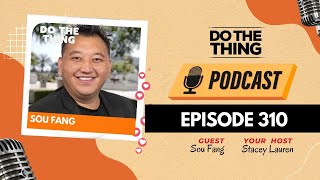
This is a transcript of a Do The Thing podcast episode (YouTube) in which host Stacey Lauren interviews Sou (Sou) Fang, director of the University of San Diego TRIO Upward Bound program. Sou describes running a federally funded college-access program serving Kearny and Hoover High School students (grades 9–12), organizing monthly community cleanups in Linda Vista (and expanded work in City Heights), and partnering with Bayside Community Center and local volunteers. Key facts: Upward Bound at USD began in 1999; Sou began her role in 2020 and secured a 2022 grant cycle that funded expansion to City Heights. Sou was born in a Thai refugee camp (ethnically Hmong), grew up in Linda Vista, trained in architecture (Harvard GSD and Syracuse University School of Architecture), worked as an architect and professor, and now leads operations (serving 70+ students, running monthly service events with ~10–30+ students). The program is federally funded through the U.S. Department of Education, provides transit/pronto cards and pays college application fees, and maintains an Instagram presence (USD Upward Bound).
Questions this video answers
1999 (described as '25 years ago' in the interview).
2020.
The 2022 grant cycle.
The program serves over 70 students in grades 9–12.
Approximately 10–30+ students (sometimes more).
Chapters
Hey, everyone. Welcome to the do the Thing podcast. This is your host, Stacy Lauren. Well, you guys, I'm excited because when I do the thing, I get to meet really cool people doing the thing. And I got to go to this volunteer event. Actually, I interviewed Tommasa a while back. She's in one of the do the Thing archives from the beginning when I was dissecting the formula and her amazing story of how she has created this monthly volunteer cleanup in the neighborhood that she lives. And it was something that I was involved with for a while while I was living there. And since then, I decided to go back recently, and that's where I met my next guest. And not only did I get to meet him, you guys, but, oh, my gosh, you wouldn't even believe what's going on. He's got all these kids, these college high school students, going to clean up the streets of the neighborhood that they live in. And it was amazing because they're going in, they have a good attitude, they're excited for the day. And there's something about the leader that's behind that that I was really wanting to talk more to, because can you imagine if more people could inspire and encourage and motivate kids or anyone to be able to do that? And so I'm excited to dive into him and his story and everything that he's doing. So I am welcoming sue to the show. Hey, Sue.
Hi, Stacy. Thanks for the invitation. Happy to be here.
Yeah. I'm just so glad because, I mean, it's one thing to be gathering students the way that you did, but their attitude about it was just so. They were excited. You could feel the energy and the electric of what they were doing. And I was so curious about how you did that. So I'd love to just. Yeah, we could start off who you are, what you do, and then we'll kind of dive into all of it.
Yeah. So thank you. Well, I'm Sue. I serve as director with the University of San Diego Trio Upward Band Program. We're a free college access program for students at Kearney High School and at Hoover High School. Our goal really is to get students into college, wherever that might be. They don't even have to apply to USD. We actually pay for their college application. So they can apply, really anywhere they would like. And we like to work with community partners continuously to get opportunities for students to come out in their communities. It's literally their backyard. A lot of these students live in Luna Vista because they go to Kearney High School, and so it's a great opportunity for us to interact with students outside of the classroom setting. So it's been a fabulous partnership with the Bayside Community center, working with Damasa, working with Kim. We started working with them in 2020, and it's been a great partnership working with them up until now as well. I grew up in Linda Vista. My family immigrated here. I was born in a refugee camp in Thailand, so I'm ethnically Hmong. And we landed here in Linna Vista, of all places. So I think I won the lottery there growing up in San Diego. And so I grew up going to the Bayside Community center, going to the Linna Vista Library. And so for me, when I came back into this role, it was just an incredible opportunity for me to continue to be involved in the community and also to get our students engaged in the community.
Wow. Okay, that's amazing. So you were kind of like born and bred right in the area in terms of kind of knowing what it did for you. And so now you're coming from this really alive place where you're like, hey, listen, this is what it did for me. It's going to help you too.
Yeah. My background actually is in architecture, and so I was an architect before coming into this role in higher education administration. Completely different, but in many ways still very much the same. While I was an architect, a lot of it was about community building and capacity building. So in my role now, that's a lot of what I do. Going out into the community, developing and working with community partners to better serve our students and then to get our students out there in the community as well.
So how do you even introduce the idea of what you're having them do and how do you get them excited about it? I'm just curious how that even happened.
Yeah. So the University of San Diego, we like to call ourselves an anchor institution, which means that in addition to really being a global campus, we have a lot of intentional focus in our local community, which is Linda Vista. USD is in Linna Vista. And Upward Bound was started 25 years ago in 1999 to have that anchor promise, or anchor institution initiative for USD to go out into the local community. And so my family was actually, my oldest brother was a part of the very first class of our Upward Bound program at USD when we first came over here to the United States. And so for me, it's been. It's dear to my heart because it's been such a big part of my family, my identity as well. And then getting the students out, involved. For us, it's our commitment to Linda Vista, Whether it's our USD students coming out or our Kearny High School and Linda Vista students coming out. For us, it's just our commitment to our community. And getting the students out have been great because we promised them food afterwards. So that's one of the kind of main attractors. It's last time we did tacos from a local vendor in Linda Vista. And then usually we have pizza or something for the students, and we encourage our families to come out as well.
Yeah. So food.
I love it. I love it. So do you have a way of motivating them or maybe how would you suggest somebody if they wanted to do this on their own? That's what I love about Tomas's story, is that she saw a lot of trash, right? And she's like, I want to clean this trash up. And then all of a sudden she's like, I need more people. Help me. And it's like this big thing now every month, where sometimes it's bigger. She said it could go from like 20 to like 200 people, depending on what's going on and who knows about it. And I'd love to have your story, what you're doing with these students, help maybe inspire people to do something like that.
Yeah, for us, it was. We wanted to commit to a project in Linna Vista. And for us, it made sense to work with Bayside with the MAS to do this. So we're there every month with her, helping her carry things as well. We typically get anywhere from 10 to 30 plus students that are coming out on a monthly basis. Sometimes we get too many students, actually, because then we have to buy a lot more food, which we don't actually plan for. We just. However many students and community members show up, then our team goes out and we try to figure out what can we do for the community. For us, it's yes, the students are getting community service hours, which looks good on their resume, looks good on their college applications, et cetera. But for us, it's a great opportunity to connect with them outside of the classroom setting because then we get to chat with them and figure out what's going on in their life. How is their game? Did they win? Did they lose? What are they struggling through right now? What are some successes? How's their family doing? And so we have those personal relationships with the students because we are intensely advising them throughout the academic year. These are grades 9 through 12 with our seniors. We're working them intensely on their college applications right now because it's application season with our grades 9 through 11, we're helping them with their coursework. And so it might be tutoring, mentoring, advising. And so because we have that continuous relationship with them during the academic year, for us, it's been helpful to really also mobilize them to go out in the community.
Yeah. It sounds like what's good about it, too, is that you're not over planning for anything, so it's not exhausting to do it. You're actually just like, whoever can come, come. This is what you're going to get from it. And then you figure it out when they come.
Yeah. And so we have students sign up, and so we meet as a large group at Kearny High School. We serve over 70 students. And so we'll meet once a month at Kearney High School and then kind of have all these other activities that are going on. Workshops, seminars, including service projects, community service projects. And so then we usually get a number of students that are signing up through there. So we have sort of a guest camp. But these are high school students. Things come up. And so sometimes students show up that didn't sign up, and sometimes students are signing up but not showing up. But we're always happy to have them come and have other community members engage as well.
Yeah. What have you noticed being a win from this experience? Like, in addition to being able to get to know the students more, has there been anything that you've seen from them?
Yeah, I think it's been beautiful. Seeing the students engage with the Bayside community Center, Even from their side, getting the students with their transit cards, MTS pronto cards. That's been helpful for them to help us get the students signed up for those pronto cards. So they have access and we expand equity for transportation for everyone in the community. And then outside of that, it's really just been getting to know the students more on a personal level. They get to ask me kind of what things are coming up. Usually they're asking me if we can plan a trip to Disneyland or something like that. And so I try my best to try to get our team together to try to see if we can make this magic happen.
Yeah. So is it under a nonprofit? Are you under. Or is it under the bigger lens of.
Under the umbrella of the University of San Diego?
Okay.
So through that, we are a nonprofit organization, federally funded through the department of education.
Okay. I was wondering. I'm training to be an auctioneer right now. So I'm like, maybe that's something I can help you with.
That's a random thing that I'm doing. Okay. So very cool. I'd love to know more about you too, because, I mean, in order to lead people in the way that you're doing, it comes from a place of just massive service. Right. Which you talked about in terms of this responsibility that you feel to the community. Because you even came when you came from Thailand and then you got here and now being able to get connected to Bayside and even what you mentioned about being an architect. Right. And then switching over into this. Maybe just talk a little bit more about that and the courage that you've kind of shown through each of these transitions in your life.
Yeah. So we're grant funded. We run on five year grant cycles. And so we actually have to submit a large grant proposal every four to five years to see if we even get the money to continue this work.
Oh, wow.
We've been very fortunate to have continuously been funded. It was in 2022, so I started in this role in 2020. In 2022, another grant cycle came up. And so I wrote the grants for our Kearney program. And then I found that it was about time we expanded the program to do work in City Heights as well. When my family came here, we landed in Linna Vista and in City Heights, and I still have family in both neighborhoods. And so for me, it was very personal to say, if I'm going to do this work, I'm going to do it because it means something to me. And so I wrote the grants for us to be able to expand opportunities in Linda Vista and City Heights. And very fortunate and happy that we got it because then we got to really go out in City Heights, then be intentional about the work that we do in both communities. These are very diverse communities and city heights. Over 80 dialects spoken. In Linna Vista, there used to be over 60. Now there's about 30 or 29 different languages spoken in Linda Vista. A lot of the Hmong population ended up leaving Linda Vista, but we still have a lot of new people coming in and we've been seeing it in our program. We just got so many students that just came from Vietnam, don't speak any English, and these are the types of demographics that we serve. For me, that's very personal to me because that's what I came through or I came up with with this wave of Southeast Asian people coming into Lenovo and City Heights back in the 90s, early 90s. That was our story. That was my story. And so going up through the public school system in Linda Vista. I like to say I went to school in, like, one square mile radius because I went to Kit Carson, Montgomery Kearney and USD. And so I didn't leave until I went out to grad school. Ended up going to Harvard Graduate School of Design and Syracuse University School of Architecture. Worked as an architect in New York City, went back to Syracuse as a professor. When the pandemic happened, the dean pulled me aside and said, I don't know if we can bring you back because we didn't meet Mission Yield. And so at that time, I was trying to figure out what to do. Do I stay in upstate New York, Do I go to Minnesota where my family is now, or do I come back to San Diego where my partner is? And she's been waiting for me to come back for five years? And so it was just when this opportunity came up to come back to Upward Bound at usc, which I was in the program when I was in high school. It made a lot of sense. Went through, I think it was six rounds of interviews, very intense rounds of interviews. And then, yeah, the rest is history. I've been doing this since 20 now.
I love this. It's like my kind of deep work is I had dissected this formula for how people can take action and reach their goals. And one of the stars of the formula was my people, which is being around people that have a shared goal. And I love it because it also represents diversity. It's not like we all don't have to be the same. We could be different because we're going for the same goal. And it sounds like that's what Upward Bound is really doing. Your goal is. It sounds like the goal is college. And then through that lens, you're bringing in all of these different perspectives and students that are all different walks of life, essentially.
Yeah, absolutely. Community building is big in what we do. Trying to build community and within just the students themselves and then seeing how they fit within the larger community. And so that's why those service projects have been so critical for us to get them out in the community and see themselves in the community, even if they're not staying in the community, for them to kind of leave and experience a lot of things.
Yeah. Okay, so what would be your number one piece of advice for people on doing the thing?
Well, I love the idea about having your people or finding your people. I think that's been really, really important for me to have the kind of core group of people that I'm consistently reaching out to asking for advice. Usually when people reach out to others when they're upset. I like to reach out to them when I have small wins or some things are happening. Even when you had approached me to ask me to be on this podcast that I called my friend in Seattle and I'm like, hey, this is what's going on. And he was like, maybe don't mess it up. And so.
That'S my advice to people, to surround yourself with those people and have your people.
Yeah. What are your goals? Do you have other goals too? Or what are your dreams for your life?
Yeah, I. It's been a few twists and turns because the day to day is very different from. I've spent eight years studying architecture and urban design and I got to work on a lot of very exciting projects. One was the tallest tower again built in Latin America. I worked on some twin towers going on in Miami. So large projects all throughout the world and some small projects here and there as well. And so it's very different now. Working with Strict, being very community interfacing, working on campus at USD has been great. One of my goals was to expand the program and so it's been trying to operationalize everything. I think we've gone to a really good point now where we've staffed the entire team. We have all our operations and procedures in play. I'm making sure that we're in federal compliance as well. That's a really important thing. We actually just had an audit that I was working on, which are never fun. So yeah, I think my goals now are really just to make sure that we're able to continue this momentum as a, for me, a relatively new program coming in and going out there doing the work in the community. We've been really good at establishing partnerships in the community in Lenovo, Cyan and City Heights. And so a lot of what I'm trying to do is just to make sure we're maintaining those relationships so we can serve the students and then is.
There anywhere people can follow along with you in your journey?
Well, we've just gotten active on Instagram, I think our social media game, we left it to our student team or we have a team of University of San Diego students that work with us and so they've been really the ones on the forefront on our social media platforms. But yeah, I think that's really it. USD Boardground on Instagram and then we have a website through the University of San Diego which we have our directory, our mission statement, all of that. But really our students are engaging with us on social media on the Instagram, on Instagram. Yes.
Okay. That's good. Yeah, I always wonder that. Where are the kids now? Where are the kids nowadays? That's Snapchat, though. That thing is crazy.
So. Oh, is there anything I didn't ask you that you wished I asked you?
Not in particular. I mean, I try to be a pretty open book. So whatever it might be, you could.
Tell your friend you did not mess up. No kidding.
Thanks so much for coming on with me. It's so fun getting to see you in action and just the students alive because of something that you're leading. And I just. I appreciate the work that you're doing, and I just am excited to have people listen to this and maybe be inspired to do something themselves, too.
Yeah. And thank you for highlighting the program and the work in the community.
Hey. All right, you guys, thanks for listening. Do the thing. Don't wait for opportunity. Create it. And hey, have you checked out my Facebook group yet? Go to do the thing, collaboration.com.
More from Stacey

From 262 Women to 8 Million Media Impressions: Deborah Drummond Built a Global Women’s Movement


From Notes App to Published Author: Avery Brenna Crumrine on Turning Intention Into Action


How Stacey Lauren's Billion Dollar Impact Marketplace Will Raise Billions for Charities and Causes

What Happened When Allison Maslan of the Pinnacle Global Network Ran a Challenge with Stacey Lauren




Leaders Share How Stacey Lauren Sparks Action, Clarity, and High-Impact Collaboration

Sandi Masori Announced as Emcee | The Billion Dollar Impact Event Returns to San Diego