Tim Murphy's Secret to TURNING PAIN into POWER
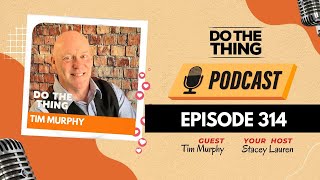
Podcast interview (YouTube) in which Tim Murphy tells his life story: growing up with an alcoholic, abusive father; joining the U.S. Air Force, rising to E-9 (Chief Master Sergeant), and later working as a civilian at NORAD/NORTHCOM at Peterson AFB; a 2014 turning point (a drunk-driving crash plus his son’s 30-year prison sentence) prompted him to get sober. Murphy describes his recovery approach—gratitude, affirmations, forgiveness and his "Seven Super Pillars of Sobriety"—and discusses a TEDx talk and his book aimed at people for whom AA/12-step approaches haven't worked.
Questions this video answers
2014.
E-9 (Chief Master Sergeant).
30 years (retired after 30 years).
NORAD/NORTHCOM at Peterson Air Force Base, Colorado (civilian role for 13 years).
Seven Super Pillars of Sobriety — When AA and 12 Steps Don't Work for You.
Chapters
Hey, everyone. Welcome to the do the Thing podcast. This is your host, Stacy Lauren. Well, you guys, I am so excited because when I do the thing, I meet really amazing people. And my next guest is one of those people. I have actually met him at Eileen Wilder's event and there have been plenty instances since then that I am cracking up out loud by his amazing sense of humor and then also crying because of the deep personal transformation that he's been through and what he's helping other people go through. And if you have not seen his TEDx talk yet or read his book, you're gonna wanna jump at the chance to do both of those things after this episode. So I'm so excited to welcome my friend and next guest, Tim Murphy. Hey, Tim.
Hey, how you doing? Good.
I am so excited to finally get you on. It's so funny. Cause we've been in each other's worlds, you know, for like a while now. And now to actually really kind of get into it, which I'm looking forward to.
I am too.
I'd love to have you share with people.
About you because I know you've gone through so many things and now you're able to come on the other side of it. Right. And you're helping other people kind of take a shorter cut and maybe even a smarter cut for what you had to go through. And I'd love to talk about that.
Okay, I'll just start out from when I was born and we'll just work our way up.
It's on scale.
Exactly. When I was growing up, my dad was a severe alcoholic, very abusive and verbally abusive, physically abusive, and lived with my two brothers and my grandmother. And my dad was nomadic. He would leave the house, be back in the house. And when he was in the house, it just horrible. Both my brothers quit school and left the house because of him. Because it's just too rough on them. I stayed and all the abuse that they took came to me. By the time I graduated high school though, I was already a depressed, suicidal alcoholic and I couldn't get a job or anything like that. It was a small town. Once everybody found out what my last name was, it's like, no, we're not going to hire you. And some of them would just tell me that to my face. Growing up again, even in school, my bullies were teachers because of my last name. So I graduated high school. I ended up joining the military as an alcoholic. That helped out a little bit. Not with alcohol, but with the self esteem and stuff like that. Because I could Be my own person and came up through the ranks, made it to E9 in the air Force. That's the highest enlisted rank you can get. So I did that, retired after 30 years and then got into a job at NORAD NordCom at Peterson Air Force Base, Colorado and stayed there for 13 years, still an alcoholic. But right there, right before I retired, I did change my ways. And I don't know if that opens you up to any more questions, but I got sober in 2014 and then retired after that. Soon after that. Here I sit.
Yeah, I mean, it's amazing actually. I didn't know about the Air Force side of your story, which is really interesting because that's such a significant part of your life. I'm curious about. You mentioned being an alcoholic in high school. So basically because you saw your dad, right. You didn't see any other way out or any other examples of anything else. So you just sort of fell into that same pattern.
Real quick.
Both my older brothers, even though they left the house to get away from it, they also fell into it. Both my brothers were alcoholics and one passed away, kind of a byproduct of it. And my brother that's left is he's kind of cleaned his act, aged out basically.
Yeah. And then when you joined the military you said, I love how you said that, that it didn't help the alcohol, but it did help you with your self esteem. What do you think really helped with that with the military? And how did you kind of cope with the alcoholism and being in the military at the same time?
At the time I joined the military, I believe the military and alcohol went hand in hand. When we'd have commander's calls and stuff, it'd be in the NCO club, it'd be a keg of beer at the back with all the snacks and stuff. And that didn't change till a little bit later on. And then it got to where alcohol was kind of demonized. People were getting away from it, but I was already so foreign to the lifestyle, doing that self medicating with it that I didn't change, unfortunately. But back again, back when I first joined the military, it was part of lifestyle and it went along and somebody got drunk, got in trouble is like. And then later on it turned into ending careers and people getting kicked out.
And so with all of that, you still said you had improved self esteem and confidence from being in the military. What do you think helped with that? Was it just the structure and the organization and the contrast of being at home with the Alcoholism. And now you were able to see a different path because of the group of people you were around.
Well, that and the fact that when I was an airman, I would join. I volunteered for everything there was going. And that helped out too, because I was accepted again. My last name didn't make a difference because it wasn't a small town. Nobody knew me, so they took me for who I was. I volunteered. I did competition teams with shooting, physical fitness and. And things like that, tactics. And as I got up, I was able to train those teams as I made rank and stuff, did TDY's, went all over the world. It just. I was able to excel, and that's how I made it to the top of the enlisted rank, being chief master sergeant. And I again got away from home, was able to excel. But again, drinking was always there. We'd go. We'd go tdy. Sometimes when it would end, it'd be a drinking party. If we had exercises overseas when I was overseas, and we'd play war games at the end of it, everybody go to the club and it'd be a drink fest.
So it just kept that part of my life going.
Yeah, yeah, yeah. It's almost like I've been actually studying this a lot. Where we have the old identity. Right. And then we're getting into the new identity. So the airmen and being with other people who were doing it too. Now it gave you this new sense of belief in yourself because you were accepted and you got to shed kind of the old life. I'm just curious how that feels when we talk about that.
Well, talking about it and looking back on it, I'm proud of my military careers. But there was still a lot of. With the drinking and stuff, problems I caused. Had two marriages that ended. I can draw a direct line to alcoholism for those. So not so great on that side, on the personal side, but on the professional side, it was good.
Yeah. And then you mentioned you stopped drinking right before you retired. I'd love to hear more about that.
Right. Right before I retired from the civilian side of my military. Well, what military career? But I was an Air Force civilian there. Nor at Northcom bar hopping like I always did. I went to drunk, went to work drunk almost every day. And one night I was out bar hopping and come home on the way home is about 1 in the morning. I blacked out again, something I've done many times before. But this time I had a borrowed car. It wasn't even mine. And I ran it into the divided highway sign that says, hey, There's a divided highway here. Centered that pole. Like I'd done it on purpose. The sign fell down on my head. It crushed the hood of the car down. Any different timing? I do believe that sign came through the windshield and probably decapitated me, but it came down on me, crushed the hood of the car, broke the windshield and everything. And I'm in there driving like this now, looking through a cracked windshield. I was about a mile away from home, so I was able to make it home. And then I woke up the next morning over and is like, did I really do that? Went out and looked, and the car was towed. So I had to pay the guy for the car. And at the same time, my son had got in trouble, and he was being sentenced at that time, and he got 30 years in prison. So I had to sit down and think that if I don't change my ways, I'm either going to be dead or in prison with him. I didn't want either one of those two. So I knew I had to get a change.
Yeah. So it was almost like the combination of what had just happened with your son and then this accident that got you to be like, okay, this is where I'm like, you saw a vision of where you could go, and now you're like, okay, I've got to make a decision, right?
Then again, that that divided highway sign really a side me. Which way are you going to go? And I chose the sobriety path. I tried AA and it just wasn't for me. After every meeting, I went to a bar because that's how it made me feel. I was like, oh, man. And I knew that wasn't. So then one day, I was sitting out here in my little shed, tinkering around, and I'd always been negative, negative person about, you know, oh, why has this happened to me? Why does this always happen to me? What's this? Oh, they're against me. And I had to sit there and think about what I've got. Good. Real quick. On kind of a different note, on the military side of it, my last deployment to Iraq, when I came back, my house was in foreclosure. My car was in arrears on payments. My son was just a shell of a kid. My ex, the wife at the time, had spent all my money, all our money, put it that way, had been abusive to my child. And I came back in, and my whole life had been changed without my say so, without my permission. I lost my retirement house and all that. So I was out there in the Shed after I had the wreck and everything and I got to thinking about all that and like, well, now I own my house. I've got a vehicle that's paid off. And then I started let me count my blessings. Let me be grateful for what's going on instead of being a woe is me guy that changed my life from that point right there. Just being thankful.
Yeah. And that's part of what your TEDx talk is about, right? With the gratitude affirmations. Let's talk a little bit about that because I think that can also help a lot of people that might be struggling right now. Just something they could start. You guys could start this today right now.
Right? Exactly. Affirmations and the road to recovery is what that TED talk's called. And yes, I talk about it is what you say to yourself, let's take AA for instance. Not all of them, but some AA meetings still do the hi, I'm Tim and I'm an alcoholic. Everything that comes after I am is your affirmation. That's what you're telling yourself. That's who you are and that's who you're going to be. So don't do that. Don't call yourself an alcoholic. You're. You're a father, mother, cousin, you're. You're something different for sure. That is not your identity. That is a problem you're having, but it is not your idea. So. Right. It's again just goes on talks about self thought and how you can change your life by changing your words.
Watch his talk because it's so good. It's like you think it's going to be about affirmations in the beginning is what I thought. And then you added the gratitude thing and I'm like, oh man, that is huge.
I'll tell you something about that. I think it's funny. I got to laugh. I take some medicines that dry me out and before I went, I took my medicines. I didn't think nothing about it. I go over to the place where it's being held there at Texas A and M and it's time for me to go up. My medicine kicks in. I'm up there on the red dot, my lips are sticking to my teeth.
And I'm having trouble and that's all I'm thinking about. Not what I'm supposed to say next. What's going on? I'm just thinking about my, my lips aren't working.
And yeah, that's hard. It's so hard. It's so hard because you put one piece of your life that's so important. And then you have like six, ten minutes to put it out there. I curious because this is something new that have been really exploring actually, because I'm helping. It's a whole long story, which I'll give a simplified version. I'm basically helping someone create a movie right now. And it's on people that have served, whether in the military or first responders. And they've now they're going through equine therapy to help them heal. And one of the things that came from it is the old identity. When you're in the military, you get stripped from your identity basically. Right. And so then when you get out, it's like, now what am I supposed to do? And you have to almost reclaim a new identity. Right. Otherwise you could fall into that. That whole downward spiral that so many people do. And I'm just kind of curious because when you got out, you actually. You got the call to change right before. And I'm just curious, did you already adopt a new identity before you left because you had been there so long? Or what was that like? Or was this gratitude affirmation, the thing that pulled you out? And that was Momish yous New Identity. I am someone that actually gives gratitude every day.
Right. I had a. I was in a shop that was. It was toxic. It was a toxic environment. And a lot of government work is. But again, I was still drinking heavy and stuff like that. And not until I had the accident did I set out there. The gratitude is what changed. Talking about the military, the longer you stay in. It's kind of like being in prison. You get institutionalized and you get these habits. You become inflexible. You retired a certain rank. I see it in the government all the time that these guys would retire as colonels, come back as a civilian, and they still tried to act like they.
Some of that happened to me too. And you really got to work to change. And that part of my life's over. I need to put that away. I need to put that rank away. I need to put that mentality away and be able to integrate with society better. So, yeah, the gratitude, counting my blessings finding out, just writing it all down, that was the life changing moment.
Yeah. And then now you are suddenly the person that gives gratitude versus complaining. So that's kind of almost your new identity. Where you were able to make the shift. Did you end up finding any people? Because I know the AA thing didn't work, but were there any people that you were around that you were able to get in with that. Were kind of going through anything similar.
Well, that's. That's kind of an odd question. Let you know real quick, though. Back to gratitude. I would tell the listeners, start your day with it, end your day with it, Bookend your day with gratitude. So anyway, did I meet any people along the way? Yes. I've had a friend forever that we was in the military together. I went to Iraq. He went to the United. Not the United Kingdom, but forget where it was, but he had a plush deployment, and I was living in Connexes and had to walk a football field to use the Cadillac toilet. So we would email each other, send each other pictures. But anyway, now we're friends here we both are retired now, but once I got here, the friendships and the people I made when I retired out of Virginia and moved out here, they were all alcoholics. But there was a few of them that were so good that I don't want to quit drinking. I'm still having fun. But, Tim, if you want to stop, I'll support you 100%. Stand behind you. And there was three people that stood behind me and in good, bad, thick, thin, and was always there for me. And when somebody'd say, hey, at the bar, hey, drinks for everybody. They'd be the first one to step up and say, not for him. And. But then I had other friends there that would say, one's not going to hurt you. One's not going to hurt you. Have one. So I had to. I didn't cut them out of my life, but I distanced myself from them.
But I had those three that were. If you're going to change your life, do those. You don't have to get rid of all your friends. That's a misnomer. But I had those three friends still. They were alcoholics then, they're still alcoholics now, but they support me in everything.
Yeah, I love that. It sounds like they really helped you at the time that you needed it the most.
Right? Right.
Yeah.
Yeah. And they would listen to me. If I wanted to preach to them a little bit, they'd say, yeah, okay. You finished?
Yeah. All right, I'll give you a ride home.
I'd love to hear more about. Because you ended up writing a book.
I'll kind of put it up here. So if we can get on the screen there. Seven super pillars of sobriety. When AA and 12 steps don't work for you.
Yeah, I love. What I love about this is that.
Stepping stop for pig.
Yeah, Seriously. What I love about it is A lot of times when people try something and it doesn't work, and because it works for so many people from what they think, they think that they're, they're not able to then do the thing that they want to do. Right. And so it stops them, they get stuck. But they don't realize sometimes you just need to try something new. Right. And so now you're giving them the other option. And I love what you said about the I am and how important that is. It's almost like the new way of doing sobriety that you're teaching people. It's like we are, and I'm imagining your gratitude and the affirmations is a piece of it. Right. And so now you're giving them. Yeah, you're giving them this new kind of vehicle to step into on who they are as a person.
Right. Again, if AA is working for anybody, stick with it. Don't change. But if you're in it and it's not working for you, there is other ways. AA is our gold standard. Even if you pay 16,000, $20,000 to go to a 30 day treatment facility, usually they pattern AA and it's free. So why pay 20 to $16,000 to go to something that you can go to a meeting in a basement and do it for free, but it doesn't always work for folks. It's. AA has a very small percentage of successful stories. It's a program that started back in the 1930s. At the time, the target audience was middle aged, white. It's changed very little over the years, but now our target audience is millennials, Gen Z, boomers, everybody from teenagers to the elders. And we need a new approach. And we believe too many things because we've heard it over and over again. And every time somebody talks about getting sober, the first words out of somebody's mouth go, day eight, you need to go to a meeting. Find a meeting and try it. Don't knock it, try it. And if it doesn't work for you, contact me and we can talk about some other options. But I believe it is your problem. You need to be the one to fix it and take control. Hundred percent accountability of yourself and your actions. Stop blaming other people for what's happened to you. And if you can do that, that's pretty much your first step, your first pillar, we'll call it. Get away from steps.
Yeah, I love that you're reimagining what sobriety looks like. Do you have a goal that people reach when they're kind of going through the process? Is There something that you're helping them strive for other than. I mean, obviously we want to stop drinking alcohol, but is there something else that they're kind of looking forward to?
Well, I believe the program I have, I think it can also help with anger issues and stuff like that, and it helped me with my anger issues. But it's take what will work for you. And everything may not work for you in the book, but that's okay. Find what will. Try to abstain and get sober and get back with your family. Mend fences with friends, people that had fallen out with, reconnect again. That's one of the things that every morning I'd wake up, I'd look at my phone. Oh, who did I text? What did I say? You spent the next few days apologizing to people so you don't have to live that lifestyle anymore. But most of it is for the person to just be a better person, have a healthier life, and just be a better person. That's the short of it.
Yeah. It's almost like you're. I'm just thinking about the level that you're able to help people with because you're doing the gratitude affirmations. So you're helping someone. Going from complaining to sit now, saying what's good about themselves and what they are and what they're grateful for. Right. Which opens up a whole new pathway in their mind. And then you're also helping. So if someone's going to alcohol, they're avoiding something. Right. Or they're trying to soothe a part of themselves. And so if someone's being really angry now, you're like, okay, of course I'm gonna drink. Either keep drinking, because I am already in that mode. Right. And so you're helping teach them how to come out of that so they're not needing to numb with these other kind of mechanisms.
Right. And face issues and stuff like that. How many times have we left work, said, oh, I need a drink today. After this day here, I said it many a time and went straight to the bar, got drunk, went home, got up, went to work. That was my psych. Alcoholism is also a family issue. So from my own personal beliefs, I wrote two marriages because of it. If it can save one person from going to divorce court, splitting her family up, her children, things like that, that's a success in my mind. So again, it's a family issue. So. Yeah.
And so you're also. It's like you have the gratitude affirmations. You have the how to deal with anger and helping People come out of that and find other. It sounds like internally emotional regulation. And then from there, you're helping people with relationships too. So are you helping them communicate or is it taking the alcohol away so then you can actually communicate?
I'm taking alcohol away because when somebody is in that state of intoxication, you can't communicate with them whatsoever. So it can't happen during that time. It's got to be when both people are calmed down and calm and talk rationally about it. Another one of my pillars is forgiveness. That was a big one for me also because I blamed everybody for everything. And I'm not talking about going and knocking on somebody's door and forgiving them. I did all mine right out there in the shed. Again, forgive my teachers, aunts and uncles, whoever I thought had wronged me and that good, I forgave my dad. And that again, was just like a weight lifted off. We're always hearing forgive and forget. That's not possible. The forgiveness part is that the forgetting part is not. We're humans, we keep that. Those scars are there, those memories are there. But the more you forgive that incident, the smaller it will get, the more manageable and the less it will hurt you. But will it ever go away? No. And they may be. You'll get it down to unmanageable and then something will happen that it'll spring up and you may have to do another forgiveness. It's an ongoing process. Not a one time, hey, I did it, wrote it down, and now I'm finished with it. It's a continuous process.
Yeah. And so is all of that in your book? Are you like. Yeah. And do you. So you explain it all in detail. It sounds like it's almost good for people, too. From any kind of addiction that you've suffered from, the common themes seem like it'd be applicable to a lot of different things.
Right. And again, I think the number one thing is take personal responsibility for your actions and what you've done.
And so what was writing the book like for you?
Oh, that was. That was nerve wracking because I got consumed in it. And that was. I wouldn't tell anybody to do that. Live your normal life. I got to where people would ask me to, hey, let's go to dinner tonight. I can't. I got to get this done. I got to do that. Stayed on it. And the next thing I had, I was working on the book, the TED Talk, all that was coming together. No, I can't do this. I do that. I can't Take my dog for a walk. I ain't got time. I got to do this. And I put so much inward pressure on myself, I really couldn't get anything done and not till the TED talk was over. With that, I went, sat down, got everything calmed out, slept for a while and woke up and decided then he's like, this stuff consumed my life and I forgot about everybody else. And it's like, I'm never going to do that again. So I would tell everybody to stay your path, Go out with your friends. The book's still there in you. Take notes, get it out when you can. Don't tell them that, hey, I can't. I got to do this right about to finish. Because I wouldn't finish that night. I would still be on it the next day. And not until I really did that calm down and decided I still got to live my life. If the words come out better and started editing and doing and got work done.
Yeah, it's hard because you're trying to put. I mean, it's probably similar to with the TEDx talk where you're trying to put your whole life's mission and purpose into this one thing and there's an attachment to that. Right?
Right. Yeah.
Yeah. Well, I'd love to hear who is the book for? Is it for people that have been struggling, like you mentioned? Don't. Well, I guess anyone can read the book, right? I mean, even if you're in aa, it's gonna help you, but because there's always extra things that you wanna do. Would you want someone that's struggling with alcoholism to read it? Or are you looking for people that are now already sober and they're needing help now, kind of living their best life and being able to come into their own?
I would say both. Anybody that it would help. Mainly targeting the professional men and women that are out there struggling. They're having life issue problems at home. Maybe it's even affecting their work. They may have had a dui or they're drinking and driving and they're just gambling with it. That's the people I'd like to reach out to and have them read it. And if they got questions or want to work with me, contact.
Oh, yeah, that's great. Could you mind sharing your contact info? Or I could put it in the show notes too, where they could get the book, right?
Well, it's at Amazon. All books are at Amazon. We all know that it's. And then books a million Barnes and Noble and the Hudson, I believe is the bookstore in the Airport. And it's in that now. The caveat that it's not in every Barnes and Noble, every airport bookstore. It's regional. And that is still being worked out right now. I've already got those contracts to have it in those places. But which airports, which Barnes and Nobles, things like that.
Was there a way that they could contact you directly if they have any questions or want to work with you?
Right. I've got. I do have a big Gmail, long Gmail, seven secret pillars of sobriety. Gmail.com or@gmail.com I got that big one. But again, I think it'd be easier right now just to use my Hotmail email, which is Murphy tmhotmail. That's a lot simpler.
Okay, sounds good. What is your number one piece of advice for people on doing the thing Again?
I believe the number one advice would be take responsibility, stop blaming other people for your problems, sit down and look at it truthfully. And I think you'll find that some of these things, you're bringing them on yourself. You can't blame other people for your life. And what goes on and goes bad or goes good, even in it. Yeah.
So true. And is there anything else? I didn't ask you that. You wish I did.
After we get off this, I'm going to come up with a hundred things, and then I'm going to send you nasty grant. Why didn't you ask me this? Why didn't you ask me that? Be prepared. It's Stacy's fault.
And then you'll have to do a gratitude affirmation.
Exactly. Give myself on that one. See how it works, folks. Yeah. So. Not really. I think you did a good job. I'm satisfied with what we've talked about here.
Thank you. Modeled something really important that I don't think a lot of people realize is because, I mean, so many people might look at you, right? Like, you've done a TEDx talk, you've written a book, you've overcome alcoholism. So many things, right?
And you might pantomime, you might.
You might seem like, oh, Tim can do it, but I'm not able. I can't do that. Right. I hear that a lot where it's like, oh, I can't do it, Tim Dib. Because he's already doing all these things. But what they don't realize is, and I'm sure you curious what you say is like, we all still have the same stuff. Everything still comes up. And then it's just that we have the system to be able to work through it faster than we used to.
And the same stuff still comes up. That's one of the things we talk about in the military, is this is. I can't deploy now. This is happening. This is happening when people try to get out deployments, and it's like that stuff's going to happen whether you're downrange or you're at home. The roof's going to leak, the water heater is going to break. There's never going to be a good time to start and do these things. There's always going to be something going on. But start.
Get a notebook, write things down. That would be one thing. I'll show you what I use. I don't have a fancy journal. I just got a notebook. That's what I use to write my stuff down in, do my journaling. I got some dreams in there that are crazy. I think after I read them, he's like, you must have been drunk in that dream. No. And so. No. Just start. Do it.
Yeah. What's one of the crazy dreams? You just opened the door.
Oh, okay. I'll tell you what. My latest one was. Me and my partner that I run around with do all my running with. Me and him belong to the Blue Knights International Motorcycle Club. That's a. A club for police officers.
So the latest dream was me and him was in Arkansas at a 1 percenters club. And that's people like the Hells Angels, the Disciples. There's all kinds of them out there.
Yeah.
And we was riding with them. There was no issues. They knew who we were, we knew they were. And we was riding on the gravel road out in the woods, which we never do. And that drove into a river. And now we're all riding our motorcycles in a river. And then it comes to a crossroads, cross river. But there was no turbulence. And that's where we were trying to get to this one spot where the water was warm. We got to that spot, turned in the river, it was warm. Then that took us to land. I'm pushing my motorcycle up a big incline, dry land, and I look over at my friend and say, where's your motorcycle? He goes, I left it in the river. I'm going to buy new. And that was pretty much the end.
How fun. Well, we put it out here.
Yeah. If anybody wants to interpret that, I would love your interpretation about that.
Oh, my gosh. Well, it was so fun having you on and doing the thing with me. I appreciate you. I appreciate you just contributing in the communities that we're in together. And I love getting to know you even more, Tim.
Yeah. Thank you. And I appreciate you also, and everything you do for everybody. Yeah.
Thank you. All right, you guys, thanks for listening in. Do the thing. Don't wait for opportunity. Create it. Have you joined my Facebook group yet? Go to do the thing, collaboration.com. all right, you guys have a great day.
Bye.
More from Stacey

From 262 Women to 8 Million Media Impressions: Deborah Drummond Built a Global Women’s Movement


From Notes App to Published Author: Avery Brenna Crumrine on Turning Intention Into Action


How Stacey Lauren's Billion Dollar Impact Marketplace Will Raise Billions for Charities and Causes

What Happened When Allison Maslan of the Pinnacle Global Network Ran a Challenge with Stacey Lauren




Leaders Share How Stacey Lauren Sparks Action, Clarity, and High-Impact Collaboration

Sandi Masori Announced as Emcee | The Billion Dollar Impact Event Returns to San Diego