Why Not Me? Geetha Sreedhar on Startup Exits, Bold Pivots, and Living a Life of Impact
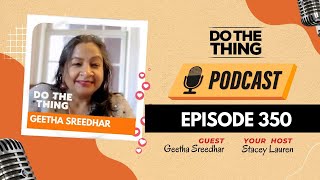
This YouTube interview (Do the Thing podcast) features host Stacey Lauren interviewing Geeta Sridhar about her multi-decade career and second-act entrepreneurship. Geeta describes emigrating to the U.S. at age 24, climbing the corporate ladder, stepping away to raise children, re-entering corporate life and reaching VP within five years, then founding an Insurtech startup at ~55 that scaled quickly and was acquired after about four years. Post-exit she invests in female-founded startups (How Women Invest), mentors founders, writes a Substack travel/finance/lifestyle blog, travels extensively (mentions 22 countries last year, 14 this year), and co-founded a Boston nonprofit funding STEM programs for inner-city students (supported Harvard Medical School summer program). The conversation also covers practical leadership tips (visibility in meetings, advocacy for team), preparing a company for acquisition (contracts, financials, projections, EBITDA considerations), and advice on goal-setting and resilience.
Questions this video answers
24 years old ("Came as a young 24 year old").
38 years ("I've been in the US for now 38 years").
About 55 ("I stepped off the ladder at age 55...started an Insuretech firm").
About four years ("we really grew like crazy during the pandemic. And then I had a wonderful exit. In four years").
63 years old ("a lot of people at my age, so I'm 63").
Chapters
Hey everyone. Welcome to the do the Thing podcast. This is your host, Stacy Lauren. Oh my gosh, you guys, I'm so excited because I love getting to meet new people and hearing the amazing things that they're doing in the world. And I got to meet my next guest through another community that I'm in called the Whisper Collective. And I actually ran a challenge inside that community and got to meet Geeka who is doing absolutely extraordinary things in the world. And I cannot wait to be able to share her with you, dive into her story, her do the Things story, and how she's impacting so many lives through the work that she's doing. And so I am welcoming Geetha to the show.
Hey Geeta. Thank you, Stacey. Thank you for the warm welcome. It's great to know you. You just came back from Dubai, so excited for the work you're doing and your podcast. So just a little bit background. I'm Geeta Alfredar. I've been in the US for now 38 years. Came as a young 24 year old bright out woman trying to change the world. So I got my mba, cpa, climbed the corporate ladder like everybody does. And then I had kids and then I said, oh, it's just so hard with two little children. They were 18 months apart, going back to work. So I stepped off the ladder and was a stay at home mom for five years and then tried to re enter the workforce, not even giving it a second thought. I'm like, I'll just step right back into where I belonged in my lovely window office. But lo and behold, life was not that easy. And I realized the corporate world was not as welcoming to stay at home mom. So this was back in 2000, so 25 years ago. So I had to kind of step down. Also from a window office I went to a cube. Just devastating for me. Oh God, I ruined my career type thing. But then I promised myself that I'm going to become a VP in five years, right? And this was a really very large company, 34 billion large assets under management. One of the largest financial institutions in the U.S. in the Boston area, top institutions. So I had set up a very, very difficult challenge for myself to do it in five years from supervisors. That meant almost a promotion every year, right? But I did it. So I think do it. I just did that. And then I will go through a story, I'm sure later. Stacey. But then I climbed enough and then I stepped off the ladder at age 55. I figured I wanted to start a startup and then I started an Insuretech firm. And then we really grew like crazy during the pandemic. And then I had a wonderful exit. In four years, one of the large tech companies acquired us. So that's how Exit group. We talk about female founders with exit. So that's how I met Stacy. And now I am investing in women. I'm an investor in how women invest. I'm an operating partner there. So we invest in a lot of female funded startups. And then I mentor startups. My timestime is I have enough for nonprofit to give back to Boston. So inner city kids in Boston, I do that. And both me and my husband love to travel the world. So I think this last year we did 22 countries. This year we traveled 14. So yeah. So I think we're doing good, I think. And I feel like I'm blessed to be in a good place.
I love how it started with just simply the vision, right. Even from the time that you. Sounds like when you were 24, kind of knowing what your goals were and what your dreams were, and then you just kept going until you were able to, I mean, I want to say achieve them because there's so many different layers there where you're like, you got to that one level and then you were able to go, okay, now let's go to the next level.
Totally. I think it's just when I look back at a lot of people I talk about, I think it's always setting those goals for yourself, right? And sometimes you set goals, but then the second thing is you don't work towards them. So I think it is setting goals and then the second layer is how do I achieve those goals? Like when I decided I wanted to the startup, right. There was nobody who had really at 56, who's sitting there and we are in a corporate world. So all my network is in the corporate world. And now I'm coming to the startup space. I'm really working 12 hours a day trying to figure out who's who in this world. How do I get ahead, how do I, what do I do, how do I building my network. So it takes about a year, right? Just getting everybody together, putting the network, the team. So I think you're right, Stacy. It's just two layers. First setting goals and then really having a plan and strategy on how do you work towards your goal. That's really very important. I think that's really the key.
What do you think helps you do that? How do you keep yourself kind of motivated and then also not wanting to give up too?
I think I've been a very strong from the because I've seen the setbacks against women. It's always like women can't do this, you can't do this. How are you going to able? So I've always fought that like why can't I do it? So that's always my thing is why not? Why can't I do that? You're telling me you shouldn't be doing this startup at 56 Gita that's so insane. Like why not? I'm going to do it, right? I just got to do it. Re entering the workforce, why not, right? So I push myself. But see, at the same time, I'll give you an example. When I was at one of the large insurance companies and I'm always strategizing, planning for my next move, right? So I'm building my network inside. But then just simple thing as attending a meeting where your boss is there and your boss's boss is there. All the top guys are there. So how do you go into that meeting? I would prepare, look at the agenda, prepare. You always have to speak up, right? You cannot just go to a meeting and just sit there and listen. That's really not the point. You go, you actively participate. And then even before I just go in and see the scope of the room, figure out where I want to sit. It's really, it's interesting, right? In the corporate world, there's so many like each company has its own nuance and you need to understand that. So for us, sitting in the right spot. So I'm not going to be the last person. Maybe there's no role, we are just standing there. So always go a minute or two early, make sure everything is lined up. And then I sit probably I know with a speaker, if I'm not heading the meeting, then I know the person who's heading will want to sit in the center. So I'm so this person's right or left, okay? So I position myself and then prepare. I either ask a question or I'm prepared to give a comment or something, right? So I think those are critical things. When we say I'm still reading comments in LinkedIn about want to seat at the table? I'm like, no, you should just pull up a chair and sit down, right? Why do we want a chair? Bring a chair with you. That's all it takes, right? And it's not just sitting in the chair, right? It's not just going to getting a chair. What do you do with the chair? You talk, you make yourself visible, right? That's really. I think so. Good. Because.
Yeah, I mean, it's the whole. My whole tagline is don't wait for opportunity, create it.
Right?
There's so many times that we could sit there and say what isn't happening, but instead you're actually able to be the one to make it happen and pull the chair up and just sit.
Down, bring a chair with you sometimes, right? You just gotta push yourself into it and be always advocating for yourself and make friends with people who will advocate for you. Right? When you're not in the room, you need somebody to say, hey, Geeta is really good. She deserves that promotion, right? Sometimes you may not be your boss because sometimes if you're getting to that level, your boss might be your competition, right? He might want to even block you. Also, I think that those times you just have to build your network within the company, outside. And then at some times it's just not going to work. You just need to leave, right? When I was at this place, I knew a large company. I looked at every opportunity and I'm hitting the glass ceiling. And then I'm like, okay, fine, that's okay. Let me do startup. It's even better, right? And yeah, always not giving up on that. That is the key. And then always when you have people working for you, right? I think it's always you're going to treat them with respect, give them right what you want to be treated right because you want your boss to treat you right. I've been in so many places where I've been brought in as an outsider, as a manager, vice president, whatever. And I have a teammate who wanted my role, right? So I remember I was at Platinum Investment when this guy Chris was probably about a couple of years older than me. I got the job and he comes to me and said, geeta, I don't know. I worked in this department for four years and this job was mine. But now you come from outside and you are here. You are now the manager. I should have had this role. I was like, okay, Chris, I get it, I understand. But there must be some reason I got the role. But let's work together. I'll make sure that I treat you fair. We'll figure it out. Let's just work together. And here are your goals for the year. Let's see how this goes and let's see if you deserve a promotion. Maybe next year we can definitely talk about it. And then actually, it was interesting. One of the most difficult years we had, we had some extremely complex tax forms. We Printed that year. And it would have cost if we had really messed up, would have cost our company millions of dollars. And then after the year, January, we filed all the returns. And then he comes back to me and says, geeta, I'm so glad I didn't get the job. I know why you got it. I'm so glad I didn't. I would have really messed up. I would not have known this level of detail. And we've been in such big trouble. So I think it's that you just feel so good, right? That. Okay, that now this person who viewed you as competition now is viewing you as an ally. And I think you have to. When you're in the business world, you always have to learn to treat people right, understand where they're coming from, right. And treat them with respect and care. And as a boss, you always have to go over and beyond for your people, stand up for them. Just like you want your boss to stand up for you, you gotta stand up for your people. Give them that extra day off. Your kid is sick, they call and I'm like, just go work from home or just take half a day, just do your thing. And then just come back and start pushing them to say, oh, you have a deadline. I'm like, I'll take care of it, don't worry. Just go do your thing. Right? I'll. I'll do that stuff today. I'll attend the meeting for you, I'll take notes. And then you see that it pays you back so much more. Right. When you are there for your people, they will come there for you. Right. That's one thing. And also, and then being there for your boss. Right? Because she's the one. You have to always. The thing here to learn is you have to make your job is to make your boss look good.
Yeah.
Because he fails. Your team is failing. Right. Sometimes people don't get that. Right. They're like, oh, I hate this boss. I'm going to do this thing to sabotage it. But when you do that, your whole department looks bad and that falls negatively on you. So your primary job is to make sure you make your boss look good and your team has to make you look good.
I'd love to know more too, about your company. When you built that and then eventually sold it or got acquired, what was that like for you? Was that an industry that you knew ahead of time? Did you have to figure it out or what kind of pieces was that?
So I have worked in the insurance industry for a number of years, so we knew this Was a problem that existed. So it was in the insurance technology space. It was a B2B market. And it was a very, very complex technology challenge we were solving. A lot of people had not been able to solve it. And so we had like put together a really good tech team and then we were able to solve the problem. And we started with just three small insurance. So it was a product where it was built towards target market was insurance agents, commercial business kind of when you think about it, it's a complicated process, but very simple. Think of it. The simplest way to think of it is like Travelocity. You go and enter the data you get. You say, I want to go from Boston to Miami. You enter the dates and then the airline. You get the best airlines, right? So it's very similar product for commercial insurance like insurance. Pizza Hut pizza shops, mom and pop coffee shops, whatever small business which insurance companies will only go insure with an agent. So we built a marketplace for the agents where they could enter the data once and get quotes from multiple companies. And it is extremely complex because each insurance company will have 300 questions. They'll ask them differently. And nobody had really been able to solve it as beautifully as we did. We have the best UI user interface. Always a key, right? You want to make it easy and simple and colorful. And so we were able to solve that challenge for the insurance agents. And then we knew we would be acquired. There was like top three or four companies in our space who are trying to solve that. And we knew one of them will be as if we did solve the problems. We started with three small insurance companies based in Massachusetts. And then in I think by year three, we had the top insurance company. I come from Liberty Mutual. So once we have the large insurance companies, of the top 10 insurance companies, I think we had seven of them were on our platform. So once you have that in three years, if you do that, everybody's looking up at you and going, how did you guys do that? Because this company will never be on your platform. And so we got a couple of those people, those insurance companies. So we had a really. I think to be successful in that, you need things to line up. So it's not just your technology, right? And it's not just. It's marketing, it's sales, it's a customer support, it's everything together. You really have to have the best of everything. And. And I was very tired. I'm on the finance, operations, technology side. So just managing all, making sure we are not wasting money. Right. Didn't raise A lot. Because we don't want to get too diluted, just raise enough money so we could hire salespeople and then this. And then we had like. Once we got the offer, we hired an advisor to help with us to work with the buyer. Right. So it would make it easier and start. Because it's a very, very complex sale. There's just so many nuances, so many contracts. So the process probably took over six months. But I thought it was a fair process. The buyers knew our company, they knew. We were well known in our industry at that point. And even in four years, almost everybody knew of our company. We had. The Tarmika was a brand. Right. It was just like everybody knew. It's like cheers and they say everybody knows you. So it was like in our industry, everybody knew us. So it was a well respected product. And having good insurance company, the customer side, both. Right. The large insurance agents were also on the portal. So that made it a very valuable product. And the sale itself was, I think with the technology we had to always have all the guardrails. And it was a fair. I think it wasn't as complicated. I was hiking, I think in Utah trying to close. We had the deal and we were closing and we were still hiking there and trying to get everything to our lawyers, the final paperwork. And it's always a crazy process. But I thought our buyers were very fair. They kept all our employees. We wanted to give them big bonuses to all our employees and the cash. We were fair. We didn't just want to take and run with it. Let's give it share to the employees. They could put down payment on their cars, houses, whatever they wanted to do. So yeah, it was, I think, the win win for not just us, but our team too. We wanted to take care of them. Yeah.
So what advice would you give someone that's building a business and that eventually wants to sell the business? Is there anything that you think that would be helpful for them to know?
Yeah, I think Cedarping is. There is. Then you're. There are just so many things which a buyer is going to look at you like every single contract with from day one. Because I've done loss, I'd be like, the contracts have to be with the employees. Who are you assigning IPs to? Right. Simple things like that. A lot of companies, they don't have good paper trail. Right. You need to have good records for at least the three, four years, whatever you have, because they are going to look at everything. So. And you need the contracts with your customers to make sure you go through that. The buyer is taking over your contracts as proper. They can take it over and continue with it and increase prices if they want to, right? So there's just making sure you have. I think a lot of people I talk to are. They struggle with paperwork. A lot of times they have not maintained a proper trail and then they're dependent. So not. And a lot of founders, I think another thing they make is because they are not into finance, they are not paying enough attention to it. They just solely rely on some accountant to do some work for you. I think you really, as a founder, one of the things you need to do is also be on top of your finances. Know your numbers, all right? Especially somebody, what is your worth? What do you think it should be? What is the market valuing you? And if you need to talk to an advisor, so be it, talk to an advisor, but have your numbers and see where you are. And your projections are also very important, right? So I think working closely with your financial person. So I was the finance person, I did. I wore probably 10 hats, I did a lot myself. But wearing that multiple hats and making sure that you're working closely and making sure that when the sale is going through, you're not. It's not that your numbers are not there or whatever and prepare for it and then think about who the buyer would be and what is important to them, right? You're always thinking, if you want to sell at least a year before two years, you need to prepare and say, who could my potential buyers be? What is going to be the most important to them? Is this contract, the customers? Is it the revenue matters or is it having this marquee customer? Once I get this, everybody wants this, right? Is it that or is it just going to be your ARR? Is it just going to be your revenue or is it going to be your profits? So the thing with. Once you are in the early stages, your multiple is going to be based more on your ARR projections, right? Because your growth is so much higher. But then when you become more established, it's going to be very tight. It's harder in the sense it has to be your growth, your revenue and your profits, right? Your EBITDA number becomes important. So as you grow along, you gotta pay attention to all these things. As a founder, you have to keep these things into your mind as you grow the company. If you're five, six, seven years, profits are going to be important. Growth and profits, right, are important. So you got to pay attention to that. So think about Those things at least a year or two before your exit.
And what do you think as far as now you've exited? I mean, I always wonder this with the people because I mean, I'm here too. Right where you exited. And now you've got a nonprofit. You're doing the women who invest. I mean, you are doing traveling, but you're also, I think, making a business out of the traveling.
Right.
Because you have a blog and different things that you're doing there. What has the drive to be able to just continue to do.
Yeah, yeah. So a lot of people at my age, so I'm 63, a lot of people like, oh, that we don't want to retire because I say I'm retired. Right. Like, oh, they're so afraid of the word retirement because they think that means just sitting around watching TV all day. Right. Which is not the case. Right. So we love to travel, both me and luckily both of us have at least aligned at that. So we love to travel and he loves to manage investments. So he keeps himself busy. I keep myself busy. I think I just want to give back and enjoy. Right. Because you have so much knowledge to share with these. And I just want to help people. I want to give back. So I do. But we do enough fun and enough work to keep ourselves, I think, mentally challenged. Right. Because that's the thing is. And you don't want to get isolated. You just want to sit by yourself all day long. Right. So you. You just want to make sure you do things to give back and enjoy. Enjoy life. I think it has to be a blend of that. It's not just total enjoyment. Right. And not doing anything. At least for me, if I didn't do it and give back, I think it would not be. So I think you have to find what satisfies you.
Yeah.
To go after that because I think that we are entitled to. To me just. And the blog, it just started with my cousins in India, everybody saying, oh, Geeta sent us photos. And I was just sending so many WhatsApp photos and videos. It just got like, okay, so let's just do the blogs. So now I found a new love for writing. Cece, I never thought I could. When you're in business, you're just writing these whatever project plans and never thought I would write, really enjoy writing. But I discovered this new love for writing and I'm writing and maybe it'll become a book because I feel like I've talked to people that you should write a book. So I've like started so with my blogs, I. It's not just my travel blogs. I started as travel blogs and then it became healthy cooking. I love to cook. So we always have fresh, two hot cooked meals in our house, I think for the longest time. And then few cook items, recipes. And then I also then started about. Then my daughter, who's 30, and her friends and everybody's like, okay, financial planning, how do we do this? How do we invest in the stock market? So I started writing about that. And then there's friends of mine who would be so burned out, right? The founders, right? I heard from all the founders who are just working 60 long hours, like 15 hours a day, 12, 13 hours, and then not taking time off, thinking that's what they need to do. So I, I was like, okay, let me write a blog on how to live a contented life, how to balance things. I think I'm all about balance. Not just working yourself crazy, right? Or just the other side doing nothing. I think life, you should kind of be always able to balance. And I think, Stacey, you bring up one good question on balance, right? I mean, this, the whole thing is still being talked about, right? How do you balance life? And then, but nobody asks men, right? Women, how are they balancing? It's always like, women are balancing and then they won't have it all, right? So when I was a stay at home mom, I stayed home for five years and my husband was like, okay, cool, now I work more, right? So he was a software guy, he was consulting and he's like, I'll take up three projects, I'll have more time now, now that home I can do more. And I don't think at that time he asked, how was your balance? He didn't have any balance, right? I mean, he'd come home just to put the kids to bed and maybe spend time on the weekends with the kids. But he was working a lot, but he enjoyed doing it and I enjoyed what I was doing. So the point I'm trying to make is balance is just what works for you, right? For my husband, he was just working and he was doing what he could to make sure that our family was secure and we are financially okay. And then for me, balance was spending time with the kids. But it, balance changes during the course of your life, right? It is different. And then we were both working, we were both juggling our careers. And so I think, don't get too focused on balance every single day of your life, right? It's a tough thing to do, balance it throughout your career. So always have Fun. Also doing everything right. Not just focus only on your career or just on family. So if you're doing stay at home when the kids are older, do something else which you're passionate about. Right? Yeah, I think do have a more balanced life.
Okay, tell us more about your travel. So what is that like for you and the blog and kind of what does that look like?
Yeah, my husband loves to plan travel, so he actually would book all the tickets. He do all the planning, of course, with ChatGPT. Right. So we probably travel. The last travel we did was I think two and a half months. We went to Croatia, beautiful place, Greece, and then we went to India. Our moms are 80 plus, so we spent some time with both the moms and then went to China. So I have to say something which I was kind of, after reading everything, kind of little worried about China. I wasn't sure what to expect, but it was really, everything was really fine. We had vpn, so they were saying Google will not work there. You can't access WhatsApp. But since we had a VPN, everything worked. It was a very safe country. We felt really very welcomed. Everybody had the translator app, so you'll just talk in English and they'll have their app and then they'll reply in Chinese and show it to you. And then so you have the answer in English to the people who are very friendly. Good. The infrastructure is incredible. So I think that's how most countries are. Stacey. I think we have all these. And then the other country I have to talk about is Jordan. Right. We went to Jordan, which was really. This was probably earlier in the year, maybe February, March, when we were so close to Israel border and Palestine. And then I was like, really? Do we have to go to Jordan? How is it going to be? But it was another incredible place. Jordan has all these beautiful hikes and things to see historic places also. But it was also very safe. But we always, when you just get in your mind that it's not going to be safe, how is it going to be? But they had a lot of security in the country. So even though they were very close to the Palestinian and Israeli border and they had like, in the country they have Syrians refugees, Palestinian refugees. But it was really beautiful. It was beautiful. I think whatever they do to keep the country safe and not have all these other issues, I think it was wonderful. And then the other thing, country I have to talk about is Botswana. We did the safari there. Another beautiful country. What Botswana does is ecotourism. So that means it's kind of expensive to go there compared to South Africa because they want to limit the number of tourists. So probably the price 10 tourists would pay, they try to get from one because once you then have less number of tourists, then there's less waste and there's less resource usage. Right. Beautiful though. We could see the lions walking within three feet of us. It was just incredible. So, yeah, so each country brings a different nuance to it, but I think everywhere in the world, I think people are friendly. They just want to live their life. Stacy. I mean, everybody just wants to take care of their family. Like a majority of the people. Right. Like in the US Everywhere in the world, they just want to live their life. Let me be. Let me be with my loved ones. Let me take care of my family and provide for them and my children and my parents. I think really that's the message is the unifying message everywhere is people, I think, are they want the same things. They wear all you want.
It's so true. I noticed that when I was doing my street interviews, I would go to different places, to Italy and London and Paris and New York and even in San Diego. And that was the common thread is we all have dreams, we all have goals, we have struggles. And it's really seeing, wow, we're all the same in so many ways. Right. And how do you actually now connect people together so they could see that and see each other's differences and then talk to each other kind of.
Exactly, exactly. And social media, Stacey, to that point was supposed to be that. Yeah. But you know where that has. But that's really. Originally when it came out, that was the whole exciting piece about the social media. Right now. We are so connected, but instead of connecting us somehow, it seems to be dividing us more, which is so unfortunate.
That's my mission in life with the do the thing challenge is it's a way to connect people together because it creates safe spaces within different groups. But anyway, thank you. I'm just saying that's what I remember. That's a selling feature on the challenges, for sure. So, okay, tell me about the women who invest and what does that look like?
Yeah. Yeah. Awesome. Yeah. So Julia Abrams started this four years ago. So how women invest, it started off as really a group of women getting together and seeing that only 2% or 1% of the money this is like four years ago, goes to female funded startups. Very small dollars go to female founded startups. And they want to change that. Right. So this is the third fund we are raising and we are Investing solely in female founded startups. Your primary and your co founder both have to be female. But it's a great democratization process where you go in as an investor. So minimum investment, you have to be qualified investor. The minimum investment is $25,000. And once you go in as an investor, you can become an advisor to these startups, mentors. They have monthly calls where they'll do a screening for the startups who have applied for funding. And then usually I've attended a lot of the monthly calls and you don't have to, but if you have the time and you're an investor and you have the time, you can. And then usually about 50, 60 women join these calls. And then at the end of each startup founder presenting, they will take a vote and say who wants to invest in the startup? So it's a very democratic process. We'll all think through and say, okay, this company is great, let's invest in them. Or this market is not that great, let us not invest in them. So it goes through the entire gamut. And so that is your participation. Right? So you can invest and then based on that, we can invest in these startups. And these startups are across all sectors. Right. There is healthcare, technology, AI, just pure AI companies. And then climate is there. So there's. And you should hear the pictures, Stacey. Incredible, incredible pictures. Every time I attend the monthly calls, I'm so blown away by these women who are doing these wonderful things and raising money. So that's really the biggest thing is that most of these women founded companies are not getting the resources they need. So we are here, but not just, this is not like a nonprofit, they're just giving money away. We are, this is for profit. So we are selecting the best companies. These women are going to do well and they're going to return. We are going to have great returns. Right, so one of you have already had exits in the funds we have invest. Some of the startups we have invested in, we have had exits. So these are all women founded companies doing incredible jobs across the board. And I'm planning to start a Boston group now. We have, they are based in San Francisco. So I have all these women in Boston who really want to get more involved, right? Advisors, mentors, finding and not only just investing and just stepping off. So they have a group who want to invest in them, but also help these companies grow. Right. Because it's not just investing, Stacey. Right. It's not just putting the money in and walking away. Right. These companies, if you have contacts, you nurture them, support them as a member, advisor, whatever it is. So we're bringing them good resources. And that's really what I want to do with the Boston group I'm starting now is to bring a network of people who would not just fund these startups, but who can help them grow. So we'll have great exits. So it's going to be win, win all around. Yeah. And yeah.
And it's like you're giving a space for the women who are investing to really be connected in community, but then also you're supporting the businesses that need to help so badly, which is really great.
Yeah, yeah. You all have connections. There's so many women in the corporate world who have connections. Right. So they can obviously invest because the startups have to be connected to the corporate. Who's the buyer? Ultimately, it's the people who are in the corporate space. They are the right. They are the ones who are going to buy our product. So I think whoever has connections, I figured we just need to bring those people into our system ecosystem so they can support these as advisors, board members. Sometimes and annually, actually, we run an event called get on Board where people who are senior women in the corporate world who want to become board members so they can run this. And this supports your pathway towards becoming a board member of small, medium, whatever, large corporate boards. So we do that and how women invest. We have another group called How Women Lead. So this is for the women who are in the corporate world to learn and hone their corporate skills, leadership skills, and also gives really very senior women place to talk.
Oh my gosh, I'm so excited. I've talked to you more about an event I'm doing in January which is all about leadership and how that's the way that we're going to all grow our business in 2026. So we'll talk more about that for sure. Okay. So I just love what you're showing people, I think is that number one, it doesn't have to be just the one thing. That's a book I want to write at some point. It's like, stop just doing the one thing. Because I mean, I think the more that we can do the travel blog, do the women who invest, the women who lead, it's all these different things. You're getting to really kind of see all these different sides of yourself and your personality and be able to open it up and then you see that it all connects. Everything we do connects. Right. In the nonprofit. It's so many things I'd love to talk about that a little bit more. So did you start the nonprofit after your exit or was this something that was there before?
No, after I exit. Because even before I remember talking about if I have an exit, what do I want to do? Who do I want to give back to? And I, I, I love Boston, but I've been here, so I feel like this is really, I need to help Boston. This was always my thing is I'm gonna help inner city Boston kids. Right. The other ones what don't have the opportunities. There are so many small suburbs within Boston city where the kids are not getting the opportunity to get into stem. Right. It's tough, right? The schools, there's so many layers of problems. So I have another friend who was very much into it. So Zara and I, so we started this probably three years ago, just around the time I exited. She was ready and I was ready. I'm like, okay, let's just do this thing. So we do fundraising and we help the inner city Boston kids participate in the summer programs which last summer we supported kids to go to the Harvard Medical School has this program called Moonshot, which is the future of surgery. How do you do robotic surgery? So these kids are in high school, so they're 10th and 11th grade, which is really the good age to when they're thinking about college. What do they want to do? So we wanted to and the kids obviously are interested, selected by their schools. The principals are recommending them and saying these are really are top students. They need the opportunity to attend program like this. So we supported them to attend this program in Howard Medical School. The summer program, week long program and gave them exposure and the summer we are doing the same thing, but it's a very expensive program. The Harvard Medical School summer one week program is expensive. So I'm like, I need to look more into doing more programs and supporting more kids. So I'm continuing. So it's our processes of continual process of how do we support more kids. Enter stem. All right. And primarily female. So girls are afraid of tech, right? So my actually interestingly enough, both my daughters are engineers. My older one is a chemical engineer, my younger one is a software. But typically the thing is most girls don't want to go into engineering thinking it's very difficult for whatever reason. And we are not good at math. I come from math background. I think we are so good at math, I think we just need to apply. So I want to give that opportunity to all these girls to get into technology. So we want more to come. So we are Continuing to raise funds and want to support more kids enter these programs and mentor them through high school and college.
Well, you are the perfect example of doing the thing. You're the perfect example of giving back and really being able to help people find their voice too. And I loved the pulling up the chair and sitting down and you were definitely the model of that. I would love to hear. What is your biggest piece of advice for people on doing the thing?
I think you need to think, what is your goal? Right? What do you want to do? What is your goal? What is going to make you happy? And then of course, the second thing is always working towards your goals. Right? Working hard. You just can't put a goal. Because I have so many people say, oh, Geeta, I want to be like you. I want to have a startup. Yeah. I'm like, okay. But then they're like, oh, I make this such a big salary, just hard for me to give up my corporate job. I'm like, okay, that's fine too. So whatever goal it is, just set your goal and work towards it. Otherwise, don't even have that as a goal. Put something else, your goal, right first and then your goals change throughout your life. Right? And I think you had to revisit your life and say, okay, this is done. Now what's next? What can I do? So it's that continuous story of growth and satisfaction. And then some people are like, I got stuck in a startup. I've got to work 20 hours. I've got to keep doing this forever. I don't have any choice. I think the biggest thing is when people say they don't have a choice. I tell them, no, you have a choice. Have a choice. You really have a choice. You have to think about it. Sit down and think about what choices are. Right? There's always a different way. So build your network. Find somebody you can really talk to and somebody who'll challenge you. Right? Me and my husband challenge each other all the time. I think they'd be like, oh, you got. Yes, you can do this. All these challenging each other. So find someone who says that to you. Like it challenges you, right? When they say you can't do this and do it and do it and at least you try doing it, you have that satisfaction. Okay? I mean, not everything you try is going to be a success. There are things which you're going to fail at. That's okay. That's okay. I think failure is always a stepping stone to success. I'm sure I must have put so many hundreds of Goals and probably failed it. But I just don't dwell on them, right? If I failed at something, I'm like, okay, yeah, that's fine. Then just move on to the next thing and not sitting there and dwelling about, oh, I failed at this. That means I'm so bad, I'm not good at anything, right? So that's really the wrong message. And then I think, Stacy, the biggest thing is the message we tell ourselves in our head. I think that's really the biggest challenge is the roadblocks we put in front of ourselves, right? Because when I reentered the workforce after five years, the message first I was. My message in my head was, I know, failure. I just let down my career. How the heck did I do this without thinking it through? Why did I do this? Why? Why? And I was punishing myself, right? I was just angry that I had given up this amazing career I had. But then I turned the. And those days, I really didn't have anyone to talk to. I just talked myself. And I said, okay, but what you enjoyed 5 years with your kids. This is what you wanted. You had so much fun. You had such a blast. So now what? So what? Okay, fine, you gave up something. You gave up your corporate career, but you got something in return. You got those amazing five years, which you are never going to get again. Because the kids are now, like, doing their own thing, right? Bihar Ji we see them maybe a few times a year, right? But it's not like staying with that. So I think once I turned the narrative to say, it's okay and you can do it again, I can climb the corporate. You did it once, you can do it again. And set a goal for myself. And then. And I was like, okay, what if I failed at this thing? It's okay. I'll figure out another. I quit this job and try another job. This is okay. I don't have a window office. I'm sitting in a cube. It's okay. If I don't fail at this thing, maybe something else would come along. But don't give up, right? So because I was this close to quitting that, and I'm like, I'm not quitting. I'm going to give it myself six months. And if I absolutely hate this job for six months, then I quit. But I'm not quitting today. Wow.
Please share with people where they can learn more about you and the things that you're doing.
Yeah, I think Geek024393 is my substack handle. I should. I'll probably send that to you. You can probably somehow add that I'm on substack handle, people can follow me and I'm on LinkedIn. I post a lot on LinkedIn, which I enjoy now. I feel like now I'm not representing anything before in the corporate world. In your startup world, you have this image you have to maintain and you just have to follow certain protocols you put in your own head. But now I feel like I can post what comes to mind. And sometimes I post a lot, sometimes not. But I'm on LinkedIn Geeta Sridhar, so they can follow me there or on my substack. And I'm not intentionally not on Facebook, any stuff. Yeah, that's good. Yeah, it's a choice I made. Right, Sorry. Smart.
Well, thank you so much for coming on. I love the work that you're doing. Thanks for everything that you're doing for the world and being able to help people really be able to take action on their dreams and then also stay connected through communities that you're building too.
Thank you. Stacey. This was so much fun talking to you. You're doing great work. Just giving us a voice is another great thing, right? I mean, you can have all these ideas, but giving people voices is a great service you're doing to Love it. I enjoyed our conversation.
Thank you so much. Thanks everyone for joining and do the thing. Don't wait for opportunity, create it. And hey guys, did you check out my Facebook group yet? Go to dothingcollaboration.
Com.
More from Stacey

From 262 Women to 8 Million Media Impressions: Deborah Drummond Built a Global Women’s Movement


From Notes App to Published Author: Avery Brenna Crumrine on Turning Intention Into Action


How Stacey Lauren's Billion Dollar Impact Marketplace Will Raise Billions for Charities and Causes

What Happened When Allison Maslan of the Pinnacle Global Network Ran a Challenge with Stacey Lauren




Leaders Share How Stacey Lauren Sparks Action, Clarity, and High-Impact Collaboration

Sandi Masori Announced as Emcee | The Billion Dollar Impact Event Returns to San Diego