Why Purpose-Driven Leaders Are Sponsoring Challenges with Stacey Lauren
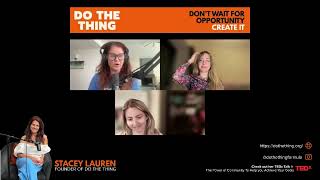
This interview (YouTube) with Stacey Lauren (Do the Thing) and sponsorship expert Nicole Martin explains how short community challenges can serve as marketing activations and direct funding vehicles for both nonprofit and for-profit organizations. Stacey describes the flagship "Find Your Voice" challenge (17 days, daily micro-dares of 5–10 minutes) and the "My people parties"—live/virtual gatherings during challenges that let sponsors interact directly with participants. Nicole emphasizes that challenges create engagement beyond logos (participants use products, join book clubs, or interact with sponsor content), and that sponsorship revenue for a Do the Thing challenge goes directly to the organizing entity (unlike typical sponsorships that cover event costs). Use cases include pre-event activation, post-event momentum, translated/white‑labelled implementations (e.g., Spanish), and rebranding to fit event themes.
Questions this video answers
Over a million views.
17 days.
Five to ten minutes.
She said she recently brought in close to a million dollars for one of her events.
Chapters
Imagine a single funding vehicle that fuels both for profit ventures and nonprofit missions. Today, we're going to show you exactly what it is and how your sponsorship can ignite its impact while giving your brand powerful visibility. So I'm bringing on right now Stacy Lauren with Do the Thing. And this was actually all uncovered by her TEDx talk, which actually has over a million views, by the way, already, which is amazing. It's called the power of Community to help you achieve your goals. So you can check it out after this interview. Also bringing on Nicole Martin, who's a sponsorship and partnership expert, to talk about this very powerful vehicle. It's so innovative. It's a way to tap into community by using challenges. And we're going to dive right into everything. So, Nicole, you've been in the mix of these sponsorships. You just brought into close to a million dollars recently for one of your events. And I know you're working on some other fun events. You're the industry expert. You've seen all the traditional sponsorship method that you've been doing in the past. Now, obviously these challenges have been so powerful. So I would love for you to start there.
Absolutely. So I think with traditional sponsorships, you're really just saying, hey, I'm going to put your logo on this. I'm going to put make a social media post on this. We're going to put your logo on an email campaign. They're not really getting that interaction. What's so amazing with these challenges is they're seeing your logo, they're interacting with your brand, not just your logo. So, for example, we've had a ton of authors come on. So the participants are literally interacting with the book. They're holding the book, they're feeling it, they're reading from it, and they're really getting that full experience. So it's more that they're interacting with the brand, opposed to just like seeing a logo or hearing about it somewhere. And I think that is a true marketing experience for each brand that comes on board with it.
And I know all three of us have been to a million conferences, so that we all know it's like we don't even pay attention to the logo of these sponsors. And so this is super engaging way to be like, wow, and make that brand just really stand out. So I want to jump to Stacy. These challenges are obviously an amazing way to activate community. What does that actually mean in practice, though? How does one challenge create a space where people feel safe to take action?
Yeah, that's what I'm loving about. Where we are right now is because I started these challenges out of just like a fun thing that I was doing after I exited a business for 20 years. And they have dares in them and they're like these micro actions. Every day somebody gets a dare. And if it's my kind of like flagship challenge, the find your voice challenge, which is really the Community Activation 1, they're these self reflection dares. So it's nothing crazy, but it's just a little bit of a nudge to get them out of their comfort zone, or as I like to say, their comfort circle. And what's great about that is because you're growing together in a shared space, doing shared action collectively together. You're getting to know each other, you're getting to really deepen and nurture relationships. Even if it's someone that you've known for years. When they're inside of a do the thing challenge, they get to know them in a new way. And it's even great for strangers that have never met to connect and meet. And that's why the challenges are a beautiful way to spark these collaborations and really intimate experiences. And since I actually became a charity auctioneer on top of that, I actually started to connect the dots behind what was happening inside my community. And then I was, as I was helping other communities use these challenges to build their businesses and build their brand authority, I realized thankfully, my mentor, Sean Kelly, who raises literally a half a million dollars to a million dollars through gala's, being an auctioneer, he really trained me on how to raise money and how the nonprofit world worked. And that's when all of a sudden something clicked and I was like, oh my gosh. If you're doing a big gala that you're paying a lot of money for and you're raising a lot of money for, you can add this challenge before the gala or you could add it after the gala. And it adds a whole nother layer of visibility and opportunities for someone to get sponsorships and then also to be able to really connect and grow together. Or there's the people that actually can't afford to do the big gala or event. And that's where these challenges also come in. Because you can get so sponsorships for the challenge alone, which is really amazing. It gives another opportunity for whether it's a non profit or a for profit business, to make money for doing a really cool event where you're gathering people together.
And it's just the magic of online gathering. Right? Like you said, they can't afford to do this Fancy gala. But these challenges are done online. I love that it's all the different platforms, because every organization knows the best platform for their following, for their members, their community, whether it's Facebook groups, LinkedIn, even. You've done challenges through WhatsApp. People could do it through there, so. Exactly. I'm glad you talked about those that are really strapped for cash, that can't do those fancy galas. And those are so much work. You've done so many different do the thing challenges for different organizations. And what's nice is maybe it's the find your voice if they don't have an activated community already. And then it's so cool that you can brand these challenges so that they fit each sponsor partner's community, community. And I know that you have two recent examples.
Yeah. What's so great is that if someone is doing an event like a gala or a big event, for example, San Diego Media pros, they recently did an event that was huge success. They had Foreigner people that went to this event. It was for helping filmmakers fund their film. And so they had a lot of industry partners there. They had filmmakers there. They had a lot of people from the community that wanted to support these filmmakers and helping them fund their film. And they are using the find your voice challenge, and we're calling it connect, collaborate and unlock your funding. So that's an example of we're using my existing challenge that's activated communities all over the world. It's even translated in Spanish. It's so powerful in whatever community is being used in it. And we're rebranding the name to be able to fit with what they're doing. Because when you're doing these big events, what happens is the energy in the room is, like, electric. Right? You love it. You just want to stay there forever and feel that energy basking. But then after the event, what happens? There's this huge drop of what am I supposed to do with all this content and all this ideas and all these things that I learned and the people that we met. And these challenges are an amazing container that keep the energy consistent so that you're able to really nurture those relationships and the things that you just learned. And it's really able to help people unlock whatever it is. And so, depending on what group or what event organizer is using the challenge, you could actually almost like, rebrand. Think of it like a book, and you've changed the book cover. We're able to rebrand it based on what that event organizer is needing. And then depending on which Sponsors are partnering with the event organizer in the do the Thing challenge. They're able to create an experience that involves them with it, which is so cool.
Absolutely. And Stacy, just to piggyback on for the event experience itself, like, I love how you said that you can use it before the event. Okay. And after the event. So before the event, who. Who's ever been to an event and you know, nobody, and you're already uncomfortable and you're like, okay, I'm there. What do I do? I think what's so great is if you use it before the event, like, you might see someone and you're like, oh, I interacted with them and we talked together. So I'm going to go talk to them in real life. So they're already like that. They're going to get more out of the actual event because they already have those relationship. And then what's cool is they can even have one after the event. And why is that cool? Because you're keeping the magic going. You're keeping that momentum from the event going. And I just think do the thing is it's amazing for people to have that experience. So it's like the event and the momentum and the excitement is everlasting.
Yeah, I love that. And think about it too, like, from a sponsorship perspective, like, that's what why we're sponsoring things, right? We want to either support the cause because we care about the cause that it's representing, or we just really want eyeballs in front of our stuff. And so, like, I've done sponsorships so many where my logo was on a bag or my logo was on some screen, but no one knew what I really did or what it represented inside of a Do the Thing challenge. They're experiencing your brand, they're interacting with it. Because every day we're giving dares, every day we're emailing the group and telling them what, you know, what they're doing the next day. And the people in there are alive and connecting together through something I do called My people parties.
And what's so unique about that? It is. And I view sponsorships for tons of events, and it's really. People have their logo about on things. Like you were saying, they're on a bag, they're on an email blast, something like that. But with the do the Thing challenges, what's so unique is the sponsors can get super involved. So during those My people parties, they can literally come to the parties and they're having you interact with the brand. And that is something that's super unique. That does not happen with any other form of sponsorship.
So let's face now, I would love for you to dive into these challenges. We keep mentioning it, but let's dive a little deeper on how. I know they range from maybe a five day challenge up to 17 days, your people parties that are so much fun, like during the actual challenge. So let's talk about that.
My foundational challenge, it's called the find your voice challenge. It's a 17 day challenge where every day the participant that's, that's in the challenge, they get a dare. It takes them five to 10 minutes to do the dare. And what's great about that is it's no time at all. A lot of times people are trying to do these overly orchestrated events. This is the one that every organization, community, company, support group, anybody on the planet needs to do this challenge because it's a personal growth challenge. And no matter what community does it, it takes on a shape of the group. And so that's the foundational flagship challenge, which is 17 days. And so the sponsor gets visibility at each phase of it. We also do this really fun thing during the challenges called my people parties. And My people is actually what came out of my TEDx talk where I identified the number one thing that helps people achieve a goal, which is being in a community of people that have the same goal. This is different than your friends and family and your regular support network. It's actually being in a group. And so that's what this challenge does, is it really activates the group in a really cool way. And I don't know about you, but if I was a sponsor, that's the kind of sponsorship I want to be in. Because when you have people that are activated around a goal, then you're getting visibility inside of there if you're the one that's sponsoring that event or that challenge. And so my people parties are basically, each one has a specific goal. And so depending on your level of involvement that you want, because as a sponsor, you could just plug and play, here's my money, we'll put your brand, we talk about where it goes. Or you could be interactive, you could have stage time, whether it's in the virtual or in the person, depending on what the event organizer is doing. And people can actually be there interacting with your product. There could be, if you're an author, they could be doing a book club inside of it that's a version of a my people party. Or they could do like actual, like touching your product, depending on what kind of product you have. And so it's an amazing way for people to connect with your brand and what you're doing in the world. It's an amazing way for you to get exposure of your brand and have people actually interacting with it and actually knowing what it's about.
And then Nicole, I know that she just touched on it, but I would love for you to chime in on why would somebody want to sponsor a Do the Thing challenge?
Absolutely. They're actually engaging people. So your brand is not just being seen.
It's not.
They're not just looking at your logo. They're, like, interacting with it. And what's so unique is how they can actually come into the event, come into this virtual world. They're not just seeing your logo. Right. They're literally interacting with it every single day. So everyone's gonna get super excited about this challenge. They're gonna wa up, they're going to check their email, because that's what we do while we're laying in bed. And they're going to watch the dare video. And guess what's going to be on the dare video? The sponsor as well. So they're looking at your sponsor. Okay. They might hear it in the commercial. Then they're going to respond to the dare.
Okay. And that their card, guess what?
Also has your logo on it. So now they've already seen your logo twice, and they've heard about your company inside of the dare, then they're going to respond.
And then guess what?
Other people are going to respond again to them. So if they write a comment, then other people are going to comment and engage with them, which is also seeing your brand again. And then every few days, there's also an opportunity for my people party. And here, they're not just looking at your brand or watching the commercial again. They're actually engaging with your product or your brand, which is, to me, is like the ultimate marketing experience. These are things that we can't just provide with a banner. This is them actually engaging and interacting with your brand, which is so unique. And in the marketing world, it's very hard to make that happen. So, Stacy, you nailed it with the do the thing challenges.
Yeah, I think it's so cool. Like, we could. I feel like this could be fun. We're gonna do the thing right now, and we could play with what this is, because imagine it's like a software company sponsoring a Do the thing challenge. Like, one of the my people parties throughout the challenge could be people interacting with the software, and that's what every software company wants. Right. Is users actually using and consuming the product. And who knows, maybe if it's even amazing for market research because maybe something that you thought worked doesn't work, then it could be better. You could find that out inside of sponsoring a Do the thing challenge. Let's say it's an author sponsoring the event. Then we're all reading your book in a book club inside of the event. And then if one of your goals is to get reviews for your book, then there you go, we're getting reviews. Or maybe you're just getting people around your book because you want to have more exposure. Or you could have a physical product that you want to see people interacting with. You could do some kind of promotion where people can buy your product at a discount, maybe even do some giveaways throughout the challenge, and people could actually be like, with your product. I know, that's been so fun, getting to see people engaging with people's products through the my people parties. And we get to create whatever kind of challenge and whatever the goal is for the challenge and whoever the sponsors are that are involved, we get to curate the experience specifically for that container of what's happening and what people want. And so whether it's a networking event and you could add your sponsor logo there and have people interacting that way, or it could even be a hot seat session where we're helping people through a specific problem.
And I think what's so unique about that, Stacy, is typically with sponsor opportunities, there's just. It's like a checkbox, right? But you're actually able to curate the sponsor experience for them to really make it the most valuable that it could be for that sponsor. So that's really cool, I think.
What's so cool, I went to my first conference. I was 21 years old, San Antonio, Texas. Didn't know a soul. It was a cleaning conference. I owned a cleaning company at the time and. And was very excited, but also nervous. I didn't know anybody there. So I think these challenges leading up to an event are so magical because then I'm already building community. I'm getting to know people. So then when I show up in person at the conference, I already have some people that I feel connected to and feel like I'm already in this community.
It's so good, Chrissy. Because I'm an introvert, and when I'm going to events and I don't know anybody, it's hard. I'm, like, sweating and drained on energy. Unless for some reason I'm the speaker, I'm Okay. Which is weird. But if I'm actually the attendee, I'm like, going to the bathroom and hiding out for the first 10 minutes, right, until I can feel more comfortable because I don't know anyone. And what I found is there's a lot of people like me that are introverts. They go to these events and they really struggle through it because it's a whole sea of people that you don't know. And that's the power of a do the thing challenge, is it helps you get to know people. It's like a curated space for connection. And it's really powerful because we're meeting people at their own individual comfort circle, which allows the group to meet each other in this really beautiful way. And so whether the person is introverted or they're extroverted, they're allowed to interact together. And so by the time they get to the event, you, as the sponsor, they're already going to know who you are. So they're going to be looking for your booth or your vendor table or whatever you have going because they're like, oh. Oh, my gosh. Like, I remember this was so cool. And versus, who are you? What are you? So the sponsor gets so much value because they already know their brand before they even get to the event.
And then, Nikki, I would love for you to piggyback on it because we definitely talked about before the event. Let's see some examples or just talk about the ones that they can do during the actual event or after the event.
I think what's so great, so what Stacy was saying is if they're doing it prior to the event, then they come to the event. They already know about your brand, they already know about your product. They're already excited, excited about it, and they already know attendees as well. But the after part, now they have met these people online. Now they've actually met them at the actual event. And now afterwards, they get to continue that relationship and growth in the post event as well, which is really awesome. And I think that there's no opportunities like that that I've heard of. So it's just. It's such a unique opportunity and it just creates such a positive experience for the event attendees.
I feel like I've been to so many conferences. I had saved all my badges. I finally threw them all out. It was a massive amount of those lanyard ban badges. I had kept them for so long. And so I'm even thinking I went to these amazing entrepreneurial conferences. Huge ones, like 3,000 people. And et cetera. But you're learning. It's like a fire hose. So many amazing speakers, so many amazing notes. And then do you know the excitement wears off after you get land off the airplane, you get back home and then are you truly implementing all this amazing stuff you learn in the conference? I don't know, you're overwhelmed, you're back in the mix of the drama of your business. So I think even the after one is really beneficial because you could take strategies from that conference from the keynote speaker and as a group, run that as a challenge.
Yep, absolutely. And then also when I attend events, say I meet Tom and I'm like, oh my gosh, Tom speaks my language, I totally understand. And then I get home and I'm like, okay, who is Tom? Do I have his information? What was it that I wanted to learn from him? With the after challenge, like you're re engaging with everybody. So then you're like, oh, hey Tom, I love how you said this. And then Tom can explain that again. And I think it's just amazing way to continue learning and continue developing those relationships.
It's so powerful because it's hard to remember everybody. Like we have our lives. I did a conference here a few months ago in San Diego and I did a challenge after the event. And honestly the only people I remember from that event are the ones that participated in the challenge. And they have built these really beautiful relationships and are now collaborating together. And so, so that's the power of doing these challenges is that you're able to give people another space to connect, collaborate and be able to grow together. And the sponsor, by sponsoring it, you're able to actually have your brand be inside of that experience. And so people are going to connect you to who they're meeting, what they're learning and what they're doing.
I know we're wrapping up and getting towards the end of this interview, so let's bring it back to the first thing we talked about during when I introed you guys. So how is this the funding vehicle for organizations?
What I love about this, adding this to your either existing event or just making this the event itself is normally when people are sponsoring an event, that money is going towards something. So if you're getting a lunch sponsor for an event, you're not getting that money as the event organizer or the non profit owner or the for profit owner, you're getting the money to buy the lunch. Right. Or if you're sponsoring the valet for the cars, you're paying for that valet. So there's no ROI on there for you with the do the Thing Challenge. When you're sponsoring it, a hundred percent of that money goes to you.
And that is so unique, Stacy. So typically the sponsorships, like if I am going to have an event somewhere, the sponsorships are literally just paying for the facility and the insurance and the bags and all the other random things you have to have. Right. But what's so great about this is there's no really cost costs. Like 100 of the money is going to the organization opposed to just paying for the actual event site. And that's super unique.
Nikki, if you needed to sum up the difference in just one sentence of what makes a Do the Thing Challenge sponsorship unforgettable, what would that sentence be?
Okay, here we go. Are you ready? Sponsors become more than just supporters. Okay. They actually become co creators of the movement.
Love. And Stacy, you want to add anything to that?
Yeah, I love that because it's the ultimate collaboration play, right? You have the event organizer, you have the engine, which is the do the Thing challenge, and you have the sponsor that's wanting to support. And then all of that is getting plugged into this interactive engagement space where people just get to take action together, they get to grow together, they get to know each other, and they're doing it through this really beautiful shared experience. And all the money goes directly to the organization that's putting on the event. And it's just a really beautiful way to make this possible for anyone to use this challenge as their funding source for either their for profit or their nonprofit mission.
So, Stacy, like, what's next up? People have listened to this and what do they do next?
Yeah, thank you so much for doing this with me. And yeah, if you are a business or you're somebody that wants to have people seeing your stuff, this goes beyond visibility. This is an interactive experience that people will be really like loving on you and interacting and engaging with everything that you have. So you can reach out to the organization that you're looking to sponsor. Or if you don't have an organization you want to sponsor yet, reach out to us and we'll help match you with the right one. Perfect.
Thanks again to both of you for coming on. I'm sure this is super helpful and yeah, perfect.
More from Stacey

From 262 Women to 8 Million Media Impressions: Deborah Drummond Built a Global Women’s Movement


From Notes App to Published Author: Avery Brenna Crumrine on Turning Intention Into Action


How Stacey Lauren's Billion Dollar Impact Marketplace Will Raise Billions for Charities and Causes

What Happened When Allison Maslan of the Pinnacle Global Network Ran a Challenge with Stacey Lauren




Leaders Share How Stacey Lauren Sparks Action, Clarity, and High-Impact Collaboration

Sandi Masori Announced as Emcee | The Billion Dollar Impact Event Returns to San Diego