YouTube Channel: @dothethingformula
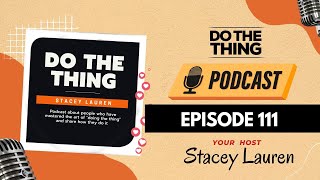
Dr. Nancy DeAndrade explains people-pleasing: it roots in childhood fear of abandonment, shows up as generosity but costs you your own needs and boundaries. Start by noticing your triggers, practice saying no in small moments, and fill your own cup before giving to others.
Chapters
I do really believe 100% from every part of me that everyone has the capacity to be able to do the things that they want and not to be held back by the mental baggage that's in our head that we want to push through.
Welcome to the do the Thing podcast. In each episode, we get down and personal with people who go after the things they want to make all their wildest dreams come true. Join us as we unveil and dissect a formula for what it takes to do the thing. Here is your host, Stacy Lauren.
Hey everyone. Welcome to the do the Thing podcast. This is your host, Stacy Lauren. So it's so cool when I am working on new things and I'm exploring just how to make it the best possible way so that when you guys get to see it, you see it from like all these different sides. And I just decided I'm, I'm working on this quiz right now because I've noticed a lot of people that I've talked to when it comes to doing the thing, something stops them. Whether it's something with comparison or perfection or self doubt or even people pleasing. And so the quiz that's being created right now is really just helping you uncover which part Persona you carry and what you want to work through to be able to move through and move through what those blocks are to go into action. And so with that, I like to get like a 360 degree view on really being able to help you move to do the thing. And so I asked one of our experts, and you guys know her well, Dr. Nancy DeAndrade, to join me on this adventure of uncovering one of the Personas. Basically we're going to be talking about the people pleaser and I will admit to you that this might be my Persona.
And the reason she's here is because she's helped me on many occasions kind of uncover when that Persona is glaring and when I need to move through it. And so I thought she'd be the perfect one to get guidance on this, on this topic. So I am welcoming Dr. Nancy DeAndrade to the show.
Well, hello, hello again. So good to be back as always. I could be here every day. I have to say with you. I can talk to you every day.
I love doing these things with you. I would have to count to see how many times I've had you on now because every, it's cool too when I get to record them. Even the one when we did on Should I Go on social media and all the things that we've been able to work through. And then we get to record when we get to publish them. It's kind of neat to see the progression of things that you've helped me work through.
Oh, I was thinking today, this is Almost my co host on this. On this podcast.
I love it. It's so cool.
Well, I'd love to talk about the people pleaser. So we want to talk specifically about people that want to do the thing. And I should clarify, do the thing that you want to do, not that someone else wants you to do or not something that you feel someone else should have you do, or because you feel the responsibility or because you feel the responsibility to do something for another. This is something to come that comes from inside of you, that lights you up, not of anyone's expectations of you. And I say that specifically because we're talking about the people pleaser. Because something I've noticed, like it's not even half the time, it's not even expectations other people have on this person. It's something that this person just embodies and lives and feels. Almost this is their service to the world, is to please others. But then what. What the cost of that is, is they're almost living their life out of others. Others needs and wants. And so anyway, I wanted to talk through this because I definitely have a lot of feelings about it and just kind of see what your perception is of this concept of the people pleaser getting in the way of them being able to do the thing they want.
Mm. It's a little tricky because when we think about a people pleaser, we think of someone who is really kind, who would do anything for you, would go at extreme length to help you and do whatever. And in this conversation, we're not insinuating or trying to say that you should not be kind, that you should not help others. I think there's a limit to how much you are helping others. And the limit is when you are neglecting yourself, when you stop taking care of your own needs in order to take care of the needs of other people. And there is sort of similar characteristics to what they call in psychology, codependency, where you make sure that the other person comes before you, or your emotions depend on how other people feel. And the people pleaser is someone who can be needy and can also avoid conflict and can seem as a martyr sometimes, which is not very conducive to doing the thing, because doing the thing is what you just said, which is, what is it that I want to do? Not what will give me a Price from other people or what will make everybody else happy. But what is in my heart for me to do. And that could be very well serving the world, being of service, but not without taking care of yourself.
Yeah, I'm so glad you said that. Because for me, right, I get pleasure like you've seen it firsthand. I get pleasure out of helping others. That's what really feeds me. But that's. It does come at a cost because if I'm not taking care of myself or resourcing myself, then I am risking myself in that way. And so this is something I have to work on all the time because that generous side of me gets fed on that. And so. And I think a lot of people are kind of in that. That. That embody this Persona are kind of in that same thing. And so that's what I really want to help the listener understand or the person that's taking the quiz is how to recognize it. Also, because sometimes it's coming out of some need for. And this is where I've gotten better, right? Cause I've kind of patched my. I wouldn't say when I've sealed my holes better now. When I had more holes in my bucket, I would almost. That was my way of getting validation without even knowing it. Which I think is the way you're talking about the codependent side. So I'm glad that came up. And I talked to someone yesterday on here that kind of gave a distinction between caretaker and a caregiver. And so anyway, I just wanted to open the space for like this conversation because I think someone might be listening to this and just rejecting it and saying, oh, no, that's where I get my. My happiness is from helping other people have that conversation a little bit more too.
Yeah, that's what I didn't want. I don't want people to think that you have to be. You have no empathy for people. That's not what we're here to say. What we're here to say is to identify what are the characteristics of a people pleaser, how it affects you, where does that come from. And the majority of the time, people are trained to be people pleasers when they are in a situation, when they grew up in a household that they had to tiptoe around their caretakers, either because their caretakers were abusing them physically, sexually, emotionally, they were probably neglectful, or they were abusing substances as well. A person tends to. Or a child at that point tends to find ways to please the caretaker in order to avoid conflict, in order to avoid anger, being lashed at them or abuse or anything like that. And so they need to be, they become the good girl, the good boy, the good person that sometimes doesn't even have needs because the needs won't be met. So they sort of hide or they become so good so they're never hurt. And so as adults, unfortunately, we become people pleasers and we become the type of people who would avoid conflict, who would avoid stealing the stress of someone being angry at us. We would do anything because that discomfort doesn't feel safe for us, doesn't feel good at all. And doing the thing is about sort of facing your fears. It's about being able to accept a no or accept rejection is about sort of gaining that strength and being solid in your, in your self esteem. That you can take conflict, that you can take disagreements and be okay still, and still be giving and loving. I can see how many people pleasers were raised by narcissistic, you know, or abusive parents. And for them is the main need is to be validated and to avoid conflict. And so as adults, they still behave in the same mentality of the, of the child because that's where the information got ingrained. And they, they play I don't have any needs. Oh no, no, you come first. Whatever you want to do. They go to this corner where they don't have any needs at all. They try to feel invisible or that their needs come last. And what happens though is when they keep denying their own needs and wants, then they become dependent on, on someone else to fulfill those needs and wants to make them feel a certain way. They become insecure, needy. And that's something that many people recognize, like, oh, I don't want to be needy, but I feel needy when I'm in a relationship. I feel needy. How do I not feel needy? How do I cancel, not cancel all of my plans because this person just called and wants to hang out with me. How do I stand on my strength and my truth? And that's the challenge for the people pleaser.
You're making me think too. It's such a big fear also of not being liked or even being abandoned. Right. Because that's coming from, from such a deep, deep place. I'm just wondering what you think about, about that.
Totally. Yeah. The abandonment can be physical or emotional or mental. The in, in your group, Stacy, you have the book club that is reading the book Attachment. And that's such a powerful book. I recommend it to everybody. And in your book club you're dissecting what it's like to have either of the personalities or the attachment style. And what happens when we have been neglected or abandoned mentally, emotionally or physically is that we become either anxious or avoidant. We develop an attachment style that is not secure. And so a person that is avoidant would do anything, it would go to great lengths to do anything to keep the person to avoid that abandonment, that feeling of neglect and abandonment that they experienced as a child. And so when, when they are engaged in an adult relationship and the other person is fulfilling their own needs or maybe they have an avoidant attachment style, then the person feels so afraid and so abandoned that they will.
They will change who they are. They will be at the mercy of the, of the other person's wishes, schedule ones and everything. And that's, that's a little. That's sad.
Of course it's sad.
But it also kills your self esteem when you stop taking care of your needs to please another person. When you stop doing the things that you want to do because the other person is now available and you have to drop everything that you're doing to be able to be with that person. And unfortunately, when you do that, when you disrespect yourself in that way, the other person disrespects you. The other person doesn't value you. So it's creating a cycle. The main thing that people pleasers don't want, they are actually creating them by the behavior that they're exhibiting with other people. Yeah.
And it's interesting because it's not even conscious for the other person that takes advantage of it. You know, like, it's like. Because the people pleaser doesn't have, really has, I don't want to say low boundaries. I don't know what the right way to say that is. But they're not holding the people pleaser is not holding their boundaries. Then the other person on the other end doesn't know where the line is. So they get confused. And then it gets to a breaking point though where they're like, oh my God, I'm doing everything for you. And, and then there's just not the, there's no equal distribution there. But they don't understand how it got to that point.
Right. And you can hear very clearly people pleasers saying, I've done so much for you and this is how you repay me. Or I've canceled all my appointments and you don't cancel yours. You don't even make me a priority. But in reality, we are the ones that are deciding what we take. We are the ones that decide when we are canceling our appointments. No one is telling us to do that. And so the other person is exactly what you're saying. The other person is like, I'll take, you're given. Sure, I'll take. Oh, you're giving more, I'll take more. You give me more, I'll take more. You're not demanding anything of me. You're not asking anything of me. Great, wonderful. Let me just put my feet up and just serve me, please. But not out of maliciousness. Is, hey, listen, if somebody comes to your house and knocks on your door and said, here's some flowers, and every day they come with flowers, you're like, wow, this is amazing. Wow, flowers every day, this is amazing. My house is full of flowers. I love it. And then one day they don't show up. You're like, excuse me, where are my flowers? You start expecting that, you start demanding it. You never think, wow, that person will probably want flowers at their house. They would never, you would never think that. Unless the person says, hey, listen, I would love some flowers too. And then there's communication, there is arrangement. And you say, okay, well, don't bring me flowers every day. Bring yourself flowers. The thing that a lot of people pleasers don't understand is that is not in the hands of anybody else to take care of them. No one is going to take care of you. You are going to take care of you because you're the best person to take care of you. You are the best person to know your needs. You are the best person to know your body, your mind, everything. No one else knows it. And so to put that expectation on someone else to please you is setting yourself up for failure. Now, I'm not suggesting that you don't count on people or that you don't ask for favors or you don't collaborate with people or have a partnership where you can give and receive. What I am saying is if you are depleted, if you are empty, don't expect anyone to fill you up. Come to a relationship, filling yourself up and then you exchange what's overflowing. You exchange that love and passion that you have. And then if at a point you need support, that person will be there. Because it's not a neediness approach. It's more like, okay, I'm in a slump right now. But I, I do take care of myself and I, I would love your support. I would love for you to be there and that person can show up when you need it. When you ask, not constantly needing that makes sense.
And I think that's why this is so important to me. Some people kind of tuning in that maybe not have. Maybe haven't listened to the other episodes might be wondering why is. Why are they talking about people pleasers on do the Thing? But the. Just so you guys know, the reason this, the reason we're doing this is because this podcast really evolved. It started with like, all about do the thing and do the thing and do the thing. And then as I started doing episodes and episodes, I realized I don't want you guys just to do the thing. I want you to do the thing out of your own alignment. I want you to be able to do things that you up. And so whenever I hear someone saying, oh, I am getting my fulfillment from other people, that's fine, but I just don't want it to be at a cost to your. To your own self worth and to your own being. Re. Like what Nancy's saying with being resourced yourself, because that tends to happen where you give, you give, you give until you're completely dem. Depleted and exhausted.
Yeah, exactly. And I love that how this is exactly the purpose of. Of this work, because doing the thing requires the development of your inner strength in order to face your personal demons and to face the world. And the world is full of rejection. The stronger you can be in how you approach the world, the more successful you'll be. Because I think that in some ways, life will give you, will close some doors for you. And so you may believe that those doors closed because the world is out to get you or you're not worthy or whatever, but if you are centered and into that inner strength, you will understand that life closes some doors because it's opening other doors around you. And all you have to do is let go, accept, not dwell on it. You know, sure, it could hurt for sure, but look around, turn around and look at the other doors that are opening and don't stop moving. Moving forward.
Yeah, and you're making me think too. If we go to the. If we go to the do the thing formula, I'm game. We look at the I identifying the why. So when you're wanting to do the thing and if. And if your why is because you want to do something for others, I think that's great. But like, maybe we can kind of talk through that. Is how do we tap deeper into that to kind of understand, like where that's coming from?
Yeah, it's. It's really cool because even that first one, finding your why, it's a great technique. You can ask yourself why? Every single time I think you mentioned in a previous episode, someone that, that you talked to that was saying the seven whys or, or something like that. I can't remember how many. Why?
Yeah, seven layers of why.
Yeah, seven layers of why. And. And when you ask yourself, well, I just. I just want to make people happy. Ask yourself why? Well, because it lights me up, because it makes me feel good. Why does making people happy make you feel good? Well, because I like seeing people smile. Okay. Why? Well, because when they smile, I feel like I've done something good. And why, you know, feeling why? Why? Looking at other people smile and you feeling responsible for their smile makes you feel good. And you start sort of like really digging deep until you find, well, what would happen, what would happen if they don't smile? Then I would feel not good enough. I would feel like I didn't contribute, that I wasn't of service or whatever. If you can find the. The main reason, the. The root of everything, then you can explore that route. You can see if that route is really sustainable or are you just trying to heal a trauma that you experienced as a child? But let's say that you think, well, why do I like to help people? Because I struggled a lot when I was young and this is my way of transforming my pain into something that can help others. That is a very different approach. It's a very different approach because it is facing your trauma, it is understanding that you can transform whatever happened to you into something positive is not hiding. It's not people policing is actually using your experiences to help other people. Now, helping other people is not the only why that exists in the world. But for a lot of people pleasers, that's what it is. A lot of people pleasers just want to help. They want to be liked. They want to feel at ease. Now, some other people pleasers just want to live in the Himalayas and not have to deal with people, which. Which is understandable, but the majority just want to help.
And I wanted to add too, because I think that the important distinction, and we've talked about it, but I want to make sure the listeners are hearing it, is you work, you're still good to help people, right? It's. We're just saying in helping yourself, that's how you're able to help others. So, because what you don't want to do is give and give and give and give until you're just completely depleted and exhausted yourself and then you're just spinning in a circle, basically, we want to get you into the practice of identifying it, where it's coming from. So then you're able to really make sure you're being resourced in the right way. And then you're also kind of consciously figuring out, okay, am I doing this because I want to, or am I doing this to fill some kind of hole?
Absolutely. And. And you nailed it. Because if you are doing whatever project and you are doing it because you want people to like you, because you want people to think highly of you, because you want people to be happy with you, guess what? You're going to fail. Because there will be people that won't be happy. There will be people that won't like whatever you're offering. It's impossible to please everybody. It is inevitable that you're going to disappoint people. But if you are focused on the true message or the true source of your desire, which is, I want to help people transform. The people that went through the same thing that I went through, I want them to know that there is hope. And if they don't take your message, you're fine. Or if they reject you or criticize you, you are fine. That's the real why. It's not about you, it's about them. It's about how are you of service and not how do people like, how many likes did you get on your post or how many people praised you or whatever. It's about them. And I think that's the difference. You can still give and you can still help other people, but it comes from another source, you know, and the inner strength.
Yeah, And I wanted to mention, because you were talking about how easy it is for this person to suppress their voice. Right. And to kind of go along with whatever the other people want. And then that idea of being invisible. So what would be kind of a way that they could flex the muscle of being able to speak up for their own needs and even discover their own needs, too?
Yeah. For some people, it's very difficult to assert themselves, to ask for what they want. They don't want to create chaos. They don't want to create rifts or conflict of any kind whatsoever. And so they may go to a restaurant and the server brings the wrong order, and they probably won't say anything. They'll probably be. They'll probably eat it and be happy with that and be okay because they don't want to bother. In those little moments. That's a really good place to start practicing. When you go to the gym, you don't lift. You know, if you haven't worked out in a while. You don't lift, you know, 200 pounds. You start with a five pound bell. The same ways you can start practicing your voice in smaller increments. So maybe telling the server, excuse me, I think you brought me the wrong order or asking for help. Hey, can you help me with this or could you hold the door for me please? Because a lot of people that want to become invisible, that don't have a voice, they there they think I'll do this myself or I don't want to bother anybody, I don't want to ask for help. The fear is rejection or becoming a burden or people not necessarily helping them. And so a lot of the times they deny their own needs or they become the type of self sufficient that is more of I don't need anybody type of approach rather than I'm capable of doing things. So flexing the muscle would be in small increments. So if you are comfortable, if you're someone who's comfortable and say no, no, excuse me, you brought me the wrong food. See in which other areas you don't speak up for your needs or you don't ask for what you want. And I'm not the. When a people pleaser starts expressing their needs, they tend to go to the extreme where they get really angry because that's the only way that they feel they can push their boundaries and maintain their boundaries. They are so afraid of failing themselves or being wishy wash in their boundaries that it becomes really difficult and they have to use anger to push the boundaries to assert themselves. And perhaps that's the first step to say no, stop it. You know, and then as they get comfortable with their voice, they, they start speaking more assertively and less aggressively. Whereas if you say that one more time, I'm going to have to leave or could you please not say those words? When they start speaking with more confidence in been facing the guilt of speaking their truth, I think that's the progress. A lot of people don't speak their truth because of the guilt that they will feel when they set a boundary. The majority of the people avoid the guilt feeling. You know, I just feel bad, I don't want to say no. I just, I don't want to create conflict. I'm fine. But all of those behaviors, what it creates is you lowering your self esteem, you not feeling good enough about yourself, you putting yourself last. And that's going to show everywhere you go, everywhere. That's the way that everybody's going to treat you like you are last. Because that's what you're doing with yourself. If you're not honoring yourself, that's what everybody else is doing. So maybe look around your life and see in what areas you can practice being more assertive. Perhaps at work there's someone who opens the door, gets in and doesn't hold it for you and you say, excuse me, hold the door or hold the elevator or whatever, or maybe something even bigger. One of your kids is being disrespectful and you set a boundary. You said you will not talk to me like that again. No, if you talk to me like that, we will have to sit down and have consequences, agree on consequences. So setting those boundaries, speaking your truth, practicing little by little can make you feel more confident, can help you show up with confidence in the world.
So good. I'd love to also kind of talk about, we've sort of talked about it a little, but I wanted to make sure we're kind of being really clear for people. Something I've been really wanting to do with these results is show people what the good side of being in this Persona is and then also the side to improve. So they see they have a recognition, right, that having the self awareness. So when they're seeing come out, they're able to like question it more to make sure they know where it's coming from. So what are some of the good sides of being a people pleaser? Like obviously number one is they're just a generous spirit, right? They have a really generous heart. So that's one part, that's one of the things of a good side of a people pleaser.
Generous, Yes. A people pleaser tends to be very accepting of you. They tend to be loving and compassionate. They accept you just the way you are with all of your faults. They tend to be very generous with their time where their resources to a fault, of course, but, but that, that's a really good attribute of a people pleaser. And I, I honestly, I keep saying people pleaser and I really don't like that name. It just seems like, I don't know, just puts people down. But.
The beautiful things about a people pleaser is how they really care about others. They really see the needs, they anticipate the needs of other people and they are so. What's the word I'm looking for? Conscious. So caring, so considerate. They're so considerate that you will feel relaxed around them, you will feel safe around them. You will think, wow, my needs are cared for with a people pleaser. Unfortunately, there are other parts to that, that sometimes backfire. But in reality you love being around them, around the people pleasers, because they would do anything for you. They would jump of a bridge for you. Not that you want them to, but they would do anything. And you can count on them. You can lay your head on their shoulder and know that they will have your back. It's a pretty cool place to be or a pretty cool friend to have a people pleaser. As long as you don't take advantage of them. Yeah.
And then what's the shadow side? We talked a little bit about it, but I love the way that you're able to freely talk about it because I think it really helps people see, see what the benefits are. Right. And then also what the other side is to it.
The shadow part is that you can't trust them because if they don't tell you what they need and they're only policing you, you really cannot trust them. You cannot trust that they're doing what they want to do because they want to do it. If you say, hey, do you want to go to this restaurant? The people pleaser would say, sure. And you cannot trust that that's what they truly want. And unfortunately it translates into everything. If you say, well, is this person my friend, my real friend? You don't know, they might just be pleasing you, they might be upset at you for something and not tell you. They might be expecting things of you and not say a word. And unfortunately that doesn't serve for a true friendship, an honest friendship, because you don't know what they truly want. You don't know where they're standing, you don't know what they want and how you can help them as well. You don't know how you can be of service. So it becomes a one sided relationship. And unfortunately too, the people pleaser is not pleasing just for free. It's not given out of the goodness of their heart without expectation. There is an expectation and the expectation is like me, please me, think of me, be considerate of me, treat me the way that I'm treating you. So it's not free. And, and when the other person doesn't respond in the same manner as the people pleaser, then they become resentful. They become, they alienate themselves. So that's not the fun part of being a people pleaser.
Yeah, I, wow, that was really good. And then I also would love to have you talk about the shadow side for the person because we talked a little bit about that. Right. Where they're not taking care of their own needs and they think that they're doing things for others because that is something they want to do. But it could be from a place of trauma, like it's coming from a place of needing to be filled up. So I'd love to kind of speak from that place for the people pleaser and what the shadow side is for them too.
Yeah. So a people pleaser will feel invisible to the world and will go. Will deplete their own energy to appease and please others. And they that can develop into depression and anxiety because when you are your energy and your sense of self and self love depends on someone else, then there's no certainty, there's no security to that. And unfortunately they will face rejections. Not everybody's going to want to hang out with them or do things for them. And when they face rejection, they will feel bitter, they will feel resentful, they will feel like the world doesn't appreciate them or love them in the same manner. They will at times feel like they're too much for people, that their emotions are too much for people. And they will go overboard in trying to please. And people will feel like they're actually needy. They're presenting themselves as needy and not good enough for people.
My first instinct is to do things for other people. But then that comes to that expense of then I either feel let down by them or they're not there when I need them. And so something you've really helped me do is to ask myself questions before I'm about to do something so I can really determine where it's coming from. So I'd love to give them a good practice what you've given me over the years to help identify where it's coming from so that when you are giving it's coming from a place, from you being full.
Yeah, I'm trying to think of an example. So identify one person that what you believe is a close connection and this is for the listeners and notice how that person makes you feel. Notice how that relationship makes you feel. And notice what happens when that person doesn't give you the feedback that you expect. When that person doesn't call you a softness you want them to call you. Or that person is not there when you need them or that person doesn't ask you to come over. What happens with you. Notice what you feel, notice the sadness and maybe journal maybe grab your phone and start recording a voice memoir and start exploring what is this feeling that I'm having? Well, I want that person to take care of me. I want that person to look after me. I want that person to at least worry about me. And then you ask yourself, why do I want that person to do that for me? Well, because we were close friends or we are partners or we are. Whatever. Was that their responsibility to take care of you? No, not really. It's not. So what is it that I'm really, really needing right now that I believe that person is going to give me? Well, right now I'm feeling insecure and I'm not too happy with the way I feel. Look my successes, whatever. And I just know that sometimes when I talk to this person, I feel better. Okay, so what you are wanting is to feel better. Is there a way that you can take control of how you feel without putting it on someone else to make you feel a certain way? So, for example, is there a way to increase your. To. To uplift your mood or to do something that makes you feel like you succeeded? Is there something that is under your control that you can do that you can be proud of? So maybe you sign up for. For a marathon, or maybe it's just going to the gym and feeling proud because you went to the gym. Or maybe is meal prepping, or maybe it is writing sticky notes on the mirror to reassure yourself because you're looking outside of you to be pleased. You're looking outside of you to feel a certain way. And what, what I like to do is, what I like to suggest is that you go from inside out. You go first in, and you can give to yourself that what you need another piece is I want you to sort of realize that you are an adult. You're not the child that was needing mom, dad, caretaker. You're not that person anymore. You are this adult. And of course the child lives within you. The child is the one that comes out and says, I, I don't want to be abandoned. I don't feel good right now. That's the child in you. But you, as the adult that you are, you take care of that child. You take care of that. Those needs of the child. You don't go searching for a mom and dad. You are your own mother, father. You are your own parent. And that's what you do. That's how you start pleasing yourself first, taking care of yourself first, your needs first. And it's difficult to shift that because we're so used to doing things for others that saying no is like, oh, my God, they're gonna hate me. They're gonna hate me because I didn't want to go out with them or I didn't do this for them, they're gonna hate me. You know what? You're gonna feel guilt and you're gonna get over it. So guilt is unavoidable. You're gonna experience that and you're gonna get over it. It's like a hangover. It'll pass.
Yeah. And I'd love to also hear you say there's going to be a shift that happens. Me personally, like, I still have certain people that I can't be close friends with because of my. Because I still am. It's a work in progress. I'm not saying 100% healed. So I. There's certain people that I don't want to say, take advantage of the people pleasing, because I don't think that's true. I think it's just, it's easier for them to feed off of it. And then my boundaries are still not strong enough yet to control it, if that makes sense. So I just have not. I've just purposely not been close friends with them. And I think that there's other people from talking to other people in my community that go through the same thing. So I'd love to kind of hear just some ways to, to work through that as well.
Yeah, totally. I really appreciate what you just said, which is I. I'm still practicing on my boundaries. I'm getting stronger and stronger, but in the meantime, I am going to put a physical boundary and time and space and energy boundary between those people. That for me, it's difficult to do, an emotional boundary. So what you did by distancing yourself, you put a boundary of space and time, which is great. That's a really good approach. Boundaries is the key here in loving yourself and respecting yourself and pleasing yourself. First, boundaries. Someone who's a people pleaser has no boundaries. They would let anyone walk all over them, they would let anyone ask them, and they would give and give and give and give and give without boundaries. So I think that the, the key to overcoming the people pleaser syndrome is setting boundaries. Now setting boundaries requires that you become aware of what you need, that you become aware of your time, your resources, what you have to give. Because if you are not aware that, for example, oh my gosh, I spent all day working for this person and helping them. And I didn't even eat, I didn't even drink water, I didn't sleep, I didn't whatever, I didn't take care of my basic needs. If you're not aware of how you're depleting yourself, then your boundaries are way too loose so noticing, noticing what you need, starting from your basic needs. Basic needs are, did I exercise? Did I eat healthy? Did I sleep? Was I exposed to sunlight? Those are your basic needs. If your basic needs are not met, forget the rest of your needs. Once you fulfill those basic needs, the next is, do I have safety? Am I safe where I live, where I work? Do I feel like I can just be in a place not afraid? That's the second need that you need to fulfill or the next level of needs that you need to fulfill. Feeling safe. If you are in an abusive relationship, that's not safety. If you are with someone who belittles you, that's not safety. If you live in a place where you are afraid to go out, that's not safety. Those things need to change first. So as you move up, there's the Maslow hierarchy of needs. If you, if you're interested in looking. As you move up the hierarchy of needs, you will see that given to other people is up there on the top. It's after you fulfill all of your needs first. So that is number one, fulfilling your needs. But as you fulfill your needs, you also have to take care of your resources. If you only have certain amount of money, or if you only have certain amount of time or certain amount of energy, you're not going to spend it all on someone else. You have to be wise about how much you want to spend your energy, time, resources on someone else. And for that you need boundaries. So let's say that a friend is saying like, hey, can you take me to the airport at three in the morning? Holy cow. Three in the morning. I have to work at five and if I don't sleep all night, I'm going to be miserable. Holy cow. A people police will be like, sure, I'll take you and forget their own needs to sleep and perform the next day and it'll affect their performance the next day. And then the boss will get upset or whatever. I'm just making a story. But when you start setting boundaries around your needs and taking care of you, people will respect you more. So for example, you could say, hey, I can't do three in the morning because I am waking up at five. Did you ask so and so? Or I'll help you pay for an Uber or whatever. Just find other ways to assist if that's something that you are capable of doing and still take care of your needs, still take care of yourself. And that's a beautiful way of setting boundaries in a way that is not through aggression, but is through loving Care and still helping being of service.
It's interesting too because sometimes that person's not even asking for them to be picked up at 3 in the morning. You're offering. Yeah, it's almost you have to. And I'm not saying you guys shouldn't help people. Obviously that's, that's good. And that's part of who you are. You're a generous spirit. I'm just asking you to check in with yourself because what happens when you have this Persona or at least in my experience has been you do it regardless of how, how you're feeling. And so you keep giving and giving and giving and giving and giving until Nancy said you're getting feeling resentment or you're feeling like it's really one sided because it is because you're the one doing it. People aren't even asking you. So anyway, I just wanted to mention that sometimes the person isn't even asking. That's why I think it's the person involved with the people pleaser. Half the time it's not even their fault. They don't even understand what's happening.
Yeah. And the people pleaser would do anything, will anticipate the needs of another person and even offer things. And it's like, no, it's fine, I got this. Like it's okay. No, but I can take you and I can bring you food. I can do this, I can do that. But why? Why? What's your agenda? Honestly? There is an agenda here. I just want you to like me. I just want you to think of me as a good friend. Drop the agenda. Honestly.
Yeah. And I wanted to mention there's a show lately I've been obsessed with and I finally realized why I like it so much. The profit. I don't know if you've ever seen it before.
Oh my gosh, yes. Yeah.
So here it's funny, I thought I liked it from the business perspective because I love business, but actually I think I it because I'm getting to see people pleaser in action. So there's these business owners, right? And they give and give and give and give and they're in the fire literally trying to hustle to get their companies to go because giving so much to everyone else, they're exhausted, spent working 20 hours a day sometimes because they feel the pressure to pay their employees. And people are rely like they in their mind people are relying on them. They have to be the martyr. They have to be the one that fixes it all. But what they don't realize because I've Seen the other side of this is everyone's okay on their own. They don't need you to, like, give up your soul, you know, to make them whole. Because when you start to set those boundaries and you're able to realize people can handle it on their own, you are not the one that has to take the. The crux of it all. People will figure it out. And whether that's for me, when I exited my company, there's been several employees that have left since I've left, and they're doing great. They got new one opened up a new company one got another great job. And so it's just because you're not feeding the fire, it doesn't mean that you need to hold the ship, if that makes sense. That pressure, I think, as a people pleaser, can feel it just. It made me think, like, wow, this is an example. And you can attest the employees to kids, to friends, to family members, whoever you want, but it's. It's like an internal pressure and responsibility that really no one else is putting on you. You're putting it on yourself because you. You care so much.
Yeah. Unfortunately, there is a God complex on this, where a lot of people pleasers believe that they have the answers, they have the solutions, they can help the person they know better, and they try to arrange everything to help the other person instead of letting the person go through the journey that they have to go through. We care so much about them that we try to cushion the world around when in reality, they might need to experience what they're experiencing. They might need a shift in their lives, and we are not allowing them to shift because we believe that we know better. Who are we to know, right. That what they're experiencing isn't exactly what they need. And another piece. My daughter was applying for jobs, and she was offered two jobs, and she was so distraught at the idea of having to tell the other people, I'm sorry, I'm not taking your position. She was like, I feel so bad. I feel like I should do both. Like the epitome of people pleaser. Right? Where she just felt so bad for saying no. And she has a coach and a mentor who was telling her, this is business. And she's like, wow, I realized that I do this with people too. I'm realizing that I stop doing what I want to do to please the other person because I feel bad for them. I feel like I'm rejecting them. I feel like. And so that drains her. And many people are like that. Many of us are like, that where we sacrifice things because we feel bad for the other person. We don't want to hurt them. We don't want them to suffer. It's okay. It's okay. You're not hurting them on purpose. You're not intentionally treating them poorly or anything like that. You are a good person. Just remember that. You don't have to necessarily define how they live their lives because you care so much. Well, yeah.
And half the times the person doesn't even care. The people pleaser takes it on themselves, thinks that it's going to be this, like, huge thing, but in actuality, it doesn't mean as much to the other person. And I don't know what that distinction is, if you know what that is. But it's. It's true. They have this fear of disappointing and this fear of really upsetting the person. Or maybe it's needing to be that. I don't know what the word I'm looking for, but you know what? I mean, it's. There's something. There's some kind of pressure that this person takes on, but the other person doesn't have the same.
Yeah, exactly. No. Yeah. And I think that. That it all comes down to. I don't want them to think that I'm a bad person. That's what it comes down to. I don't want them to think ill of me or not like me or think whatever. So it's a form of control. It's controlling your environment. So you are safe. You're safe from rejection, you're safe from criticism. It's playing the childhood trauma all over again. If you can control everybody being happy, if you can make sure that everybody is at peace and happy with you, then that brings safety or an apparent sense of safety. But it's not a real sense of safety. It's just a sense of control.
And that's another. Another podcast right there, the Control piece. But a lot of people pleasers, what they do is they try to please, is to feel liked, to feel at ease, to have harmony, to be okay and feel safe and not have to worry that someone's just upset at them. You know, it's replaying that so good. Yeah.
I wish I. I wish I listened to this when I was 24.
Or 44.
Don't we all? I know. Yeah.
But I guess I wouldn't be able to hear it until now. It's so good, though. And it's kind of neat to see that idea of constantly evolving and being in progress. And I think the idea of just if you're listening to this and you're like, I do that. That's your first step, is just to be self aware when it's happening. And that's literally the first thing you need to be able to do is have the self awareness. And once you have the self awareness, then you know, you can make little shifts that eventually over time, get better and better. So then you're doing things from you. And then if there's a hole that someone else is filling you up, filling up by doing, by you doing something for them, you're able to recognize that and go, okay, what do I need to do? Fill that hole myself and not need to have, do something for someone to get it filled.
Yeah. And there's something in the do the thing formula where, remember you mentioning facing rejection or at least it was part of your story, which is, you know, you went out there and you got a lot of no's and a lot of rejection and that built the strength within you. And I can see how even in high school you want to please appease everybody and you want to belong and you don't want to be the odd one out. You sometimes you just want to be invisible. Like, hey, if I'm standing out, that's not a good thing. I better be invisible or go with what the masses are doing. Everybody's doing this, I'm going to do that as well, to stand out and to say no, I don't want that. No, I'm not doing that. I'm not okay with that. That's very risky. But that's something that people should practice a little more. That rejection, to not conform, to not be just. And I know a lot of people feel like, ah, that's gonna make me not be part of the pack or not belonging. But I think it's gonna give you a lot more security about yourself. And what you will notice is that the stronger you are about your beliefs, the more people will look up to you and trust you because they know that you stand for your beliefs. That if you say yes is yes. If you say no, it's no, it's not pleasing anybody else. It's truly want that you truly are there. Like, trust me, I don't want to eat whatever. Trust me, I do want to eat this. And people can count on that. And that's, that's something that of course not a lot of teenagers have. Most teenagers are go with the flow and do what everybody else is doing. So you belong and you're, you're okay in the eyes of everybody. Else. But it will be such an amazing skill to build early on that self assurance, the ability to go against the grain, to accept rejection, to. To be okay with your. With your truth, what works for you. And you will belong for sure. People will appreciate you and respect you even more, believe it or not. Yeah.
And that reminds me of something you, you would say to me all the time when I would go through this. It's. Whoever that person is, whether it's a relationship, child, parent, family member, friend, they want to see that you at your full. When you're. They want. They want to see you from a resource place, not from an exhausted spent place.
Yeah. No one is asking anyone like, hey, can you deplete yourself so I can be happy? No one is saying that ever. No one. We are the ones that decide. I'm going to deplete myself to make that person happy. And that's the definition of codependence. I'm going to sacrifice myself to make someone else happy. And that other person is not happy. Oh, I'm not happy either if that person is happy. Okay, great. I'll be happy when that person is happy. That's putting that on someone else. Your responsibility for your own happiness is in the hands of someone else. Holy cow. That's so unsafe. That is so unsafe it's not under your control at all.
Okay, Dr. Nancy, the time is here. What is your number one piece of advice for the people pleaser to be.
Able to do the thing. Yeah. So for the ones that give too much, I would say start giving yourself first. Find the needs that you have and see if you can fulfill your own needs first. Don't go outside of you, but start loving yourself, taking care of yourself more. Start identifying your needs and take care of them first. And from that space of plentifulness, then.
Give what would you also say would be a good dare for the people pleaser to help them as well actually to help them flex the muscle of.
Being able to do the thing, identify your why and see if that why is coming from you needing to control your environment or if it's coming from a space where all of your needs are fulfilled and you are given from plentifulness. So good that that's broad. If you want something like a little more specific, I can figure something out. But I would say doing the thing, that will be the first step.
And please share where people can learn more about you. For those of the of them that haven't heard you yet.
Yeah. On social media, Dr. Nancy, and my website as well. Dr. Nancy or nancydeandrade.com thank you so much.
Thanks for listening to the do the Thing podcast. We hope you enjoyed the show, but even more, we hope you'll be inspired to do the Thing. Do you have a burning question on Doing the Thing that you'd like answered? How about an inspiring do the Thing story of your own that you'd like to share? We'd love to hear all about it. Just leave us a voice message at.
Do the Thing.
Or email us at hello, do the Thing podcast dot com.
More from Stacey

From 262 Women to 8 Million Media Impressions: Deborah Drummond Built a Global Women’s Movement


From Notes App to Published Author: Avery Brenna Crumrine on Turning Intention Into Action


How Stacey Lauren's Billion Dollar Impact Marketplace Will Raise Billions for Charities and Causes

What Happened When Allison Maslan of the Pinnacle Global Network Ran a Challenge with Stacey Lauren




Leaders Share How Stacey Lauren Sparks Action, Clarity, and High-Impact Collaboration

Sandi Masori Announced as Emcee | The Billion Dollar Impact Event Returns to San Diego