YouTube Channel: @dothethingformula
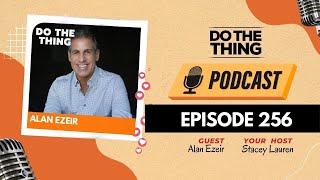
Alan Ezeir built telecom and domain businesses starting in 1995, then moved into angel investing and private equity. He shares his decision-making approach: sleep on big choices, assess the worst case, and enjoy the process itself. His happiness comes from music, audiobooks, calling friends, and exercise.
Questions this video answers
55
About 20 years (joined around age 33, spent ~17 years in the under‑50 group and ~5 years in the over‑50 group).
Built a telecommunications company and a domain registration company from approximately 1995 to 2015.
About 15 companies.
27 years.
Chapters
Hey everyone. Welcome to the do the Thing podcast. This is your host, Stacy Lauren. Well, I'm so excited to introduce Alan to the show. Hey, Alan.
Hey, nice to meet you.
Nice to see you. I'm so excited to do this with you.
Yeah, this is going to be great.
So it's funny because we've talked before and I heard tidbits of your story and it's really quite different and fascinating. And so that was one of the reasons why I was excited to bring you on. And then I'm also exploring, exploring peer to peer mentorships right now. And so I know you've been involved with YPO a long time and so I'm also excited to explore that with you. So why don't we just start off and share with everyone about you and your story.
Where do you want me to begin?
We could start at Tequila or wherever you want to start.
I'll go from. I grew up in the Los Angeles area and was. I knew very early on when I went to college at UCLA that I was going to be an entrepreneur and right out of the gates of graduating, started a lot of little businesses and then got into my passion for technology and built a telecommunications company and then a domain registration company from 1995ish to 2015. So over those two decades and being a little restless entrepreneur kind of in the middle of it, did a lot of angel investing. So invested in about 15 different companies all over the map. And in the midst of that also got involved in starting a gym. And a lot of that had to do with my interest in fitness, but more so my unhappiness with the fitness facilities in the area that I was in. So I said, well, let's just start one. That led me into tequila tasting, which is a whole other story that we can get into. And over the last 20 years or so I've been testing tequila or tasting and testing and educating people on agave spirits. So been really enjoying that throughout that also got involved with cryptocurrency and real estate. Kind of when I see something, I get interested. A lot of people have been pinging me on the whole AI world to say am I going to get into that too? And probably a good chance I'll probably do some venture in there. Made the mistake as an entrepreneur and sold everything. And this was about five years ago and didn't have much to do. And that is dangerous for somebody that likes to do things. So got into private equity through a business group I've been a part of YPO as you mentioned, the young president's organization for 20 years or so now, maybe a little longer. And one of the mentors in there suggested I look into buying small operating companies, helping them grow and then selling them. So started that process a little less than five years ago and have bought a couple companies, continue to do so. Was just on the phone with another company that I'm looking at all different types of segments around the country and it keeps me kind of creatively interested in different businesses since there's so many opportunities out there and I don't really focus on a particular industry. I just get excited by the different things that are out in the marketplace. Currently own a hearing aid company that has disrupted the hearing aid industry for over the counter hearing aids. And that's been a lot of fun in doing what I do, which is placing executives and then looking for more business. What else? Raised two kids and I always say that's probably my biggest success. They both got college degrees, they both don't have any debt and they both have paying jobs where they support themselves, one in San Francisco and one in Green Bay, Wisconsin and they both love what they do. So that was really nice to get two other humans launched into the planet and actively just investing in various companies. Live in San Diego now, been here for 27 years and really just enjoy meeting entrepreneurs, looking at developed private equity companies, Reading kind of an Audible junkie. So always downloading a book to listen to and then getting actively involved in longevity and fitness lately where really trying to say, okay, at 55, what do I need to do to kind of prolong the not lifespan, but a healthy lifespan at certain ages. So I'm hoping to be 60 and feel 40, so doing all the things that are obvious and traditional along with maybe a few things that are more cutting edge.
So gosh, it's the ultimate do the thing right where you get excited about something and then you go after it. I'd love to hear about you say, let's just start one that was with the gym, right. How do you say that? Where does that come from to be able to just have the confidence to say that?
Yeah, well, there's, there's a couple parts to it. Probably the overarching thing I do is I always sleep on every decision I make and in the morning I wake up and the question I asked myself the night before is on my deathbed because unfortunately none of us are getting out of here alive. Am I going to regret not trying that? And there's been times where I've said, oh I want to try xyz. And then I wake up the next day and I go, you know, I really don't want to. So I think I always start with that. And then the next thing is I think about the trade off of what I'm doing now versus what that is going to give me. So the best example would be when you do one thing, you have to give up another because it takes time, and your time is the most valuable asset you have. So a lot of people tell me, you own your own time, so why are you filling it with stuff? And I go, well, I'm filling it with stuff that's better than the time I have now. So that's as simple as have an answer. So I think to myself, wow, wouldn't it be fun? And let's use the gym as an example to have something to talk about that's different. And I've always been into fitness, have a place to go to that I can call my own, change other people's lives. And then I look at the risk tolerance of the capital and the time versus the outcome. I don't always look at it as, how do I make another $10 million or billion dollars. I don't think of that. I really think of, all right, is it a sound business? And am I going to enjoy the process during the hard times? So every decision I make, I almost assume that there's going to be a hard time. And I really kind of reflect on how I'm going to feel when that hard time comes. Because there's nothing worse than being in something that you hate doing and it's hard and you don't like it. And then you're like, why am I doing this? And you don't know how to get out of it. So. So when things are good, everybody's happy. It's kind of like relationships or anything to do with business or anything that we're doing. When things are good, it's easy, and it's like being on vacation and the sun's out. But when it starts to rain, when you're in a sunny place, it's frustrating because you think to yourself, I came here for the sun. Well, if you can imagine and enjoy it during the rain, then it's only a bonus that the sun could be there. The risk tolerance, I think, comes from doing the reps. I think that's the hardest part for people is the fear. So you just have to get comfortable with failure because I don't know anyone that has succeeded and never failed. So you just have to kind of get comfortable with the idea that failure is a part of it and that you're not going to ever put that out in the universe. But if it happens, it happens. And the other thing that I've done really well with is simplifying life so that my basic needs are met. I think this is one thing a lot of people don't talk about. It's like a basic roof over your head and food, your general health. Then everything else should be your willingness to take a chance as soon as you start sacrificing the roof over your head or food. I've known people to do it where they just go down right to the edge where they don't have anything. I don't know if that's the right way to do things. I think there's some benefit of our mind and body being really clear when we know, well, what's the worst thing that could happen. I'm still sheltered and fed. And everybody's definition of being sheltered and fed can be a little bit different, right? Some people think, well, I need my multimillion dollar house and I need to have a chef. And some people are like, as long as I have four walls and I can go down to the local grocery store and get some basic food, then everything else is a bonus. So I do believe it's difficult to take the risk and take the step if you haven't done it. But as soon as you've done it enough times, then it becomes second nature. And then really that down to the first thing I said is why are you doing it? You're replacing that risk and time for something in return. And some people like a guarantee. And the reality is, I don't think in this life we have any guarantees, so what are we doing here? Might as well take the chance. And if it doesn't work out, then keep trying. Because if you want it to always work out, there's a good chance it's not going to. And I sometimes respect people that want to keep it simple and don't take the risk because then they don't have the failures that come along, but then they don't get the joys of the successes. So I think that was a long winded answer to say you got to just take the right foot and put it in front of the left one and put yourself in a position where if it's hard, that's okay. As long as you know you're going to have a place to lay your head down and feed yourself the next day.
Yeah, there's so much about that that I love one is I feel like a lot of people don't see that idea of just starting with your basic needs. And so once you have those met, then you're not burning energy on all of the other stuff that can come in the way. So that's where the expansion can happen. Right, because your mind's not full of, of that fear that could be happening.
Correct? Yeah.
And then the other thing that I think is interesting is it sounds like you do a lot of front loading for yourself where you're pre deciding if this happens, this is going to happen. So then when you're in the moment, you're not having to be reactive because you've already sort of thought through what was going to happen.
Yeah, I do. I kind of keep life pretty simple. It's like the pleasure pain theory or the love fear theories. I think to myself, what do I want my life? And there's always the other opposite. Right. So it's like I don't ever look down on people that decide they don't want to do something that's just a decision they made to say, well, I'd rather have this. Which could be comfort or simplicity versus complexity and uncertainty. I do believe it's sometimes hard for somebody that wants to take a risk that doesn't have that innate interest in okay with being in a scary place to be able to do so. When I think ahead of time, of all the steps, there's still no guarantees. I mean, I laughed at my goals last year. I had 100% of my spare time broken out into four categories. And those four categories were for alternative investments. And 95% of them were on things that didn't happen. And the 5% that I did that I thought would not happen happened 10 times over. And I kind of laughed when if you told me that at the beginning of the year that that 5% would yield what it did, I would have said, yeah, whatever, but it just happened to click at the right time and work. And there's many times where nothing works. So it's a lot about just trying. I met Michael Dell, late 80s, I want to say 1988, 1989. This is like five years into him running a public company, if that, or I mean Dell Computer was doing maybe 50 million in revenue. And at that time you could walk up to him and say, hey, I need some advice. And I was at a conference in St. Louis, if I recall. Either that or Dallas, can't remember, but I remember being young, going to that conference and asking him and saying, hey, what is it? Teach me. I'm young and I want to be like you. And he said, it's kind of like the yellow brick road. You just kind of have to take a step, assess and keep taking steps. And don't try to figure it all out. It'll unfold. Now you have to have a plan, but most likely every plan falls apart 10 times along the way. And I think that stuck with me. So I don't try to write the end of the novel before I've started the introduction.
Yeah, I love that visual because it's so true. Right. You just need to know the step in front of you and then get to the next step. But it sounds like by you being able to manage your reaction ahead of time, then it's helping when you're in the middle of it too.
Correct. Yeah. The reaction, it makes it the softer landing to be able to. You know, I always am a very optimistic person, but I always take the view that if it doesn't go well, what's the worst thing that could happen to me? And that makes life really easy. Because then you're like, okay, got a roof over my head, I got food in my mouth, and I've got people that I love and love me. Let's just keep moving forward. And yesterday can't be brought back. And no one knows the predictability of tomorrow. So it's truly the be present statement that a lot of people struggle with. Because you want to feel like you can kind of have your goals for 2024 and have a future plan and feel like all you have to do is these 10 steps and get there. But the reality is it's not that simple.
How do you think you manage that, having no attachment to an outcome?
So cliche, But I do believe it. It took me a long time to get there is I do really enjoy the process, so the whole outcome. So I've been fortunate to have a lot of outcomes that when I got there, I realized the outcome wasn't as exciting as the process. And it's the old story of the person that gets to the top of the mountain, they're like, okay. They celebrate it, they're excited. And then they're like, okay, now what's next? And if they didn't enjoy all the training and the ascend to the top of the mountain. I know, again, very cliche, but until you live it, you don't understand it. I'm looking at, like, physical fitness is a very big thing to me, and I'm living it. All the time now, almost working out and exercising two times a day. And I enjoy the journey as much as I enjoy the result. And I think it took me a while to understand that. And my. I'm using this as an example. I enjoy the people I get to exercise with, so I get the camaraderie of them, and then I get the joy of what it feels like to me, and I enjoy the result. So when I hit a goal, I don't sit there and say, all right, I'm there. I don't have to do anything else, because that's not the intention. So I think people have to find a way to convince themselves that the journey really is the goal and not try to, at the end, win and think, okay, now it's over. I don't have to do anything else. You don't want to get to the end. The end is not a good place. The end is what I call the inevitable, unfortunately, which is all of us passing away because I yet meet anyone that hasn't passed away. So I want to enjoy all these journeys.
And you mentioned, since we're talking about getting to the top and then what's there. You mentioned at that point it sounds like you had made the money and you're doing the thing, and then it all stopped. Right. And you didn't have much to do. And you said that was a dangerous place for an entrepreneur. And I'm just curious because I was there. You were kind of part of that one side of that. When I exited. I didn't tell you about that year of. Of self discovery that I had to do to figure out who I was again. I'm just curious. What did that look like for you?
Oh, boy. Probably calling my therapist for that one. That one. I went back to my roots, which was learning new habits, waking up and doing the little things, and finding wins in the little things. And when. I mean little things, I mean, I slept eight hours. That was a win. I didn't have a cocktail that day. I called a friend. Those really simple things to get into a place where then you get into these really good habits and you're discovering what you want to do, what you're passionate about. There's a lot to be said about following your passion. Candidly, I don't think I did the whole time in my life. I think I followed the joy of learning, which was my passion, But I don't think I found anything. Like, some people become schoolteachers or they become lawyers or they become parents, whatever it may be, and they find A lot of passion in that. I don't know if I could actually say I'm passionate about one particular industry that I've been in. I'm just passionate about the learning and the change and the curiosity. So I have to continue to do that because I don't care if it's the most exciting industry in the world. Eventually it becomes mundane. So being able to look back at that year and it probably lasted more than a year and ironically we walked right into a pandemic right after that, which made it even more interesting. So it's just a lot of go back to the self help books, go back to the little wins, go back to, as a friend of mine would say goes, they're not going to eat you. There's no line behind you trying to eat you. So what are you worried about? And learning how to meditate. I don't think it was a trendy thing. I really think it was like the meditation I had this morning was phenomenal. And I think that helps me set kind of a baseline versus my frantic mind wanting to worry about something. And as early as 10 days ago, I was still uptight and nervous and frantic and I couldn't figure out why. And it was probably because my mind wanted to take control. So I think it's these practices that each, you know, I'm not saying meditations for everyone, but find the things that work for you and just take one step in front of the other. And a lot of it's the same thing. Don't compare yourself to others, don't try to do things that make other people happy. Do what makes you happy and realize that this is one life for yourself and there's no rules. As long as you're a good person and the moment is yours, you give it away. No one takes it. So it's really that simple.
It's great, as you mentioned, just even recently kind of feeling frantic and all those emotions. But the good thing is a lot of times when we're in the fire, you don't even notice it. You're just bold nosing in. And now that you've had that space space and got to kind of get more in touch with yourself, you're noticing it. So then you're able to do something.
Yeah, I mean, just to go back to that one moment, I came back from a 10 day trip in Hawaii with someone I really love. Couldn't be in better place. And days after that trip, I'm in a frantic state. And if most people knew my life, they'd be like, how could you be in a frantic state? But my mind wanted to play a game with me and say, oh, you're not doing enough, or this isn't moving fast enough, or maybe you are not doing the right thing. And then it had to take a moment to reset, to say, wait a minute, am I living my life the way I want to? And am I enjoying the journey? And then it just kind of reset. And it's tough at times when you have a lot of peers that are doing quite a few things too, but it's easy to compare yourself. Even so, you don't know what their lives are like.
Yeah. It's amazing how powerful just a question can be to yourself and how that can just completely shift everything.
Yeah.
For you. Yeah. When I started do the Thing, it was all about do the thing and getting people to really achieve their goals. But as I was continuing on with the podcast, I realized it was more about doing the thing that is lighting you up and not just doing it because other people think you should or you think other people should or expect of you and all that. So I feel like I'm loving that the conversation went here because I think it's right in tune with what I'm trying to help people do. Not just hustle and go after your goals. It's really tapping into your true self.
Yep.
So I'd love to talk about ypo, because I'm imagining that's helped support you through the process. Do you mind just first seeing what it is for people listening and then also how it's helped you with your journey?
Yeah, and I'll share my journey into it. So YPO is the Young President's Organization. It's a worldwide organization, been around for about 75 years. There's different chapters within the organization. I'm in the San Diego chapter. There's two segments of YPO. There's people under 50 and there's people over 50. I'm 55, so I've graduated into the over 55, I think I spent 17 years from 33 roughly to 50 in the under 50 and then five years in the over. It's a group of business owners that meet a certain qualification worldwide. And that qualification varies based on region. But just for sake of simple numbers, roughly 50 employees and roughly 10 million in revenue is like a basis with a certain employee kind of payroll size, but that varies based on area. I learned about YPO when I found my people, when I say it, and this was when I was 18. I was part of a group called the Southern California Entrepreneurship Academy, which was a group at UCLA that basically a bunch of young kids that said we want to start a business. And there was a couple speakers, generally it was students, fathers and mothers that would come to UCLA and just teach us. So that was one organization and then I joined another organization called ace, the association of Collegiate Entrepreneurs. And that's where I met Michael Dell at that conference. And both of these organizations I don't think exist anymore. I was a part of SCA for quite some time and I met a lot of entrepreneurs through that and a lot of them were in ypo and I think that's what turned me onto it when I was in my late teens, early 20s and I thought to myself, well maybe one day I'll qualify. And I think I was early 30s and I had a couple businesses at the time, well that telecom business and that domain registration business that I built. And the revenues and employee count was right. And I applied. And then throughout that journey I've met hundreds if not close to a thousand ypoers that have been just instrumental in terms of having the ability to lean on them along with them leaning on me. They're broken up by entrepreneurs, hired guns that are running big companies along with legacy businesses of people that have inherited a business. And each one has some dynamic that you can learn from and it's opened a lot of doors. So just the ability to ask for a favor and a favor could be as simple as could you introduce me to so and so because it would help me in my next step in my journey and that's been really beneficial. And then it's just a peer group. So I think everybody finds their people either at age 6, 16, 36, 66, whatever the number is. I just knew that when I met that group there was enough people in there that we had just like minded interests. So yeah, it's been a part of my life since I was 32, 33 years old and I'm sure it'll be a part of my life for the next 20 plus years.
I love that you use the word my people. That's actually. So I call it my people. That's one of the pieces in the formula I mentioned before we got on and I haven't heard anyone use those words before, so I think that's awesome. I would love to hear. So you mentioned it's a group of people with like minded interests and that you guys lean on each other. So what else does my people mean to you?
I think that. So I have groups of people like that So I have the ones that are just incredibly positive and innovative. And they may not be a ypo, but they're just interesting to be with, I would call it. They're interested in things and they're interesting. It's kind of like the friend that you don't see for six months and you go see them and it feels like no time has passed and you spend six hours with them and then another six months goes by and the same thing happens with that person. That's my people too, the YPO group. And not all of them. I can't say all ypoers are my people, but there's quite a few in there. And then I have other segments. My significant other, my girlfriend is definitely near and dear to my heart. We think alike. We do the same things. We want to involve ourselves with each other in everything. I'm around people that are just health conscious. I really enjoy that looking at what we put in our body and how we take care of it and knowing that this is one body. So when I say my people, I think of all those. I like the entrepreneurial crowd, I like the YPO crowd. Obviously my girlfriend is someone that I'll always look up to. And I know that we're tied at the hip when it comes to the things we want in our lives together. And then the health conscious crowd. So those are my people. I think that change is also throughout life. I think it was a time where I enjoyed being out late and doing more of the kind of socializing which I still do, but not as much. And those were my people at one point. And maybe they're not as much. So where I'm not looking for the next event to go to, but maybe the next event when it comes to learning something. So it just. I think when you're with the right people that you call my people, it's that really. That feeling of this is where I want to be, this is who I want to hang out with. And not for the reasons of I want what they have. I just feel right. I feel like I'm in a place and I feel seen and I feel like they would take care of me as much as I would take care of them. So that's how I define my people.
Yeah, I think that whole idea of that common interest. Right. Because you're going through something similar, even though you might be really different. You just have some similar values with wanting to learn and grow and have new experiences. I like that you said that too. It might not even be forever. I did a comedy class here in San Diego. And I called them my people, even though it was a six week class because we did it together and then we did our performance and it felt like we were a part of something. So I like that idea of it not having to be forever.
Yep, that's true. And we evolve. Hopefully we're growing and we're continuing to experience this life thing.
So you mentioned when you saw Michael Dell, you said teach me. And I love that because I think so many people tend to, I don't know, lose the cess for learning and be able to really kind of realize just how much is out there. And I think that's why you've been able to expose yourself to so many things. Right. And get into it because you have this curiosity mind. And I'm just curious if you have just opinions on that or thoughts on just giving advice to people in relation to that learning piece.
Yeah, I'm going to dig back to that year, year and a half where I was discovering and there was a book I listened to.
Try to remember the name of it. I will. Rather than trying to figure out the name, I'll tell you what the lessons were in that book. And there was one lesson that sticks. And I think in any person you meet or book you read or conference you go to, if you can get one thing and you add those one things up, they add up to a lot of things, that book. And again, maybe after this I can dig and send it to you. But it taught me to find happiness boosters and trying to remember the exact name of the book. And it was things that would really make me happy. And you have to figure what that is. And there was four things that made me happy. And I'll give you my four, and they may not be yours, but the first one was listen to music. I love good music. So if I listen to music, it makes me happy. So I can see a mood change when I listen to music. The other thing was listen to an audible book that's nonfiction, that's educational. I can turn on a fictional book and I can zone out and not even hear a word. Put a nonfiction book on and I'm just riveted to understanding the thought process. The other one was call a friend that's inspirational and just talk to them. So that was my third happiness booster. Someone that you really like, hearing their voice, whether it's a family member or friend. And the last for me was getting out and being physical. Like go and increase the heart rate, go for a long walk, go exercise. So Those four things really stuck with me when I read that book. And I grabbed onto those things. When I need to create a mood or understand that I need to get out of whatever rut I'm in or to start something. So as long as I'm listening to music, getting educated and being interested in something, exercising and talking to people I love, I'm really happy. So back to your question. One of those things happens to be learning, though. I just discovered that I get excited when I'm listening to something going, wow, I didn't know that. And it was just interesting to me. So then I just would question anything. And I don't expect everybody to feel the same way, but I expect everybody to find out what their happiness booster is and then do it. And hopefully it's a happiness booster that's healthy. And if it's unhealthy, then they need to probably change it. In most cases, they probably do.
And just for you guys, for the listeners, I just want to make sure you're hearing this. So Alan's basically saying you're able to pre decide kind of what we were talking about earlier, where you pre decide how you can even get yourself out of whatever it is. And I think it's that kind of free moment that really helps because then you're not in that low state. And when it's hard for you to even think, because when you're already there, it's really hard. So if you already have something to access, it makes it easier.
Yeah. And I'm also going to say, because I know I've said this since I can remember, is all this only can happen when you have the freedom of time and you're not in survival. And I dig back to that same saying of if you're living day to day or even month to month, it becomes very difficult. So sometimes you have to struggle to put yourself in a position to be able to do what I'm doing. And I didn't understand or appreciate it as much until I noticed a lot of people being in that fight or flight. Like, I need to make enough money to pay the bills this week or this month, and that makes it difficult. So I always say, put yourself in a position where spend less money than you make and live below your means. The shiny objects are not that exciting after you buy them, and if you can afford them, great, go ahead and do it. But make sure that you have the time and freedom so you can have the space to do these things. If you like the things that I'm doing or find the things that you like to do and do those things, but you need the freedom to be able to do so. And I wouldn't expect somebody that needs to put that roof over their head or food in their mouth. Then you're in a position where you have to do everything you can to survive.
So true. Okay, the time is here. Alan, what is your biggest piece of advice for people on doing the thing?
Biggest piece of advice on doing the thing. When you say doing the thing, like finding the thing that's gonna spark them.
And doing the thing kind of means anything. It could be taking the trip that you've always wanted to, getting married, getting divorced, having kids, going open to the business, selling the business. So the thing is just sort of this evolving thing.
Yeah. So doing the thing. So the first thing is, don't try to do all the things right away, because then you're trying to do them all at the same time. Do the thing that matters right at this moment and to pick that thing. Kind of think to yourself, I couldn't live or would be sad on my deathbed to say, I didn't at least try that, or do this. And that could be getting married, having a child, or moving on from a marriage, or starting a business, or learning how to play the piano, or taking that risk or losing that 10 pounds or gaining that 10 pounds or whatever it may be. So I think the best thing to do is to give yourself some space, to truly ask yourself what excites you. And if there's nothing that excites you, you need to go talk to some people to dig in, to figure out what really, really drives you, what makes you want to feel. And I think we forget that we're feeling creatures, right? And we want to get up and go, wow, that feels. Feels good. And whatever that may be. And then you can pair that back into, okay, well, what can I do to make a living doing that? And if I did that forever, that would be great. You have to get over, which has taken me a long time, and I still challenge myself. You have to get over trying to make the money before you've done the thing. And it's easy to sit there and say, well, that makes a lot of money, so I'm going to go do that. And let's use the example of being a professional artist and a musician. And if you're not excited about practicing your trade, don't chase the end of the rainbow, which is, okay, I'm famous and I have a lot of money, and I'm the next Taylor Swift or Bono or whatever it may be. Find the things that excite you each day. Do the thing that really make you excited. I love people so I'm always going to be meeting people and find a way to turn that into some type of career and make enough so that you're happy versus trying to make a lot of money and then you end up by going, okay, I have all these things but I'm not doing what I love to do each day. I think doing the thing takes a bit of work and you have to reassess that every so often and I don't know if that's every six months or six years but I think that's important because the 55 year old Alan is different than the 25 year old Allen. That's probably going to be different than the 85 year old Allen and I'm not changing all the time, but I'm definitely questioning what's important every year or so.
I'd love you to share where people can follow along with you or find out more about you.
Yeah, you know, I wish I could say I'm really good at social media and do all that, but I'm not. It's not something I've done. I think the best thing to do is I'm not hard to find. So if you get on Google and you dig around, you're going to find me and all the companies and the things I'm a part of and just reach out. I don't have a public forum that I use and a lot of that has to do with. It's not as much of an interest to me to do it every single day but when it comes about I'm all for raising my hand and participating so that's the best way to find me. Just Alan is there and just put it into Google and it's amazing how quickly you can find somebody.
Thanks so much for doing this with me. It was incredible.
Oh well, thank you and it's great seeing you again. I know I misspoke and said nice meeting you at the beginning but I remember our conversation years ago and hope you're well and best of luck with all this.
Thank you. And for you guys, do the thing. Don't wait for opportunity, create it. And hey, have you joined my Facebook group yet? Go to do the thingcommunity dot com.
More from Stacey

From 262 Women to 8 Million Media Impressions: Deborah Drummond Built a Global Women’s Movement


From Notes App to Published Author: Avery Brenna Crumrine on Turning Intention Into Action


How Stacey Lauren's Billion Dollar Impact Marketplace Will Raise Billions for Charities and Causes

What Happened When Allison Maslan of the Pinnacle Global Network Ran a Challenge with Stacey Lauren




Leaders Share How Stacey Lauren Sparks Action, Clarity, and High-Impact Collaboration

Sandi Masori Announced as Emcee | The Billion Dollar Impact Event Returns to San Diego