YouTube Channel: @dothethingformula
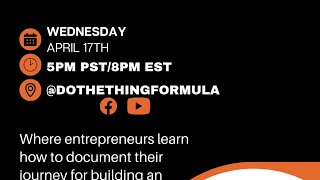
Recorded live session (YouTube) where Michael Shatravka and host Stacey Lauren discuss how Michael documented his weight-loss journey on Instagram and turned it into a brand-building exercise. Michael shares concrete, tactical advice: start small, choose a sustainable posting cadence (day/week/month) and a repeatable video structure, run short tests (weeks) to find what works, and iterate; audience members (Alan, Alex, Vicki) bring use-cases—an equine product brand, a mom-focused ‘screen-free’ product/community, and daily live clips—receiving on-the-spot feedback. The video also points viewers to Michael’s free mini-course on YouTube and offers free Instagram audits via a QR-code call-to-action.
Questions this video answers
About 30–40 pounds (said he was 280 lbs and is about 240 lbs).
Around 500 followers when he started.
He started documenting about six to seven months earlier.
He posted videos every single day for about three months.
He referenced having around 17,000 followers at one point.
Chapters
Hey.
Hey. You guys. Really excited today. I've been hearing messages from so many people. Hearing messages, seeing messages from so many people when they saw who I was having on and what he was going to be sharing. And I know you guys are really excited, and so I am bringing Michael onto the do the Thing show. Do the Thing show. It's not really a show, but anyway, to the do the Thing Live. And yeah, so he pretty much. Pretty much. We did an episode together. If you guys haven't listened to it yet, definitely check it out and we'll sort of give highlights to you. At least if you haven't seen it yet, you'll know. But he has really just, like, I don't know, renegaded through Instagram and, like, created your own. Like, you created this whole. You took Instagram by storm, basically, you know, by documenting your journey. And so I'm so excited to have you on because we'll be able to, like, talk about that and then all the other things that you're. You're doing now. Why don't you say hi and I'm going to just make sure that we're, like, showing up wherever we need to show up.
Awesome. Yes. Stacy, thanks for the intro. How you guys doing? Yeah, my name is Mike, and I really quick about me. I started documenting my journey like, six, seven months ago because I was trying to, you know, actually lose weight. I lost 30, 40 pounds. And I was trying to build a kind of a weight loss brand and figured, hey, let's use me as the example. And my Instagram page, when I started had like 500 followers. I had really, really mediocre videos. Like, I. It was just me filming myself like this talking and, you know, just one long, boring shot. My videos sucked. Honestly, they were garbage. And I remember that, you know, the. I just realized I really wanted to figure out how to create better videos. I just. I really just doubled down, said, I'm gonna fig. Figure this thing out. And for the next, I say, three months, it was posting videos every single day. And most of it in the beginning was, you know, wasn't the best. It was kind of. I thought they were the best, but now I look back at them and I was like, you know what? Those videos, they sucked. But it really just took those gradual steps to really get better and better. And definitely, hopefully I'll share some of those tips today. But I'm almost in the same level as you guys. You know, I. You know, even though my account kind of blew up, it. It started with just starting, you know, just Putting one foot in front of the other and just doing it. So that's kind of the key and it's possible. And, you know, it's the. Get out there and do it.
Sorry. I was trying to. I was trying to see everyone's comments because I see them all here and I'm like, I can't see your names. Yeah, no, it's great when you're able to go through that journey where you're able to use your weight loss right. As a catapult for this accountability device that you got. And that's what I love about documenting your journey. Even though I don't think I do it enough. The two times I have done it, where I did it with, when I started my second podcast, I documented it every time. And then the second time was when I was planning the two hour cocktail party challenge, I think. Well, actually, technically I'm doing it in a private group right now where I was building an audience, but it's like more of like an accountability device, you know, And I know you're doing it for social proof, but there's another part where it actually just helps you, like, follow through on the thing that you want to do.
100. Yeah. Because I would say as soon as my. Because I come from a very traditional family and when I posted, my first video was me with no cl. I'm totally shirtless. I'm super fat. I was 280 pounds. Now I'm about 240. So I was super fat. And for me, I was like, you know what? Once I do this, there's no turning back. Like, I. I have to actually make something out of this. I need to lose weight. And like, once you make that post, my dad called me like, two hours, and he's like, oh, my God, what is this? Like, and I'm like, listen, it's. It's for. It's. It's gonna be good. Don't trust me. It's gonna be good. And it was. It's. It really. Just once you do it, it's like you have to do it. So really the accountability of documenting your journey, because now you're out there, now everybody's eyes are on you. Everybody. It's kind of scary, but at the same time, what was funny, I got to say this one thing you. A lot of the times, like, in our mind, we think of the worst case scenario, we think of all this negative stuff people might say. And honestly, when I made that post, there was nothing bad. Like, nobody really said anything. I actually didn't get Any negative feedback from anybody. Matter of fact, I started getting random people on the Internet dming me and telling me how, like, my story resonated with them and how they were inspired and, like, they were even fatter than me. So now I was like. It was. It was. I never. I never thought I could inspire somebody by just documenting my weight loss journey. So it was incredible. And now I probably. Now at this point, I probably have, like, 100 people. They're like, close fans that are like, you know, we're all losing weight, and it's like, people around the world will cheer you on. And now it's like, especially when you're losing weight, it's like, now I gotta go do the workout. And that kind of pushes you, because there have been days where I just didn't really want to go out. It's raining, but I'm like, no, I can't let down my people. So you get out there and you do it. So, yeah, just. That's one benefit of documenting your journey is now, like, you're out there, and now it's like you're already doing it. You know, you're already losing the weight. And now this kind of maximizes the situation because now you're also kind of diling a brand out of it. You're building a community, and you're building these timeless moments on Instagram. It'll be there. And it's also on Facebook. So it's like everybody's watching you do this thing, and nobody knows if you're gonna get through it. But once you get through it, and I'm still in the process of getting through it, you know, it's kind of like, wow, you know, it's a huge thing.
Yeah, I. I thank you so much for sharing. And everyone's really excited about it. And then, oh, yeah. So someone just said, I need the accountability part of it. I agree. I think whenever I. And for me, it's going live. That's my ver of documenting my journey, I guess, is when I can go live. And I typically do it in a private group, but that's what I do for it. It keeps me more focused, if that makes sense. But it's like, it's. It's exciting in that way. I'd love to have you share with them. Like, how would you even get started? So I hear there's a lot of people here. Like, Angela's here. She's starting a new business called Soothe park, where she's creating these amazing kits for people in the mental health space. So she was saying she's going to start an Instagram for that. And Carmen said. And I think this is Carmen. Sorry. She still shows Facebook user. But I'm going by what I know. But on a weight loss journey with weight watchers, and you've been documenting your journey and then.
Accountability plus modeling bravery for other people. Yeah. So for people that are actually wanting to start doing this, like, what would be like. Like a good way to start?
Well, you got to start. But to actually explain a little bit more easier, I would say that.
If I were to do this again, if I were to document my journey, I would say.
The most important thing when doing this is finding sustainability. And I would say that is one of the most critical steps that I actually made a small little course on YouTube, you guys can watch it free about documenting your journey. But. But now I've understood that sustainability is the most important thing. And what I mean by sustainability is a lot of times when you want to document your journey, you're enthusiastic, you want to, like, you know, you want to do this thing, you want to launch this business, you want to lose the weight, you're just like, I'm going to do it. Maybe you're like, you're at rock bottom. You have to do it. And most of the time, we all start strong. And what happens is that willpower starts to kind of run out and to keep it up every single day, posting every single day, it becomes very. It becomes almost a chore. And I would say initially, what I mean by finding sustainability is you need to ask yourself, realistically.
How often can you post? Every single. Can you post every day? It doesn't have to be every day. It could be maybe a few times a week, could be once a week, could be once a month. But it just needs to be consistent. So if I had to tell somebody how to document their journey, I would say before you even start thinking of what your journey is or what it's going to be, you need to ask yourself realistically, hey, I have a job. I work at night. I work, you know, during the day. These are my hours. When do you have at least an hour, two hours, preferably two hours per day? Can you commit two hours to this, to a post? And you need to figure out when can you commit this time and then stick to that schedule for at least nine, for. For three months, for 90 days at least. And once you can kind of make that. That decision to commit, now you actually need to decide, hey, what's my journey gonna be? And a lot of times Your journey is the thing you're after, the thing that's been bothering you your whole life, the things that you want to do. For me, my weight has been. My weight's been like this for 20 years. I've been super fit, super skinny, super fat, been like this. My waist bothered me and I've always wanted to just keep it off bothered me. And maybe, you know, I mean, maybe you're somebody that worked corporate your entire life and you knew that you could start a business, but you just kept putting it aside. Maybe you started, but then you stopped and it's just that thing's bothering you. And that is the journey. And what the journey is, is going from point A to Z, starting at nothing, starting at, you know, super fat to now super fit, or starting, you know, not having a business to not having a business. So whatever that journey is, you have to ask yourself, what do you really want? Like your vision, like what's bothering you and how can you overcome it? And what do you really want to achieve? And that becomes your journey. And the way you then start is posting content. And just to really simplify it.
I would say when you create content, you want to just come up with something simple, something sustainable, something you can post without getting too creative. Because a lot of times that was a mistake I made. I'll get too creative. I make my videos too personal. I try to put all these moments. Yeah, the videos were great, but I would say that it wasn't sustainable. It's very difficult to make these super nice videos. So for people that are trying to document this, to be consistent, I would say find a, find a structure for your videos and decide what that structure will be for your posts. And just to really simplify what a structure is, is how does the video start, what do you talk about in that video and how does the video end? And it's all less than a minute long. And then you can repeat this structure in every single video. It's the same format for every single video. So.
Yeah, can you.
I was going to say.
Yes. Yeah. So what I was saying is you want to come up with a video structure, a video format that is simple, it is easy, and you can do it every single day because you're going to be posting this format every single, you know, day or week or, you know, that's because what happens a lot of times when we document our journeys, we make different videos every time. And that can get very overwhelming. So before you even thing, just sit down for two, three hours and just figure out a structure that you can make for every single video. And even if those suck initially, which they will, they're probably going to suck the first month. Just keep posting the same structure and slightly improving it. And now the beauty of having the same structure is you can compare apples to apples now, you know, hey, in this video, I posted it like this. And now I slightly tweaked my hook. Like my introduction. I slightly added a different shot. Now you can keep improving the video. So that's. If I had to do it all over loud power. Sorry. If I had to do it all over again, I would, one, find a sustainable posting schedule, and then two, I would create a structure for my posts and a structure again. It's just. What are you saying? Like, what's the hook? What's the video going to be like? Hey, today's day 13 of, you know, building a business, and the body is just adding the points. And I don't want to get too complicated, but just a format. A format. You can post every single post.
Could we. Could I. Could I have an Excel, one of my audience accelerator people here? Could I bring you on?
Yeah. Are you okay if I bring you on? All right, I'm bringing you on. I'd love to bring him on because I. This is a really good example of a. Documenting the journey. You're good? Okay, good.
Hi, Alan.
How are you?
Oh, I think it's the volume.
I think it's the volume.
Oh, shucks. You want to try again?
Oh, bummer. Okay, I'm gonna talk about you. Oh, no, I'm gonna talk about you, though. And then you could put it in the chat. So I'm gonna. I'll keep you on, though. All right, so here's the thing. He has a. He is a. He is a horse brand. Right? And so what would be a good way where he actually, like, he's. He's creating. He has an amazing product.
Oh, my gosh. I, like, keep wanting to remember. It's like saddlebags. These really amazing saddlebags. Right? Isn't it?
Yes.
Okay, thank you. Really amazing saddlebags. And then eventually he's going to be doing some, like, ointment or first aid for horses. And so he's creating an amazing community for people that are going to be able to really just, like, have this space for the resources, the connections, trail rides. They'll get to have experience, experiences with all camping and things like that. And on top of that, it's like pro, like, really American made, you know, products. And so just kind of wondering, like, how would he. What would he do? And I think this is a good example for everyone to hear. Like, what would be a good way for him to start documenting his journey? Like, what is his journey? Is his journey creating the products or is his journey with the horses? You know?
Good question. I think that's a very good question. I would say ultimately, what I'm. What I'm hearing off the. What I've even seen, you know, so many channels, and I found that when you could really share kind of your beliefs, why are you doing this? Why are you creating this product? Why are you creating this brand? You know, you're. Whatever your beliefs are. If you, I think if you share your beliefs, that's going to attract so many people. Not about the products, not about the horses, but they're going to watch you because they agree with what you're saying. And I guess you need to decide what the main thing is because it's. You can eventually share all of it. But if you just focus on, you know, the horses, you know, you're going to attract people that love horses. If you just focus on the hiking journey, you're going to attract hikers. But there's a million different types of hikers. There's a million different. You got little girls that like horses and you got, you know, cowboys. It's two different audiences. So I think your, your, the people that your, your customers and the people that follow you are people that are going to resonate with what you believe in, why you think things are this way, why is it lifestyle like this and your journey.
Would be ultimately what you really. What's. What's the first priority? Is it, you know, preserving the American spirit, preserving American tradition, preserving the American lifestyle? You know, is it kind of connecting Americans, you know, with, with nature? Is it bringing. Or is it more about, like, you really want to build? You, you love horses. You want to build the most comfortable horse saddles, and you're on a mission to design the best product for horses and, you know, horseback riding. And you're just a regular. I don't, I don't know who you are. I'm saying maybe you're just a regular guy. You're. You're a cowboy. You got a farm. And I actually, what's funny is I, I watch this guy on YouTube. This guy is a farmer and he started a kids show with his farm animals. He's just a regular cowboy. They have like a milk. They milk their cows and stuff. And my little girl, I would prefer she watches this cowboy show because real animals, real people, real Life compared to some cartoon. So because I like the guy, I don't really care about the cartoon. He's the thing he's making. But I like the gu. Like his. I watch, I watch the guy and I let my, my little girl watch this thing because I like what the guy is saying. I think, you know, I agree with his values. I agree with what he's saying and I think, you know, it's better than watching, you know, cartoons that are just stupid. You know, on, on television, she's watching real life farming stuff. So ultimately, I think just by sharing why you're, why you think, why you're doing this, why are you creating this, this product, this brand? Why is it important to, to, to you, to, to the American like you know, you have. Does that make sense? Yes.
Can you guys hear me now?
Yes.
Sure.
Yeah. Yeah.
I've never been on this platform and it was not connecting to the m. Right. Microphone.
Yay.
So exciting. Yeah, I know. I love that. Right. What do you think about that?
Yeah, no, that, that was all. That's all. Yeah. I think Michael's right on track and that's kind of what I'm trying to work for. And I think he gave me some good affirmation towards that and, and, and about being about the journey and about being personalized with that journey. And so yeah, that was, I think.
I think the thing though, to really. Because you can get lost because you know, you think, hey, I want to be personal and share my stuff that can go in a million directions. You can get overwhelmed easy. So I'd say that the best way initially is to figure out what is the journey. You know, what, where am I taking this? What's the A to Z at A, you know, you don't have any, anything and Z is whatever that thing is and that's the, the dream outcome, that's the success. So then you kind of reverse engineer it. So whatever that dream outcome is, what is the dream outcome for you? Or maybe you have to decide which route.
Yeah, yeah. I've, I'm building an equine brand, a brand related around horses. And I'm going to work on it for five years and I want an exit out of it in five years. And, and I've never.
Derived income from horses in the past, but I've been. Spent a lot of money on them in the past. But so I just wanna, I'm just trying to work on a business that's in my passion area.
Okay.
And so.
Okay. Yep.
And so I've gotten into it now and I'm, I have one product out there and I'm looking at another, another avenue. And we're sort, we're working through everything and we're pretty excited about the future.
Nice. Nice. So yeah, I mean the journey could be essentially just creating these, these, these best products for, for the horse. Why you think it's important? And I'll tell you, like, I, I followed fitness, other fitness profiles. I know it's not horses, but just giving an idea. I followed fitness accounts that were also on a weight loss journey and they also were starting out and they weren't like, you know, they were also gaining traction. And then I saw a few accounts that all of a sudden went viral and got really big and they started just promoting random products, sponsors. And as soon as they did that, it immediately kind of severed the connection because they kind of was like, eh, like they're selling some random product. But then there was this other, I think his name was, I forgot his name. But this was other guy. He's been documenting his journey for like a year. I watched him last year and now the guy is super fit. And while he was getting fit, he was also developing. This guy lost weight, eating sandwiches, like sandwich wraps. And he's been doing it for a year and now he's released his own like recipe book with his sandwich wrap recipes and his own little stuff. And now I actually like, I, I trust him. Like I would buy the product because I watched him make this thing. I watched him develop this product because now, and now the guy, I think he launched it like a month ago. He like had an incredible launch and he made like a million dollars. But I think he got there because he showed the process of developing this, this thing that became personal. It wasn't just somebody sticking some product in your face. So I think if you could kind of document the journey of building this, this horse brand and why it's important to you and why, why you decide to pursue this. You know, you could, you could have just, you know, went to the stock market, you could have, you know, learned options trading. You could have, you know, do Bitcoin or selling whatever, cars, real estate, how come horses, you know. So I think just, it's kind of an interesting reason to hear why someone's pursuing this thing and building this product. So.
Yeah.
And then also you can implement the values you have.
I will say I do have a little bit of bitcoin, but just a little bit, but, but also, yeah, my, my big problem with documenting the journey was.
It'S about putting yourself out there. And I. And I. I'm on social media and stuff, and I'm getting better at it. And that's why I'm hanging out with Stacy, because I'm in her audience accelerator program and I knew that Stacy would be good for my shortcomings in my building, my audience. And so. And I knew. And I've watched you, Michael, too, and. And you're very good at it too. And that's why I really wanted to be here tonight, because I'm here with two people that I think are gonna help me out.
You know, just. Just to give you a quick idea. I know this is a little unrelated to you, but just to give you guys a better idea about branding, because it doesn't have to be too focused on the product. It really is just sharing your. What you believe in. And there's this account, let me just put up on. On Instagram. It's actually an Instagram for dating. And I'm married. You know, I got a kid. Like, I don't. I'm not in the dating game. But this account, it really just striked me so much because it was a. Let me just pull it up. Because they're branding. The way the guy was positioning himself, creating content.
I gotta pull up his account. I forgot what. It's basically, I think I shared it. It was what this guy does. He didn't even really talk about his app. He made. He made a dating app for conservatives. And on his page, he doesn't even mention it, like, he doesn't say it, like, anywhere. But what his entire profile is, is every post is like some kind of trending thing. And he has his. And then he puts his own kind of conservative take on it. Well, right now, I'm sure you guys see on the news, squatters. And he just adds his two cents about squatters. And he adds like a little comedic. He doesn't get all serious and political, even though it's a political thing. He makes it very funny and comedic. And he just adds the conservative touch on why he thinks it's like that. I gotta pull up this page. And what happens is he sounds very.
Michael. This guy sounds very interesting and sounds like someone I would like to kind of follow his journey. So I would, I would.
I need. I need to find his page. He has like a funny name, but he basically. I'll share it with you guys. I'll link it somewhere. But. But what this guy did, before he even started mentioning his dating app or selling it or promoting it, he was just posting on different topics. Like, hey, you know, it's 2024 and, you know, people are still wearing a mat, whatever. It is just funny, you know, little funny, relatable skits that only conservatives would relate to. It's gonna. It's gonna push away everybody that's not conservative. But what he's doing, he's kind of polarizing his audience. He's bringing in everybody that would actually buy his app. And then when he finally attracted this audience, now he has like 200,000 people now that he attracted the super engaged, polarized audience that really stands behind what he says. Now he's sharing the app with them, and now it's gotten like a tons and tons of downloads and it's making them some money, and they didn't. I don't even have the app. I don't care about the app. But I follow him just because he's kind of a funny guy. So that shows you just sharing your beliefs, and it could be the vice versa. Maybe you're super liberal. You know, you can share the super liberal standpoints and only attract those people. So it's. It's literally about, you know, sharing your beliefs and you attract people like you, and then they end up becoming number one fans.
Yeah, that sounds good.
Yeah, I love that. And then he can also incorporate like the. I mean, because you. He, like during the find your voice challenge, it was really cool. I think that was one of the things we all loved, was getting to see the horses and you feeding the horses and having that be all part of your, like, what you're. What you're doing. So would that be something he would do every day? Because I feel like that's. That's a lot. That would be every day. Huh? But just like a few minutes a day, nothing major.
All right. It's called date date. Right. Stuff. This is the guy date.
Okay.
1.4 million. 1.4 million. Never. Not 100. 1.4 million. And what's funny is he does. He doesn't mention a single thing about. In his posts. He doesn't even talk about his app. He just talks about whatever is relevant. So I would check out his branding idea. But regarding you, you know.
I'll take a step back and look at sustainability. Can you really post every single day? Maybe you can. And. And then what would the structure be? Maybe, you know, It's. It's day one. It could be like a day. In my YouTube video, I teach kind of just a format for making it like a daily thing where you kind of shoot little moments and you say like, you know, day one of trying to build a horse brand. And the structure, the structure that I teach is kind of like a recap of kind of just getting like vlog style moments throughout the day. We just take your phone. It's not too produced where you're doing all these scripted. You kind of just shoot everything with your phone, whatever is nice. Maybe you, you wake up and you're making like a nice breakfast. You know, you got like the old fashioned like exit or something. Like, you know, maybe you got like the big table with like, you know, pancakes and stuff. And then it's like, you know, you step out in the barn and you milk the cows and you got the horses and then you're, you're brushing the horse and you're like, oh, here's Dandelion and you're brushing, you know, denying the horse and she smiling. You know, people love horses. Get some shots of the horse. And now it's you kind of walking out down by the meadows and you're fishing, catching a fish for the dinner. I don't know, you know, something really American. And it's kind of like just a day in the life of Bill. Then maybe it cuts back to you in the studio and got like a light and you're like a dim light and you're by, you know, writing your business plan or something. I don't know. Just kind of a day of day in the life of building a business. So it's just, it's gonna be. Yeah.
I actually did a post last night on my, on my company Facebook page and I'm. I'm not good at social media, but I'm trying to plug a little bit because I'm going to a trade show tomorrow. This, tomorrow through the weekend. A couple trade shows next couple weeks. Well, I did, I filmed a little video of my, one of my horses last night and said, hey, just check. Missy's just checking in here, talking about she's going to be up at the. Wondering if you're going to be at the Midwest Horse Fair in Madison, Wisconsin this weekend.
That's. That's exactly, that's beautiful. Exactly. Stuff like that, you know. And one thing I've even noticed, I've seen chat. My wife actually follows a lot of channels where it's people that don't really want to show their face. They don't really want to talk. Talking is a lot of work. Even doing voiceovers, a lot of work. But what these people do, she, she follows a channel. It's got like 2 million followers where this person basically took her identity, her Persona, and she put it into her dog. And now her dog kind of talks through her dog. So she basically, like, videotapes her dog, and they're like, trap this. This dog is living, like the super life. It's traveling in private jets. You know, this dog lives better than all of us. And now she, like, talks through the dog. And because you, the viewer, watching this funny, like, you know, rich dog or whatever, she's sharing her thoughts through the dog, and now people are kind of laughing. It's funny because it's like a dog is think she's kind of expressing herself through the dog. So you could maybe express your thoughts through the horses or through, you know, the animals or whatever it is. Just to make funny little things like that.
Yeah, yeah. No, that's a very clever idea.
Yeah. So there's a lot of ways to document your journey. I was going to say there's a million ways to document your journey. And the best way is, I'd say, because there's so many ways. Just I even talk about doing this thing called the first hundred posts, where you kind of. I would just try to have a structure, just have the same structure, but you can try, like, different ideas, different concepts within that structure. So maybe you. You try like, you know, the first post you make is your. You yourself talking about it. The second post is, you know, you're the. You're trying to. The horses talking, like you were saying the funny little skit. And then you kind of look at these posts and you see, like, which ones are performing the best, which ones have been the easiest to make, which ones require, like, the least amount of effort, but get the best results. And then you kind of start narrowing in on what's working and just doubling down on what's working. And then you just refine as you go.
That sounds like a good plan.
So good. All right, well, thanks, Alan. So good job. You. You are your. Is this your first YouTube live?
Congratulations.
Yeah. Everyone congratulate Alan. That's amazing.
Congrats. Good to hear you. Wish you the best on this. I want to. Actually, if you follow my Instagram, I'll follow you back. I definitely want to see your journey with these horses. I want to see it.
Hey, that sounds good, Michael. Thank you.
So good. Thank you. Awesome. And then, yeah, so someone said, Alan, my son. Woman's family are all about horses. They barrel race horses. Your product might appeal to her family and their horse community. They live in New York and they travel. That's great. And everyone's saying, congratulations, Alan. And yay, Alan. And congrats, Ellen. Yay, guys. Okay, that's cool. I think it's great when people can see somebody that's, you know, has this thing that they're wanting to build and then you can apply it to, to yourself. Do you mind? I can give you someone else that's like an example.
Go for it. Yeah, go for it. Get them all on.
So, yeah, so Alex is in the.
That's awesome.
Yeah, no, it's. It's so good. And so Alex is in the audience accelerator also and she, her brand is. She's going to. It's so cool. You'll probably like it too because you're a parent. But like, you know, kids are on tech so much now and it's great, right, for like certain times. But when it's all consuming, you know, it's like not as good. And so she's helping create products to help them, you know, actually like be off of tech and do other stuff that's going to help them learn more and be more bonded with their family and different things. And so she's creating a community of parents, women especially moms that are just needing that support through motherhood and the identity loss and all the things that come from that. But also to help give ideas on, you know, on other ideas other than like not tech type things. So what would be like a good documenting of her journey for that? Would it be? And again, I mean, she's got the products she's creating, you know, she's got a prototype coming in a couple months. And then also the community that's happening, people are scanning your QR code. Yeah.
Oh, that's. I'm looking to come. Alex Butoso. That's. It's you.
Yes. Yeah, yeah.
Okay. I think, yeah, I'm familiar. Yeah, I'm familiar with it. Yeah, yeah, I think, yeah, I remember. I think I did glance at your channel on your page. I'd say, I think last time I was mentioning that if I know before you go from a faceless route where you weren't showing yourself, is that still something? Are you still going the faceless route or would you be comfortable showing yourself?
I love this because she is showing herself now.
Okay. I definitely gotta check it out. Yeah, definitely.
I don't know.
Okay.
Yeah, also definitely scan, scan. The, the thing over here says audit and I'll give you another audit for your page, but we're gardening. So regarding journey. So I guess mom brand, you know, so just so I'm. I'M on the same page as you. Your. Your product. What you're doing is you're trying to get kids off of screen. Get away from the screens, away from tech. Is. Am I. Is that in the right direction? Away from consumption of too much and.
Actually, yeah. And I. I'm gonna be crazier now. But, Alex, I message you because I don't. No idea. You're probably not available, but I'm just gonna message you in case you want to.
Come on.
You could let me know.
But anyway, so I guess just off the top of my head, I. I don't know if. I don't know if she's. But let's say, you know, the. The brand is about, you know.
Yeah.
What'd you say?
Oh, screens for screen. Free activities. Yeah.
Minimizing the screens. Yeah. Okay. So I would, you know, it doesn't necessarily have to be about.
Yay, she's here. Oh, my gosh, I'm so excited.
There you are. Hey, how you doing? How are you? It's good to see you again. Good.
How are you guys?
Good, good.
Sorry, I wasn't ready for it for.
I know. I'm like, I have no idea if you're going to be open to this or not.
Sometimes I listen to these calls and I'm in the bathtub, so I'm like, I had no idea what your situation was. So it's great that you're here. Yeah. So. Okay, go for it, Michael.
Awesome. So just off the top of my head, because I'm also just kind of brainstorming here, so I. Let's say I was a mom and you. We also don't. We. We try to avoid kids screens for our kid as well. So I think just showing, you know, just showing yourself, not giving the screens to the kids, you know, could get redone. It could get boring. I think it'd be interesting to see kind of like more of your mom kind of lifestyle routine. Why you think it's important not to. Life day in the life. You know what? It's funny. I actually follow. I follow. Follow a mom on Instagram because I really love what she's doing. But also I love her. Her content, her branding. I really, I don't really pay attention to, like, her family stuff, but I like the way she positions herself. Her name, I'll tell you. Don't. Don't copy her. But her name is.
But what she does. Well, before I even show you her page, what she does is. It's incredible. She has four kids and she manages to be super productive where she wakes up at like 4:30 in the morning, she goes and works out. She goes and does like this planning this meal preps these breakfasts. You know, she goes for a walk with her. It's insane. It's kind of like she does all this insanely productive stuff and then her kids wake up at like seven and then she has them like do all their stuff and everything. The thing I need to show the page. But the thing is what she, what she did is she didn't like start telling people why you have to, why you have to do this, why you have to do this. She doesn't tell you what to do. What she does is she just shows her routine. And now what she's did is in every single post she has, she kind of puts a routine into the posts where no matter whether she's like getting ready for, for work or getting ready for, you know, for to cook or getting ready to a soccer game, every post is the same. They all have a routine. They're all very organized, they're all very structured. And every post looks the same. Even though they're different. They're all different. Every post has the same structure. And that's the one thing I really recommend is just figure out a structure. And what she does is she's like, oh, you know, 4:30, like timestamp 4:30. You see her doing this 6:00am she's doing this 7, 10, 12. And you see the date. It's like a recap of the day, but the day is so organized. And what, what's interesting is if you look at her products and she sells like planners. She sells like family plans, organizing. All the stuff she offers and sells is planning, organization. And she's making a killing. I'll put her, what's her name is, I think Brooke.
Brooke.
Oh yeah, Brooke. Brooke Rabel. Yeah, Brooke. She got like 600,000 followers. Brooke Rabel. I check her out, but I just, I'd get some inspiration from her because she just, you know. So your thing is about screen time. So why is it important that your kids are not, you know, on, on the phones all the time or what, not watching TV all the time. And maybe you can show the substitution because a lot of parents think that they have to. You know. My friends are the total opposite of us. They give their kid an iPad and the kids like this, you know, on the iPad because they're all working. So I'd be curious how you, I think you work in kind of corporate. So how do you. A working mom, how do you, like, keep your kids occupied by not, you know, giving them a phone? So I'd love to see that. That could be content, how you keep your kids busy with something, how you keep them engaged with something important, not just glued to their phone or watching tv. And you can share the lifestyle because it's, it's kind of like, I'd be curious to see how you do that. So just sharing yourself. And a lot of people, they think it's. Oh, but I don't want to show myself, and I personally don't. I don't want to show my kids on Instagram, but I found that if you do create content that you show your kids, you could get it from a far away. Whereas maybe you show yourself, but the kids are at like an angle. You don't see their face. So there's a way just to kind of be creative and cheat the, cheat the angles. But I think really just showing why you are pursuing this or why it's important to you. And when you start sharing why it's important to you, you're gonna polarize people that think you should just give your care an iPad. But the result is you're going to attract so many people that agree with you, like I agree with you. So now you attracted me to your side. And what's going to happen is you're going to start attracting all these moms that are on your side, and you're going to have a whole audience of people that are rooting for you and then buy your product. So it's going to be, you know, just getting out there, just that one step at a time.
No, it's awesome. And I really enjoyed your, Your course too. It's like, it's very structured. It's great, Mike. So I'm really looking forward, I'm hoping that your, your course is going to, to gain traction.
Thank you. I actually, I put that on YouTube, so now it's available for, on YouTube for free. And just what I'm doing is I'm actually now creating a second version of it. It's more step, that's step by step and explains a little bit things more thoroughly to, to not get overwhelmed. So now it's, it's coming soon. I definitely will. You'll see it real soon.
That's great. We'll be, we'll be rooting for you.
Thank you. Thank you. And definitely I want to, I want to check you out too. I want to see the new stuff you did.
Yeah. And if you guys are watching and you have kids or you have kids who have kids or, you know, moms. Alex, you want to share your. Your group?
Yes. So. So my new Facebook community is called Mom's Meadow, same as Instagram. And that's. That's where all the magic is going to happen. I'm in the process of creating a product that's being actually inspected by right now for the quality, and hopefully it'll be launching in about two or three months.
So good.
Thank you. Alex, I'm so excited that you came on. Thank you.
I love that. Good to see you.
So good. That's so fun. All right. There we go. This is so great. Um, yeah, it's amazing to hear how.
Yeah, I feel like this could be a thing for you. You know, where you could do these. You could do these live coaching. So when you're doing the audits, people are signing up for the Instagram audits. Maybe you could do a live coaching audit in your group. You know, something.
Good idea. You know? Yeah, I got a group, too, so I'm. I don't want to take your group, but I'm saying I got a few live calls as well. I'd be happy to be a guest on your page all the time and, you know, give feedback to your people.
Yeah, that's amazing. I love that. And so. Okay, let's take a look. So someone asked.
Yeah. Yeah.
Oh, go ahead.
Should you create a new Instagram for your new content? That's a great question. And I have actually struggled with that question. I've actually been on the edge of thinking, hey, you know what? Should I even. Right now, my account had, like, 17,000 followers. And to be honest, guys, like, when I started my account, I. I did it during my weight loss journey. And I'm still doing the weight loss. I'm doing. I'm working out every day, I'm eating clean. And I realized my weight loss journey is for life. It's going to be for the rest of eternity. But I. I personally, I don't really. I don't really want to be, like, a personal trainer. Like, I don't. I don't want to be, like, a fitness guru. I'm just trying to get. I'm not trying to be a bodybuilder. I'm just trying to be fit enough to play with my kids.
So I realized that I'm building this, like, fitness brand, and I don't necessarily, really, really care too much about fitness because now, like, I'm getting all these followers. My account's going viral, like, in January, and it was like, Everybody now wants me to do this thing. I don't really want to do it. And it's like, originally I was just making videos of me just, you know, losing weight, but now it's like, it kind of started to become like a job. That's why it's really important. I didn't really. When I. When I started, I didn't really have a vision. I just figured, hey, I'm going to just document my journey. But I think it's important to kind of have that initial vision for what is your journey? Why are you trying to do this? What is the. What does the outcome look like? You know? So I think it really is important to have that initial vision. But what. What I'm saying is when I started my journey, I wasn't clear on my vision, and I kind of like got this all distraction doing something that I'm not necessarily wanting to pursue to the end. So even if you look at my account, you'll see that now I realize, hey, you know what? I had, like 17,000 followers, and a lot of people rooted me on, like, a lot of hype, a lot of excitement. And now it's like, I don't really want to make these kind of videos. Honestly, I really don't. And I want to do this. What I'm doing with you guys, this is what I'm really passionate about. I love teaching. I love helping small businesses grow and, and get customers to get bigger and bigger and help people kind of transcend onto the Internet and get people, you know. So now it's kind of like I was thinking, do I delete my account and make a new account and start from zero? Do I make a totally, like, separate account and don't give it to anybody? Why? Because, like, now that I got all these followers, when I do post a video, I don't want to go too into technical algorithms and stuff, but I noticed that when I do post a video, it doesn't. It doesn't get as much traction because my audience is kind of split. So it's kind of a thing where it's like, I. I've noticed that, you know, to answer your question, should you make a new account for Instagram? I personally decided not to. I decided to just double down, double down on my Instagram account. Why? Because I've seen enough evidence that it's possible to change the course of your Instagram following just by being consistent enough. What I mean by that is my prior to what I'm doing now, I've worked in media production for nearly A decade. And my content was all real estate production, talking about media production, talking about business production. And all this content was just like production. And what I. That was my Instagram. Like it was all built on that. Those are all people that follow me, like real estate clients and stuff. And this year I kind of, well, August 2023, I kind of stopped doing that and I started pursuing weight loss. So now I started posting weight loss on that account when it's kind of mixed production people. And then I started posting other stuff. And what I found is when you really just double down and push through it on Instagram, if the content gets better and better, eventually you'll just kind of overpower the algorithm and you'll have get it out there. But I would say it's consistency. But regarding tick tock, for example, no matter what, I just wasn't in my tick tock because I had a real estate tick tock on my. It was my name. Both real estate production, content. No matter what I did, I could just not over overpower the tick tock algorithm. So I figured, you know what, let's just make a new account for tech talk for this one specific thing. And now it's kind of what I'm doing. It's getting traction and my wife tested it with her account. She makes cooking videos and her account also started growing a lot faster. She was getting like 10,000 views on her TikTok versus her personal. But when it comes to your. Should you make a new Instagram account, I actually would just keep your personal account. I would just double down on your personal because you already have all the connections that know you, your friends, your family, your colleagues. You have like the people that follow you for your business. And you've already put in so much effort to do this and now it's, it's your personal brand. You know, your brand evolves, you evolve. And now this is the thing you're focusing on and just power through it. For Instagram, but for niche pages, I. If it's like this, if it's not, I'm sorry, I don't want to go too off off topic. But if it's, if it's like a totally faceless niche, that's not. You go for it. Make a new Instagram, make a new TikTok, doesn't matter. It's a new page. But if it's your face, just double down.
Yeah, yeah, that's. That's really interesting and I love that you're doing this right now. I like that you're feeling the Tug, you know, to do something else, you know, and that you're realizing. And you're not just following the hype, Right. Like, you're really trying to. Trying to tap into what you want. I think that's really. Yeah. Admirable to do that. There's not a lot of people that do that nowadays. You know, they follow whatever it is. So I think it's great that you're tapping into that, which is going to get whatever you're going to do, explaining, exploding, because it's going to come from what you actually want to do. Thank you.
Pushing through. Just power through and just get it out there.
Yeah. Vicki just said. And Vicki, I sent you a message if you want to check it.
But Vicki just said, I share clips of my morning lives each day. Will that help or should I be doing it differently? So she uses. So she has a weekly live where she has a private in her group, and that's kind of like the celebration for the community. And then she's doing daily lives, and I think they're on YouTube and Instagram, and that's what brings them into her group. But she's just wondering if she should be sharing clips. Oh, that's actually the clips from her morning lives. Okay. That's what it is. So she's doing a morning live where she's talking about a daily journal prompt or an affirmation. She takes a clip of that and then. Oh, she is here. Yay. I love you guys. This is so good. You're, like, so good. Okay, bringing Vicki on.
How are you? Hello.
Hello.
So you want to ask your question? Yeah.
I got off real quick and.
I was like, well, I don't even know what she just said. So, yes, I go live in my group every single day and I use Streamyard. Hold on, I'm gonna close this door over here. Sorry about this. I wouldn't expect him to.
But what I do is I use Streamyard and it allows me to take clips of the morning live and then I share it out. So I usually share it out to YouTube, LinkedIn and Instagram. And so I'll usually have two or three of those. And I'm also streaming. I don't stream out live to those. The whole thing, it's just clips. So I've heard say that if you're putting in too many videos that it hurts the algorithm. So I didn't know if I'm doing several a day. And it's all about this. The little clips here. Is that enough or do I need to be doing Something specifically for it. I used to do create videos and put them in all the time to us lives.
Gotcha. So just, just based off what I've just heard, just to recap them on the same page, you are doing like a daily life and you're using a software to just distribute it to like five different places?
Correct.
And my question is how, what's the kind of, how is it going? Like, how is it performing on these different platforms?
Well, see, I don't know, to be honest with you. I don't really know how to, how to, how to judge that.
Okay, well, I mean, is it getting, is it getting views, likes or comments? Is it getting any leads?
Comments?
It gets likes that, it gets some views.
Is it significant? Is it like 2 or 3 or like 20, 30, 50, 100? Like, what's the.
Oh, it's, it's lower than that.
Which platform gives you the best outcome?
I don't think I've been really good about checking that, to be honest with you.
You.
So I don't know. I mean, I have.
I can, I can say I get more comments, I think from Instagram, I think.
Okay, which.
One are you actively on the most?
Facebook.
Okay.
But that's where my group is. So I try to go on to Instagram more and LinkedIn, but it's like I only have so many hours in a day and I've tried to filter it where I need it the most, but if I need it. So it makes a difference if I'm real active on there as well.
Well, so here's the thing, because I, I've. When I started, I'd say my, my journey, I see midway, like in the winter time, like December, January, I started sharing my reels to every single platform. And it's, it's kind of like a. It's like a chicken or the egg situation. A lot of people that are starting out, they're like too thinking about the algorithm and really what the algorithm comes down to is consistency. But it's posting good stuff. It needs to get better and better every time so you can be consistent and post the same thing at the same time every day. But if the stuff isn't performing, even if you post 5, 10, 20 times a day, if that stuff isn't performing, meaning it's not getting any traction, it's not getting any likes, any comments, it's not getting any feedback, it's not moving the needle forward for you at least, then the algorithm sees that your content, nobody wants to watch it, your content's not performing. And it just sees that no one's watching it. Okay, so now the algorithm knows that, hey, you know, whenever Vicky puts a post out, it gets like three likes or, you know, five views, whatever, and it's not really going off. So now you, Vicky, are spending your time and effort to coordinate the software to put it out all over the place. But you're just putting out a product, or essentially your view is the product. You're putting the thing out there that's not really performing the best. What I recommend is to just so you don't get overwhelmed, because I've gotten overwhelmed. When you post on YouTube, on Instagram, on TikTok, on LinkedIn, on Twitter, you go crazy.
That's why I liked this software, because it would allow me to just make.
These clips and do it easier. Yeah, but that. What happens is if you, when you take the lazy route, you get the lazy outcome in which you want and the ultimately, you know, whatever your reason is.
I mean, this. I'm just giving advice to myself that I wish I knew. So I. I'd say initially it's the best to. Because I. I would sit down and make 100 episodes just talking to my camera. And then I would post these videos and they. Nobody would click them. They just. They sucked. Because I would try to. I try to do it the fastest way, the easiest way. And what I found, when it comes to content.
It really comes down to value. And what does value mean? Because everybody throws that word around. Value. Value is simply creating a feeling. People need to feel something from your content, and feeling doesn't have to be, you know, happiness or sadness or anger. Value could be a simple validation. Say, oh, Vicky's also doing that. Okay, I'm also tr. Doing this thing, and I see Vicki's doing it. Okay. I guess I'm not the only weird guy who's drinking this weird, you know, Kool Aid stuff. She's also drinking it. So now you validated that it's. Some people are also doing it. So when. When people see that you're doing something that they're also doing or something they're thinking about doing, but now they see you doing it, it kind of validates. And now you've given them value. Or, you know, value could be you're teaching, you're informing, you're, you're entertaining. Value was the easiest type of value to create. The easiest type of value is create relatable value where you share a moment, maybe something that frustrates you per day, something that you're angry about or frustrating or some annoying thing that keeps happening in your house or with your cat. There are. There are so many people that can relate to that. That's value. Value is creating a feeling. And if your content could create value, it'll move the needle forward. And ultimately what I suggest is to just start with one platform. Start with the one that you're most active on, most comfortable on. And you said Facebook and Instagram and they're almost tied together. If you share it on Instagram, it'll automatically share it to Facebook. And if it works on Instagram, it'll probably work on YouTube, it'll probably work on TikTok, and you don't burn out. You kind of like. And once you get that thing that's working, then you can share it all over the place because it's. Now you're sharing a concept that's been proven to work because getting you results you desire.
I have an idea and I'm curious what you. What you both think about this, but. So Vicki has an incredible community on Facebook, very engaged, and everyone's like really supporting and encouraging. And I like what she says. It's like a. Like they're sitting at a campfire, you know, and just all hanging out. So that's like the love of her group. And so the Instagram and anything else she's doing or YouTube, it's to just basically bring people in. And I'm wondering because she does this like beautiful journal prompt and daily affirmation in her group if maybe she does the live. And it's like you prepping for that, you know, like you're. You're writing it out. You know how you do that part before you go live? It's almost like the. That would be your documenting your journey. What do you. What do you guys think about something like that where it's like you're writing it out and then I don't know what that is, but just. That's a thought.
So what's your thought about that, Michael?
Yeah.
I'm like, this is the best idea ever.
Yeah, I gotta say, I mean, it sounds a lot of us, we all have the best ideas in our life. I'm taking this one.
I'm taking this comment.
Yeah, I would say a lot of us have that the best idea, that maybe this will be a cool idea in our head. But the thing is, it's not really what the market wants or what's out there. So the really only way to do it, I realized the only way to see if it's a good idea is to do it and try it. And that I can't tell you. That's a good idea. That might be. That might be the best idea. And just to give you guys an example, nobody knows. My video that went viral was me just walking up and down the steps. And I walked by this staircase a million times. I never thought about it. And my wife and I, before we even made these videos, we thought, this is so stupid. Why would anybody care to watch me go up and down a staircase? It's only five steps. Why would anybody care? And we almost decided not to do it because it was so stupid. We figured, hey, we should make something that's more catchy, more interesting, more intense. But we just made a video that was just me walking up and down the stairs, not even doing anything. And the first post only got like, you know, a thousand views. And we were kind of like, eh, maybe it does suck. And then we just stuck to it for another day. And then. And then it got even less views. And I was like, yeah, maybe this. This video does suck. But we're like, you know what? Let's just. Let's just try it for a week. Let's just try this concept of walking up and down the steps for a week. And then we did it. Third day, and it still sucked. And then on the fourth day, while I'm doing it, the video from yesterday went viral. And I was like, holy. And it's like, you never know what's gonna work. Like, I've had. And also, like, I've had so many other posts on, like, other. On other YouTubes or other accounts, just videos that took so, like, no effort. They were so stupid. And I just post them and they kind of just blew up. So the truth is, there's no right or wrong. You gotta just try it. But ultimately, how do you know if you're, you know, how do you know if your idea is even worth the time? I mean, you gotta do it. But ultimately, the idea needs to have some sort of reward for the viewer. Like, what does the viewer get out of it? Like, what's the kind of. What's the. The transformation? Like, what's the payoff? Like, the journey? I guess for me, for my stupid stairs video, the payoff was I'm doing one stair step. Like, I'm doing one step for every follower. And I only had like a thousand followers. So it's like, okay, the payoff is you're gonna see me walk a thousand steps. Okay, it's easy. But then the next day became 10, 20, and then 1050 and then it became 9000 and then like 15,000. Now it's like, now it's really adding up. And now the audience is like, the curious. Is he going to do it? Is he going to make it? Is he really going to walk this thing for eight hours straight? And it's kind of like it creates that curiosity. So whatever you're doing, think about what's the, what's in it for the viewer? What's the reward at the end of your video? Like, hey, if you're, if you're doing this journaling or you're writing out this process, maybe like, maybe you're a speaker on stage. I'm just throwing ideas here. Maybe you're a speaker. You're like an on stage performer. You make these motivational speeches and when you speak, you just come across so like, wow, like, how does she just speak so, like straight, without any preparation, how is she so good? And then it cuts to you doing your preparation, your process, your affirmations. And it shows you doing all this prior for three hours. And then it cuts to you doing it when you, when you didn't prepare and you sound like everybody else because you're not warmed up. And now it shows you how effective your preparation system is because now it makes you sound like a super guru on the stage. I, I don't know what you do, but basically it just, it shows like the proof in the pudding that, hey, what, what I'm doing, this is my, my routine, this is my thing, and then allows me to do this effectively. And it's kind of like the, that could even be content. This could be the A and the B. The beginning is, okay, this is me preparing. This is my affirmation routine when I'm writing. And then it cuts to be the result of what those things bring you. Maybe it's, you know, exercising, talking, whatever it is, you know, you know what the answer is. So whatever the result is, or whatever you do, that's the, the outcome.
Okay, well, that's a lot to unpack and.
Trying to keep it.
And now my mind's going boom, boom, boom, boom, boom.
This, relate. How does this work? So, so you're saying that if I, if I, if I kind of feel like I can digest that and put content out there, then how much time do I give it? I know you said you was like several days, so how long is too long? I mean, I just, if I do something, I don't want to keep doing it thinking it's gonna hit, it's gonna Hit. It's gonna hit. I don't want to waste my time.
I think it's kind of. I love your question. I love your question because it's so important. I think all of us, all of you guys, when you're creating content, it's very important not to get attached. Because I've gotten attached years ago to content, to pages, and you keep working and making it, and then a month goes by, two months, three months, and it just sucks. It's not going, but you're forcing it. And it's. There's a word for it.
It's like when you invest in a business and your business is failing, it's like a syndrome or something. You guys probably heard of it. But basically, when do you cut it off? I would say you need. Before you even make the content, before you make the series, you need to tell yourself, if this doesn't hit these metrics or these, whatever I'm trying to get to in this amount of time, I'm gonna give it one week, two weeks, three weeks, one month, six months, 12 months. Because content, maybe for a business, you can give it a longer frame, but for content, because it's so quick, it's so instant, and because the response, you get feedback so much faster from short form content, I think less than a month, less than two weeks, even a week, I think you need, if you can do it consistently for a week, that would. You'll see something. If as long as it's consistent, it needs to be consistent, then you can kind of gauge. But an important thing is also you want to go back to sustainability of being able to.
Find how. What is sustainable for you to create this content. Because when I started with my videos, they would take me three, four hours to make. And that was so much time. Like, oh, like, you know, initially, the first few weeks, you, like, you have the willpower to do it and you make it. And the videos are good, but they're like, you can't keep it up. It's you. I don't have. I can't do this every day. So that's why, like, I had to, like, if you notice my videos, there were times where the videos got a lot of views. Sometimes it got like no views because now I was only making them for like an hour. But I found for me personally, two hours is kind of my sweet spot where I can now have enough time to kind of think of a mini story I could shoot. And I found that if, like, if I can do it under two hours, it's. It can Create a good enough response. It offers value. And I'm not like, going crazy. So I think you need to ask yourself, how much time can you commit per day or per week to creating content? And stick to that. So if it's two hours a day, figure out the best way. Just make that first post in under two hours, post it, and then the next day do it again, and then improve it. Do it. Just cut her off after two hours. Just post it no matter what. Don't try to fix little thing. Just. Just get it out there after two hours. But really, you know, I. I'd say like between two to four weeks. Just test it for two to four weeks. Less than a month. Less than a month consistently, and you'll have something.
All right, perfect. Thank you. Thank you so much.
Good luck.
Thanks, Vicki.
So, okay, and then. Oh, someone asks a post you do in the day shows up again. Only if someone shares it. Correct. Is that right?
A post you do in the day? I mean, sometimes you get posts I get, like, when I go on Instagram, I sometimes get posts from the day before or from the people that I follow and they posted something, I guess. I mean, it's the algorithm, I guess, whatever the. The feed is. But typically what I've seen is on these platforms, it's like Instagram, tick tock. It's all, like, relevant, all in the moment. Nope. You don't. No. You don't ever see posts from like a week ago or a month ago or a year ago? It's all from now. So whatever is from like, yesterday probably, I think probably the day before max. But most stuff is all from, like, within 24 hours. So I. I will try to keep it within that time frame.
Okay, well. Oh, my gosh, this was incredible. Thank you so much for coming into the group. I still, like, wow. I just want to, like, listen back. And I'm. I'm bummed my otter's not on, because I want to, like, dissect everything you said. But for those of you that didn't get to snap the QR code, I saw many of you did, but are you an aunt? Mention what the Instagram audit is, and I hope you'll do them live, because I feel like that would be really good for people to see this, you know, like, what. This magic that you do, you know, like, for the free ones, at least those are live, you know, you guys can do this.
And also on my. On my YouTube, I just uploaded the mini course, the miniseries. I don't know if I. I can't I don't know if I can comment on here, but if you just Google my name, you'll see. You'll see the series on. Okay. On YouTube. It's loaded with value. I share my entire process, A to Z, how I shoot, edit, post, how I create a story. And yeah, it's for free on YouTube. And yeah, if you guys scan the QR code, I'll give you guys a free personalized audit. And I plan on doing more crawls like this. Hopefully with Stacy. I'll see you more often and love to do this with you guys. I'd love to. Also be sure to follow me on Instagram, same name and I'll follow you guys. Love to see what you guys are doing. But yeah, ultimately comes down to just. Just doing it. Just do it. Get out of your head and doing it's gonna get better. Yeah. Do the thing. Do the thing.
So, yeah, so go to his. Go to Michael's YouTube channel, subscribe on there as well, and then show him love and comment and do all that kind of stuff because this was incredible. And thank you so much for doing this. And thank you, Alan, for joining impromptu. And Alex and Vicki, I appreciate you guys. And then you guys that are watching, I also appreciate you. And do the thing. Don't wait for opportunity.
Awesome. And Stacey, thank you so much. Best luck to all. You guys will be in touch. Take care. Thank you so much. Do the thing. Do the thing.
Bye. Bye.
More from Stacey

From 262 Women to 8 Million Media Impressions: Deborah Drummond Built a Global Women’s Movement


From Notes App to Published Author: Avery Brenna Crumrine on Turning Intention Into Action


How Stacey Lauren's Billion Dollar Impact Marketplace Will Raise Billions for Charities and Causes

What Happened When Allison Maslan of the Pinnacle Global Network Ran a Challenge with Stacey Lauren




Leaders Share How Stacey Lauren Sparks Action, Clarity, and High-Impact Collaboration

Sandi Masori Announced as Emcee | The Billion Dollar Impact Event Returns to San Diego