YouTube Channel: @dothethingformula
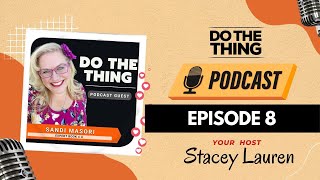
Sandi Masori went from teaching to balloon artistry to book strategy. She talks about her ADHD, why deadlines actually work, and how she gives herself permission to do things badly at first. Her approach: ready, fire, aim.
Questions this video answers
2012
The Ultimate Guide to Inflating Your Trade Show Profits: How to Increase Branding Recognition, Visibility, Customer Loyalty, and Attract More Attention with Balloons.
Dr. Nalini Shilkov — 32 Ways to Outsmart Cancer.
Today show; Hallmark Channel; Home and Family; plus multiple local TV appearances (four local appearances mentioned).
ExpertBook4U.com (presented as ExpertBook, the number 4, and the letter U).
Chapters
I do really believe 100% from every part of me that everyone has the capacity to be able to do the things that they want and not to be held back by the mental baggage that's in our head that we want to push through.
Welcome to the do the Thing podcast. In each episode, we get down and personal with people who go after the things they want to make all their wildest dreams come true. Join us as we unveil and dissect a formula for what it takes to do the thing. Here is your host, Stacy Lauren.
Hey, everyone.
Welcome to the do the Thing podcast. This is Stacy Lauren. I'm so glad you guys are here today. I have Sandy, Missouri, from Expert Books 4U, and she and I met at a fitness camp last year and have become great friends since then.
And also you have a special treat.
Because she is the one that is editing and helping me publish my book. And so you're going to get to hear all about her and her background and how she constantly does the thing with everything she does.
Hey, Sandy. Wow, what a buildup. Hey, Stacy, thank you so much for having me.
I'm so excited to be able to talk to you and have the listeners be able to hear from you because you have so much awesome nuggets every time I talk to you that it's been unbelievable.
Well, I will try not to disappoint.
Tell us just a little bit about.
Your background and how you got to where you are now.
Okay, well, you know, like you. I mean, we've talked about this, but for the listeners, my background is very serendipitous. I mean, my original, original major, like we're going all the way back now, you know, in high school and my first year of college was acting. And then I didn't believe in myself and I thought, well, I really should study something more practical. So I graduated with a degree in Middle Eastern studies. But from there.
I'm very adhd, which means that I have a ready, fire, aim personality, which means that I often just kind of leap into the deep end without thinking about it too much. And this really is probably one of my biggest blessings in life because it's kept me from overthinking things. And really, I would say that most of the things that I've done that others would consider me having done the thing were because of that, that I just kind of left. Left off into the deep end. And it was like, okay, now what? Because of that, you know, that that's what got me into the Middle Eastern studies. And then from there it took me to Israel in a classroom. And then I discovered that I like teaching. I became a first grade teacher and then to make extra money, I was cocktailing in a magic themed dinner theater in la. The reason that I was cocktailing there was because they had tables that were full of glitter and I really liked the table. So I applied for a job. But anyways, this was to support my teaching habit. And while I was there, I started hanging out with the magicians and I started learning magic. And then through magic, I started learning balloon. I got an opportunity to go perform in Japan at the exact time that my school was going off track. So, you know, just kind of left the country. My parents like to joke that they sent me to college to join the circus. And then from there I woke up one day in Japan on my 25th birthday and I said, I have to go make aliyah, which means move to Israel and take Israeli citizenship. So I did. So I moved to Israel, I made aliyah, but I actually never finished the process. So I never fully took Israeli citizenship because I ended up coming back to the States when I met my now ex husband to plan the wedding.
Really one thing kind of led to another, led to another, led to another, just these great leaps. Came back to the States with my then husband. Kept doing balloons. Opened a balloon company here in San Diego. From doing balloons, I started going to marketing conferences to learn how to market myself. From there, I wrote a book and I started making TV appearances. Got divorced. Kind of lost my passion for balloons, but I was doing books for people on the side and that became my main thing. If you look at it just like teacher turned balloon lady turned book lady. It's a very strange journey. But all of it was just these kind of serendipitous connections and me diving in and then going, okay, I'm here now what?
That's how most of the things that I do get done. But then there's the things that, you know, don't.
Yeah, yeah. So what happens with the things you don't?
Well, this is. This is where we really get into the blessing and curse of adhd. Right? I mean, things that need to get done but I don't want to do or I'm not interested to do. I have to say, honestly, don't get done until the 11th hour. And then it's that pressure of the 11th hour and my perfectionism that makes it happen and makes it happen. Well, but it can be super, super stressful. I mean, I don't know that you leave it to the Last minute is a great tactic, but I think it's more the sense of responsibility, of, okay, I have no choice now. This has to happen now what? So I think it actually goes back to the same question that I ask myself when I dive in, is, okay, I'm here. Now what? You know, how do I make this? How do I make this happen? How do I make it work?
Yeah. It's interesting hearing you talk about that, because part of me was thinking when you were saying the things that don't get done. I'm picturing things not getting done.
There is that, too. I mean, I have given myself permission to live in a messy house.
You've.
You've been here. I mean, I don't invite many people to my home because it's messy. And, you know, I'm comfortable for the most part with the mess until it gets to be too much, you know, and then I end up doing something about it. But I don't. I've given myself permission not to feel the need to perform and clean my house. And I mean, don't get me wrong, I have a housekeeper come every so often, so it's not dirty. Dirty, but. But there's a lot of chaos here, you know, and so that's something that I. That doesn't get done. And I have to be okay with that, you know, because I can't do it all.
So you're basically. The things that aren't getting done are the things that aren't important to you, at least for. Compared to the other things that are more important, essentially.
Well, I think that could be said about everything, always. I mean, the things that are priorities to us, we make happen. Not always.
I'm actually loving this conversation. I hope you're okay diving into this a little bit more, because this is cool, because. Not always.
From what I mean, that's one of.
The things that kind of inspired this whole thing, you know, of doing the thing and, you know, wanting to do the book and then wanting to do the podcast is there's so many people that want to do things and that are priorities for them, but then they just don't do them, you know, because of fear or because of the overthinking and that whole opposite of not diving in, you know, and maybe not understanding that the risk may, like a small risk for the reward, you know, like whether it's leaving a job or starting a business or traveling or whatever, that do the thing fading, you know, do the thing is for them, you know, it's. It's. Sometimes it is A priority. But fear or something else gets in the way.
Right. I mean, I get that, but I'm going to push back a little bit. I mean, I totally get when we stand in our way, I'm. I'm fully queen of standing in my own way. And we can talk about that in a minute where I'm myself hung up. But I see it a lot with, you know, with the books and things like that, of people who say they want it, but maybe they don't really want it, you know, I mean, there are people that I've spoken to year after year after year for, you know, several years in a row who tell me, oh, I really want to. I've always wanted to write a book. I'm going to write a book, and they're not starting it. And yes, I mean, maybe there is some of the fears. I mean, in the case of the book, there's probably a lot of who am I? And stuff like that. But then there's, I think, also, you know, what is kind of a dream and it would be nice and what is. And it must happen. You know what I mean?
Yeah, yeah.
And that's what I think. I prioritize by. It's not enough of a priority, you know.
Yeah. Maybe they didn't come up with their compelling. Why enough, do you think?
Yes. Okay. Yes. Yes. Yeah, exactly. I mean, it's not. It's not a deep enough, like, I have to do this, you know, a driving force that I'm gonna stop at nothing and, you know, kind of thing. It's kind of like, oh, yeah, that'd be kind of cool, you know?
Yeah. Yeah. So maybe they want, like, me baking.
A rainbow cake.
A checkerboard one. You know, I watch the videos. I'm like, oh, that is so cool. But, you know, as much as I think, yeah, that's really cool. I mean, I don't know that I can dedicate six hours to it.
Yeah, no, it's so true. Right.
It looks cool, but is it worth.
That time that it's going to take you to get it done?
Do you really think that's the case.
For the people that. And we're sorry, we're going a little bit further into this, but I kind of feel like this is actually really a cool.
Or more like. Do you think. And again, I'm using the word book, but this could be anything could replace the word book, you know, And I think that's cool because you have such an inside look into people because, you know, people have that dream, and then once they actually find the resource, which is you.
Right.
You know, it's. Then how do they, like, leap in? Are you finding that they haven't, like, maybe explored the idea of why they want to do it more and what it would give them if they got it done, or are they getting, like, paralyzed in something else?
It's a good question, and I'm going to say both. I mean, not some people both at the same time. But I want to say that I've probably seen both, and it probably is something that's worth diving into more with the people that aren't, you know, making movement, but are, you know, keep mentioning it.
Yeah, definitely. Yeah. It's so easy to do that. Okay, cool. Thanks for playing with me on that.
We weren't talking about not doing the thing. We were talking about doing the thing. But you know what?
I love it because we.
You have to almost. I haven't actually had this happen yet where we were able to kind of talk about it. And it's true. We can so easily get caught up in that. When you kind of understand why you're not doing the thing, it actually helps you understand how to do the thing, you know?
Yeah, that's. That's a really good point. I mean, I think looking at why you're. You're not doing the thing, and again, you know, going back to what I was saying about prioritizing, and if you're looking at it, you're saying, no, this really is a priority, then you're right to dive in. Okay, this is a priority. Why am I not doing the thing? And then what can I do to get me to do the thing that I don't want to do, that I need to do? That is a priority.
Yeah, yeah, no, definitely. That's good. And I love that concept of giving yourself permission. I think that's so beautiful. Actually, I was talking to the guy that. His name's Adam, and he is the one that founded the podcast that we're recording this on. And he was talking about one of the lessons he had said was giving yourself permission, basically, to be a beginner at whatever you're doing, because then you're more open to doing the thing. And I love that concept. And then hearing you use the word permission today, it's just really resonating with me. Yeah.
Yeah. You know, permission is something that has been coming into my life lately a lot, actually. I mean, first I had to give myself permission to have an amazing, fabulous birthday that I threw for myself. You know, then I had to give myself permission to spend money for the mommy makeover surgery that I recently had and then to take the time off to recover for it from it. So, yeah, that concept of giving yourself. You know what, that's really interesting. I think that for maybe people like me who are hyperactive high performers, maybe sometimes it's not so much about doing the thing so much as giving yourself permission to not do the thing.
Yeah, yeah.
No, it's true.
Right. It's so hard to get yourself to settle down, you know, and give yourself that balance. But I think you still want to do the thing. You just want more balance while you're.
Doing the thing, you know? Right. No, for sure. I mean, sometimes it's permission to do the thing, and sometimes it's permission to not do the thing and to be. Okay.
Yeah. Well, I was happy with your birthday because your permission for your birthday because I got benefits from that. So I'm loving your permission for your birthday. That was.
Yes. And I am so appreciative that you were part of it. It was so far my very best birthday ever.
Yay.
49. I love it.
I love it. Okay, so we're going to. Gosh, it's so cool.
I actually.
I didn't know all this about you, so I'm excited. I love the idea of you even. I don't think I even knew you were a teacher. So it's like the idea of you teaching and then working at the dinner show place because of the glitter on the table. I love that the balloon company, which you exited, you know, doing magic in Japan, it's so many amazing things. You've really mastered the art of your adhd, where, you know where the strengths are and the weaknesses are of having that and being able to navigate through that. And it sort of helped you and also hindered you from doing the thing, it sounds like.
Yeah. I mean, I definitely know my strengths and weaknesses and the strengths and weaknesses that come from adhd, that doesn't necessarily always help. I mean, it's, you know, always a challenge. And I'm very lucky, you know, as an entrepreneur that I'm able to do things that, you know, that appeal to me and that work with me rather than against me. Right. I don't think I do very well at a 9 to 5 desk job or in the military, for example. So, you know, I mean, there's that and it is a struggle. I mean, you know, the more. The more mundane yet important things, the adulting kind of things are Herculean tasks for me. So the big things that other People would be like, oh, I can't believe you did that. I can't believe you just picked up and moved to Japan. And I can't believe you just moved from Japan to Israel and didn't even think about it. That was nothing to me. When people praise me for it or whatever, I'm just.
Of course I did that. Who wouldn't? That's so obvious to me. But, you know, it's the adulting thing, remembering to pay my bills on time, you know, those important things that. Getting those things done.
Yeah, it makes sense, you know, in terms of having this mindset of just being able to jump in at all times. It's almost like that rhino, you know, that's pulling through, and then, you know, you have the stuff kind of behind you. I want to delve in a little bit more to what you're doing now with you helping people write books and things like that. So when you made the decision to do that, did you stop doing something else? Or were you, like, where were you at right then when you were like, this is what I'm going to do? Like, you had already been sort of playing around with it by writing your own book when you had the balloon company, and then you were starting to help people. But what made you, like, finally jump into that?
Yeah. Okay, so we'll go back to when I started doing books, which would be 2012, which, as you said, started with my own book, which at the time was written to my clients, my prospective clients, trade show exhibitors and organizers about how to use balloons as a marketing vehicle. So that book worked in so many ways for me. One, it promoted my business as intended. I mean, it literally changed the way people looked at me.
As a balloon artist. I had this problem that when I told people what I did, they would automatically think birthday parties. Right. And yeah, of course, I mean, if somebody wants to give me money, I'm not going to turn it down. Did birthdays. But I really specialized in corporate stuff. And in fact, I was on the team that decorated Obama's last white last Halloween in the White House. But when I told people what I did, you know, oh, hey, what do you do? I'm a balloon artist. Oh, so you're a clown. Right. I mean, you instantly saw people moving me down, if you will. Right. I mean, literally, I could see it. Right. And so then when I gave them my book, this is what happened. I gave him my book, which. Here, let me get it, because it has a very long title, so I'm going to have to read it to you instead of trying to do it from memory. It's called the ultimate guide to inflating your Trade show profits. How to increase branding recognition, visibility, Customer loyalty, and attract more attention with balloons. Very long title, which I'm a big fan of, by the way. We can talk about that at another time. But anyway, so I give them my book. So it's like, oh, you're a balloon. Oh, okay. So you do birthday parties, you know, and I'd reach into my bag because, of course, you know, I have an oversized tote bag just so I can have, you know, schlep the books with me. And, you know, I'd give them a book and I'd say, well, actually, you know, I really specialize in large corporate events, you know, large stages, trade show exhibits, you know, things like that. And give them the book. And this is what they do. They take the book, they look at the COVID right? They absorb the COVID They see your name on it. They flip it to the. You know, they see the spine. Yeah, the spine. It has your name on it. They turn it to the back. Wow, there's an ISBN, right? And then they flip through the book, like, just make sure there's words on the pages. I'm not sure. Right. That's a real book. And then this is what they do. They look you up and down, and they look at you and they go, you wrote this.
You're like, well, my name's on the COVID I guess so. But yeah, so that was what happened with my business with the book. I got on tv. I got. You know, it changed the conversation. It was no longer, why are you more expensive than the other guy? It was now, okay, I get it. You're the expert. Can you work with my budget? But in the marketing circles that I was learning from, when I put out my book, people saw that and they asked me for help. The first book that I helped somebody else with was a cancer doctor, actually a holistic doctor by the name of Dr. Nalini Shilkov. And her book was 32 Ways to Outsmart cancer. And that was the very first book I helped somebody else with. And then, you know, she gave my name to somebody else, and they gave my name to somebody else. And as I kept going to marketing conferences, you know, I'd meet people who needed help with their books. So I was doing it alongside the books, alongside the balloon. At the same time, I'm building my balloon business to the point where the media is calling me America's top balloon expert. You know, TV appearances, local national, international tv, you know, the Today show, Hallmark Channel, Home and Family, four times local, local shows all over place, right? I'm like. I'm like literally having all my dreams with the balloon business coming true, right? I'm up at the top of the mountain. But what's happening in my personal life at the same time? Well, I'm getting divorced. And not only am I getting divorced, but my ex husband was my business partner and very much intertwined with every aspect of everything, right? So all of the. And he leaves the country. He leaves the country. So all of a sudden, I'm a full time single mom with a business that requires me to be gone nights, weekends and holidays. I'm also doing a whole bunch of traveling for the TV appearances. So I basically kind of stop everything, right? I mean, it took a while before I could fully stop the balloons, but I started scaling back. In fact, that year, it was the first year that I didn't work New Year's Eve. I deliberately turned down New Year's Eve jobs, which as a balloon artist is kind of like your biggest day of the year. So, you know, I mean, but for once, I want it to be home with my children on New Year's Eve. That was really, you know, a novelty. But anyways, I really started to resent the balloons. I started to feel like, you know, I was getting calls for huge jobs. And instead of being excited when I would get a call for a $15,000 job, I was like, oh, God, I gotta do this. All right, let me start figuring out some ideas, you know, but at the same time, I'm getting excited about diving into category research for my client's book. So it just became really obvious to me that it was time to pivot and it was time to, you know, retire as America's top balloon expert and really embrace fully my book lady, I guess, Hat, if you will. But then there was also kind of this crisis of I guess, of self, if you will. You know, I was America's top balloon expert. If that's not who I am, then, you know, who am I? Like, I'm starting over. Do I count? Do I matter? You know what I mean? Like there was this kind of, I guess, imposter syndrome flare up, right? Mm.
Well, your whole identity shifted Pretty much. Yeah.
Yeah, exactly. The whole identity shifted. So, you know, I mean, it took a while to fully embrace it, and I'd say it took about four years to really completely transition from the balloons into full time books. But then my ex husband also came back to San Diego So I gave him the business, the balloon business. And that also helped me finally let go of that part of me and turn fully into just the. Not just fully into the self publishing strategist I am now.
Yeah. That's amazing. Wow. So you really were doing what you had to do by running the balloon business because that was your income while you're also starting writing books for people and then basically managing all of it until you were able to like, let that other part go.
Yeah, there was especially, you know, when my ex first left the country and right after the divorce, there was definitely a period where I literally was only doing what absolutely had to be done, what absolutely had a deadline, what needed, you know, what my kids needed. Obviously they were getting fed, they were getting to school, they were getting to their activities, but. But I was really just putting one foot in front of the other and really, you know, doing the thing was okay, what absolutely has to be done, what absolutely has to happen.
It's interesting. This is, I think, the third time someone has mentioned the one foot in front of the other. I didn't have that initially on my first round with the book, Steph. And I think that it's such a great concept to sometimes, you know, not look so far ahead because that's where it can also be paralyzed, paralyzing, you know, and actually just knowing, okay, I'm just putting one foot in front of the other, whatever makes sense next for me, essentially.
Yes. What is my next best thing?
Yeah, and I love that concept of pivoting. Like, you didn't get so rigid in what you were doing that you were open to that idea of just starting something brand new.
Well, I mean, luckily it wasn't completely brand new because I had been doing it all along.
It was still really scary, but I don't know. Then again, I mean, you know, that entrepreneurial mindset that I have, it always means that anything I'm interested in, you know, first I deeply explored, and then my next question is how do I make money from it? So I don't. I can't think of a time in my life when I've never had another side gig or something. But I don't know if I didn't have something on the side that I could, you know, basically flip, flop or flip into, if I could just cold turkey walk away from my identity and then go try to rediscover and reinvent, I think that would be an enormous challenge. What do you think has been. It sounds like, I mean, I'm just.
Kind of imagining what it must have been, like, then. And I know you mentioned a lot of the hard stuff, but what do you think was the hardest part for you during that time?
I mean, I think the. I think the hardest thing was the who am I to. I mean, you know, the. The people that I work with, the authors that I work with, are amazing people like yourself, fascinating people, smart people. And, you know, there are times when you. I really kind of need to not check myself, but, like, kind of, like, reaffirm myself that, you know. Yes, these amazing people are looking to you for advice, and, yes, they do respect what you have to say. And, yes, you are an expert and you can guide them. I have one that I'm working on right now that is probably, I don't know if I want to say, the scariest client, I guess the one that I'm probably the most emotionally wrapped up in. I don't know if the most emotionally wrapped up. And it's the wife of my mentor who taught me everything I know.
Oh, wow.
So, you know, I mean, I feel a huge debt of gratitude to them for starting me in this direction to begin with and, you know, so privileged to be asked to do her book. But then I'm putting such a huge pressure on myself that I just, you know, I want to knock it out of the park. And I can't believe that these people that I have on a pedestal are coming to me, you know? So I think. I think the biggest thing really, you know, was struggling with the who am I Itis and reaffirming that, you know, what? Yeah, I'm kind of a big deal, like. Yeah, I kind of do know my shit, you know?
Yeah. Yeah. That's amazing. So do you think that is what helped you get over that? I mean, can I call it imposter syndrome or.
Definitely imposter syndrome?
Yeah, yeah, definitely. Yeah. Is that what helped you? Is you reaffirming yourself, or would you look at the people that counted on you and the books and the successes and be able to almost, like, have this way of reaffirming yourself that way? Or were you reaffirming yourself from just.
You and who you are? No, I'm an extreme extrovert. I have to get it from them, too, you know, from outside as well. But reminding myself that, you know, that I'm getting it from them, I guess. Reminding myself that, you know, look, you know, Dr. So and so just received your book, and look how excited she is, and look how thrilled she is, and look how, you know, how she's Telling you I couldn't have done this without you. And so, you know. Yes, Sandy, you are the expert. Like, you got this kind of thing.
You know what I mean? Yeah. It's hard. It's hard to put yourself in that position and know people are counting on you and then to believe it. I think that. I think it speaks to more people than people realize. You know, I mean, even the person that's running this podcast, he's actually introduced me to someone who's running a challenge for people that want to run podcasters or run podcasts and wanted me to speak to them on Friday. And I'm like, wait, I've only been.
Doing this a month. Are you sure, like, you want me talking to them?
You know, and so it's so easy to get into that, like, headspace of, you know, am I good enough for this? Or whatever it is. But that. That internal language that we have that is annoying.
Yeah. And combating it, that bully in our head.
Oh, yeah, yeah, exactly. So, yeah, I am wondering, too. Do you have anything that you've, like, wanted to get yourself or how do you get yourself to do something that you really don't want to do? Yeah.
So, I mean, I think. I think for me, the biggest thing is feeling the sense of responsibility and pressure of the looming deadline. Making lists. Well, sometimes I do silly things. Like, I haven't done this in a really long time. I probably oughta, but I remember, like, when I was in. I think I told you about this in our first interview when I was in college. No, maybe it was after college. Maybe it was when I was teaching in LA and if I had to vacuum my apartment, I would put on silly music and roller skates and put my hair in two pigtails, put on my rollerblades and do it with rollerblades. And I just felt so silly. That would perk me up. Or if I need to change my state, I've got some obnoxious, silly songs I listen to.
I love that. So just taking something you don't want to do and then making it fun, basically, so then you can get yourself to do it.
Yeah, making it fun is one now that can work on me sometimes. I can't always. I can't always turn that one on for me, for myself. So I think making it fun and then my sense of duty and responsibility is the second one that, you know, I put the pressure on myself that I can't. If I promised it to somebody, I can't let them down.
That makes sense.
I think if I'm doing it for myself, then I need to lean more into the, make it fun. And if I'm doing it for somebody else, I think that's where that sense of duty and responsibility is my first motivator.
You know what I'd love to talk about, if you're okay with it? We talked about the people that want to write books and then they end up not engaging because it ends up not being a thing for them. What about the people that are writing books? Have you noticed any kind of common thread between the ones that like connect with you and then actually like, get it done? Yeah.
So there's, I would say two, two streams of people. There are the people that for a lot of my clients, we do it as a pre release. Actually, for almost all of them, we do it as a pre release. But when we schedule that pre release launch that we're going to, you know, put the book out there and try to drive it to bestseller and do a marketing campaign and do the launch, whether we do it as a pre release before they've even started writing it, or whether we do it when they're pretty much done with the book really kind of depends on if they're the type of person like me that responds to pressure and a hard deadline or if they're the type of person that, that really makes them nervous and overwhelms them. So for a lot of my clients, they are kind of that more I need a hard deadline, high performance kind of personality. And so getting that pre release three, six months out and doing the marketing campaign and launching it kind of starts that clock ticking for them. And that's what gets them to the finish line. And there's a lot of them who afterwards have told me that if we hadn't done that, that if we had waited until it was done and then set the date, that it never would have been completed. So I guess there too it's the, you know, those are people who are motivated by that sense of duty and responsibility and deadline.
I guess I'm almost putting that under accountability too.
Sure, yeah, yeah, that could go under accountability. And then, you know, and then there's the people who want to have everything perfect. So I mean, of course everybody wants to have everything perfect, but that it really makes them nervous to put it out in any way before it's, you know, what they would consider ready. And I would say that half of those people don't get to the finish line.
Because it's never perfect. So for example, I have one client that I've been Working with for on and off, like three or four years. And we've basically rewritten his book from scratch like four or five times. And every time he's, oh, actually this isn't the direction I want to go in. You know, I really want to go in this other direction. Or he's worrying about what is the perfect first sentence. Probably the real block is, you know, an insecurity thing or who am I? Or something like that. That's really stopping him from completing it because he keeps putting the time in right for him. It's not that he hasn't put in the time or that it wasn't a priority. There's something else because we get there and then we start back to from square one.
So, you know, I think that, I think in his case that perfectionism is really, you know, what's standing in his way. So I think that, you know, it's got to be, it's got to be a good balance of, you know, doing the absolute, of doing the absolute best that you can and also giving yourself permission for good to be good enough. Mm, back to that.
Permission.
Back to permission. Back to permission. I love it.
I love it.
That's so good.
It's so true. It's like that idea of perfectionism is crippling for so many people.
Yes, yes. And I love, and I mean, obviously you want to do everything that you can to make it as good as you possibly can, right? I'm not saying, hey, just slack off and just, you know, take an unedited interview with all the ums and ahs verbatim and go and publish that, you know, but there's also a point where you have to say, okay, you know what? I've got to let my baby into the world now.
Yeah, it's true. And it's, I think it's kind of like that with everything. It's giving yourself that permission, you know, to have good. Be good enough. I mean, otherwise it's not done at all, you know, and what's, you know, or it's going to take two years longer, you know.
Yes, exactly. And that's the beauty of self publishing is that, you know, it's infinitely editable, right. You can upload a new manuscript at any time or you can release the second edition or whatever. Right. I mean, it's so accessible, you know, the barrier to entry now is almost non existent that there's really no reason to, I guess, get paralyzed by.
It not being perfect. Perfect.
Yeah, I like that.
So, okay, let's say, was there anything.
Else, Sorry, I wanted to make sure I covered that. So people that are actually doing the thing and they're like engaging you and saying I want to write this book and then they sign up and then they actually write it and you publish it. Is there any other common thread that you've noticed that's getting them to do it?
I mean, I'm going to go back to priorities again. Right. I mean the ones where it's really a priority for them, they have their burning why they have a deadline or a goal or something that is that they're driving towards whether that they wanted out by their birthday or they want it or they, you know, want it for this event that's coming up or you know, whatever. They made a bet with a friend who knows. I think the ones that have, I guess that motivator and I feel like.
There'S more in there. But I mean, maybe it comes back to the why, you know, because.
Well, I mean, remember that I'm only working with the ones that, you know, that are. I talk to people who aren't seeing it through. I talk to them year after year, but I'm working with the ones that are making it through.
Yeah.
So I'm working with the ones that have prioritized it, you know.
Right, yeah, yeah. I was just wondering if you saw any other common thread with them. Because there's one thing to sign up and then there's another thing, you know.
You could sign up for a gym, you know, and then not use it. It's that same.
I'm trying that for 20 years.
I'm trying to compare it to other parallels. Right. Because it's one thing to sign up with you and then, you know, so it's not just the book I'm thinking of. I'm just trying to think what is the common thread, you know, of those people. But yeah, I mean, I think, I think the perfectionism part of it not being, not knowing that it's not going to be perfect or not that it's not going to be perfect, it's going to be exactly how it should be for the people that want to read it. You know, I think the thing that.
Gets, that gets my clients through when it's hardest for them is the accountability.
I think.
I mean, yeah, I really think that for a lot of them it's.
Especially like I said, about 80, you know, more than 80% of them go the pre release route that we only have a cover when we do the launch. They're writing it sometimes up until the last minute. And for them it's the accountability they have guaranteed to Amazon that Amazon will have that book by a certain deadline and that deadline is what makes it happen. I would say for most of them it's that. And if it's not accountability to the deadline, then it's accountability to an event or a person.
Yeah, that's powerful. That's powerful. Okay, so you have one piece of advice and you may have already given it, you can repeat it if you want, or come up with something new. You have my permission to come up with something new. Stani, you basically have one piece of advice to give to our listeners about doing the thing. What do you think you would say is your best piece of advice?
Okay, so I actually have this on my computer and I have a sticky note and I have it on my computer. So most of the things that I've done in my life that have been successful have been when, thank you adhd. I ready, fired, aimed. And when I get stuck is when I get stuck in my head. So I have a sticky note on my computer that says stop thinking, just do trust that things will work out. Trust that if you make the leap and then you figure out how. Right. Because there's that accountability piece, like you made the leap somehow you're in it, you committed to it, you're already free falling. Now figure out how to land on your feet. And every time things have gone right in my life, it's when I've done that.
I love that. I love that. I have a similar one. It's Action Cure Steer.
I really hate to quote Nike, but.
Sometimes it really is just do it.
Yeah, well now you'll be quoting Stacey Lauren with the thing.
Well, you know, Stacey Lauren, in my head I hear it as do the thing.
I know, right? I know. No, we're still talking about that.
That's so funny. Okay, so is there anything that I have not asked that you wish I asked?
I can't think of anything right now. Who knows, I may come up with something later and like frantically call you to edit it in. I think my theme is permission and accountability.
Permission to do and not do and accountability to get done. I love that.
And I was actually, as you said, permission. What came to my mind was that permission to not be perfect also. Yes. Yeah.
Well, you are amazing.
Thank you so much for doing this with me and for entertaining some of my thoughts that I wasn't thinking we were going to go to today.
I love these kind of open ended calls, you know, that we can just kind of mean. I know, we went way, way, way off topic. And I'm sorry for rambling so much, but I love the way we were able to meander and dive into some stuff. Well, yeah, because I think when you're.
On a topic and it and it and it sometimes it does kind of need a little bit more unpacking to really understand the concept. And I feel like, you know, there was so much in that that, you know, even though we weren't planning on talking about it, I think it, it was really helpful in understanding the concepts that we're trying to, you know, to get with the podcast, with the book and all that kind of good stuff. So I appreciate it. Okay, so this has been awesome. Thank you so much, Sandy. So why don't you go ahead and tell our listeners where we could find you?
Well, if you are interested in writing a book, I would love to help you. I would love to be a resource and you can download a free copy of my best selling book, Book it long title. I'll give you the whole subtitle here. Book it how to write and publish your business authority book without going crazy so that you can get more speaking gigs, get media attention, attract better clients and make more money. You can download a free copy of that off of my website, ExpertBook, the number 4 and the letter u.com that is ExpertBook, the number 4 and the Letter u.com. thank you so, so much for having me. This was so much fun. Like, I know we, we chat a lot, but this was really a lot of fun. I really enjoyed doing this.
Oh good. I'm so glad. Yeah, I really enjoyed it as well. All right, well, I'll talk to you soon. Bye bye.
Thanks for listening to the do the Thing podcast. We hope you enjoyed the show. But even more, we hope you'll be inspired to do the thing. Do you have a burning question on Doing the Thing that you'd like answered? How about an inspiring do the Thing story of your own that you'd like to share? We'd love to hear all about it. Just leave us a voice message at do the Thing callcast co or email us@helloothingpodcast.com.
More from Stacey

From 262 Women to 8 Million Media Impressions: Deborah Drummond Built a Global Women’s Movement


From Notes App to Published Author: Avery Brenna Crumrine on Turning Intention Into Action


How Stacey Lauren's Billion Dollar Impact Marketplace Will Raise Billions for Charities and Causes

What Happened When Allison Maslan of the Pinnacle Global Network Ran a Challenge with Stacey Lauren




Leaders Share How Stacey Lauren Sparks Action, Clarity, and High-Impact Collaboration

Sandi Masori Announced as Emcee | The Billion Dollar Impact Event Returns to San Diego