YouTube Channel: @dothethingformula
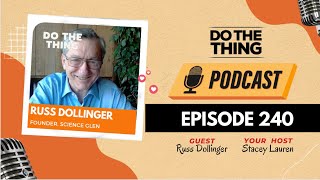
Russ Dollinger left teaching to build science education products. He sold 222 flashcard sets to chemistry teachers after giving away 250 trial versions in a Facebook group, and early testing showed his 3D molecular models improved student performance by 33 to 44 percent in 15 minutes.
Questions this video answers
February 10, 2024.
Over 100,000.
Rejoined the incubator around September 11; launched the product on October 10.
Printed 1,000 sets and offered to give away the first 250.
About 468 emails.
Chapters
Hey, everyone. Welcome to the do the Thing podcast. This is your host, Stacey Lauren. Well, you guys, these are the moments that I just absolutely love having a podcast, because, you know what happens is you could see someone's name get featured in an email from someone that you've been following a while, and then all of a sudden you're like, wait, that person is perfect for this thing that I'm working on. And you could reach out to them and ask them to come on your podcast. And that is the situation with the guest that I have on for you today, because I got to see Russ, who is our next guest on the do the Thing podcast, was featured in Ryan Daniel Moran's email showing how he just built an audience from 0 to, like, 450 and is kind of going on all these amazing things. And I just was so excited about it. And the fact that he's in his 70s doing it too, just makes it even extra special, because I know so many people that listen to this podcast and that are in the do the Thing community are starting over and want to really make an impact in what they're doing. And so I just can't wait to dive into his story and just hear about what he's doing. So I am welcoming Russ to the show. Hi, Russ.
Hi. Thank you so much. Can I say something first?
Yes.
So I don't think age has anything to do with it. I think it's really more about mindset. And unfortunately, it's so easy to become stopped by one's own bottleneck or fear. Oh, I'm too old. I'm too this. I was stupid before. I made mistakes before. I'm afraid I'm gonna fail again. It's really more about mindset than about age.
I love that you're just hitting it out of the park from the start. Huh? That's really good. It's so true. Once you can tap into that idea of you just being able to live your life regardless of whatever's coming up for you, that mental baggage is what I like to call it. Then that's when you're really free, no matter what age you're at.
Yeah. And we all learn things different times. This is a phrase that I have. We learn when we're ready to hear. We learn when we're ready. And it may be that when we were 20 or 15 or whatever, we weren't ready to hear. And then at 40 or 50 or whatever, it may not be like, me, I was stupid. So it took me a little longer.
So I would love to Just hear if you could tell us your story. Story.
So my story is long and complex. So I started off as a scientist and I have a PhD in anatomy from UCLA and I was doing brain biochemistry, cell biology kind of things. And I had an idea for a book called Pocket Medical Spanish, basically, or a thing like that. And I left academics, I went into business. I had a Ph.D. and I thought, well, I can do anything. I'll read a few books, I'll make a few mistakes. I. I'll figure it out. I just proved that I was more than anything arrogant and stupid and that business is really, really hard and things go wrong and you have to kind of expect that. That's sort of the nature of it. So anyway, I ultimately came out with a book called Baka Medical Spanish. And I sold over a hundred thousand of those and did well and did some other things like that. Interpreting service and typesetting, foreign language typesetting. And we had a software company, we tested our software in the LA County Men's Jail and the la and in Cedar Sinai Medical center. And ultimately those businesses basically failed. In around 2008, when the crash happened, all my sales went like this to. It stopped immediately. And so I scrambled around and did this and that and the other and tutoring and anything else I can figure out. And then around June or so of 2008, I thought, well, I'll go and be a sub and I'll work as a sub teacher substitute. And then the economy got really, really bad. Lehman Brothers was about to crash. And I said, well, forget the sub thing. Sign me up as a regular teacher. So I got a job as a regular teacher without any training. They gave me a key and they gave me a book and they said, go teach. That was my training. The room had been stripped bare by the other teachers. There wasn't markers or chairs. It wasn't anything. And I went in there, I found these notes from the previous subs saying, good luck to the next teacher. This is the worst class we've ever seen. And I didn't know anything about. I mean, one of the things that beginning teachers learn after very short time if they go to survive, is classroom management. And I didn't have that. It took me about three months to really calm the class down. They were an angry bunch. And the teacher that had been there left after two weeks and they were just on their own. And it took a while to calm them down. Well, by the end of the year, I hated it. I mean, I thought every day I'd get home. So Angry. I thought, there's no way I can keep doing this. It's going to kill me. And so at the end of the year, I quit and I said, all right, I'll work at being a sub. And I did that for the next eight years or so. Now, as a sub, you very quickly learn classroom management because otherwise you don't survive because you're going to go into whatever. And I managed to do a little bit of everything. So around 20, 15 or 16, as a sub, you don't make much money. And I was still doing business on the side and still doing things and making it work. And sometimes it worked. But during the summer, you don't get paid. During the winter holiday, you don't get paid. You can't make a living that way. So I went back to school, got all of my credentials as a science teacher, so I'm fully qualified in biochem and physics, and I knew classroom management by then. So I said, all right, sign me up as a regular teacher. And I went back and I got a regular job teaching AP Chem and AP physics and all those kinds of things for, I don't know, six or so more years. And then I decided that I'm going to quit that and go back to being an entrepreneur. Ryan Daniel Moran says, as this great phrase, being an entrepreneur is a life sentence.
It's so true. And so I should hate entrepreneurship, but I love it. It's a roller coaster. And when it's great, it's amazing, and when it's bad, it's divorce and depression and you want to kill yourself and all the other stuff you probably know. And so I went back and decided I'm going to do this. So in June of this year, I basically retired from teaching, and they get a little teeny pension for that. And then I basically spent the next three months busting my butt to get a product out. And I came out with a set of flashcards for chemistry for learning about ions, which students have a lot of trouble with your audience. Do you guys remember your chemistry journey? I bet not. I bet it was the most fun, right?
Painfully.
Most people remember it. And there's some reasons for that that we can go into, I think. So I did that, and then I rejoined the incubator as of September 11th or thereabouts, and launched the product on October 10th and got a pretty good response.
Amazing. So for anyone listening, the Incubator is one of Ryan Daniel Moran's programs that I've been in as well. And it's such a great Program to help you kind of realize what you're doing and be able to actually get it to market and sell it to eventually have a successful business. So I want to go back for just a minute on the a hundred thousand book sales from the Pocket Journal. How did you sell that many? Because that's really an insane number for just selling something that you had thought of.
So sort of an interesting story with that too. But ultimately I came out with that version of it. I had an earlier version of it and had some disasters with it, but I basically pushed it into medical school bookstores. This was a thing that was designed for doctors and nurses and paramedics and so on like that. It's Pocket Medical Spanish. And the way it works is it's like a flashcard. And on one side of the flashcard there was an English phrase and Spanish phrase and how to say it. And on the backside of it was the same Spanish phrase in large letters. The doctor would hold it up and the patient would read along. And the only thing the doctor had to understand was, see no or no say yes, no, or I don't know. And it worked very well, and it fit a real need. And this was before Google Translate or anything like that. And so doctors, this was a real pain point for people providing health care. And so I put it into medical schools. And then every day I called one medical school bookstore and I gave them a pitch, and I said, here, da da da da da, and I'll send you a free book. And then about a week later, I'd call back and find out, what do you think? And want to try to start with 10 copies or whatever. And you started to do really well. And so then I started calling all the wholesalers, distributors and wholesalers and convinced them to do it. And then as well, I went to the various trade shows. And one of my best trade shows was a fireman's training show. And I happened to get the booth right next to the beer stand. And so I would have all these firemen in the beer line, and I would pull them out of the bureau line, say, hey, look at this. What do you think about this? And then about two, three, four weeks later, I would have some fire department somewhere in the country then call and say, hey, we want to start with 10 copies. And I gradually built it up and word of mouth and I kept pushing it and some advertising and so on like that. This was pretty much kind of at the before and in the beginning of the web stuff. And so that really wasn't the big Push then E Commerce wasn't that strong and I wasn't that good at it. So it was really more like the old fashioned way of doing things. But I built it up and ultimately, and I usually get 3,000 books at a time printed. And the other thing about it was, is that we assembled it in house. And so I would literally get a half million pieces of paper in little chunks. We had these on racks and then we could put them on little sorting stands and we would literally peel them apart and put them together. And as it happened, I was the only one who was any good at doing the binding. And so I literally bound about a hundred thousand books myself. One of the problems with that, and this was because of my just lack of experience in business, I just didn't know anything really, is that we kind of started with a bad business model. I mean, it was enough to make things go, but it wasn't really enough to get much beyond survival. We did other books as well and other things like that, but I was moving and moving and moving, but not really getting anywhere. So I sort of affectionately thought of my own business as Hamster wheel Publishing.
There's so much I love about just your story in that between the entrepreneurial side of it, with both the times that you were doing it and then with the educator side, because you're still educating people, so you're still an educator. You're just doing it now through entrepreneurialism. And I love that.
Yeah, it wasn't quite the way I planned it, but that's the way it worked out. I mean, I mean, I tried different kinds of jobs and things. And finally kind of one of the things I did is I went and went into a web immersion school, one of these really crash courses, and discovered that I was the stupidest person in a room full of nerds. I'm going to have a PhD and I was the stupidest person in that room. And ageism was a real factor as well. So, I mean, I was like three times older than many of the other students in there. And when they had this job fair kind of thing as part of that school and nobody was interested in me at all, and had I been 20, they would have thought, hey, this kid has really got some opportunity. He's going to be great later, we're going to shepherd him along. But instead I ran into this real thing with ageism. Well, ageism exists in all kinds of stuff, even in Bryant's posed actually. But in teaching I was able to go and do that as long as I was Confident, was able to do it, was able to relate to the students and. And behave relatively well. Then you can keep doing that until you're 90.
Mm, definitely. Well, I'd love to hear about the flashcards that you're doing now. So how did you. You got the product, you created it. Oh, you're going to show me. Yay.
Yay. Oh, my gosh.
You know, and I love that. So let me open this up. It's an unboxing, right? Yay.
Seeing it here.
All right, so here's the thing. Grab you one here. Oh, weird. Same thing happened yesterday. So, barium ion. Do you happen to remember the charge on a barium ion? No. Think back to your experience in chemistry. So barium is undevilable. And metals lose electrons. So inside of an atom, there are protons that have a plus charge, there's neutrons with no charge, and there's electrons that have a negative charge. Okay. So atoms will gain or lose electrons easily. The protons don't move. So barium, as it happens, loses two electrons. So if you look here on the top, it says barium minus two electrons gives you barium two plus because it lost two electrons. So now it has a plus two charge. So this is an easy way to look at it for this, and it works well. And it's got a nice thick card and so on. So now let me just grab another one. So there's different ways that atoms can hook together. Atoms. Am I losing you?
No, you're great. I love it.
Keep going and think back to your chemistry. Your audience can think back to chemistry. There are three ways that atoms can hook together. They can hook together with what are called covalent bonds, and they could hook together with ionic bonds, or they hooked with metallic bonds. Metallic bonds happen in metals, but let's just focus on the other two for the moment. So in covalent bonds, imagine that you have two atoms and there's an electron between them. Each one wants that electron and they grab it and neither one wants to let go. Sort of like you and maybe your sister or brother holding onto a $20 bill. And neither one of you wants to let go. So you're tied together almost like two people with their belts tied together because neither they're so greedy for that electron. And a covalent bond. They're sharing the electron because neither one wants to let go. Right. In an ionic bond, one has a plus charge, like the barium that had a plus charge or chloride with minor or like things. But table salt, you have sodium chloride. Sodium loses an electron, some metal, it loses an electron becomes plus one. And a chlorine that might be nearby grabs that electron, becomes negative one. Well, they're attracted to each other. Sort of like when you take some laundry out of the dryer and you get a static charge, get a shock. That's an electrostatic bond. And in a sodium, between a sodium and a chloride, they're attracted to each other. That's an ionic bond because it's between two ions.
Yeah. So you're really, what you're doing through these cards is you're helping simplify something that's normally really complex and hard to understand. And you're making it a visual thing that they're going to be able to see and then use and interact with that.
And also that the way the brain works is we only have maybe eight or so bits of what's called working memory that we can use to take advantage information. But we're surrounded by thousands of bits of information hitting us all the time. Like do you feel your feet do? But you didn't before until I mentioned.
Right, right.
And all this information bombarding us, but we filter it out and we only taking the relevant. So what happens with chemistry students is that there's all these new terms and concepts and ideas that they've never seen before. I mean, they've had math every year from the time they were in the third grade and they've had English and they've had history, but they've never had a class like chemistry. And chemistry starts really, really easy and it gets harder and harder and harder all the way through. And interestingly enough, you know who, who does the worst or has the most trouble at the beginning? The smart students, because they never had to work before. It's so easy for them. And what happens is they tend to kind of fall behind at the beginning of the class unless they're really disciplined. These are 15 year olds and unless they're disciplined where you. When you were 15.
Actually I was pretty disciplined.
Okay. So what happens is the students start off and they don't really pay attention. And then when the time comes, when it gets harder and harder, then they fall in behind and as hard as get out to catch up in chemistry. So now when you can have. So for example, the shell of a seashell or coral is made with calcium carbonate. Well, calcium is a metal. It loses a couple of electrons. And carbonate is where you have more than one atom hooking together with another. You have a couple of them. So here we have carbonate ion. And on the backside of it you see, you've got several atoms hooking together. You've got a carbon and three oxygens hooking together, and then it acts as an ionic to bind together. Well, students, when I say to them, if they haven't been paying attention and they don't remember the terms, and I say, what's calcium carbonate? And they can't do that, or if I say sodium nitrite as opposed to sodium nitride, difference of only one letter, completely different compound. And so when we get to later parts of stoichiometry, it's harder. So this has to do with the way that the brain learns summarization and how better to do it. And the purpose of my company, and really my passion more than anything, is we create tools and courses to help people learn faster, easier, and deeper. Wow.
And I love that you're exemplifying just how when you're passionate about something and when you're able to tap in to what that passion is, how it can be interpreted into something like this company that you've created.
Yeah. Thank you. Thank you.
Yeah. I would love to hear about how you did it, because when I saw that email from Ryan, what was so impressive was that you went from zero. I mean, there were so many things impressive about it. But the thing I'm specifically referring to right now is that you went from zero to, like, 400 people, and then half of them, I think, bought or something. And I'd love to just hear what that process was like and how you did that.
All right, so it's not quite exactly the way Ryan presented it, but it will be. Okay, but let me explain. So I'm on a Facebook group for chemistry teachers, and I had to prove I was a chemistry teacher to get onto that group. And it's got theoretically 13,000 members, but probably only maybe a thousand or two thousand of them are active. Who knows, Some of them retired by now and whatnot. Anyway, when I was teaching, I found that when I asked students to make flashcards, they did better. And the class. And so this was a pain point for me. And so I thought, all right, And I have some other products I'm in the process of creating that are being made in China right now and so on. But I thought, in the meanwhile, let me create some flashcards. And I spent about a month when I created these flashcards, and then I thought, all right, well, I need to build my list, and I need to get teachers to use these flashcards. And teachers are. They don't want to be bombarded with sales pitches on the one hand and they're not that trusting of some new gadget and education. Here's another one, here's another one. And I don't believe anyone. So I thought, all right, I can kill two birds with one stone. By I had a thousand of these things printed and I said, all right, I'm going to give away the first 250 of them and I'm going to give them away to the chemistry group and I'm going to send them to my website, I'll grab their email. And so for about a month, at about once a week for, for a month I was posting pictures of the various cards and here's what's going to include. Now there's flashcards and there's flashcards. And so the way I think about it is the regular flashcard is sort of like a VW bug and these flashcards are more like a Bugatti, okay? And so they have things that no other flashcard in this field have on them at all. And so most chemistry teachers going, oh wow, I want this. So basically I promised to give away about 250 of them. I think ultimately we sold about 222 of them. Most of the teachers got them for free, which is fine because they were planning on. And I had teachers from all around the world, literally China, the Philippines, Guatemala, Australia, New Zealand, Canada promised to test these things with even the United States promise to test these things with their students. So what's going to happen is they're going to then go into the class. Well, one of these boxes with 81 cards is not going to work with a classroom with 25 or 30 students if it's successful, okay? And so I know for sure that they're going to then go and they'll check it with their students and then they're going to go to the principal or assistant principal or whatever at the school and say, here, buy me 10 of these or buy me 20 of these. So this was a long term brand play. Now as it happened, I had, I think I'm up to about 468 emails and it's dropped off. It was a big spike. It's dropped off now. And so now the hard work for me has to go to the content creation and coming in authority site which I'm doing and the website kind of promotes that. And as of now, of the 200 and some that I shipped out, 220 that I shipped out, only about 40 of them have been delivered yet. Rest of them are going to be Delivered in the next few days because they're going all across the country. And so the ones that were near where I am in California, they got it fairly quickly. And I've already had a few people put messages on the Facebook group saying, hey, these are great quality. So they're feeding back to that Facebook group now. One of the things that Ryan blasted me for was not having my own email list. So what I did, in essence was, was to siphon off or scrape off 450 from that Facebook group.
Amazing. So you created the product, you have other products in the making, but you decided to do this one because you could make it quicker, which I just love, because that's doing the thing right. Like, you could have waited for the other products that are going to take longer in China, but you did it quicker. And then you decided to post it in this Facebook group of chemistry teachers. And then what you did was when you posted it, you basically were showing a picture of the flashcards and saying, I'm giving away 250 of them. Who wants one? Is that right?
And there's going to be scarcity then, too. And I only did week, and it's only 250 and it's going to go quick. And I kept pushing it and pushing it. Once I launched it every day, I said, here's what's going on and here's this. And I showed other pictures and so on. So I created a momentum.
Yeah, scarcity, and then momentum of just like, oh, my gosh, this is actually really good. And then from there, those are just kind of a starting point because then those teachers are taking the cards. They're loving them. They're showing to the principal, the students are seeing them. People will be ordering them in blocks of cards, basically. And then by the time you decide to make those other products, then you have this now list that you're going to be able to sell those to pretty easily, because they're already people that buy in this space.
Right. So let me show you the thing that we're about to come out with, like I said. So this next product is also for chemistry. One of the things I discovered was that students had terrible trouble remembering or coming up with the names for various ionic compounds. So do you remember what the formula for magnesium chloride is?
No.
So magnesium loses two electrons, so it becomes plus two.
Oh, I love that.
Right.
Okay. And chloride tends to pick up. Negative one becomes negative one. Well, guess what? Boom. Let's take some.
Oh, my gosh, I love that.
So, oops, let me hook it Together properly here. Now we've changed this a little bit. This is just a little 3D prototype that I made. But now we've already finished this amazing manufacturing. So now if you think about what the formula is, is MG CL1, CL2, MGCL2. And when I tested it with students in my classroom with some wooden paper models that I made, there was a 33 to 44% improvement with one 15 minute training.
Wow.
And students kept saying to me, dollinger, why didn't you teach us that way before? Well, I hadn't made that thing yet and we pending on it and it'll be where we're about to start cutting the molds. The molds are going to be expensive. The molds are about $26,000 for the molds and another 25 or so for the first run. That'll be coming out around January. And interestingly enough, and something I hadn't thought of, it's something your audience might consider as well is I don't know if you know Greg Johnson or not.
Oh, I do. I love him. Yeah, he's great.
He's a great person for email and marketing and whatnot.
Yeah.
But he said, you know what, I want to buy one of these too.
He's going to give it to his students, his son's school, so that they can use it. And he thinks that I can pre sell 500 of these without any effort at $99 each. So, you know, the parents will give it to the school so the school can use it and I never again. So fans, from a teeny niche to a huge mark.
Totally. And for the listeners, I want you guys to hear this. He didn't start with this. This is an idea that he's going to be doing. But he started with the cards because now you're in momentum, you're seeing people, you're getting to talk to Greg now you're already moving. So that's when things are going to start happening for you because you're literally doing the thing and in momentum.
Yeah, yeah. Moment. And it's big, not just in terms of sales. And I think this is an important thing. It's also big in feeling good about where you are in the process. Because it's so easy as an entrepreneur. There's good days and bad days and when you're struggling and you're not sure, oh my God, what am I doing? And this is crazy. And I gave up. I quit a tenure track science teaching position to do this. So by down by a bunch because I believed in myself. Enough. But even then, I still have a lot of talks with myself at night when I'm like, oh, shit, what am I doing?
I would love to hear you talk to the listener. As far as, let's just pretend we're talking to an educator right now and they're wanting to make a change, because I actually have many right now that are kind of exploring. They just started a podcast and now they're starting to get their voice out. And now the next step is figuring out the next thing. And I would just kind of like to see what your thoughts are in general about that and then also in terms of building an audience, kind of like you did.
So to your teacher educators out there, and this is something I'm sure they can relate to or anybody else, teaching is frankly the hardest job I've ever had. It's a killer. I mean, I would get up at 5 every morning. I'd go to school. I'd be done at 3, 40, and then I would tutor afterwards. And then I'd go home and I spend an hour or two walking the dog, maybe eating some dinner. And then I'd sit down and work for the next three or four hours getting ready for the next day's class. I was teaching AP Chemistry and AP Physics and so on. So this were not lightweight classes. And I would have to really, really push. And one or two in the morning, I'd go to bed and I'd get up at 5. And by the end of the week, I was wrecked. And so I understand it's a hard job. So teachers burn out. Aside from the stress and whether the administration supports you or not, it's a hard job and you have to really love it. And it takes a certain person to do it for 20, 25 years. Really, that's. So I would say that in terms of moving ahead for a teacher, for any of your listeners for that matter, be really clear about what your why is. For me, my why is that I want people to love learning and learning new things as much as I do. So that when people see each other and they need each other, instead of saying, hey, what do you do? They say, what are you learning now? Just a whole different way of looking at things. That would be my goal. And I think I can change a lot of the way education works, which is really the focus. I mean, the name of the company is Science Glenn, but the focus of the company is really about helping people learn faster, easier, and deeper. So I would say, know what your why is and why you're passionate about Doing it and be clear about it or what. When you were in the incubator, I'm not sure if you had to do a vision statement or a vivid vision thing or not. So you want to be clear about where you're going to be and think ahead maybe two or three years. Where am I going to be in three years? And that'll keep you going when things go wrong. Because things always go wrong. You're constantly putting out fires in that, just like you'd be putting out fires in a classroom with some kid, messes up or steals something, whatever. Okay? It's the same thing in business. That's no different, really. And it's the vision and the why and the passion that keep you going. It will do it. And then it's the grit. And that comes from having the passion, the desire, and the eagerness to go ahead, even if you're not sure if it's going to work or whatever. If you believe in yourself, then you make it happen. And it doesn't matter if it hurts, it doesn't matter if you're tired, it doesn't matter if so. And so doesn't believe in you, because you believe in yourself and you're going to make it happen no matter what.
And then I'd love to hear your advice. For people that maybe have already kind of started the thing and they're working on building their audience, what would be maybe a couple of pieces of advice that you have there?
Well, one of the things that I learned a lot in the incubator and in Ryan's programs, it's called capitalism dot com. One of the big pushes for that is you really have to know your avatar. Who is your customer? What do you know about them? And this is the whole thing about the hero's journey, like you were talking about. Who is your customer and what is it that motivates them? What is their pain Point. And then if you do that, I mean, so many years ago, I came up with Dollinger's four rules for success. You ready for them?
Yeah.
One, find a problem that is not being met.
Two, create a solution to that problem or service that is not being met. Three, tell everybody about the solution that you've created to solve this problem that everybody has. And four, fill the demand that you have now created. Simple, right? I have managed to screw up every one of those four things at one point or the other. I mean, I had a book, Pocket Medical Spanish, and I said, oh, I got to do Pocket Medical Chiropractic, and I put an ad in the magazine for it. And I had a zillion orders. It was amazing. I hadn't written the book yet.
Building demand and products that nobody wanted. Okay. So you have to really know what your avatar is and the one person you cannot trust what your family says. You cannot trust what your best friend says. You want to trust what some impartial person says because people will try to please you, or you can't trust yourself. You have to test it, because it's very easy to fall in love with your own baby and not recognize your baby's ugly baby. It's so easy to fall into that trap. So for the people that have already started, find out what is really the pain point for your customer and then ask your customers if you have an email list and you're already communicating with your customers. Find out what they want and what's wrong with your product, what's right with your product, and really communicate back and forth with them. You're building a brand. And once you have this brand built, like what? You know, the things that Ryan keeps pushing. If you have a brand, you're not just selling a thing. You're selling an idea and a solution to a problem. Your customers love you and they want to see the next thing and the next thing and the next thing. Does that sound like magic?
Yeah, it's really good. Okay, now the time is here. What is your number one piece of advice for people on doing the thing?
Trust yourself. Believe in yourself. And from the time we are little, two, three years old, we first start hearing things until we become an adult, we get so much negative stuff that we pick up some of it on purpose, some of it just by chance, whatever. And then we make decisions about the world and how to interact with the world, about how to behave, whether we should be introverted or extroverted, and what things mean. And when somebody looks and walks into the room and smiles, does it mean that they like us or does it mean that they're making fun of us? We make these decisions, we choose that. But a lot of who we are has been programmed into us without being aware of it from the time we were little. So if you know yourself and you know how react, then you can start to believe in yourself and you can repair your damaged ego. And there isn't anybody I've ever met who doesn't have a damaged ego in one way or the other. And so anything you can do to repair your ego, to believe in yourself, is going to improve your chances enormously in whatever field. And then you sell and the other thing is that everybody sells. So I had a PhD. So, funny story, I left my PhD and before I did it, I was going to go into business. I thought, all right, I'll go do business. I'm so brilliant. I'm going to be able to be easy. And I decided I was going to go to the ucla. I was doing my postdoctoral work, go to the business library at UCLA and research some stuff. And I walked there. And before I went into the building, I hope to dear God nobody saw me go into that dirty building because anything with sales was horrible, because that was the academic gold tower, whatever way I was looking at the world. And what I realized after I went into business for a while was that everybody sells. Whether you're a car salesman selling a car, a preacher selling God, a teacher selling an idea in a classroom, or Einstein selling his brilliant things, and he was great at it. Everybody sells. And even in science, the people who sell the best are the ones who get the keynote speeches and get the grants. Okay? And the teacher who sells well to their students is the one, the teacher that is loved and et cetera. Everybody sells. But that's easier to do if you believe in yourself and you're comfortable with yourself. And. And then if something says something bad or you're rejected or your pitch fails or the website you created is. And people hate it, well, okay, fine. You pick your panties back up and you do it again.
That's simple. I mean, that's. That's the key to success.
Yeah.
Is you don't give up when you fail. You learn from what you can. You cry a bit, you learn what you can, and you do it again. That simple.
Incredible. Oh, my gosh. Well, this has been amazing having you on. Please share with everyone how they can get connected with you and what you're doing.
So the name of the company is Science Glenn. That's one word. Science. And then Glenn. So I have this little teeny forest, a glen is where you have land that slopes down into a kind of like a gentle ravine. And I have one of those in my property. And it's a. My little Glenn. And I was trying to think, what is the name I got to call a company? I want to do science. And I was in the Glenn. Science Glenn. I was able to trademark the name, more or less. Okay, so the name of the company is Science Glenn. One word, Glenn, is G L E N Com. So if you happen to have in your customers, if you have children that are in science now and struggling with chemistry, then I had these ion flashcards and so it's a simple name, Ion Flashcards and I have it available on the website but I have lots of other stuff coming along and courses and whatnot and anything I can do to help you, Stacy, please.
Yeah, I have a few ideas. So we'll be talking for sure because this has been incredible. Yeah.
Where are you based out of?
I'm in San Diego.
San Diego. I'm up outside of LA in Bombdale.
Oh, okay.
Oh, and I'm going to be down in San Diego actually around April.
Oh yeah. Oh yeah. That's amazing. Well, I have a few things in mind as you're talking. I'm like, oh my gosh. We're definitely going to be keep in touch for sure.
I'm so pleased. Thank you so much. So much.
Thank you so much. And for the listeners, do the thing, don't wait for opportunity, create it.
More from Stacey

From 262 Women to 8 Million Media Impressions: Deborah Drummond Built a Global Women’s Movement


From Notes App to Published Author: Avery Brenna Crumrine on Turning Intention Into Action


How Stacey Lauren's Billion Dollar Impact Marketplace Will Raise Billions for Charities and Causes

What Happened When Allison Maslan of the Pinnacle Global Network Ran a Challenge with Stacey Lauren




Leaders Share How Stacey Lauren Sparks Action, Clarity, and High-Impact Collaboration

Sandi Masori Announced as Emcee | The Billion Dollar Impact Event Returns to San Diego