Creators + AI Are Rewriting Financial Advice | Steve Chen (Boldin)
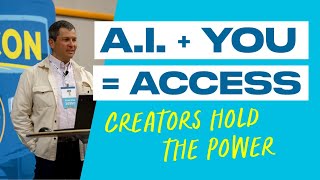
Steve Chen (Boldin) presents to a creator/audience community about how creators and AI are changing access to financial advice. He describes his company's trajectory (venture-backed, large user base), argues financial wellness parallels physical wellness, and explains that creators now provide education and distribution while AI and decision-tools scale personalized planning and support. Chen gives concrete business metrics (monthly active users, AI support resolution rates), discusses liability and product structure (software company + separate RIA), and outlines service evolution from software to coaching. Rob Berger joins to share creator experiences and practical AI use-cases (personalized agents, support automation, document parsing). The session closes with audience Q&A on implementation, hallucination/limitations, data security, and potential future directions.
Questions this video answers
About half a million people.
About 100,000 monthly active users.
Around 89–90% of questions were being handled/resolved without a human.
Nationwide and Raytheon (Raytheon RTX licensing planning as a benefit for 250,000 people).
About nine coaches and nine advisors (previously five coaches and one advisor).
Chapters
So just two seconds about us and just who you're talking to. So we are a venture backed company. This thing started bootstrapped, then we went venture backed. We've helped about half a million people with digital financial planning. You can think of it like TurboTax or planning. And our users are kind of like typical. Well, they're a little bit more mass affluent. Even though we're trying to help everybody. But we've kind of attracted these enthusiasts like you would find through fincon. And they tend to have done better financially, but a little bit about like what we do day to day. I think one framing that I think about for this space that could happen is that it could mirror physical wellness. I read this book, Shoe Dog, which was written by Phil Knight. It's a great book. He tells a story there where it's like, we didn't realize that exercise was good for us until 1949. Does anybody know the story about how they figure this out? Yeah. Do you know back here, I'm trying to remember the book.
It was something about productivity or what they saw productivity.
Well, actually the version I saw was that they did a study of British bus drivers, the double decker buses. And they were studying the drivers and the ticket takers and the ticket takers, the drivers had heart attacks at twice the rate. And so the ticket takers lived much longer. And they're like, hey, why is this? And they're like, oh, the fact that they're actually exercising is the difference. And then it's kind of shocking to me, right? It's like, hey, we didn't understand this, but once we figured this out, companies like Nike, Adidas got created, the whole sports economy got created essentially. And we think the same kind of thing could be happening here with financial wellness where people are discovering that hey, it does take literacy. You have to know what's going on. It takes good practices and good habits, right? Sleep, eating well, exercising, managing stress. So it's behavior change. And it takes a lifetime practice and you can have much better outcomes over the course of your life. So same thing with money. It's like, save money, invest it, manage your own behavior. Don't shoot yourself in the foot of the end. Those are all part of this. And we lean into planning because it works. People with financial plans end up with about three times as much money. It's a dramatic change. And it's because they're literate, they make good decisions and they actually take action. Advisors play a key role in this because they wrap all this stuff together, which is great. If they're accessible, the challenges, they're not accessible to everybody, but they will help you with behavior change, which is a key thing. Making good decisions, saving money, but also helping folks once you have money, not shoot yourself in the foot. I saw this in my own family. There was someone in our family who's a former CTO of Xerox. They had done a good job, saved all this money in their 70s and then got bored and started day trading and then was like, oh, in the beginning, started making more money and then suddenly lost money. And then he's explained to his partner, yeah, we were financially independent, but now maybe we're not. And that created all this additional stress and they didn't need to do it in the first place. This risk exists. We're our own worst enemy across our entire lives. And just for me personally, just on fincon, I actually haven't been here for a few years. But when I first came here to this community, I think it was a real aha moment for me where there were thousands of people really into money and also focusing on financial independence, which is this unlocking idea that you can achieve financial independence and pursue it earlier. And everybody ultimately needs to get there or you're going to end up on public welfare or something like that. But we all have to get there and that you can be much more proactive about getting it. So we're trying to bring that idea, you're all bringing that idea to everybody else. And we're trying to support that, that motion. And I think curator, I think creators have like a huge opportunity with what's happening right now where they can build the relationship with the end user. There's another big conference going on in parallel right now called Future Proof where all the financial advisors and kind of traditional financial services are and they all want to talk to people like Rob, like Azul and the various creators here because they have access to the market and trust with the market. And so they're looking to win referrals and things like that. And so the power dynamic is changing materially in the space. Okay, any questions so far? Is this helpful? Yeah. Good. Okay. All right. So yeah, a little bit more on the power stuff. I mean, when I first ran into saw this, the power has been concentrated with these large companies with their brands and the financial advisors. The financial advisor has the knowledge, has the tools and the ability to execute. That is now. And they had a massive information advantage that is now getting spread through the ecosystem, including to, you know, the, to the creators. Right. So distribution is being Done by creators, right? Financial literacy is done, being done by creators. Decision tools are available for tools like us and other competitive products. Behavior modification or behavior management is happening through influencers, but also communities. There's many more ways that people can, you can help your audiences in a big way. Just much more transparency. So one of the big changes we're seeing, Rob and I are going to talk a little bit more about this, but we were riffing beforehand. I think some of the stuff that we're seeing is that there are whole new segments of consumers now that are empowered, realizing that they can do this themselves. And they, you know, maybe they didn't want to talk to an advisor or maybe they didn't have enough money to get in touch in front of an advisor. But now they can kind of start down the path of getting educated. There are also new ways for advisors to scale their services. So there's going to be, we think, more availability of advice and guidance, which is good, including the creators and coaches. So we're talking a lot of creators and coaches that are coming up to us and saying, hey, they, they want to go beyond creating content to facilitating communities, teaching classes, offering memberships. I think you'll start to see that emerge, these hyper empowered and more vertically integrated creators that monetize their audiences in much bigger ways. So a little bit more on kind of the past, present and future. But definitely you're probably seeing this and we'll talk a little more about it. But the way that people learn, plan and act is changing very quickly. And it's almost real time right now. And then where we see this going is that definitely in the future we don't think people are going away. Creators are definitely not going away, advisors aren't going away, but we think they're going to be able to serve many more people at scale with these tools. You'll have tools help you create content, reach your audience, engage with them, support them, actually help people make decisions, and then with agents actually take action and affect change. So that's going to hopefully increase access pretty dramatically across the whole ecosystem and across society and society in general. I think another thing to be thoughtful about is that the business model is changing pretty dramatically. So traditionally Advisors get paid 1% of your net worth every year, which is like, doesn't sound like a lot to people that are less aware of the long term risk of this, but it adds up and it'll end up costing you 25 to 30% of your terminal wealth. So it's a huge drag on returns and it's that business model and the incentives behind it, I think led us to where we are today, which is you have great advisors, they want to serve wealthy people. And that's where. So if you have money, you can get great advice and make more money. If you have less money, you're kind of on your own. And that's where I think this community comes in, reaching a lot more people, educating them, and new services come out. So we're definitely seeing the kind of. The funnel is still pretty much the same, but we're definitely seeing it evolve where at the top of the funnel, the influencers are educating and engaging people in a much more significant way, in a much more authentic way and I think impactful way than traditional brands. And that's. You know, I was talking to Tanner earlier about this. You know, you know, it's like companies want to reach these folks, but it's hard to be a. You know, people want to. People want to talk to other people. And then there's definitely many more, much more advanced tools that are available to people. It's really empowering folks. And then you're able to connect them with coaches in different levels of. You don't have to go talk to just a financial advisor. You can talk to a coach. You can engage in a community that's facilitated by the creator or some combination. And this should create material opportunities for the creators out there. So what hasn't changed? Essentially, the core stuff is the same. People want to follow other people who are experts and really know what they're doing. Trust. It's all about trust. So it's all of us that create stuff or run businesses. It's about authenticity and real relationships. The learning never stops. The Pat Flynn talk was great. Super impactful. It's like when change is happening super fast, we have to be running experiments all the time and they want to learn pivot. One thing I've noticed here is there's definitely like an OG class of fincon people that have been around for a long time and made it work. And they very often end up winning, I think partially because they are also financially independent. And so many of them are financially independent so they can outlast other people. But that is part of this, part of what we've seen is that it can take, I think, Rob, you spent five years building your YouTube channel. It goes by. It takes time, but then once you build it, it has real momentum and then niche and focus, real expertise matters. That's what we see working on YouTube a lot. Is that how to explaining things Diving into topics. We had an advisor on our team and they did a talk on pensions and they have 400 followers on YouTube, but they have 40,000 views. And I was like, what happened? It's just like they hit the right topic. They dove into it. They know what they're talking about. Okay, so a little bit more about what we're learning and seeing out there. Definitely this trying to build a scalable infrastructure. So in our business, and I think for a lot of you folks, it's like, how do you deliver stuff at scale through content, through software? How do you personalize it? We think AI is going to play a huge part in personalized learning. I'd love to talk to people about that and what they're seeing. But like, that's a giant. I mean, it's also in schools. It's a huge opportunity for children is to learn in a very new, different way and then access to advice on demand. We think that'll be a key part of it. Again, humans, but hopefully enabled with AI to serve more people. Some stuff about what we're doing in our business. We have about 100,000 monthly active users on our platform now. There's 100,000 people logging into their financial plans. They're interacting with hundreds of billions of dollars, making huge decisions, and they have lots of questions. And so we use a tool called Intercom, which has something called Fin AI in it. So it's a platform that already has us built in. We had a ton of really sophisticated help documentation, tens of thousands of questions that had been answered before. And it's also backed up by human beings. But we hit the switch and it went from in the beginning of the year, it was like 50 to 60% of questions were being answered and resolved 60 to 70% of the time. And six months later, it's handling about 90% of questions, 89% of questions, and resolving 90% of them without a human being. And people say they like it better than humans because it's available 247 and. And these. What's. It's like talking to ChatGPT. You're going back and forth like, oh, I'm thinking about claiming Social Security this way. How do I do this? And how do I think? And then it's very interactive. It's kind of amazing watching these things and like how people engage with this stuff. But that's also backed up by a human being. But it's scalable. Yep.
How are you able to do that and like, not be a financial advisor? I mean, when it gets that specific to their specific plan.
Great question. So we structured our. This is a. We were actually talking about this earlier. So we structured our business and to try to avoid this risk. Right. So it. Basically, there's Bolden this Inc. Which creates software, which comes with all the disclaimers. Like, you're using software, you're putting your own data in, you're getting results out. You know, there are disclaimers like, there are risks with this. We're always testing, but there are risks. And it's really. You're making your own decisions based on your own data. We do have an ria, a registered investment advisor, that's a sister company over here, and that is a regulated business. And so you can start building your own plan. Say, I want to get financial advice and go over here. So, yeah, we disclaim. I do think you're raising a great point, though, which is as people interact with AI and it gets more specific and it's more personalized, is there a gray area our regulators are going to come and say, hey, we think this is biasing towards advice. So we try to guard against that by structuring the company and setting up disclaimers and T's and C's and stuff like that. So I think in general, it lets creators, but also lets companies like us kind of punch above your weight class in terms of, hey, we use it for content creation, editing, editing podcasts, editing videos and stuff like that. We do a lot of testing across our business. So advertising media. Right. Like, running very large. Rob does this too. You know, Google campaigns and then coding, QA design. We built our own AI Illustrator. So companies, you know, building jobs, you know, we built this AI Illustrator. Yep.
Do you build your own Q and A application?
We are using tools that are kind of platform tools. We're not, like, from scratch writing them. That is now out of my pay grade, actually. Don't know. I do know that we're. And part of the reason, I don't know is that we are testing. You know, we are, you know, like, we'll use Windsurf, we'll use Anthropic for coding, and then we'll, you know, we're trying different QA tools. I mean, this stuff is moving so quickly. We kind of divided and conquered and said, hey, let the engineers run their own experiments. And it's interesting because then you'll see engineers emerge. Like, there's a guy, Joe, on our team, he's like, oh, he's got a really good motion going where he seems to be cranking out code Way faster than other people. What's he doing? And then kind of spread the word internally. So it's that kind of experimentation, but it's moving around pretty quickly. Yep. Data. We do a ton of data. We built our own data lake. We're doing a bunch of stuff on the analysis there. And it's like aggregating all this stuff that's a whole other beast. And analyzing and trying to make good decisions, but super valuable. And then scale and security. We work with companies like Nationwide and Raytheon as well. So there's two sides. There's a consumer side of our business. There's also Raytheon RTX. They license financial planning as a benefit for 250,000 people. That's the kind of stuff you can do with software. It's like, hey, let's let everyone build their own. We give people the equivalent of what they would get from an advisor with MoneyGuide Pro or eMoney. They can basically do it on their own for 12 bucks a month. And people like the fact that they can build their own scenarios and have their level of control. I don't know if this is valuable or not, but just like, if you're building companies, these are some of the things that I was just thinking about this morning as I, by the way, full disclaimer. I'm used to presenting to sales or investors. And so, like, for them, to creators is like a different, different move for me. So I was like, totally overthinking this. And then, thanks. Thanks, Rob. And then Rob was like, this is going to suck. It has to all be about how to. He's like, rip all this stuff out of here. I was like, I'm calling you up if I need help anyway. But some stuff that, like, you know, we find super important as we're trying to build this business about building teams. I feel like creators are very often like individuals, but then they start to scale, they start to build these organizations, and then they can do a lot. But as you build organizations, the whole motion changes. And these are some of the things that matter for our business. But I think one of the big insights is that and I think opportunities. This is what we see is we feel like the human. We have tens of thousands of people that pay us and they're all, you know, they're managing their life savings on our platform and most of them are, you know, well educated, you know, still have plenty of human capital left. Getting to be financially independent and then looking up and saying, okay, what am I going to do with the rest of my Life, like, what's my purpose? Like, their thinking changes, and I think a lot of them are like. Like, people at fincon are like, oh, maybe I'll be a financial coach. Maybe I'll help other people get to this point. Like, if you retire at 55. I was talking to one of our users here, and he was like, yeah, I retired at 54 from Pepsi. And he's like, now what am I going to do with my life? I mean, he wants to be a coach, right? And he's really leaning into it, and I think that's a very meaningful thing for him. So you have the same thing if you have thousands or hundreds or tens of thousands of people that are super well educated and thinking about this, finding ways to tap into that human capital and get them. We have many people in our business that joined us from being in the community. They're like, I'm going to help you. Our lead educator who wrote all of our courses was a teacher in upstate New York. And she's like, hey, I taught Spanish for 30 years. I'm a boglehead. She's probably wealthier than all the rest of us, literally. And she's like, I'll come over here and help you create courses and build the coaching practice and start. And she's coming and, you know, like, we basically had to. We were, like, paying her, but not enough. And then we're like, we got to pay you more money. And now we're like, we really need to pay you. And so, you know, but these folks are out there looking for ways to contribute back, and it's a. Can be a massive resource for. It's been a massive resource for us, and I think we're barely scratching the surface. Okay, how are we doing on time? So I. So I wanted to invite Rob up here and ask him a few questions about kind of what he's learned as we work together. And for whatever reason, I thought of this where I feel like Rob has been around in the. I don't know if you guys know this meme or this picture, but basically there's a thing done in World War II where they're looking at all the planes that were getting shot up and coming back, and they're like, we need to fix where all the bullet holes are. And people were like. And then one of the folks looking at said, actually, no, the planes are coming back full of bullet holes are fine. We need to think about the planes that went down. They're getting shot where the bullet holes aren't. And that's where we need to reinforce things. Anyway, I was thinking that Rob has learned a lot as he's gone through blogging to YouTube. I don't know if you guys know Rob Berger, but he's got 250,000 people on YouTube. But he, before this, he built a whole blogging business, sold it for seven figures, bought it back for pennies on the dollar, and then reincarnated himself as a big YouTuber. And he works with us and so thought he could come on up and we can ask some questions. So anyway, any questions so far?
So something we're noticing the trend of big aums with five people. They're starting to steal our language, muddying the message.
Yeah.
Have you guys been seeing that as well as you guys are looking at the data?
You mean from an SEO perspective? Yeah. I have not seen that in particular, but I totally believe it. I mean, I feel like there's a movement towards, I think, flat fee, fee for service that's entered the lexicon. And so consumers are starting to be much more. There's much more fee awareness. And so I do think that with fee awareness, people are searching for it. And so folks will probably try to capture that traffic. But I think also as consumers get, you know, more educated, they'll see, they'll start, you know, they'll. Their antenna already up. Trust is super low. And so I think, you know, what, you know, creators have is credibility and trust, and they can learn all about you, watch lots of videos and stuff like that.
Okay, so someone is working on the application side. A client is working with the app, and they haven't moved over to the personalized advice of an ira. Is there education that's being done through the app on fee structure, on how your money can be managed on your own?
Yeah, I mean, so we do things the way we do services is our model works, is like, there's free software, there's paid software, there's office hours, there's classes that are free, and there's whole. There's. There's a whole community, too. Community is a giant part of what we're doing here. We learn with our. And so those folks talk to each other. So people will be like, we have a Facebook group that has 22,000 people. And people are like, should I do Fisher Investments? My advisor does this or that. Is this a good idea? Like, actually a huge question is, what's the fair price? Is this worth it? And then there's a lot of folks that are kind of bobblehead oriented that will come in and kind of Give their point of view on things. Yeah. Any other questions from the group before I ask Rob some questions? All right, so, yeah, Rob, I was curious, what has surprised you when you made this transition from blogger to YouTube?
Well, I have a quick question. How many of you are content creators? Okay, about half. How many of you. This is going to answer your question. How many of you. Your primary platform is something, you may not have heard of this, but it's called a blog. One guy who only raised his hand halfway and one there.
Okay.
And how many of you? Your primary platform is some form of video. More. Okay. So when I. So I was at the first Fincon, I've been to all of them. That was 2011. My first blog was 2007. Did YouTube exist or. It just launched, I think 2008. So look, I'm older than YouTube or my blog was. And in the first Fincon, there were no video creators at all. Everything was blog based. And so you talk about surprises and challenges and growth. With YouTube, one of the biggest challenges is the fact that the challenges never stop. But the good news is every challenge comes with an opportunity. The problem is, you know the challenge because it walks up to you and slaps you in the face, like when Google stops sending you traffic or they're going to ban TikTok or whatever. The challenge is, the opportunity is there. It's hard to find at first for a lot of reasons. And so there are a lot of finconners who built their businesses on blogs. I sold mine. Probably a good thing, it turns out, in hindsight. So when I started, when I came back to it in 2020, my thought was not blogging at all. It was video. And the thought was. My thought wasn't a business plan. It was just, I can show my computer screen and I can help people with retirement planning or investing by showing them, for example, Bolden and how to use it or whatever the platform is. And I think the thing that surprised me was how many people really, really want that. They don't care that I don't edit my videos. They don't care that I put that. I don't put goofy thumbnails on the videos. And if you do, that's great. A lot of people do. And they do, they work. But they just wanted someone to help them understand a lot of the questions like the one you raised and that things are going to be okay. That's what they want. They don't want pie in the sky that things will be okay because they've got this. Maybe they need to make some changes. They can plan. And I was just surprised at the volume. I mean, I get thousands of emails a month and they're not like, hey, thanks for what you do. They're this long. They give me their portfolio, they give me the tickers. I know how much they're worth. It's amazing what they send me. And it's been a good feeling because I think I'm useful to some extent. But that was probably the biggest surprise.
Nice. Then how are you using AI today in your business?
So can I answer that a couple ways? So if you think before, AI technology in my mind, was static in the sense that what you got back from an app, let's say, was whatever the developer decided you were going to get. Even like Google search, you put in a search term, you get back not only the sites that Google decides you should see, but just you get 10 links. That's what it used to be. It's changed now. That's what you got. You couldn't change that. You could put in a different search, but you're going to get back whatever. And it's true with budgeting apps, planning apps, you put in your data, you get back what the developer wants you to have. AI is changing that. It's totally flipping the script because even with search now do you see the Gemini AI? Has everyone used an LLM of some kind? Right. Okay. And what do you do? You can now say, you know, I don't like that answer, so let me start talking to it. I'm going to. Now you're in control. You control. The LLM is giving you back what it wants, but you can continue to change what you're asking. You can have a conversation with it. And it's happening with apps as well. Steve mentioned what they're doing. Your question was a good one about liability, and I don't have an answer to that. Even as a retired attorney, I don't have the answer to that. But apps are doing it in one of two ways. They're bringing AI into the app, so in the app, you can ask AI questions. The difference is it has access to your data, so it can give you an intelligent, informed answer. That doesn't mean it's right. But the other thing some apps are doing is they're flipping that. They're saying, rather than bringing AI into the app, we're going to allow you to send your data out of the app into ChatGPT or Claude. They're doing it in a couple of different ways, but that's absolutely happening. And I Think. In the not too distant future, every single app you use, it's going to have AI in one way or another baked in. And I think that's good for us because it's not just about text. There are apps now where you can say, hey, graph my net worth for me. And it'll generate the graphs and you can control what you're seeing. You can ask it to generate charts of your asset allocation and it'll do it. And it's more or less accurate in terms of my business. Does anyone have any. Has anyone created AI agents? One person, maybe. So let's imagine you want AI to help you respond to emails. So there are creators. Do you get emails from your viewers? Yes. Okay. And do you feel overwhelmed sometimes trying to respond to it all? Some. So you think about how you could use AI. So one would be like in Gmail, it's sort of built in that. Have you seen like the three suggested responses? You could hit one of those. Maybe it works, maybe it doesn't. That's very simple use of AI, but now you can take that to the next level. You can actually train an AI. You could do like a custom GPT with ChatGPT and you could give it 50 emails in your responses and train it on how you've responded to past emails and then ask it to respond to the next email you get. And it's going to know your writing style. If you give it enough of your history, it's also going to know how you answer questions. So with me, it might know that I like index funds. So if someone asks a question, it's going to say, I've got 500 past emails that Rob wrote. I have this data. You can take it a step further. And this is where I think you'll see over the next few years, you'll have your own personalized AI agent that will have. For me, it'll have all the content I've written, it'll have all the. It's kind of scary as I say this, it'll have all of the videos I've published. And so it can do a couple of things. It can use all of that data to understand my thinking on something and write an email that's not just in my style but in how I think about the 4% rule or whatever it is. But the other thing it can do, and I know this is a long answer and I'm sorry, this is the last part and I'll shut up. It could say, and I've done this with like you from. With N8N. Yeah. So I've used it and I've played with it. I'm still a beginner, but I got this to work. It will go in. I use an airtable, a base and airtable, but it will go in. And in answering the question in a draft email for me, give them past YouTube videos I've created that directly relate to their question, along with a link to the video. And it does all of this in a draft with me just pushing a button. And I think really, even that's just the tip of the iceberg. I think what you're going to see right now, all of what I've described is kind of hard to do and time consuming, but there will be tools that eventually do all this for you. It'll be very easy and you'll have, this is from business, but you could have all of the restaurants that you liked and all the movies you liked. I mean, you kind of see this in, like, Netflix, where they'll recommend things, but you can personalize all of this. And I don't know if it's scary or exciting, but it could, you know, it'll help us in some way, maybe hurt us in others. But. Sorry for the long answer.
Yeah, just real quick. I mean, the comment I was going to make is like, essentially, that's what we're doing with our support. Hearing you describe it, like, we're doing that as a company and it's working. And it's kind of like, interesting to hear people say this. They've said to us, like, this is the greatest implementation of AI I've seen. I'm not trying to blow. It's just kind of interesting to hear people say that. So. But to hear you describe it for you as an individual like that, that just could be happening for all of us here as individuals. Does seem scarier than a company doing it for, quote, just support. Anyway, I've used that.
It's very good on your site.
Thanks, Rob. Going back to a couple of topics. When people send you their whole portfolio and go, gee, what should I do as a content creator, how do you respond? Because they're asking for very specific financial advice.
So it, so I've, I've responded in a variety of ways. One is to say, I, I just can't give you any advice. And here's some. I have a list of advisors. I don't have any financial relationship with them. And I, you know, recommend that I've, I've, I've done videos where folks will send me their portfolio and I'll Do a video of their portfolio and evaluate it. I'm not giving them specific advice, but I'm evaluating their portfolio. So I've handled it that way. And sometimes I'll say you ask interesting question and maybe I'll cover it in a video in the future. In some ways I dance around the question a little bit, but I try to be useful in some way.
Do you have a question? Yeah.
When you guys are working with AI, especially how implemented to your software, you find that the threads get to a point where. Where it forgets the AIs, forget previous conversation points in that thread and starts hallucinating in a bad way.
We haven't seen that on the support side. I mean, I've seen this personally where I think, yeah, personally. But like I think we try to constrain. You do have to be thoughtful. I think about how much you ask it to do. And the farther you go down, I think you can start to get strange things. Like I was trying to vibe create this deck last night and it was like pretty underwhelming and so I ended up abandoning it.
So you guys didn't input a limiter to keep it, keep your customers from going too long of a rat hole that it actually starts spitting out?
Well, yeah, so this is something we're thinking about. I mean, we're about to roll out a feature called Smart Summaries that'll basically like we do, unlike in our platform, we'll be like, hey, here's your net worth projection or whatever, your tax projection. And then people will say, we'll have a button that says explain what this means to me. And then we're feeding all the data and. And that question a prompt to an LLM, letting it come back and then letting people initially, right now they can just vote. Like, I don't like that, but they can generate three times and then stop. But we're doing these kinds of simple experiments to learn about like how do these LLMs behave? How fast are they? How much does it cost us? You know, there's all this stuff you have to kind of. You don't think about. But like if you start feeding a ton of stuff to these LLMs, well, there's liability, but there's also cost, there's time response time, all this stuff. So we're. There's a whole motion around learning about these things.
I mean, it seems like a logical evolution of Bolden would be to convert your people who haven't gotten the RIA yet and somehow get their assets through like a cheap portfolio model kind of like Marketplace or something like that. I mean, are you guys looking at doing something like that?
So we've gone from like software only to coaching now. We started off, we had for a while one advisor. We're working nine hours a week now we have like, we went at the beginning of the year, we had six coaches and well, five. Five coaches and one advisor. Now we have nine coaches and nine advisors. You know, a few months later or whatever, eight months later. So we are definitely leaning into the service side of this thing. We're definitely seeing a lot of demand for it, the AUM thing under discussion. But like we, our point of we are much more kind of flat fee, low fee orientation. So we'd have to be pretty thoughtful about it. But we'll see. I mean we're going to respond to the market. I mean there's deep demand for people that want help. And like if you looked at us, right? Look at Rob, right? I mean he gets hundreds of emails, right? Every RA in the country be like dying to have that kind of inbound volume. They're all like, where are these people? Right? But then the creators are just like making videos and talking authentically and then getting, you know, I mean it's crazy. You know, some of these videos get like hundreds of thousands of views or million views. It's amazing. And it's definitely translating. So that's why I think that these advisors can build or, sorry, creators can build relationships and trust through these platforms. And then the question is, what happens next, right? Where do you go with that? I'm actually curious here. Does anyone have any killer use cases for AI that you've found internally where you're like, oh, that was amazing. I guess it's kind of interesting that people don't have that. I mean, not that, not a criticism, but I think this is also something we're thinking about is like Rob and I were talking like AI ChatGPT came out in 2022. It's like it is doing some amazing things, but it's also not completely revolutionizing the world. But everyone thinks that it's about to.
I have a simple use case that I found helpful. Anyone have an HSA and you save your receipts to use later in retirement. So how do you manage all that? So I did it with N8N did an agent. So I scan the receipt and then technology takes it from there. It automatically puts it into a Google Drive folder. AI reads the receipt and outputs it to a Google sheet. It knows it can figure out even though there might be a bunch of numbers. It knows the cost, the provider, the date, and so that I can track it in a Google sheet and then totals at the bottom. I know it's sort of a simple little goofy thing, but I can't tell you how much I would have receipts stacked up because I didn't want to deal with them and now I don't have to do it. And the real interesting thing in that process, as simple as it is, is AI's ability to take a PDF and understand it. That to me is just remarkable. So on that One, I use N8N to create the agent and then. But, but I'm using. So the way that would work is you. You still need an LLM to do the work, to understand. And I just use Chat GPT. Yeah.
Yeah. Have a question.
Just to prep for conferences. Our CTO is able to scrape the speaker and attendee list for us and to identify, given the 10 parameters I'm looking for. And then all of a sudden I've got a great spreadsheet that helps me target conversations.
Yeah, that's good use case. I definitely think the, I mean, we're seeing this in like the estate planning and people are, you can. And just plan building too. You can grab documents, grab statements, grab, you know, tax returns. There's whole businesses, like holistic plan their whole businesses, like drag your tax statement here, your 1040, it'll scan it and get the data cleaned up, start down the path to generate a financial plan. I think that'll become more table stakes for a lot of these kinds of companies.
And it's great at formatting. So like I'll give it an article and I'll say, what good tables or some sort of data presentation could you pull from this article that I could include in whatever I'm publishing. And it creates incredible tables with data. So I think about it beyond just writing something or giving me research, it can format data in just about any way you want it.
Anybody here have super strong opinions about where they think the world's going to be in five years with this?
Yeah, sorry, military.
Okay, well, tell us what's going to happen.
All right. What do you think.
About using financial data to do an analysis on something like Chat GPT? How can you.
Make sure it's right?
Well, not necessarily that's right, but how can you communicate that later? Somebody's not going to get a chart somewhere with your specific client, specific data that you're not.
Yeah, so. Good question. I mean, the, you know, the model, you know, the labs have enterprise versions where they say your data is siloed off. You're kind of trusting that that's true. I do think it's a real question. I mean, the history is that they've gone out and scraped the entire Internet, right? Everything that's been written has already been ingested and now they're creating fake data. So I think it's a risk. But, I mean, companies are doing this today. I mean, one of the interesting use cases I heard is there's, you see companies that they're feeding all the communications from internal comms inside the company and making it available. And so people can just search that and figure out who is talking about something over here. I mean, this huge company has 100,000 employees and they're able to link people up and connect them way quicker, which is interesting but also scary because they're feeding all the communications together.
I don't know if apps will end up doing this, but you can run an LLM locally. In theory, you could do that as an app owner so that it wasn't going out to say chatgpt or again, I don't know. I'm not an expert on security and those sorts of risks. But you can run them locally.
Cole, I was just going to say we did use Claude to create an. We call it an app, but really it's just code that went on our website for an ROI calculator. We publish books, so it does the ROI on a book and you just put all the information, information in there and then it gives you how much you're going to make on your book.
And the life of your book.
We just created that on Claude.
Isn't that incredible that you can do that? And in fact, you'll ask Claude a question. Depending on what it is, it'll spin up code and give you an app to run inside Claude. It's the craziest thing.
Was there a question over here? Okay, yeah. I mean, for sure. This vibe coding thing, if you haven't tried it, it's definitely worth trying. There's like lovable is you can go in there and kind of describe what you want and it's evolving quickly. It's worth, you know, you kind of have to go back to these things because you'll try it and then two months later try it again. It's definitely evolved. So this is where it gets kind of interesting. Like, are people going to be able to, you know, vibe code up Bolden in another five years or a couple years? You know, who knows? We'll see. Hopefully not. I was going to say.
Another one we use for charts and graphs is called Napkin, so you don't have to go do on your own.
Yeah, awesome.
I have a good rock. As far as ideation, are you using AI at all to generate ideas or do you get so many questions from people that, like, you've got topics from down till.
Yeah, most of my ideas come from either my own research and reading or viewer questions. And I have thousands and thousands of emails that I haven't gotten to with. Great. They're all great questions. I started answering five questions a week every Friday just to try to get through some of them. I know it's only 5, but I do use AI a lot for research and it often triggers ideas. Maybe not for the whole video as a whole, but for things to say within the video. It'll come up with angles that I hadn't thought of.
Are you seeing the questions get more sophisticated? Like, are your users getting more going to more detail over time?
I would say the questions are not changing. Like for retirement, the questions are, how much cash should I have? That's like this. One of the biggest questions I get is just how much cash to hold and what kind of bonds should I invest in? Should it be a ladder? Individual bonds, they're really scared of bond funds. Are there advisors here? Yeah, they're really scared of bond funds because of 22. They still remember 22, and they're scared to death of bond funds and they think individual bonds are safer. That's a whole other topic. Maybe for a different discussion. So a lot of the questions are staying the same. They're kind of the basic stuff like that.
Awesome. How are we doing on time? 2:17. Is this good? Or we. I'll let you wrap up any other questions for folks? No? Okay. Yeah, I think that pretty much covers it. I appreciate everyone's time and attention here, and hopefully this was helpful. And if you're interested in what we're doing, always happy to answer questions about that as well. All right, thanks.
More from Steve

When Should You Claim Social Security? #personalfinance #financialplanning #socialsecurity

Social Security & Medicare: What's Changing and What It Means for You with Mark Miller (ep. 109)





Retirement Savings Waterfall: Where Your Next $$$ Should Go (401k, HSA, IRA, Brokerage)



