Financial Planning & Literacy for Every Generation with Gary Danoff (ep. 73)
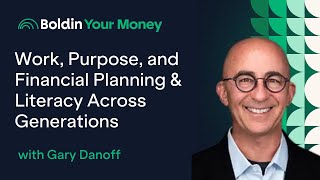
Gary Danoff, a Google executive and coach, discusses how millennials and Gen Z approach careers differently, why financial literacy matters across generations, and how AI tools like Duet can augment but not replace human coaching. He shares advice on preparing for layoffs: Google cut 17,000 people, and he says you need to "pack your parachute" before you need it.
Questions this video answers
Devadas ("servant of the shining one").
Approximately 17,000 people (about 6%).
Chapters
You. Welcome to Neurotirement Podcast. Today we're going to be talking with Gary Danoff, a global alliances leader at Google and an executive coach, advisor and podcaster about work purpose and financial planning and literacy across generations. Gary runs his own podcast, what's Next Now? Which is about improving human connection across work, community and purpose. We're going to discuss Gary's story and the personal connection that brought him to new retirement thanks to his son Jake. And we're going to dive into the importance of financial literacy, AI and how it may impact society, especially the well being of younger people. All right, so with that I just want to give a quick backstory on kind of how this came together and then dive into a little bit about Gary's story. But you know, basically what happened here is Gary pinged me on LinkedIn and he was a user of our platform, which I thought was great. I always love hearing foreign users. And he told me that he found out about it through his son Jake, who's a doctor at Kaiser. And it just turns out that we were also and are talking to Kaiser a bit about whether our platform could be valuable to their, to their audience and their community of doctors. So quick, shout out to Jake for facilitating this connection and bringing us together. Yeah. Yay, Jake. So with that, you know, Gary, we'd love to just kind of get your summary of like, kind of your journey to today, which obviously could be a, could be a lot but like, and kind of, you know, your view on, you know, what you like about what we're doing here and also what you like about the work that you're doing today.
Okay, my journey. That got me to where we are today. Well, how many hours is the show? No, no, we're not, we're not going to torture people with that. Yeah, it's a great question. First of all, thanks for having me, Steve. It's, it's great to be with you today. And I do love your product by the way. I'm, I'm an unsolicited non paid fan so I can say that, you know, I want to tell a little story about an earlier chapter of my life actually when I was a teenager. For those listening, we can all remember what those days were like, right? And I had the benefit of having a very influential uncle in my life whose name was Uncle Hy. Hy, short for Hyman. And Uncle Hy really got into the yoga, the eastern way of spirituality, coming to America that it did around when the Beatles came in and all the rock bands back then And Uncle Hai introduced me to an Indian guru whose name was Santka Shivadas. I can still remember that. And trust me, it was decades ago at least. Sanka Shiva Das came over from India to help Uncle Hai on his spiritual journey. And Uncle Hai introduced me to Sanka Shiva Das who in a meeting looked at me and looked in my eyes deeply. And we sat together and we breathed and we meditated. And when we came out of it, Sankha Shivajas says, gary, your Sanskrit Indian name is Devadas. Devadas. And I said, well, Sankha Shiva Das, what does that mean? And he means, he says it means servant of the shining one. So I've kind of, I'm going to connect that to where I am now and who I am and what I'm doing in that. Where I see my kind of mission and purpose in life, Steve, is I'm here to bring out the light in other people. You know, I'm, I'm serving the light within you and within me and within others. And I do that in the business world. And I'll, I'll talk about that more later. But that's my on the spot answer to your question, which I can go more into with different branches off that tree. But, but that's the fun part of how I got to where I am.
That's awesome. It's awesome to hear that kind of story. How old were you when that happened? When you first.
That was when I was like 15 or 16 years old. It was, it was, it was impressive in that it impressed upon me.
And you've carried that with you that, that moment and kind of like vision for yourself for your whole life then?
Yeah, I really have. You know, I really, I really have. I try and live my life that way. I see the light in other people. I, I see light in myself. I would much prefer to see light than darkness because one can train their vision on either. They are both there. They're both there. But I choose the light as often as I can and I make my living on that. I'm an undercover light worker.
That's awesome. I really like that vision. For yourself. I was actually explaining to one of my kids, like my oldest is a recent graduate and starting his career and he started a company and it's never easy. And I've done this for a long while. Career and sharing some insights about not just the mechanics of like starting companies but like the emotional and internal. Internal part of this thing. But part of it was this vision. Yeah. Like why I do what I do and like I Remember telling him, well, when I was young I had this vision of like making a lot of money and giving it away, like becoming a philanthropist, which has sort of been in the back of my mind. I've done very poorly on the giving it away and to be determined on how we do on the building up a lot of wealth. But I just think it's interesting for people to have this kind of internal vision as a, as a guide for, for their, for their lives and what they're doing so that it's cool to hear yours. Can you give me a couple examples of like how that has surfaced over the course of your career because you've had a pretty, you know, wide ranging career and lots of like Western, you know, making money. And I was looking. You have a sales background and like, you know, kind of partnership background.
Yeah, yeah, happy to, happy to talk about that. Happy to talk about how I came to blend the two together. So, you know, classically I came out of college and at that time my mother was a recruiter in the high technology industry. And I remember that I was so excited that I had interviewed for and been given an offer to go to work for, for Corning Glass Works out of Corning, New York, which makes Corning ware, which I'm not even sure is around anymore, but you one used to buy Corningware at something called a department store which sold many things used in your home. They also had fiber optics, so they also made Corning fiber optics because it was after all a glass company and all the uses of glass. But then Almost at the 12th hour, I had the opportunity to interview at an upstart upcoming technology company called Digital Equipment Corporation, or DEC out of Maynard, Massachusetts. Long story short, I interviewed and was fortunate enough to have earned the role. And so from that time on I've been in the technology industry in sales leadership and business development partner roles. That's how I've made my living. I've been very blessed by it and I really enjoy what I do. About 15 years ago is when the advising and coaching comes into play because I was either at NetApp or Microsoft, I'm not sure which, but I kind of realized a lot of people are coming to me with questions and seeking advice. It's kind of above and beyond a couple friends asking your opinion on something. It's kind of above and beyond casual advice. People were coming to me with kind of beefy, hearty life issues having to do with either their career or relationships or transitions that they were making at different stages. And that coincided with the birth of the coaching as a profession and as an industry. So I was like, well, I think this is where the light in me is, is wanting to shine. And so I became certified through the International Coaching Federation as a, I'm now a professional certified coach at pcc. And so I began to blend the two together and using coaching more in my full time work. And then I took it a step further and started Gary danoff.com which is my advising and consulting business.
Why do you think people first started coming to you? Like, how do they know to approach you with these kinds of questions?
I think it's because I was born naturally passionate, to be curious, to explore new options and importantly to teach and to guide. And the only thing I can say, Steven, is that people kind of pick that up out of me. Like they felt that I create trust. I create an envelope, an environment of trust very easily and very authentically. It's one of, it's one of the things that I'm blessed with. And so I think that's why people started doing that.
Awesome. And I see that you've kind of, you know, you, you obviously do the coaching through Gary Daniel dot com. You run your, your podcast and then I look, you've also done this at Google. Any, any big takeaways when you're working at a place like Google, is it different? Is the practice different there or is it the same thing out in the retail world?
I guess I used to hate it when people would answer a question like this. You ask them a question like you just asked me and, and they say, well, yes and no. I would say to myself, what are you talking about? It can't be black and white. It's yes or no. Well, wait a minute, maybe it's gray. So the answer is yes and no. And here's what I mean by that. In this instance, it's similar in that the constructs of coaching, which are deep questioning, deep listening, active listening and guiding, happen in both Gary danoff.com clients where I serve founders, CEOs who are starting an enterprise as well as young professionals or people making a transition. And then in Google, I do the same thing for people who are software managers, people who are divisional leaders, VPs. But it's in a different envelope. It's of course in a multinational, highly successful, highly driven technology enterprise. And so there's some peculiarities to that. Like there are, if I were doing that same type of work with, you know, Aetna Healthcare or Disney or gm. So okay, yes and no.
Are you seeing on the coaching front, have you seen any big changes over the last 15 years? And the reason I asked this is that our business has been expanding. We're hiring a more diverse population of people. And it feels like some of the folks we're hiring that are millennials are frankly pretty incredible. Like in terms of, they've been paying, they're like digital natives, but they've been paying attention and learning a tremendous amount quickly. And some of them show up with very sophisticated questions and thoughts about their work, their career, their motivations. And just curious if you see that, like, it does feel very different than it was even five years ago, but definitely like 10 or 15 years ago.
Absolutely. I mean, you know, you nailed it. The millennials, the digital natives, the Gen Z, they are so astute, they are so tuned in. They have so many channels for information and learning consumption and they're very hungry to learn and grow. And so some of the stereotypes about them being demotivated and not interested and don't want to work hard, I don't see a lot of that. I do see that they don't have the same comparative climb the ladder slowly that boomers have. Like, I have had to appreciate and understand that they're more willing to say, you know what, in two or three years, I'm not going to get what I need here, so I'm out and I'm going to switch over to another, another place where I get it. But to answer your question specifically, the change in coaching has been around the flexibility that like for example, I offer people, you don't have to sign up for six months. You can have as much or as little as you want because they, that fits the way people want to consume it. And then I let them self direct, you know, I really need more time with you or I don't need more time with you. So, so that's one thing. And then we can talk about artificial intelligence in the world of coaching as well. I don't know if that answers your question, Stephen.
No, no, it does. Yeah, it's, it's, it's really interesting to just get your perspective on kind of what, what you're seeing. And, and also I, I hear you on the, I don't say transactional, but there's a lot more, I think self awareness and considering the value exchange when you're, you know, hey, I'm going to work with you and I'm going to work hard, but also hopefully learn a lot. And then if it's not, if I'm not seeing the opportunities for growth Here, then I'm more likely to move. I'd be interested in looking at, I don't know if you've looked at this, but the data around, like job switching across generations, you know, I would imagine. Right. Older generations are more, you know, loyal and they, they, they move less probably. Right. Than some of the other.
Absolutely. You know, for example, the first job that I took, the one I referenced earlier at Digital Equipment, I stayed there for eight years and I did that because I wanted to climb the proverbial ladder and then I left to go start a video production company. So I jumped way out of that boat into a much smaller boat on a much volatile ocean, etc. Etc. That's another story. People today in entering the workforce or in the workforce for their second or third or fourth job are going to stay about two years unless they are, as you referenced, embraced with opportunities for learning, advancement and growth. And I wouldn't necessarily always put them in that order. Like to some people the straight up advancement may not be as important as what they learn and sometimes moving to the side to then move up. But it's organizations that offer that, that are going to attract the best talent.
Yeah, I think also culture is huge in these companies now. I know we've started really thinking about this a lot and also listening closely to the members of the team about what they want to see and how it should evolve. I think people used to throw out the word culture, whatever. It's like, hey, foosball tables and free massages and stuff like that. Now it's really about the values, communication, norms, you know, expectations and all this stuff. And it definitely needs to be shaped and built together.
Yeah, culture. What I've, what I've experienced culture to be is that thing that you feel that's, it's not on a whiteboard and it's not in a policy document, but when you walk into a room with a group of people in a sub team or division or a large meeting, culture is what you feel in the room. Culture is what you feel and how people treat each other, what the norms are around, what they expect. And you know, from the Aristotle project, which is some research Google did about how to make people more productive, there was this phrase that's been coined called psychological safety, which has five elements to them and to it. And one of the key ones is what's called conversational turn taking, where everybody knows that they're going to have a chance to be heard and people don't get stepped on or disrespected because of their religious or ethnic or sexual orientation background, so, you know, culture. I'm thrilled to hear that you're paying great attention to that as your company is going to grow in scale. Because I'm finding at Google and with my clients outside of Google that it really matters a lot.
Yep. Yeah, I think I feel like it's a living thing that you have, like you have to pay attention to and nurture and in both ways, not just nurture, but like prune back and manage. I mean, there's definitely evolutions to this thing that we're learning. All right, that's cool. Yeah. I mean, just real quick as we kind of exit the coaching part of it, like, do you see, I do want to talk more, a little bit more about AI, but do you see AI impacting the work you do as a coach, but also your, you know, your clients that you work with and how it's changing their lives? Is that surfacing?
Sure, yeah. Yeah. So the answer is yes to both of those. Look, today if you are 22, 42, 52 or 62, and you want to get some sense of recognition and acknowledgement and you're not particular about receiving that from a human being who has blood coursing through their veins and breath coming in and out of their body, you can actually get that. And increasingly you'll be able to get that through what really are from AI based models that represent emotions or responses to inputs that you provide to them. So I see that happening. I have a particular point of view where I think it will be a while, if ever, where that is the same give and take, gives and gets and responsiveness and nuanced responses. When, if you and I are having a coaching session and because of the accumulated knowledge that I have from our prior sessions, I'm able to listen and guide in a way that, that is particular and unique to what you show up with today. And you know, I don't have a crystal ball, Stephen, that it may come to that. You know, I mean, I'm trying to think of a virtual Gary Danoff and I'd like to make a lot of money off of that if it does happen. But I don't, I don't know if I see it. So, you know, that's. And you could just Google, you know, AI in the coaching industry and all kinds of articles will come up. Lots of people, I, I think there are supplements to the human side of coaching that you can have with AI. There are what we call nudge mechanisms which can remind you, hey, Gary, you promised when we had our session last week that you were going to do five reach outs and two callbacks and you were going to write a half pager about your new service by Wednesday. How's that going? So that could be an AI articulated agent that is working with me as the coach to check in with you about something that, that you had agreed to.
Yeah, the accountability part. Yeah. It's interesting. I mean, I will say that having worked in technology my whole life and seen various points of disruption. Right, so the web or the Internet? The web, mobile, cloud. This definitely feels like a seismic change. And the first time I'm like, okay, this does not feel quite so predictable. I mean, probably we're in the middle of a hype cycle and it's going to not be as great as we think. But like, sometimes I'm like, okay, I'm recording like we were talking about in the preamble, like hundreds of hours of videos with just, you know, just because of, you know, using tools like grain and that stuff is stored. Could this emulate people? And also could it be trained to read emotions? I mean, this is what it doesn't do well right now. But if it, like it could actually detect, oh, someone's getting a little bit elevated or whatever, like it could do some incredible stuff. But will it be the uncanny valley, like, not quite there, or will it be like, no, actually this thing is starting to be like people.
Well, I agree with you that we're early in and I do think, you know, if you look at the bell curve, where we're at, the early disbelievers of venture triers, those cavalier frontier people at the beginning who embrace it, I think we're at the early part of it. And I do agree with you that it is potentially a sea change technology, but bringing it down to the current day where I see it having an impact, and I'll just speak for myself, like using Duet AI in Google workspace, I can say, please write me a draft email to Stephen summarizing the things from new retirement that are best for people in my age category. Like, that could be a real prompt that I could put into a Google Doc using Duet AI or Bard, the consumer version, bard.google.com and it would go and do that and it would, it would then give that back to me. And what I find so amazing about that is in the creative process, it's often just getting started. That's the hardest thing to do. And so it just helped me get started. And it's there 247 and, and so I appreciate that quite a bit. And there's lots. You can do that with images, you can do that in spreadsheets, you can do that with, with sound. There's a lot of plugins available now. So I think what will take it from the hype stage to, and I forgot the four phases of crossing the chasm, but you know, to the adopted stage, to the laggard stage, to the doubters, when it gets mass, mass acceptance is when people or at least businesses find, oh wait a minute, this is actually buying minutes back in productivity of my team or my employees. There's value here, there's measurable financial value. And I think that's the part that we're getting to be able to make kind of business cases on pretty quickly.
Yeah, it's pretty interesting. I just signed up to put a request in for us to use Duet for our business. So we're on Google, Google workspace user. I mean, you know, I've got, I don't know, 35,000 emails in Gmail right now. Something like some, I don't know what it is. It's a lot, right? And so, you know, and all these Google Docs and then you have video and you're kind of like, okay, I mean, you know, a calendar. I mean on the one hand you're like, ugh, do we want Google knowing everything about me? But on the other hand it's like, well, Google could see that, oh, someone's emailed me. They look like a prospect. This is the kind of thing Steve usually sends to them, including like, here's what we do and here's my calendly link, you know, and like automates a lot of this stuff. I could see it like pre populating like, okay, we drafted this for so and so. You'd be like a good send or no, I want to edit this or whatnot. And it would learn what I would do and that would save a tremendous amount of time. So I could see, I mean, you know, how these tools could be if they're well executed, totally game changing.
I mean that was just a beautiful paragraph you spoke there, Steve. Even the example you gave about all your emails wanting to draft something, having it determine whether or not what it drafted is what you want to send to that person. Like that whole loop times probably 15 to 30 that you need to do a week. Imagine the time savings of that, you know, and people say, well will it, will, will it one day take my job? I'm like, no, it's not going to take your job, but it is Going to free you up to do more creative thinking, more planning, more producing so that you don't have to be involved in the tactical production of getting stuff to and from people.
Yep. One of our investors, he went to like the Singularity University or whatever it was. You know, there was something at Stanford and they talked about the abundant future. And I remember him sharing this deck like five years ago and talk about, hey, you know, if we get unlimited energy through renewables, like solar right, which it feels like. Oh, you know, or fusion. But say solar right, which is a kind of. We're approaching at least replacing a lot of fossil fuels is happening pretty. With. It's accelerating right now. It's pretty interesting. Then you can start to do things like, oh, well, we can turn salt water into fresh water. You know, it starts solving other massive problems in society. Like now there's fresh water for people. And then, you know, we get AI cooking and we get really energy efficient. I mean, I saw the Google, like, for instance, they have an algorithm update that reduces traffic by 30%. I was like, what a great application of technology. Just kind of plug it in and it like reduces traffic by 30%. Like, great, you know, you know, so it's amazing kind of some of the stuff that that's surfacing out there.
I like your vision, you know, I, you know, there's a lot of light in you for the what, what is the good side of technology. And I appreciate that you're focused on that.
Try to be. You gotta be optimistic. Right. Although that's not humans, our nature is not always to be optimistic. I'm not always. There's a, there's a strong side of me also that can be too much of a critical thinker and like, what's not right? So I try to. But. Yeah, I appreciate that. All right, well, we'd love to chat a little bit about your podcast and kind of like what you've learned from that. Like, I was, I was checking it out, right. And I saw that, you know, you've done some interesting stuff. So, like, who are some of your, like, favorite guests? I saw you had Carlos Santana. So it looks like you have a pretty wide ranging set of guests that have come on.
Yeah, the funny thing about that is. So I did have a man named Carlos Santana. He's my most recent guest. I think it's episode number 39 and it's called Managing your uncertainty. But it's not Carlos Santana the musician.
Okay.
I know, I know. I have had musicians on the show before, which I love doing and I'll talk about a couple of them, but Carlos Santana is a data analytics person at the Disney Company and he's also a former veteran, an army captain who came out of West Point. And during Veterans Week, I have a habit of interviewing a veteran and learning about their journey and having them share kind of life lessons with the audience about the pivots they've had to make in their career. And, and Carlos talks about staying flexible and learning a lot, taking advantage of learning opportunities, talks about how he overcame fear. And so a lot of great stuff came from, from that conversation. So he's, he's a memorable guest. But I've also had people like Dalia Feldheim, who wrote a book called Dare to Lead Like a Girl. Amazing story. Gay Hendricks, psychologist out of Stanford and author of over 40 books. A couple of my favorites are the Big Leap in Conscious Luck. I learned so much from Gay. And then Jody Ramsemi, who was my boss at Google before he left in January and started Vivid Presents in Seattle, which is an entertainment experience company designed to give people a musical experience on site or remotely and also build community, come together in the human form again. So, I mean, you know, those have been some of my favorites. And frankly also when I get to do a solo podcast, I love that, Stephen, when I can talk about a topic which I'm deeply passionate about and I can, I can name a couple of those for you. But yeah, that's a little bit off the top there.
Interesting. Yeah, I'll definitely have, I'll check out some of your solo podcasts. I've never done that. I've always had a kind of a gust format. But yeah, it'll be interesting. So actually, I don't know if this was a solo podcast or not. I saw you covered the idea of layoffs and this is, you know, we are talking, you know, we've kind of gone from like, hey, there's this great potentially abundant future. But also AI, there's also this like, oh, is it going to take work really quickly either way, layoffs are like a something that is happening today, right? As we've probably mostly driven by the fact that we've gone from ZURP, right? 0 interest rates, lots of money flowing around to, you know, 5% long term interest rate environment. And that mortgages are more expensive, car loans are more expensive, people are just going to be spending less money, money, you know, there's everything, returns of everything have to be better. Now are you seeing that surface in your coaching community and, and like, what was your like, big take when you were doing the podcast on it.
Okay, let me unpack that because there's a couple of different questions there. So, yes, I'm seeing it so surface in my coaching community in that there's more people who need coaching specifically around becoming more inventive about their career, stating their value more clearly and succinctly, being more expansive and creative about whom they shop that and publicize that to and how they do that. Just those are a few of the topics that people come to me with when that's the piece of work we're going to do together on the podcast. In January, when Google had its layoff, I think it was 6% or 17,000 people. Several people who I work with, including the man who was my manager, I referenced him earlier, Jody Ramsey, were laid off. And I have had the good fortune and also the scene scars to be working in the technology industry for really the lion's share of my professional life. And the reason I say the scars is this is a harsh industry. This can be a harsh industry. The boards and the shareholders and the executives don't flinch or hesitate to cut costs quickly. And I'm not necessarily condoning this because there's other ways or approaches that could be taken, but this is what is done. And so they lay people off to get an immediate return and to, you know, show Wall Street a signal that they're, they're serious about cutting costs. And so with that for the rank and file, you can never be sure when it could be your number, could be your turn. And it's happened more than once to me. So I speak from experience with this and I know a lot about recovering from this and building resilience for this to possibly happen again. And having a callous about it is just a fact in this particular industry and really many others. Now, I will say before I tell you a little bit about that particular show, Stephen, that the recent slate of PI of layoffs, even in comparison to the last 20 years by numbers and ratios, is not as drastic as we've had at other points in time. It always hurts and it always stinks, but it actually has been worse, for sure.
Yeah, one, one thing I've seen is, you know, we talk about, oh, you know, Google laid off 17,000 people. Yeah, but then they don't mention, yeah, but in the year before they hired 30,000 people or something like that. Like, they've been like, we've been hiring like crazy. But I definitely hear you. Like, I've worked in technology and financial services and both are being impacted Strongly right now, or at least by these layoffs. Yeah, you're right. I mean, it definitely is a little fact of life. And I do think as we live longer and have longer careers, people do have to take more agency about their managing their human capital, which is a huge part of their lives. And having backup plans, you know, to, if something happens over here, I can go over here or whatever.
Well, you know, if I could just, if I could just riff with you on that for a second. So, you know, I love that you say manage their agency. That is so, so spot on. What, what the nub of the matter is. And a lot of people get this wake up call when they get laid off because they've never had to manage their agency, manage their human capital, manage their brand. So the podcast episode I did called pack your parachute, it goes something like this. Imagine you're on an airplane, you're coming back from a business meeting in Hawaii. People are watching movies, listening to podcasts, they're taking off, Everything is good. They're serving the first flight of drinks, food. And then all of a sudden, without any notice, the emergency exit open. Somebody's got sucked out of the airplane. Oh, my God. People are panicking. They're freaking out. They should be. Nobody saw this coming. Who's going to live? Who's going to die? Fast forward 30 minutes later, the emergency was averted. The captain said, ladies and gentlemen, we've got it under control. You land, you get off the plane and you're in shock. And so the reason you have your parachute packed is because you might be the one who gets sucked out of that emergency row exit with no notice. And if you're not the one, you still have to have your, your parachute on because now you have to survive in a wholly different environment. And so in that episode, I talk about building your brand. Always be networking abn, and, you know, just be ready, because it could happen.
Yep. The world is not always a safe place, and ultimately we have to, you know, have our own. I remember one of my favorite terms is FU money. Right. I learned that really early on in my career. It's like, what is you money? And I was like, oh, fu money. I love this idea. So, yeah, you save up like six months or a year of money, and then it's like, okay, whatever, you know, I can deal with it. Like, I can be, I can quit or I can be fired, but I have a lot of control. And unfortunately for many, you know, Americans, they have like four weeks of, like, Runway. You know, it's really Unfortunate. But for people that have like a year, it's like, okay, they can sleep well at night because like, you know what? I'll be fine.
You know, that's one of the things I have to say that I love about new retirement. And you know, this is just me coming off spontaneous here. Not like you scripted me to say this, but I'm kind of interested in things like new retirement because it lets me as a DIYer, really get down nitty gritty about what I have, what buckets they're in, what's going to be the impact if A, B or C events happen. And not that I can control all of those events, but I at least can get a visual of the outcome possibilities, you know, what would I do? So to your point about people having four weeks or four months of savings when they have to pack their parachute, I found that I can like quantify that and then plan for it a little bit better with, with a new retirement product.
Yeah, I mean this is a lot about how we run our business. Like so we're a venture backed business and we talk about, you know, burn rate and Runway all the time. I think people should think about that in their own lives. It's like I think about Runway and visibility, you know, and yeah, back to psychological safety. Like if you feel confident and secure that you have X amount of time in front of you, you understand the lovers. Right. For many of it's like it's work, but it's also expenses and where you live and the, and as you go to retire, these things have become the spectrum of opportunities increases is like we like, well, at least I live in California, it's really expensive. But like I grew up in Rochester, New York. If I was like, you know what, I know I can go to Rochester and I could be financially independent right now. So stuff like that. But you know, for people to understand what those mechanisms are, I think is hugely important.
I totally agree that. And you know, that's how Jake, when Jake turned me on to new retirement, he did so because he knows that I like this stuff. And you know, fortunately I've been vocal in my household and perhaps some of the other listeners today are also like this, you know, letting your children understand and not be afraid or intimidated about finances, managing their finances and how credit works, how banks work, how loans work, what interest rates are, what are bonds? Do you need them? Why don't you need them? What is insurance? There's just topic after topic. And so because of that, Jake has developed a curiosity for these things and so the student became the teacher. You brought it back to me.
I thought it was mostly our audiences, kind of 50 plus plus. So I thought it was great that your younger son was like recommending the app, the, the platform to you, which is awesome. That's great. I'd love to kind of get your take. Let's shift gears a bit to kind of like financial literacy planning, you know, in the age of like longevity and also kind of like, yeah, AI. And these kind of generational changes we talked about. I mean, are you seeing that people are more. That you're. The folks in your community are more aware of needing to take control here.
You know, I can do a rough poll in my head of conversations of people. It's going to follow what you would think it would that younger people, younger, you know, let's say somebody starting off in their career, ideally in their early 20s, in their first or second job up even up into their early 30s, they don't have typically a level of awareness that for my standards, Stephen, I think is needed. I'm not seeing that. But it's a very small sample relative to, you know, the United States. So, you know, I'm always bringing that up. I'm subtly bringing up topics around finances and money because one of the reasons they come to me is because they want to make more money or they need money. I'm working with a 54 year old who's transitioning in his own career now and has a dual objective to both make more money, retain or regain his agency, and also, you know, kind of shift things in the power in his couple with his wife. Now they have a lot of understanding there about money, as you would expect. So. But that's not surprising to me.
Interesting. Do you. I think it's interesting how the psychology. I remember when, you know, when I was younger, I was like, oh, I'm indestructible. And like I would have all kinds of like, basically like, I think, you know, when you're, when you're a young man, you're very like, you know, you're full of confidence, you know, partly because of hormones and risk to appetite is massive. And I think also very often people will feel like they'll figure it out. I remember in our first company the CEO was like, oh, we're running out of money. I'm just going to liquidate my entire 401k right, and use it to like subsidize our situation or relax. And I was like, ah, dude, that doesn't sound like. Even then I was like, that doesn't sound like a good idea. Now we know just how terrible an idea that is. But unfortunately a lot of people do that kind of stuff. They're like, I'll figure it out later. Do you think that you said that in your younger years they're just a little bit less aware of some of the future risks they might face?
Well, yeah, and really for the reasons that you said, I think that they've got a lot of wind in their sails, you know, kind of figuratively, emotionally and from an energy perspective. And you know, if you think back on your younger self, and I think back on my younger self when I left Digital Equipment Corporation to start Communication Arts Video and then Dan off and Simons Productions, I sold a lot of my stock to fund myself, you know, and had I kept that money, oh my gosh, what it would be worth now. But I don't regret a minute of it because the lessons that I got from doing that and the business that I ran, I could never replace that. But so I do think that people in a younger age cohort, you know, by and large who don't have a financial understanding of the impact of their choices and without any value judgment on the choices, like, okay, I'm going to choose to save 15 to 25% of my pre tax or my after tax income. That's fine. Somebody else says, I'm going to choose to save 5%. That's fine. Help me understand, how did you reach that decision and have you considered kind of the pluses and the minuses of that? So that sort of conversation and just that that sort of thinking is something that I would hope happens more.
Yeah, for sure. I mean, we're definitely big proponents of they should, we should be teaching financial literacy. In every high school there, there is a movement that is helping to have this start to happen. But it, it still is ridiculous that so many things like the student loan debt crisis, credit cards, maybe some of the crypto losses could have been averted if we had a more financially literate population. And it seems insane that we don't. What do you think on your side? Do you see any big ways from like your kind of. You have a perspective inside of one of the largest tech companies out there. Like, are there big things that you think we could do as a society, like improve literacy, improve people's ability to plan and think about their future or their whole lives?
I want you to hear and sense my pause. I want you to know that I'm thinking and I'm breathing and I'm going To go with the first thing that comes to me and the thing that I think is needed right now. And I don't think this is a Google or a not Google thing. I think it's a humanity thing. Certainly Google and other social media can play a part in it, but I think we need to learn the skills of compassion, empathy and organizing. You know, the CEO and in the world today, at the time this podcast is being recorded there, I think that there's just a, just a grotesque lack of those types of skills. And instead there is a lunging, a lusting and a lurking toward anger and separation. So those are the things that I think we need and do. I think Google espouses those things. It's one of the reasons why I love working at Google because it is a company who, we're a for profit company. We make products that we sell because we intend to make a return for our shareholders. At the same time, we have a very strong ethos toward producing things that are valuable to people and literally to organize the world's information in ways that are useful, accessible and repeatable. So that's what I see. And I have. I came up with my own program called the CEO Cycle. That's part of what I use with individuals and companies that helps to teach some of those things kind of in a business setting.
I love that. You know, acronym Compassion, empathy and organizing. Yeah, the teaching, right. So we should teach financial literacy, we should teach emotional intelligence.
Oh my gosh. Right, Listen, let's put something together that does that. You know, you could do it as a. It could be part of your current enterprise, it could be a non profit that you could influence policy at the state and the federal level. You could apply for grants. There might be listeners out there right now who are passionate as you and I are, who want to do that. It's really needed. It's very much needed. And I think the future productivity of our country depends in part on people understanding finances.
You know, as someone who works in technology and thinks a lot about how do we engage people, how do we keep them coming back? Right. There's a whole, this whole industry is about capturing people's attention and monetizing that. Even before this podcast, I was like grabbing a quick bite to eat. I'm in the kitchen and I'm like sitting there on my phone reading the news and I was like, God. And I just put my phone down and I looked out the window at the trees, the sky.
I love that you did that. I love that you did that. Yeah, that's so important to just drop our technology every once in a while during the day, Many times during the day, actually 100%.
But you know, I was just noticing, I was like, I didn't feel that I put it down because I was like, this doesn't feel good. But like, I think in the moment, it's so hard sometimes to recognize that this is not good for us and that to recognize the balance you need. Like we need to be outside, we need to be in the sun, we need moving our bodies. But on the flip side, you know, you've got, you know, trillion dollar industries, like really designing incredible experiences that are so accessible on these mobile devices. And I definitely see it. We're not going to have time to cover this. Maybe we'll have to do another podcast. But the impact on mental health, especially for young people, I mean, I see it in my kids and I see it in other people's children. Like, it's just a generational thing. Like from growing up where I had plenty of time to be bored, I tried to explain to my children I had nothing to do. I had to go wander to my friend's house and be like, can you go play football? And these guys can grab a device or jump on a video game and be instantly entertained all the time. They had this concept of being bored is torture to them. Even though it's important for the creative process and just how your brain is.
I think, well, I mean, Stephen, I'm just so on on your side on this one. You know, we should do another podcast on. It'll be interesting to see what your listeners say if they write in or comment that they'd like to hear more of that. But I'm. I'm frightened for the generation of, you know, digital natives and even Gen Z. And here's why I'm frightened. So I was at a restaurant lobby or someplace the other day and I saw a man sitting there with what I guess to be his three or four year old, like, you know, not, not in a stroller, but kind of older than a toddler. And the guy was on his phone, like buried in his phone, and his kid was buried in its phone. And then the kid had some sort of question about a game he was playing or whatever and was tugging on the dad and the dad was ignoring the kid. I just, it just broke my heart. It's like this is just. This is. You're just draining away your humanity, you know, like that as much as AI or more than AI scares me, you know, technology, that people just need need some discipline around this.
Well, it's tough. I mean, this is the challenge that I do feel like, you know, I'm competing with. I mean, we're all competing not just as a parent, but, like, as individuals with the pull of technology when we interact with one another. And this technology, and even with AI, it's getting much more customized for you. The speed of your. Of what you see, you know, entertainment or news or whatever, it's bespoke to you and that you find compelling. And the more you do that, it's like Tick tock's like, I feel like the ultimate incarnation of this, where it's like, I don't know. I. I've done. Actually, I don't use tick Tock, but I was like, on Instagram watching reels or short videos, and I was like, everyone's spending half an hour. I was like, holy smokes that this stuff is so compelling. But I also feel like how unhealthy it is. And I'm like, I'm not going back there because you could. I talked to some folks that are peers, and they're like, oh, Yeah, I spend two hours on TikTok. I'm like, holy. That's like, crazy to me.
But one of the things that I work with myself on and with my clients on, because a couple of the key operative words I have in my life are accountability and discipline, and I set limits, you know, and this is not new. I'm not the only one who does it. But, you know, I set goals around how much I read out of a book per day, not on my phone or, you know, actually pick up a. Now, I like that. I like the tactile touch of a book. I like reading it. I like highlighting things. And then I. On the other side of that, I limit how much time I'm gonna be in. All the YouTube topics that I'm so interested in, you know, whether it's cars or bowl turning or, you know, what sports, it's just. I think you have to do it. I think you have to protect yourself that way, 100%.
All right, well, look, we're approaching time, but, you know, Gary, I really appreciate you being on the podcast. Clearly, we could go on. This is why we were talking about how long it's going. We could roll for three hours here, man. We could go right to the next topic, but I think we should do another one, especially around AI and generational stuff. And I actually, we should probably invite, like, a Gen Z and Millennial on and, you know, maybe do a three Way podcast or something and like, hey, get that perspective. But any closing thoughts on your side before we wrap it up?
I would say, you know, first, thank you so much for inviting me to what has been, in my feeling, a really engaging conversation with you, Steven. It's good to get to know you more, like, through this conversation. So thank you for that. Yeah, you know, I would say that I'm. I'm out here looking at the light for the light and kind of cultivating the light. And I do that in the business world, you know, helping people achieve goals that they figure out and set for themselves, whether it's starting and growing a business or growing their career. So I'm privileged to do that and I'm grateful for it. And also, it is very cool working at Google, I have to say. It is a constant learning environment and I love it. So, yeah, you know, I feel blessed and I'm so glad to have discovered the business that you started, and I'm damn glad you did it.
Thanks for being part of our community. Yeah, no, it's pretty cool. I mean, it does feel like some ways we're getting smarter where there's so much good information, ways to grow out there, that we are evolving pretty quickly and hopefully in good ways. But, yeah, no, Gary, appreciate. I loved hearing your story about, like, searching for and helping people kind of cultivate the light inside of them. I think that's great for people listening, you know, thanks for. Thanks for participating in this and. Or listening this and, you know, our goal at New Retirement is to help anyone plan and manage their money, their finances, so they can make the most of their money and their time. And if you made it this far, definitely check us out, you know, at our site, neurotimer.com or our Facebook group. And then finally, any reviews for this podcast, the Neurotrama podcast, or Gary's podcast are definitely welcome. And we'll put the links in the show notes. So with that, thank you very much and have a good day.
More from Steve

When Should You Claim Social Security? #personalfinance #financialplanning #socialsecurity

Social Security & Medicare: What's Changing and What It Means for You with Mark Miller (ep. 109)





Retirement Savings Waterfall: Where Your Next $$$ Should Go (401k, HSA, IRA, Brokerage)



