Five Years Later: White Coat Wisdom with Dr. Jim Dahle (ep.93)
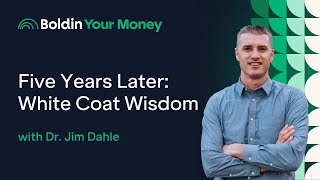
Dr. Jim Dahle, founder of White Coat Investor, talks about his climbing accident last August and how it shifted his thinking on purpose and spending. They cover practical investing for doctors, tax-loss harvesting, estate planning for multiple children, and why he funds 529s for nieces and nephews.
Chapters
You. Welcome to Bold in youn Money. I'm your host, Steve Chen. And today we're catching up with someone who's no stranger to the podcast, Dr. Jim Dali. He's an emergency room physician and founder of the White Coat Investor. So Jim and I first Talked back in January 2019, and we talked a lot about kind of his own journey through building, you know, financial resiliency and building towards financial independence. I imagine you've made a lot more progress since we've talked. It looks like you have. When we talked a lot about what it is especially for doctors to kind of go through their own journey as they go through medical school, how they deal with debt, and how they set themselves up to be on a great path over the course of their whole lives. I wanted to loop back and check in five years later to learn more about what's developed with Jim's life and also with White Coat investors. So with that, Jim, welcome back to the show. I appreciate you joining us.
Yeah, it's wonderful to be here. It's been a little while, but it's good to be back.
Yeah. You're looking good. And I know we met at Bogleheads a couple of years ago, so it was great to meet you in person. But I know since then, one of the reasons we reconnected was I saw your post about your climbing accident, which was almost a year ago in August 2024, and it seemed like that really had a big impact on your life and would love to kind of just get your take on how that affected your thinking and if it's affected kind of the way you're approaching life at all.
Yeah. Interesting the way you phrase that, how it's affected my thinking. Right. Because frankly, I'm lucky to be alive. Right. I had pretty serious injuries from this fall, including fractures of, you know, all the way across my face, separated my skull from my face and leaked all the fluid that my brain is supposed to be swimming in out my nose. Aside from, you know, spine fractures and rib fractures and, you know, nasty wrist fracture and shoulder separation lacerations and those sorts of things. So it was a pretty big trauma. You know, this was my first time in my life being disabled. I was definitely disabled from work, at least for a few weeks, and really took several months off. And so that was, you know, that's a sobering time. I'm back at work now. I can do all the work I want to do, both in the emergency department as well as here at the White Coat Investor. But it does feel as if one chapter of my life has closed and another one has opened in that respect, if for nothing else than recreational activities. Right. I mean, my wrist is probably not coming back to 100%. So am I going to be climbing as hard as I used to? No. And so it does feel over the last year that I've moved a little bit from my youth to middle age. And I turned 50 this summer. And maybe I should become middle aged much sooner instead of, you know, pursuing these pursuits like climbing mountains. But it does feel like I've turned a little bit of a page that year, this last year, at least in my recreational pursuits. But I like to think I was living pretty intentionally before then. So it's not like, oh, I gotta quit working and spend more time with my family or playing or something like that. I was doing all that stuff before, so I think I have pretty good balance on life. And that balance is pretty similar now to how it was a year ago.
Yeah, I've heard that doctors actually make terrible patients many times. Do you think you're a good patient?
You know, I'm actually thrilled with how I was as a patient. I had a pretty bad head injury, obviously, aside from the CSF leak and all the fractures, I was badly concussed. And so I was asking the same questions over and over again for several days. And the beautiful thing about it is I'm reassured that I'm not a mean drunk because I spend most of the time in the ICU thanking people repetitively for taking care of me. So I was actually kind of happy to hear that. At least I was nice about my, about my head injury. So I, I think I wasn't that bad of a patient.
Yeah, well, I can see that. Yeah, you had this, you approached it with a, you know, with a sense of gratitude. Like, I saw your YouTube video. I watched that yesterday. And, you know, kind of like you're. You talked about the kind of the heroes of your life and people who kind of came to help you out. And yeah, from actually hearing you firsthand, it sounds like this injury was even more material. I didn't realize that how, how injured you were.
Yeah, there were, there were two helicopters involved in getting me from that mountain to the trauma center. And it was pretty amazing, actually, that I got there in less than three hours from the injury. I definitely needed a trauma center. There's no doubt about that.
It sounds like it's not slowing you down that much because right before we got on, you were talking about you're going to go canyoneering and coming up.
So yeah, I'm pretty excited. It's my first trip canyoneering since before that call, so I'm a little nervous about it, but I think I'm ready to go and able to travel and doing other fun stuff, playing hockey and skiing. And I was out running yesterday, so I'm happy I can still do lots of fun things that I enjoy.
What is. What is canyoneering?
Well, this is. This is an interesting thing that a lot of people that don't live in this part of the country have never heard of. But along the Colorado Plateau, which is basically southwestern Colorado and southern Utah and northern Arizona, there are slot canyons. They're basically formed by water running through sandstone and exploring those slot cans is the sport known as canyoneering. It involves rappelling and swimming and route finding and hiking and teamwork climbing. And so it's a lot of fun for those of us who do it, but it's definitely a niche sport. I've been a lot of very cool places that people have no idea exist, even when they go to national parks like Zion or Arches or Grand Canyon.
You know, I'm. I was reading A Walk in the Park. I was just looking it up by Kevin Fedarko. Have you read that book? It's about. So it's about him hiking the entire Grand Canyon. So there is some of this discussion of slot canyons and stuff like that. And they first start out, and they're totally unprepared. Like, it's. It's like he used to river raft it. He's like, oh, I can river raft the whole thing. But then I think hiking.
Hiking, it's a different, different job because you got to change levels as you hike through it. And the changes of the levels is the challenging part 100%. And it's like, aside from the fact that this thing's like 260 miles long or something.
Exactly. Maybe you can take this on. This could be one of your bucket list things.
I've looked at a lot of that train. In fact, just a couple of weeks ago, we were out at Toroweet with the kids for spring break and peering over the edge. This is the only place of the Grand Canyon where you can really look over the edge and look directly down at the river. And at that point, the canyon's about 2,500ft high, but it's a pretty impressive viewpoint.
Yeah, yeah, for sure. We hiked Mount Whitney with my oldest son when he was 13. And, like, that goes to 14,000. I remember we kind of got up the saddle and looked over and you're looking down, like, 4,000ft. It's pretty crazy. I'd never seen anything like that. And you really are like, wow.
Yeah. That east face of Mount Whitney is a fun climb, too. I got a chance to do that. It's been quite a while. It's been decades, actually, I think, since I climbed Mount Whitney. But we came up that face. It's. It's longer than we thought it was going to be, that's for sure.
Yeah. When, when we. I mean, I haven't done, like, that's the biggest thing I've ever done. And like, I, you know, I mean, I like to hike around, but not like, what you're doing. But I just remember going from, you know, I think you start at 8, then you go 10 to, like, at 12,000. I was like, oh, we're there. And like, and then I'm slowing, like, like my pace of making progress, like, slowed to our crawl and it took us forever to get to the, like, last part of it.
So, yeah, it's pretty impressive. How to will affect you until your body gets used to it.
Yeah, 100%. Has this affected your. You know, you talk about the chapters, right? One closing and I guess the next one. How do you think about the next chapter? And, like, has your orientation about the work that you're doing and the why behind your work changed?
You know, it's interesting. I just got a feedback from a bunch of our employees, and they tell me I'm much nicer now. And I'm like, was I a jerk before? I didn't realize it, but. So apparently I'm nicer than I used to be. I'm also told that I'm much more mission focused. I think that's been a gradual change over the years, and I think that comes just with building wealth. When you have enough, you stop caring about more money quite so much. We think, well, what else am I going to leave this planet besides a little bit of money? Because at this point, we're not going to spend all of our money. We've got to figure out where that's going to go when we're done. And what else do I want to do? You know, what do I want to do with the rest of my life? I'm not quite 50 years old, and I feel like I've still got a lot I can give. So I'm definitely more focused on purpose and mission and those sorts of things. You know, as you become financially independent, you start reading different books instead of reading how to Invest, how to get wealthy, you start looking for books which are much less common on how to be wealthy. And so I've been reading books this year like the Purpose Code and Die With Zero. And what do you do when you get what you want, those sorts of books? And I suspect that's probably affected the way I think about some of this stuff as well.
Any big takeaways from those books? I mean, Die With Zero people have talked a lot about it. I haven't heard of the Purpose Code, but I'll check it out.
I mean, Die With Zero is big takeaway is most people are dying. The wealthiest, they've been their entire life.
Yep.
And he sees that as a huge tragedy. You know, he's like, you know, the older you get, the less, well, you can exchange money for awesome life experiences. So he actually advocates that you actually hit your peak wealth between age 45 and 60, and at that point your wealth's declining because you're using it for. For good. You know, whether that's experiences for yourself or people you care about or giving it away to Char or whatever. His idea was basically, yeah, really Die With Zero now, it's kind of an unattainable goal, but as a mindset, I think there's a lot of value there for those of us who have accumulated wealth and maybe aren't using it in the best way we could.
That's a great insight. Yeah, I can totally see that. I've seen some stuff too, around you need to look at. Not just a lot of people track their net worth right. As they're going up into the right. But they also need to track the same time, how much human capital do they have left and what's your probability of being alive? And a lot of folks are, yeah, they're indexing to like, I want to have plenty of money when I'm 95. And then.
And what exactly do they think they're going to be doing with the money at 95? Right. I mean, part of. Part of life is just balancing current you with the needs of future you, you know, and that. And that can be challenging, for sure.
Yeah. That's interesting. And how has this affected what you're doing with white coat investors? White coat. I mean, when you, when you think about your own time, right. There's the. Your work, your family, the white coat investor, which is like a larger conglomerate of things. Are there other big things that you're putting your energy into?
I mean, I have some volunteer work through our church and community and that sort of thing. You know, one of the fun things about getting to this stage of my career and this stage of our family is to see my wife get all excited about career like stuff. For example, she ran for office last year. She is an elected member of the district school board. And so she's been having a heck of a time being on the school board. It can be a thankless job. And you get a lot of flack when you're on the school board. And so it's been fun to watch her pursue some of her interests as well. That's probably been one of the bigger changes in the last year for us.
Do you think you'll run for public office?
No, I think I'm completely unelectable now. With 3,000 or 4,000 blog posts and 500, 600 podcasts out there, surely any political opponent I ever had would be able to just find something that would keep me from ever being electable, that I said on some podcast or something. So I don't think so. I'm not really interested in it, number one. Number two, I'm pretty sure I'm unelectable.
I don't know, I think you seem pretty electable. All right, so just a little bit more on White Coat Investor. I mean, how has it evolved over the past? You've been doing this for a while. I think you started in 2011, right? It was like a blog. And then I know you've bought other properties and podcasts and YouTube and stuff like that and courses. How do you see it evolving?
You know, the mission really hasn't changed much at all. The goal is to be the spot for docs. You know, docs that want to learn about finance or want referrals to financial service professionals or companies. Basically, we want to help docs stop doing dumb stuff with their money. You know, and when I say docs, I'm also talking about other high income professionals. And frankly, 98% of it's the same for everybody. Let's be honest, that part hasn't changed at all. Now mostly what we've done is realize that some people like to learn in different ways than others. Some people like online courses, some people like video, some people like audio, some people like written stuff, some people want email newsletters, other people want books or they want to go to a live conference. And so we try to package up the same information into whatever way you like to learn and give it to you that way. That's a lot of what we've done over the years as White Coat Investor and most of it at this point, it's just keeping it going, knowing that every year, 30,000 people come out of medical school, and they still need to know the stuff that last year's people needed to learn. So I don't know that we have dramatic changes. You know, we're always trying to figure out ways to serve people a little better, whether that's bringing one service in house or taking one out of house or finding a different person to refer to. But for the most part, it's similar work, what I was doing a decade ago.
Nice. Do you think you're going to keep running it for the foreseeable future? Would you ever consider selling it?
I'd consider selling it. You making an offer? I mean, we'd entertain it for sure, but, you know, as I get further in life, I care less about the money that offer would bring in as much as trying to figure out how this thing can outlive me. And that part's a little bit trickier, it turns out, than just figuring out a valuation to sell it.
Yeah, for sure. It's hard. Cool. Well, I'm glad you're making progress and you're doing good work in the world, which is awesome. So I. I thought we could talk a little bit about just kind of, you know, what's happening, you know, in the. In the world a bit. I know it's. It's been a kind of a crazy time, and I know neither of us are, you know, we're personal finance experts.
But I guess I should ask, when does this run right? Because it feels like everything's changing day by day here In April of 2025, every day is different than the day before, politically, for sure.
It is basically impossible to keep up with it. I did a podcast. I tried to get in front of it early on, like, right after Liberation Day, you know, the. The tariff thing. And we rolled a podcast, like, Tuesday morning, and we put it out, like, Wednesday evening. And in that time, like, the market moved, or the Dow had moved like 2,000 points, or there was like a 10 swing one day and a 15. I mean, it was crazy, you know, so it was like everything changed.
So there was one day in there which was probably the most profitable day of your life. If you're like most people. Right. The market went up 10% that day. And if you multiply 10% by the amount of money you have in stocks, that's probably more money than you've ever made on any other day of your life.
Yeah, but do you have any take on what happens here? Do you think things will settle down or do you think this kind of continues on for a while?
Well, my crystal ball is cloudy as usual. Right. I have no idea what the future holds. I don't know what interest rates are going to be in a year. I don't know what the Dow Jones is going to be at in a year. I don't know which asset class is going to outperform others, or how Bitcoin is going to do or how gold's going to do or anything like that. And I think it's fascinating that people ask those questions. They think somebody knows. Right. When all evidence is to the contrary that nobody knows and nobody's gonna know. And you really ought to quit asking the question because you're not going to get any sort of useful information as an answer. And if you're not convinced of that, I would suggest you start keeping a journal. Right. Write down your own predictions. Write down the predictions of others, be as specific as you can, and then go back and look at it in three months and six months and a year and two years. And it won't take you long before you convince yourself that you need an investing method that doesn't require you to be able to predict the future to be successful, because you almost surely do not have that ability. And if you do, there's no way that you should only be managing your money. Right. You should be managing billions of dollars.
I think that's a great point, kind of. How do you get this insight? I mean, like, the fact that I asked that question, how do you get this insight that, like, it is impossible and I know you can read and stuff like this, and, you know, I think people are so. They want to know. They want to be able to explain things, so they want stories. And I feel like that's what a lot of financial services gives. It's like gets in front of you, like, hey, here's what's happening, you know, do this or that. You can, you know, but you can be confident because I'm telling you what to do. And the reality is, nobody knows.
Yeah, I mean, what. What we need to have the proper perspective is experience. And you can get a certain amount of experience in your own lifetime, but what you should really ideally do is borrow experience from history. And I think it's important to understand financial history. You know, I mean, every time something crazy happens in the markets, it feels like this time it's different. It will always feel like that. It's supposed to feel like that. In some respects it is different. Right. We've never, you know, dramatically Increased tariffs like they've been increased in the last month. That's never happened before. It is different this time in that respect. But markets are resilient. Markets have had shocks like this before, and once you go through enough of them, you realize that you've seen this movie before and you know how it ends, right? In 2022, we raised interest rates like 4% in a few months. That had never happened before. It led to the worst bond market returns that we've ever had in a single year in 2022. And it felt like this time it's different. In 2020, we had a worldwide pandemic. People were keeling over in China, in ICUs, in Ireland, or not Ireland, Italy, and it was starting to hit New York City. It felt like this time is different. And where were we at a year later? Where were we at five years later? Right. The markets are resilient. Companies that were profitable five years ago are mostly still profitable today. These are the most profitable corporations in the history of the world. And if you go back through history like this, you realize that you expect a 20% drop in the stock market on average, about once every three years. Well, when was our last one? It was three years ago. So we're down. I don't know what it is today, you know, as we record this 13, 14%, something like that. This is an expected event. If you didn't expect this, you don't understand what you're doing investing in stocks, they drop like this from time to time. And that's just part of the game. The point is, this is money you're not going to spend for 10 or 20 or 30 or 40 or 50 years. Is that likely to still be down 50 years from now? No, it is not. And so you just gotta learn to stay the course. Jack Bogle was famous for saying, this is my most important advice. You know, if there's one thing you gotta understand, you gotta pick a reasonable course and you gotta stay with it through thick and thin. And I think that's still really good investing advice.
It feels like you learned this pretty early. Like you were, you know, as you got started. You were, I know, involved in Bogleheads really early on. It's like, how did you get started in your own journey here and kind of come to these realizations?
I got mad. That's what happened. I realized I had been taken advantage of. Not with a lot of money. I didn't have a lot of money. I could have lost everything I had, and it wouldn't have been a lot of money. But I was mad because I felt like the financial services industry was taking advantage of me, that every interaction I'd had with them had ended up badly. You know, a realtor, a mortgage lender, twice a recruiter, an insurance agent, a financial advisor. I just had felt like I'd been ripped off. And so that motivated me to learn. And I started reading. I lived across the street from a used bookstore, and I went over there and started grabbing used financial books. And I'd read them. I read a whole bunch of terrible financial books. There are a lot of really bad financial books out there. But I read some good ones. And after a while I realized, well, the good ones are saying the same things. And one of the early ones I read was called the Four Pillars of Investing by Bill Bernstein. He's a neurologist, turn kind of financial guru. And one of the four pillars was learning financial history. And so he went through that and he loves writing about history. He's done all kinds of history books, financial history books, kind of stuff. But once you get that perspective over centuries of financial markets and developments and stuff, you just look at the world differently. It's almost like you feel like you have a superpower looking around, you're like, nobody else understands that this is going to go away in a few months. And that's the truth. You know that. Yes, sometimes things change that are dramatic, that make a difference for centuries. You know, at the end of the Bronze Age, for instance, a bunch of Eastern European civilizations really tanked and nobody came back for centuries. But since then, the markets have been pretty darn resilient, you know, and. And I wouldn't bet on the end of the Bronze Age. Again, you're probably much more likely to get something the equivalent of the dot com crash.
When you studied history, do the problems that led you to get mad, did they persist? Were they existing back then? Was there a lack of transparency and a lack of alignment?
Well, another one of the pillars in Bernstein's book was learn how to interact with the financial services industry. And you realize that, you know, the people that go into financial services, you know, this isn't 100% true, but it's generally true. They're not the same people that become kindergarten teachers. Right. They have a little bit different motivation. And you really have to put your business hat on when you walk into the financial services world and realize people are there to make money from you and you are the source of their profits. And so you got to be a little more on your guard and realize that you Know, maybe you ought to treat some of those people as though they're a criminal trying to rob you. And when you have that mindset in place, then you just interact a little bit better with the financial services industry.
It's so funny talking to you. I mean, I agree with what you're saying. And also.
But also, you know, you somewhat work in the financial services.
We interact with the financial services. I mean, like, I'm in financial services and we. But I interact with the community. And I do think these. These issues persist just because of how the. The industry operates, which is generally, it's kind of opaque. And yeah, you are the product versus the, the customer.
At least the information is out there now. Right. Prior to really the Internet, probably this information wasn't out there. You had to go dive through obscure periodicals in the library or read books to really get a sense for how this stuff works. At least now, if you want to learn it, it's pretty quick to learn.
Yep. Well, I think it's changing. I mean, like, I remember I was reading back our podcast from 2019, and I, you know, when I first kind of met you and got like, Tim Ranzata was getting going with next generation personal finance, and like, that's become a thing. And now he's educated, I think 50,000 teachers, and they're teaching 5 million kids a year. It's shot, you know, it's. It's incredible, right? He's like, so literacy, financial literacy is getting taught, which is great. The information is out there. You know, people are picking it up. I do think it's a generational thing. I. I really feel like every, you know, you know, like, the millennials are smarter than Gen Xers and the Gen Zs are smarter than millennials, and the Alphas are probably gonna be smarter than the. They're definitely more.
And hopefully that keeps going, you know, but it's pretty awesome when you think about, you know, it's a little bit like, you know, reaching doctors. What we're trying to do is help doctors be more financially literate. I think it actually does improve patient care. And likewise, if you just make the teachers more financially literate, they'll naturally teach it to their students. And so you really get this multiplier effect where you end up helping a lot more people than you think you are initially.
Yeah, for sure. So do you, like, as you've built wealth, you know, you talked about how your orientation on purpose has changed. How do you feel about. Do you feel like things are getting more complicated? I know that you probably have to think more about your estate and taxes and stuff like that. Is life getting more complex for you or are you keeping it simple?
This is a challenge for us. Me, because I'm a hobbyist, right? I mean, I'm like, all right, like, one of the things I did a few years ago is we added some I bonds to our portfolio, right? I bonds are cool. They're inflation index. They work a little bit differently from tips, but they're cool. The problem with I bonds is you can only buy, you know, $10,000 of them a year. So it really doesn't work to add I bonds to your portfolio once you're already wealthy. And so I went through all this trouble of opening up treasury direct accounts, one for myself, one for my wife, one for our trust, and bought I bonds every year. And here I am three or four or five years later and still have an insignificant amount of our portfolio in I bonds. Is there anything wrong with I bonds? No. Can they be a meaningful part of portfolio? Absolutely. Are they a meaningful part of our portfolio? No. All they're doing is adding complexity to our lives. We are getting no portfolio benefit out of having what we have in I bonds, you know, and so you start thinking about things like that going, we got to simplify things like this. So we look into simplifying things a lot now. But is our financial life complex? Yeah, it is.
Like, what are some of the things that you do to simplify your life?
For instance, you know, I filed in 12 states a couple years ago. Well, last year I filed in nine. And hopefully this year it'll be six or seven, you know, and so that simplifies my life somewhat, obviously reduces my tax preparation costs. But I have to be a little bit careful which private investments I invest in if I don't want to be filing in multiple states, where those investments are located and whether they do some sort of composite return and those sorts of things. That's one example of something that maybe people don't think about going in, but can make your financial life a little more complex going out. The other thing I think about from time to time is starting like a, you know, rental property empire. I think it's a great way to build wealth. I think it's a good way to preserve wealth. I think it's worked for many, many people. It's not something I need in my life, though. And if I start buying a bunch of direct rental properties, all it's going to do is give me a whole bunch of schedule ease to file on my taxes and Phone calls and things to deal with. Whereas we've already got a reasonable investing plan, if we follow is going to work just fine to meet all of our financial goals.
So when you invest, is it primarily it sounds like you're doing some private alternative stuff, direct investing that you've done. And then you've got stocks and bonds and do you have any other. And you've got your business.
Yeah, I mean our investment portfolio is kind of boring. It's 60% stocks, 20% bonds, 20% real estate. That's what it's been for years and years and years. And I don't try to go, oh, the tariffs are hitting. Should I put more in international real estate? Nope, a third of it are international stocks. Nope, a third of it's an international stocks. It was in 2006, it wasn't 2016. It will be in 2026. And sometimes international stocks will do better than US stocks, sometimes they won't. I don't know when that's going to be. So I'm just going to keep the same percentage year after year after year. And the beautiful thing about that is all the stuff I don't have to listen to or read or think about and there's a lot of power in there.
So for your. When you think about your positions, is it really like less than 10? I mean you chop it up in equities across international, domestic, large caps, whatever it is some mix, but it's pretty straightforward.
It's pretty straightforward. I mean we do a little bit of small value tilting in our portfolio. I have for years. That hasn't paid off, by the way.
Right.
I mean a total market approach or even a growthy large growth approach for the last five plus years has definitely been more profitable than a small value tilt. But because of that tilt we have four stock funds, Total stock market fund, the total international stock market fund, and a small value US Fund and a small value international fund. That's our stock funds. That's 60% of our portfolio. Now because of a lot of it's in a taxable account, I have a few, you know, each of those has a tax loss harvesting partner. So I may have eight funds in that taxable account, but it's four asset classes.
Do you do the tax loss harvesting stuff yourself?
Yes, I do all the portfolio management myself. It's one of those things that number one, it's not that hard to learn, I don't think. And so I learned it early on and I've been doing it ever since. When you do it with A four figure portfolio, it's no big deal to do with a five portfolio figure portfolio or six or seven or whatever. It's the same game. And secondly, I'd just be unhappy with if someone else was doing it. I'd be hassle and I might be a terrible client so might as well just take care of myself.
And how often are you rebalancing and.
Trying to capture Rebalancing I think is totally overrated. Everyone gets into the ideal way to rebalance using some sort of back tested thing. And the truth is nobody knows. Nobody knows. And there probably isn't an ideal way. Should you rebalance in some way at some point? Yes. If you're doing something to rebalance, you're doing it right. Don't go any further than that. If you're trying to rebalance every week, you're just creating work for yourself and you're probably hurting your returns more than you're helping. So don't make this too complex. So mostly I just direct new money at whatever is lagging and try to bring the portfolio back in the direction of being balanced and that's good enough.
And how about tax loss harvesting?
You know, I've done lots of tax loss harvesting over the years. I did a little bit more this month. You know, obviously the market's going crazy. It's pretty easy to tax loss harvest right now. At this point I have more tax losses that I'm ever going to use against my ordinary income. So barring a sale of our house or a sale of the white coat investor is a business, I'm never going to use up all of my tax losses. So I'm pretty cautious about getting more. Now I do grab more when they're easy to grab, but I make sure it costs me nothing to get them. But does tax office harvesting add a little bit to a portfolio? Sure, but it's up there with rebalancing. Right. This is a relatively minor portfolio task. The big problem people have, the reason people are wealthier than they are is they don't put more money in their accounts. You know, and when you compare rebalancing and tax loss harvesting and stuff to figuring out a way to make more money and save more money, more of it in your accounts, they're pretty small, you know, chump change kind of amounts.
And I guess in terms of building taxable wealth. So you do you, do you generally save in your tax deferred first or when you're saving money, are you kind of like Roth tax deferred and taxable.
Yeah, I don't see any reason to put money in a taxable account until you've maxed out your, your tax protected accounts. So the first thing we fund every year is our HSA, that's usually January 2nd. We're doing backdoor Roth IRAs on January 2nd and 3rd. And I try to max out any 401ks available to me early in the year as well. And after that I got nowhere else to put it other than a taxable account. So, you know, it used to be we didn't even have a taxable account and now it's our largest account. So that's a good problem to have. It's hard to complain about that. That just means when a lot of.
Money just, I mean, you obviously make money as a doctor, but you're also making money through the business essentially. That's what's driving it. And I guess you're capturing returns from, if you did you for your real estate stuff and you're getting distributions from that, things like that.
Yeah, I mean we have, you know, we have portfolio income, dividends and interest from stocks and bonds. We have rents from, from some of the private real estate investments. We have occasional capital gains and then of course business income from the white coat investor. And the white coat investor pays my wife and I both a salary and I have a little bit of clinical income too.
Yeah, that's good, well diversified. Good job. That's amazing. Yeah, I feel like owning a business completely is like the path, the lowest risk path for wealth building in this country. It's very tax efficient and through that, and just through kind of running a profitable company, you can do incredibly well.
Now I would not argue with that point that you can do incredibly well. I think it can be the most profitable way to use your money, to use your time, et cetera. I would not describe it as the lowest risk way though. I think there are far lower risk ways to build wealth, maybe not to such an extreme. You know, obviously, you know, if you're going to build the next meta, you know, the next Alphabet, then you know you're not going to do that being somebody else's employee, you know. You know, I've thought a lot about what is the most reproducible way to, you know, build wealth in a relatively short time period. And I think it's using a reasonable amount of leverage in building a portfolio of short term rental properties. You know, is it another job? Yes, it is another job, but you can eventually outsource a lot of the parts of that job, you know, It's a reasonable use of leverage that can further boost your returns. And the truth is, you're running a hotel business, not just a housing business, but I think it's got a lot going for it. If your goal is to get rich quick, I think that's one of the more reproducible ways to get there. And it's not quick. It's not. In two months, it's going to be five, 10, 15 years. But I think it's one of the more reproducible ways to do it as opposed to trying to start the next white coat investor. I mean, since we started this, there's been another hundred plus physician financial blogs out there. Only about three or four of them have ever made any significant amount of money at all. And none of them have been as successful as the white coat investor. I would say trying to do this is the risky thing. Whereas, you know, there's lots of other ways to build all the wealth you're ever gonna want without taking that sort of risk.
Yeah, I think that makes sense. You know, franchises or like, you know.
They'Ve already been proven right. You don't think your subway is gonna make money? The subway's gonna make money. You know, put it on the right corner and it'll make $80,000 a year like the other subway, you know, and you buy enough of them, you'll have. You'll be a subway millionaire.
Right? Yeah. And I think I agree with you on real estate, but it is a job. It's like, that's like building a business. I mean, you know, you do it for 10 or 15 years and you end up with whatever 100 doors or a thousand doors or whatever it is.
It's like, for sure, it's. It's building a business. No doubt about it. I just think it's one that's a little more reproducible. You can get help from people who have done that same business just in a different location. They don't mind helping you at all because you're not competing with them. Whereas if you're trying to build the next bold in, you're competing with the entire planet.
Yeah.
It'S just. It's more challenging.
Yeah, no, I know. It's. It's. How about your, like your family and your kids? So I've seen this with my friends. As they get wealthier, it's like they start to really think about how much they disclose to their kids about what they have and what might happen and how do they keep them aligned in terms of, like, making sure they're motivated, you know, Motivated. Right. And not gonna blow it. And.
Yeah, so estate planning becomes much more important to you as you build wealth and as you become older. There's no doubt about it. And for a lot of people, estate planning means talking to an attorney and putting some, you know, papers together. For us, estate planning is a lot more significant than that. It involves teaching our children and getting to know our children, you know, talking to our children about when they're going to inherit money and why and how and those sorts of things. Because you can really blow it. You can really ruin somebody by giving them the wrong amount of money at the wrong time in the wrong way. So our estate plan is essentially, basically four chunks that each of our kids will get. And the first one, I think, is what most people find very interesting, which is what we call the 20s fund. And it's a relatively small percentage of what they're likely to inherit. But it comes to them in the form of a Roth ira, you know, for money they've earned as teenagers that we basically give them, you know, a Parental match on 529 to pay for college, a UTMA account they can use for whatever they want in their 20s, and then an HSA, because there's a cool thing you can do with HSAs these days where while they're still on your family plan, but they're actually not your dependent, you can put in a family contribution for them. So that's the four parts of their 20s fund. And we get to watch them and see how they use this money. And there's only one of them in their 20s now, but we get to see how they use their money, whether they can handle inheriting more money later.
How do you keep visibility to their money or the money? Like, do you still have access?
Well, until they turn 21, I mean, I'm controlling it all. It's all custodial accounts. As they turn 21, you know, the access goes away, but you're still talking to them about it and that sort of thing. But, you know, basically, if they can't manage money, they're going to inherit the later inheritances in a different format than they would. Right. They're much more likely to get a spendthrift trust kind of inheritance than a lump sum kind of inheritance. And then we tell them, you got to have a career, you got to go do something. Right. Because you're not getting any more money from us until you're 40. And so they get a chunk at 40, a chunk of 50 and a chunk at 60. And the idea there is, you know, three strikes, you're out. If you blow it, you got to blow it three times. And, you know, the first one probably pays off their mortgage, and the second one maybe makes them financially independent. And the third one, they're just managing for the next generation.
I mean, it's kind of amazing.
For now, you know, after reading Die with Zero, he really advocates for, for inheritances between 26 and 35, which is later, which is earlier than we were planning to really give significant amounts of money. So maybe if they prove that they can handle it, maybe they'll get some money a little bit earlier. But right now, if we got hit by a bus, they wouldn't get anything other than their 20s fund until they turn 40.
Wow. Yeah. I think it's so interesting. As you have more money you can be afforded, you can afford to be more generous, and it can change people's lives. You know, there's someone in my family and, you know, he's in his 30s and he's like, they want to buy a house. And then, you know, they've been saving up their money, but like, they've got relatives that have more money that are probably never going to use their money. And it's like, well, we could, you know, if you, if we could pre inherit some money, that would be really helpful for us. But also, I mean, they're working hard, they have a career and all that stuff. But yeah, I think that's true.
Money. Money at 30 is way more useful than money at 50. I don't need an inheritance from my parents now. It would not help me whatsoever. You know, I'd just be managing it for the next generation. So, you know, there's a lot, there's a lot of wisdom there and, you know, kind of that Die with Zero philosophy to give inheritances early and give to charity early and spend your money early, you know, when you can really still get, you know, maximum memories and life experiences out of it. Obviously you have to balance that with not even alpo in your 80s, but for lots of. Lots of. Most people. Most Americans just don't save enough money, let's be honest. But of those who do, very few of them figure out how to spend it. Well, that transition is a lot harder than most people think it is to go from saving money to spending money.
Yeah. Do you see that in your community? Where do people come. Are people coming to you now? Because as you, you must be having doctors that have. Going through their careers, right. And they. You're 20 years into this 20, 20 plus years into it, you know, they're hitting retirement or whatever. They're getting to that point. Are they showing up and saying, hey, I need help with this. I got to think this through?
Yeah, for sure they are. You know, a lot of them, even if they started at the beginning of their career with me, when I started doing White Coat Investor, you know, they're getting to the point where they're starting to think about early retirement, those sorts of things. They're in their 50s now, and definitely people are thinking about that. But this is a challenge. For many years, I've been writing about how there's five money activities you got to master. You know, there's earning, savings, investing, spending, and giving. And the truth is, almost nobody's good at all five of them. Naturally, you know, if you're a natural saver like I am, you usually get pretty good at earning and saving and investing, and then you suck at spending. So for five plus years, five or 10 years, I've been trying to get better at spending. And I'm not just talking about spending money. I'm talking about spending money well on things that actually make me happier, that improve the lives of others, that, you know, I'm getting a good deal on, for instance, and those sorts of things, you know, spending can take just as much work as saving money does.
Well, many people are good at their. They're able to spend lots of money, but they don't necessarily spend it well. And they, they get. They get going on that early and versus the saving.
Yeah, it's a real bummer. It's a real bummer to blow a bunch of your money on something that doesn't even make you happier.
That's right. Yeah. Understanding that about yourself is super important. You know, there's a dirt bike sitting in my garage because my middle son was like, made some money in the summer and he's like, I'm gonna spend two grand on a dirt bike. I'm like, whatever. And then, you know, I mean, I think he enjoyed having it, but he's not necessarily getting maximum utilization out of it.
Yeah. The worst part about it is it's in your garage. I know, exactly.
All right, awesome. Well, it's so interesting about, you know, I guess, last question on the estate stuff, because this stuff resonates a lot. But when you zoom out, like, how do you think about the mix of what is going to your family? Sounds like family and charity is where your money's going. Is it going anywhere else?
Not really. Although we've made A significant point of giving to nieces and nephews. So we funded like, I don't know, 35 529s. I think one of them has been cleaned out. So far, only one niece and nephew has actually graduated from college. Yeah, 35 529s. So we've offered them a match on any money they earn themselves and put in the 529. We give them a two to one match. And so that adds up to a chunk of change every year when there's 35 of them. So that's been a cool way, but that's basically what we've done. We've done charity and we've got plans for our kids and then we've reached out to the nieces and nephews. I'm sure down the road there'll probably be something for grandkids as well. But yeah, charity versus family, I think is the decision most people are struggling with. How much do you lead to each?
All right, so, you know, just to, you know, as we kind of close out here, a little bit about, you know, we appreciate you guys have been, you know, partner with us on at Bolden, at White Coat Investor and, you know, would love. I don't know if you have any feedback from people that are using the platform or things that you're seeing. Are people getting value from it there?
Yeah, I think so. I think people find it useful. People love calculators. You know, they love anything that will project things out. And it's good to do that, especially if you don't feel super comfortable, you know, using a financial calculator or a spreadsheet. You know, if you're a total money nerd, you probably figured out how to do those things. But most people aren't total money nerds. They would like a little bit of software to help them make these hard decisions, you know, and there are so many hard decisions out there. Two of the hardest ones are the Roth question, right. Whether you do Roth or traditional contributions, whether to do Roth conversions. That's a hard one. Another hard one is paying off debt versus investing. Right. These are hard decisions. And having any sort of a platform or software that can help you to invest those decisions. Obviously there's still lots of value judgment and variables. You don't even know for years and years that go into these decisions. But having a little bit of software that can help with that, I think provides a lot of value to a lot of people.
Yep. No, that's great. Yeah, that's really how we are thinking about it. Like, how do we help people get educated, kind of see what's possible, make informed decisions about what to do next. You know, this kind of next best action for my money is like the perpetual problem across all of these platforms. And that's what, that's something that we're definitely working on. Any other big things that you think that your audience would love to see in this area?
I mean, what everyone would love to see is one very inexpensive program that does everything for them. So they never need an accountant, they never need an attorney, they never need, you know, a financial advisor, and, and they just take care of it all for them. You know, I mean, that's what people want and it's to see the developments in the fintech space. I saw some software the other day that combined filing for an LLC with filing your taxes and did both of those services for you. And so it's interesting to see what people are coming up with. But I think the successful platforms and software pieces are continually adding more features as the years go on, especially with the advent of AI being able to add maybe even an education component component into that. AI education right now I think is very hit or miss. You never know what you're going to get when you, when you type into it. You know, I suspect over the years that's going to improve.
I think we're getting closer to this point where you're going to have more people that are better and simpler tools that do more for you. Are you, are you seeing the impact of AI in your business right now?
Well, only, you know, as the AI engines steal from us. Right. I mean, that's the problem when you're a content creator is AI takes from your content and doesn't necessarily give you any credit for it. You know, if you, if you type something into Google and you get the AI answer at the top, you no longer have to go to that website. That website now doesn't have a chance to show you advertisements or make any money. So I think it really might have a very negative effect on real content creation out there. But we'll have to see as the years go by what happens.
Are you blocking the AI engines right now?
No, not currently blocking them. I thought about it and you know, there may come a time when we need to do something like that, but hopefully this all sorts out in a way that becomes beneficial to the people actually creating the content. Because let's be honest, right? AI is not necessarily, you know, creating. It's not great for creating stuff. It's great for compiling and synthesize and stuff, but that all has to be created by somebody.
Jim, this has been great. Do you have any questions for me or anything I can ask you about or answer?
I, I don't think so. I just appreciate all you're doing to help White Coat investors to reach their financial goals.
Yeah, I appreciate it. All right. So, yeah, for everyone listening, we will link out to White Coat Investor. You know, Jim, thanks for being on the show. It's, it's been great to get your insights. And we'll also any reviews or feedback to this are, are super appreciated for, for both of us. Thanks for taking the time to listen to Bolden your money. And Jim, thanks for being on the show.
Thank you.
More from Steve

When Should You Claim Social Security? #personalfinance #financialplanning #socialsecurity

Social Security & Medicare: What's Changing and What It Means for You with Mark Miller (ep. 109)





Retirement Savings Waterfall: Where Your Next $$$ Should Go (401k, HSA, IRA, Brokerage)



