Flipping the Script with Geoff Schmidt from Holy Schmidt (ep.95)
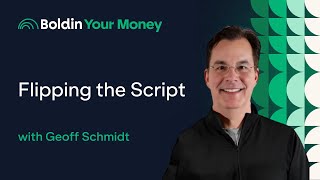
Geoff Schmidt built Holy Schmidt into a tens-of-millions-view YouTube channel about retirement planning, starting during COVID to help his father. He shares how niching down and tracking metrics led to breakout videos, and argues most people overthink retirement: own your numbers, budget your spending, and consider Roth conversions instead of chasing headlines.
Questions this video answers
May 22, 2025
Idea in 2019; channel activity catalyzed in 2020 (COVID period)
Over 350 videos
Over 4 million hours of watch time and over 50 million (≈55 million referenced) views
Approximately 335,000 subscribers
Chapters
All right, so welcome to bolden your money, where we explore bold ideas and fresh voices in personal finance. This is Steve Chen coming to you from Mill Valley, California. And today we've got Jeff Schmidt on. And I was lucky enough to go on his podcast back on April 15th on his YouTube channel, Holy Schmidt. And today we're going to reverse it, and I'm going to ask him some questions, and he's going to be on our podcast. So with that, Jeff, welcome to our show.
Hi, Steve. Hi, everybody. Thanks for having me on the show.
Yeah, I appreciate you making the time. So, Jeff, as we get started, what we do for our audience is a lot of folks kind of share their backstory, kind of how they got started and how they got to where they are today. And would love to hear that from you.
Sure. Well, when I started the channel in 2020, actually 2019, it was a personal YouTube channel. I was just watching videos on it like Everybody else. In 2020, Covid hit. And I, like a lot of people, had one of my parents who got sick during that time. And if you remember the early stages of COVID people got sick for a long period of time, two, three, four weeks. And so I went in to basically pay the bills and help manage the finances while my dad got better. And I noticed that he was doing a lot of things. Number one, he was doing a lot of things in his head that I actually had to figure out, which was really, really hard. But also, I thought, while I'm here, let me start tinkering with things. So I worked on getting form signs so I could consolidate accounts and have one view on. On. On with his. With his money. And by the time he came out, my daughter said, dad, that was great. You know, there are a lot of people that are at home right now. What do you think about starting a YouTube channel and helping not just grandpa, but people like grandpa? And with that, the channel was born. And I said to her, I said, I'm not sure what I should call it. Do you think I should call it Jeff Schmidt's podcast or Jeff Schmidt's YouTube channel? She said, no, no, call it Holy Schmidt. And I thought, that's pretty funny. So I looked up the name On. On, I think it was GoDaddy to see if the website was available. And it was. Somebody owned it, but I bought it for a pretty tiny fee. And so every time you hear the intro or the outro on Holy Schmidt, and you see, you hear that woman say, holy Schmidt, that's my daughter. And so with that, the Channel was born and today we have over 350 videos, over 4 million hours of watch time, over 50 million views or 335,000 subscribers. It's growing pretty quick. So it's something we're very proud of. It was basically an accident, but a happy accident. And we just kept working at it during COVID and then it took off and here we are today.
Yeah, it's amazing to kind of hear that story. And I love the inspiration of helping your dad figure this out. And I feel that's the same reason I got started with our business, help my mom. But are you still doing stuff with your. With your parents?
So after I straightened everything out and to. To be fair, there was nothing wrong financially. It was just in a lot of weird places and it needed some direction. So I will have discussions with, with my dad, but he's on top of it now and he, he owns it, he's excited about it and so it requires very little direction from me. I'll occasionally poke my nose in and say, what's happening with this? Or do you have documents for that? But now that he's 100% again, he's probably a little more reticent to take my advice. But at the time I had, I had the right opportunity and I. And I took it.
Yeah, I do think this is going to become a bigger reality for many kind of a, you know, adult children that have aging parents that they're going to get involved and there's an opportunity to help them be more. Everyone, to be more efficient and streamlined, but also keep an eye out for risks and fraud. Especially as people get older, they have money and making sure they're not getting taken advantage of. Do you worry about that?
Oh, sure, sure. I mean, I know family members who've been taken advantage of. I. We have an email inbox where we get incoming emails from. We have a. We have a live. Live stream. After I'm done with this, I'm going on. I'm going live on YouTube at 7pm and we have emails that come in with questions. And a lot of the questions aren't questions at all. They are, they are just, hey, this has just happened to me. What do I do?
And.
And some of that is just. You can't answer the question on live stream because you have to take the inbound questions as well as the questions that have come into the inbox. So I usually reply to those personally and give them some advice, but it happens all the time and in. I just don't know how people can live with themselves, some of the stuff that they do, because it's just horrible. You know, we are. But in terms of, in terms of financial savviness, we are. If you look at the world today and you think about the medical community, penicillin was invented in 1928 and medicine took off after that. I would say retirement, true retirement planning started Sometime in the 40s or the 50s, 1935, the Social Security Administration was created, but it actually has less lead up time. And the businesses like yours, Steve, are the penicillin of this industry. People look to something that's clear, it works. They are not afraid of it. It helps them get clear about their own finances. And I got to tell you, from the vast majority of the people that I see and I talk to, that is the one thing it's not Whether you have 15 extra salary or 12 extra salary, it's getting clear about what to do. And that is the direction I think most people need to go. And that's why the channel has done so well, because there's, there's a, it's a no hype channel and it's one where I'll say it like it is. And, you know, I had one video, I joke about this with my wife. I had one video which talked about the new head of the Social Security administration was his bio. And one commenter said, you're clearly a Biden supporter. Unsubscribed. And about three, three comments later, they said, you're clearly a Trump supporter. Unsubscribed. I looked at my wife and I said, they don't like me because I'm telling the truth. So what ends up happening is there's a lot of, there's a lot of noise out there and it gets people very frustrated. And so clarity is power, I would say.
Yeah, I think there's a huge demand for financial literacy. It's starting to get taught in high schools. We've talked a lot about that in our podcast. But, you know, clearly YouTube, it feels like it's hit this inflection point. You know, I look around and there's, you know, channels like yours, Holy Schmidt, and some other, you know, CFPs that get on and they talk about explaining pretty detailed things. And some of These videos have 2000-003000-00600,000 views. You know, how to do Roth conversions, you know, whatever. How does Social Security work, things like that. It's, it's, there's clearly a strong demand for this.
You need to. Those videos that, that have that many views, they generally tap into a pretty common question that just hasn't been answered. And so when you see a video with a million views or 2 million views or 600, 000 views, it's, it's, it's, it's almost never something that's super sophisticated. It's not options trading or anything like that. It's what's the average net worth of a 62 year old? And how do I compare? And you know, people care about that sort of thing.
Yeah, for sure. And I think they like to hear it from people like you that are independent and don't, you know, are fully aligned with them. So I think that's something else that's emerged. A lot of financial services, it's pretty opaque. You know, it's not. How people are paid is not obvious. And I think hearing it from peers versus someone who might be selling you something but you're not quite sure if they're selling you something or not is obviously important.
And I don't, I'm not, I don't, I don't take clients. The. I worked on Wall street for 25 years. In fact, I structured a lot of private investments for, for institutional investors and family offices. And these are, these are investments that people never see traded on the stock exchange, but yet they are really good investments. And there is that group of people. So that group of people, actually it would be impossible to, or nearly impossible to charge them a fee that they didn't know about because that's what they do day in and day out. But there are fees that are built into annuities, for example, that you couldn't. Actually, some annuities are great, others not so much. And it just depends on what annuity is. But a lot of them have big fees and you just don't see them. Same thing with mutual funds. Same thing with a lot of different investments.
Yeah, no, I think it's one of the things that's going to get better for you. So you're working on Wall Street. This YouTube thing emerges. Did you, were you still working when you started doing the YouTube stuff?
I did this actually. I never intended for this to become a thing, so to speak. It was, it was fun. It was something I could do with my, my daughters. It was making a big impact. But my day job was working, working in New York City on Wall street. And the, the companies that I work for were all great companies. They weren't, they weren't what you see on tv. These are nice people, smart, focused in on doing the right thing. But it is a lot of work it is. I have over 5 million hours, 5 million miles on the airlines. I've been to Australia 135 times, been to 32 countries. It is a lot of work and it never stops being a lot of work. And so as I progressed through my career, once I got to about the 25 year mark, I thought, you know what, it'd be really nice to try something different that I, that I, while I like doing what I'm doing, I wouldn't mind not working 60, 70, 80 hours a week. And so that's really when I committed to this. And that was about September and we've seen some pretty big run up in numbers since then.
Just this last September?
Yeah, just this last September before that. So of those 350 videos, 310 of them were done on weekends and they were done. A lot of the ideas were my daughters. She said that there are people that would really love to hear about how to. What are five things that people shouldn't do in retirement? What are five things they should do in retirement? I think we talked about this or we're going to talk about this. But, but the, a lot of that is just my daughter coming up with ideas that she thinks that. Or my dad. I talk to my dad and he'll say something and then I'll think about it. And if I think it's great for a lot of people, it usually ends up in a video at some point I've got a list of hundreds of ideas, hundreds. And usually when I wake up the next day I scratch it out and say no, that's not a good idea. But if it still sticks the next day then it probably, it'll probably end up as a video at some point.
That's pretty amazing that you have been to Australia 135 times. In the preamble we were, you were telling this story about. I was going to ask you about your jacket and kind of your outfit. Is that something you want you're willing to share?
I have worn a suit my entire adult life. I was a public accountant for many years and then I went back to business school and then I went to, I went to New York and got into financial services and I've always worn a suit and I'm very comfortable wearing a suit. But I also think different people show respect different ways to their audience. For me, wearing a suit shows the people that have entrusted me with their time that I respect them and that I'm showing that respect by wearing a suit. I could show up and wear I've seen people wear T shirts, you know, white T shirts, and that's it. And that's. That. That's their. Their thing. And it's really not who I am. And so you'll. You'll probably see me wearing a suit really, for the rest of my time on YouTube and beyond, I suppose.
Well, I'm wearing the FinTech uniform, which is the Patagonia fleece thing.
Everybody has the uniform, the uniform of their industry. So it, it, it all works.
Yeah. 100. And then you said you, you wear glasses partially because you're starting to get recognized, and you got recognized in Australia.
So. So these are, these are reading glasses, and they're very, very light prescription. But I was in a business meeting in Australia a few years ago, and somebody walked up to me. Now, mind you, you. It kind of freaks you out when you're 10,000 miles away and you are leaning into a client. You're talking about whatever it is we were talking about, and you hear this, holy Schmidt, mate. You're Holy Schmidt. And I looked up and I'm like, no, not now, not now. And so I had to explain to the client who thought it was funny, and I talked to the guy who, who recognized me for a couple of minutes, but told him I was busy. But the, the glasses really are number one. It's easier to read because I do a lot of reading, and I do a lot of reading when I'm on camera. I'm reading a lot of information, a lot of data. But also, it's probably okay if somebody doesn't recognize me every once in a while when I'm out and about.
Yeah, that's an awesome story. Well, I don't have that problem, but it's cool that you do. So I want to ask a couple more questions about YouTube just because it. It's such an interesting thing for me that people are, you know, able to kind of do this. I mean, not everyone does it right now. There's a lot of people that don't succeed at, you know, this. Becoming an influencer, basically. But you have. What are some of the top things you've. I mean, it. Well, I guess first, were you financially independent when you started doing this, or were you like, no, this is actually going to be like, I want to make money from this. I mean, obviously you want to make money, but. Or you need to make money.
I mean, I don't need to make money. I don't do this for the money. The business makes money, but I never want to be in a position where the business is losing money because you have to cover costs, otherwise you're paying for them yourself. But if I didn't work another day in my life, I would be just fine. But the mission of the channel is, first of all, there is a very discreet group of viewers who need this information. They don't just like it, they need it. And so that's, that's the people we serve. And in, in serving them, there are some things that you should be doing if you're, if you're running a channel or running any business, and that's providing them with good ideas, providing them with opportunities for things like, well, sponsors, you. We only take. And I've said this to you, Steve, a couple of times, and for the, those that are watching this podcast, I am. We are sponsored by Bolden. But we went to Bolden and asked if we could please be one of their influencers. They didn't come to us because we thought the product was so good. We were, we wanted to make sure that if it was a possibility that we got in there quickly before they ran out of, or ran into too many people that wanted to, to represent them. And so fortunately, Steve, you said yes, but, but also, once that happened, it created an interesting dynamic because Bolden was the first sponsor that we, we started working with. And it's been a delight. It's been wonderful. And, but, but you can only support a couple of them. You can only do a good job for two or three. If you have somebody who's, who's talking about, who's talking about bitcoin one day, gold the next, and then subscribing to the Wall Street Journal the third day, you probably, probably shouldn't take look at it for what it is, which is it's an ad. But if it's somebody who's dedicated, two or three businesses, and those businesses perfectly align with your client base, you should really consider why that person chose them. We have, we have 25 approaches. A quarter, maybe 30, 35. Now, I was looking at one of our less used emails and today we got three. But you look at these and think just this isn't aligned with the audience. What we want, but our audience is, is these are, these are people that, that want to do well in retirement. They think about retirement. That's why they're watching YouTube videos. They're sometimes, they're do it yourselfers. Although that can be both a positive and a negative. It's a positive because they're interested. It's a negative because they can sometimes get it Wrong, because they're doing everything with spreadsheets, which is where something like Bolden comes in, really. But. But they want this information. And like I said, we only have. Right now, we have three. And I don't think we'll go up three. It's too hard. It's too hard to represent more than three companies if you want to do it right. And. And the companies deserve your full attention. So that's how the. Com. That's how the business makes money. Makes money from sponsorships and makes money from advertisement on YouTube, the YouTube ads. And. And really, that's how most influencers make money.
Yeah. No, I appreciate it, by the way. We really appreciate that you are working with us, and I appreciate what you're saying, too, which is, I think it's clear to people, like, if folks run it for the right reason, right. If they're doing their work for the right reason, that comes through and people see that and they. They want to work with folks that are very aligned with them and authentic. And. And we have. We have the same view as you do, which is we're here to serve people. We're here to do it at scale. We think that there's a. There's a need for literacy and planning and helping people make good decisions strategically over the course of their lives to achieve better outcomes for them and their families. And that's. That's why we do the work. What are some of the big things before we move on? Like, what are some of the biggest things you've Learned Building this YouTube channel? Just about how to be good at it. And do you. Is there an up. Do you think there's opportunities for folks to do this as a. I mean, clearly for some people, there are right to make a living at this.
No, sure. YouTube is just. So in order to be successful at YouTube, you almost need to de. Romanticize the concept of YouTube. And let me explain what I'm talking about. When somebody walks up to you in Sydney, Australia, and says, you're holy, Schmidt, they have a certain view, and that is you put some stuff out, it just magically goes to a million million views, and that's it. But it could be. That's far. That's about as far from the truth as it possibly could be. You actually need to plan the content. You need to plan who is going to watch it. It's the same person every single time. Because if you want to talk about art one day and you want to talk about investing the next day, and you want to talk about how to rebuild your car the next day, well, you won't have repeat viewers. And so you, you pick one and you go hard at it. For our first vid, first 50 videos, I felt like I was recording videos for myself. I, I don't, we'd get, we'd get a couple of views and my daughter would high five me saying, dad, you got a couple views. And, and I thought, oh, that's the greatest thing in the world. But it would be great if we got a few more views. So if someone wants to do well on YouTube, I would say niche down, really, really tight. Make sure that it is something that you either know about or can learn about. For example, a big, a really big focus on our channel is Social Security. I'm a registered Social Security Analyst, I'm a CPA of 25 years of financial services industry experience. You can't get more straight down the center of the plate than that. But if my brother, who's an engineer, wanted to start talking about finances on YouTube, he probably wouldn't do very well. But he could talk about how Tony Stark's rocket suit works, I guess making it up, but, but he could tell you that kind of thing and I would have no idea. So if you can be successful on YouTube, no matter what it is you're good at, just pick the thing that you're good at and go hard at it if that's what somebody wants. But, but you got to stick to that, to that, to that group. That would be my advice to someone. But the reality is, because nobody ever listens to that, you might have one out of 10,000 channels that breaks 100,000, you'll hit, you'll have a lot that hit a thousand, five thousand, six thousand. In fact, if you were to tier what YouTube considers successful channels, ten thousand is what's called a micro influencer. It means that you have enough sway with a certain segment of the population that they can, I suppose they know what ads can run on your channel. But also it's the same type of person over and over again. Once you get to about 25 to 50,000, it's more of a medium sized influencer, 100,000 above and you're considered a big influencer once you get to a million year enterprise level. And these are names that everybody recognizes. And so if you were to think about it, 10,000, 25,000, 100,000, a million, those are the breakpoints. And there are some that just. Mr. Beast, I don't. He's got 100 million. I don't even sure what the Number is, it's a huge number. But also you don't need 100 million in order to make a career out of it. I suppose you probably could do it with 10,000, maybe 25,000. You just need to be tight with your message.
Were there unlocks for you? Where is it like a step function as you're growing, where it's suddenly jumped up? Or has it been kind of a linear.
No, there were, there were points and, and I found the more consistent I was with knowing the audience, the more the videos jump up. The average, if you think about this, we have 50 million, average of over 50. Like it's 55 million views now with 350,000, 350 videos. I guess that's, I'm not sure what the math is, is that a hundred thousand a video, 10,000 video, something like it's probably about 100,000 a video, maybe a little bit more. Some videos are going to do great and others are going to do horrible. But when you get that one that takes off and it might be for us, it might be one out of 10 and the others are 25, 10 million, 10,000, 25,000. But when you have that one that takes off, it really takes off and that's when the jumps happen and it's because people what your message is resonating with whoever it is that is watching it and you, every YouTuber who does that should go back and really study the video and see what they did.
Right?
That would be my strong recommendation.
And when it takes off, does it take off? Like you can just tell like early.
On there are two or three telltale signs. The click through rate's higher, the hang time of someone watching the video is longer, the amount of time, the amount of recommendations that it gets are more. And, and, and the number of likes, likes are really important. We have, our average like ratio is about 98% and, and 98 is extremely high. Anything above 95 is considered excellent. But if you, if you're running at about 98%, well that's, it means you're doing something right. And, and for example, the video that you and I did, Steve, it was at 98.6% and maybe even 99%. And people love that video. And the click through rate was huge. The watch time was long. It's everything that you would want in a video. And so when you see a video that has those three key elements, it's going to do well. And so if you focus on filming the video for the viewer, not the, not the algorithm which a lot of people think is what they should be doing. If you film it for the viewer, the algorithm will figure it out.
Super interesting. So you're at 330,000 or something like that subscribers right now.
335,000. The last time I checked that was a couple of days ago. And we're growing between 5 and 25amonth. It depends on the month.
Wow. So is it the ambition to be cross that million subscriber mark and then become an enterprise level influencer?
It would be. So a lot of things happen when you, the, the higher up you go, the higher up you go and it moves, it starts to move faster because it's always a percentage or it is, should be a percentage of the, your views that are your subscribers that you have. And so when you get to the enterprise level, different things can happen. First of all, the advertising, the advertisements are different. The, the, in terms of credibility, once you cross the 10,000 person mark, you have pretty good credibility. 100,000. You have extreme credibility in a million. Well, you people, people really can't argue with that. And, and so when you get, and that is our goal to get to a million as quickly as possible.
Where do you think this is going to be? This is my last question. Where do you think this will be in five years?
Well, I think we'll be over, knock on wood. Hopefully we're over a million and the, the business will. Right now we're posting three to four times a week and it is super concentrated on financial, the financial aspects of retirement. But I, there, there's so much more to retirement than just finances. There's well being, there's health, there's, there's so many things you could do with a channel like this as long as you know the audience and the audience trusts you. Now I'm not, I'm not an expert in health by any means, but I know people who are. And we had, we had a trainer to the 50 plus community on a few weeks ago. That was the interview after yours in fact. And, and then on the, on the flip side we had somebody who, Professor Joel Lippman, who was extremely knowledgeable about, about investing, particularly for, for this client set. But just overall so I, I could see more interviews on the channel. We've done three so far and they seem to all have gone pretty well. So I think, I think there's a, there's a lot more of that.
Awesome. All right, well, let's shift gears a bit. I appreciate the context about YouTube so some lessons for us as we, we're at 5,500 subscribers. So got a lot of ways to go. Yeah, I wanted to talk about kind of retirement blind spots and breakthroughs. This is something you've kind of talked about in your, on your channel. But you know, as people approach retirement, what are, you know, what are five things you think people should do?
Yep. So I think the first is I, I say this, I'm just looking at my notes here because I, I want to make sure that I, I say this in the right way because I don't want people to think the wrong thing. The first thing I would say is relax in terms of the scary numbers you see out there now. What do I mean by that? Well, if you go to Vanguard, they will tell you that you need 15x your salary in order to retire comfortably. 94% of the people out there don't have 15x their salary. And so that, that means that 94% of the people out there are going to be a little bit afraid of that statistic. It's a, I think the median 401k balance is $79,000 between ages 60 and 64. I think for, for your audience, it's going to be quite a bit higher. Just people who tend to, tend to use personal financial planning software tend to really think about these sorts of things more deeply. But if you think the averages out there and you just discard the people where this is something that they think about day in and day out, it's a pretty low number. So I would say do the best that you can relax about. Relax when someone puts a big statistical number in front of you that you can't possibly hit because you're not alone. However, at the same time, you do need reasonable, a reasonable amount of money in retirement to retire. And so ignore, I don't want to use the word ignore. I would say put the statistics out of your head and really focus in on doing the right thing between now and retirement and even in retirement. And that is building your retirement nest egg through your 401k through different types of investments, real estate, if you like that. I'm, I'm not particularly good at real estate, but I know a lot of people are. There's so many ways to do it. But focus in on the wealth builders out there. But ignore the, or, or take the data, the fear data, and put it aside because there's a lot of fear data out there and it's not just, it's not just numbers. It's, there's, there's a lot of fear in the system. Right now, overall, anyway, that's awesome.
Super helpful. Any other big things? So chill out a bit. Over index on the scary numbers. Start focus on building wealth.
I would say that if you think about when you come through the other end and you actually are retired.
If.
You'Ve done a reasonable job of saving for retirement, you're going to have this big number in front of you. And whether that number is the $79,000 that we talked about, the average, the median 401k balancer, it's millions of dollars. It's going to feel like a big number. Be careful when you see that number because that's a lifetime number. And so you want that to continue to grow. You want to use it, but it's precious. You need to cultivate it. You need to make sure that it's being used for the right things. I said to somebody the other day, a friend of mine, actually, he, he went out and he bought a. He bought a California Ferrari. I think it's called the California. And, and it's, it's the lower end Ferrari. He bought it used and he bought it for. It was probably five figures. But I said, I said, well, why'd you buy that? He said, well, because I've always wanted one. And I said, but, but are you going to drive that to the supermarket? He said, no, but I've always wanted one. That probably is okay once. My concern, particularly with this person is the boat will be next, the RV will be next, the timeshare in Aspen will be next because the money is there and it looks like it's a big number. But treat it, I would say treat it with respect because you've spent a lifetime building it. And rent rather than buy. If you want a Ferrari, rent it for the day. Go have fun. Rent Ferrari for the day. But don't, don't go buy one. I would say that that's. That it may feel like the, the lotto, but, but it really isn't. Guard the 401k with your life. That would, that would be. I would. My biggest piece of advice for someone who thinks people should, should really focus in on. Don't keep up with the Joneses. It was never a good idea, even when you were working full time. But people get caught up in the game. They, they, their daughter got in an argument with somebody else's daughter and all of a sudden that somebody else's daughter has a new Tiffany purse. I guess that's what they're called. No, maybe it's not Tiffany, but I don't know.
A lot about person Birkin handbag, one of those.
And so all of a sudden you gotta go buy one for two. You really don't. It doesn't. Ten years from now you won't even know that you bought it, but you'll definitely know the money that you spent for that handbag in your 401k is there to help fund the child's college education. And so today especially media has mastered the art of getting you to want something. The, the advertisements are really good. I mean I, some of the, I look at an ad on television and I'll think, geez, I, I really want that. Oh, wait a minute, I can't do that. That's, that's not who I am. But if I was, I'd buy that. And so I would say keeping up with the Joneses is not a great idea. The Owning your, your numbers is supremely important. And this is Bolden again, but just more generally. A lot of people, you could, they'll tell you what's in their 401k, they'll tell you what's in their IRA, they'll tell you how much they get. If they have a say they have a pension, they'll tell you how much they're getting from their monthly pension, but they can't tell you how much they spent last month on their expenses. And the problem with that is it's really easy to have expense creep. And if you planned on spending $3,000 last month and you spent four, well, okay, that's, it's only an extra thousand dollars. I suppose it seems like a lot to miss the mark by, but if you do it every single month, you're going to run out of money pretty quickly. So own the numbers. Use something like Bolden to manage your finances because you can't do it in your head. You can't do it on spreadsheets. People have tried. It's really hard. And then once you own the numbers, you, you treat your, your retirement savings with the respect that it deserves. And I think the rest is really just staying away from the things that you shouldn't do.
I do think that this idea of building a budget, really understanding your spending, especially as you approach retirement, a lot of folks that I've interviewed say that's a, that's a best practice. And then, yeah, tracking your plan to actuals and making sure that you're it. It's so interesting. As people build plans, you know, they one, they understand where they stand and then they start to see what's possible. And I think For a lot of people, especially our users and probably many of your listener listeners, they've been saving and been prudent and made good choices. And you know, if you've done that your whole life, as you get to retirement, very often that continues. It's hard for people to start spending money and that's something they have to develop. But they'll also just keep building wealth throughout their whole life. And very often their high point in wealth will be, you know, as they, you know, as they get older and you know, it just goes up with, with their age.
So there was a, there was this, there was a survey done. It wasn't a survey, it was a report that was published by JP Morgan. And in the report it showed wealth bands and people. You would think that at 65 their wealth would stop growing, but it actually showed that it continued to grow up through past 75. And it kind of leveled off there. And the reason it leveled off is because of required minimum distributions. If you don't start taking it out and doing something with it, you're going to have to pay this massive penalty. But that same report said that 84% of the people who responded to J.P. morgan again understand the audience a bit, but the 84% of the People who Responded to the J.P. morgan survey was used to build this report. They had, they had not touched their, their retirement savings at all at the time the RMDs kicked in. So either 73 or 75 depending on when they were born.
I, yeah, I believe that, I mean one of the most popular features on our platform is Roth conversions. People have been saving and their qualified money and then they get close to retirement and they try to, or they do kind of reallocate from a tax location perspective from qualified, your 401k and IRA IRAs into a Roth, especially during if they have some lower income years, they'll try to engineer their income lower between say 60 and 65 and draw out the qualified money, pay hopefully lower income taxes because they're filling up these marginal income tax rates, put the money into a Roth where I can grow tax free and then also come out tax free and go to their heirs as well in a very tax efficient way. So they're doing this kind of long duration tax strategy that does work and it diversifies them from a, from a, from a taxability perspective.
I would say that everybody is really good at something that they've seen once before. The problem with going to retirement is you've never seen it before. Then there's a group of People that are really good because they can model it out. And that model is a good predictor of what will happen. And that's what, that's what you're talking about. Someone may not have been 63, 64, 65 before or in low income years before, but the model says it'll work and then magically it works. But you do need to be able to have some sort of guidance on that. I think a lot of people, because they've never been through retirement before without something like a financial planner or financial planning software, it's really, really hard. They can figure it out, but it's a little bit more scary.
What are some of the biggest worries that people have in your audience? And also what are some of the biggest blind spots that you think people have in your audience as well?
No, I'd say the biggest worry is the noise in the media right now. You can flip. It doesn't matter where you sit, left or right. There's a lot of information that's just put out there now because the Internet exists and people can write a story, Anybody can write a story. My 20 year old daughter can write a story about something. The, the world's investment, the, the, the, the World Investment bank or, or some, some big bank in, in the country is, is not doing well and you better sell immediately. There would be no basis in truth in that. But if it got picked up and went viral, they're going to be a lot of people who are scared. The problem is that there's a lot of bad information out there. And so I would say that people right now need to really focus in on just sources of good information. I read the Economist, it is a great source of good information. I read both the Wall Street Journal and the New York Times. Great source of information. But when you start going beyond really a core group of half a dozen outlets, you start to get scared. And people are scared. And I would say that they don't need to be. One of the things people are terrified about is what happens to Social Security in 2034. And if you look back in time, we were here one time before and it was in 1983. In 1983, we were two months away from the Social Security trust being completely depleted and then they would have to cut everybody's Social Security payment. But like all things, the politicians got together, they modified the rules for Social Security, they increased the, the tax on, on wages. They went from, I think it was 5.4 to 6.2% with an employer match. And that happened immediately. That immediately shored up the Social Security system and then they put in place, 20 years forward, an increase in full retirement age from 65, eventually up to 67. So it didn't affect anybody who was 20 years close to retirement, but it all happened two months beforehand. That is something people worry about a lot. And I understand the concern, but I also know that it would be really, it would be highly unlikely that 57 million retired people drawing on Social Security would suddenly have their benefits cut by 30%. The politicians probably wouldn't have a job at the end of their four years. So I would say that there's a lot of worrying, unnecessary worrying out there. And I think people getting clear on information and good information is super important.
That I did not know that I knew that we had fixed it, but I didn't know the exact story. So and I didn't realize that we got within two months. But that makes sense. That makes, and that's, and probably it'll probably be similar this time. Right? We'll be like, oh, we're getting closer. And then. Or do you think they'll, we'll get our acts together in a more advance?
I, I think that this is going to everybody does. I think personally, me, Jeff Schmidt, I think here's what's going to happen. I think that they're going to raise the Social Security tax from 6.2 to 6.9, 7.1, whatever the number is, to keep it solvent and moving upward again. The push to extend full retirement age from 67 to 68, I guess it could happen. That was far less impactful on the outcome than that nudge up on the Social Security tax. But I also don't think anybody who's 50 plus really needs to worry about that. And I think, actually think if they're 50 plus in 1930, in 2034, they probably don't need to worry about it. I think it's going to, it's going to be close to 2034 because no one really wants to tackle it until then.
Right. And what about raising the. Because right now there's a cap on the income. You pay Social Security up to a certain level of income and then you stop paying it. Do you think they'll just raise the income cap?
I think that it goes up naturally every year with inflation anyway. It was at 145,000 three or four years ago. Now we're, you know, it was 162. Now it's 170. It continues to go up every single year with inflation. And that will Continue up the question about whether they're just going to take it off altogether. And that is a solution. What people, I don't think fully realize is that because Social Security is a progressive payout system or a regressive payout system, most of the benefit goes to the people earning the least amount of money. So if you as a payer into Social Security, earned twelve hundred dollars a month, fourteen thousand dollars a year, you're going to get on average about 90% of that back for your Social Security payment at full retirement age. But the more you earn, the less you get. So the next tier up is 32% and that's up to 7,7300 and I think 7350. I actually have to look up the exact number and then the next tear up is 15%. And so you could keep tiering it and then just lift the cap and pay somebody 15 of everything, I suppose. And that would. But the Social Security payment would be someone like, someone like Bill Gates would have a five million dollar a year Social Security payment. That would, I don't think that would go very well. But yeah, I think everything is on the table and there's nothing that, there's nothing that doesn't make sense. But the question is, number one, what can you get through Congress? And number two, what really solves the problem and not just for the immediate group, but for our kids? Because that's really, that's really who you're trying to protect here.
That's right. I think Prof. G. Scott Galloway was like, I don't think we should pay benefits if you get to a certain level of income or certain level of other retirement income or assets. And as you get older, do you think that's going to ever happen where, if you have 10 million bucks or something or whatever the number is?
I don't think so. I think, is it a bad idea? I don't know that it's a bad idea, but I think that anytime you do something like that and you change the rules of the game after the game is almost over, it's much harder to get it through. If that had been a discussion point in 1983 and said 20 years from now we're going to do this, that might work. But you can't really sneak up on somebody a few years before retirement and say, okay, well, we've just changed all the rules around you. We know you've got $10 million. It would be, it would be, it would be sensible, I suppose, as a, as an option. But, but I think that if you're going to do something like that, you need to plan that out 20 years in advance, 10 years in advance. You can't just. Because if someone has, and I don't, I don't, I don't know a lot of people who have $10 million. If someone has $10 million in retirement savings, but they've already committed 9.5 million to donate to some charity and the, the nobody realizes that, well, that this person is now in trouble. And so, so I think it needs to be managed well. The things, people with a lot of money, for better, for worse, shouldn't be demonized because they've done well, but they also need to be able to pay their fair share as well. So I suspect it's going to be raising, taking the cap off my work, increasing the tax on Social Security, my work. And there are a lot of thought.
Of options out there, you know, as you call out it's, or point out, it's already regressive. Right. If you've been earning money and paying into it, you're going to get a relatively smaller amount back. I mean, you'll get money back, but not the same amount that someone who's wasn't fortunate enough to, to make as much money over their career. Before we move on to the kind of, the end of this, I'm actually curious. You've been doing this for a while. You've helped a lot of people. Do you get positive stories back? Do people write to you and say, hey Jeff, you know, you've really helped me get confident and like retire or whatever, accomplish other goals in your life. And how does that, you know, are you hearing that? How does it make you feel all the time?
In fact, I get more of those than the other. I will. It's, it's nice when you have a channel that's been around for five or six years, you have people that have just been doing what you recommend and if it works, it works every time. If, if saving for retirement is a good thing, whether you're making a million dollars a year, you're making 50,000, you're making $25,000 a year, it's a good thing for everybody. So it works every time. But the, the time tested stories of someone who's five years out listening to the advice and then sending you a note saying, hey, I just paid for my daughter's wedding. Thanks for, thanks for talking about this on a YouTube video 225 videos ago. It really made a difference. That's pretty great. That feels pretty great. And I get a lot of those. And we also get the SOS from time to time. But I would say I get more of the. We get more of the second than we do of the first, fortunately. So I love what I do, and I get to do it every day.
Yeah, I think there's many people that want the permission that it's okay, like, to, like, hey, you've done well. You're going to be fine, and you can actually spend money and you should enjoy all the fruits of your labor. We see that in our community, too, where folks are like this really gave me a lot of confidence to understand my numbers and feel like I could leave my job or down or, you know, downshift a bit and work part time. And that's freed me up to do other things that I love.
Well, Steve, you know, while we're talking about our history, yours is pretty fascinating and how Bolden started. Maybe you can just. If you haven't told your viewers, your listeners about your story, I think they'd love to hear it. I was particularly interested in the interplay with your mom and you and its influence on how you thought.
Yeah, no, it's a, you know, I think people, some folks have heard about it. Yeah, I was happy to share it. It's, you know, I think that what I, I've, like you, I've worked in financial services and, you know, I was. My mom came to my brother and I and was like, hey, I'm approaching retirement. I've been a. She was a small business owner working in advertising. And then, you know, she had downshift, shifted a bit, and, you know, things had gotten away from her a bit financially. And so she was, like, looking to us for some guidance and assistance. And so we, you know, know, we first tried to outsource the problem and help her find a financial advisor, and we really couldn't find someone. I. I think one of the things about the world we live in is that financial services is kind of indexed. Two things. One is if you have a lot of money, you can get good advice, but you have to have a certain amount of money because the folks that deliver advice are mainly paid on your assets. So if you don't have that level of assets and now that number is like a couple million dollars of savings, then it's harder to get their attention. Otherwise, you could be talking to someone who's potentially probably trying to making money on selling you something. Or if you're at the lower end of the tier, people are making money by giving you debt products like credit Cards and loans and things like that. And so we just saw how the world was and we felt that there needed to be a better way for people to get literate and get organized. And so we started creating software and that's how we kind of got into this. And those problems still exist. It's getting better, but there's more choice for people, there's more education. But we're, you know, if you look at the outcomes in this country that's still in worldwide, you know, some there's a 5% of the world that has, you know, a lot of money. And then there's probably 25% of the world or in the US that's doing decently, 25% that kind of can make it work. And then there's like half this country unfortunately doesn't have, you know, doesn't have a lot of money, is really kind of living a paycheck to paycheck world and just getting literate, kind of understanding what the mechanics are, figuring out how to, you know, manage spending, start saving, start investing. What, what does it mean to even invest and how to make good choices. Like there's a giant unlock for people. And so that's what we're trying to work on. And it also is great to kind of find folks like yourself that are educating people at scale in new ways that didn't exist. Even this mechanic of being able to create your own TV or channel to directly connect with people is an incredible advancement that is obviously having a huge impact for folks. I mean, 55 million views is pretty material.
A lot of views. We have 50, 55 million opportunities to help somebody.
Yeah, 100. So it's, it's cool like, I mean that, you know, folks like us can kind of get out there and have a voice and you know, that other people will listen and also share it. I think probably for you and for us too, a lot of this is like people hear what we're doing and just tell family members or at work. There's some stuff happening with Microsoft right now where folks at Microsoft are found our product and they're sharing it internally. So it's, it's interesting. Stuff like that is starting to happen.
That's great. That's great. As I said, I came to you because I was definitely a big fan before you and I met and before I met your team. But I do think that financial planning software today, bolden in particular, but it's the penicillin of the medical community in 1928 where people actually, it is the game changer For a lot of people, the. But if you went back 20 years ago, I used to call it Franken software because they. There are all these weird things bolted on to. You would sign on and I don't want to name names because I don't want to get in trouble, but you would sign on and you immediately get blasted with a pitch for a credit card, and then one came for a mortgage, and then one came for. One came for an auto loan and then buy your car from this dealer. And it was, it was, it was really frustrating because the, the actual software was really hard to work with. It wasn't. And so you're paying a big price mentally to get into the software. Then you actually kind of figured out it's not like today where just. It's an interview, it asks you good questions, you drop in your information, and then at the end of it all, you've got something really good to work with. Big difference. Big change in the last 20 years.
Yeah, no, it's moving. And I think AI is going to really change the world as well. It's going to get easier and more personalized. So as we wrap up, when you look forward, what are you most excited about exploring around Holy Schmidt and kind of the work that you're doing?
So I, I want the. I want the channel to grow very, very quickly now. Now that I've. I've committed to more than just weekends to the channel, I think that that's, that's very likely. I'm looking for different ways to, to really help people. We're gonna have some pretty big announcements on some things that we are, I'd say, weeks away from at this point. I've been working banker hours for the last several months trying to get a project off the ground that we're just about ready to announce. And I think it will help a lot of people. I mean, a lot of people. And it's never been done before. It's something that I think will just help a lot of people. And it. Don't get me wrong, the one on one or one on many videos are big. They help a lot of people. But what we're going to do next, if you check with me in about three weeks, you will see it everywhere in about three weeks. I still want to tell you now, but I can't. My wife said, don't tell Steve. Don't tell Steve. And I said, okay, but what if I just whisper? She said, he has an audience. Don't tell Steve. So give me three weeks and then see it. You'll you'll know exactly what it is because it's going to be big. And things like what we're about ready to announce rapid fire after that. It's going to be big.
Do you think your business is going to, I mean, it sounds like, you know, your, your wife and, and your, your daughter and, and maybe other kids are like involved in this. Do you think that that is how it ends up? Like you'll end up pulling everyone into the orbit of this business?
I would love for, I would love for all of the Schmidt clan to be part of this business. The Schmidt clan likes to be part of this business, but they don't want to do it for the rest of their lives. And so I suspect if you were to look at this business in a few years, we'll start. The Schmidt's that want to stay, they're more than welcome. But we'll start adding on from that point forward. There are some obvious things that we could definitely use. We could use a video editor for sure. We have, we have a wonderful video editor and my wife, she's great at it. But if you're cranking out the level of content that we, we actually need to crank out to, to get to a million enterprise level, it's not just two videos a week, three videos a week. It's sometimes it's two a day and, and, and it's, it's data driven. It's, it's, it's, it's based on more than just. I think this will, people really like this. Let's all get together for about four hours and do a ton of research on this particular idea and come back and see if it works. It'll be available and it'll be just downloading it from there. There are a dozen sources that we could go to tomorrow. If I wanted to spend $25,000 a year, I put a Bloomberg terminal in the office and just download the data from there. It'd be easy.
But you're going to have a Bloomberg terminal in there in a year, I'm sure.
But, but I be, but yeah. So you'll see behind me a bunch of, bunch of, bunch of monitors behind me and you know, we'll start the video off at the back of my head with me kind of like a mad scientist trying to figure things out and looking over my shoulder. Oh, you're there. We could, we can have a lot of fun with it, you know, sort of Frankenschmidt type of thing.
Don't go full. Jim. Jim Kramer.
Exactly.
Sell this. We're gonna buy that. Yeah.
The.
I will say I went like, probably five years ago, I met. I met someone in financial services and they were like, thinking about trying to do some deal with some folks that were doing YouTube. But it was like this family had built kind of a mini YouTube empire around. It was the guys that make the pancakes, you know, the kids pancakes. Anyway, they gotten really good at YouTube and they built a studio and it was like a entire thing, like business studio, whatever, and clearly working well, but it was totally focused on, like, kids stuff. And I don't. I don't know. I'll have to look back. I doubt they were able to make the conversion to financial services, but they were thinking about it.
Financial services is a, Is a wonderful, It's a wonderful opportunity on YouTube, but you really need to know what you're doing, because if you. There are so many YouTube channels out there that just kind of put something out and, and, and I'm not saying that you need to have a CPA and an MBA and, and all the different certifications, but you certainly a great, A great, great one that I think would, would do really well. If anybody wants to start a YouTube channel on how to, how to save money, how to coupon or, you know, things like that. Those, those. That's the type of niche I'm talking about. I don't, I'm not really good at that sort of thing. I'm good at finding things like stray subscriptions that I'm paying for that I really shouldn't be. But, but you could get really good at something like that, and you could get a million million subscribers because there's going to be somebody on YouTube looking about, looking up how to, how to coupon.
Right?
And there's a whole, There's a whole skill set to it. One that. But, but there, there's so many things like that, and I think, I think that there's some big opportunities, but you really should. Niche. Niche down.
Okay, that's super helpful. Well, Jeff, really appreciate you coming on the show and sharing your story, and it's awesome to learn about how you've built this and, you know, and why you're building it. And congrats on what you've done so far. For everyone listening, hopefully check out Holy Schmidt. It is a great channel and you've obviously met Jeff, but he's producing a lot of good stuff and it'll be interesting to see kind of where things end up in the next couple of years, but obviously things are going really well now and. Sounds like you're very intentful on it and I will, I will say it comes through loud and clear how thoughtful you are about what you're making and how you're making it. And you mentioned your wife before and how she puts a lot of time in and editing stuff and you know, I think that all that stuff, the attention to detail makes a big difference. So shout out to your partners in this.
That's very kind of you, Steve. Thank you. And thanks for having me on your podcast. It was a pleasure and hopefully you'll see me again at some point on another episode. Who knows for sure.
Yeah, I'm looking forward to it. I want to know in three weeks I'll be definitely calling you kind of hear what's going on. Well, thanks again, Jeff and we'll, I'm sure we'll be in touch.
You bet. Bye, everybody. Bye, Steve. See you.
All right, see you, Jeff.
More from Steve

When Should You Claim Social Security? #personalfinance #financialplanning #socialsecurity

Social Security & Medicare: What's Changing and What It Means for You with Mark Miller (ep. 109)





Retirement Savings Waterfall: Where Your Next $$$ Should Go (401k, HSA, IRA, Brokerage)



