From Negative Net Worth to Coast FI | Marriage, Money & Financially Fit Kids w/ Andy Hill (ep.97)
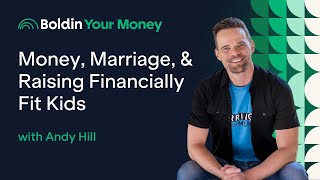
Andy Hill went from $50k in debt around 2010 to multi-million net worth in 15 years by combining incomes, cutting debt, and investing. He hit $500k in retirement accounts by 40, then shifted both spouses to part-time work (20-24 hours weekly) to prioritize family while letting investments compound through Coast FI.
Questions this video answers
Negative $50,000 (about $50k underwater).
About $1.75 million ("now we're at about 1.75").
About $500,000 in retirement accounts at around 40 years old.
About $180,000 average for that 10-year period; the last five years (part-time) the household income is a little under $100,000.
Between 20 and 24 hours per week.
Chapters
This episode is brought to you by the Bolden Financial planning platform, formerly New Retirement Create a financial plan for free@bolden.com welcome to Bolden youn Money. I'm your host, Steve Chen. And today we're joined by Andy Hill, the voice behind marriage, kids and money. And he helps young families with kids on their journey to financial independence. And so we're going to learn more about Andy, his story, talk a little bit about fire and some of the big lessons that he's learned over his career. And so with that, Andy, welcome to our show. It's great to have you join us.
Thanks so much, Steve. I appreciate it.
Yeah. So, you know, I'd love to get started just by learning more about kind of your story. You know, I did a quick, you know, now perplexity search. Right. I was like, tell me a little bit more about Andy. I know we met way back at Fincon. We were talking about that back in 2010. You had negative net worth and you kind of sounds like you got started. But we'd love to kind of hear from Fast forward, right. 15 years. Seems like a lot's gotten accomplished.
It is a lot that is accomplished. And it's funny that you say 15 years. Yes, because my wife and I just celebrated our 15th year anniversary, which is fantastic. And it's also mind boggling that 15 years can go by so fast. But yeah, when, when we got married, we combined our finances and there's a lot of fun conversations with combining your finances when you get to be married. You know, for me, it was an instant boost of income because I was making like $70,000. And then I married this awesome woman and she's making $60,000. I'm like, Whoa, now we have $130,000 together. This is insane. We still live in the same house. We still generally buy the same amount of food. You know, it's like, wow, we've got a boost. What are we going to do with this extra money? In the beginning, we just lived for today and had a lot of fun spending all of that $130,000 together, going to concerts, going out to restaurants, eating food, you know, whenever we wanted, things like that, just spending all of it. And then it wasn't until we learned that we were going to be parents that something sort of switched in our brain and said, hey, it's nice to live for today, of course, but we should also plan for tomorrow. We've got a new one coming into the world. And for me, that was a financial light switch that hit my brain wow, we're spending all of this. I can't believe that I was spending all of the $70,000 that I was making and then when I got married, spend all her money too, you know. So we decided after some conversations that, hey, we, we could really make a big difference in our future daughter's life if we were able to, you know, just at least pay attention to our money a little bit. And through some further conversations with my wife, she's like, well, ideally, I'd like to be able to stay at home with her in the future. Maybe not all right away, but part time when she's born. And if we decide to have another one, that'd be great if we could do full time stay at home. Mom, I'm like, okay, all right, we got a plan, right? You know, I feel bad about spending all of our money. You eventually want to stay at home with, with our daughter, want. What can we do? And so we decided after looking at the numbers quite a bit, we said, well, you know, realistically, we could probably live on one of our incomes and then save the other one. And that might take some practice now that we've learned to double spend by both of our salaries. But, you know, after she became pregnant, the joy of going to a late night concert and the joy of eating out for every meal just kind of faded a little bit too. So we, we were able to buckle down a little bit on our lifestyle, but a lot of it had to do with just kind of paying attention to our money. So we made that commitment with each other to say, hey, let's give this a shot. Let's see how it goes. Let's try to live on one of our salaries and then see what we can do financially for our daughter's future as well as our future.
When you guys first got married, did you have a discussion about, like, probably values in general, but like your money values and like, yeah, combining your. My wife and I actually didn't combine our, our money really. Like, we kind of like, I mean, we are, you know, we kind of. There is, I think there's one joint account, but otherwise it's like, you know, she has her 401k and other savings and investing and I have mine, and we kind of like run parallel stuff, but curious, you know, did you sit down and kind of like get super intentional about it or you're just like, great, double the income. Have a good time?
Well, I think before we got married, we had some conversations about money, but.
Not a lot of the ones that.
I wish that we would have had, like, specifically, how much debt do I have? Specifically, how much debt do you have? What are we both making? How are we going to do this combined finance thing or not combined. We got married and then we started just fumbling and tripping over each other a little bit with how we were going to do this. So it was sort of trial by error over. Over a little while and us figuring it out. So there were some conversations that I wish we would have had beforehand and would highly recommend them to anybody in a serious relationship right now or engaged. And just having those conversations up front, they could be a lot of what ifs? Or what do you think about? Or how would we do this if this happened? Because there are a lot of couples that get together, and as the, you know, the happy feelings fade after a little while just because of life and getting busy, you start to realize, well, what did I get into? These are some serious things we didn't talk about. And that's where some marital trouble can come in. Maybe marriage counseling, you know, hopefully not divorce. But the big conversations really should happen early on to make sure that you have an idea of where you want to be.
There's some serious parallels with your kind of your journey and my journey. Same thing. We, you know, my wife and I got married. You know, we, you know, had kids. We were living in the city, we were renting. And we're like, we wanted to buy a house. And then we're also the calculus of like, child care. And like, okay, I remember we had this discussion of, hey, you know, in. In San Francisco, like, you pretty much needed to, like, if you have. Depending on the kind of child care you got, but, like, if they've got a nanny and some support, it, it's 100. It could be easily $100,000. Like you. If you made a hundred thousand dollars and then paid $35,000 or $40,000 in taxes, say 35, then you're like, left with 65 grand. It's pretty easy to, like, start spending that kind of money taking care of kids or a lot of it. And you're kind of like, that's. That was kind of basically the net that I was like, you have to make a lot of money here or, sorry, the caregiving. I shouldn't say you, like, there's all these gender biases, but, like, someone needs to make a lot of money to pay for childcare. Or you could stay at home. So one person could stay at home and be the caregiver.
Yeah. And I've had a Lot of conversations with other women in this aspect too. Ones that I worked with too at the time, where they're like, you know what, God bless your wife, but I don't think I could stay at home with the kids. You know, like, some women don't want to do that or some men don't want to do that, and that's okay too. You just have to find out through the conversations, through these important conversations who wants to do what, or is it, hey, is this going to be something where we're both two working spouses and then we figure out the childcare situation? But to your point, man, there are a lot of expenses that go in with quality childcare around our entire country.
Absolutely, 100%. Like, I remember when our, you know, post, being a little tiny baby, like even like pre kindergarten, just, you know, daycare, I was like, I'm paying as much for daycare as I paid to go to college.
Yes. Especially in a high cost of living, like, like Saint Fran. Absolutely, man.
So interesting. So for you then you didn't like, come to the world. You didn't like, come up like, I am financially literate the whole way or like a super duper financial per. You're kind of like living life, enjoying it. Then you had a kid and you're like, okay, time to get serious. And I do think this is a common thing that happens where you're like, especially with, okay, it's not just us. We have a responsibility and how is this going to play out? And so I guess at that point is you got very smart about money.
Yeah, it's actually there's some scientific research around it for fathers specifically, where mothers might be more of, hey, what can I do to create a great environment for my child and what can I do to. To make them feel warm and welcome? There's this sort of father brain, how do I protect my child? And things like that. And for me, my protecting mode came into what can I do to get our finances right so they live in a secure home and they have a good future. Conversations around that became very interesting to me and I sort of just started consuming as much content as I could. The Susie Orman show was a big favorite of mine. You know, look, watching her, her show, Susie Orman show, and there was a segment called how my Doing. I don't know if you remember ever watching that show. And they, she'd kind of go over somebody's finances and give them a A grade, you know, like, hey, you get an F, you get an A. And I thought at the time, since we were making $130,000, that man, sure, surely we'd get an A plus on her show. But they kept talking about this term, net worth, net worth, net worth. And I really had no idea what it meant. So. So I decided to go up on the big whiteboard in our guest room and say, okay, let's figure out what our net worth is. So we both go up there with the black marker writing on the left side. Assets. We're writing, hey, we've got a home. You know, we've got a little bit on our 401k, but really that's just because our, you know, HR department made us do it. We got a little bit of cash. And then this car that you have, honey, has some value to it. That's fantastic. And then we got on the liability side, and this was around 2010. And the mortgage that I owed on my home was actually higher than the value of my home because this was during the Great Recession. And in metro Detroit, things were not looking that great for home. So I was actually underwater on my home. I owed $30,000 in student loans, and then my wife owed $20,000 on that car. So we actually had a negative $50,000 net worth when we did that math on that whiteboard. So I would not give myself an A plus grade on Suze Orman show. This was a sad moment where I said, oh, wow, I thought we were rich because we're making six figures and we're a married couple. And then all of a sudden I just had this epiphany moment like, whoa, this is an opportunity. We could really quickly solve this problem or at least start making financial progress because we have this six figure income with no kids or what can we do before they come in the world? Because, man, we know kids are expensive. So that was sort of a turning point for us.
Right. And so did you get pretty aligned with your wife and like, hey, let's get serious about paying down the mortgage or paying down the sorry, student loans and other debt?
Yeah, I would say my problem or the error that I made in the beginning. Steve was talking about the numbers too much. I became a little bit focused on net worth and debt and investment returns and all that. And that just sounded like wah, wah, wah, wah, wah to her when I would bring it up to her. But what I did learn over time is that she responded more to the emotional benefits of what money could do for her. Like, you're talking net worth, you're talking reducing debt. That just sounds like pain And a lot of heartache in order for us to get there. What is the payoff? Why would I do that? And so when I started to talk in terms of the emotional benefits, hey, eventually, if we do this type of stuff, you'll be able to go part time instead of, you know, going to this job that you're really not liking. Right now. You're coming home pregnant, and your. Your clients are really rude to you and you are not happy. What can we do to reduce your hours from 40, really 60 hours till like 20 hours a week? Okay. That's when she started to pay attention a little bit more and have a little more of the conversations. That's when she was open to, hey, let's get together once a week to just talk about the numbers or to look at our goals and see how we're doing and making that progress. So it wasn't until I to I speak in. In more of her language that we started to make some progress together as a couple.
Well, I want to give you some kudos. It feels like you really, like, you know, when I was pulling your numbers, like, because I think you published just. The directory I have is like, hey, you had negative Net Worth in 2010. You started doing this blog podcasting thing in 2016, which sounds, you know, clearly you love. Like, so you're doing work you love.
Oh, yeah, that's great.
Yeah. And it sounds like you've helped, you know, get your family in a place where both partners are doing work they like, and there's a right, right balance and you've got to a million dollars of net worth, you know, in 2025. Imagine you're doing, doing fine or, you know, better.
So, yeah, yeah, things have gone really well, but thank you. Yeah, but it all started with those initial steps. It's really like, hey, what can you do to know, know your current situation where you're starting? So that negative $50,000. And then, yes, you talked about what it's. What it's gone to 10 years, 15 years down the road, but really understanding that starting point and then saying, okay, what can we do to make a difference going forward?
I'm not a hardcore fire person, but as I've looked at fire, definitely the sense I have is like, it's about 15 years. Like, if you get serious about your money and saving a lot, managing your expenses, so learning to save and investing, and you do that for 15 or 20 years, your life changes. And it's like you're the living embodiment of this happening.
Thanks, man. Yeah, I mean it was, I think we started at negative 50,000 and now we're at about 1.75. Just about through 15 years of paying attention to it, saving a good amount of it, but then getting to a point where you look at the numbers and saying, okay, even with time and compound interest and me not really giving too many more contributions to this, it can still grow and then realizing, okay, I can dial things back a little bit and enjoy more life. And that's, that's what we've been trying to do.
Well, it's so interesting. So you kind of hit that escape velocity like. So I guess when you started this and I guess you probably did some projections, did you think fast forward? Were you like, okay, in 10 years this is what it's going to look like and in 15 years is what this is what I think it'll look like. Did you have that sense in your head?
I love looking at calculators, I love looking at compound interest charts because it is amazing what can happen if you stick to it. I am a goal oriented person, so if I can see that this is possible and you say, okay, here's the end destination, if you just keep doing these things, you will get there. I get really motivated by that. So when, so yeah, I did, I looked at them early, I looked at them often, sometimes too much to the detriment of my relationship and the amount I talked about it. But yeah, I think if you're determined enough to get something done and you have the right habits in place, then anything's possible.
So you're not surprised. Then you're like, I, I, I feel like I talk to a lot of people and they're like, this is happening like in our community, right? They're like, oh, or, or at some point. I mean, I think it's more like as it happens, they're like, oh, wow, this, you know, but they're, they're kind of like where you are, right? Where they're like, oh man, I've got a couple million bucks and if this, that's a lot. That's more than I thought I would get to. And if this keeps going, I might have like, you know, six or I'm going to have tax problems, you know.
Well, that's the situation that I started to see and then I started to do those calculations and say and saying to myself, well, I don't want to have too much that I won't utilize and maybe die with a few million because that means that I am spending more time growing the wealth than Growing my life. So I wanted to at one point just say, okay, what could I do to work less but still get a great result with regard to my retirements. That's why I got really excited about the concept of Coast Fire. And I kind of went nuts with that idea. And so much so that we're living our lives in that fashion where we, where we hit Coast Fire and we decided to stop our contributions to retirement. Well, I'll say stop. I drastically make it a lot lower than what it was to our contributions just because we saw those calculations of saying this is still going to take us to like three or four million dollars even without contributing any more money. So based on that, if we don't need as much money to contribute and we've eliminated all of our debt, including our mortgage, then we could just work less. So we were both working full time when we had this epiphany and we said, okay, let's just gradually both move to part time work and see if we can still survive and enjoy our lives. And we're five years into that plan and we're, we're so happy. Like we've, we've, we've never been healthier. The time we spend together as a couple is dramatically gone up. I wanted to be a present parent during that timeframe from my kids being in second and second grade and kindergarten till now. They're both going into middle school next year. I feel like we spent that important time with them during that period of time when they wanted to spend time with us. I'm getting to that point with my teenage daughter where she's like, I'm good, I'm going to go be with my friends. We'll see you later. Yeah, no, it's made a big difference in our lives.
Well, I think it's great for people to learn that. And by the way, I have a confession. Even though like you, I've been in the space and like learning about this stuff for a long time, when I first heard Coast Fire, you know, I'm like watching like Fat Fire Burstifier, I was like, Coast Fire. I'm like, oh, that's for people that live on the coasts. Right? That's exactly what I thought. I'm like, it wasn't until like this morning as I was walking around listening to your podcast, I'm like, oh, hey Coast Fire, you're coasting into it.
Yeah, yeah. So for us, we got to $500,000 in our retirement accounts at around 40 years old. And then we did some projections and we said, hey, even with like 6% real rate of return. And if we just didn't put any more contributions in there, this could be close to like 2 million by the time we retire in our 60s. Isn't that enough with a 4 or 5% withdrawal rate based on what we are spending today? And that's not even including Social Security. That's not including, you know, potentially selling our mortgage free house when we're older if we want to. It just became that sort of why not Question.
Yeah, I checked out the calculator on your site. It was cool to run. I do think that that moment where you're like, oh, and I think this is real for our users too. Like, am I over saving for this goal? Like, everyone's kind of. Our company was called New Retirement. Now it's called Bolden. But you know, a lot of people are at this kind of thinking about retirement's like the main thing. Like, and it's really financial independence. But maybe you overfund that and maybe you could be doing other things with that money. But people, I think for a lot of people, they're like, oh, it can never be overfunded unless they get way more. And then that gets to that kind of like, how much is enough question.
Yeah, that becomes a psychological conversation at that point too. Are we saying this because of things that have happened in our lives where we said, okay, I'm doing this because I want to be diligent and take care of things, because maybe my childhood was a situation where things weren't taken care of and I wanted to make sure that they were completely. But am I over indexing now to have $20 million when I'm 95, and then saying, okay, could I have lived a little bit more with 19 of those millions to make more connections with people that I love, to maybe give back in the world to anything, maybe spend more time with our spouse so that we had a great marriage, whatever it ends up being. I just want to make sure that I'm not on my deathbed saying, man, I wish I would have utilized a little bit more of that money to create some more time.
Okay, so I have a related question for you then. So there's so many ways we can measure, you know, like our health, right? All these metrics, like our Garmins or Strava or whatever. Like, we're measuring our activities and there's so many ways we can measure our money, right? So, like, how am I doing my saving enough? What's my debt to income? What's my net worth? Going to look like over time. So back to this like work life balance. Do you have ways that you measure the investment that you're getting in this light, the life part of your life?
Well, that's a very good question. I think there needs to be something developed that is around, like call it a, you know, how we have, we have budgets, budget tools for our money, maybe time budgets, you know, are we utilizing the amount of time that we have on this planet to the best of our ability? Some micro things that I've done are tracking the amount of hours that I work each week. And I tried my best to keep that between 20 and 24 hours per week so that I am utilizing my time to work on the other goals that I really have now. And a lot of them are around my health. I want to be able to, you know, exercise more than I ever have before so that I have a healthy heart and I can live a long time. Another area is just what am I doing to invest in my marriage? What am I doing to become a better husband? I didn't used to make dinners very well for a very long time. And I can see that weighing on my wife over time being like, dude, this, this isn't the 1950s. Come on man, like step up. So I'm proud to say that I've been better in that department over the last year. Things like being a present father, I want to spend more time with my children, make memories with them. So these are things I'm actually physically measuring on a habit tracker app that I have. It sounds so, I guess, nerd. If I described it to my wife, she'd say, oh my God, that's so nerdy. Andy, because you're so into the numbers, how do you numerically track the amount of time you're spending with me? Like that's so unromantic. But that's how my brain works. If I want to be able to be better at something, I need to track it and make sure that I'm progressing in those areas. So a lot of it ends up being around self care, whether that's exercise, you know, meditation, just drinking the right amount of water that I need to do every day. These are the things I'm trying to track so I can say yes, working is still important to me. Having a part time job where I feel like I'm, you know, providing some service into the world, I'm really helping people. But then also realizing that I want to have multiple identities in my life besides just guy who works and dad, you know, and Then there's nothing wrong with that. I love being a dad. I love being guy that works. But I also want to have, you know, be healthy athlete. I want to take care of myself. I want to take care of my family. I want to learn. I want to be good friend. You know, I lost some friendships over the years when I was working so hard to build my net worth. I'm like, okay, well, I need to really spend some time on leaning back into making some connections in my community, spending time with friends and, you know, just being me. So those are things I'm. It sounds funny to say, but I'm tracking those and making sure that I'm spending time towards them.
I think it's great. And I feel like the world could definitely go there. Right? There's a lot of, you know, it's interesting also, like in the fire community, you know, you see people there get very focused, at least kind of early vintages of fire people. It's like, it's all about the money. Save, save, save, save, save. Work and save super hard. And then you're like, then they're fi. And then sometimes people get depressed. I was seeing this too. I like, oh, yeah, like now what? You know, I kind of achieved this goal. Like I hiked up Everest and what else is there? And so I think this idea of being super intentional about your time, which is our non renewable resource. And also, clearly you've got really good thoughts about the balance of work, family, personal health, exercise, community, giving back. All these things are part of it. And nobody talks about or not enough people talk about it. It's like you kind of figure it out. Some people figure it out.
Yeah, I'm drawn to some of those conversations from the stoics, or at least the. The folks out there that like to talk about stoic philosophy, about the concept of memento mori. Just remembering that we're going to die someday and it's either going to be for men on average, maybe around 80. Hey, if we're lucky, 90, maybe 100. Wow. If we work really well. But whatever it is, it's a date, man. And it's out there and it's uncomfortable to think about. But if you take your certain date and say, hey, I'm 43 today, and hey, if I do well, maybe I could add, you know what, 57 years. That'd be cool for 47 years. How do I want to use that time? Do I want to be working until I die and die with $20 million? Or do I want to say, hey, what can I do. Somewhere in the middle of saying, yes, it's important to work, it's important to provide for your family, it's important to have some niceties in your life. But I also want to be somebody that gave back in my community. I also want to be somebody that took care of their health and showed my children how the importance of taking care of your health. And sometimes that is, sometimes for me that's working less.
I, I, One of the hypothesis we have here is that like, you know, wellness, like so like financial wellness will follow the path of physical wellness. Like, you know, one of the things we talk about is like, we didn't, like, I don't know, you ever read Shoe Dog, the Shoe Dog story. So Shoe Dog is the Nike story, right? And he talks about how we didn't realize that exercise was good for us until like 1949. It's such a good story. And like, and then, you know, by studying the double decker bus, guys, like, the drivers died early, the ticket takers live longer because they're going up the stairs. And once we figured that out, we started exercising. And I think that like financial wellness is following that, where we're realizing it's a lifetime practice. But I, I could see what you're doing also becoming part of this. It's like we'll go from a world of like money track, well, fitness trackers, money trackers, to life trackers, where it's like, hey, like we have screen time, right? That's an indicator, like you're probably not super happy if you're spending tons of time on your screen. And like, especially with AI and ambient knowledge, it could be like, hey, you know, you've only made dinner once this week. And you know, the kind of the work split isn't that great? Maybe you should go for a hike with your partner or whatever it is.
Absolutely, yeah. And to your point, I am so diligent on the time tracking that I actually put screen time reminders on my phone to stop stop myself. My son and I play this game Clash Royale on our phones, which is super addicting. But I give myself like a 15 minute timer on the thing because I'm like, I am gone. If it's after 15, I get, I get lost. Same thing with social media. I deleted all of my social media apps off of my phone just because I have an addictive personality and I just would keep on going. That being said, I still have social media. I go on my laptop to, to look at things, but having it on my phone, I would have this Reflex of just checking it over and over again, even if I just looked at the thing and then I said, wow, am I really utilizing my time well? Nope.
So I've seen this. I. I watch young, you know, include my kids. You know, they'll be like, on, you know, various shorts or whatever, Instagram. And you're. I started like, you know, I've gotten into wing foilings, which is a cool sport, but then they like, I'm watching videos about how to wing foil. Then I'm like, oh, you know, if I start hitting these shorts, I'm like, I've never put TikTok on my phone for a reason. It's like. But I've been like, oh, my God. Like, the algorithms are so well designed. It just serves up this stuff that you're like, oh, yeah, that's kind of interesting, you know, and, like, there's so much science and computational power that goes into what you see next, including, like, they estimate how your body's reacting. And, like, it's like watching a movie. There's, like a story arc going on with these things, and it's ridiculous.
So it is wild. And I've. I've tried to be cautious of it. It is one of those things where it's like, okay, it's a part of our world, so how do I live with it, but how do I not let it take over my life?
So a couple more questions, then. I kind of want to move on to, like, kind of the kids and family side of this thing. But, you know, when. You know what, like, as you've kind of built your. Your business and practice, what are some of the biggest lessons you've learned with your audience?
I would say, since I am in the financial education business, really, honestly, if that's. That's what. I am a financial coach, but I do mostly financial education online. I try to provide free financial education and then get paid through advertisers or affiliates and that I know, like, and trust that can support the families that are out there. What I've learned is that the more that I hone in on a specific message, the more relevant that message becomes because it hits the right target. So in the beginning, I was so excited about creating anything online and creating content and helping everybody and talking about everything that it was a lot of fun. But I didn't sort of narrow myself into an area of saying, hey, here's what I'm all about. Here's what people can know me for. So in the beginning, I spent a lot of time. I spent a Lot of money. Just kind of going down a content development path that maybe wasn't so fruitful. I definitely learned a lot about myself and things that people are interested in. But the more I niche to an area that really supported my. My audience, the better off it became.
I do, by the way, I'm just going to give you a quick shout out. I was. As I was listening to your podcast, I was like, oh, you're way better at this than I can see. You're a professional at it, and I'm not just trying to glaze you.
Thank you. I appreciate it, man.
No, but it was like, oh, man. You know, it's on message. I was actually noting. I was like, we need to have a real calendar here. We really think be thoughtful about what is our audience getting out of this? What do we want to get out of this thing? How is this being valuable? And so I could see that you're doing.
It's definitely come over time. Like, you should also listen to one of the 2016 episodes and then you'll say, okay, I see how this has come a long way. Any.
Any other big kind of takeaways that you've had. Also, like, just for your audience, too. Have you seen that change over the last 15 years? Like their own sophistication and you know, where they are in the process?
Yeah, I would say a conversation that I've wanted to be a part of was one that I thought was lacking in the community for a long time, was sort of the, okay, I'm debt free now. What? You know, that's really the conversation that I like to be a part of. And I've sort of stuck with. I found that it's harder and harder for people to even get to that point of debt free that they end up getting stuck in sort of a cycle of consumerism, as well as not being able to stick through goals and making it happen, whether that is through general lack of time or motivation or partnership with their spouse, it is a difficult thing to even get to that point. So I know that I've narrowed my focus to a specific area, but I'm realizing more and more lately that it is difficult for even people to get to that starting point where Nicole and I started our journey. Just saying, hey, we've got negative $50,000. How can we get out of this hole? Then we can talk about building wealth. So I realized that that takes a long time for a lot of people. So that's something I've learned along the way, actually.
This is a good segue. Into kind of the next part. I do want to talk about kind of kids and literacy and like, it's such a, you know, gift to be brought up in a financially literate household with good money practices. Right. Which probably, you know, you and I didn't necessarily grow up in, but came up to. Came up to. But, you know, one of the. As we get into this, I want. I'll share a quick story. So I was at a fintech meetup in San Francisco last week hosted by Fiat Growth Ventures. Anyway, I was, you know, there's a bunch of founders talking about what they're doing and personal finance stuff. And a couple of the businesses up there got up and they're like, yeah, we make emergency loans. One of them for like, I think it's called possible finance. But like for $200, right, we will loan you 200 bucks. And someone else was like, there's another group, etc. I think they're doing the same thing, kind of like emergency, I don't know, advances, but like maybe 500 bucks. But it was like, I was like, there's a business whose job is to hand out 200 bucks like that in the U.S. like, I could get that in like third world countries. And you know, we were talking about it and it's like half this country can, can't really come up with 500 bucks. Half, one in two Americans. It's just not my world. I mean, I'm tangentially aware of this, but like, it kind of brought it home. And I don't know if you see that, but I was actually talking with credit karma guys there and I was chatting with them. They're like, yeah, our audience are they serve one in three Americans and we represent America overall. And it's like, it's not that great. You know, there's a lot of debt, you know, and stuff. But I don't know if you have, you know, color commentary on that as we head into this discussion, but.
Well, I would say even for the folks that don't have that double income or six figure income, that's a difficult situation for those folks who are maybe call it below $100,000 a year living in America, trying to figure this whole thing out, especially with kids. But I'd say a lot of the financial coaching calls that I have have couples that are making over $100,000, maybe 100,000 to $250,000 that have a lot of debt as well. So it is a difficult situation. It's a really difficult situation when money's very Tight to say, how can I breathe? Because I need to put food on the table, I need to make sure my kids are safe, and I need to be able to not have a panic attack. Like, I get that. That's really. That's really tough. So where I would see, hey, I need a $200 emergency, that's where somebody's just hitting the panic button and saying, help. You know, I would be worried about what that business model is, though, because if you're a business, you need to be able to make money in your business. And if your goal is to make money off of people hitting a $200 help me button, then I'm worried about that. But my point was, people who make good money are also finding them in this situation where they are saying, oh, my gosh, how am I going to be able to pay the credit card bill at the end of the month? We're spending all of it. So it's. It's a lot of. A lot about an income situation. Increasing your income will help you dramatically. That's just true. But it's also a intentionality problem. Like, if you don't like the situation you're in, what can we do to make small changes today in order to get there? Now, for the people who are making a lot less money? That can feel very, very difficult. But again, start where you are. Right. I'm just looking in my closet over here to the right of me. I always think about that when I'm like, if I needed 200 doll today, I would walk around my house and just see what I could do to find stuff that I don't use anymore that has value that I could put up on Craigslist, Facebook, Marketplace, just see, hey, man, could I pull in 50 bucks just from selling some of my stuff? And that could give me a lifeline. Could I pull up a side hustle just to try to bring in some extra money? Just doing some extra work this week. What could I do to make that? Because as soon as we start hitting the $200 panic button to get myself an emergency loan, that's too easy. And there's going to be consequences to that convenience, I believe. So. I know it's really hard, but whether you're making $250,000 or $50,000 as a household income, try to figure out how you can make some small changes by producing income and growing income, providing more value where people are already paying you and growing your income.
Yeah, yeah, yeah. It's super interesting. Well, hopefully with financial literacy, more people make better choices. And, you know, I'm still hopeful about an abundant future with AI and everything.
Else, but I hope so too. I hope so, too. I hope that trickles down to a lot of folks that could need it over time because the wealth gap is a scary thing to look at, especially for people who need. Who need support just for the basics.
Yeah. So with your own kids, you know, I didn't hear your. I think you were inviting your son on. I didn't get to that part of it. But like, I hear you having your kids into the podcast, so. But like, how have you, you know, what are some of the big things you've done to kind of like educate your kids and kind of instill good habits? Yeah.
I would say the first and easiest thing that we've started to do is not make money a taboo topic in our house. You know, I know a lot of people grow up in a family where that, hey, we don't talk about money. We're talking about money's rude or whatever. I'm not even sure where that came from. That might have been some historical thing that's been passed down to keep people from talking about money. So they don't know how to use money. I don't know, almost like keeping people from reading because that makes them more educated. It feels a little off and odd to me. Why money would be a taboo topic if money provides you with freedom and financial independence. Anyway, we've made money a non taboo topic around our house. We talk to our kids about money even when they were young. We go to the store, we about wants versus needs. We talk about what things cost on the shelf and why we might buy it because it fits within our plan or why we might not buy it because it doesn't fit within our plan. We try to not use language about we can't afford it or we can't do this or we're, you know, we're too poor or whatever. We try to use language on intentionality and purpose, like, this isn't a part of our plan. We can discuss it and see if it can be a part of our plan. But right now, these 45 toys that you want to get at Target don't fit within our plan. So having those conversations early on has been a big difference for us. You mentioned having my son on the show. I've had my daughter and my son on the show for probably seven years, just on and off as she was five years old when she started with me. And just we would do little money quizzes, you know, where I Would ask her questions and see if she can answer them right. I'd give her a dollar for every question she answers right. And things like that. Doing that for a long time since they were podcast co hosts, I'm able to pay them through my business and invest for them in their, in their Roth IRA because it's an earned income that those little things have been good to have conversations with them on. And then we also have found that a great way for them to learn about money is to physically give them money. That way they can learn, make some mistakes. They can make mistakes with $20 at, you know, 11 years old, as opposed to $20,000 at 41 years old. So the more that they were able to play around with it, make mistakes with it, figure it out, has been fantastic. So we allow them to earn money around the house by providing extra support through chores and contributions. They work with dad through their business if they want to make some money. They also have done things around the neighborhood lemonade stands. My daughter babysits at 13. All of this money that they make, whether it's money that they've earned or gifts from a generous grandma or an aunt, we break it down in the 60, 40 generational wealth plan that I try to, I've made up. Just try to call something interesting. 60% of the money goes to smart spending. 20% goes to investing. 10% goes to saving. 10% goes to giving. I believe this is a really smart way to handle money for children because they start to get an idea that not all of it goes to impulse spending on the things that I want. Children learn a lot as they are growing up about the ways of doing things. I believe if we can do this, that they will understand to spend most of what they get and then save, give and invest some of it, and then they'll have a really wealthy and happy future. The giving piece is pretty important to us at our house because we feel like that's a great way to provide service and a great way to connect with others with some of your money and also to show your passion towards a certain topic, whether it's a charity or a house of worship. This helps them to realize that happiness can actually come from giving as well. And that's been proven from many universities and scientific research studies that giving is a key breakthrough to happiness.
Yeah, I completely agree with that. I mean, I think that's one of the things the most consistent or maybe the number one way to improve your own sense of fulfillment is it's giving or doing work in service of Other people. So they're giving your time or giving your money. I almost feel like giving your time is even more most impactful.
I would agree. I would agree. I would say that if you're able to give, if money's tight, then give your time for sure. And if time is tight and money's tight, give your voice. You know, you can, you know, promote something on social media. You can just tell people through word of mouth a great charity that you know about, there's always ways to give that doesn't. That don't always have to be financial.
When I grew up, we. It was kind of, that was said like, we don't talk about money or, or play. People don't talk about money. I've definitely heard that. And like, I mean, we, you know, I was aware, but I think, and I grew up in the east coast, the Northeast. I do think that part of it's the Protestant mindset. I also could see that if you. There's two sides of it. One, there's the like, hey, keeping up with the Joneses, right? Like, it can create weird dynamics where you're trying to represent yourself a certain way. I could also see, like in a household like yours, right, Our kids are literate, they're comfortable. I really like what you're saying about the language, but you're not like most families, right? You're not. And I mean, you've accomplished a lot with a relatively like, it seems achievable, right? Obviously you've achieved it, right? You're not saying, hey, I inherited a bunch of money or I made half a million bucks a year or something like that.
It's like, no, just for context, everybody, I don't mind sharing. We made on average around $180,000 for that 10 year period where we were really building our wealth. And then the last five years we've gone part time and so we make a little under $100,000 now.
I mean, that's incredible.
Thanks, man.
It's incredible for me to hear this just because, I mean, I live in a very high cost living area, right? I live in Marin, right, North of San Francisco. I just like. But in some ways, you know, it's like, is it a lazy excuse? Oh, it just freaking costs a lot of money. And so you have to make a lot and you spend a lot and.
Like, you know, Northern California is probably one of the most expensive places in the world. So I would not say that that's an excuse. Excuse. I live in metro Detroit, so things are a lot less expensive than where you are for sure.
Yeah. But anyway, so I think it's your kids talking to their friends about like, yeah, well, we're comfortable. This is where we're at. And by the way, on this current trajectory, I might inherit a bunch of money that is a divider. I mean, it is a divider in this country. Right. The wealth concentration. I mean, but how can you begrudge people like, okay, you worked hard and saved your money. Right, Good, that's the point.
Absolutely.
Yeah.
And then hopefully we're using it in a way that aligns with our values. And when it doesn't align with our values, I try to check myself and say, hey, are you really doing that? Make sure you're heading back to that North Star of how you want to use this money?
Yeah, yeah. Well, I think, I mean, it's, it, it's cool though, hearing your story because it definitely makes it like, oh, this is, you know, two incomes, live in a relatively affordable, affordable area. But be intentional, save your money and be disciplined about it for 10 or 15 years and like, hey, you can be on this great trajectory and then you can have that control and, and make these choices. So that's awesome. Okay. So, you know, I guess as you look forward, do you, how do you see your life unfolding from here? Because you're still relatively young, you know, your kids are in the middle of it and whatever, like, you know, so you keep going. I mean, like, hopefully you live another 40 years, right?
Yeah, absolutely. I mean that's, that's part of the intentionality with my time is that I want to be a guy that is taking care of his health and living a long time. So I'm hopeful that over the Next, call it 15 years, my wife and I continue to enjoy working part time and living full time for my small business. I would love to grow it, but I really have no big goal of it becoming some, you know, seven figure, eight figure business, really. I want it to be a solopreneur business. I want it to be something that is a one person business on purpose because that keeps things relatively manageable, simple. I have managed employees in the past through my previous roles in corporate America. And while it is a privilege to do so, it's also extra time and thought and consideration that I don't really want in my life right now. So I'm trying to balance regular growth with the fact that I just want to go live my life. So what does that mean? That means, you know, working 20, 24 hours a week and then with the rest of my time, you know, making memories with my family, traveling. My wife and I love running together. We love doing one or two half marathons a year. We're getting into exploring our state and trying to find different parks that we want to go hike in. Just kind of taking care of ourselves, taking care of our, our health and then just being there for the really important moments that are going to happen with our kids over the next seven to 10 years. It's really exciting. I can't even. The fact that both my kids are in middle school is kind of blowing my mind right now. But over the next five years, so many important things are going to happen.
So it goes by fast. By the way, you'll be shocked. My kids are. I have a 24 year old, 21 year old, and a sick and a 16 year old. But I would say that like you kind of like they hit high school, they hit like their teens and they kind of hit a skin escape velocity or it's almost like your money is like, oh, it feels slow. When they're young. Like I remember 0 to 5, I was like, oh man, my kids, it's like they're the same age, nothing's changing. And then they start and then, you know, once they become teens, like, oh, they're, they're, you don't see them as much. Then, you know, you're like, oh, wow, they're getting through high school. And then you're like, oh, they're in college now, they're out of college. Like I have one out of one in, you know, one's out, one's in, one's in high school. And yeah, it's a shocker. And then you also realize, by the way, 98% or whatever percent of your time you're going to spend with your kids is before they're 18 years old. So that is something to be pretty thoughtful about.
My wife and I were just talking about that this morning too, because we've, you know, we've heard a lot of the conversations about 18 summers. Make sure you're taking advantage of them because we're in a summer right now. But even, even more so our, for our teen daughter, she's like often kind of doing her own thing now. So it's really like 13 summers. So like, oh my God, I got to hang out with my son before he wants, he wants to get out of here.
No, that's 100% right. Yeah, no, it's super. I mean, for your kit. Well, so actually two thoughts. So one is I kind of wonder if you're going to be like, you know, like they say the future is here. It's just not evenly distributed in this AI, abundant future. If that all happens and we don't have to work as much and hopefully quality of life goes up. I do wonder if it's going to be more like this where people will be working, yeah, 20, 30 hours a week, you know, and having a lot more control but still choosing to work. Right. Like, hey, it's rewarding. It, it provides purpose, you know, giving, giving back to the world. There's a lot of, I mean, I, I don't, I meet a lot of people that don't have to work. Not a lot, but I meet some people that don't have to work. And I just got a call yesterday from an entrepreneur. I'm 64, going on 35. Like, he's like, you want to come on my boat? He's got like, he's got like this killer boat, right? So money's not an issue, but he's, you know, you can tell he's like, he's still got the fire, he still wants to go after it. And, you know, it's important for people to kind of like that, especially those that are wired that way to like, absolutely, yeah.
I can see work being a part of my existence until I'm, until I'm very old. As long as I'm serving a purpose and I'm able to help people, why not, right?
Yeah, 100%. And what about your kids? Like, what do you think their life will be like? Do you think about that?
Like, my gosh, I mean, as you're bringing up things like AI and the changing workforce, I have no idea, really. It's like, it seems like things change on a weekly basis now and then. Where it used to be in the decades like when I was growing up, hey, make sure you study engineering, because everybody's going to need engineers. And now I'm not sure that, that depending on what happens with AI, it's like, is that going to be a career path that we're going to want to send our kids toward? Who knows? I think that as long as they have a willingness to learn and be flexible, I think that's going to be a really important part. One thing that I think AI can't take away is human to human connection. So if anything, we can do to continue to teach our kids great communication skills, the ability to interact sales is going to be a really great route that you're going to go into, because I don't think the Robots can do that. I don't think AI can do it. Sure, they can pretend to do some digital presentation online, but hey, everybody's. I think people are going to crave that People are going to crave more in person engagement, more in person conversations. Especially coming out of the pandemic and with this big rise of digitization for everything. So if we can teach our kids anything, it's going to be like, hey, when we meet people, here's how to communicate with them, here's how to ask good questions, here's how to be empathetic. These are skills that people are maybe going to lose, that they can, they can hopefully learn and gain and grow with.
Yeah, I mean, I will say I am amazed, you know, at the amount of information my kids absorb and how they use tools like AI and also they have like, I'm not trying to. They, you know, I think we try to be a pretty high EQ household, but they also listen and pick up a lot of things. I mean, I would say it's. It's pretty interesting to watch. Like when I benchmark like my oldest son versus what I was like at his age, you know, he is, I mean, he's still got the. You still can't outrun like human physiology, like, in terms of like risk taking and impulsiveness that you have as a young male. Right. That stuff still drives you, but the level of context, information and the rate that they absorb information is pretty amazing.
That is crazy. That is so true. And like, for exposure to those AI tools, while they might seem scary, I'm also, I'm also very excited to show my kid, you know, chatgpt and what, what it can do and how it's a better. How it is a better search option or information option than most search engines out there right now. So having the ability to use those tools and whoever can be the best person to wield those tools will probably be the most successful in the future. Right?
Well, watching them use it, it's. It's kind of like probably every generation has this, but they, you know, like your parents watching you, you use an iPhone or something like that, or an iPad. It's like, I watch my K son, my middle son was like, oh, I'm gonna set up a music studio. And he like, borrows some podcasting equipment. He's thrown up soundproofing on in his bedroom. He has built a setup that is rivals mine in a weekend right when I people and it's. And it's like. But the way he's doing it Is like, he's like showing. He's taking pictures of his setup. He's like, okay, you know, chat, GPT, what software I need. All right, how do I configure it? How do I wire this stuff all together? What are all the settings? And it's like, it's just, it's like, you know, it's interesting not just talking to it, but like using images. And like, you can totally see that, like, in the future we are going to have ambient stuff. I mean, like watching what we're seeing, listening to what we're talking about, feeding us information about what's happening and giving us best practices. Like, that's amazing.
I mean, just even this conversation right now is expanding my mind on how you can use it. I think that it's. I need to keep practicing with it and keep using it.
Same thing. It's like, what's interesting is watching people. I think this is where kids are really amazing is because they don't have these preconceived notions about how you're going to do things. That's what makes. It's also goes to entrepreneurs and stuff like that. It's like you have to be a little bit of a irrational human being and ignore probabilities to do, be a founder or do things that are not normal and be willing to embrace that. Most companies, a thousand Companies start like 900 are dead and it's like 80 are just okay and a handful kick ass and do well, but everybody ignores that and they just kind of go off and do it and see what happens.
Well, it's a romantic and exciting story to kind of go in and build your own thing and hopefully it works out. And for the ones that do, I mean, they, they definitely, they can do really well.
All right, well, look, as we wrap up here, like one last question on the practical front, like for, for, you know, for the families that are getting going in this process, what are your kind of like top things? Like, okay, you know, young family like yourself as you're getting married, but think about having kids, like, what would you do differently? What are the practices they can. Will help them get ahead?
Yeah, I would say I learned a lot from conversations with my wife early on that I think it's important to dream early on and talk about your goals and what your future looks like, as opposed to diving so much into the numbers where that can turn people off, you know, so if you can find one person in the relationship that doesn't mind looking at the numbers and kind of making sense of them, and then leaning into that person and saying, okay, that's your role. And then the other person could say, hey, what can I do to be the person that is saying, hey, what is this going to do for us? How can we dream together? What are the big things that we want out of our lives ten years from now? What would be the best life ever? And then those combined superpowers of tracking the numbers, growing your income, decreasing your expenses, decreasing your debts, and then investing as much as you can towards those goals can really help you to build the life you've always wanted. And while you're at it, if you can think about it, try to figure out how you can own your time through that process to say, okay, yes, we might have to work really hard for, like you said earlier, Steve, whatever, 10, 15 years to kind of crunch through this plan. But what's the gold at the end of the rainbow? You know, what do we want to be? Where do we want to go? Do we want to work less? And if we do work less, then what do we want our lives to be? You know, do we want to travel more? Do we want to spend more time as a couple? Do we want to cherish these golden years we have with our kids? Put that out there. So that becomes your why? As opposed to like, hey, here's my net worth goal, here's my, here's my 100k, here's my whatever that is. Think about when I get there, here's how my life's going to be different. Because I don't think we don't dream enough anymore. Like, we did that a lot as little kids, right? We thought about dreams, we thought about what we're going to be, what we're going to do. And then we get into our whatever, 30s, 40s, 50s, and we, we stop dreaming. So I would say dream and do it with somebody you love.
Dream track, act. Yeah, yeah.
Dream track and act. I like that.
Do you just last thing on this, do you, do you see people doing this better, more now? Like younger folks that you're like kind of the cohorts, as they get younger, are they more in tune with this?
I would say that the information that's out there is a lot more prevalent. I would say the tools that are out there are a lot better with the process. So it's becoming easier. And since it's becoming easier, the younger, the couple that I speak to, they are miles ahead of where we were. So I think the information is out there. It's more helpful. And like you said, we can get at it so easily and so quickly and have some great tools to do it. So. Yeah, absolutely.
All right, well, Andy, this has been awesome. And so how can folks, you know, there's Marriage, Kids and Money, the site, there's Andy Hill, and you were mentioning, like, I think you have a book coming out. You want to talk about, like, kind of the resources that you make available for folks.
Absolutely, yeah. So I have a podcast called Marriage, Kids and Money, also a popular YouTube channel of the same name. My first book is coming out in January. It's called Own youn Time, and it is the 10 financial steps parents can take to put family first and escape the corporate grind. So that's the conversation we had today with Steven. So if this resonated with you, check out Own youn Time. You can pre order it on Amazon, Barnes and Noble.
Okay, awesome. We'll. We'll add a link to that and to your site and stuff like that here. All right, well, Andy. And then, like, when the book comes out, you know, maybe we. Maybe we do a little recap. And we do. We do a lot with books, and.
That'D be great, man.
So I love it.
That'd be great. I appreciate it.
Yeah. So, okay, well, that. Andy, you know, thanks for joining us and for all your feedback and for folks listening. Hopefully you check out Marriage, Kids and Money. Also check out Bolden. You know, if you don't have a plan, planning is good. I think it's good. Like, in this discussion, it sounds like, you know, a lot of our users are 50 plus, but it sounds like there's, you know, more and more younger people taking control and building agency that way. And all reviews and feedback are welcome for both of us. So I know we, as podcasters, we appreciate that. All right, so, Andy, thanks a lot again for joining us.
Thanks, Steve.
More from Steve

When Should You Claim Social Security? #personalfinance #financialplanning #socialsecurity

Social Security & Medicare: What's Changing and What It Means for You with Mark Miller (ep. 109)





Retirement Savings Waterfall: Where Your Next $$$ Should Go (401k, HSA, IRA, Brokerage)



