Living with Intention: Insights from Christine Benz on Retirement Success (ep.85)
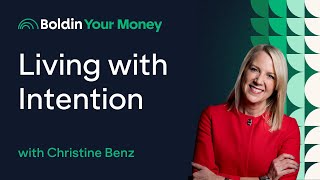
Christine Benz, Morningstar's director of personal finance, discusses how to structure retirement accounts for taxes, manage withdrawals, and plan for long-term care. She covers bucket portfolios, annuities, Social Security timing, and why relationships and purposeful spending matter as much as the numbers.
Chapters
You.
Welcome to Bolden youn Money, the podcast that empowers you to take control of your financial future with practical advice and expert insights. I'm your host, Steve Chen. And today we have a very special guest, Christine Benz. And Christine is the director of personal finance and retirement planning at Morningstar. A senior columnist and co host of the Longview Podcast, she's been named one of the most influential women in finance. Christine brings decades of experience and expertise, and we're thrilled to have her with us and talk through our latest book, how to Retire. And we're going to chat a bit about kind of the essentials of retirement planning. So with that, Christine, welcome to the show.
Steve, thank you so much. It's an honor to be here. I always love talking to you.
I know you were on a few years ago, and it's, you know, I see you out on the, you know, the circuit for conferences and stuff like that. So, yeah, just, you know, as we get started, I thought it'd be great if you could kind of share a bit about, you know, your journey and, like, what originally got you into personal finance and has kind of kept you in there, keeps you going.
Yeah. So circuitous journey, that's for sure, for me. So I was a Russian language and poli sci major in college. I had studied Russian for like 10 years and so thought I would do something in that general vicinity. I still love international affairs, and I'm a student of international relations. But at the time I graduated, it was in the 80s, so kind of the still the Cold War period, and was really kind of striking out in terms of finding jobs. And some of the jobs that I, you know, where maybe they were interested in me, I wasn't that interested. So I stumbled, I moved home to Chicago and stumbled upon Morningstar mainly because my dad had started to be someone who was interested in Morningstar. He had been mainly a stock investor, but was starting to be more interested in mutual funds, but was really finding that the research that he wanted to see on funds, like, how did they actually invest, it wasn't really available back at that time. So I started at Morningstar and I was a copy editor originally, writing or reading the analyst reports, editing the analyst reports, and along the way I was kind of thinking, gosh, I could do this analyst job. So I interviewed for the fund analyst job and did that job quite happily for a good several years, and along the way just learned a ton about investing. Morningstar has always been really great about training liberal arts grads like me in the the finer points of investing. And then I headed up the US Fund research team. But along the way, you know, as we were kind of doing this micro level analysis on mutual funds, I was realizing, well, gosh, there's sure a lot of stuff that we are not addressing in our work here. So we're not talking to people about, well, how do you create a sane asset allocation plan? How do you invest appropriately given your goals? We're focusing on funds and selecting funds, but there's a lot of decision making that precedes the decision about what to invest in. So I went through the certified financial Planner program at that time and I remember I was talking to our now CEO, Kunal Kapoor. He was heading up morningstar.com and I remember he said he was like, I want to hire, you know, like a Suze Orman type person to do personal finance for him. And I remember looking at him and being like, it would kill me if you hired anyone but me to do that job. Because my interests were just much broader at that time. And so that's been a really happy home for me for, gosh, almost a couple of decades. And along the way I've gotten more interested in retirement decumulation, mainly because I just think it's so much more to talk about and think about and there are so many different tentacles of retirement planning. So that has been a key focus for me over the past, I would say 10 or more years.
That's awesome. Yeah. Actually one, one thought, one question for another related question. So we're doing a fair amount. Our users are starting to do more and more with decumulation. But as we do that, and a lot of that's around asset location, right. Getting in the right spots, like what's the right mix of qualified, non qualified Roth and then and how to what order to take things down in. But one thing that's occurred to me is, you know, when people are accumulating very often it's like save and invest. Right? Just do that. But there's also, I think, a growing thinking around like, and what should, and where should I accumulate my assets? And being more intentional about that, do you see people starting to think about that much more actively, like, oh, here's the right mix of, you know, do some in my taxable, do some in my 401k, do some in Roth as they're building wealth?
Yeah, and some of it is preordained, Steve. Like our choice set might be constrained somewhat. So most 401k plans now do have a Roth option, but until recently, many did not and similarly, many people are shut out of making direct Roth IRA contributions. They can get in indirectly. So some of the doors are shut for us. So that I think helps winnow down the choice set a little bit. But yeah, I love the idea of people getting ahead of the decision making a little bit. Because what we see today is that a lot of baby boomers do show up in retirement with the bulk of their assets in traditional tax deferred vehicles. So they've enjoyed all of that great tax deferred compounding over their time horizon. And then they are really kind of in for a shock when they have to begin pulling assets from those accounts. And once those required minimum distributions kick in at age now 73, that can change their tax picture in a hurry. So ideally you would diversify and you'd be thoughtful about it in the accumulation period.
Yeah, yeah. Basically, they essentially logged this as an item for our team, where I was like, yeah, this is, you know, we see the exact same thing. It's all, you know, 401k millionaires. A lot of our, you know, we changed our company name from New Retirement to Bolden, but we attracted a lot of people at retirement. And they have this exact situation which is they, they've done a good job saving, investing for 20 years and great, they have this pile of money, but it's all qualified. And yeah, RMDs kick in and, you know, just like, we help them think about it. Can we reach farther back in time and kind of tell people like, oh, you know, good job, you're saving it some, you know, I think some of the Gen Z's are really, they're getting the message and they're saving investing. Earlier I talked to more young people and they're like, okay, you know, I wanna, I was just talking to a guy that I play soccer with and he was like, yeah, I'm gonna, I'm on track to be, you know, a millionaire by the time I'm 38. And he's like, 30 and he's like, you know, he's a good saver. But people are starting even younger. They're just, they're ramping up. But if you start doing that, then you, you will definitely, depending on what vehicles you're in, you could be facing this problem. So can you look forward and be like, guess what? You've funded enough and qualified or, you know, based on people like you, here's the right mix, right?
Exactly. No, that makes a ton of sense. And you know, in a similar vein, you've got a lot of People who, especially higher income people where by necessity, if they're, if they're heavy savers, most of their assets will be taxable. Right. That they have maxed out those tax sheltered receptacles and they're kind of a drop in the bucket relative to what they're able to save. And for them really being thoughtful about what they put in those taxable accounts to kind of try to reduce that year to year tax drag is the name of the game.
Yeah, we're all going to become kind of tax efficiency experts, maybe. Good problems to be discussing, right? Awesome. Yeah. Well, what was, what was Morningstar like when you first, like when I met Kunal, like he's now CEO, like how big was it back in the day.
You know, so Kunal wasn't there then. I started in 93 and it was growing very, very quickly and fabul stroke of luck for me was grow, you know, growing with a growing company. It. I always feel like I was so lucky to have kind of the best of all worlds and that I was able to be an entrepreneur within the context of, you know, a large company with good health insurance and all that stuff. So it's been a fabulous journey. But yeah, back when I started, it was, it was a pretty small but very quickly growing company.
That's awesome. I mean, it's. Morningstar has obviously done a lot, it's very robust business now, you know, with a lot of different, you know, divisions, I guess, of the business. So, yeah, yeah, it's interesting chatting with folks there. Awesome. So, yeah, like, you know, before we move on, you know, I guess in terms of, like when you look back at your work at Morningstar and you know, you've obviously done a ton, there are there a couple things that you're like the most proud of in terms of the work you've done.
So I think some of the work I've done on bucket portfolios I'm proud of. So I never take ownership of that idea. It was Harold Evensky who put the bug in my ear probably 20 years ago. I was talking to him about retirement decumulation, how he did it with his clients. Harold was a professor of financial planning at Texas Tech and also had a really, still has a very large financial planning practice. And he said he uses this bucket approach where he segments the portfolio, mainly using a cash bucket alongside a long term total return portfolio that he managed. And he made a point to me that I never stopped thinking about, which is that it really works for people behaviorally to know that they have Their cash flow needs set aside in that cash bucket for at least a couple of years. It gives them a lot of peace with the volatility that's inherent in a long term investment portfolio. Knowing that they, you know, that they can still go ahead with their plans even though the market may be volatile at various points in time. And I think that's such a valuable insight. If you can have an investment strategy that doesn't have a huge opportunity cost, but also keeps people in their seats in difficult times. That's kind of what you're going for. Yes, it's sort of inherently suboptimal. You wouldn't have cash on an ongoing basis because it's kind of dead money once, once you factor in inflation. But I think it's a healthy of mental accounting that can provide people with a lot of peace of mind, which is sort of the unheralded allocation in retirement. You know, we talk a lot about these financial allocations we might take and we can quantify the value they might bring to us or take away. But peace of mind is something that I think does not get enough press.
100%. Yeah. When we rename the company, we call it Bolden, you know, your financial competence platform. Because even though it's a big giant calculation modeling engine, people really use it because they want to build confidence. I mean, that's how they sleep well at night is like, just like. I agree with what you're saying about the bucket strategy. It's like, you know, you have a pile of money over here, enough liquidity, so you don't have to worry about it. And then if you understand the rest of your money and the returns and taxes and stuff like that, you're like, okay. They have a much stronger sense of how it's going to work. And so that lets them like, okay, I, I see this money and how it works and like, I see why I have a high probability of it lasting for the rest of my life.
Right. Well, exactly. Yeah. And if you can give people peace of mind in spending in retirement to, to feel like they can spend in line with what they truly can spend, I think that's huge too. So, yeah, confidence building is so important.
Have you seen any reports on. Another thing people talk about is maybe people should buy pensions to guarantee their minimum quality of life. But I do think that the bucket strategy seems to be much more popular with folks in terms of just ways of hedging out this risk. I don't know if you've seen the relative comparison. Is the drag on a portfolio from keeping cash in a bucket greater than the drag on a portfolio of buying an annuity to cover your minimum, like above Social Security. Cover your minimum income requirements.
Yeah, I don't know. I don't know that I've seen anything that has quantified that. But certainly there is a drag from holding cash on an ongoing basis. But it's interesting, Steve, I felt like I was always fending off critics of the bucket approach prior to 2022 and then 2022 came along, both stocks and bonds fell at the same time. And I felt like that shut everyone up about. And now I feel like there are many more bucket enthusiasts in our midst. But certainly I think you could do both. Right. In fact, I think when I think about my own retirement plan, it will probably look something like maximize Social Security, potentially add some type of a very basic vanilla annuity type to help shore up fixed living expenses through those fixed sources of cash flow to basically get those things aligned. And may, I don't know, I haven't run the numbers recently. It may be that Social Security for me and my husband gets us all the way there. But if we have a shortfall, we would look to some sort of an annuity and then we would probably bucket our investment portfolio to supply us with additional cash flow needs. But I think the beauty of lining up as much stable income as you can is that it allows you to be flexible with those portfolio cash flows. If it's not cutting into your day to day existence, if the variability and the portfolio cash flows aren't cutting into your fixed outlays, I think that you're much more willing to put up with them. And I have come to conclude that the dynamic portfolio spending strategies really are the way to go for people, people who are comfortable with a little bit of volatility in their cash flows.
Right. Do you think you'll have. It sounds like you. You're a pretty probably frugal person. Good saver. Do you think you'll have a hard time shifting to become a spender in retirement and like go travel or whatever you want to do with your money?
Definitely. In fact, my husband and I use a financial planner to help us with kind of projects. And that's one thing she's pointed out. She's like, I think you're going to have a hard time spending this in retirement. And so Jamie Hopkins in the book actually gave us an idea which is that you could kind of practice spending prior to retirement. So his example is like, just buy a car with cash, which we'd be inclined to do anyway. But just see how that feels because you do kind of get used to your savings being a one way street, right? It all goes into my investment accounts. Nothing ever comes out. Or that's kind of how we've tried to do it where home remodeling or whatever, we try to pay for it out of the kind of cash flow that we don't like to invade our investment resources. So I do think like getting the training wheels on prior to retirement is a really good thing to think about for people who are getting close.
It feels like, you know, there's always like meetup groups for people that have problems. It's like, oh, Alcoholics Anonymous or like, you know, I need to get out of debt or whatever it is right now. We're going to have some community group groups are like, you need to learn to spend money. You know, do you think that'll become a thing?
Well, part of the issue is the term spending is really, I think people have a lot of negative connotations and they think it means profligacy. Like I think that's part of the issue and my whole thing, ever since I read Mike Piper's book More Than Enough, it's called is lifetime giving is so under discussed that that should be part of the equ. And I think people need to really think through like giving kids a pile of money when they're 55 or in their early 60s or something like that. Their financial fortunes are set by that time when they inherit money from you. So ideally you would do more giving earlier and along the way. And there's something that's terribly enjoyable with that too, right? Getting to see your money help people. And Mike's point in his book More Than Enough is just that it doesn't take a lot. Like it might be helping someone pay off their student loans or helping a child with a home down payment or whatever the case might be. It doesn't have to be. You know, people hear lifetime giving and I think you think that at least I think that sounds like millions of dollars. It doesn't have to be. It can be, you know, an extra $10,000 for someone's home down payment, 100%.
I think this is becoming a. I wonder how it's changing with generations. Like if younger generations are more comfortable. It feels like, you know, I don't know, like some Gen X graduated and I kind of didn't have any expectations of getting any support. I was like, okay, go to college. I got some support in college, but ran up some Debt and It was an RA and like, kind of mostly I graduated 9,000 bucks and paid off in two years or something like that. And, and then I was like, I got a job and I was like making money. And it's been that way for my whole life. And versus my kids, I'm like, I have, you know, a kid out of college, one kid in college, and, you know, the, the kid out of college is paying for himself. But I kind of feel like, you know, I'm up for. And it feels like there's my generation, there's more up for supporting our kids. Like, you kind of, like, you kind of read this as like 20%, I don't know, high percentage of kids, children, adult children will still be back in the house, you know, before they're. But, you know, after they're out of college and maybe, you know, or before, you know, under 25 or something like that. You know, we've definitely seen that with the, you know, Covid and everything else or with.
Definitely.
And I could also see, I get the argument of like, if we had the means, like, oh, yeah, could we be intentional about supporting people and buying a house or whatever. I mean, I think, I mean, you have to balance that against like, do I have enough money to hedge my own future, like not running out of it myself? Make some contract with your kids, like, they're gonna take care of you. I mean, which is what it used to be, right?
Right. No, absolutely. You, you need to make sure that you're on financially sound footing before you can embark on lifetime giving. I mean, that's, that's. Yeah, for sure.
Yeah. But we do see it in our town. We see some, some like their houses getting bought by younger couples. And you're like, how can they afford it? And they're like, they have some wealthy parents that are they. This wealth transfer, the great wealth transfer thing is it's real, but, but it's also super concentrated. You know, I don't know, like, what number have you heard about how much might be transferred between like the boomers and now down to millennials and stuff like that?
I don't know that I've heard a specific figure, but I would agree that it tends to be fairly rarefied in the typical situation. I think, you know, people might inherit some housing wealth from their parents. You know, parents pass away, leaving the house as the main asset. I think that's oftentimes the case in more sort of middle class, upper middle class families for sure.
But like, I've heard like, you know, I remember I think I first saw it with Morgan Housel. He was writing a number like 35 trillion is going to get passed. And now I, I was listening to a podcast with the CEO of Robinhood and he's like, it's going to be 80 to $100 trillion. And we're basically building Robinhood to catch all of the money. They have 20 million, 30 million, you know, millennials on the platform. And they're like, these people are going to inherit all the money and we're gonna get it onto the Robinhood platform. That's part of their strategy. And they want to build out wealth, tools and stuff like that. Interesting. I do think it'll be concentrated. I mean, what everyone forgets is, or, I don't know, you know, it's just there's so much wealth concentration in this country that it's going to be not, it'll be a lot of, potentially a lot of money, but to not a huge portion of society.
Yeah, no, absolutely. I mean, from a practical standpoint, in a lot of households, a lot of wealth will be gobbled up by long term care costs. As more households are foregoing long term care insurance, they're on their own. And, you know, the longer someone lives, the more likely they are to experience cognitive decline. Those two things go hand in hand. So I think for a lot of families, it's, it's not a happy thought, but a lot of wealth will go out the door in terms of, of long term care expenses.
Yeah, no, it's, we're all going to become the sandwich generation. It's, you know, aging parents. I mean, you know, they're, and kids growing up and maybe needing some support. So yeah, let's shift gears. I want to dive into the book. So, you know, and I'm sure you have some related stories with us, but like, what inspired you to write your new book, how to Retire?
So I had been talking about doing a book for a while. I thought it would probably be a retirement bucket portfolio book. And I may still work on a book along those lines. But I had been talking to Harriman House, the publisher, about doing a book. And Craig Pierce really came up with this idea because I do my own podcast called the Longview, which is an interview style format. And I had had some really great interviews for the pod. And even though the book did not arise from those interviews specifically, I just met some fabulous people in the retirement planning space who I wanted to speak to and harness their wisdom. And I also knew that to the extent that I worked on a Retirement book. I wanted it to be very holistic and I wanted it to cover quality of life considerations like purpose and identity and relationships, things where I personally do not have a lot of knowledge. And so I wanted to be able to have a holistic book. So the only way to do that really was to reach out to some external experts. So each of the chapters is a lesson in how to do some aspect of retirement, whether financial or non financial. And super happy with how it came out because it is really broad, I think. And I also love that it doesn't just give one perspective about how to do retirement, that there, there are people who have varying perspectives on topics like annuities and how long to keep working and, you know, how to construct a portfolio. Because there isn't a single way to do retirement and a lot of it has to do with kind of how you're geared, what makes sense to you. And so I think key is to kind of understand yourself and then find the right combination of strategies that make sense for you.
That's awesome. Were there any like super big ahas? I mean, you've been in the space for a long time, but you interviewed a lot of like smart people, so anything that jumped out at you?
So I loved the conversation with John Guyton. He's a financial planner in Minneapolis where he has worked with clients on their retirement plans. And so he has, you know, hands on experience with this. But he's also a researcher and he made the point in the book that he's a big fan of varying your withdrawal withdrawals once you're retired, varying them with how your portfolio has performed. So like taking less when the market is down, taking more when the market is up. And he made the point that it wasn't a moment for me where he said, you know, it's a rare behavioral instinct that actually aligns with what's good for you financially. Whereas usually, you know, the behavioral things that feel good are terrible financially, like spending more instead of saving or selling yourself out when the market's down, when you should probably be buying more. Well, here, like taking your foot off the brakes in terms of your withdrawals, being able to spend a little bit more when the market's up, well, that's actually pretty okay to do for your portfolio. And the converse is also true. So I thought that was a really great way to think about retirement spending and potentially embrace a dynamic spending strategy.
Got it. When you were writing the book, were you going back to your interviews that you'd done or were you meeting and kind of Getting new interviews and any, any particular, like interviews that jumped out at you?
Yeah, so they're, they were all new recorded for the book and then really put through the editing process to put it into a form that someone would want to read because that's as articulate as each of the subject matter experts. You see a raw transcript. It needs some work to be brought into a readable form. So each of the conversations was recorded just for the book. And the goal of that really was to kind of keep each of the chapters to a lesson rather than covering everything that a given subject matter expert knows about. In terms of kind of favorite interviews. I often point to Laura Carstensen as one of my favorites. And I'm sure you know Laura Steve from your work, but she talked about relationships in retirement and just how important relationships are throughout our lives, but how our relationship network tends to change a little bit as we age. So I thought that overall it was just like a very reassuring and human chapter from Laura. So that stands out as one of my favorites.
Yeah, I mean, loneliness, like there's this loneliness epidemic in our country. Not, you know, I think it started with older folks, but then it's, it's also now with like younger males. And you know, it, it's, it's a very real thing. I think the surgeon general just came out and was like, hey, we should all get together and have potluck dinners. Which is a very good idea. But yeah. Does she talk about kind of being super intentional about investing in, you know, in your social network and. Yeah. And your friends and so forth and family?
She does. And she talks about the value of diversifying that friendship network too, that there will be sad things that happen in our lives, whether someone, you know, gets sick and dies or moves away. And those incidences of that will probably pick up as we age. So ideally we would try to be intentional about putting ourselves in situations where we're meeting people of different age bands. And that can happen through a lot of different scenarios, whether continuing to work in some fashion or doing volunteer work or through family or church or whatever. Just really being intentional about getting yourself in situations where you're staying exposed to people of different age bands. She talks about the value of that and, you know, trying to pick up friends along the way. That, that, that is something to, to be intentional about. And to me, it really suggests that people who are living in some sort of a situation where they're mainly among same aged people need to make a point to get out community that, you know, like the continuing care Retirement communities have gotten super popular where everyone's sort of age segregated. That's fine. And, and that might be a super lovely social network for you, but you do need to make sure that you are getting out of there and meeting people at different age levels.
Right? Yeah, I think being. Yeah, super intentional. But yeah, work provides that. I think as you leave work and that it can get trickier and the nature of work and remote work is also changing this stuff since I see more people that are the gig worker or the independent consultant and I'm just sitting here in my garage. You can live and work anywhere. Digital nomad. Great. But maybe you're not teaming up with people and you're a little bit more isolated just from the ways we work and how that's changing.
Definitely. And for people in that situation and it is a growing number of us. I'm sitting here at my home and I realized that, you know, as I move to be a fully remote worker, even though I'm in the office once in a while, I need to shore up my plans to, you know, I have a walking buddy in my neighborhood, but we need to go more than once a week now because I need, or, you know, I need to find other walking buddies or whatever. The case might be that since I am having that less regular face to face contact with people, I need to figure out where I go for it instead of.
Right. Yeah, yeah. Our company's been fully remote and now we're like, as we get bigger, we're like, oh, we totally see the value of like being in person. And it's such a. We had a bunch of people met up in New York City last week or the other week and you know, it just changes the energy. You know, we're used to jumping on Zoom, but I, I think the thing about Zoom is that it's, you know, it's very transactional. Like you kind of show up, we got to get work done, you know, and then you can like, I don't know, like I have these days where like, like I see people all day long from all over the world because I'm in. But I'm in like 25 minute chunks or whatever, you know, and you don't really get the time to just step back and get to know people better, what their, what's happened in their lives and, and stuff because we're bouncing around.
So yeah, my, my in office days are my favorite days actually. Even as much as I push to be full time remote, I really do love being in the office. But the funny Thing is, I make no plans to get any work done on those days. Like no, like at my computer type because I know it's not going to happen. I'm just going to be really enjoying being with my colleagues and hearing what's up with them. And that's just fine because I'm not doing it every day.
That's pretty cool. So, you know, keeping going on this kind of topic around like how our lives are changing, you know, as we live longer, you know, I've been, I was doing a little reading, but we have these stages of life, right? Kind of be like, hey, you're born, you're a toddler, whatever your kid, then you know, whatever your student, then you're a young adult adult. Da, da, da. Right. It feels like. And I don't know if you. Did you dive into this at all? Like we're getting these kind of different stages or maybe more stages of life. Is that something that, that you touch on in your work at all?
Well, absolutely. So we talk about phasing into retirement that I'm super happy to see that the board, the border between working and retirement is becoming way more porous, that more people are phasing into retirement gradually, either, you know, sticking with some version of the thing that they were doing before they retired, but doing it in kind of a skinny down way, or just taking some of the favorite tasks that they did while they were working and continuing to do those longer. So that's one change I think that has taken place that I think over the past 20 or so years. It's very rare that, not very rare, but it's increasingly rare, especially in the realm of knowledge workers where it is a hard stop for people. So I think that's one change. And then I've come to think of retirement as basically three distinct phases. And that's partly aligns with some of the research that's been done about how people spend in retirement that we see this go go period in the early years of retirement, followed by slow go, followed by no go. And I think that actually mirrors some of the life changes that people are experiencing as well. So the early years of retirement often are the very healthy, busy, pent up demand years of retirement transitioning into, you know, maybe some health issues have cropped up and you're, if you're traveling, you're probably staying a little bit closer to home or maybe mainly going to visit kids and grandkids and then sort of the late life phase, which tends to be marked by more health issues, potentially some cognitive decline So I think there are different stages of retirement. It's definitely not this single block of time, for sure.
Do you see people being very intentional and planning for that too, where they're investing their time and saying, okay, I'm willing to spend more money because I know that I have this human capital and health span that may not last forever. So I want to get out there.
More, you know, not as much as I would like. Steve. I think that it's kind of the human condition that we tend to think, you know, the body that we're in today, the mind that we're in today, that it will ever be thus. So I think we tend to not want to give much thought to that last stage, and it's easy to see why a lot of the stuff I just talked about is not super happy. So I wish that people would give them a bit more. Give themselves a bit more permission to spend in those early, healthy years of retirement. I think it's. It's important, especially for people with tighter financial plans where, you know, the early years of retirement may entail real sacrifices if they don't assume that their spending might trail down a little bit as they age.
Yeah. I have a friend that he's, you know, he's older than I am, but. And so he's in his 60s and, you know, he's super healthy and his family has pretty good longevity. But he saw his father, you know, who was super productive, eventually get dementia and, like, saw the impact. And so he gives himself a budget of, like, he's like, I think I have 10 more years of high quality health span. He probably has more, hopefully, but. And so he's being really intentional about, like, spending money, you know, which he's not this way. You know, he's having to push himself. He's like, okay, well, I've worked hard. I've got this window. I'm gonna have a budget for travel, and I'm gonna use, like. And he, like, because he's a planner, he's like, in, like, you know, budgeted it out, and he's like, I'm gonna do this, and I'm watching him do it, and it's great. I mean, he's like, you know, I mean, he's done pretty well for himself, and so he can travel all over the world and go to these incredible places. And now he's bringing his kids and, like, you know, I think it's. It's good, but it was a thing where he had to push himself and be thoughtful about it. I think look forward in time and say, yeah, then don't do what you're saying, which is don't count that like it's going to be the same in 10 years or whatever.
Right, right. John Guyton makes the point in the book that with something like travel, he gives his clients a travel pot. He call, he was like, you don't want to 4% your travel budget because you are not going to spend the same amount throughout retirement on travel. He said he gives his clients a travel pot and his advice is, I hope you spend this in the first 10 to 10 to 15 years. How you do it is up to you. But yeah, it's not something you want that you necessarily need to plan on spending throughout your whole retirement time horizon. Maybe you'll still feel like, I mean, Harold Ovensky I just referenced, whenever I talk to him via email, he's like in the Baltic or you know, wherever he is, living it up. And I'm not sure exactly how old he is, but he is not a new retiree, let's just put it that way. And you know, he's, he's still an avid traveler and I love to see it.
That's awesome. Yeah. So I'm curious. I know I've been watching you on Twitter and like, and social media. Like it seems like your book's selling pretty well. Congratulations. Has it exceeded your expectations?
Well, you know, I have heard from so many authors, like unless you're Morgan Housel or something, you should have muted expectations about how any book would sell. So I didn't necessarily feel like it would be a blockbuster. But I have been happily surprised with its sales. I think the publisher has been very happy. I was up there with like James Clear and Ina one day early on after the book's publication. But the funny thing was I had been at this, this investment conference that had invited me to come sign some books and they had purchased a hundred books for me to come sign. So I'm sitting there at my table and it just, it was kind of a traders type financial show. And so people, people were like coming up to me and saying, I don't know who you are, but you look lonely here because I'm just sitting there and I had free books to give away. I was willing to sign them and it was literally the same day, you know, that the book was, was performing super well on Amazon, I think after a TV interview that I had done was on. So it was kind of humbling. But other people seemed to be enjoying the book even though the people at that, at that Trader show did not seem to find much interesting into it. I remember saying I was like, free retirement book. And they're like, I don't read or I'm already retired. I was like, okay, do you have someone you could give it to? It was interesting.
Well, I saw Big Line went future proof when you were there, so. I know, I know.
That was awesome.
Yeah. And Morgan Housel was in the. I think he, I was watching you, and then he came and sat in front of me, and I was like, you know, yeah, Morgan Housel. So, I mean, I, you know, I, I remember, like, I think everybody but him expected his book to kill it. And then it killed it. And then I think it's, he's done so far. Every time I see him, it's like, yeah, it's another million. I don't know. It was like 3 million. I don't know. Now it's even way more. I mean, it might be six. I don't know. It's incredible. That's what's happening with him. But. And, like, yeah, he's flying all over the world as a talking head, so. All right, good. So one more question about kind of the aging thing or the kind of longevity thing, Gray divorce and relationships. Is that, like, something that is. You're seeing a lot in your work and impacting people's lives in a big way?
I wish we had a chapter about it in the book, Steve. It's. I just been hearing more and more about it, these staggering statistics about how it's accelerating, but it's not something that I've been writing about. I mean, one thing we know is that divorce can be a financial killer. And so I'm sure that's true later in life, too, because you just have less time to recover from any financial shocks. And I can definitely appreciate the financial impact, but I haven't really worked on that topic. It's incredibly sobering.
I'd be curious. I just read an article about it. I mean, I've seen it, been reading up on it, but, like, in the New York Times, and it was talking about how it just had a couple stories about people that were late 60s, 70, you know, been partnered up for 20, 30 years. Right. And they're like, and now I'm getting divorced. And, you know, it seems like a generous, somewhat generational. I also wonder, I'm curious if it's like, like, I, I. My understanding is that most divorces are driven by women. Women are like, women choose who they want to marry. And women, I guess maybe this might not Maybe, maybe I have it wrong, so I'm not gonna. We can fact check ourselves later. But I wonder if that's. If true, if that's tied to women having more wealth, like building wealth and then. And feeling, having more agency and saying, you know what? I'm gonna exit this relationship because I don't think it's good. I don't, I don't, I don't know.
But yeah, possibly. So I was talking to Michael Finca, and he's in the book too, but I don't think this part is in the book. But I remember him making the observation that we should all use the COVID experience as a lens to understand how it will feel to be retired with our partner at home. And many of us were continuing to work during COVID but we were, at least in that first year anyway, at home with our spouses. And his point was, did you like that? Did you not like, did you go crazy during that period? If so, you may want to make some adjustments before retirement before you are, you know, really there all the time with, with your partner. So I think that that's kind of a good reality check for people who are getting close and kind of thinking about the lifestyle adjustments that they'll want to make. And I do think it's an astute observation as someone who's been married for more than 30 years. Life is just great when you both have your own things and then you can get together and talk about your respective days. I think Fritz Gilbert in the book calls it like me time, she time, we time, or something like that. But I think that's a valuable concept that you just have more to say to each other if you each have your separate pursuits. And I would imagine that that's true in retirement too.
100% man. I feel like we spent this whole time talking about that. The non, mostly the not well, largely the non financial parts. Any like from your book, any kind of top like three to five financial things that jump out at you of like or best practices people should consider as they're approaching and then transitioning into retirement or things to watch out for.
So from a financial standpoint, one would be keeping it simple, trying to reduce the number of moving parts in the portfolio. Retirement does really present a fabulous opportunity to try to reduce the number of investment accounts and the holdings within them. And the reason is, the reason to consider doing that is that you probably have other things that you want to do in retirement. And then we've talked about the incidence of cognitive decline, how that I think can sort of really be a negative. I mean obviously it's negative, but if you're, if your portfolio is too complicated that those two things can run together. So that is one. We talked about the value of maximizing non portfolio income sources and using those hand in hand with ideally kind of a dynamic spending strategy for retirement and then long term care. Just creating a plan for long term care. And Carolyn McClanahan in the book addresses some of the key things to think about when crafting your own long term care plan and deciding whether you will self fund or be covered by some type of insurance product. And she weighs in on the pros and cons of the various insurance products. And then for people who have very limited resources, then they would be reliant on government resources. So just kind of deciding where you fall on that spectrum and building a plan from there. Those would be a few of the key things that I think people should think about. Because one of the reasons people have so much angst about retirement spending is that they're worried they'll have this balloon pan at the end of their lives of very high long term care outlays.
Yeah. Which is a fair risk. I mean it's a real risk, but it is. Yeah. How do you hedge it? Do you care, do you do long term, do you have long term care insurance for yourself or not?
Don't. We're still contemplating whether we should potentially we might do one of the hybrid type lifelong term care policies. If, if we do not do that, we would probably segregate a pool of assets from our spendable assets just to sort of hive it off from the rest of our portfolio. We would probably invest with a pretty long term mindset with the assumption that those would probably be the costs that we would incur toward the end of our lives. And you can use statistics on the cost of care and the typical duration of care to arrive at the size of such a fund. So I would encourage people who are going the self funding route to kind of think about creating a segregated long term care fund. Fund.
Yeah, I think it's good that there's new like the hybrid stuff I think is an interesting idea. And then you know, you kind of at least know that there's going to be some benefit versus if you don't need long term care or you know, it gets, it gets trickier and. Or deferred annuity. I think that's interesting. Or yeah. Self funding. But yeah. Being intentional. Super, super smart. How about like security? I feel like in one thing that we should talk about more. But isn't is like, I mean, a cognitive design decline is real. That's a risk. Like, like that's probably one of the biggest risks is that someone takes in being taken advantage of someone, you know, steals your money. And same thing with securities related to that. Right. Like, you know, there is wealth concentration. You know, there are people that target folks that have money and like, you know, try to defraud them. Is that becoming a bigger topic in your, in your world?
Yeah. We had a conversation with person who is the head of, of fraud prevention at aarp and it's reached epidemic levels, the level of fraud among older adults. And I remember asking her, so where are these schemes concentrated? Like in what sort of asset classes? Her response was crypto. Crypto, crypto. So older adults, I think, need to be hyper vigilant. And I always say, you know, I'm a boglehead, part of the bogleheads community. A lot of these are DIY type investors who are kind of allergic to the idea of getting any financial advice or paying for financial advice, I should say. And if that's your plan, just make sure that you have some trusted adult child or some sort of, you know, maybe your spouse who you can engage in these matters. You need a sounding board for this stuff. You need that person to be like, that doesn't sound right. I mean, just this past weekend, Jason Zweig had a great, great article in the Journal about some very faux income product delivered to seniors. And these people had basically liquidated their investment accounts. The wife and this one couple he profiled was not the investment person in the couple, but she was the one saying, this doesn't really add up to me. And unfortunately her husband didn't listen. But we all need someone to be kind of the devil's advocate kit for us. Yeah. And if it's not a paid financial advisor, you need somebody else. You can't be diying it into your 80s, in my opinion.
Yeah, I think that's a very real risk. And, and it goes to estate planning and not just the money, but even the caregiving decisions. And you know, it's almost like one thought I've had is like you almost need like a board, a board of advisors or board of directors for your estate because you don't necessarily want one person. You, you know, it's like as, especially if you have more money, some kind of. I mean, it's this tension between. People want to control their money, but as they get older, they might need some help along the way. And how do you Set this up in a way that keeps people aligned and has good governance. It's like in companies, you have governance. Right. And that, and it helps, you know, like, you don't have a rogue CEO because you have a board, and the board is different people, and they're taking a look at you and, you know, know, you know, I mean, if you, if you're lucky enough to have 5 million bucks or 10 million, whatever, it's like, you know, you know, you want to make sure once money's protected, managed properly, and then, you know, doesn't get scammed away at the end or something. So.
Right. It's, it's an interesting model and arguably it's a good spot for some sort of professional fiduciary. If you don't have the, that, you know, good internal team within your family. A lot of people fall back on adult children, but they're not necessarily the best situated to make these decisions. And yes, the professional fiduciary is going to entail some cost that might not be there by using a family member, but it may end up being worth it in the long run.
Yeah. All right, awesome. Well, look, Christine, this was great. Any last thoughts you want to add for our audience? As you know, before I kind of read us out.
Well, so one thing, Steve, I would say is that look for role models as you think about retirement and aging, we all have examples. In fact, as I've told people, oh, I just finished this book called how to Retire. Everyone's like, oh, you need to talk to so and so. This guy who lives in my building who is so happy, who does, blah, blah, blah. You know, we've all got examples around us of older adults who have made the most of this time in their lives and have lived longer, happier, more successful lives. And so look for those examples. And we also all have negative examples, right? The person who basically retreated to their couch after retirement because they were so burned out and really did not get themselves out there to try new things. And a lot of those situations end with better, with worse health outcomes. So look for good and bad role models and use those to influence how you want to be later in life. I think ultimately that's probably the best way to think about your own retirement plan.
That's awesome. It's a great, it's a great point. And yeah, no, I, I think like it. I, I, I really like that. And looking, you know, up and down kind of the age chain, like, hey, people ahead of you, people behind you, what are they doing? Stay engaged, you know, and encourage other generations to stay engaged as well.
Yeah.
In this journey.
Yeah. And especially, you know, as we age, we invariably have experiences with our parents or other loved ones about how they handled things. And sometimes, you know, we make it through our parents last years and passing and we just kind of put that away and don't think about it. Well, use it. Use it to do better with your own, with your own later in life, period. Use it to, you know, to make better decisions that will, will make your loved ones happier.
Awesome. Great. All right. Well, Christine, thanks so much for coming on and sharing your story and thoughts and like, insights on money but also life. I mean, I thought this, you know, the dialogue about helping about some of the lessons about how to live life and best practices are great and definitely for folks listening, check out and we'll link to this how to retire 20 lessons for a Happy, Successful and Wealthy Retirement. And you know, so Christine, it is great to see you and hopefully I'll see you again in person soon and we can hang out. I got to get out to Chicago, but, you know, appreciate your time and, you know, coming on the show.
Steve, sounds good. I always love talking to you. It's an honor. Thank you so much for having me on.
More from Steve

When Should You Claim Social Security? #personalfinance #financialplanning #socialsecurity

Social Security & Medicare: What's Changing and What It Means for You with Mark Miller (ep. 109)





Retirement Savings Waterfall: Where Your Next $$$ Should Go (401k, HSA, IRA, Brokerage)



