Retirement Ready Confidence, Planning, and Purpose with Mike Richardson (ep.87)
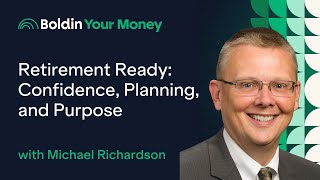
Mike Richardson left his job at Nationwide at 55 after 18 years, with pensions and Social Security covering his must-spend costs and a three-year cash buffer for discretionary needs. He prepared not just financially but by volunteering with AARP, writing a leadership book, and intentionally designing time for travel and relationships to give retirement real purpose.
Questions this video answers
56 years old (says he will be 57 this year).
He retired in June of 2023.
About three years (plus a small additional cushion).
Chapters
You. So welcome to the Bolden your Money podcast, where we share real stories and practical strategies for building financial confidence and achieving your goals. Today, I'm excited to introduce Mike Richardson, the former SVP and CTO of Nationwide, who made the bold decision to retire at 55 and has since joined us at Bolden part time as a financial coach, which we're going to talk about. And in this episode, Mike's going to share kind of how he built his plan and built the confidence to take the step to retire and how he's investing his time in retirement and some of the strategies that he's pursuing and using to stay confident. And then for all of us listening, you know, hopefully this is helpful as you kind of think about your own lives. And so with that, Mike, welcome to our show. Appreciate your time here.
Okay, thank you for having me. I appreciate it.
Yeah, no, it's great. So, you know, to get started, we kind of like to let our guests introduce themselves. And could you kind of give us a quick few minutes synopsis of kind of how you got to where you are today, you know, over the course of your life?
Yeah, absolutely. So I'll start with just a little bit of personal background because that'll be relevant for the conversation that we have going forward here as well. So I am 56 years old. I will be 57 this year. I'm married to a wonderful lady named Jennifer. We have five children. All of them are adults. There's a couple of them that are still working their way through college. Three of the kids are from my first marriage and two from Jen's. My first wife passed away in her early 40s from cancer back when the kids were pretty young. We live in Ohio, and actually here in Columbus, I went to Michigan. Jen's Ohio. Given the Ohio state thing that just happened, I call it the thing that happened. It's been quite energetic. Medic in the house for her. But anyways, the. I was born and raised in Ohio, which actually has shaped part of the way that I think about our finances as well. And what I mean by that is that I grew up in Toledo in the mid-70s, and if you know anything about that area, it's effectively a suburb of Detroit. And particularly at that time, the Toledo economy went as the Detroit economy went, which went as the auto industry went. And my stepfather owned an auto parts store at the time. So there were a lot of boom years and a lot of busters that we saw. And part of my financial philosophy that I grew into over the years was rooted into Be prepared for the bus when they happened, because for us, they were always inevitable from a career perspective. I graduated from Miami of Ohio back in 1990 with a degree in economics and a minor in Spanish. And I had a job all lined up when the economy turned. And all of a sudden my offer was rescinded and I had no job. So I was telling my story of woe to one of my friends from economics and she said to me, I'm going to work for Anderson Consulting. I didn't even know who they were. I said, who are they? He said to me, literally, she says, they do computer stuff.
Yeah.
And I said, I know nothing about computers and you know even less. The only computer class we ever took was Lotus 1, 2, 3. Literally. And she said, well, I have a job and you don't. And she was right. So I called down to the Cincinnati office of Anderson Consulting and asked if they were still interviewing. And the lady said, we have one last position if you want to drive down, but we're not doing campus interviews anymore. So I rode down to Cincinnati, I met with the HR lady, I met with one of the partners, and literally halfway through the conversation, the guy waves his hand at me and says, well, you seem smart enough. That's how my career in technology began. Right, Let me talk about your random incidents. Right. So I went to work for Anderson, spent about four years with them. I left to get my graduate degree from the University of Michigan, spent two years getting my mba, did an internship in between over at Kellogg's at their corporate tax department, then decided, coming out of graduate school to go to work for Coopers and Lybrand and Audit. I did that for one year. I was a horrible auditor, did not like it. So I decided I needed to head out. So I went back to. Because I like the dynamism of it. Y I joined IBM, held a number of positions over the seven years that I was with them, ultimately making associate principal at the time, and then left IBM to go to work for Nationwide, where I spent 18 years. And I led a number of organizations. You know, ultimately moved into some CIO positions, including for enterprise applications, the personal lines business, the financial services business, and then my last position was as the chief technology officer for an enterprise organization where I held organizations like our enterprise Data Office, Enterprise technology strategy, and other enterprise level organizations, upon which I retired in June of 2023.
Nice. And here you are today.
Here I am today.
By the way, it's. It's great hearing your story. So my grant on my mom's side My grandparents were from Toledo, Ohio, and so we used to go there. And yeah, my grandfather was an engineer. He was a civil engineer. And anyway, he lived all over the place. But it's kind of interesting. I do remember visit. I didn't at the time, I didn't appreciate that it was like part of Detroit. But I mean, it was a good town. And it's kind of cool that we have that overlap. And also I think it's interesting how people's family histories inform how they behave. Right. So people that were born like during the Depression or afterwards and experienced that, they're way more or lived through it. And they are super frugal. And I think the same thing, like the millennials, I think a lot of them had experienced kind of a 2008 kind of drawdown. And so that formed like their experience, but also their earning power. And it affects kind of how you live your life to some degree.
It leaves a mark on the way that you think about things and what you prepare for and what you don't. I absolutely agree with you.
Yeah. Like, you know, growing up in Rochester, your experience with the auto industry was our experience with Kodak, where Kodak blew itself up after being around for 130 years or something and owning imaging, but confusing that with being a chemical, we're like, instead of thinking, hey, we're an imaging company and digital imaging is here, they were like, we're a chemical company. We make a lot of money selling chemicals. Let's keep selling chemicals. They actually had the patents for all of the digital imaging stuff and could have pivoted, but unfortunately, you know, the, the innovators, where they couldn't get away from how they viewed themselves and ended up, you know. Oh, yeah, yeah.
How you consider your business and how you think about. Well, you know, that for your business. Right, right. You could be too broad, you could be too narrow. They both have risks to them.
Yeah, 100%. So I'm curious why. I mean, you know, retiring it. I think you retired at 55. Right. So, like, that feels pretty young, you know, why did you take that decision when you're kind of probably at the peak even or in the middle of. In the peak of your earning years.
Yeah, There, there were really two considerations, I guess. The first, and this happens for many people. You know, I already spoke to, you know, Amy's passing so early. My dad passed away in 2022. So that gets you thinking, you know, how much time do I have left? And, you know, we all go through that conversation with ourselves and that just got me to thinking, you know, hey, how much time do I have left? Do I have that much more related to technology that I want to do? And the way that I've described it to others is my answer was no, it's time for me to think new thoughts and do new things. And that's exactly what I'm doing, partly as a coach with Bolden at this point, partly as I'll speak to later as a, an AARP tax aid, you know, just doing things that are different than what I had done for so many years. So between considering my own longevity and what might be or what might not be, plus that sense that, you know, I've done what I wanted to do in technology and I'd like to do something different.
Yeah. Was it difficult to walk away? I mean, you're at like, you have an influential job, a lot of. And there's a whole social aspect. Right. And I, you know, we do some work with Nationwide too, and it has a strong, good culture and community. Is that, was that tough to leave behind?
Yeah, somewhat. The reason I say somewhat is because, you know, that culture, you make a lot of friends, so it's a very friendly culture and I've had a lot of friends. Now, has it really impacted me one way or the other? Not so much because I do stay in touch with many people and, you know, from Nationwide and I have other connections that make up for the gap, I guess, that I had for so many hours for every day over so many years. So I was worried about it, but it hasn't played out to where I feel levels of loneliness or anything like that. But I will tell you, it is a go forward concern. Right. For all of us. You know, it's easy to say no, I'm still good 18 months into it.
Yeah. Right.
15 years can be quite different. So. So I think that's part of why you have to be purposeful about the relationship side of things. And I'm trying to do that by maintaining some of the relationships with nationwiders and others.
Yeah. When you think about it like, so you did retire to something. Right. You're doing the AARP tax stuff, you're doing some work with coaching. I know you're writing a book and you've got other stuff and you've got your leadership stuff. Do you think about, do you chunk it up into blocks? Like, hey, for the next five years it's going to be like this and then I'm going to do that, or like, how do you, how do you think about your Time I have chunked.
It into the first approximate five years. I have nothing beyond that because I want to do different things. Right. I don't know how long, you know, I'll do any of these individual items that I'm doing right now, but I know I want to do them for a little bit. I'm enjoying it, but I like the idea of the freedom of saying it's now time for me to do some other type of volunteering that I would enjoy. You know, I look back, even all the way back in high school, I volunteered and was orderlies been pushed. Right. The patients around to the different rooms that they needed to go to. I'm like, I could do that again, you know, other than picking up the illnesses, which would be so great at this point in life. But even that, you know, it felt very useful and helpful. Just part of what I'm looking for in my retirement. So I'll continue to do those things, but I expect them to evolve.
Yeah, it's interesting. You go from this play, this world of, you know, nationwide, you do work that could influence hundreds of thousands or millions of people. And, you know, now you're kind of. Well, I guess through the book writing you can do that, but like individual service, when you're actually helping me and person, you can like see and hear them and be in contact with them.
It's. It's.
It's pretty different. And I guess that's intentional.
Yeah, I. Is different, but I enjoy it very much.
All right, well, I want to chat a little bit more about kind of your. How you approached it. I mean, you're. You're obviously technical and thoughtful and quantitative. You know, as you were thinking about whether to retire and when and, you know, just how to get ready. Like, how did you approach that problem and how far in advance did you think about it?
So I am a planner. I am a preparer. Jen is as well. Right. So our, our natural approach to things is to plan them out, to try to consider what might happen in the future, good and bad. Right. And to be thoughtful about it. But the confidence to actually retire. I think for most people, right. It has two components to it. You've got the financial confidence component and then non financial component for us and the financial component. There's confidence for multiple reasons. The first is, is that Jen is still working. She works for Discover. She doesn't have to. She could stop at any point if she wanted to. But she's enjoying her work. She likes the culture, she likes the people, and she'll consider each Year. Whether she wants to continue, you know, progressing and doing the work that she's doing or when it's her time to think new thoughts and do new things just hasn't gotten there for her yet. So the fact that she's working gave a level of confidence, although it's not the source of the confidence. We were lucky enough to have pensions with nationwide, so that gives a level of confidence. Social Security, I still believe there'll be a good level of Social Security there. And even though we won't take our pensions until we're 65, she's a couple years younger than I am. The pensions and Social Security will still cover the majority of what we need for our must spend dollars.
Right.
Even with inflation, you know, and no COLA side of that though, it'll still cover quite a bit. So knowing that we have those two legs of the stool, knowing our numbers, we know what we spend every month and track to that and knowing our lifestyle, forever and ever we have lived below our means. That was one of the things that I learned growing up. One of the things that she learned growing up. Below your means. Save that difference.
Yeah.
So knowing your numbers, whether you use Quicken or spreadsheets.
Yeah.
Certainly get to the bolden planner if you want the accurate view of taxes and inflation that most people don't account for within their spreadsheets and so forth. But know your lifestyle and you can build up, you know, some confidence there. And I guess the last financial component was that we had all the buckets covered, meaning we had the kids school covered. Felt like we've got good contributions to HSAs, the emergency fund is covered. So all of the basics gave us that confidence which from a financial perspective. We talked about this in a minute if you want, you know, led to the. How do you cover all of your, like to spend the other dollars? Yeah.
And how do you. Yeah. So you, your, your kind of must spend is covered by guaranteed income. Jen's working so there's some income there. Maybe it doesn't sound like are you drawing down any of your savings right now to bridge yourself or are you just able to live on one income?
A little bit of drawdown for certain things like when we take, you know, a vacation with the family or that type of thing, but for the most part we're able to live off of the one salary, you know, we've been saving. And I'll talk about the house that we're building in just a bit.
Yeah.
You know, but trying to save and spend for that more so than for Other things. But yeah, that's the financial component. If I could hit just one other thing, you know, to the non financial piece of confidence goes a little bit to where you started, Steve, which is, you know, hey, how you maintain those relationships and you're with a lot of people all day long and then there's kind of nobody at work. And you know, it is a very emotional decision as people that have done it know.
Yeah.
And you know, it's not just about those dollars, but you think about was very busy for a lot of years. What am I going to do? And you said it earlier, if you're retiring to something and not just to go do another set of activities, but something that gives you purpose, then I think that bridge is a lot easier than if you're retiring to go sit on the couch, perhaps because you're just done.
Yeah, right. Yeah. Do you have friends that have retired? Are you ahead of your friends?
There are a couple. I'm a head of a number. I have a couple that are older. Jen actually calls us the retirement club. You know, we'll make the random trip up to the NFL hall of Fame or go bowling and do lunches or beers or whatever.
Yeah.
So yeah, there's a small contingent, a couple more that are on their way to retirement pretty soon that'll expand that.
And are those folks pretty intentional like you? They're thinking about. Are they thinking about the same way you are or are they kind of like are some of them are just retiring, chilling out?
I would say it's actually about a 50, 50 split. So yeah, there, there are some that are very much. No, I'm just done and I have enough hobbies. Yeah, you know, you play pickleball all day long or whatever it is that they're going to do. As we have our conversations, I'm always like, talk to me in five years and we'll see. You know, some of these are people that have had very high level positions on the go 24 7. You know, just always something happening. I'll wait to see how they engage their minds as well as their hobbies. Yeah.
Back to your household. How does Jen decide every year? Like, it's just. Is it just like I'm satisfied with work or is there some other. Does she have like a set of criteria she's thinking about?
If she has a particular set? I'm not aware of it. The conversation tends to be more along the lines of I'm happy, I enjoy what I'm doing. You know, with the capital one purchase of Discover, there's a lot to very and she's in technology, so a lot of very interesting technology work that needs to occur. She's a wonderful leader. So she has, you know, the relationships and the approaches with her team members and growing them while she works with great people who are growing her. So, yeah, again, I don't, I don't know that she has specific criteria as much as just when she's ready to say I want to do something different.
She'Ll call it and any. Did it change the dynamic in your household, having one person retired and one person working?
What you trying to say, Steve? Am I hard to get along with?
I'm just curious.
How do I need to read into your question?
I'm just curious. I'm.
No, I don't. No, it's actually because of the other things that I'm doing. And we've even said had I still been working, you know, the new build of the house that we're doing would have been infinitely harder for the number of times that I've had to run over there and meet with the builder or do something real time that I couldn't have done had I still been working.
Yeah.
But no, they're, they're, I have enough that's keeping me going during the day that it keeps our stories fresh for one another. Right. Where you still get to talk about your day because there's enough variety. Yes. We haven't hit that stage yet.
Got it. Can we, can we zip back to the how you're planning to do income and you're decumulating a bit right now from your assets. But like just for our listeners, like how you're investing at your age and kind of where you're going. Can you give us a little color on how you think about that?
Yeah, absolutely. So first, just a moment on how we approached it leading up to the retirement. Right. So first and foremost was save and don't touch it. Invest that money and don't touch it for retirement. Invest that money for the kids school and don't touch it. Live below your means. Okay with that? For all of the years of investing, we were aggressive. It's all been in stock funds in the 401ks and the IRAs. Right. Not individual stocks to any great degree. Not in bonds. Did target some tax diversification by getting into some of the Dollars in the 401s in Roth contributions than traditional contributions and really just stayed the course over the years. So relatively, I would say aggressive but vanilla approach to trying to accumulate wealth. Coming into age 55 everything was still invested heavily in stock funds across the various accounts. And it wasn't until just last year that I pulled out a chunk of money into a cash bucket. So basically a money market within the 401k saying when I look forward, if we need dollars between the ages of 62 until we get to 65 and start to take our pensions and whenever we'll decide Social Security later, if we need dollars, I want those dollars to be safe.
Got it.
Looking again, we're lucky enough that we've had two incomes and good stock market returns. So was able to p chunk of dollars. And I'm just keeping that, not even investing that in bonds because I don't want to see the ups and downs of the, you know, the, the bond values as that occurs. So keeping a portion in cash is bucket one and all the rest is in stock funds.
How much time did you essentially hedge out by taking, moving it to dollars?
Three years for that time.
Okay, so you took three years of income and you're like wonk, I've got it.
Yeah.
Set aside. Okay.
Plus a skosh just to be safe. Just a pinch more. Right. Just to be safe with it. And then I look to do the same effectively. As we approach 65, we'll see where the stock market is. You know, between 60 and 64, we start pulling out and putting some more into a bucket just to have some of that available as we might needed beyond the pensions.
Well, it's interesting. And now especially with higher interest rates like you, you know, you've, you feel like at least you're getting some return. It's not like you're getting 0.5%, you might be getting 4 or 5% on your cash. So.
Exactly. The decision, I believe would be different if we were still sitting at half a percent interest relative to the four and a half that you get on the money market.
Got it. And if you use this money, like if you eat into that three years, do you then re replenish it?
It's a tbd, quite honestly. So right now what I figure is it allows us to sleep at night knowing that if we had a need for three years, 62 to 65, because we have enough to keep us going up to them. We have enough keeps going longer. But get that money safe, we don't worry about it. It's not a true bucket strategy of trying to have the three buckets and then replenish number one. What I'll do is we'll talk about it as we get into our 60s.
Yeah.
Then say, do we want to pull more? How do we feel about it? What are we seeing within the market? But we'll do something. But I don't, I'm not just solely targeting three years.
Right.
We felt like five was the right answer at that point. Yeah, pull five.
Yeah, interesting. Do you expect to continue to grow your net worth over the rest of your life?
Yes.
Yeah, yeah.
They again, when I talked about knowing yourself, knowing your spending habits and your, even your personality styles, you know, what you do. I'll talk about this a little bit if we talk about the house a bit more, too. We just don't spend to the level at which we saved and what that growth will be. And when you've got pension, Social Security, you don't have to use all those dollars. You can if you want to, but it's just not how we tend to live.
I mean, it's, this is true of a lot of people in our community, people that retire and have money, keep building wealth. I just talked to Fritz Gilbert on the podcast and he's six years into retirement. Same thing. I think he retired in his mid-50s. Now he's in his early 60s. Six years in. He's got, he's got a higher net worth now, Grant. We're in the middle of like a great stock market and all that stuff, so we'll see. But it's interesting to think that, you know, you've got the guaranteed income, you don't use too much more, and then you have this nest egg that through the power of compounding, you're probably seeing great things happen with, to have that orientation.
But this is why. So here's a good plug for the planner here for you. This is why I like that max spending feature, because I do go out and I look at the max spending and say, yeah, we could spend that much more if we wanted to. And then Jen. And I'll say, what are you going to spend it on?
Yeah, right, right.
And if anything, it's on the experiences.
Yeah, right.
We'll. We'll give some more money to the kids while we're still alive and watch them being. Be able to enjoy it. We'll pay for the family vacations. Yeah, but it's not in us to just go buy a boat. Right. We're not boaters, do that kind of thing. So it, yeah, there's, there's the growth and we enjoy what we do and we enjoy our time, but it doesn't cost us that much more to enjoy what we happen to enjoy.
No, that's awesome. It's good to hear. So you're, you're in the generation like we're in the same generation where the 401k was just getting created. And actually many people don't have pensions. Like I don't have a pension. My dad had a pension, you know, or has a pension. Did you? Because you were doing the tax stuff, you kind of got educated financially early or you just knew to do this.
I always had the interest in it since college. Right. Since my days as an econ major. From that grew an interest in personal finance as well. And I don't know exactly when I started reading Kiplinger and Money magazine. Remember Money magazine? When that was still around. Kiplinger. So I still have the subscription. I read it every month. Right. The retirement report, the investing for income report. But I just, I built that awareness early and a little bit of fear goes a long way. And as I said, there were many years growing up where there was fear. Right. You don't have enough money in certain years and you know it. So you'll work hard to avoid that feeling. Yeah, that's what I did. So I learned. And to answer your question, around, you know, the time, it was in my late 20s that I started just putting a little bit of money away. A little bit more money away. A little bit. And you know, like most people, you see that savings balance grow and that feels good. So you keep doing it.
Yep. And how about investing? Were you in. There's saving and then there's investing.
Yep. Starting with saving.
Yep.
Through all of the reading, making sure, you know, the typical things. Again, there's a relatively vanilla approach, which was make sure you get your emergency. Emergency savings in place. And the two types of emergency savings. Right. The emergency savings of, oh, I gotta pay for, you know, my car that just broke down. Or the kind of emergency savings, which is, hey, I just lost my job and I need six months worth of savings to cover that. So focused on that. First I had some debt coming out of Michigan. I had enough money that I had saved to be able to pay for one year, but pay down the debt, you know, in addition to that, then I started investing and putting money into an IRA and into the 401k, little bits, and then just grew it over time.
Okay, good. Yeah, I think it's. So this is the opportunity. Hope it's. I think more recent generations are getting educated on this way earlier and hopefully doing the right things out of the box, you know, But I think earlier generations, they didn't always. Maybe they Got maybe they saved. They didn't always invest. You have to save and invest and do it for 20 years and see that pattern. And then you're kind of like in a great place and then it accelerates as you start taking advantage of compounding.
Well, and a lot of it is expectations specifically. I'm trying to remember back to some of the conversations, but like when I was at IBM, we had a pension at IBM as well. So if you're expecting there to be a pension, you behave in a particular way. If you're expecting Social Security to be fully there, you behave in a particular way. I think in today's world, you have so many more people that don't expect there to be a pension because there aren't. And there's some expectation that their Social Security may not be fully funded. So behaviors shift to drive people to become hopefully more aware and better learners and better investors because of those expectations.
Interesting. One thing I saw in our notes is like, you have this idea of take a knee. Can you explain what that is?
Yeah, absolutely. So this, you know, this comes to the, the concept in football of you won, you're at the one yard line, right. You're already up, you're gonna win, take a knee. You don't have to go for it and possibly fumble.
Yeah, right.
Have a problem. So part of our financial strategy is absolutely rooted in take a knee, meaning that, you know, we will leave money to the kids simply because of our lifestyle, but we're not trying to maximize every single dollar to leave as much as we possibly can. We're not being stupid about it.
Right.
But it's not our goal to say the next incremental dollar that gets divvied up five ways across them is what we're going for.
Yeah.
So we're looking and saying, are we comfortable? Do we feel good about where we are? Are we set? As you said, we'll continue to have assets grow. We'll take a knee. I'm not going to get any more aggressive or say, hey, don't pull the money out between 64 and 65 for what we need, because we want that to grow. And then I'll peel a little off. Don't need to.
Right. It's so good that you see that. It's interesting. Like when you're young, you have an appetite for risk that you know, and you want things to happen fast. So I think a lot of people, especially young men, they take a lot of risk and they take the kind of risk where you could, like in crypto for example, it could go 10x or whatever, super fast, but it could also go to zero. Very often it ends up, if you have, if you have high volatility, you know, you can end up with nothing. So you, you get this excitement of like, oh, maybe I'm going to get rich, but then you can go to zero and then you end up burning time versus if you buy things like equities and companies that have intrinsic value, you're guaranteed to not lose money. Assuming the US if you buy the whole US stock market, assuming the US economy doesn't grind to a halt and we keep getting more productive, you'll be good. And that's a good bet, which is likely.
And there are also only so many places to put your money. So even when the market takes a dive, there are only so many places for you to be able to invest. And everybody wants to be able to do that. So it's far more likely that the market is going to recover than that.
It's not.
Right?
Yeah.
Yeah, I guess, you know, for us and what we've talked to our kids about is slow and steady wins the race. You know, if you don't do slow and steady and you find yourself many years from now kind of behind the eight ball, then yeah, all of a sudden bitcoin looks pretty good because you're trying to put the money out to have the big win. Until you don't.
Well, it's interesting. You're going to be, I'm assuming, did you inherit money? No. Yeah, but your children are likely to do that. This will be an interesting generational thing. I mean, the numbers vary widely, but you know, people are saying 60, 80, 100 trillions of dollars will go between generations. And when I hear stories like yours and you know, even in our life. Yeah. I mean, I think that's the goal is to like, I think depends on how long people live and depends on the cost of long term care. We'll talk about that in a second. These other considerations. But you know, I do think that you're starting to see this and it can really change people's lives. If people do end up inheriting money that funds their retirement or gets them started buying a house, that will change the course of people's lives.
Yeah. And I mean with the trillions of dollars that are out there, for those that are listening, I just like them to know that I can be adopted.
There's still time.
There's still time. I promise to behave. Okay, I lied about that.
Want, I want my inheritance. I'd love to talk about a little bit about some of the other, like some of these other considerations in your plan. And, and this is a very real thing. You know, I see this. You know, we're all living longer. Good. Our parents are living longer too. We're all becoming the sandwich generation. But you know, there's parents, there's your kids, there's like things like your house that you're building and being tax efficient across all that. Would love to get your color on kind of how you think about this part of your planning.
Yeah. So for the other considerations, it absolutely does begin with the aging parents. Multiple sets of parents that, you know, as their time comes, we want to be able to help. So even our new build, we're building an in law suite so that they can come and stay with us as they're not able to stay in their current residences as that happens over time. You know, that aspect of it is really emotionally draining for people. You know, I remember how hard it was when Amy was sick and the design of the house that we lived in and her inability to move around that house with stairs and narrow doors and these kinds of things. So even the new house that we're building, building with the, you know, the three foot doors and the ability to be, you know, one story ranch, move around in it a lot easier and have that place for the aging parents so that they can move around in it easier. Another consideration, you know, we've, we've got the kids. I talked a little bit about leaving the legacy. Yes, there'll be legacy, but it'll also be let's do more together, you know, that we pay for, for vacations and give them gifts as we proceed. Managing taxes. Right. Always an important aspect. But it's interesting especially again as I do the coaching, you know, with Bolden and look at people's different perspectives on Roth conversions and when to do them, when not to do them. And I've held a personal perspective. That said, I'm trying to optimize taxes across the generations if I can. I'm not trying to leave the kids the most Roth, most dollars in a Roth that I possibly can. So our income tax rate is generally higher than their income tax rate and may very well stay that way. So if we're paying all of the tax at a higher rate, moving to a Roth and then leaving them fewer dollars than if we had left them the traditional and then they're being taxed right at their own rate. So there's some interesting articles that are out there around, hey, watch, watch your Raw thinking, for lack of a better way of saying that. Right. You know, think across the generations on the taxes and you can come to some substantially different answers as to whether to do them or when to do them.
I do think that there's. We talked to this company, Daffy, they're doing like donor advised funds. They try to make it easy, but like they're, you know this. As people think about gifting money, it can be to other places. But being tax efficient. Yeah. Across time and being able to look through, you know, your situation to your kids or how you move the money around is pretty interesting. I do think that's going to become, especially as we're talking about this, you know, these big pools of money, being efficient with how you move it is going to become a much bigger opportunity.
Yeah. The far bigger issue that I see when I speak with my friends, lots of people miss that after one spouse passes away, it ain't but the next year before the living spouse is now paying taxes at a single tax rate much higher. So I look first and in the conversations with Jen, we look at, you know, hey, what might be necessary to assume I pass first. Right.
Yeah.
That she has options to manage taxes over her lifetime. Working with someone without necessarily having to just get completely hammered at a single tax rate.
It's so interesting. Yeah. I've, I know that Joe Kuhn, who's one of our folks, you know, he, he's on YouTube and he, he covers our product and you know, he does things like they'll have a couple and maybe the one person has a pension and they're like, okay, that has no joint survivor benefit or no survivor benefit. And we're like, you think you're good, but what if your partner who has the pension passes away? You know what happens? And people don't always realize this, but they'll do that scenario and they're like, wait a second, everything's just changed. The tax thing that you just suggested is really interesting. So yeah, I do, I really believe that this whole, this idea of intergenerational planning is becoming a thing especially for people that have money. And it's like giving people some, it's interesting tension. Right. Give people some visibility or the people in your family some visibility. Like, okay, maybe I'm willing to do this, like, like maybe I'm willing to help pay for your kids education or maybe I'm willing to help you with a down payment and how much to share about what's happening, what you're willing to do. And it all depends on the Family. Right. And their dynamics, you know, and you don't want. And you want to have good incentives too for people.
A lot of dynamics that can happen in those conversations. Right.
100. I talked to one of our members today, he's a former lieutenant general and he was like, I, you know, we gift money to our kids, but what we do, they're just doing their own personal matching. They're like, if you show me that you save $10,000 this year in your Roth, I will match that to some degree in your Roth, which is kind of. They're like behaving like a company, you.
Know, It's a heck of an incentive though.
Yeah, right.
Heck of an incentive.
I thought that was a pretty clever idea in terms of how you spend your time. Right. This is other. So you, you know, we've talked about your money and stuff and I know we've got some signals, but like, yeah, any color on how you are investing your time and how you think about segmenting that as well. Do you bucket that time up? Because I've talked to friends that are like, okay, I think I have this window of like being super mobile, this window of maybe being a little bit less active. And I'm not quite sure. So I'm going to hedge. I'm actually going to front load my spending, you know, and my activities to try and take advantage of my human capital.
Yeah. So I'll hit on that too. Pretty important item there. So. But yeah, I'll begin with, you know, we're building a new house and just how much time actually goes into that? Anybody who's ever built one actually knows that this is our first. So we've learned that as we've gone along. But one of the things that I would say about it, Jen and I sat down and actually said, right, how do we like to spend our time? Right. What do we do? So because we were like, hey, should we move south? We love lakes, we love the ocean. Should we go somewhere different? You know, would it be great to live in a condo in a city and all of these kind. Because we like to do different things. But at the end of the day, we said for the majority of our time we're actually pretty quiet.
Yeah.
We like to sit, we like to read, we watch a little tv. Right. It's worth that all the way. We like to go to dinner.
Yeah.
Right. So for our type of, you know, like to exercise. See, we like the elliptical. Right. So what we did for the house was we designed it. She likes to cook. We designed it for how we like to spend our time. I'll have a nice office in it because I like to sit in the office and write. She's going to have a big garden out back because she likes to garden and she likes to cook. So we designed everything for the house in terms of how we like to spend our time, and that made it ready for us to age in, as we talked about just a little bit ago. And that really pulled us back from the. What are we going to a lake or an ocean for? Let's go visit. Yeah, because we like to visit. We like to go to different places. In that vein, I did decide to have foot surgery, which I've always had ever since I've been a kid. The foot doesn't point the right way kind of thing. So they basically reconstructed my foot because I want to be able to travel. We're going to Italy.
Yeah.
In October of this year. You got to be able to walk around on the cobblestone. Doctor said I could wait. I said, let's not. Let's get it done. You know, don't want to end up falling before my time kind of thing or anything else. But if you have medical things that need to be addressed, highly recommend thinking about them and getting them taken care of while you're on someone's insurance here at the beginning of your retirement so that you can enjoy the rest. So those are two big things, you know, we have other travel. I reconnected with a friend from Mexico that I hadn't seen since high school. That was wonderful. Fun going back down to Monterey. It connected just like it was, you know, back in the 80s, my good man, you know, when we saw each other.
How did you guys know it? How did you know this person in Mexico?
He actually went to my high school as a foreign exchange student.
Okay.
And we met in Spanish class. They put him in Spanish and he.
Stayed in touch for 30 plus years. 40 years.
It was. It was on and off and kind of random. And then, you know, we got tighter at the end and I said, let's come and visit. And yeah, it was absolutely fantastic. So, you know, getting back to some of those older connections, we've had a couple of others of those, too, friends in Denver and so forth. But that makes a big difference for that sense of feeling in retirement. For me, outside of those things, I guess the rest of what I'm doing is all rooted in the concept of just trying to be helpful. So, as you mentioned earlier, you know, I started a small llc. It's called the Richardson Leadership Group. I write a blog that's titled Practical Advice for Leaders, which is the same as this book that I wrote. And what I saw, you know, in a lot of leadership books and in the blogs is that these things tend to be written for the CEOs or their direct reports. And I'm writing my stuff for leaders that are two, three and four levels below the C suite. Things that leaders of organizations actually have to do on a daily basis. Sharing stories, you know, of, you know, where I had success and failure and that kind of stuff.
Like what informed us. I mean you've gone through. You had 18 years at Nation, sorry, Nationwide. And like, did you have mentors or were you reading books along the way?
All of it. I actually had notes all the way from my days back in Anderson, things that were fun. IBM where I took write down funny things that would happen or hey, you got to remember this kind of thing all the way up through my time at Nationwide, including things that I had been coached and mentored around and things that I coached and mentored others around.
Nice.
And put it all in this book. And now writing the blog to be able to share those learnings with people.
Nice. Good. How's that going?
So the blog is just fine. I've got whatever it is, 30 or 35 or something posts that I've got out there and I get, you know, some comments via email and some on the website and stuff, send out the weekly newsletter and you know, people seem to enjoy that. The book. I did slow down because I had just started. I'd like to be published traditionally if I could. Right. But there's a lot to that. I won't go into it. But right as I was getting into that process, I had the surgery and I slowed down a number of things for me. So basically focusing on the blog during the time that I've been hobbled and then additionally. I'm sorry, go ahead.
No, I was going to say I think it's a good strategy. I mean, I've definitely seen people like, they'll build through blogging or social media. They'll build an audience and like build awareness. And then when they publish their book, they have a built in group of people that know about it.
I have no expectation of making any money off of this book, but it would be wonderful to know that people said, hey, I read your book and it really helped me think about whether it's, you know, behavior, communications, vision and strategy, you know, coaching others or my own career and all of these topics, you know, that's. That's what I'm looking for, quite honestly.
Yeah. You could totally see spinning up like a mem, like a mentorship group and just doing it online as well if you.
Exactly. And that's what I would extend into as, as we proceed. Then the last two items, just real quick is I do act as an AARP tax aid, which is a wonderful program for helping people do their taxes that aren't tax literate or don't have the money to go somewhere to have someone else do their taxes. And then of course I am a coach with Bolden. I love doing that. I spend 15 to 20 hours a week between the coaching and prep and other things there. And wonderful, wonderful people in your organization, Steve. I completely believe in the mission, the approach and learn so much from all of the customers as I speak with them every day.
Wow. It's amazing that I love telling the story about you joining us and also just hearing about how you're learning with our audience and I think seeing a way for us to we're thinking hard about how do we scale this business. We have a lot of enthusiasts that are like you, you know, well informed planning natives. Right. Planning enthusiasts, power planners. That's what we call folks. But it's like other folks that are newer to it. Right. How do they learn these things and get into this motion that can lead to real long term success. But how do you make that approachable and, and safe, a safe space for people? And I think that's you've asked us some really good questions about how to think about this.
Yeah. And it. You have quite a mix. So yes, there are power planners out there, but there are a lot of people that are just trying to figure out am I okay or not. And the thing that every single, no matter how much money I see in the accounts, everybody has the same basic questions and the same basic need. I'm trying to feel good about this at trying to know that I'm okay and those two aren't even the same all the time. You people say, I know I see the numbers but I don't feel like I'm actually okay. And there is a lot of emotion wrapped up in all, you know, I spoke to the emotion of retiring. There is a lot of emotion wrapped up with this because you start with fear and you end with relief.
Yep.
Hopefully.
Hopefully. Well, it's interesting like one of our first customers and users was a doctor from Kaiser who was a psychologist or psychiatrist and he was saying he also, you know, we talked about some kid stuff and he's like, anticipatory anxiety is, like, the biggest anxiety. And I think that's what we all suffer from, and especially around these huge life decisions. Okay, I'm making money and now I might step away. Can I afford it? Well, there's all these things that are tied up with it. And how do you. I think part of this is like interviewing folks like yourself that have kind of crossed the chasm. Right. Okay, I've done this. It could be great. And there's a lot of other things going on. And so I think that's a big part of this is like, sharing these stories.
I love the way that he described that, because that is exactly what it is. Right, the anticipatory anxiety. Yeah. And that's real.
It's real. Just to wrap it up here, you know, any thoughts or insights you've had or concerns or regrets that you want to call, I mean, I know there's a lot tied up in there, but, like, jump to mind for you is.
Yeah. So two things in there that I heard right. So around regrets, not from a career perspective. I enjoyed my career, loved my companies. They were good companies. They were good to me. Still too early to say I have regrets around. I didn't maintain relationships because I'm maintaining enough of them that I don't have that. The financial regret, of course, is that I don't have all my money in after tax dollars.
Yeah. Right.
So everybody wants the traditional 401k when they're working, and everybody wants the Roth after they're done working. Right. So, yes, it would have been nice to have some additional dollars after tax versus pre tax and the implications of that. But, oh, no, I don't regret retiring, and I don't regret the way that I'm spending my time. And I feel like I'm adding some value, which is the goal.
Yeah.
To the messages, component or whatnot. I would say the primary message is, you know, especially for younger people.
You.
Know, life is lived on the margin. Wealth is made on the margin. The difference between overspending every year by 10% and saving and investing every year. That 10% dramatically impacts your life and your wealth. So encourage everybody, you know, especially as you're starting younger, live under your means and save. Invest that additional 10%, you'll be far better off than if you hadn't done that.
Do you think, okay, so you've done a good job saving, investing, and you're happy living the way you're living and you're not feeling like, oh, I should go spend more money, do you do you think if, worst case scenario, you got sick and you had less time, you only had five years to go. Right. Would you be like, would anything change? Or would you be like, no, I've lived my life in a way that I'm happy with.
That's a great question. You know, everybody at some point feels some level of regret for something. But, you know, I had a friend, another friend, who had said to me at the time that Amy had passed away, which was, you know, he said, you can have regrets perhaps about what's happened and the way that you lived and she lived. You know, somehow you're feeling that, you know, you didn't do enough for the time she was here, this kind of thing. But he said, it's hard to have regrets if you're looking forward and doing your best.
Right.
Stuck with me, right. So I try not to think about regrets of the past as much as say, I can simply be better and the best that I can be going forward.
You know, there's. You can get caught up in the water, under the bridge stuff, which is like, hey, we all make mistakes. And, you know, I think we, you know, all of us would like to look about why did I own a bunch of Bitcoin, or why didn't I buy a bunch of Nvidia or whatever it is, you know, or do this or that. But. But yeah, mostly it's like learning from what we've done and trying to be thoughtful about how we're investing our time and going forward.
Agree that last point is so important. How are we investing our time? What are we doing to enjoy ourselves and make things better for others? I think if each of us does that, then we're living a pretty good life.
Okay, well, look, Mike, thanks for joining us on this episode of the Bolden podcast. I think, you know, your story is great and hopefully a lot of good lessons. Hopefully if younger folks are listening to and taking it to heart and kind of seeing, hey, there's a. It can really pay off. I liked what you're saying about living life has lived in the margins. Right. And make those good decisions over a long period of time. So for folks listening, if this has been helpful, hopefully you can leave us a good review. All questions and feedback are welcome. And also, if you like this, hopefully try out our platform or refer us if your customer, refer us to your employer. We're definitely interested in talking to our employers and providing us as a benefit. Okay, well, with that, Mike, thanks again for joining us. Hopefully we get a lot of good feedback on this.
Thank you. I appreciate it.
More from Steve

When Should You Claim Social Security? #personalfinance #financialplanning #socialsecurity

Social Security & Medicare: What's Changing and What It Means for You with Mark Miller (ep. 109)





Retirement Savings Waterfall: Where Your Next $$$ Should Go (401k, HSA, IRA, Brokerage)



