Scaling Financial Education: A Conversation with Cody Garrett (ep.76)
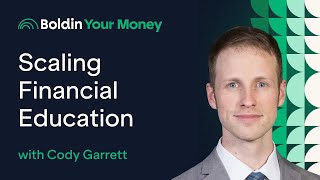
Cody Garrett left a 10-year music career to become a CFP and built Measure Twice, which now runs three businesses: free consumer education, an advice-only planning practice capped at 10-15 families yearly, and a platform for 400-500 financial advisors. He emphasizes teaching DIY investors to plan rather than just invest, and argues that advisors should ask better questions instead of only providing answers.
Chapters
You.
So welcome to the new retirement podcast. Today we're happy to welcome Cody Garrett, a dedicated advice only financial planner and educator who is passionate about empowering DIY investors. As the founder behind Measure Twice Money, Cody specializes in building comprehensive financial plans and providing personalized education to help families make informed decisions on their path to financial independence. So with that, welcome Cody. Thanks for joining us.
Absolutely. Thanks for inviting me.
Yeah, no, it's super good to get this time with you. So, you know, I thought first we could kind of, you know, dive into your backstory a bit. Love to learn more about kind of where you grew up. I know you were a musician, but like kind of your journey to financial planning, like what, what, you know, led you here today.
Sure. I have a. I, I started music when I was a little kid. I actually grew up in an engineering family. Pretty much everybody else in my family works at NASA or in some engineering job. So we really grew up in an analytical, data driven type of family. With that said, I got into music when I was 6 or so. By the time I got to the end of high school, they were like, what do you want to do in college? I'm like, well, the only thing I'm good at at this point, I think is music, so I guess I'll just continue with that. So I ended up getting a bachelor's degree in music theory, which, which is kind of ironically, I guess it would make sense, is the kind of the science of music. So kind of taking that data orientation and plugging it into music. So I have a music theory degree and then I also went to Boston at the Berkeley College of Music to study contemporary music. So I have my bachelor's degree in classical music that really everything from Gregorian chant all the way to Gershwin. And then I studied Gershwin all the way to modern jazz and pop music at Berklee College of Music. After that I came, I moved back to Houston, Texas, where I'm from, pretty close to NASA, where my family works. And I had a 10 year career in professional music. Did pretty well, probably made around 75, $80,000 a year, which is pretty good as a full time musician down here. But I got really into kind of the idea of adulting. Right. I got married in 2020. Sorry, I got married in 2015. Feels like a long time ago now. Got married in 2015. And as a professional musician, you don't realize it, but you're actually an entrepreneur. You're actually, you know, you're a sole proprietor. And I was may or may not have done my taxes like as quote unquote accurately as possible, getting all my deductions as a self employed individual. But I really wanted to learn more about really making well informed decisions about my money, especially being married and being the sole income provider of the family. So I started going deep into the weeds. I started listening to podcasts at two times speed on my way to work and back. I listened to like two hours a day of podcast like Choose Fi, the Mad Fientist, Radical Personal Finance, a lot of good ones around there that are still there, the Money Guy show, for example. And I just, I drank out of the fire hose. I started learning as much as possible personal finance. And one, one time on the phone, I was, I was talking to my mom on the phone one day and she asked, hey, what have you been up to? I said, oh, I've been learning a lot about personal finance. I love this stuff, it's kind of fun for me. And she said, oh, well, you should talk to our family friend Joe, because I think he works in that space. And I go, oh, cool. So I called Joe and he's a certified financial planner and he owns an investment management firm and provides financial planning to over 100 households in his firm. And he said, hey, if you really want to drink, if you really want to drink even more out of the fire hose and go beyond the basics in terms of your personal finance knowledge, go ahead and enroll in a CFP education program. So I signed up as a professional musician. I got my certified financial planning education and exam done. And then Joe actually hired me to work at his firm. Really starting from the ground up, like completely dry sponge, ready to just learn as much as possible about serving clients, running a financial planning business. And that's where it all started.
Nice. What is Joe, how long ago was that that you were working with Joe?
So that was September of 2018.
Okay. And how long did you work with him for?
I worked there for about two and a half years. Joe was amazing about not just, he didn't just put me at a cubicle and say like, you know, crunch numbers or go find clients. Like, you know, I didn't do any prospecting. Effectively was. I was a fly on the wall. Not just a fly on the wall, but I sat at the table. He invited me into all the meetings to meet clients and prospective clients to really learn how the ship was, you know, how he, how he sailed the ship really, but effectively. I worked there for about two and a half years, gained enough edge, gain enough experience hours to have the CFP letters. After my Name, which is required to get the letters. But then a really big shift happened. I started getting. As I was going through the CFP education program, I created a lot of educational content. I really found that the best way to learn is to teach. So anytime I learn something, I go find somebody to teach it to, because I found out that the more you teach, the more you learn. Or really, when you teach, you learn twice. So I taught the people at my firm. I actually created an educational blog called Measure Twice Money back in the day, and I just started sharing education, not expecting anything in return. I just wanted to learn more. But then I started receiving about five prospective financial planning clients per week about six months into doing that, just creating educational content without expecting something in return. And after doing that, I realized that there were a lot of consumers looking to hire a financial advisor, but not to manage their investments. They were really looking for a financial advisor to give them personalized education and advice, but without requiring them to move their money under AUM assets under management. So I just said, hey, if there are five prospective clients coming in or, like, sending me messages every week, maybe I could launch a firm and just do that. Maybe I could launch a firm that only serves DIY investors with no investment management. So I did that in 2021. I think it was in 2021, I launched my firm, had 17 clients sign up on day one and pretty, pretty quick to full capacity. And now it's just a few years later, and I'm really expanding out from there.
Yeah. What is. What is Joe's full name?
Oh, Joe. So Joseph Burkhoffer. He's a cfp. He's at Legacy Asset Management in Houston, Texas. Fantastic firm, awesome educator. He really, without him, I probably would have gone a completely different route.
Nice. Well, so give him a little shout out here. Of course. That's cool. It's awesome. And I wonder what he thinks now, because it's been interesting watching you. Right. Kind of coming from nowhere to, you know, maybe, you know, we should call you the Brock Purdy of, you know, financial planning, which I'm a 49ers fan. You know, we've got the super bowl coming up, but, you know, you know, really, I think coming on the scene in a big way and getting a lot of press coverage and stuff like that, it still feels like you're early in the. In the journey here about what's possible. And I know, you know, I guess it would be great to hear more about kind of how you've evolved, because I know you started with your own firm. And then you started educating financial advisors themselves. And now you're starting to get into educating consumers at scale outside of your firm. So I'd love to hear you kind of describe how you see that evolving.
Yeah, it's kind of funny. I mean, a lot of people know me for launching my firm, which is advice only, you know, no Investment management got a lot of press for that because it's very different. Right. Probably only 1% of firms even will provide financial planning without managing your investments. So a lot of people assume that I launched my firm first, but before that firm, I actually started my educational stuff for consumers. So I actually have three companies now, three businesses within Measure Twice brand of this umbrella. In a way, I have Measure Twice Money, which is so far is free education for consumers. Just as I learn something I just taught others. Then I launched my firm, Measure Twice Financial, which now I'm not accepting any new clients. So if you're listening to this, looking for advisor, I'm not the one for you, but I can help you find one if you want. And then the third one was kind of funny. Measure Twice Planners is actually now it's an educational platform, but specifically teaching other financial advisors how to become more comprehensive. Financial planners, whether they're career changers or even been in the industry for decades, really showing them how to go beyond the basics and really tilt toward more of a financial planning focus rather than just an investment management focus. So the reason I started educating advisors is the one thing that kind of sets me apart is the financial services industry does not have a wonderful history in terms of transparency. There's been a lot of hidden fees. And even if the fees are transparent, they're not salient, they're not really talked about, and not even just the fees, but the services. Financial advisors, I'm sure you haven't seen too much of it on social media, which is financial advisors are not known for sharing how they do their work in the public. They're not sharing their process and their templates and even their biases toward certain planning areas. And I just gave it all away. I was just like, hey, this is how I do it. Everybody can duplicate what I do. There's no competition. I always say, you're only competing. You're only competing if you're copying. So since I'm doing something different and I serve different people than others, I just gave it all away. So as I was giving stuff away, advisors were like, hey, like, can you show me how you do financial planning in more detail? So rather than trying to have one on one conversations with hundreds of advisors. I actually had zoom calls with over a hundred advisors in one year trying to learn my process, like let's go ahead and just make a community and a comprehensive video course. So I made an eight hour video course sharing my entire financial planning process, my templates, my calculators, everything. So that launched Measure Twice Planners actually almost exactly a year ago. And now there's about 400, 500 advisors that I teach financial planning to.
That's awesome. Yeah. We're also big proponents of kind of this one to many approach which is, hey, let's have, you know, we introduce classes for our community and that's been a huge success. And one of the things that, you know, we, we do in our business, right. We free software, paid software, classes, coaching that it's one on one, but. And then we have access to a cfp, a flat fee basis. And he's actually started doing Bruce one to many meetups with consumers who are just like, do I want to get a financial advisor or not? So instead of meeting him one at a time, he's meeting with a bunch of them like a lot at once. And apparently that's going pretty well. So yeah, it's cool to hear about that. So quick question back to the cfp. Like, you know, as a, as a person that's gone through, you know, being like a, you know, like essentially not knowing much about personal finance to being a enthusiast and learning and you know, also like I've, you know, a lot of the podcasts you mentioned, which we'll cite in the, in the show notes, you know, there are great resources for individuals to learn and then going from that to becoming a cfp, like, how would you characterize the difference? Like how much more did you learn becoming a cfp and like how does your thinking change? You know, as. And I'm, I got my Series 65, but I'm not a CFP. But I, you know, we have CFPs here and you know, obviously we build a lot into our software. But I love your take on this.
Sure. I really think the CFP education is really learning the rules and the concepts, which kind of ironically, I think that the cfp, yes, it's comprehensive in terms of the knowledge base and learning lots of numbers and rules and administrative things and IRS publication terminology. But at the same time you learn the rules and concepts kind of going beyond the basics. But effectively everything in the CFP program you can Google and you can find on YouTube for free. Right. It's just, it's a Nice cozy space where you can get it all at once, you know, get it, you know, learn all of it in nine, nine months, you know, at least that's how long it took me. But as we know, you know, as we found out, knowing the rules and concepts is really not enough, right? So I always describe financial planning as two islands, right? You have your quantitative, you have your, your comprehensive financial ecosystem. I call that everything, your life with a number on it, right? So the CFP program teaches you all about those things. It teaches you all about, all about the numbers and the quantitative details and, you know, how did all these time value money calculations of how does compound interest work? And should I choose a pension or a lump sum, things like that. But there's this whole other island, right? And it doesn't really make sense to make a bridge, which is a financial plan. It doesn't really make sense to make a bridge to something that doesn't exist. So we have to create this, we have to understand this whole other island, which is a family's qualitative, right, Unique values and desired outcomes. So even though the CFP program teaches you all the rules and concepts, it really doesn't teach you what you need to know about the person. It teaches you the what and the how, but it doesn't teach you the why behind, for example, when people are using new retirement, when people are creating their scenarios, the output is only as good as the input. That's a big thing I'm a big proponent of is tools without education can be dangerous. So I think it's really important that the CFP education is incredible in terms of giving you tons of knowledge, but then you have to filter down that noise and figure out, who do I want to serve, how do I want to serve those people? And then, you know, how much of the information is actually applicable. So I, I've actually narrowed down, you know, nine months of education in the CFP program down to a five hour video course of saying, here's all the things that I actually think that I need to know to do my job well.
Okay, awesome. So you feel like the CFP really framed up kind of like especially the number side of it. How about in terms of the personal side? Yeah, eliciting the goals, understanding values, and really kind of diving in, aligning someone's money to their values and where they want to get to. Do you feel like it gave you a good grounding for that?
So when I took the CFP education program in 2018, they actually did not have that element. They've Just recently added a psychology of money, psychology of financial planning element. But when I did it, it was solely quantitative. You really didn't have any knowledge about how to have conversations, how to ask better follow up questions and some of those, you know, the softer sides of money.
Yeah, this is, it's so interesting kind of like hearing your, your journey here. And so in terms of going forward, right? So you've, you're not taking new clients, you're focusing, you're educating advisors already now you're adding the consumer side. Like where do you want to be in 3 years, 5 years, 10 years? Like what do you think? Like your own long term vision as you're in the space and do you think that you'll stay? I mean you already had a 10 year career in music. You think you'll be like, I'm going to do 10 years in financial education and then to switch gears again or what do you, how do you think that.
Yeah, they, yeah, maybe 10 years here and they'll become a master plumber and they'll become a lawyer and maybe just. I, I've really, I've realized that I didn't realize how much of like an, kind of an entrepreneurial spirit I have. And it's not necessarily, it's not really about like how can I like scale like a big revenue business. But I really define what my core value is, right? My core values of generosity and transparency. I personally define success as the ability to give to others without expecting something in return. So I'm trying to scale all three of my businesses, my financial planning business, my advisor education business and my consumer education business. I'm trying to scale those in a way that well, yes, the revenue will support our pretty low, you know, living, expensive living expenses, lifestyle. But beyond that, like, how can I create, how can I scale impact, not just revenue? So to answer your question, financial planning, kind of like how, you know how you talk about like you kind of have a free option, you've got a paid option, then you can pay a little bit more to get, you know, to work directly one on one. I really think that way about business where the closer people get to you, the more expensive it is. So my blogs, right, My free educational videos and blogs, like that's all free, right? Because those, those people do not have any direct access to me. One level closer to that is Measure Twice planners, right? Where people have, you know, they can meet with me in a group setting and ask me questions and get, you know, some of their Q and A done. But you know, then there's one. You know, one step closer to me is one on one. I realized that one on one financial planning is very difficult to scale unless you delegate and create other advisors. So on the financial planning side, I've decided to cap my capacity. I'm only working with between like 10 and 15 families per year mostly. Of course, I love working with those families, but also I want to keep my mind sharp and, you know, be ahead of the game and understand what's, what's happening in financial planning. The second part, Measure Twice planners, three to five years from now, I, you know, I would love for kind of if I were to 10x or 100x what I'm doing in that business, it would really be plugging in the measure twice process, teaching the measure twice planning process within CFP curriculum. So I've already been talking with different university programs and adding Measure Twice planners as part of their curriculum so that, hey, you learn the rules and concepts now, learn how to apply real application. And then on the consumer side, I really want to blow up the education side from a really changing the public perception of financial planning. If I ask most DIY investors, by the way, anybody who's not working with an advisor right now is a DIY investor.
So.
So there's a lot more DIY investors than there are people being served by advisors. I really want to teach DIY investors that you can manage your own money successfully, that you don't need to hire an investment manager or even an ongoing financial advisor to be successful with money. So changing the public perception really means showing consumers, hey, I'm a financial planner. I'm at full capacity. I'm not going to work with you one on one. But I will teach you everything that I do as a financial planner so that you can create your own financial plan as a family. And then at that point you will realize, first of all, you have, you'll gain clarity and confidence in your own financial situation. But you'll also now understand what financial planning really is. It's not choosing investments. Right. Choosing investments is probably 5% of the financial planning process. So I'm teaching consumers to effectively do their own financial planning so that they gain clarity and also know, hey, if I am going to hire a financial advisor in the future, at least I know what to look for. And I, you know, I, I know enough to ask the right questions.
Yeah, that's awesome. So, I mean, it does. This obviously begs the question, okay, you, you have taken the time and spent years becoming a cfp. Now you're building education for the main purpose of like telling other people that maybe you don't need an advisor. How do you, I mean, do you think that there is a use case for financial advisors? I mean, I, I do, I do. I mean, even though we're in the business of helping many DIY folks, but I still think there's a few, you know, coaches and advisors, I believe are a key part for many folks. But I love your perspective, you know, on their role.
Yeah, I think that it's really important that, that, that that term financial advisor, it's not only unregulated, but it really doesn't. It means something different to everybody you ask. So I kind of think of kind of three, three different people. You know, there's an investment manager, there's a financial planner, and then when you kind of, if you push those two together, that creates a financial advisor. So I do think that everybody would benefit from a financial planning relationship, but I don't think that everybody needs an investment manager. I think that investment. You used to need an investment manager to buy at least, you know, from what I was taught. Like, you used to actually need a broker to like facilitate trades for you. Now I can rebalance my entire portfolio in five minutes on my phone. Right. So I think investment management is a commodity in terms of the trading of securities. But knowing which securities to trade, how much, that's really the role of a financial planner. So I think that everybody could benefit from a financial planner, whether hourly, project based, ongoing, but with or without investment management. And of course, I have a bias toward aligning the compensation model with the service provided. So I'm really a big fan of the flat fee models. Whether you have investment management or not.
Yeah, 100%. I think one of the framings that I've carried around with me, and I'd love your perspective on this, is that a third of the world is diy, a third of the world is do it with me, and a third of the world is do it for me. Do you think that's roughly right or do you think it's the mix is slightly different?
Well, I think it's funny. One of the phrases I use all the time is just because somebody's a do it yourself investor doesn't mean they're a do it alone investor. And what I mean by that, I think DIY to me means, you know, you have to ask, like, what are they doing themselves? Like, the DIY to me is clicking their own buttons, right? They're logging into the custodian, they're the ones clicking like to trade, you know, to buy and sell. That's the doing it yourself, but it's everything else, right. It's the, it's the ongoing guidance. If you, anytime somebody talks about a DIY investor, they're not talking about somebody who does their own financial planning and does their own Social Security analysis. Like, what they really mean is somebody managing their own investments, you know, in terms of discretion. So if I step back a minute, think about like a kind of a, kind of an investment in a financial advisor who manages your, manages your investments. The only thing they can do for you is trade securities. Right. They can't spin for you, they can't give to charity for you.
Right.
They can't change your, you know, they can't change your daily behavior when you're not in the, in the meeting with them. So pretty much everything outside of trading investments you have to do yourself whether or not you have an investment, whether you have an investment manager or not. So yeah, I think that kind of, this framing of a lot of advisors like to just tell people what to do or do it for them. Whereas I think there's a big shift happening where people don't, they don't want the advisor to be the hero of the story. Right. They want to be the hero and they want the advisor to be the guide. Kind of a building a story brand kind of framework here. Donald Miller, which is people want to make, well, their own well informed decisions, but they want to be able to ask somebody for guidance as needed, but not necessarily hand over all of the implementation by force.
Yeah. One of the analogies we're drawing with our work when we're kind of sharing our story about what we're building is the parallels between physical wellness and health and money. Where with physical wellness we didn't know that exercise was good for us until 1949. And once we discovered that, which is an interesting backstory, you know, it's like, hey, there is a doctor in Britain, he's studying the outcomes of double decker bus drivers and ticket takers. And the double decker bus drivers died way younger because they're just driving the bus all day. Well, he's like, why is this? And the ticket takers are living way longer. He's like, why is this happening? What's the difference? And it's like, well, the ticket takers are running up and down these stairs and moving around all day. And so once that happened, you know, people started taking way more, becoming way more involved in their health and exercising more. And the whole culture of education. I Mean of exercise happened, I think so. Something similar could happen here with Financial Wellness, which is like, hey, we realize, you know what, we're our own best agents essentially. We have to act for ourselves and look out for ourselves. We can use other experts along the way, but like, you know, we have to get some baseline literacy. And by the way, we should be teaching shout out to next generation personal finance. We should be teaching personal finance and every. To every high school student in this country. Country, you know, hands down.
Right.
And slowly starting to happen. But then, yeah, become educated, kind of find the tools and then figure out the folks that are aligned with you. Be. And I think there's also this regular regulatory change was like, yeah, we got to be really clear, like, who's a fiduciary, who's not, like, who's actually aligned with you? How do people get paid, have more transparency and that will lead to way better outcomes, but it's a journey to get there.
Well, it's always. It's been difficult historically for consumers to learn about the benefits of financial planning without being sold something. Right. It's kind of like asking, going to a Ford dealership and asking, hey, do you think I should buy a car? Right? So similarly, one great thing about me not accepting future financial planning clients and not accepting new clients is that when I provide education to people, it's not a bait and switch. It's not like, hey, here's some education. And by the way, if you want to set up a free consultation, like now I can just give it all away without them feeling like, hey, like, is Cody actually giving me good education or is he just using this as a marketing tool? So at this point I feel really, you know, I'm not financially independent. Like, I can't just not work again financially, but I have that freedom right now that I can effectively spend my time on efforts that are really benefiting others. And by the way, I can get paid along the way too. But it's nice to be able to have a business framework where I can just give a ton away and that actually leads to more success financially.
Yeah, well, I think that's what's needed. I mean, there's so much before advice was kind of gated by an education, was gated by the financial advisors who had a great innovation around their business model, which is like, let's get paid aum, which I mean, does, you know, I understand it's an incredible business model for them, but it leads them, you know, the, the incentives there lead them to help people that already have Money. And that's like. That's why we started our company, right? Because we couldn't find a financial advisor that would help, you know, our parents that, you know that because they didn't have enough money. So we're like, okay, well, they can't get access to help, so, I mean, we need some help.
We can't help you be successful until you've already been successful.
Exactly. That's exactly right. So, you know, we'd love to ask you a question about, like, you know, what's an. What's something that. An unpopular opinion that you have and have developed in the course of building out your offerings that you think is an insight, A big one?
I don't know if it's like. I guess it would be uncommon is. I don't really like rules of thumb. I say that one size fits all advice hardly fits anyone. Like, imagine, you know, you're at a. You're talking about the super bowl, right? Like, let's say that they. You know, how they shoot those, like, free shirts into the stands every now and then at football stadium. Like, how often does that. That shirt actually fit you, Right? It's like. It's like the extra, extra large, Right? So, you know, the big thing is I always. I like to go beyond rules of thumb. Second, I kind of, you know, put in my notes here that let me go down here a little bit. You see that part of. Yeah. So, yeah, that kind of the most unpopular opinion for me is I believe that the gathering and the review of financial information is one of the most important parts of the financial planning process. As we talked about earlier, the output is only as good as the input. When I was a professional musician, if you went into the studio and you had a really bad guitar player record the guitar parts, and then you went in and try to mix and master that song, it would never sound good as hard as you tried. So financial planning to me is. We think about financial documents as just being, like, black and white. Like, you know, how often do people review their pay statement or their tax returns or their mortgage statement? Right. But I believe that every financial document tells a story not just about the numbers, but tells a story about you, your family, your values. Like, I'll ask you this, like, Steve, like, if somebody. If you showed somebody your credit card statement and they reviewed your transactions of where you spent, you know, how and where you spent money, do you think that they would be correct if they assumed what your values are as a family?
I think they would have. I don't know if they'd be correct, but they would have insights into what I'm like as a person. Like, a lot of insights. So I think it does reveal a ton about you.
Like the surfboards. This guy must like surfing because he buys surfboards. Yeah. So, yeah, effectively, I think that again, kind of in the financial advice world, I say, you know, nobody can give you financial advice in your best interest until they understand your interest. So I think people need to spend a lot more time asking questions, including of themselves, rather than just trying to find answers. It's just like how people are going and using AI. They're going to chat GPT and they're, they're asking, you know, they're asking, they're trying to get answers rather than asking, hey, which questions should I be asking? So ultimately, my unpopular opinion is that if you ask somebody for advice, the first sentence out of their mouth should actually be a question, not an answer.
Right. I think that that is a really good insight. We see this too, where a lot of users come to us and they then say, oh, this is really getting me to be aware of what I should be thinking about. I hadn't thought about this stuff. And it's kind of that progression from being like one of the, I guess stages of thinking I love is like, you know, hey, you can be unconsciously incompetent, then you could be consciously incompetent, then you could be consciously competent. And ideally you're conscious. Unconsciously competent, right? And like, very often, like, and you know, I'll walk around and be like, well, we were unconsciously incompetent about this, like in our business, because, like, hey, we're, we're building new things. We're like, oh, we didn't even know. We didn't know. So do you, do you see, like, what are, what are some, like when as you deal with and educate folks, which I think is, it is great. Like, it's like, it's important as you do your education, like to keep serving other folks so you learn firsthand. But what are some of those AHAs that you see people having when they get into this process?
The biggest one, of course, is that they realize that financial planning goes beyond choosing investments. Like choosing the best large cap growth mutual fund is not going to make you financially successful. Right? Like, for example, in the first 10 years of investing, your contributions are growing, should be growing faster. You should be contributing more to your accounts than your accounts are growing in the first 10 years usually. Right. The compound interest everybody talks about, like, doesn't really start really like exceeding your contributions until like 10 plus years. So the big part is that it's more about financial planning in terms of realization is there are so many more things within your control than you think. You can typically control how much you spend, how much you earn, you know, in a way. Right. How much, how much taxes you pay. Right. How much taxes you don't pay. Right. There's strategies there, but, you know, but I think a lot of times we focus on the things out of our control. We focus on inflation and some of the, you know, some of the assumptions that matter, right, they're in your, you know, in new retirement, these assumptions like inflation and investment returns. But we, we focus so much of our time trying to, trying to control the things that we should realize are out of our control rather than be like, hey, there's all these things that I can do in the next month that would be way more impactful, like, you know, get the 90% right, rather than trying to chase the 10% of optimization. And the, the second part of that is one thing that it's been fascinating to me to realize is how difficult it is for people who spend decades learning how to save and invest for them to flip that switch and suddenly be intentional with their spending. So I'm realizing that there's a lot of financial media out there, like great financial, like personal finance media. Like pretty much every post is about, hey, like, hey, make sure you save, make sure you invest, make sure you save. But nobody teaches you how to spend money with intention. So I think for me, like, I, I'm, I'm really passionate right now about what I call, I call value based spending, which is actually you look at your spending without looking at the dollar amounts at all, only looking at the transactions, not looking at the dollar amounts. Because if you put the dollar amounts next to where you spend money, you're immediately going to feel guilt and judgment and shame about how you spend your money rather than just asking, hey, like, how much do I value that thing that I purchase?
Yeah, that's awesome. It's so interesting. I mean, by the way, I love this framing of which I, you know, it's going to sound stupid, but like, I mean, I see this in life where, like, yeah, you hit this point where, yeah, you're starting to produce more from your investment returns versus what you've contributed. I've always been a pretty good saver and kind of thought about, my orientation has always been like, how much am I saving? You know, and how much? And very often through defined contributions. So saving Money in taxes versus And I wasn't as smart and good about investing. I've gotten way better at that now in terms of like, hey, low fee, you know, simple portfolios, just set it and forget it. But I think having that as a step where you're like, let's orient you around. Understand, this could be 10 years saving, saving, savings. But then at some point, you hit this magical point. And then after that, you know, you're producing more than you save, which is great. You can keep saving. But, like, which is. You should. But, like, you're like, this compound growth is going to take off. What other steps? Like, how do you break it down for people to make it approachable? Because I think a lot of people, they come to this and they're like, you know, retirement. We were doing an interview and someone's like, retirement's just not for me. Like, I can't do it. You know, it's like. And some people, you know, they. They don't really save a lot of money. I mean, a lot of people, unfortunately, don't save a lot of money. And then they walk in and they're like, oh, I'm 60 years old. You know, friends are getting laid off. You know, this is like, now I have to figure it out. But it's a little bit. You're kind of doing emergency surgery at that point versus all the preventative stuff you could do early in the process.
Yeah, I think when people are kind of. You have to really consider the words people are using. So at my last firm, at my previous firm, and doing investment management, people would say things like, hey, just do this for me. And as a financial advisor, we love when people tell us what to do. Like, we love when people give us permission to do things for them. But we miss that word. Just when they said, just do this more for me, that word just is so powerful. Right. So that that word just typically means maybe frustration, maybe a limited belief about their, you know, their ability to have, you know, to gain the talent. I call the time, temperament and talent to do the thing. So, you know, when. When somebody's frustrated or someone says, I just. I just can't do retirement, I think the kind of two exercises really help. One is kind of, as I mentioned before, putting on one page a list of the financial variables that are within your control, and then the variables that are without kind of outside of your control. It's kind of very much like a stoic, mindful type of type of exercise. And I always say, simplify the things that are out of Your control so you can spend more times with the things you can control. And then the next step to that is actually simplifying. Kind of sounds funny, but simplifying your financial life. So when financial planning clients come to me, they often have, I work with clients who have over 99 mutual funds, right. And an ETF A1, right. So they come in with 90 mutual funds. And upon working together with using tax optimized approach, being smart about it, not throwing out the baby with the bathwater, tax wise, but effectively like coming in with, hey, you have 10 investment accounts, you have hundreds of mutual funds and securities and then transitioning to a place where each of you has one ira, each of you has one Roth ira, you've got a checking account, a savings account, a taxable brokerage account. Like that is your financial ecosystem. So I would encourage anybody here who feels frustrated, right? How can you simplify? Because I think usually people add complexity. You know, financial advisors, typically what I call, they add complexity for the sake of job security, right. The more complex they can make it, the more it's worth the fee. But even if you're not working with an advisor, sometimes your complexity is either because you kind of, you didn't, you didn't corral things or consolidate things early on, or you're trying to over optimize, right? You're trying to optimize for the 10% rather than getting the 90%. Right. By just simplifying and saying, hey, each account has a specific purpose, every dollar has a job and a use by date. Once you can see your whole financial picture on one page rather than 50 pages, then you're like, oh, I feel like I can actually do this now because I can actually interpret what's on the page.
Yeah, that's super interesting. That's definitely a theme for our work and we definitely have work to do there. But I totally agree. If you can simplify and make it more approachable and kind of lower the barrier for folks, then it can be become way more accessible. And I actually wanted to loop back on one of the comments you made about becoming an intentional spender. I think one thing folks should realize is that, you know, the financial services industry, which I've grown up in, isn't is a line behind people doing a couple things. So one is it makes money two ways. One is debt, right? So when you're young, why are credit cards so easy to get and all that stuff? I mean, and why do people get in trouble with credit card debt? They're giving out like candy to people that might not be well educated about it. And we see lots of folks have gotten into trouble with credit card debt, student loans. Like, let's give everybody, you know, I'll take out $100,000 and go to school, right? And you're like, holy smokes. That actually someone has to pay that back. You know, I gotta have a job that makes a lot of money to pay all this. That's one way. And it's not. You're not well educated about. The other way is, yeah, you accumulating money to your. To your point about like, the. The message is always like, how much do you need? It's always like, more. I mean, like, if you ask 100 people on the street, how much money do you need to retire? They're just going to say, a lot and probably more than I have. And why do they think that way? And I think that's one of the things that is a big unlock for folks is like, oh, I actually have enough money, or I can make certain spending changes or lifestyle changes or where I live or whatever. And I could be done right. So they're more aware of that.
Well, I will kind of what's funny here, I think sometimes we make the assumption that people already know what they spend. If you ask again on the street, if you ask people, how much more money do you need for retirement? They'll say, oh, just a little bit more, A lot more. But if you ask them, how much do you spend a year after tax? They have no idea. So I always say that clarity precedes confidence, Meaning before you can have the confidence to say, hey, I have the confidence to retire, you first have to have the clarity, which requires two things. Knowing the island of what you value and your desired outcomes. But you got to know your numbers. Like, you know, my friend, financial planner Jen Stellaga. You know, shout out to Jen, she's awesome. She says cash flow is the wellspring of your financial plan. If you don't understand how money's coming in and money's going out, like, it's kind of like trying to learn calculus before you know how to do one plus one equals two. Or, you know, or really, I guess in terms of money, it's, you know, three minus one equals two, right? So it really comes down to just slow down, like I need to do sometimes, right? Slow down, simplify, and say, what are the next three things that I can do to improve my situation? And sometimes it really does require working with somebody like a financial planner, financial advisor to help you gain. First of all, to keep you accountable, to actually do the thing. But also the name of my brand is Measure Twice. Right. You might have heard that phrase, measure twice, cut once. Like some people, like some of us, you know, they're called blind spots. We have blind spots and we call them blind spots because we can't see them. Right. So going back to why, you know, if you should hire a financial advisor, if you feel like you don't have the clarity and confidence to move forward with your money, like, hire somebody to help you measure twice. And you know, like, really say, hey, like you're doing a great job. Here are some possible places you can improve and then they can keep you accountable moving forward if you have a hard time staying on track.
Yeah. One of the things that I have wanted to do forever and we have not yet done, but now this is reminding me we like totally need to do this is just create like a methodology, right. That people can follow. Like a recipe.
I mean, today, order of operations.
Yeah, an order of operations. Right. Today our platform is a little bit more like, sometimes I call it like Grand Theft Auto. Like you can come in and you can go all over the place, which a lot of people like. And then through the process of going over the place, people actually do start to it together. So there, there is an educational approach that it's very freedom oriented. But, but I think there's also like, hey, you know, Cody, here's a situation. You're like this, like I looked at you do these, do these things, these three things. One, two, three, next. And then just like, like, let's get that done first and then we'll do that next. But that we has not been made totally obvious to people yet on our platform.
I do think that you're. That idea of even like gamifying it, right is I think it's really easy to get caught up in the complexity and say, like, I want to do, like, I want to do, like I want to learn about Roth conversions. Like, I want to do like backdoor and all these Roth conversion things. You're like, I love the idea of saying, hey, like we're going to go through this order of operations so that by the time you get to the Roth conversion part, you actually know enough and have enough information involved that you can actually make a well informed decision around that more complex area.
That's awesome. All right, so I want to shift gears back a little bit to kind of how you see kind of going forward here. And so are you a solopreneur right now? Like individual person doing this all your time.
I have a hard time delegating. So it's just me. Do you think that's going to stay the same at least for financial planning? It will be. But in terms of my one to many education that might, you know, I might, you know, I might hire two not necessarily employees, but I might delegate some parts of the process out.
And how far do you think you can scale doing this?
In terms of my financial planner education, probably scale to like 5 to 10,000 would be kind of, kind of, I guess how I envision a ceiling being especially in terms of new financial planners joining the industry in terms of one to many education closer to like the 100,000 people actually creating their own financial plan within the next five years.
Nice. Do you, do you do your own YouTube channel or not?
I kind of haven't gone all the way, all the way there in YouTube. I will, I'm planning to actually release most of my financial planning process for free on YouTube. I actually have a video. I have videos on how to review a tax return. I actually, on YouTube, I actually have a video that is I walk through an entire financial plan which again, you're not going to find that from very, very many advisors out there. But it has, I mean it has over 10,000 views. I don't know how I, you know, there's over 10,000 people interested to learn what a financial plan looks like at this point, so. But I do, I do plan to go more video in the future. Yes.
Yeah. Do you know Rob Berger?
I do. I love Rob. He's awesome.
Yeah. I mean it's pretty interesting watching him. Right. So he started it, he started as a blogger and then he sold that and he had a community and other stuff. And then he like, I'm going to do YouTube and like I just looked. He has 180,000 subscribers. He. And they're like, he, we work, do some stuff with him and also Joe Kuhn. But it's interesting watching kind of. I don't say Rob is like a lay person and Joe really isn't either. They're both into this. Rob is even Rob is a very technical person and deeply into his own money or into how to do planning and just kind of giving it away. But there is definitely a massive audience out there that's, I mean and I think he's grown from. To this in a couple of years, you know. So I, I think that there's a huge opportunity out there to use channels like that.
And you know that, yeah, the retirement planning education Facebook group, which I help moderate. It's gone from Nothing to over 50,000 members and in the last two years. Right. So, like, yeah, there are a lot more DIY investors interested in going beyond the basics than we might think.
So, yeah, I think, I do think, though, that there's a. When I think about, like. Like, I feel like Rob is like, more on the power side of this. Like, people that are more closely aligned and familiar with their money. And then like, someone like Joe is like, hey, for people that are kind of coming in and just getting started. And I think there's actually a much bigger space to help folks that are just make this approachable. And like, how do you start? With baby steps and stuff like that. But it's good. So I'm excited to see as you start doing much more on your own channel.
What's funny is, you know, Dave Ramsey has baby steps. I kind of think of. I think of what I create as kind of toddler steps. Like, hey, like, you have your emergency fund. You're not. You don't. You don't have credit card debt. Like, now my content is really good for you. Like, now you're at that place where you're like, how do I invest? How do I set up my estate plan? Like, if you want to go beyond the basics, like, that's really like my sweet spot. I guess you'd call that like mass affluent, effectively. Like, kind of after the baby steps, move on to Cody stuff.
That's awesome. So, yeah, I'm just curious, like, with Andy Panko and kind of like return planning, education. So you're involved with that tentatively, but, like. Like, how would you compare what you do versus what Andy does? And I think that there's a lot of value in both places, but kind of interested in your take on that.
Yeah, we're very similar on one. On one financial planning. We both really focus on tax optimized retirement planning. Andy is more focused on kind of traditional retirees, like 60 plus. And I'm more focused on the early retirees who are retiring in their 40s and 50s. So in terms of demographic, a little bit different. Also, I use. I like to, you know, I like to show people things. Like, I really like to. I share my templates and Excel calculators. And like, I think that financial planning is. I would say that, you know, he teaches probably, you know, a lot of auditory and visual learners, but I'm teaching a lot of people who actually want to get in the sandbox and like, be more tactile with their planning. So I would Say we're very, you know, very aligned philosophy and investment wise and how we think about retirement planning and tax optimization. But we're just, we're serving different people with different learning styles effectively, right?
Yeah, it's interesting. I mean, there's education, then there's giving templates and doing stuff on spreadsheets and stuff like that. And then there's like building your own software or contributing or using tools like ours. Like, how do you see this unfolding, you know, over the next few years? Do you think, like, how do you think financial planning and reaching and helping a lot of people is going to evolve?
I think that it's going to be not one or the other, but a combined effort. So I think that people are going to be provided personalized education, but they're also going to be provided the tools with the education on how that tool should be used correctly. So when you think about new retirement, it's actually very similar to how you have it set up and what you're moving toward now. You have like the new retirement classroom, you have digital. The digital coach is really cool. I think the future too is that financial planning software isn't just going to give people answers. It's going to ask better questions or it's going to tell you which questions you should ask yourself. And by the way, but questions that go beyond the money. It won't just ask you like, hey, how much do you spend? How much money do you have? How much money do you save? It's going to say, hey, have you had this deeper conversation with your family about this topic? Right. And kind of. So I would say it's going to move to more of a collaborative approach, but consumers are going to have the same access to tools that advisors have. And that barrier between advisors and consumers will be very, in the best way, very much like mesh. So anytime a consumer says, hey, can I use, like, oh, I want access to your financial planning software? I'm like, hey, like, you can't use the one I use. But new retirement, like, actually, by the way, I'll just say new retirement looks and has better inputs, outputs and looks better than the ones that advisors are using at this point. So I just kind of, I'm not paid to say any of this stuff. But, you know, the more I look at, I've realized, like, new retirement is not just like the consumer version. It's actually just as good or better than the ones that the advisors are using.
Oh, thanks. Yeah, I mean, it's, it's interesting. I mean, we're, I Still think we have a lot of work to do. But I totally agree that like having, you know, I think where you and I are so aligned is that it's really about opening up access to. But I love also clarity, like getting clear first and then building towards confidence. That's exactly how we're framing what we're doing. But yeah, it's opening up access through mass media, giving the materials away, letting people get educated, and then making it really efficient for them to interact with experts. Because a layperson is not a cfp. You've been through a lot of training. You also have seen so many different cases, user building their own plan and they're thinking about their own situation. You've helped hundreds, and then, you know, through mass media, thousands and thousands, tens of thousands of people, you're going to be able to see these patterns way quicker. And I think we have the exact same orientation, which is like, let's let consumers start and that's what makes this really easy. And then. Or more accessible and then have the same platform serve both in a completely transparent way. But the advisor knows more. So they're going to be able to help inform this thing quicker. And there's still a lot of value for them there. But through that model, we can scale this. I mean, our vision is how do we help 100 million people? Right. So that is like a, you know, a very ambitious number. I know it sounds ridiculous, but, you know, there's 8 billion people on this planet. I mean, who knows, maybe it'll be bigger, right, in the future. Right. It's like there's a lot of people that could do way better and achieve way better outcomes.
And just to kind of cap that, I think that the future of financial planning is actually DIY investors, or I don't even call them DIY investors, just people and families. They're going to get. They're going to have the tools to create their own financial plan together and then they're going to go work with a financial planner advisor to help them adapt. So rather than having a financial advisor kind of compose their financial plan, they're going to come, they're going to be the composers and they're going to come to the financial advisor or financial planner to help them arrange their composition. So, thank you. From a musician standpoint, like, people need to be conducting their own financial orchestra, but the financial advisors is not going to be the conductor. It's going to be the arranger and the orchestrator who makes sure that, hey, like the right, you know, the right people are in the right seats, playing the right instruments effectively.
That's awesome. I love that analogy. So, you know, if you were, I know we're coming up on time here a bit, but I just would love your take on, you know, how do you think AI like how do you think technology and AI and, but also education. Do you think this comes together? Do you, do you feel like there is a there, there in five years or whatever? You know, I mean for 10 years I think for sure. But like I'd love your take on how you think what it looks like.
Yeah, I think kind of the funny thing about AI is even though of course AI like doesn't, you know, of course it's not like real human, but in a way AI has been built to have ego. What I mean by that is AI has been designed to always have the answer, even if it doesn't know the answer. Again, it doesn't know what it's actually saying. But I really do think that kind of making AI more humble. If you could make AI know when there's more information needed before giving the recommendation. Here's a really fun example for your listeners is type out some of your financial information, I mean to keep out the confidential stuff, right? But put some of your financial information into ChatGPT and say what should I do? And it'll tell you like, hey, like you should, you know, probably invest a little differently or whatever. But rather than that, ask, ask ChatGPT say what questions should I, should I be asking myself about my financial situation? You're actually going to get some pretty awesome questions. So I think AI can give you the right, can give you great frameworks to think about, but you need to, we either need to, we either need to learn how to use AI in that way or, or AI needs to be aware of our ignorance and take away its ego to start asking us. I would love AI to ask us follow up questions rather than just giving us answers to our, you know, not quite solidified questions.
No, it's awesome. Yeah, I, I agree. Like having a, some kind of asking it to, to pose questions that you should consider is great. And also like what's your confidence level in this answer? So. Or like yes or saying how much.
More information would you need to give to make this a better answer?
Yeah, no, I was doing that too. I was, I was messing around. Just, I was like well if I'm a 50 year old male and I have like this, what should I do? And then I was like, and if I have this, this, this and this. And it was you know, producing some more insights and ideas that I hadn't considered. So there, I think there's some. There's definitely something there. But what that looks like in five years yet, we'll see. I mean there, you know, who knows, maybe we'll all be have little avatars that'll know everything about what we would say and just spit out all the right answers. We'll see.
Well, just last thing here is that AI is not going to replace the human element. It's actually going to help us become or be even more human in what we do. So I think AI is going to be a part of it regardless of whether you want it to or not. It's going to be here. Right?
For sure. I agree with you. The more the technology emerges and helps people automate the stuff that's like, okay, investment management can be automated now, right? So the future taxes can be automated or hey, you can generate an estate plan or let's size insurance coverage better there. It leaves more space for okay, you know, what are you trying to get accomplished here? What do you want to do with your time, purpose, all that stuff? You know, that's hopefully what we get to. All right, yeah. Net positive. Exactly. All right, well, Cody, this was fantastic. Really appreciate you kind of sharing your experience and kind of how you've built this so far, which is fantastic and definitely wish you luck going forward. Super excited to see how, where it goes from here. Thank you.
Appreciate that.
Yeah. So, all right, I'll just wrap it up. So in conclusion. So yeah, thanks for, thanks for coming on and sharing all these thoughts and putting all the energy into this. I think it's really good. And what you're building with Measure Tries Financial is awesome. We'll definitely link to this in the show notes for everyone else. Thanks for listening to this new retirement podcast and all reviews for what we're doing or for what Measure Twice Money is doing are welcome. And if you need a financial plan, definitely check out what we're doing. If you need education, check out what Cody's providing and you know, appreciate it and hope to you'll join us at the next podcast. Thank you.
More from Steve

When Should You Claim Social Security? #personalfinance #financialplanning #socialsecurity

Social Security & Medicare: What's Changing and What It Means for You with Mark Miller (ep. 109)





Retirement Savings Waterfall: Where Your Next $$$ Should Go (401k, HSA, IRA, Brokerage)



