Tariffs, Markets & The Macro Story with Mike Himmelfarb (ep.91)
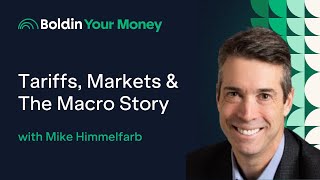
Mike Himmelfarb breaks down the "Liberation Day" tariffs announced in April 2025, their economic scenarios from stagflation to growth, and what it means for your portfolio. He covers China tensions, supply chains, and why dollar-cost averaging and diversification matter when the macro picture is this uncertain.
Questions this video answers
April 8, 2025 (recorded at 6:30 AM, per hosts' on-air remark)
April 10, 2025
US debt cited as $36 trillion and GDP cited as $27 trillion (debt ≈ 124% of GDP)
$9 trillion (referred to as largely maturing in the first half of the year)
Chapters
You.
All right? Welcome to BOLDEN YOUR Money. I'm your host, Steve Chen. And today we're diving into one of the most talked about developments in the market this year, the Liberation Day tariffs that just got announced last Wednesday and their effect across the globe. So today I've got Mike Himmelfarb. He's a friend of mine, investor and member of our community, who I am kind of thinking of as a smart but relatively normal human being to kind of give the perspective from two kind of laypeople, himself and myself, about, you know, what's happening and like how we're trying to make sense of the changes that are happening here and how kind of the confluence of politics to some degree, you know, administrative strategy and the markets are coming together. So we're recording this on Tuesday, March 8th, sorry, April 8th, at 6:30am and the market had a big correction last Thursday and Friday. It was kind of flat yesterday on Monday and then it is right now, as of this morning, it's up. The dow is up 1300 points. So we'll talk about how quickly it moves. So with that, Mike, welcome to the show.
Thanks, thanks. It's good to see you again.
Yeah, I would love it if you can give kind of a couple minutes on your background for our audience. They just kind of understand kind of where you came from and how you got to where you are today.
Sure, sure. So as Steve mentioned, I am an uninformed investor, but I dabble in the market. But I manage our portfolio a very certain way. I started out actually in investment banking after college, so I have a finance background from way back when. Then I went and got my MBA again in finance and then moved into more corporate life and have spent the past 30 years in the technology space, mostly working for big companies. About 10 years ago though, I started my own firm, my own consulting business. I left big company life. I just got really tired of the lifestyle and the type of work and have since been consulting with small to medium size technology and data businesses, helping them with strategy, marketing, product marketing, things like that. Recently I've been focused very much on pricing as a particular because a lot of it, because I'm really interested in the subject. And as I've gotten older, I've realized that I want to get a good balance between doing something I really enjoy but also can make money, of course. So that's how I got to where I am today.
No, I appreciate that. And given what's happening in the markets, how do you think about how that could affect your own personal planning? And balance between working and managing your assets.
First of all, I should say that we are very fortunate that we have built a nest egg over the years where generally conservative investors. We can weather the storm, I guess is the best way to say it. We are also relatively risk averse. I've been through. This is my fourth potential recession in my career. In fact, I started my career the first day of work was the market correction in 1987. I remember being on Wall street and all the senior people were staring at these little screens that had the market just going down, down, down and they were talking about how their bonuses were all disappearing and they were losing like hundreds of thousands of dollars on that day. So that was my, you know, I had no money at the time, so it didn't really matter to me. But that was my initiation into it. And then, you know, we went through the 2008, we went to the dot com bubble. And so I think just having those battle scars is really just to be able to not stress out too much during those times and know that we're gonna, we're gonna give a little bit up on the return on the upside, but you know, we're protected on the downside.
Right. So as you, you think about this, you're, you would say you, you are anticipating or comfortable with if the market corrected 20%, which you know, or like a significant amount like it had, I mean, didn't recur 20%, but it was down 10%, you know, on Thursday and Friday. So you're fine with that kind of like volatility?
Well, I don't love it, but if I have to do it, yeah, I really believe in. So I went to business school at University of Chicago, which is very much efficient markets. You can't time the market, you can't beat the market. That's sort of the bottom line. And I do ascribe to that. So most of our portfolio is in index funds. So we've really brought exposure. And then I play around with a little bit of money with companies that I know and I just don't really believe that it's possible to time the market up or down. And so we have a weighting that we're comfortable with and balance the portfolio every three to six months and just going to ride it out. I think. I do also ascribe to the view that over the long term the market's going to go up. So hopefully we have enough time left to recoup whatever we've lost here.
Yep, 100%. Well, I think that given what's happened with technology and healthcare. Hopefully many of us will live longer lives or there's a very real possibility we could have much longer lives. We have to think that way. And I think being invested and taking the appropriate level of risk is definitely part of that. Yeah, I mean, we did a survey of our audience on Thursday. Starting on Thursday, we had a thousand people reply and, you know, 58 said, hey, they were prepared for and comfortable with the volatility, which shows you the power of planning. And another big chunk, which I think took us over 70% actually were thinking about it like, hey, this could be a buying opportunity. So it's very different if you can kind of step back and think about the volatility. But I think those folks are kind of the exception and the media feeds into it. You know, there's at times like this, there is a real test for a lot of people emotionally about, you know, you know, their investments and are they really prepared to deal with this volatility and people start thinking about the worst case scenario.
So let's get into that one thing. I think the other part is it's really important for people to live within their means. I think a lot of people get in trouble because they establish a certain lifestyle for a given earnings level. And then if that goes away or they can't draw as much savings, then they really have to. Then they're kind of stuck either with a high mortgage or a car payment or something like that. And so it's really important just to keep that part in mind too, is that your spending needs to correlate with this type of market. And you have to be comfortable. They can still maintain whatever lifestyle you have if this happens.
Yeah, 100%. I think one thing that our audience and our community has in common, a lot of folks, they're kind of like 401k. Millionaires are kind of like the millionaire next door. Right. I mean, we didn't set out to attract this audience, but a lot of folks that have engaged with our platform and I've been meeting with some of these groups are this way. They have kind of been prudent that they've been pretty frugal. They've been saving and investing for a long period of time and seeing the positive impact of that. And it's easier to look back when you're decades into your life and your career and say, oh, hey, it's working, right? The challenge is when you're younger and you're kind of just starting out, like when you start out and on Wall street you have no money. It kind of feels like, well, it's 20 years from now. That feels like 30 years from now. That feels like a long ways away. And you don't really see the power of compounding until you kind of get deeper into it and you have a bigger asset pool. Then you're like, oh, wow, all right, so we want to get into. And kind of a couple. Cover a couple things. So one is what is happening? And. And then like, why is it happening? And try to articulate the strategy here. And I think, you know, just for full disclosure, you know, we want to keep this. Obviously this is tied up with politics a bit, but we're trying to. We're going to stay apolitical, just kind of like discuss what is actually happening and then maybe get into the economics a bit of it, like tariffs and do they work and things like that, or what's the kind of the point of view on tariffs. But let's dive in. So, you know, we had this Liberation Day tariff thing that happened, right? And essentially the administration announced a number of tariffs across, you know, 60 countries. Ish. And very high levels of tariffs. And the market, I think, saw that this one was unexpected. The. The degree to which these. How big the tariffs were. And that was a shock and a surprise. And the market started reacting, like, during the speech, announcing these things. Kind of the analogy I had was to simplify. This is like, hey, you know, if you think of America as a country where, you know, with a bunch of. With a complex supply chain and supplier relationships all over the world that, you know, make stuff that we need as a. I mean, so as a company, right? We need all this stuff. If we then, like, shredded all the agreements we had one day out of the blue, it would be very difficult to keep running the company very well. And I think that's kind of a bit how at least. At least I see it. I don't know, Mike, if you have a perspective on what was announced and why.
So obviously I've been thinking and talking a lot about this with. Almost every conversation I have now starts with this tariff thing. And I think there are really two parts to it. One is just the rationale behind what they're doing. And if you look at that, a lot of it does make sense. Like, you want tariffs to be fair, you want other markets to be open to us, you want to protect our intellectual property. And so these tariffs are a lever that can solve some of those problems. And I think we'll talk about that a little bit more later. But the other part is, like, how you do it. And that's, I think, where people are getting really nervous, because one thing about the market is it hates uncertainty. And that's what's happening now, is that people aren't really sure what's going to happen with the economy. It might be going to a recession, might be stagflation. There's all these doomsday scenarios that seem more likely, and market hates that. But on top of that, Trump's style is just to be kind of capricious. I mean, he's very unpredictable. And I'm not saying this as a slam on him. That's just his style, and that just adds to the uncertainty. And I think that really just magnifies all the changes that we're seeing and what we're seeing happening in the market.
Yeah, 100%. I think some people think that that's on purpose. I think that's his style, but that also he's leaning into it. And I do think you're right. The strategy, it's like with any company, organization, you want a strategy, and then you want a plan, right. About how you're going to execute your strategy, and then you actually do it. And I think what we're getting here, it's like, here's the plan, here's what we're doing. And then, you know, I have been looking around, and I think that's what this podcast is about. Like, what is the. What is the coherent strategy that gets us from A to B? I think, like, the B is, hey, we want to enable better growth in the United States. Right. We want it to be more fair with our trading partners. We want less regulation, lower taxes, all these things. Right. But how are we going to. Can we actually navigate this? Right. And tariffs are one lover, but they're, you know, we live in a world where there's, you know, countries can react and they are reacting. And, you know, how does that actually play out?
Yeah, I think one of the best analogy that I heard that explains Trump and how he's handling this is historically, a president will play chess, and they always say he's playing chess and the other side's playing checkers. And so if you think about the complexity here, it makes sense that you'd have all these moving parts. You have to figure out which levers to push, that sort of thing. Well, Trump doesn't play chess. He plays poker. And if you look at it through that lens, everything makes sense. Right? Like, he. He'll make a big bet, he'll try to bluff the other side, he'll wait till they fold or do something and if it doesn't work, he'll change his mind and go on to the next hand. So if you think about it through that lens, it actually becomes pretty clear what he's doing in my mind. And so you can start seeing if you play it out. There's probably a good chance that these tariffs are going to go down our way in a lot of cases, in my opinion. Some are going to take as countries already take calling as bluff and others are already folding. So you're starting to see that, that play out on a, on a limited scale right now.
Yeah, that's true. I mean, I know that some folks are, countries are coming in and saying, fine, we'll. I mean, other countries have had tariffs, you know, on the US I don't know if they're that material, but they're saying, okay, fine, let's lower, let's go to zero tariffs on both sides. But you know, I think the thing that's a bit confusing is, you know, there's. What I think the goal is, is one, use tariffs to collect money. So I think he wants to keep the tariffs in place so we collect money, right, to, in lieu of taxes. This idea is to tax everybody else, not just us, you know, citizens. And the other thing is, is the trade deficits. He's like, okay, well let's try to balance that out. Like, hey, we buy much more stuff from China than they buy from us. Let's make that more fair. But it's not one to one. Like we buy and sell different things that have different values from each other. And so I don't know if you're going to necessarily solve that kind of like trade imbalance, like super quick, you know, overnight or, or frankly at all, or frankly, if that's even necessarily a good idea. I think one, one thing that a lot of people are struggling with is that generally, you know, de. Industrialization of the United States or shipping, manufacturing overseas has been going on for like 50 years, going for a long time. And, and it's generally been a good thing. Like the US has evolved as a country. We've kind of moved higher up the food chain. We do more quote unquote, higher value things and we ship. You know, we ask our trading partners to do other work. So that's not necessarily a bad thing. And that's helped the world economy in general. I mean, we've lifted other countries out of poverty, right, because their folks can go from working in farms to like working in Factories. And that's been good. I mean, having said all that, I mean, I totally get that, like the US Needs to make some stuff, right? We need to make chips, we need to make weapons. You know, we need to be able to make cars and like with the stuff to run our country. But we're not, I don't think, going to be making everything. You know, we're not going to, we're not going to go back.
Yeah, no, I totally agree. And just look at Vietnam. So you know, do you really want to put a tariff on Vietnam so that $2 t shirt now costs 250 or $3? I mean, what difference is that really going to make to us other than, you know, be negative? And then if you look at the, the annual wage of a worker in Vietnam, it's like $2,400. So think about the minimum wage in the US for a factory worker. It's at least 10 times that, right? So we're never going to get to the point where you have an American who wants to earn $2,400 a year, right? It's just not going to happen. So those types of like you're saying those types of products, it doesn't make any sense to manufacture them here. And so why tip the Apple cart? But if you're looking at China and they're stealing our intellectual property and our ideas and you look at, you go onto Amazon now, you do a search for anything. The first 50 listings are all these knockoff products, right? So that I think is a, that's a real threat to us because that really does undermine are like, so the higher value stuff, the things that we're innovative with, that we have a competitive advantage. That's, I think the things you really need to crack down on long term.
Yep, yeah, 100%. Yeah. So I mean, I think we, you know, I think some of the ideas behind these tariffs are rational, right? Like, hey, you know, we, there's a national security element of this thing. There's a rebalancing things a bit and trying to capture more revenue. That, that, that makes sense. But also, you know, we're in prepping for this. You know, we was listening to the all in podcast and they, you know, interviewed the Secretary of the Treasury, Scott Besson, and, and he's talking about like, look, the other big driver here is the US has like $36 trillion in debt, right? Which is 124% of our $27 trillion GDP. And 9 trillion of that is coming due largely in the first half of this year it needs to get refinanced. And a driver is like, let's get the 10 year treasury down as low as we can. It was I think 4.5% and they're trying to, it was leading into this thing. It was kind of down to 4%. I don't know, it's probably moved a lot today. But how much do you think that is part of this?
That's big. So I think there's one school thought which we talked about, which is the emotional part, which like it's got to be fair, we don't want to get ripped off. But the other part is just we have this huge overhang in this country of debt. We're at the point now where we have to raise a ton of debt just to pay off the interest on our old debt. So it's this really bad cycle. I also read there's a large hedge fund manager, I can't remember his name, was pointing out that all our GDP growth over the last 20 years has actually come from increases in government spending. And I think that there's, you could argue either way whether what it makes sense the government to do. But the fact is we are becoming a lot more dependent on the government. And there's a huge school of thought that says that that's not sustainable. Right. And I think you're seeing that with the debt and the other way to look at the tariffs is it's a tax, it's a consumption tax or a sales tax basically on Americans. And they're, they want to replace the income tax which they, you know, eliminated during the Trump administration. They want to continue that and this is the replacement, this is how they want to pay off the debt is essentially by taxing Americans. That's I think the simplistic way of looking at it.
Yeah, yeah, yeah, I think, I mean, I believe this is like a huge underlying driver and it's a test. You know, I think the other big narrative here is like China, right. It really feels like, you know, it's a face off between the US and China and you know, and like, hey, we don't want to be, you know, as we look forward it, you know, obviously technology is a huge part of the future. We, I think rightly, with the CHIPS act started in the last administration started moving limiting our dependency on Taiwan, which makes like 90% of the chips in the world, right. And saying let's reshore some of this stuff. They're building huge plants in Arizona, they're bringing people over from Taiwan to like work on These plants, like, that's happening and that's a good thing. But we want to, you know, there's like, literally, I think the biggest threat out there is like, hey, if China's like, guess what? We want to control Taiwan, you know, and we're like, Taiwan has something we want, which is probably second to oil, right? Or not. I mean, chips and oil are like the name of the game. Energy and chips. And like, we could get into a conflict with them, which would be really difficult. I mean, do you have a perspective on this whole, you know, how the whole China narrative plays out?
I am not an expert on this topic, but I can tell a couple anecdotes. So at my old job, I managed a business that was located in 27 countries, and I ended up spending a lot of time in China. And this was, I don't know, maybe seven to 10 years ago, eight to 10 years ago. Most of the large Internet companies are banned in China. You can't get Google, you can't get Facebook. I believe that there's some auto manufacturers that have humongous tariffs, so they can't enter the market. And then think about here you have TikTok. We do open up our market for them and they don't for us in the same way. So it is, it does feel unfair. I completely understand that. I think the, the issue with China is they're. They're no dummies either. Like, they, you know, they have their own astral interest. They have a lot of control over us because they, I think they're the largest holder of U.S. debt. So they could really mess with us and mess with our whole economy. You know, they just start flooding them. You know, selling our debt, stop buying can really cause a lot of problems. So. So I think taking the blunt force approach might not be the. I think you're going to have to. But you got to be smart about it is my perspective on it. And I think it remains to be seen how that's going to all play out.
Yeah, in some ways I think it's interesting seeing the market. I think a lot of people were wondering, is Monday going to be black Monday? And it was pretty stable. And then today it's jumping back up in a pretty huge way. But I think a lot of people discount or the market discounted like that these tariffs were going to stick at the level they were going to stick at because a lot of folks have said that, hey, if we were really intent on keeping these tariffs at these super high levels for a long period of time and Trying to re industrialize a lot. One, that would take a long time and two, the market would be more, not down like 10%, but be down 30 to 50 plus percent. So it was already discounting it. Now you're seeing the market come back up. So I think a lot of people see this, but I think one of the scenarios that's, that's less good here is that ultimately in some ways, you know, countries come down to their leaders, right? And like if you get in a, in a yelling match with somebody, that's one thing. Like, but if you start, if you then someone pushes somebody else, then suddenly you're actually in a physical. And like, I just worry that, you know, in some ways does this go from like, hey, I'm playing poker and I'm bluffing, you know, and like talking and then, you know, China's said, okay, we're not going to take this lying down, we're going to crank up our stuff and maybe they start pulling other levers, you know, that. Does it turn into something worse?
Right? Yeah, for sure. Well, I think the other thing is, yeah, you look at the personalities right now and the Prime Minister, China and Trump, neither of them want to back down. They're not going to back down. And so if we get to a point where it's just unbelievably painful, they're going to need some sort of off ramp that makes it look like each of them got to win. And I don't know if either side really understands or knows what that is. And Trump's kind of fishing around for that. He said through, I think it was yesterday, if China agrees to sell TikTok, then he'll lower the tariffs. So he's trying to find some sort of win that he can then talk about. And it may be big or maybe small, but that's, I think the part of the issue with what you're saying is that it becomes this financial arms race and who's going to blink first?
Well, even if there's this off ramp, I guess the question is, do we still have these underlying problems? Because, you know, if this, you know, if we're like, okay, guess what, just kidding, we're going to lower these things, okay, the stock market ramps back up, but if interest rates also ramp back up, then we still have this refinance problem. And, you know, so.
Well, the other interesting thing I saw, and this is really important to keep in mind now, is that in the last, whatever, four or five bear markets, there is a, there's always a bounce. So this happened in 87 when I mentioned the drop. Then a couple days or a week before the market had dropped, let's just say 2%. I don't remember the numbers. I wish I did. And then it climbed back up for a couple days and then it tanked. And the issue is that everyone should keep in mind as they're trying to, like I am time the market and see if you can get 3% in a minute is that this isn't going to erase the long term issues that we have. And so if we're heading to a recession, removing the tariffs isn't going to necessarily remove the threat of recession. And so I would expect that we might get a little bounce. It's going to be extremely volatile and for some reasons I can explain, but over the next 18 months you should probably expect six to 18 months, you should probably expect it to be lower than it is now.
Yeah, there's, there's definitely an emotional part of the market. Right? Like it's not. I think one thing that people have been around for, for a while now is that, you know, markets are not only rational, they're also emotional. And you don't really find the market bottom until there's something called capitulation, which is like everyone around you feels like it's freaking over. And yeah, you're right. Like 87, you know, I was graduating high school, so I was saw the headlines, but wasn't like, yeah.com crash there was capitulation. People were like, you know, it's over. We totally overdid this stuff. 2008, you know, great financial crisis, that was capitulation. People were like, you know, Bernanke at the time was like calling his wife sell it all. You know, like the whole system could come grinding. Like literally people thought it could be freaking over. They called all the banks together, like we gotta, you know, backstop everything and like, you know, know, otherwise we could have a total meltdown. And then in 2020 and co I think people were like, hey, I could be dead. Right? So at, at times like that those you see one significant corrections, like 20%, whatever, down plus down. And then people thinking it like it's all over. And that's when actually the buying opportunity is. Because if you, if you zoom out for like, you know, 100 years, like the stock market is just kind of like up into the right. But there's, you know, the, the volatility is part of it. It's a feature, not a buy.
Yeah, so two comments on that. The first one is if you, if you remember back to 2008, what happened was Bear Stearns went out of business, right? They went bankrupt and so the market sank and then the government, I can't, I think they sold them. So they, they rescued Bear Stearns, market went back up, then Lehman Brothers failed and then everything went to heck in a handbasket. So this might be the first shock among many. But the other thing I've been thinking a lot about is if you do want to invest in the market, it's probably better to do dollar cost averaging. Just say I am for the next 12 months I'm going to put X in the market and you will catch some of the upside, but you won't be risking that. You're mistiming it, right?
Oh for sure, yeah. You want to be gradually and gradually out and kind of ride this thing. You know, it's time in the market versus timing the market. I mean I think in general the more concentrated you're bet either by time or by specific equity or specific position, you know, the more risky your stuff is. And like that's where investing over long periods of time and then also owning broad indexes and being broadly diversified is just way safer for people.
There's actually one other thing to think about. This is the first possible recession, let's say market correction since the advent of programmatic trading basically. So during the last one you still had a lot of individual investors making manual trades. So there was a lot of emotion, but it was a lot more diversified than it is now. And so what friends of mine who are on Wall street say is that this programmatic trading just causes massively more volatility. The swings are just going to be way bigger than they would have in the past. So in some ways it's a little bit of an unknown how the market's going to react. But overall I think we should expect that it's going to be pretty volatile. And these 200 point swings or 2, 3% in a day, that might be commonplace versus before it might be a bit more spread out.
I was talking with another founder and he was just noting that he's like the constant volatility, these 800 point swings. And the Dow is just like it's hard. He's in financial services too, but it's just hard for him emotionally to kind of watch this. And I don't know, I've gotten to the point where I generally ignore it because I believe in my plan and have a long term perspective that it's going to work out and the market self corrects And I'm broadly diversified. But yeah, it's, it's tough. And I think another thing that people, I don't know if they're like, I, to some degree we, we are like in terms of like downsides here. We could be kind of talking ourselves, creating our own recession because there's so much uncertainty. I mean we, you know, he was seeing it, we see it a little bit in our business. It's like when people are so distracted and uncertain about what's going to happen here, they pull back. Like he runs a business in the lending side of the world, right. For larger considered projects. You know, things like home improvements, you know how, you know, cars and stuff like that. And if people aren't sure, then they delay decisions. You know, it's just like I don't want to spend money, I don't want to think about it as that happens broadly, that slows the economy down and that causes a recession. So.
No, absolutely. So I deal with a lot of technology companies. Most of them are a little bit smaller than their, you know, I would say middle market, lower to middle market. And yeah, they're terrified because a lot of times they're kind of considered to be a discretionary spend by their, their customer. And so they see real downside risk. And you know, I think it's important to at this point kind of step back and take a moment just to take the emotion out of it and the, here's what's happening right now and think a little bit longer term for these companies because bringing back to individuals for these companies, yeah, budgets are tightening. But if the end goal is to actually get more on shoring, it's not going to be human factories, it's going to be all automated. Right. And companies here are also going to be looking for other ways to create more efficiency. So there's going to be long term, there's going to be probably more demand for technology to solve some of these issues. And I think the smart companies are the ones that are both managing the short term and also taking a long view on how they can adjust their business and their go to market and their product. And so I think individual, it's important for individuals to do the same is that you can feel the emotion and the terror or being scared about what's happening now. But it's a good time to think about, you know, what is my risk tolerance, what do I really need to weather the storm, how do I want to basically come out of this and be in a decent position. So it's really important to kind of take the motion out and take, and take a step back and take a rational look at it as well.
Yeah, I want to kind of dive into in a second kind of some of the good and the bad things because I think there's definitely like a long term strategy for the country that we want to get into. But like just to recap, this is what's happening. So listen to the all in pod, which is helpful. And you know, basically the plan is this. Right. So, so the goal is hey, how do we get the country to grow faster and be more efficient as an engine? Right, Makes sense. Or that's a good goal. And then the plan is like let's like raise revenue from outside of taxation because they taxing US people. So that's tariffs and also they hope to that tariffs 1 raise revenue and 2 lead to more on shoring of manufacturing. Okay, that makes some sense. They want to increase efficiency so that lower regulation. Right. And they also want to lower taxes. So that's part of this. And then they're also trying to you know, decrease spending in the federal government. So like Doge is in there. There's 3 million people that work for the U.S. government, 600,000 in the Postal Service, 2.4 million doing everything else. Their goal is to get 10% of everybody else. So 250,000 jobs or something. And I think they're getting there, but they're doing that. And then I think they also are trying to convince the Fed, which is independent, to lower rates. And one way to do that is to like cause a recession. And so some people think hey, we're actually fine if they're, I mean Bassin actually said this. He's like, hey, we're going to do these things and hey, you know, there's going to be market volatility and there might be a recession and like whatever. That's the cost of doing business. I think what the challenge is is that the Fed also's job is to fight inflation. And tariffs can cause inflation because it makes the cost of goods higher. So that makes things more expensive and that could lead to lower growth and inflation stagflation, which would be bad. But that's kind of like what they said they're doing. And what is happening. I don't know if you have any more color you want to add to that.
Well, stagflation is. Yeah, there's a lot of stuff I could say to that. Stagflation is for anyone who's lived through the 70s and early 80s, it's tough I mean, it puts the Fed in a real bind because like you said, normally in a recession, you'd lower rates, so you incurred spending, but if there's inflation, then you would raise rates to lower the inflation. So it's. They're kind of stuck. They don't. They don't really have anything to really do in that situation. What ended up happening in the early 80s is this. During Reagan, they ended up raising the rates to interest rates, like 18%. They're huge. Right. And so you can think about what that would do to the economy. It just slows it down tremendously. So I think that is a real risk that they need to be careful of. I think the other thing that's interesting that's going on is a lot of this is happening because the Republican Party in general, in Congress especially, have been deferring to Trump and they've been letting him go. And I think you're starting to see a number of politicians, whether it's Ted Cruz or the Heritage foundation, some of these really conservative organizations are starting to get nervous because they think that there could be a real political cost to going into a recession. So, yeah, it might be good medicine, but it could really cost them for a long time. And the midterms aren't that far away. It's only a, you know, little over a year. Right. And so that, I think is the other thing that could happen is that they get so nervous that they. They basically reign Trump in. Like, they try to reassert control over, over the tariffs. And so I think that that's the one thing that you will see how it plays out, whether they can actually pull it off or if that'll happen or not.
Right. Yeah. So it's interesting. We're going to find out any points of view on the worst case, mid case and best case here.
Well, I think certainly the worst case we just talked about, which is stagflation, that could be very painful to go through because it's very hard to control the levers. And if you look at Japan, they were basically in a stagflation environment with zero growth for. It was like 20 years for a really long period of time. And they just are coming out of it. And that type of malaise is really painful to go through. So that, I think would be the worst case.
Yeah, I think I see the same thing. I think we get into a real trade war, you know, and everything gets more expensive, which drives inflation, slows us down. And so, yeah, it's stagflation and that, like, we haven't seen that. And it's very tough to adapt to. And you know, so I think that's like definitely the, the downside in the mid case is like, you know, it's like this goes on longer than we think. Like, I think the best case is like, hey, this is a big negotiation scenario and like it gets resolved pretty quickly, right? I think the mid case is like actually it drags on, the uncertainty drags on. That just we basically self drive score an own goal by causing our own recession when we don't necessarily need to have one. And it just, and it just slows things down. And I mean, I was doing some reading leading to this. Like Peter Mallouk at Creative Planning did a good kind of like interview with John Clements where they were talking about these scenarios. And I think a lot of folks feel like, okay, one, this is not like 2008 and 2020, right? It's not like there's not these external driving things that are so terrible, like potentially so terrible. It's a little bit like we're doing this to ourselves. So hopefully it's not going to end up being that kind of scenario. And a lot of this is trying to like you're saying your poker analogy like it's negotiation, right? And it's like making bets and trying to get information. But then also, you know, the administration can get away from some of these bets and basically say, okay, you know, actually we're not going to keep these tariffs in place and we can kind of go back a little, we can backtrack a bit.
The other thing that I think a lot about is like how all the other policies fit into this plan. There are two big ones that I think are worth remembering. So usually a country needs to grow, they need to expand and grow to be healthy. And a lot of that growth for us has come through immigration. And we've basically decided to cut that off as well, justifiably. So you could argue the pros and cons. It could potentially magnify the impact of a, a low growth scenario, right? Because then you don't have new people coming in. And then if you're trying to onshore a lot of production, you know, a lot of that's taken by people who come here and they're making a lot more money than they were in their where they used to be. Right. And a lot of times they're doing jobs that most Americans don't want to do. So I'm not sure if those policies are in sync. And then the third part is higher Education, we've spent a lot of time, as you mentioned earlier, sort of upskilling ourselves and moving from moving ourselves up the ladder to doing more high value activities. And that's all been fueled by the university system in the US and it really is a crown jewel. You have a lot of people around the world who want to come here because they think it's the gold standard. Right. And for other reasons. The administration is kind of getting that to contract too. They're doing things against, that may undermine that asset that we have. And so if you look at that, those three together, you just wonder if it's a coherent policy or how they're all going to interact and what the effect of them will be.
Yeah, totally agree with that. I think we have to be thoughtful about the kind of super long term strategy here. And you know, what has, I think made America great over time has been, well, one, let's not forget we're all immigrants. Everybody in this country, except for the Native Americans, right. Kind of our ancestors came here at some point and many of them, you know, they started at the bottom of the ladder and like, had crappy jobs in the first generation, worked hard, educated their kids. That was the American dream is like, come here, you know, get a better job than you had in your previous country and educate your kids and hopefully they do better than you did, largely through education and also be a beacon where people, the smartest people in the world want to come here and work hard. I see this in Silicon Valley, you know, like to try and take a shot at it and like, and it happens. You know, look at the, the stats on the unicorns founded by like basically immigrants. It's super high. I mean, people come here and they're like, hey, great, I can work my ass off and you know, and do well. And like, if you make it less welcoming and people don't want to come here, you lose that innovation. And if that starts happening in other countries, that's a net loss. So I think we need to be thoughtful about that and support that.
Yeah, I think that's what makes it really tough is that, I mean, I fully believe in all the things you're saying and the value of education. On the flip side, you look at the K through 12 education in this country kind of failed us, right? Like you could, you could make a very good case that Department of Education has failed for the past 20 years. You know, scores have gone down, there's a lot of issues. So on one hand I can say I could see the rationale for Saying, let's just get rid of it and start over, right? And figure out a better system. But at the same time, you got, you know, like, to your point, you don't want to, like, crash the whole system. You want. You want to do it in a thoughtful way. And so I don't know what the right balances or how you protect that asset we have and make sure you change it. I mean, there's so many reasons why it's. Why it's not changing, and it's very complicated, but something needs to be done for sure.
Yeah.
Right.
I mean, I think, I think there's like, some good things, right, about what's happening, right? So reducing waste in government, lower regulation or some lower regulation can be good. Lower taxes can be good. I think the private sector is better at allocating capital than the public sector from our openness. Some. There's some of that, right? There's also some crazy stuff. So there's some, some good stuff, but there's also some. Some worrying things, right? Like, I just in general feel like this country is also founded on the rule of law, like, versus the rule of men. And like, that's a very different thing. Like that. We, we had the American Revolution because we didn't want to be governed by a king, right? We wanted to basically be like, hey, we're going to rule. We have rule, you know, have rule of law. And the Constitution was set up that way with, you know, separation of powers and checks and balances. I mean, these are core things. It's super important. It's like. But it worked. I mean, America has totally worked. If you ab test America versus everyone else, we freaking win, you know, and we want to keep winning. And part of winning is like having a. A common set of rules for the game. And so I think that's, that's core. And also just trust with our. Like, we're not in this alone, right? It's like, we need to cooperate with our allies and other countries and be good trading partners. Like, you'd be a good business partner, right? Like, hey, you know, I want to do business with you, Mike. Well, I gotta hold up. There's contracts. I gotta hold up mine to the bargain and you gotta hold up yours, and then we do it better together. So that kind of stuff, we gotta keep our eye on that as well.
Oh, for sure. I mean, if you run a company, you. You look at sovereign risk, right? Like, you're not going to go necessarily build a new plant in Somalia. There might be a lot of corruption. It might Be unstable. You need stability, and you need to know what the government's going to be there for you. And if you start doing things that are unpredictable, it just lowers the appeal of doing that. And so if we're counting on investment in the country, which this really banks on, you have to have an environment that really makes that welcoming. To get political for a second. It's very easy. I mean, I know I have a lot of friends on both sides of the aisle, and it's very easy when you see something on the news that Trump does to either just immediately love it cause it's him or hate it cause it's him. And I think you're bringing up a really good point, which is it's very helpful, especially in times like this, to take that step back and put the emotion aside and spend the time to really understand the issues and make your own rational evaluation of what's going on, rather than let your emotions dictate what you do 100%.
Well, I think the core thing for everybody is critical thinking. They teach in school, but you got to develop it and maintain it. It's like you can't believe everything you see on the Internet or in the news. There's bias in everything. And I think, you know, both sides of the aisle see both. That, like, a lot of people are like, CNN is just only liberals and our Fox News is only conservative. But, you know, people have to have their own perspective and make their own rational judgment, judgments about, you know, what's happening. And try to understand that's what we're trying to do here is just kind of like, understand it. So, you know, I think we see what's happening. It's really the why and what is the end game here? How does that play out? That is still not obvious. What are the real drivers now? The debt thing is real. The national security thing is real. But how does it play out? Because I think in the prep for this, we were talking about it in China, they have developed the muscles of building things. They can build factories fast, and they can build the supply chains around those factories fast. And that's highly automated. And like, that's. That skill set exists there, you know, and, you know, you watch videos of like China making bridges and you're like, oh, hey, they're going to lay down a bridge in like a week.
You know, it's like, okay, apartment building in 24 hours.
Yeah, it's just.
It's crazy. Yeah, right?
I mean, the. The person that, I mean, you know, that the amazing stuff I see, I Mean, then you see like, you know, SpaceX. Right. Launching huge rockets and landing them on the fricking pad again. I mean, so you're, you know, there's things that we're also great at too. Right. And we're cranking out AI and an amazing ways. And so, I don't know, you have to, you know, I think be respectful of the skills that have been developed in these different countries and you know, recognize that it's, you know.
Well, you know, I can give you another example. We were in Mexico over, over winter break and there's this electric car manufacturer in China called byd. They figure out how to make these cars that are their electric cars. They're like $24,000. They're super cheap, but they're really nice. I mean they, I would, if they were available here, I would buy one in a second. They're just really great cars but because of tariffs, they're not sold here. They wouldn't be competitive. So that's, I think the question we have to ask ourselves is we are giving up some lifestyle things by having these types of tariffs and some opportunities. And so that's just another consideration.
Yeah, but I get, I mean on that front, I mean, you know, we want to protect the industries like we want to, you know, it's tough. We, we do want to maintain the ability to build stuff here for sure. Right. And we have to decide how much of our economy is going to be devoted to that. And I think that's a real, that's like, to me, I guess the ultimate question because, you know, we have to be able to defend ourselves. I do believe in, you know, you can't be like rich but not strong. Right. So that makes sense. And I think what China has done is like, you know, they were investing a ton in real estate infrastructure and then they basically pivoted and they said we're going to invest a ton in industrializing or being able to build factories and they've built over capacity and therefore they can like, you know, ship solar panels and they can ship cars super cheaply. But they've also gotten good at it. You know. Now the question is, is that a good use of resources? Are they themselves under their own. I mean they themselves are an 88% kind of debt to income ratio. In terms of their GDP, their GDP is like 18 trillion versus ours is 27 trillion and their debt is like 16 trillion. Right. So they're under. But like, you know, they're running up the, you know, they're running up the corporate credit Card too, to build stuff out, which creates some pressure on them too.
Well, I think the other thing of, I understand the military security purposes of having heavy manufacturing here. The other way of looking at it though is that's how World War II was fought. But if you look at the current conflicts, whether it's the Mideast or Ukraine, it's turning into mostly a drone based war. Right. So if you can, if you think ahead 20 years, does it make sense to be able to build these huge fighter jets or do you just build these cheap drones that it could just really change how you look at what we need to have to protect ourselves? I think. I don't know the answer, but I think that's the thing you got to think about.
Yeah, no fair point. I mean you read the kind of these science fiction, I mean it's like, hey, we're going to have these insect sized drones with AI in them and facial recognition and they're going to zoom around, see who, who's bad and quote, unquote bad. And you know, like, it feels like this stuff could be, you know, real very soon or.
Yeah, well, as another anecdote. So we've been, you know, we're thinking a lot about long term care and health insurance and you know, we're, you know, a couple years before retirement, but we're kind of getting to that point. So we, we do have long term care insurance and we were talking to a friend of ours about it and, and who's in a similar situation and they said, you know, I'm not worrying about it because by the time I need it, it's just gonna be robots. I'm just gonna hire a robot and it's gonna take care of me, it's gonna be cheap. So yeah, you just never know.
Could happen. I mean that's what, that's what Japan's doing right now. Like they're building, you know, some robot stuff for caregiving and also for companionships. It's like, you know, it's kind of sad but like, you know, people like, you know, they have dementia or they get, you know, intellectually diminished and then they like give them a, a robot bunny rabbit and they're like, oh great, you know.
Yeah, yeah. Actually do you see. So that's another point around security. I don't know if you saw this yesterday, but there was a story about there's this robot dog that's developed in China that's used all over the place, including by large institutions. And what they found is that there basically is a security Flaw. It's built into the system, is a way for China to basically pipe back all the information that this dog is learning.
It's everywhere. Like, we're surrounded by. All of us carry smartphones on our. On ourselves that we can literally, we can talk to and could also record everything that we're doing. And I think, like, frankly, I don't know. I mean, a lot of people hear a lot of these stories. It's like, oh, yeah, I was talking my wife about going to Mexico or something, and then suddenly I'm seeing ads in Metta for trips to Mexico, and I'm like, I didn't type that into anything.
You know, I know. I hear that all the time. Yeah. And so I think there's. Yeah. I mean, I don't care if people know I watch a certain TV show or whatever, or I'm about to buy a. What, a new mixer. But if you have a factory and you have, like, these trade secrets, and somehow the foreign government can steal all the secrets, you know, I think there's different, Extreme, different levels of risk, in my opinion, for sure.
All right, well, look, let's talk about one more thing, and then we got to wrap it up here. But, like, you know, in terms of, like, what people can do. Do. Well, Mike, like, what are you doing, you know, in your own situation to kind of adapt to this volatility?
Well, I am not doing much now to adapt. I feel like I've adapted a while back, and that is just. I have much more of a set it and forget it type mindset that I've developed over time. Like, I. I personally just. I don't like the risk. I'd rather miss out on a little bit of upside and not get the downside as much. So we have a balanced portfolio. We're almost all in ETFs. And, you know, I rebalance quarterly or every six months, and that's. That's. And I. And I know that they're going to be. There's going to be volatility. And I try not to worry about it. I just. I don't want the stress. And I just feel like, you know, when we set this, you know, our allocation or how we wanted to do this five years ago, you know, I'm comfortable with it, and we stay within that range and, you know, yeah, it'd be great to time the market. And I wish I invested yesterday at 345, but I didn't. And, you know, that's how it goes. So I think it's just set a Plan the long term goals, get everything in place and then of course keep an eye on it. But try not to panic or make any adjustments right now when you're really emotional about it.
Do you have a, do you use a bucket strategy at all? Do you have a cash allocation for some period of time?
We do not really. It's mostly the more traditional 60, 30, 10 or whatever it is allocation the like.
I think a lot of what you're saying resonates. I mean for sure, being educated, having a plan, having scenarios and thinking through it in advance. I mean I think that our, our poll reflects that a lot. The reason, you know, much, vast majority of people are in our community are not freaking out is that they had thought about that this could, they anticipated this could happen, thought about it and were comfortable with like how they'd behave when this happened. And it's like, and that's really good for them long term because it's traditionally retail investors get crushed because they buy high when there's euphoria, hey, Nvidia is like happening, let's buy Nvidia. When it's like peaking and then, oh, things reverse, things are bad and they sell low and they basically, they do the opposite of what they should do versus if you can stay invested and just ride it out, generally you do better. But on the bucket strategy side, some of our users, to do this, they basically set aside 1, 2, 3 years of cash and they're like, whatever, I'm gonna kind of live on that. And they just kind of continually replenish that. But if something like this happens, they just start using the cash up, you know, if you live on and, or maybe they reallocate into the market but then they're, they're timing the market to some degree which is just taking some risk. But you know, so they use that cash as a stock absorber and I think be diversified, right? Just generally be diversified across your investments, across, you know, equities, bonds, real estate. Right. Cash and domestic international as part of this.
Well, I think the other thing is that you and I and probably most of your audience are extremely fortunate that we have a cushion to be able to do. Most people don't have assets where they could have three years worth of cash on hand. And so I remind myself that every day, yeah, we're losing money, but man, are we fortunate. We're lucky that we, we can weather the storm. And I think it's, it's helpful to have that kind of perspective as well. That yeah, it might be annoying and painful but you know, we're, we're just in a very fortunate condition, but it takes, you got to plan ahead to do that, to get there. Right. It's. And so that's, that gets to your point about doing the 401k when you're young, is this might be bad, it might go away, but at some point there's going to be another recession, there's going to be something that happens and if you plan ahead, then you're going to be in a much better spot where you're going to be able to weather it.
Yeah, for sure. Well, I think that's the part about like, you know, we at Bolden, we kind of talk about being your financial confidence platform. Like making these good decisions, being educated, being thoughtful, doing it over a long period of time lets you build that, you know, the knowledge base, but also hopefully the asset base to have some resilience. And that lets you be more emotionally stable and take a longer perspective. But yeah, unfortunately it's the exception versus the rule. I mean, I think our vision is like, how do we help long term, the long term stuff for this country. It's like, how do we help a lot of people get financially literate when they're young, make sure families help families support each other and pass that knowledge across generations and build that wealth over generations and so they can make good decisions, stay disciplined with it because it does require discipline and there's no like easy path here and you know, there's, there's real risk. But anyway, yeah, no, I agree.
I, you know, so I'm a user obviously and for us the benefit has been. I have this thing against paying somebody one and a half percent to manage all my money. I just, I'm just like, I don't need that. Especially if I believe in just buying ETFs, right. What do I need to spend that money? So I think I don't spend all my day thinking about the market normally, but with the platform at least I get enough. I could check in on myself. I have this automated system that can keep an eye on things and alert me if things need to be rebalanced. It's not overbearing in any way. So I can use, but I could always use it more or I could use it in conjunction with a financial advisor or whatever. But I think it's, I really like the flexibility of it. But also it just, it does give you comfort that you're not, you know, that you, that you're doing the right things.
Yeah, I think a lot of our users thanks for saying that. I think a lot of our users, they do, it does remind them, like, yeah, one, we're fortunate and two, you know, it keeps, keeps things in perspective, right? Like you take a long term view, you're like, okay. I mean if you look at like Thursday and Friday, you're like, ah, like it's super scary. But if you look at like two years of data, you're like, okay, you know, or five years or 10 years of data, you're like, eh, you know, it's a blip. But you know, probably things are going to be fine.
I think you guys should inflate the grades of readiness though. So just give everyone a 99 and they'll make everyone feel comfortable.
Yeah, well, we don't. We want to. We try to, we try to. You know, we use Monte Carlo, we use math to like help people see it. But yeah, no, there's, there's more coming. We're always trying to make it like give people a better understanding of their own situation and you know, help people kind of see things more clearly is what we're trying to do and take long term perspective. All right, well look, so Mike, thanks for jumping on and helping us break this down and hopefully for folks listening, it was helpful. You know, again, we are not like economists, but we're two people that do care and that like, you know, we're, we're living it and you know, so, you know, and I think from stepping back, you know, this is a moment. I mean this will be a moment in history for sure because of what's happened. And I think, I guess we will find out over the rest of this year how it, and maybe into next year how this plays out. But hopefully it's for the good. So anyway, for everyone, thanks for listening and all comments and feedback are welcome. And Mike, thanks for joining us.
Thanks for having me. This is interesting.
More from Steve

When Should You Claim Social Security? #personalfinance #financialplanning #socialsecurity

Social Security & Medicare: What's Changing and What It Means for You with Mark Miller (ep. 109)





Retirement Savings Waterfall: Where Your Next $$$ Should Go (401k, HSA, IRA, Brokerage)



