Leadership Live - Accountability is Not a Bad Word
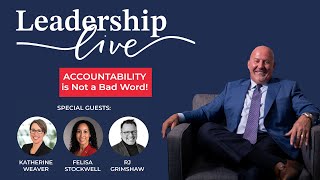
Steve Lowisz hosts a panel with Felisa, Kathy, and RJ on reframing accountability as a positive force in leadership. They discuss how personal accountability, peer accountability, and trust shape team dynamics and organizational culture.
And welcome to another edition of Leadership Live. We are live streaming on LinkedIn, Facebook, and of course on Zoom. Thank you for signing up. Thank you for attending. For those of you that have never seen a Leadership Live, the whole idea behind what we do is really tackling topics that leaders are contending with, that people are contending with, and bringing some experts on or at least some folks with some opinions to talk about these specific items. My name is Steve Loewes. I'm actually your host. Now, the one thing I'm going to caution everybody on is since we're streaming on so many different platforms, we can't monitor all the comments on all of your platforms. So if you're watching this, if you have a comment or a question, please text my cell, which is right here. 734-837-8500. Again, 734-837-8700. Now, today's topic is an interesting topic that the four of us and I'll introduce my three co guests here in just a second or three co presenters, whatever we want to call them. But this topic of accountability is one of the probably one of the more struggling topics that we've had conversations about where leaders continually bring up how do I hold my team accountable? Then on the flip side, it's individuals saying, well, this accountability thing doesn't make sense to me because it doesn't feel good. It's like micromanagement and so on. So we're going to tackle a lot of the questions that you as the audience have already sent me or to Leah or others, as well as comments. So I would encourage you to play an active role. But with that, I want to introduce my three friends here and I'm going to read some of their bio. Just so we're all aware. I know all three of them to certain levels, but just so we're all on the same page. Felisa to my right. And I got your name right.
Thank you.
After all this time, which I continually screw up. But VP of Global People and Culture for Dahn Foods. If you don't know Dahn Foods, a global leader in bakery product ingredient manufacturing and distribution across the globe. Correct. You lead the organization's Global People and Culture strategy, focusing on talent development, performance management, succession planning, talent acquisition and a bunch of stuff. Right? So you were also honored here recently. Crain's Detroit class under 40, 22, 22 class under 40. Congratulations, by the way, on that. Here's some interesting stuff. Bachelor of Arts from the State University of New York, Master of Science in Clinical Psychology from Loyola and a Master of Human Resources and Labor Relations from Michigan State.
Go green.
Where's the PhD?
You know, just been a little busy.
Fair enough. Thank you for being here.
Thank you for having me.
Kathy, my newest friend. We haven't spent a whole lot of time with each other, but managing director and Michigan market leader for aon. More than 16 years at this point with Aon. But you've got a lot of community development and other things that you spend a lot of your time in, even beyond running the markets that you actually run. Detroit Economic Club, Girl Scouts of Southeastern Michigan, American Corporate Partners for Veterans. I mean, you are busy outside of work.
It's just one of those things I feel firmly in giving back. And I help think it helps develop me and really understand what's going on in the broader world.
I love this comment. I don't know who gave me this, but Kathy's drive to foster growth in others underscores her belief in the power of commitment and collaboration to enact positive change. And I would say, based on our little bit of interaction over the last couple of months, that seems to fit you pretty well.
Perfect. Well, thanks for the conversation.
Thank you for being here. Yeah, that's why I wanted to make sure I got it right. And then my friend RJ over here, another cigar smoker, but RJ was most recently the CEO for Unifi Finance, which was a division, or is a division of the bank of Ann Arbor. Ten years there grew the business from 10 to more than $115 million. I didn't know you were a veteran. So thank you for your service. Three years in the Air Force and a consummate entrepreneur from the time you got out of the Air Force is what I understand where you guys started this.
Scribe, A Town Inn.
Scribe, A Town Inn, which was an outdoor venue, a motel, and other stuff.
My dad had to be crazy. He was our bankroll at 23. I was the age of 23. And he financed the whole acquisition for us, rest his soul. I don't know why he did it, but I got my MBA in how to run a business at a young age.
Well, which is great. And the other thing that I appreciated about your website is moved into the corporate world by mistake.
It was by mistake.
Maybe at some point I'll ask you online here, but three senior folks that I think will be great on this idea of accountability. So let's jump in if you guys are good with this. Again, if you have questions. 734-837-8500. So why is the topic of accountability in your minds, or is it in your minds such a big issue right now?
Go ahead.
Sure. I think it's when you think of accountability, people automatically, or maybe many people automatically feel like, oh, I'm being punished, or, you know, if I, if I don't do this thing, I don't achieve this thing, hit this goal, hit these numbers, something terrible is going to happen to me. And I think that comes, comes from, you know, if you think about. As you're a kid, if you do something wrong or you make a mistake, you might hear, you might feel a negative consequence. And so people associate accountability with negativ. And when we think about this in terms of the workplace, obviously everyone has goals, objectives. We have, you know, from an organization level to an individual level, we have things we need to do and things we need to achieve. And when those things don't happen, how we respond or what happens to us it in. If it's a, you know, the negative feeling thing, it's not done in the right way. People may internalize that and feel that. And then it's like, I don't, I don't want to be accountable. I don't want to do it, because if I don't, something bad's going to happen to me.
They're afraid.
It's a fear.
And I would agree with that because that's a personal choice. If you want to be held accountable or not, it comes down to the person. I believe my. From my philosophy, if, if I want to be held accountable, then I take action to make sure that my responsibilities are taken care of. It doesn't matter what's in front of me. And a good illustration of that is, say, Steve, I hired you to clean this room. Okay? That's the responsibility. I gave you to clean the room. But I gave you three specific things. Make sure the chairs are aligned, the floor is swept, and the tables are straightened. Well, one day I come in and the floor is not swept. And I say, that's your responsibility. I say, steve, what happened to the floor? Why isn't it swept? You said, well, I blew a fuse and I couldn't do it.
Yeah.
And you said, there's nowhere in my job description that says I should have to change a fuse. However, the person that owns accountability, and that's an intrapreneur in my mind, will figure out a way how to get that floor swept clean.
No matter what.
No matter what. Either they're going to fix the fuse, they're going to find a broom, they're Going to find an alternative broom or something, electric vacuum, to get it done. That's the difference from my perspective.
So you got two different views. And Kathy, I want your opinion on this or thoughts on this, because yours is kind of the personal. Starting with the personal accountability. I think where you were going was a little bit of both. But most of the questions I got was kind of from, I think more from the employee perspective, I think, because I don't know who all the folks are, but it seemed to be more from my boss. I don't like the way my boss, quote, unquote, holds me accountable. And then from some of the ones that I got from the boss's perspective, because I want to bring these two together here in a second was I'm afraid to hold my team accountable.
Yeah.
Especially with what's going on now. What's your take on all of that?
Yeah. So it's a great question, I would say, if you back up. Right, like, why has accountability risen to such a level? It seems to be the corporate buzzword.
It is.
They kind of run around. Funny enough, I was supposed to be in Chicago again today for some corpor training with an external trainer, and it was on accountability. And I started laughing. I was like, okay, well, this is really interesting because I'm talking about accountability.
So you were accountable to coming here.
So you did choose here. I did choose here versus showing up that personal choice.
I do like that.
But I'm super interested to hear from everyone else back to the accountability piece. I can't be there, but following up to say, what'd you guys take away from that session? Will be really good. But when I think about, like, what's accountability? When we step back, if you look at the number of changes globally, even just most recently here in our local market for the UAW strikes, we continue to have such a tumultuous level of change. And I think business leaders are trying to keep pace with how do we still deliver results which allow us to serve our clients, serve our colleagues, reinvest in them, and if you're publicly traded, serve our shareholders. Right. And ultimately it comes to accountability. But to your point on, is it a bad word? Not in my opinion. I think clarity, like is being is kind.
Right.
Being clear is kind. Having the ability to very clearly just lay out expectations is a key to a really strong relationship and even key to hiring the right people to make sure you're making good investments. And if it's done well, then there shouldn't be a contentiousness between the employee and the Manager or the employer. But there's a lot of change happening. So there.
I, I agree with that. Go ahead.
No, I, I agree with that too. I think when you have a leader who isn't maybe doesn't have the capability to have those kind of kind, clear conversations, that's where accountability as an employee or a team member, you feel like you don't like how you're being held accountable because it's not clear or you know, something, something's happening to you instead of happening with you. When it, when it comes to what's the. I have to clean the room. Okay. The table, the floors. And I forgot the third thing you said.
Just make sure the tables are straight.
And straighten the table. But are you, as the leader going to tell me exactly how I have to do or everything, or can I, as the employee? Okay, well, here's how I think I can get that done right. And, and, and then it's done. And it happened with me, not to me.
And I would love to expand on that. So when we would hire people at Unify, I would always make the direct comment to the candidate that if the job description that we're hiring you today is the same a year from now, we haven't done our job and you haven't done your job in terms of the opportunities because you're in the trenches every day, you're going to see where areas to improve. As we talked about a little bit earlier, before we came on, sometimes we're so close to the business, we have blind spots.
For sure.
We want to foster an environment to have that feedback back to us.
Can we go back, though, to something that Felisa, you said originally is, you know, as your kid, when you do something that you're not supposed to do, your parents hold you accountable and so on. Isn't there a little bit of ingraining that we're doing for those of us that have kids or, you know, we were all kids at one point. So we grow up with this. Is this possible? That part of this, as we grow up with that idea that, oh, crap, I did something wrong, I didn't straighten the table the way I was supposed to at home, and my dad's going to come in and he's going to whoop my butt, right? That's his version of accountability, because that was my dad's version of accountability. Does that really play into what some of this, of what's going on now? So, because I think there's an employer perspective and employee perspective. Would you agree with that or would you not agree with that?
Kathy said earlier, as long as the leaders communicated properly where the individual understands their responsibilities and the actual actions that they need to take to perform the duty, then it should be fairly clear. And I agree with you. Accountable typically is when someone says you're held, you're being held accountable and it's a bad situation.
Right.
No one ever comes up to you and say hey, great job this month. You hit all your responsibilities. You are so you're so accountable. We don't use it in that kind of stuff.
I think there's the gap when you say like no one does. And I will tell you my growth as a leader continues to evolve. And one of the things that I was coached on very early, it's a lot easier to have tough conversations when you also have kind reinforcing conversations. To say you did that well, keep doing it. The impact of doing that was or like I'm super proud of the outcome. And so when you're reinforcing the positive behavior, kindly saying, hey, I noticed you did this. Here was the impact in the future I would suggest you maybe pivot it and here would be the, the beneficial outcome. It doesn't feel so harsh like you're just not. Why didn't you do your job? Like that's not a helpful conversation. Right. So there's so much learning and coaching. And if you think the number of people we have in leadership positions has changed drastically. Are they getting the support and the coaching they need externally, internally? Because a lot of times people just put leaders in without good training.
Well, as well as they respond have more responsibilities in today's world as a Leader. Think about 10 years ago, a person in your role, your role, my role or Steve's role, you didn't have all the responsibilities and being held accountable for so many different things. I think it's challenging for leaders, especially when they're put into that position as a first time leader to slow down because they're just focused on success. I'm guilty of that. When I became CEO, the only thing I wanted to do is make sure that we were successful because I moved my family to Michigan. I was going to do everything in my power. And you lose the human element of it. And I burned fridges during that time. I, I clearly own that. Steve and I have talked about this at length.
Yeah.
And I owned it. And I'm continuing trying to get better. But it's hard for new leaders because especially if they're. It's a first opportunity. They don't want to let People down, but they're burning relationships over that.
I would argue that it's not just new leaders. I think leaders at all levels because it's how you were treated, what you saw modeled for you. But I think Kathy, to your point, how I sort of kind of characterize what you said, it's, it's accountability with empathy. Like the two don't you, you can, you can have both at the same time. You can hold people accountable, have the conversations on the expectations, but do it in the right way. And that's something I think leaders at all levels can, can work on. I mean my I for myself included.
I feel that I, I, I agree with that. You said something that was interesting. That, that I think is very true. Accountability is often a look back. Mm. It's the, at the deadline has occurred and now we're gonna look back on that. But what about all the time in between when you started and the deadline like isn't where do, where do we or how do we. And this is one of the questions that we got asked that I'll, I'll paraphrase it. Right. It's always the negativity often comes out. Not just because we were trained like that when we were younger, but we get into the work environment, we're given a deadline, which is nothing wrong with the deadline but, but the accountability comes and it becomes a bad thing when it's just a look back, you didn't achieve it. So now what? How do you bring accountability into the timeline in between start and deadline?
That's a great question.
Yeah. I think it's conversations. You need to have a cadence of conversations. Check ins ideally. Right. It should be a two way street. The people leader can be checking in with their team. The team members should feel comfortable and have every right to talk to their leaders and, or their leaders. Leaders. Right. And within the organization and other people about what's happening. And I've been a firm believer. You shouldn't end up at the end of a project or a mid year review or at your review and be surprised about anything that is being said on that document because you're having consistent conversations and it's about how can we help you improve. Is there good alignment? Everything you did really well. But I think it takes time. It takes a lot of time. Time that you have to be willing to carve out and put forth if you want to have the best team and you want to have the best possible results. And it's hard.
Right.
There are days where you're just like, okay, I Can do this, right?
Cheering yourself up.
I don't want to.
I may have landed at 11 o' clock last night and had practically no sleep because I had a be somewhere at 7:30 this morning for another, like, I gotta do this. But it's energizing. And then.
Do you think the culture plays into that as well in terms of peer accountability?
I think it is ultimately the underpinning of everything. The culture. If you don't feel good about the culture you're in, there's toxicity. It's tough. I mean, I was, I was mentioning, I think before I even got started, I was at a training and decided to be here today. It was part two. And this external coach gave a really great example. And it was, it's really easy to get stuck in what's wrong and bad. And she drew a circle, like, and she's like, here's all the issues. And then like, here's what you can control. So figure out what you can control. And gave a great story behind it. Right? Like, she, her example was being stuck in Seattle and she hated the rain. It rained for 35 days. And she's like, what did I just do to myself?
This sucks.
And she goes, I kept showing up and showing up. And finally the person like I was reporting to pull me aside, they're like, really worried. Like, every conversation is about rain. Like, all you do is talk about rain. She's like, and I finally realized I just have to buy a new coat and I have to buy new boots and I have to get a new hairstyle and I have to get new clothes. And then it like, it all changed for her, but because her perspective on it changed versus this is the worst decision I ever made. So what is it? The saying is, you can keep it, you can change it, or you can leave it. Yeah, right. You got to make a decision where you want to be in that.
I was just gonna say the culture piece, I think is key because again, if you have individual leaders who see accountability differently, act with their teams about accountability. But from an organizational level, what's driving that? Right. At the end of the day, everyone's accountable to something for themselves, their teams, the organization. And if you know your top leadership is promoting a culture of accountability, it's not just happening to you. And this is exactly what you said, Kathy. It's happening with you. So here's this project, here's this timeline. How can you get it done? What do you need? Check with me. Let's check, you know, a quarter of the way. Don't Wait till the end. But if. But if you have a broader culture that only cares, hey, you did this or you didn't, and it doesn't matter why or what if. It's only about the what and not the how you got there and the why the relationships, it makes it negative.
So before we go further than it, here's what I'd like each of the three of you to do. If you had to define in your own words, accountability. Just a simple one sentence, two sentence definition.
Obligation to act.
Obligation to act.
I think it's delivering on your commitments.
Okay.
Following through on your word.
Okay. I don't think any of those are inappropriate. So let's. If it's that simple, let's kind of go back to the original question, right? Why are so many leaders struggling with this? And if it's about filling the gap in the timeline, you said empathy and results, you got to kind of have the two together.
Empathy and accountability.
And accountability. Let me give you a quick example, then I want to go back to that original question. So when I was younger, my parents taught my dad in particular, Old country came from Poland. So he was proud when he got his second house in the suburbs, right? This was a big deal. You know those people that cut the grass on an angle and then they come back and cut it on the angle the other way. So you've got this checkerboard. That was my dad, because he was really proud of it. And eventually he taught me how to cut the grass specifically. So he was going to hold me accountable to the way I cut that grass. And I did a pretty good job of it. Ended up picking up the neighborhood, picking up all kinds of lawns to be able to cut in particular, one guy next door, his name was Mr. Pete. Mr. Pete was in like his 70s or 80s, and he had a special needs child that was in his 50s. And his wife, while she was alive, did the same thing, cut the grass perfectly. It looked better than my dad's grass even when I was cutting it. Right. Eventually he passed, or she passed away. So he had asked me to cut the grass, and I kind of approached him to do it, but I was 14 years old, so at some point I was going to cut corners. I want to play with my buddies. In fact, we were playing football across the street. I hadn't done the things he had asked me to do, but Mr. Pete was a wise old man. And he would walk his dog, Rusty, down the street a couple times a day, and he saw we were playing football on the other side and he walks by and he says, steve, come over here. I said, hey, Mr. Pete, how are you doing? He says, great. He says, how does. How do you think my lawn looks from across the street? And I'm like, oh, crap. And I started bawling right away. It's like, I knew what he was doing, but he's like, hey, you know, what do you think we could do better? Can I help you actually do this? That was, to me, accountability with empathy, where he was teaching me and was willing to help me to actually get there. Kind of what you were saying, right, is that we've got to have this balance during. During the timeline. So if that's. If it's truly that easy and it's truly the definitions you guys gave, why are so many leaders struggling with this, not just the employee? Because we talked about it from the employee side. Why do we really struggle with making accountability a positive thing and not just a negative thing?
Well, I'll give you a counterpoint to the lawn story. I had this similar issue, except I was Mr. Pete.
You were.
And hired the neighbor kid. And I did not handle it like Mr. Pete did. I was like, he is not. I just said, within these three days, I gave him flexibility. He's not edging. I was like, off my rocker. I was so mad that he didn't do it. I was like, not my best day. So I learned from it.
Right?
You learn from. So I think that's the big question is learning from it. When you step back and I ask new people, leaders, like, why is this uncomfortable? We're having an issue with one of the colleagues, and they're just so uncomfortable. They don't know how to have the conversations, is what I generally find. I know it's a problem, but it's usually the, why can't they just do it? And I'm like, okay, so we have to help. Like, let me help you, give you some suggestions on how to have the conversation. So we get to a place because ultimately we want them to succeed right within our environment. We don't want them to not work for us any longer. But I think that's what it is. They don't know what to do. How many people, through the course of your career, when you didn't know what to do, you didn't feel like you had a good network, felt a little frozen, like, I'm just going to ostrich it, and I'm going to avoid it and hope it goes away, which it doesn't.
It doesn't.
It gets worse. It Gets worse. It never goes away. It gets worse.
Yeah, it does.
So I think that's the issue. But I welcome what your thoughts are.
What if we just change the word from accountability to scorecard? It's a different conversation because you're really measuring the same thing. If they achieve the objectives of the job description. And you, and you reference a scorecard versus accountability because again, negative. There's a connotation of negativity to the word. Because we grew up. I love what you said earlier. We grew up as our parents saying, I'm holding you, you're punished, and you're.
Accountable to your actions.
It's a.
Accountability and consequence are often found together. It can, it can be.
But I don't think as leaders, we. I don't think as leaders we do that, though use it in that context again.
I think you can call it a scorecard. You can call it accountability. You can call it, you can call it whatever you want. I just, I think it's the what you, what you're doing and the how you're doing it. And Kathy, you know, to your point, it's. You can have the conversations you hold. No one's saying, don't hold anyone accountable. We all have to be accountable for something for sure. And I think sometimes as leaders and just your own sort of personality and, and you know, you said, how did he not like, know this was wrong? We. If you're someone who high accountability for yourself and we're not putting ourselves in other people's shoes, I think that's what we need to do. Okay, so this didn't get done before. I sort of, you know, go on a rant and maybe bring someone down. Let me stop and think and ask questions, well, why didn't this happen? What can we do differently? Like be Mr. Pete. Yeah, and then use motivation to help drive account ability versus you must get this done or the world's going to end and you will have no food. I mean, like, just. That's not helpful.
That's.
For most people. Everyone's different.
But for most people, that's true. I mean, everybody is a little bit different. But I think we all need some of that. Again, in between that start and that, that end point, all of us need some level of motivation, inspiration, support, empathy, whatever term that you actually want in there. But we're kind of missing the gap. Many of us as leaders are missing the gap and going right, right to the end again, for sure. So, so here was one of the other questions that's related to this. What's the difference between responsibility, accountability and ownership. Is there a difference between responsibility, accountability?
Responsibility is the obligation to understand what your. What your job description is. You. You understand that responsibility, the accountability. Accountability pieces, as I mentioned earlier, the obligation to act. What was the third one?
Ownership.
Ownership falls into accountability. I think they're cinnamons. They run together. At Unified, we actually read. Great story. Extreme Ownership.
Yeah, for sure.
Great book. The whole company read it. We'd pick a book every year and read it. We stopped doing that probably four years ago. Well, I had this senior salesperson with the company, 30 years, sweetheart of a man, incredible soul. Well, he read that book and he took it to heart. Everything he did in his life, it was life changing for him. And he would reference extreme ownership. Extreme ownership. I own it. I'm not a victim. I deliver my results. And it was fascinating. This gentleman was late 60s, maybe mid-60s. And. But that is ownership because it resonated with them. Just like accountability. I think they're. Again, that's my beliefs. They coincide with each other.
What do you think, Felisa?
I think it depends. So, I mean, if you think about like a racy motto you have, responsible and accountable. And sometimes it's the same person or the same people, it's different. But when I think about responsibility, it's. This is. I'm responsible for doing xyz.
It's in your job description.
This is in the job description. Or this is in the project. But accountable. There's ultimately someone who's accountable to ensure that those things get done and they can get done because the accountable person does them or the accountable person delegates them to others. So maybe your team. But I think in. In understanding accountable, responsible and ownership. It's in the conversation of this is the work we're doing, this project to build this table. Ultimately, I'm accountable for this table to get built. But how I go about that, I'm gonna have you. You're gonna build the legs, you're gonna put the top together, you're gonna screw the screws. And if one of those things doesn't get done, I need to have the conversation, hey, it's not getting done. How do we work through this? But the end of the day, if the table doesn't get built, it's on me as the accountable person. So I think it's all three at the same time, but also not. It depends on how you define it and how you're communicating it.
Is that part of the challenge, though, that we all define it differently? So there's confusion around it because we throw out, and I'm saying collectively, we as just business people in general, parents, it doesn't matter. We throw out those three terms consistently. So, Kathy, what's your take on, on responsibility, accountability, ownership? Is there a difference?
Yeah, I, I think there can be difference to Felicia's point, depending on the company and the various roles. I think that's where we run into trouble, is the clarity.
Yeah.
So if we use the table example, right. So ultimately, I say all the time, I ultimately own it. In the end, if I'm calling because there was a service issue, Right. I had the people that were accountable, I had the people that were responsible through the entire size of the team. But it's still, I have that responsibility to own, apologize for the mistake, make it right. We use the table. The problem is we can walk in because in my mind it's supposed to be level, but the other person just heard, put the table together. They don't care that it's gonna rock back and forth.
They put it together.
They told me to put it together. Right. Not realizing the outcome. So it's a lot of, I think, taking the extra time to clearly articulate the expectation, the why, what the impact is if it doesn't happen. Because now we're going to sit here and hear this crazy. And by the way, it doesn't rock. So it's totally good. The table's great quality furniture.
Actually it does a little bit.
Whoever built this did a good job. But you're not going to hear this bang, bang, bang, bang, bang, right as you're taping. Right. So they just. People don't necessarily understand that. It's like you just said, build the table.
I built the table as well as post Covid too. You don't know what's going on in that person's life too. They might have something going on that's causing stress where you weren't getting their best performance for that day. So you have to weed through that too. And that's an area that, Steve, I've worked on with you about the whole empathy piece of understanding there's more in this person's world than just unify or what's taking place Now. If it's a behavior where you're seeing a trend, that's a whole different conversation. But if it's a one time event, you know, a lot of times that's where that empathy piece comes in for sure.
Can I be devil's advocate for a second?
You absolutely can.
I know this is the super simple example of the table and that, oh, you just said build the table. You didn't say it had to be level. And like, I. I guess to think about. I don't know if that's accountability or that's. Well, I think about quality and what. How people's level of, you know, wanting to do a good job, like, intrinsically, I want to make sure this is correct to build the table and it's wobbly and be like, well, I built the table.
Yeah.
I think that's almost a different conversation.
That's that personal ownership thing, that personal.
Ownership, but it's personal, like caring about the product that you gave, not that you just got it done. So for me, that goes a step farther. And I think about work, too. You told me, you know, to. To create this PowerPoint or whatever, but it's got spelling errors, the format's off, the graphics are horrendous. But did you not see that or help me understand why didn't like. To me, that's not account. That's accountability for quality. And for some reason that feels a little bit different.
Don't you believe that you can identify the two. I call them functional and vital. In companies where that functional employee, they might just let it rock and that's fine. But that vital employee, they're going to figure out a way how to probably make it better than what you were hoping for. And it's magical when you find those team members, it's unbelievable. And those are the folks that you just pour into example that at Unifi, we hired a lady out of the Detroit Red Wing. She was there for eight years, and we were able to hire her to come into unify. She started as my executive assistant today. Now she's a portfolio manager, collection manager. She's received all kinds of pay increases, but we saw that in her that just ownership and accountability. But it was always above and beyond what any of us ever expected.
So you actually just described kind of my thought process, going back to my original three responsibility, accountability and ownership. Responsibility's in your job description. Here's what you're responsible for. Now. Could there be. Could there be some. Some items in there that are not clear? Absolutely. And it kind of screws the whole thing up. Right? Accountability is the obligation to do it. To me, ownership is the choice to do it because the obligation doesn't necessarily make. Make it the choice that I have, somebody's gonna ultimately hold me accountable to. It is kind of felisa what you were talking about, but I view those as completely different. This one is given to Me, this one is my obligation and somebody's going to hold me to it. But this one is where I take the ownership. And if I do this, these two become non issues. But I don't think enough of us look at it in that way. You can't force somebody to take ownership, can we? No, no. We can only force responsibility. And yes, we can enforce a certain amount of accountability, but we can enforce ownership. So how do you create that culture? I think be more specific though.
It's pure. I believe in pure accountability. When we would interview people back at Unify again, one of the questions I always ask, after you're here a year and you see one of your teammates not carrying their weight, how do you handle that? And if someone said, I put my head down, I just worry about myself. Guess what? They were not a candidate any longer. I wanted people to hold people accountable because I wanted to be held accountable as well as the president. And I would tell my team all the time, please don't come to me a month, two months. Complain about something when you know that I want you to hold accountable. Because I'm not going to ask anyone to do anything that I would not be willing to do or haven't done before.
So you just bring up a good point. I want both of you to comment or all of you to comment on this. You said the peer holds the person accountable. You just kind of brought that up. Whose job is it? Is it the boss's responsibility? Is it the peer?
I communicated that I want. I always wanted a culture of peer accountability. Again, we're in a small company.
Yeah.
And we're. We were very transparent with our numbers. And if someone wasn't carrying their weight, it didn't only affect the. The team members, it affected their families as well.
Sure.
So there was a ripple effect that I would always try and coach and teach to like you're not only. You have a decision to make every day when you wake up. Do your job, Dot do your job. As basic as it is, if you decide not to, you're not only affecting your behavior, but you're affecting everyone else in the company as well as. How about the external customer? There's a ripple effect that a lot of people don't understand by just sliding, gliding and not taking ownership or accountability.
What are your thoughts?
The best teams that I've seen function together. They've been part of a hiring process. Right. So they definitely want that person on the team and. Or they've built a relationship. You've given them the space, working on Projects together in the office, you name it and you can tell there is a genuine desire to ensure the other person is also successful. They enjoy working together and so they naturally like become accountable to each other without you even have to reinforce it or say it because like, it's like, Steve, I like working with you. I really want to work on this project. If I fail to get something done, I'm going to feel terrible. Letting me down, that I let you down. And that is hard to force. I think you can teach, you can encourage, you can train, but you find the people. It tends to have a rhythm about what's going to work in an organization when you've got the right people in.
What do you think?
I think I agree with both of you. I think peer accountability is necessary and for high performing teams it's there and it's cultivated and developed based on working together, having success together, going through challenges together. But I would also say I think we can't just stop there from like this, you know, accountability across, there's accountability down, accountability across, but I think there's also accountability up.
What do you mean?
So from a cultural standpoint, and this has to be developed, I feel like my team, for example, I want them to hold me accountable for the things that I say, you know, I own. I know that I could go to Jason, who's my boss and say, hey Jason, this is what was discussed. You know, how can we work through this or whatever it is. But I think it has to be. It's, it's not, it's a shared accountability throughout the whole organization because it's an individual level, it's a team level and it's a broader organizational level. And that's, I mean, you know, your success on the team is my success and the organization success is my success. So it's a shared accountability.
Where does trust play in all this? Because that's one word we haven't discussed at all. Part of the accountability is the trust factor.
Can you separate the two? Trust and accountability? Can you do both or can you do accountability without trust truly in the right way?
No, I don't think you can. I think it's a lot tougher, but I think it's easier to give people the space to do the job in the way and get the result that you want. When you have a high level of trust, right? It doesn't matter which route you took, if you got the end result, great. When you don't have a level of trust, that's where I see the breakdown is there are A lot of questions because there's a fear they're not going to get to the end result, and then that becomes uncomfortable for both parties.
I'm seeing it in my head. It's almost accountability can drive trust and trust can drive accountability. So it can go both ways, I think.
Yeah. I don't know how you can have true accountability without some level, especially what you're talking about that bottom up. You've got to trust your leader, and your leader's got to trust you to open the door to be able to do that. Right. I mean, my conscience is sitting right across from us. Right. Looking at it, I'm sure she holds you accountable writing right now, but I think we have a fair enough level of trust and a relationship that it goes both ways. So I don't know that you can separate those two. To truly do accountability in the way that you guys are talking about or we're talking about doing accountability, you can, in the sense of how we generally use accountability. Here's your scorecard. You didn't do it. Shame on you. And now you're in trouble. In order to do that, you don't need trust for. In fact, it breaks down trust by doing it that way. One of the comments I just got on text though was, it's not my job to hold my peer accountable. It's my boss's. As we're talking about this, it came through.
That's the one person's choice. That's okay.
I think that's, again, your success or our success is my success in both ways. And when I think about the peer accountability, I just think about group projects in school. You know, the dreaded group project where we're all on a group and inevitably someone's not doing this. You have the slacker. Then you have someone who's like, oh, no. Like, we have to get this done. So let me take it and okay, I'll do this. Like, you're gonna delegate, delegate, delegate. And I think when you're on a team, it can sometimes feel like that. But again, I think when there's trust and you have the right culture, you can have those conversations and you can say, steve, you know, your role in this is xyz. If this doesn't get done, you know, here's the impact. What do we need to do to get this done?
Yeah.
Or find a role that Steve could be successful in. We do that all the time. We'd pivot someone, okay, this isn't a good fit for them. Good person, good attitude. All the. All the Intangibles, let's pivot and find them a position that they can be successful. That was always our mentality, you know, because we hired them, we saw something in them that we liked. So let's find a place that they're going to be successful. And we did that numerous times in our organization.
But I would say on the peer accountability, it can't just be there. It does still need to come from the leader above.
There's an example there somewhere. I use this example since you brought up teams when I played football when I was in eighth grade, ninth grade, and so on, I had to ride my bike to get to practice right after school. And in order to get there because my parents were working in day one of football practice, I'm late. What do you think happens?
You ran by.
Who told me to run? The coach.
The coach.
Day two, you all ran. I ended up late again. We all ran. What happened on day three? Because I did it three days in a row.
Your buddies were waiting there. Make sure you're gonna be on time.
Well, the coach didn't have to say a word. And the coach realized at that point because he set the example of what was going to happen. It was the peers that said, okay, we're gonna. We did suicides. Hundred yards. You know what that is, right? Like, we're all puking at the end of this thing. So they didn't want to go through that again. So after that third time is when they finally said, okay, we have two options here. Kick your butt off the team because we're not going to run again, or we're going to help you figure out how to actually do this. So he was smart enough to create this environment where there was his accountability to me, and it wasn't negative. It was teaching me a lesson. And then the team's accountability. But in the corporate world, is it that easy?
I think it depends. And I can't talk to whoever texted you, but I think I would ask him, like, do you solely.
You can tell her I actually know who she is. So you can tell her she does not work here. For the record. Yeah.
I think the question becomes, like, are you a sole contributor and nothing you touch or do is impacted by your colleagues? And is that the same? I mean, maybe. Is that where your position's coming from and accountability? Or are you frustrated with your colleagues and don't know what to do and just want your boss to fix it? And so that's the. Where your position's coming from and accountability? Or are you frustrated with Your colleagues and don't know what to do and just want your boss to fix it. And so that's the I don't need, I'm not going to be the one to hold my colleagues accountable.
Who knows they're going to follow the system, what's laid out in front of them. They're never going to make improvements to it. That's a level one functional employee team member which you need however, really especially the world we live in today to go to that next level with innovation, improvement culture, things of that nature. We need level 3 employees or team members and they're your intrapreneurs because they have that mindset of back to ownership. It's one of the characteristics of an intrapreneur is ownership, resourceful things of that nature.
But what I will surmise from that question is there probably is a lack of accountability within the organization by mere facts of the way the question was stated.
It's so new. So she shared with this person, I gotta be careful, shared with me yesterday that there is this sense of accountability again only happens when there's a negative outcome, right. And it comes. Then somebody comes in, in particular her boss's boss and that whole team comes in and you know, throws things and says things and it's a mid sized company, hopefully they're not throwing too many things.
Did you just say throw things inside?
This happened yesterday.
Okay.
Like literally this yesterday there was something that was picked up and thrown across the room, did not add anybody.
Sounds like accountability is not the issue.
But in a fit of anger, well, not a topic and it's not the CEO. So there's an accountability issue for that kind of behavior. So we can, I mean we can unravel all kinds of things. But I do understand her concern that it seems to be a cultural thing. So her question to me yesterday, and it's on the sheet too, but it's okay. We can talk all high level about what accountability is. The definition of it is how we view it, how we've applied it. An organization that's struggling with it, which almost every company has pockets that are struggling with this whole idea of accountability. And if from your experiences, if you said here's the practical things you need to do, not the high level feel good some of the conversation that we've had. But if you were to go in an organization and try to change that in an organization or if you have change that in organization, what would those steps be? What would you tell her?
Yeah, so I always start with, I said it when we started the conversation clarity is key. Being clear is number one, put it in writing so again there's no misunderstanding. Conversation's always first, right? Put it in writing so it's very clear. And then check ins to provide appropriate support with positive reinforcement and then understanding the why behind it and the implications for not doing it. Not just for the individual, for the team, the company. Like so people can get on board. And if they're not, because if you have that conversation, you can tell if someone's on board or not. I mean, it's not usually hard to read people's faces. Tell me why, what's the issue? To really peel that back and understand their perspective and start having that dialogue, I think you end up in a much better place.
I would just echo all of that. I think if I think it, it's clarity, commitment and, and consequence, but positive consequences. So be clear, bring people with you. The why, how it's going to help them, the organization, how is it tied to the team goal, the organizational goal, what have you and how can this best get done? Let's check in. If there's issues along the way, here's what you can do. But then I also think, and just kind of going back to the peer thing, it's coaching people and giving them guidance on this is how you can hold others accountable. This is how you can be accountable yourself. If this is the project, this is how you can hold your peers accountable and this is the expectation and then deliver the consequence positive. Hey, this worked out well. You're meeting these objectives. I like how you were able to tell, you know, Kathy to step it up here or whatever.
Yeah, happens all the time.
I'm sure it does. So I do want to clarify because I agree with you on the whole. We keep using the term positive consequence versus negative consequence.
I know consequence is not the right word.
Well, actually it is. You know what the definition of consequence.
I mean it's an action based on what you do.
Positive or negative. Or negative. Exactly. We just happen to quantify, usually use it as oh crap, there's a consequence. So we've got a problem. So answer your thoughts on that. The advice that you would give the steps, anything different from what Kathy or.
Felicia just I think they're both spot on. I mean it's just fostering a team. We focused about team, team, team, team, team. Almost to the detriment where it was just team, team, team. And as long as the culture's like that and everyone understands their role within the organization, that's where you can have the Peer accountability example of that. Sometimes we get extreme operations would go to the sales leader and say hey, your team's not doing their job well, let's have a conversation around that versus just. And again, people lie, numbers don't. And as long as you have the data to support accountability to a certain degree, it kind of works its way out.
So let's hit on it. Because you mentioned clarity metrics, scorecard. We've talked about all this. I pulled this yesterday in Forbes. 80% of employees feel that their performance metrics are out of their control. Think about first step is clarity. Okay, we're giving all these scorecards, metrics and so forth. But according to this study that they did, and I don't know how many people, there's like 11,000 people that responded. 80% of employees feel that their performance metrics are out of their control.
I would love to what size companies they work with.
Don't know. I know I can pull the study.
Because I think there's a lot of data behind that where typically and I've been in that spot before where you feel that you can't whatever. And again, I was in sales so it's easy to quantify the numbers. But I remember sitting in meetings 10, 15 years ago where the CEO had said you need to get to a quarter of a billion dollars in five years. Let me know how you're going to do it and walk out of the room and you're starting at zero. That's the worst feeling in the world. However, if you're in an environment from my perspective and if those people felt that they couldn't obtain their numbers, I would ask that person if they were on my team, well justify. How can we get you there? How can we get you there? I had a gentleman, I gave a ten million dollars. He's probably watching a ten million dollar goal to. He started crying and I said whoa, stop. I will not let you be fail period at all. You will be successful and I'll make sure I get you there. This year he'll do probably 30 million. That year he did 12 million people trust. You have to have trust back and forth.
Here's a comment we just got. What I've seen is accountability by scorecard. If you haven't done what I've asked you to do in the time I need you to do it, you're useless to me.
That's a harsh comment.
It's anonymous. It's truly anonymous. I have no idea who did this one. I just wonder if that's a very pervasive feeling.
I mean, honestly, go back to what you just read the statistic. Honestly, my first reaction to it was, how sad. 80% of the people that responded, irrespective of the size, company, or the number of people, they do feel like how they're being rated is completely out of their control is. It's just sad. Right.
You're set up to fail.
You're like, okay, so then my head goes to, what's their level of engagement? Like, are they happy with the company they work for? Like, I just spin.
They control that. They control that. If you're not happy and you're not, you only feel engaged in the organization now. It's becoming tougher. But over the last couple years, you had your pick of a company you would want to go to.
Well, I will say this. Successful people control it. I think therein lies the question. And there are people that feel stuck in their jobs for whatever reason, personal situation, level of education, I mean, who knows? But it's just. It's sad that that's where we're at.
So go ahead.
I was just gonna say, I think it goes back to that culture piece, too, on what you're rewarding. So if you're rewarding, you know, the people who drive, drive, drive, and the comment that just came in that if the people who are doing those things, leaders are being rewarded because they're getting numbers, and if they're not, they're bringing in new people who they're driving hard, then it does become pervasive. And so I think in addition to accountability, it's also. It's broader than how the organization, what the organization celebrates and rewards from a leadership standpoint. And not just people leaders, but, you know, individual leadership as well.
Sure. So this. This was another question that kind of goes alongside of this. It's hard to talk about accountability. And this is, to your comment just a second ago, rj, it's hard to talk about accountability when employees these days take that as an attack and leave. How do you suggest we address those? It's almost like hurting feelings.
And that's a lot of times why people don't have these tough conversations. Because we think we can either be empathetic and not accountable, or if I'm accountable, it has to be mean.
Right.
And it doesn't.
So if this 80% number is true, that it's the clarity issue, how do you start? How do you address that particular issue? Because if that's the first thing you said, you got to have clarity. We've all kind of said it to a certain extent in accountability, the first thing is being clear. But by this number, let's just assume for right now that it's the right number. 80% of people think that they can't control what's on their scorecard. What do we do? What advice are we going to give people? What advice are you going to give people?
That's a great question. I will just tell you we are in the midst of changing the way our scorecard works. I just had to have this conversation with the team and we're probably behind in changing how the scorecard is done. We've gone from a five point system to four very clear definitions which in my mind again, I'm okay, I like change. I'm actually the one who pushes change. I'm comfortable trying new things. But I recognize on the change spectrum, right. Which there's many books from psychologists you've probably given your degree where people are at and how they feel about it. You have to keep talking about it and explaining it and address their concern. And it's like exceeded expectations, met your expectations, partially met, partially achieved or did not achieve. And then there's some really clear definitions below it. And what I said to the team in having the conversation was, look, we used to rate from 1 to a 5 telling someone they partially achieved a goal. And that's literally the scorecard is there. You have all the capabilities and skill sets. There was some barrier in your way, economic conditions, customer related issues that drove these outcomes. Even though you went through and did every single thing you should have done, that's a partially achieved. Doesn't that feel better than saying you were a two?
Right.
That's a whole different conversation.
I've been the same thing.
Right.
You're going through the same thing. Like everyone's going through it. So again, accountability is a topic changing the way you have these conversations. But the hope is from my perspective, better clarity and feeling better about the conversation of you have the skillset for whatever reason, you just didn't quite achieve this year. But here and you can focus more on what you're going to learn and how we develop you as an employee moving forward versus the way we used to have these crazy conversations. You rated yourself a three. I think you're a two. You rated yourself a four. I think you're also a four. Like through every box. It was kind of a crazy process. So what's the solution here? Well, if you're a people leader, I think you go talk to your leadership team about, I sense we're having A challenge. What are we thinking we're going to do within the organization? If you're an employee, hopefully you feel comfortable about having a conversation with your people leader and your people leaders, like manager and the other leadership team that you have enough ability to have those conversations to at least raise the issue. Because I think you have to acknowledge there is an issue before you can get everybody on board with changing it. And if they're not willing to do that, I think you go back to the either gotta, you gotta deal with it, right? You gotta try and help change it or you gotta decide you want to leave it. And I'm not one for like, okay, it's time to all go change roles. But those are things people have to make a decision on. Because God, working in a world where you feel like you 8 out of like 10 people are just have no control and probably aren't happy. Like that's not great. That's not great.
So what are your comments on this RJ and Felisa? If that's, let's make the assumption it's true.
80%, that's tough. I think if that's the case, there's a broader, maybe organizational systemic issue that there's these robust. I'll make an assumption there's robust goals from, from a company standpoint. And we're telling everyone, you know, down all the levels that you're, you're accountable to this. That's not practical. And so I think as a leader, if I felt like that was happening for myself or my organization, I think to Kathy's point, there's a duty to raise up to higher leadership and say, hey, help me understand the why. Firstly, so it's clear for me, so then I can communicate. But then I think it also needs to come from up. We need to be able to say, hey, I can't deliver $5 million next year when last year, you know, I delivered half a million and here's my resources. And this was the plan like how help me, help me to do this. And if, if that's, if that's the expectation, then we need to ensure people have the right tools, resources, time, et cetera to do the work. And it sounds like 80% of people don't feel that way.
That goes back to trust too. To be that you feel, you, you feel trust in your organization that you can go have that kind of conversation. I have a completely different point. I think we've created an environmental world of victims and a victim mentality and they rather take the victim mentality because they View, it's easier versus owning it. Hence why people say, it's easy to say, I can't achieve this because it's irrational versus saying, you know what? Let's figure out a way how to get there.
Yeah. The, the other question that or the other comment was, you know, we might. I might upset somebody. That was actually the background of that particular. I know who, who sent that one in too. That was the background.
Was it his cariar?
No. No. We're tired. I am so, so quick. So I met. And my eyes are always open to find good candidates for our organization. It would drive my family nuts. I'd check into a hotel if the person behind the desk gave me great service. Hey, what do you. What do you want to do in your life? I'd hand a business card. This particular gentleman I met at a cigar bar. He was at the time 26 years old. My wife looked at me, she goes, you're going to hire him? I said, if he does everything he's supposed to do during this process, yeah, I'm gonna hire him. Hired him. Came in as a account manager. Now he's in sales. Met his wife, who's a credit analyst, married for five years now. It's. That's what it. That's what motivates me when those things happen.
And it could have just been the day, right? Like, you may have just said that it was just the day for this poor guy.
No, and it wasn't actually. It wasn't bawling or anything that you could. I could just sense it. And he. And, and I, I said, I said, you, you will be successful there. I'm not, believe me. You just have to have faith. It's sort of like when, you know, when you're running a mile, you know, okay, I'm at 8 minutes or 10 minutes or 12 minutes. You're trying to get a mental. Quicker to get down to 10 minutes. Maybe you just train. It's the same thing with accountability and your job responsibilities.
I believe there was a. Just bringing it up. I took one of my team members to lunch at a restaurant right up here on Plymouth Road a couple months ago. And this is a place that's never busy when you walk in, like, so you can just walk in, sit down, get out. Really, that's why I go there. When every once in a while we pull into the parking lot and there's hundreds of cars, I'm like, oh, this sucks. We get inside and we wait at the host stand. I mean, had to have been 11, 12 minutes it was like, you know that feeling, and you're like, this is not going to go well. We finally get set. There's only two waiters in the entire waiter and a waitress in the entire building. And there's quite a few people in there. And sets us down in another 10 minutes before he comes back over. Now, at that point, I want to hold them accountable. Like, what would you do in that particular situation?
I might decide if we should just go.
Should we leave? That's one option. What else would you do?
I would personally say, man, I see you're busy here. You know, you're doing a great job. Try and pump them up a little bit. Because especially service workers in the living today. Now, if you're not thanking them, smiling at them, trying to help them, then that's a human being type.
You're a bigger man than me. Rj, what would you say?
Well, before I sat down, I probably would have said, like, so what is going on in this place today?
So. So my natural just, you know, my natural instinct would be to hold him accountable by going finding the manager and giving the manager. That's my natural instinct. It's probably a lot of ours to a certain extent, but I decided to take a different route because I had somebody with me, which was the setting an example. So if I was by myself, I probably would have not reacted in the appropriate way, but because I had somebody. When I asked the waiter to come over, finally he comes over and I gave him a $50 bill, and I said, can I get change for this? Because I want to make sure I leave you a really good tip. And he kind of looks at me, walks away. And a few seconds later, he's back with 20, 20, and 10, knowing he's going to get either 10 or 20 bucks out of this thing or something along those lines. And all of a sudden, the service changes. So much so that the two tables on either side of us come over and like, what did you say to him? Because our service has completely changed. Thought nothing of it. I just thought, you know what? I'm going to give a good example to the person that I'm with. We walk out into the parking lot and out of the back door, this waiter comes running around, gives me a hug. Don't know this kid, aside from this interaction. And he's bawling on my shoulder, what is going on? He says, you don't understand. My mom died yesterday. And the only reason I'm here is because they would have been left with one server, and they would have had to shut the doors, had no idea. But my natural accountability hat would have been, I'm gonna give. Oh, man, I'm pissed off of this kid. But somebody was there to hold me accountable. It wasn't Leah, but somebody was there to hold me accountable, to act in a different way. So it does change how we approach. We don't know to your point of what's happening in that, in that given day, but. So we've got a couple of minutes left and kind of your closing thoughts on this. We're not going to solve the problem today. First of all, we're not going to do that, especially if 80% of people think the beginning stages of accountability are messed up. And I'd have to believe some of that's true, even if it's not truly 80%. Right. So that's a problem. What would be the closing advice you would give to one, the leader that's watching. Two, the employee, and I hate to even use that term, but the team member that's saying, we just, we don't get it around here. What's the quick sentence for each of those that you would give, Kathy?
Yeah, so for the leader, I would say walk through the steps we outlined, right? Be really clear. Make sure you've got clear, concise roles. Follow through, control what you can control. Even if there's a broader cultural issue, people what you control, the people that report to you. And if you're a colleague, I would say take the step to meet with your people leader and say, look, I want to be really clear. If you feel like there's a lack of clarity about what the expectations are, about what I'm doing well, about where you feel I can improve and how can we build out a plan together? I think if you can be brave enough to do that, it will completely change the dynamic with your people leader, especially if they're afraid or fearful to have the conversations because you've been vulnerable enough to say, I want the feedback, please give it to me. You've given them permission to do that. And can we engage in a dialogue in a relationship like that?
Wonderful, Lisa, all of that.
And as a leader, I think it's when you're setting the expectations and you're communicating clarity, bring your team members or your team along the way with you. So instead of this is what you're going to do, this is the end state, this is what we want. How can we get there? How you know, what are your ideas? What barriers do you see? So let them be part of the, you know, the Build the, the how that we get there and then communicate along the way. Reinforcement, find what motivates people, find people's why and include that. And I think then as a team member for your own leader, exactly what Kathy said. Be, feel empowered to have that conversation with your leader and ask the questions and get the information that you need so it's clear for you to be able to deliver on what you need to deliver on and feel good about what you're doing.
What you just said is what Mr. Pull, if I go back to my example earlier, did for me because when he walked me around his yard, he showed me exactly how to do everything his wife had done prior to her death. So it was showing exactly the how and getting my input. Can you do this? How could you do this? And so forth. Thank you, Felisa.
That's a whole nother level of guilt as well because now you feel in your heart you've let her down as well.
Well, so his intention, though, I do not believe was guilt.
Okay.
His intention was to actually help me grow to show you he's since passed. But he wasn't the kind of guy that was going to and I think that was a trust thing to a certain extent. We lived next to the guy for, I mean at that age. I was 14, so I knew him for 14 years in one form or another. Trust is definitely a big issue.
Rj what has already been said and from a leader, don't start questioning your drive to have people reach their full potential. And again that goes back to the person and not the leader. But stay true to you who you are as a leader and have those conversations if they feel you're being irrational or can't hit numbers or things of that nature or do their responsibilities and what you said clarity, spot on. If you're the, if you're the team member, the employee, you own your career, you own what you do on a daily basis. Do not play the victim card and figure out a way either you can be successful in that current organization would be the first choice. And if not, find an organization that you believe in from a mission, vision and idea perspective that you feel you can fit into that team. Go seek that leader and tell them that that's what you're looking for. However you have to deliver after that. So I think it's been a great conversation and there's no we're not going to solve it.
I am going to add one thing on that. There's this saying that relationships are 5050 and then there's another saying that says, no, they're not. They're 100. 100 because they're 100% from one person. Because when the other person can't give 100%, that one person is, and vice versa. I think this relationship, this whole accountability relationship in the workplace is 100% the responsibility of the employee and 100% the responsibility of the leader of that particular employee. I don't think it's a 5050 game. So thank you, all three of you. Thank you for sharing your thoughts on this. We're not going to solve the problem today. In fact, my guess is over the next couple of weeks we're going to get a lot more questions, comments and thoughts now that things are percolating. So I may ask you to come back on if you're open to doing that at some point in the future. For all of you that are watching, if you want to be part of a Leadership Live in the future and you've got some content, you've got some thoughts around something related to leadership business results, all these things, employees, please let us know. Reach out to Leah. She's all over the Internet, so you know who I'm talking about. In particular, reach out to me directly. You can text me again at 734-837-8500. We're talking about going to monthly as opposed to quarterly. We don't know if we're going to do that yet, but, but stay tuned for some announcements around Leadership Live and some other things that cool things that we're going to be doing into the new year. So again, thank you to everybody. Thank you to all of you that are watching. Do not hesitate to reach out if you want to get in contact with these folks. I can make sure that that happens as well. So again, thank you and thank you to all of you. Thanks.
It's been a pleasure.
Thank you.
That's awesome. Thanks, guys.










