Leadership Live - Extinguish BURNOUT Before It Starts
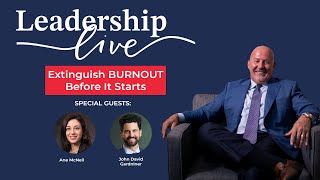
Steve Lowisz talks with Ani McNeil from Trinity Health and employment lawyer John David Gardner about preventing employee burnout. They cover legal risks, leadership challenges, and practical strategies for managing workload and keeping people engaged before stress becomes a crisis.
Welcome to Another Leadership Live. Apologies for the delays. We're sitting here in our studio and invariably crap happens and we just figure out a way to get through it. But welcome to again, Another Leadership Live. I'm excited about today. We haven't done one of these in a quarter and we'll be doing another one in August. I'll get to. I'll get to that at the end. But I've got two special guests with me today with John, David and Ani. Thank you for both being here. And before we get started, just a couple of housekeeping items. We've got a lot of questions that were submitted prior to the event because this is a hot topic around burnout disengagement. We've talked about it. I've talked a lot about it online. So we've got a number of questions that have already been submitted. However, if you're watching this, it's streaming on most stations at this particular point. And you have an additional question. Don't do it on Zoom or where it's streaming. Send me a text at 734-837-8500. It's just too hard to monitor all the different channels that it may go out on. Again, 734-837-8500. All right, before we get started, I'd like the two of you to introduce yourselves. Ani, you to my right. So please introduce yourself so the audience knows who you are.
Thank you, Steve. It's great to be here. I'm Ani McNeil and I work for Trinity Health. It's a Catholic healthcare across the United States. And I serve as the senior Vice President of Human resources.
Morning, Ani. Morning, Steve. Thank you for having me. My name is John Gardner. John David Gardner. If my mother's watching. Hi, Mom. I am an attorney with the Bodmin Law Firm specializing in workplace employment law.
And how long have you been an attorney?
Fifteen years, Steve.
And how long have you been with Trinity?
17 years.
Yeah, you've been there a long time. From our conversation, I thought, who, who better to talk to about this idea of burnout than an attorney for a reason and head of HR for a reason? Because this is serious. At least some people think so and other people think it's a bunch of crap. So we're going to talk about both sides of the coin on this. But before I get going, I wanted to name off a couple of stats that maybe you guys have seen, maybe you haven't. But I pulled this from this morning and just to kind of set the stage for this whole thing around burnout, disengagement, as we labeled it, no matter what you call it, it's tough. All right, 89% of workers have experienced burnout in the past 12 months. Seems okay. 77% of employees have experienced feeling of burnout at their current job. Because the 8 part of the 89% jump jobs as a result of the burnout. 64% of employees say that they're stressed at work right now. I pulled that from this morning. And it was something that was posted yesterday. 21% of workers say that their company does not offer programs to alleviate burnout. That's an interesting comment, because one of the questions is, why should they? I'll come back to that. It was 20%, 21, and 69% of employees are experiencing burnout while working from home. Makes you think. So let's kind of start with. How do you guys define burnout? This whole thing that's going on. How do you look at it? Ani, I'm start with you.
I look at it as something that is chronic. It's a, you know, chronically stressed or chronically burnt out, I guess emotionally exhausted, but it's a chronic situation.
What do you think?
I think a lot of things. To me, it's a matter of engagement. And what I think is really apropos to most employers is losing your top talent, your thought leaders, your rock stars. I think those are the folks who ultimately make it important to all employers to tune into this issue.
Well, we know it's being attributed to turnover. It's being attributed to the whole quiet quitting, you know, all the buzzwords that are out there right now. Is it really that big of a deal from your opinion? This is. This is entirely from your point of view and what you're experiencing or what you're seeing it. Is it that big of a deal?
Ani, you know, in healthcare, it was a big deal before the pandemic and, you know, during the pandemic and now, you know, three years, it's even a bigger deal. I mean, we're seeing one in three nurses being burnt out. And that's just a study that took place from Duke University. We are sensing it with our staff. And it's interesting that you quoted the statistics in regards to people that are working at home as well, because we're hearing from those colleagues that there isn't a turnoff point. You know, their computer, wherever they have it set up in their house, they continue to go back to it and just do one more email or one more, you know, paper. So you know, we are sensing that it is an issue and we are doing something about it.
We'll get to that in a second. I do want to hear what you guys are doing about it. What do you think, John?
It is, I'm hypothetically here from the future because in the future for employers this issue arises in a number of ways. One is a stress or exhaustion related leave request under the ADA or the fmla. Another is quiet quitting or voicing opinions with people's feet. Secession planning doesn't work if you don't have the talent that you relied on. We're in a unique period of time where effectively zero unemployment. So I think it does, it is real and I think it affects employers in different ways.
Can I go down that legal path here for a second? Because that was a number of the questions that I received. Here's one in particular. And I don't know who this person is, but there's a website or a group called Expert HR and there's a legal editor by the name of Robert Teachout. Does that sound familiar at all?
Yes.
Okay. This is what he said. Anxiety would qualify as a serious health condition under FMLA and its regulations if an employee requires inpatient care or continuing treatment by a health care provider. This is what he explained. Anxiety or other mental conditions can qualify as a disability under the ADA if it substantially limits one or more of the employees life activities. What does this mean for our organization? That's from somebody named Shelby.
Sure. So a number of things to unwrap there. But without getting too far into the weeds in terms of FMLA coverage for an employer of 50 or more employees within a 75 mile radius, 12 weeks, you always assume coverage. Right. There are a few exceptions in terms of a disability qualifying, but anxiety does, stress does, other offshoots, depression does. And so whether you're small, medium or large, you're going to be covered based on the employee threshold by at least the ADA 15 plus employees. Right. So most all of your audience, the FMLA, maybe, maybe not. But at a minimum you're going to have to evaluate requests for leave. And so let's quickly kind of put to the side, maybe it's just a matter of Michigan paid medical or unpaid leave. Right. And maybe it's only a duration of a week, two weeks, three weeks. There's a disruption to your productivity if you start to lose folks to stress, depression, anxiety related leave. And so my attempt at humor, which is always a little bit mixed bag in the future, this issue when it comes to My desk or your desk is at a point where you. You can't unwind it as quickly as you'd like to. And so now, I think, is the time to try to proactively address burnout before you come to that point in the future. Right.
Can I play devil's advocate on that just for a second? How do you know that the anxiety was created by burnout in the workplace? Could that be overstated?
Let's assume it is. I mean, in today's era, right, in terms of oversharing or at least sharing in real time, everyone's job looks better on multiple social media platforms, right? Today I'm in studio, so everybody wants to be me today. Tomorrow I want to be Steve, wherever Steve is. And on Saturday, I want to be Ani. So you start to already evaluate your job based on what everybody else is doing, just like your vacations, just like your social media. I think the real issue, though, for burnout is we're not armchair physicians or psychologists. And so when it becomes an issue, you have to assume coverage, and then you have to engage in the interactive dialogue. Right. And you need to address, do we need to look at a reduction in hours? Do we need to look at unpaid leave? Do we need to look at a furlough? Do we need to look at reassignment of priorities? Do we need to look at additional remote work, if applicable? I'm not saying you can entirely avoid that, but I think there are some measures that employers can take now to best address that in real time. And if it hasn't cropped up yet, it's going to. And I think to Ani's point, this issue goes back before the pandemic.
So let's talk about what you're doing to address it. But I do want to come back because there were so many questions about what's really causing the burnout. But let's first talk about what are you guys doing Ane, because you seem to believe that this is something that's true. Both of you do that. I'm not saying I don't. I got to play the middle, the neutral card here. Right. Because I got comments on both sides. What are you doing? What is the trinity doing to deal with this idea of burnout, disengagement, whatever you want to call it.
Yeah. We're doing many things, and there isn't just one thing that you can do to address the issue. And it's different for every person. Every person has a different level or threshold of what they might call burnout or emotional exhaustion. In my personal opinion, the one thing that you start to do, and we've done this and we're continuing to do it, is look at the environment. So look at the environment in which the person or people are working and is there a community of trust? Can I come to work being my authentic self? And it starts there. Do I have a leader who I feel can support the needs I have? And as John was saying, if it is a matter of maybe workload, burden, right. I have too much to do. I keep getting more and more and more and there isn't a resource to help support me. What is the leader doing to support that person manage through this situation and you know, a feeling of fairness when situations come up. Are we, are we looking at the situation from a fair perspective? So, you know, in Trinity, we evaluated all of our practices, our policies to make sure that they were fair, they were representative of the colleague base that we have and even the patients in the communities that we serve. Because we know burnout. Oftentimes we think, Steve, you go figure out your burnout. It's all you. But burnout, it's we. Right? It's how we are working it and managing it together. So looking at the environment, looking at job design and process, enabling technology to help support our colleagues, maybe not to replace everything a colleague is doing, but looking at technology as enabler. And then, you know, we've stepped out of the traditional employee assistance program.
You mentioned that a couple weeks ago.
When we were talking. Yes, yeah. And we've moved into more of a mental well being. So we have a colleague care program that is sponsored by our mission integration team and supported, you know, by HR in large part. But there's. We recognize that for a person, for me, if I'm experiencing burnout, that it could be contributed based on my home life, not just based on my work life. So the services that we offer programs are not just for me as an employee, but also for my dependents that might need at a college. If I have a college student that's going through issues and it's contributing to me, it's also an offering for our employees, dependents.
You had mentioned something earlier as you were just talking about the workload and I want to go back to that here for a second because one of the comments is somebody named Steven that it's not me, it's spelled differently. Just for the record.
Submitted his own question.
It's spelled differently. So here's what he says. Our organization talks about burnout all the time. My boss told all of us as leaders to evenly distribute the workload. So it's the same for all workers of a certain type. When we did that, it blew up because some naturally want more work and others want to just get by. Is this really the right approach? I mean, think about that from the context of burnout. How do you determine what's the right workload? Given that I thrive with an incredibly high workload, and I know you do, and John, I don't know you well enough, but my assumption is you probably thrive in that too, but not everybody does. So you have two people in the same role. How do you have different expectations where this person gets burned out easier? Let's assume that it's a force of the workload itself. We're just making that assumption. How do you deal with that, both from a rest of the team perspective and from a legal perspective where same position, same responsibilities. Doesn't the expectation have to be the same? Start with you, Ani.
No, I don't think the expectation should be the same. And you know that leader. So Steve's question, as a leader myself, you get to know your people. John mentioned talent and making sure that you understand the talent that you have and what is their sweet spot, what are their strengths, what are their weaknesses? And you balance the work largely based on that, if you can. I mean, some functions may not have that luxury. But in large part, if you know your team and you're engaging with them, you know where their strengths are, what you can give somebody, what you might not be able to give another person. So the workload may not always be equal. It should be fair, but it doesn't always have to be equal in terms of I'm going to give you 10 papers and 10 papers and 10 papers, I might give you 15 and John, 10. So I would say the leader should know their team and understand what their capacity is and perhaps even work on increasing that capacity through some development opportunities.
What if they're in the same role, John? They're in the exact same role. And now you've got preferential treatment claims. You've got all kinds of other stuff. What happens from a legal perspective, and I agree with you, Andy, but let's just think about what does it potentially perpetuate.
It has to be individualized, or I think it ought to be individualized. There's kind of small, medium and large steps that you can take more generally. And I think sometimes employers are surprised that the laws are structured in a way that in some senses are employer friendly. Right. So to the extent that you have Exempt or non exempt workers, so long as you're paying them for all work on the non exempt basis, you can work them unlimited overtime every hour of the day. You don't have to pay holidays, you don't have to offer vacation other than paid medical leave here in Michigan. Good luck staffing if that's your approach. But there are a number of things that employers in general can do, but I think specifically to workload, what I think makes sense is to try and tailor it to the individual and incentivize it. And I think some of the issue with burnout is what appeals to some doesn't appeal to all. And so, you know, small steps, honoring vacations, honoring out of office messages, seeking to work with employees, open air meetings, walking, you know, meetings. My movie reference here is office space and the TPS report, you know, the 1999 fictional movie, but with some real life application where the call was to come in on the weekend to do the TPS reports. Was that really necessary? Right. Is that really necessary that Saturday to do that report for that individual? And let's assume again if this is a thought leader, current or emerging talent, is that someone that you want to continue to overwork? If the individual wants additional work, how do we incentivize it? Right. Because that doesn't get into discrimination or disparate impact if you're allowing opportunities equally not basing it on age, any protected class membership or characteristic that is the individual's choice. Right. So additional hours for me may work for my family and myself. Additional hours for a colleague may not work for them. Maybe who you know is a stay at home well or the providing parent. It may not work right now, but I think those are it all to me encompasses the idea of communicating with the individual.
What are you seeing other. You were talking about some of the bigger things that you're doing at Trinity. What are you seeing businesses for both of you, other mid size or smaller organizations, if you have seen that, what are they doing to combat this idea of burnout? Because you've got some flex being a big organization like Trinity to be able to offer some of these enhancements because you're not doing the traditional stuff any longer, Are you seeing anything different that a mid sized small organization can actually do that doesn't cost them an arm and a leg.
You know, what I even see within our hospitals or our medical groups outside of like the traditional programs that fall into your benefit plans is just recognition time, you know, taking a break during the day and like you said John, going outside and Going for a walk or having an outside picnic or meeting with your team, just stepping out of that normal environment and getting together. And you know, for a nurse or for a physician, that might be a little bit more challenging because their work is at the bedside. And so how do you bring celebrations or respite moments to them? So some of our locations have even created respite rooms or wellness break rooms where they can go in and there's a yoga ball or there's a refrigerator with water or snacks and coloring books. They can just take a break while they're walking past the room. So it's non traditional type of stuff. And I'm, you know, other companies, even outside of healthcare, I'm reading and watching that. That's what they're doing as well. So whenever they can have team collaboration. John, you mentioned communication. I think that is essential today, especially post pandemic, people feeling like connected and heard.
So you mentioned yoga. Yes, and I smiled and you did. It had nothing to do with.
I didn't know if you had yoga.
Respect for yoga. It was only because the second question that I got was, according to a recent McKenzie study, an employer can't yoga their way out of the challenges of toxic behavior that is the real cause for most burnout and disengagement. Okay, that was the comment. We keep pushing wellness programs. Why are we afraid? And you kind of did already, Anya. But let's kind of hear this person out. Her name is Terry. Why are we afraid to address the real problem in most organizations retrain or fire the offenders and burnout goes away. Prove me wrong. Pretty direct from Terry.
I don't disagree. I don't disagree with Terry. And I would say that as employers we are, you know, we recognize even within our organization that management or lack of management support in some cases even toxic behavior from leaders is a contributing or the contributing factor on that unit. You can see it in your metrics if you're watching them. And so how we respond in what we do, people are watching and you know, John can even share. We have to walk through a process, but we must address it. And so some employers may be a little bit slower to address it. We've been slower to address it on some occasions, but it's not lost on us.
I don't disagree with Terry's question.
You hear that Terry? You've got two agreements. I happen to agree with it as well. So you got three agreements. But John, please continue.
Slash statement. And I don't disagree with anything that Ani said. I would turn it A little bit on its head, though, and ask it in a somewhat rhetorical way. And that is to say, if the individual, if the talented person is getting more work, their reward is more work and maybe more money. Is that really the example you want to set for staff? Is that in five, seven years, do you want to be getting more hours and more dollars, or do you want other things? That would be one. But to the management point of Terry's question, what I would say is it is so easy as employees and employers to go the easier route, which is to give the work to the thought leader and the emerging talent. Right. The rock star is just going to do it versus going to the person who always has some reason why they can't get it on time. They're stressed, they're overworked, they're overwhelmed. Yes, that is a management issue, but it's also a talent and productivity issue. You have to address the cause, not just the effect. And it can be on both sides.
I think that's what Terry's referring to. And then there was somebody who sent me something but preferred not to give their name. So let me. Because they're related. If I can just read this one and then comment on it. Burnout is real, but are we solving the wrong problems? Kind of what you were just talking about. Our company provides meditation rooms, which is fine, but we're not solving the real issue or the real problem. The problem is that our leaders are always changing the goalposts without telling us. Expectations are constantly changing. Somebody out there is watching this and saying, I'm feeling this pain right now. Right. Expectations are constantly changing. No one knows what's expected of them. Sure, I will take a nap in the room a few times a week, which is probably why they're not giving me their name. But that's not solving the problem. Why aren't we dealing with the real issue of inept leadership? It sounds like there's a lot of blame being put on the leaders to cause the burnout.
Yeah, and I would say I'm not. I don't entirely agree with putting all the blame directly on the leaders. I do recognize that there are some leaders that are equally perhaps burnt out or disconnected from work, and that should be addressed separately. I think that there's a breakdown in communication. I know within our leadership structure, our CEO at the very top of the chain is having communications frequently with all colleagues, recorded videos, and making sure that messages, post board meetings or, you know, other meetings that he's having, that colleagues are hearing the message, whether it is hybrid work and how we're managing it or you know, transitioning from being more technology enabled or advocacy work. Communication is filtering down. But where I think there's a breakdown is that our middle managers, we continue to give them more and more and more and oftentimes we don't do a good enough job of explaining why something has to change or why we are implementing something or why we have an initiative. We do a lot of that why and discernment at many levels above the middle manager level. But then we just expect the manager role in change. Yeah, here's a Memo, here's a five slide PowerPoint. Now go explain it to your staff. And we're not giving them meaningful time to really understand or absorb. So it's no wonder why our colleagues feel that it's the manager. But I think to some degree as executives we also take accountability, but we expect communication to be cascaded and feedback to be provided as well.
Can I use myself as a really poor example of what you just described? Because I did what you just described not long ago. So change I thought was easy for. It's not easy for everybody. I love change. So you tell me to change and it's like, okay, let's try it. If it doesn't work, it doesn't work well. We were paying some dollars for a project management tool that we use at our organization, but we also pay for it through our Office365. Microsoft comes with Planner, which has a lot of the same tools. I'm like, why the heck are we paying for it? Here's the deal. We're changing. Just get it done. Talk about the stress that I create. To me it was like nothing. We talked about the why at a different level. We wanted to save some dollars. We wanted to reinvest it in other places. And then I went to my marketing team, part of which are here, and I said we're just going to change. And the consternation I got back, I probably caused some burnout for about two weeks because I didn't even think through communicating the change. I think that's a real issue that's causing some of what's going on, especially the changes that all organizations or many organizations are making because of the financial circumstances going on in the economy right now. We're just haphazardly making the change. It seems haphazardly, but it's the communication that is really haphazard of some of that change. Is that, does that follow what you're saying?
It is? Yeah, directly. And you know, you Can't. You don't know all the unintended consequences, but you should pause to understand the major ones. And of course, when you roll out the change, you hear from majority of your team and you're like, oh my God, this was the worst decision ever. Or had I just done xyz, it could have been better understood.
I probably should have let them weigh in on it and duh, lesson learned, lesson learned.
Well, I think that's a great example. I think sometimes for managers, the initial thought is, I'm going to meet with the individual, I'm going to calendar something, I'm going to ask how things are going. Maybe I'm going to ask them. This is an example of a similar situation which ended poorly, but it was a good lesson learning. I'm going to ask the individual who's indicating being overstressed to monitor everything they do in a day or a week. And then we'll kind of evaluate how productive they are or where we can find ways to. Someone who's experiencing stress, anxiety, burnout, you're just adding work to their situation. Right. So a lot of times maybe a better approach is a more frequent review or a simplified review. Don't throw surveys at it necessarily. Surveys are great, but it just creates more work or committees. Right. Death by committee. Instead, maybe look specifically at what are areas that you are doing well in. What are areas that we are doing well in? What are areas that we can improve upon and not in three years. What in three months would you like to see in your role? Right. Maybe it's upskilling up training. Maybe it's a hybrid remote work Wednesday or Monday or Friday, whatever the situation, if applicable. Obviously, healthcare is very different and unique. You're not going to have Frontline and providers can't have a remote nurse. Telemedicine. We're not there yet. But asking the individual kind of what he or she suggests, providing an opportunity to be heard, but not adding additional work to try and figure out where they're being overworked. And it's a moving target. It has to be.
One question I always ask too. So all the questions you asked are spot on, is what do you need to do your best work? Is there something you need from me that I'm not providing you that you need? And it's different for every employee that you ask.
And we call them different things. Stay interviews, exit interviews. But maybe it's just. And it's different for different employers. Maybe it's literally walking into the person's office, picking up the phone or putting something on a calendar with the idea being, here's what we are seeking. And maybe the response is, I'm good. Right? But I think to one of the statistics Steve mentioned in the beginning, those folks, 70, 69% who are working remotely who are feeling 69%. Yeah, those same folks. And it hits some generational specificities. Those same folks want to work remote, and yet they feel overwhelmed with remote work. Right. And so that's. It's the push pull. Do you bring them in? Do you try and, you know, connect them? Do you try and network? Do you have a mentorship program? But a lot of times people are sending mixed messages. I want to work remote, but I'm stressed out in my work environment.
And that was one of the articles that somebody. I didn't bring the article, but they linked to the article. And it was exactly that issue that I'm going to reduce my stress by working at home. Right. Because we proved under the last couple of years that we can work at home. It cut off all kinds of drive time and everything else. And then in the same article, the same people were saying, but I don't know how to shut off, so I'm working even more hours. It was easier when I was in the office, but I want to stay home. How do you fix that if that's the cause of the burnout that's going on? Where? Out of one side of my mouth, I'm saying one thing, as you just said, John, and on the other side of my mouth, I'm saying the exact opposite. What do you do with that type of person? Because it's happening.
This is my second attempt at a movie reference. The storyboard framework, right? And a lot of films. I'll just think of a couple here. Star wars, the Hunger Games, Rocky. Right. The storyboard framework is there's a mentor and there's a hero, right? And you kind of. Yoda finds Luke, Hamish finds Katniss, Mickey finds Rocky. Right? You.
We as managers, you missed some of the millennials.
Yeah, I was going to say, I'm trying. I'm trying. I'll think of something. I'll think of something. We as employers and managers, we don't want to be and we shouldn't strive to be Luke, Katniss and Rocky. We want to be Yoda, Amish and Mickey, right? We want to empower our employees to be the heroes in their own work story. We call it work for a reason. It is work.
It is.
Everyone is burnt out, right. Depending on. And I'm not minimizing but everyone can be burnt out. Right. And so trying to have work, life, balance, do it day by day, week by week. Right. Maybe today is not going to be the time that I get to spend countless hours with my kids. Maybe it is. But try and get the balance over time and try and make the employee recognize and realize what are you aspiring to do and become. Right. And ideally a tier with us because again, in the future, or at least now, very, very difficult to find replacement employment or talent rather. And it's difficult to keep throwing money at the situation. Right. That is not advice that my clients want, particularly based on locale right up. Clients don't want to be told, just offer them more money. There aren't people here. Right. We need to motivate and incentivize and work with making these employees the heroes in their own work story.
Yes. And I think you said, I mean, key point, you said it is work. I mean, we all have a choice.
There's a book, it's called Work for a Reason.
Work for a Reason.
There is a book.
And so you have to work. And I think people have to examine if they have this chronic burnout that I'd mentioned. Is there a misfit between what they've chosen to do as work, you know, and their alignment, like their joy of practice and whatever that practice area is. If I go in every day and I just feel like, oh, you know, it's a burden to be at work, then I need to reevaluate whether this is the right work for me. Right. But I have to work. Is this the right work? And I think people get confused between like burnout and stress because I, you know, I thrive on a good amount of stress. Like when I'm, when I don't have a full day, I'm like, why don't I have a full day?
It's always boring for you. Right? Right.
And then when it pours, you kind of wonder, man.
When it pours, you're just like, okay, but today's better than yesterday and tomorrow, you know, but you know, I think of like when people are truly burnt out, because there are, there are people that are truly burnt out to your fats. But you know, it's. I call it pebbles in your shoes. Like there's pebbles in your shoes at every step you take. It hurts. And it's every day or every hour. And so what are we as employers doing to address those pebbles in our colleagues shoes? You told me that there's an issue with the linen not fitting the bed. Am I helping you with making sure we have fitted sheets for the bed or whatever it is in your workplace. And that to me is when it's repetitive and they don't have the means to do their work, it becomes, you know, a chronic issue.
Could, could some of this also. And I agree with everything. But, but it's, I'm. My job is to play devil's advocate.
I was going to walk out when you said you agree with everything.
I'm going to play devil's advocate. Okay. And it's, there's, there's kind of two things. You said the term balance and I want to reference that here in a second. And then I want to go to Jeff. Is it possible that much of this talk about burnout and disengagement is caused by the hype the media has given it? People almost expect to be burned out. Now, let me take it back to your comment around balance. Is teaching balance, talking about balance actually the right thing to be teaching?
I talked about small, medium and large approaches before. I would go to a medium approach answer, which is sometimes it's scheduling, it's prioritization, it's asking the manager in an employee manager situation, when do you need this by? I have seven assignments. Can you order them for me? Some of it is balanced in a different way. Some of it can be addressed simply by, I think, more specifics around. I've got X number of meetings this week. What are the priorities for this week or this day?
Flip, flip, flip. I was kind of coming at it from the employers, the employees discussion because if somebody keeps telling me I won't be happy unless I have balance in my work and my personal life, are we automatically setting them up for failure? Is balance the right word? Think about the impact of the term balance. I'm just asking.
Yeah, I personally, I don't use the word balance because I don't know that you can have a balance between your personal life, your work life or whatever you choose. You need to. It's individualized and I think a person has to figure out what that looks like for them at what time of day. So if I choose to, you know, my balance is for me between work and life. I'm an early riser, so I get up really early in the morning. I'm not going to wait till 7am to send an email because you only, you get up at 7 and you don't want to get any emails from me earlier than that. What I choose to do is what I choose to do. So that's my balance for Me what works for my life. And I think as a leader I would not impose my work life integration or balance on my employee. I would do what you said, which is we have to communicate. I don't know what you need unless you communicate and vice versa. Right?
Great point. And I think great point. Ani and Steve, to your question and point. I think it's a balance over what period of time. I don't think work life balance is going to be daily or even weekly. I think it is measured in quarters or longer view. I do think there are some things.
In email because you only you get up at 7 and you don't want to get any emails from me earlier than that. What I choose to do is what I choose to do. So that's my balance for me what works for my life. And I think as a, as a leader I would not impose my work life integration or balance on my employee. I would do what you said, which is we have to communicate. I don't know what you need unless you communicate and vice versa.
That both employees and employers can do. And some of them can be very simple. Some of them can simply be versa.
Right.
Great point. And I think great point. Ani and Steve, to your question and point. I think it's a balance over what period of time. I don't think work life balance is going to be daily or even weekly. I think it is measured in quarters or a longer view. I do think there are some things. If you have access to the calendar programming that Steve mentioned, maybe it's looking at the employee's calendar before you say I'm going to schedule a meeting or I want to schedule a call. Everyone can do that. Even I can do that, right? I can see other people's calendars and not make it more as though that both employees and employers can do. And some of them can be very simple. Some of them can simply be if you have access to the calendar programming that Steve mentioned, maybe it's looking at the import for them to schedule a call to try and help them. I can help with prioritization. Maybe employees calendar. Before you say I'm going to schedule a meeting or I want to schedule a call, everyone can do that. Even I can do that. I can see other people's calendars and not make it more. There's some incentives that employers can do. You're already booked in terms of the amount of money you're paying in most situations. Maybe the incentive is an hour early here or there or when you hit this project. That's it. Right. For that day or that week, whatever the interval. You don't necessarily work for them to schedule a call to try and help them. I can help with prioritization. Maybe there's some incentives that employers can do. You're already booked in terms of the amount of money you're paying. In most situations, maybe the incentive is an hour early here or there or when you hit this project, that's it. Right. For that day or that week, whatever the interval, you don't necessarily have to. And a lot of employers can't continue to throw dollars at it, bring in third parties. I think there are some simpler solutions that may appeal.
I bring up the term balance because I hear this all the time of what does balance condensate? 50, 50. So are we setting by constantly saying balance, balance, balance, Are we setting people have to.
And a lot of employers can't continue to throw dollars at it or bring in third parties. I think there are some simpler solutions that may appeal.
I bring up the term balance because I hear this all the time. What does balance connotate? 50. 50. So are we setting by constantly saying balance, balance, balance, are we setting people up to think, well, I spend more of my time at work. I'm not 50, 50. Now I'm stressed. People up to think, well, I spend more of my time at work. I'm not 50. 50. Now I'm stressed. Is it more of a blend? And I know it's semantics, but. But sometimes the words do have meaning when we keep saying them over and over and over and over. So that's kind of the 1.1point. But when I go back to what Jeff had said, is some of this burnout, perceived burnout, not saying it's not real because there are people that we feel it. Right. The stress is some of it potentially because it came up three or four times in this perceived burnout, because we're told so many times that we should be burned out, that we should be.
Personally and respectfully for our audience out there. I feel the phrase is overused. Burnout, Burnout. I think it's overused. I think people can be burned out on eating too much chocolate or burned out at work. Respectfully. So I think it's describing again, there's a misfit between what you're doing and what you want to do, like your internal value, your passion. And I don't know that you can apply a 50, 50 to that.
I don't think you can. Yeah. And I'll take it once and let me just give you kind of A scenario. I did a keynote yesterday and I'm giving away the answer. I hope nobody's watching it, is going to be in it tomorrow, but I'm going to do this anyways. I basically had two circles, a red circle and a blue circle on the screen. And it looks like they're the exact same size. And I told the audience they're not the exact same size. So how many of you think the blue circle is bigger than the red circle? And how many of you think the red circle is bigger than the blue? And I got about 80% of the audience to pick one over the other one. Do you think they were the same size? The fact is, they were. And my point in all that is, and I think this goes to kind of Jeff's question that we've got to be careful about is if we keep repeating the same thing over and over and over, it becomes our reality. And if I keep hearing it, if you tell the kid from the time that they're a little kid, the blue circle is always going to be bigger than the red circle. Instinctually, we know that's not the case, but because we were told so many times it's part of our reality. And if we convince enough people, it becomes part of our culture. Could some of that be what's going on? Not all of it, because I do believe that we overwork, we don't communicate, we do all those things. Could that be some of it? Given the impact media and all of this has on the way we think?
Sure, I would say.
But I think some things, and I think we all probably have experienced this, some are examples of maybe the culture, Right. And this is fairly specific, maybe the culture is those people who are hardworking, show up on Saturdays. Right. They're talking about salary exempt employees. Maybe for folks that are experiencing burnout, Right. If they can get the work done in a truncated period, what's the point of just showing up on Saturday? Right? It's the same increment of work. It's just different hours. It's 6am Maybe it's 6pm Obviously you need hour exempt employees. Maybe for folks that are experiencing burnout, Right. You know, intervals where people are in the same space at the same time.
Sure.
But I think we can. If they can get the work done in a truncated period, what's the point of just showing up on Saturday? Right. It's the same increment of work. It's just different hours. It's 6am Maybe it's 6pm Obviously you need reimagine ways to produce the same measure of outcome. And it doesn't have to be 9 to 5 in the office in suits Saturdays. So everyone knows how dedicated you are. That to me is a recipe for disaster. And sometimes you have to change just to say the same in terms of your level of productivity.
Well, let me flip that on you because you're an attorney, billable hours, you can't do that. It's not based on outcomes, it's based upon your billable hours.
Exactly right. But when I get my hours in is up to me. So the incentive to me and the message to those up and coming associates and emerging talent is it doesn't matter necessarily how you get there as long as you get there for you and for us. And so obviously coming in the office if you don't have the experience is important. Getting to meetings, getting to court, getting that experience. And that will help you. But certainly the hours are important, but when you do them may be less important. And so this idea that you have to come in on Saturday to a lot of folks or Sunday or work, if your office lights off at 6pm, you're a slacker. No, I think that needs to be changed. And I think that's unmanageable. I think then we're part of a real problem.
Flip gears a little bit because I just got a text about it and then I had a comment about it as well. So as employers, as leadership, as hr, as whatever advice that you're giving to folks trends to look for, to see if your team is experiencing burnout, real burnout, what should we be looking for?
I think then we're part of a real problem.
Yeah, flip gears a little bit because I just got a text about it and then I had a comment about it as well. So as, as employers, as leadership, as hr, is whatever advice that you're giving to folks trends to look for, to see if your team is experiencing burnout, real burnout, what should we be looking for? What data should we be looking at, aside from somebody just coming up and saying, hey, I'm burned out, I'm disengaged, and so on, because now it's gotten too far, potentially. What do you look for?
It's a good, good question. You know, what I look for is if there is a change over a period of time, so not just in one day or one week, but if there is a change over a period.
What data should we be looking at aside from somebody just coming up and saying, hey, I'm burned out, I'm disengaged and so on, because now it's gotten too far potentially. What do you look for?
It's a good, good question. You know, what I look for is if there is a change of time in that person's motivation or interest in picking up an assignment or asking a question, it may not change over a period of time. So not just in one day or one week, but if there is a change over a period, not necessarily be an indication of burnout, but it's going to be an indication that something is happening with that person, something has changed. Changed. Maybe it's something in their personal life that is contributing, maybe it's something in their work life that's contributing. But I feel as a leader I have an obligation to check in. I don't need to probe, I don't need anything personal, but I have an obligation to say, and I did this last week with one of my colleagues to say I've been noticing that you have been showing up differently. Let me give you three examples of what I mean. And it may be nothing, it might just be my observations, false pick, you know, picking up on something. But I want to, I want to just check in with you to see if there's anything that you need from me that you're not receiving. And that conversation led to the person feeling like, you know, decisions are being made without collaboration on many levels and you know, organization, period of time in that person's motivation or interest in, you know, picking up an assignment or asking a question. It may not necessarily be an indication of burnout, but it's going to be an indication that something is happening with that person, something has changed. Maybe it's something in their personal life that is contributing. Maybe things that are large and integrated that may happen, right? Yeah, but it's how we describe them. So I think just staying kind of keeping a pulse. And if you know your people, you'll see differences in their behavior because of.
The size of your organization in particular. Are there other kind of numerical trends that you also look at? I agree with the one on one. And for as many of us that are able to do that, we should be paying attention to our teams and the people that we work with and so on. But are there actually more kind of documented trends that you would say if this is happening, you might want to pay attention because you may be experiencing some burnout on your team?
I mean certainly turnover is kind of uncomfortable. Of course that's the number one of the easiest low hanging fruits is if you've had a position, get something in.
Their work life that's contributing. But I feel as a leader I have an obligation to check in. I don't need to probe, I don't need anything personal. But I have an obligation to say, and I did this last week with one of my colleagues to say I've been noticing that you have been showing.
Up posted in a group for I would say beyond 90 days. That's probably a little bit artificially low. Clearly if you're posting that position, you recognize that there is a need for more workers in that group. And so you can't ask people to continue to differently.
Let me give you three examples of what I mean and it may be nothing. It might just be my observation.
Triage without any end. Right. So maybe you need to, to reassign or delegate work. Maybe you need to bring in short term staff or temporary staff. Remember, you know, Yoda help Luke. There's always that time or hey Mitch, help Katniss. There's always that time where you hit a low point and that's it's important that you help in the low point before you know otherwise, you know, it's two different paths and you don't want your talent to pick the path of least resistance, which is the door. That is not a solution. That is.
Yeah, I read every exit interview that comes through and our group, so we review them, you know, for the patients, false pick, you know, picking up on something. But I want to just check in with you to see if there's anything that you need from me that you're not receiving. That conversation led to the person feeling like, you know, decisions are being for what we call our Trinity Health Nation. And you know, we look at them every week and it's very interesting to read what our colleagues are telling us. And I think if made without collaboration on many levels and you know, organizations, leaders, we pay close attention to how that person may change over a short period of time. It's, it's like the subtle things and for them it's the most important thing. You know, like I referenced the pebble in the rocks. It's the I don't have what I need to get my work done or there's somebody on the work unit that is not cooperating with me. There isn't communication cooperation. It's difficult for me to do my job. I've shared it with you, maybe not directly, but you haven't done anything about it. And so I'm going to leave now. So that is. And we don't want people to leave, right? We want people to stay we want to work through the situation and you know, we're focused on retention, recovery right now. So. But again, a lot is now on the. That are large and integrated. That may happen, right? Yeah, but it's how we describe them. So I think just staying kind of keeping a pulse. And if you know your people, you'll see differences in their behavior, the shoulders of the middle manager to recognize issues.
Because of the size of your organization in particular. Are there other kind of to resolve issues?
This is where from an executive leadership standpoint, we do leadership rounding to help supplement that for the, you know, the middle manager.
What about also looking at things like excess sick time taken in an apartment all of a sudden? Yes. Those indicators potentially of this burnout thing that's going on and it could be by department, it could be by leader. Are there other kind of indicators like that that you could think of that are something that people watching us would say, oh yeah, I can look at that and it might help.
Yeah. And it's even not taking time off.
Or not taking time off.
So we see not taking time off or taking, you know, numerical trends that.
You also look at. I agree with the one on one.
And for as many of us, pattern of time off. We even measure productivity. So overstaffed and understaffed. And so there's a measurement that we get reported on every two weeks.
There's that are able to do that. We should be paying attention to our teams and the people that we work with and so on. But are there actually more kind of documented trends that you would say if this is happening, you might want to pay attention because you may be experiencing some burnout on your team?
I mean, certainly turnover is a number that comes out. And you know, departments that are understaffed that have, you know, greater than 100% productivity, you need to question why are we at 125 in this department? What are the contributing factors? So we have a mechanism for leaders, you know, to discern that information and what needs to happen, you know, and if it's a pattern over time, we expect them to address it.
The other thing that I look at, and I even look at this in my own organization, if you ask your team a question and nobody answers, yes, there's a problem that happens to you too. No, and I know this and we teach this, but invariably it happens, right? It does. And I think it happens in every organization. It's the degree in which it happens. But if people aren't, of course, that's.
The number one, one of the easiest, low hanging Fruits is if you've had.
A position, feeling like they can say anything, like their opinion will be heard. I think that's a direct contributor to burnout.
For some folks posted in a group for, I would say beyond 90 days, that's probably a little bit artificially low. Clearly, if you're posting that position, you.
Recognize, I mean absolutely, that relationship with the leader or leaders or even the team. Right.
Psychological safety is. Am I safe? Do I feel safe to speak up in the room?
That there is a need for more workers in that group. And so you can't ask people to.
Continue to train with my peers and.
My leader and to set it up, maybe to be bold enough to change the format so that everyone's being heard. And I would, yes. Productivity metrics, attendance, unused vacation or pto. One of the things that I am full of analogies, but it's like running a marathon. It's like building a financial nest. It's planning. It is very difficult to say to someone, go run 26.2 miles. It is a lot easier to say, okay, this week we're going to walk three miles three times a day. And so that's the shorter interval because if someone, if the view ahead is. It's just more, it's more of the same. It is difficult triage without any end. Right. So maybe you need to reassign or delegate work. Maybe you need to motivate and inspire someone. And that's, I think that's where we need to bring in short term staff or temporary staff. Remember, you know, Yoda help Luke. There's always that. There's always that time or hey, Mitchell, Katniss. There's always that time where you hit a low point and it's important that you help in the low point before. As managers, we as employers can help our employees and lift them up. Right. And I go to one of Steve's, hopefully I'm paraphrasing correctly. The definition of leadership, right. Is not to get more out of the person, it's to set the person up to be the best self. Right?
Yeah. The term that I often use is not just to get the best from. It's actually to get the best. So you create an environment where people choose to give their best because you can't force performance any for any long period.
Not for long.
You can do it for about a day maybe and then you're trying it all over again. So that doesn't work. I do have one last question because we're coming up on the hour though. How much does Compensation play into burnout. And the reason I asked the question is again, I got the question, but.
You know, otherwise, you know, it's two different paths and you don't want your talent to pick the path of least resistance, which is the door. That, that is not a solution. That is.
Yeah, I, I read every.
As I did a little research yesterday and this morning, one of the top things that comes up in terms of how to fix burnout, one of the top five is always easy increase compensation.
Exit interview that comes through and our group, so we review them, you know, for the.
What do you, what's your opinion on that?
You go first.
Yes, yes and no.
The loaded one for the last question.
I'm not ducking the question, but I will, I will submit.
So. So that's an attorney's response. Come on, come on.
I want to qualify, I want to kind of quickly dodge. In my experience, it is very difficult, if not impossible to find someone who will tell you that they are overcompensated. Right. It is amazing to me the self preservation instinct that kicks in in various circumstances and individuals always feel that they're undercompensated, underappreciated, overworked, overwhelmed. And I go into meetings with the idea that everyone believes that they should be compensated more.
Right.
And it is always in the top.
Five compensation for what we call our trinity health nation. And you know, we look at them every week and it's very interesting to read what our colleagues are telling us. And I think if as leaders we pay close attention to how that person.
May change over a short benefits, recognition, upward mobility, on and on it goes, I think to the compensation point. There is, there are ways to incentivize.
A period of time. It's like the subtle things and a lot.
But it doesn't need to be base necessarily. It could be productivity, it could be pay at risk, it could be we can't afford to pay a dollar more, but we can afford to give you more flex time or opportunities to work remotely or. John loves Monday morning runs. So John, Monday morning, you earned it, right? Go out there. So I think the compensation piece is always going to be there, but you have to go into it as an employer, I think with the mindset that even your lowest producing employee feels that they're undercompensated to begin with.
So telling them that it's the most important thing. You know, like I referenced the pebble in the rocks. It's the. I don't have what I.
Well, you got to hit, you know, you got to hit Steve's metrics or ani's metrics. That's not going to work for them.
They are, I need to get my work done or there's somebody on the work unit that is not cooperating with me. There isn't communication, cooperation. It's difficult for me to do my job.
They feel like they're underpaid and they're going to compare it to the person who's out drinking wine with their work group. Right. That job starts to look really, really nice when you're sitting inside in Q1 and it's.
I've shared it with you, maybe not directly, but you haven't done anything about.
It, you know, freezing cold. So I don't know if I answered the question, but I think you have to go into it with the idea.
I agree with, with everything that you said. And what I'll add to it is it's the number one thing that I hear, you know, compensation from our colleagues, from our leaders. If we just increase compensation, it would fix the problem. And in some cases, okay, we will. We do. But it hasn't fixed the problem. So I think compensation is. It's not the primary factor. It's a contributing factor, but it's not the primary factor. You have to fix the environment in which the person is working. So somebody. And so I'm going to leave now. So that is. And we don't want people to leave.
Right.
We want people to stay. We want to work through the situation. You know, we're focused on retention. You know, we, we all get calls. Right. There's another job that might be better recovery right now. So. But again, a lot is now other than the job that we're in. If you catch anyone on a weak moment, it's not the shoulders of the middle manager to recognize issues because that job's paying more. It's something else that's contributing to it. And so I think compensation in the last two to three years, it has been probably talked about just as much as burnout, but it's not a contributing factor. We should, we should be paying a just and fair wage.
Yeah, fair. We have to. We have to all pay fair. One of the things that we hear from part of our business is recruiting. And one of the things that we hear all the time is the reason I want to leave is that the employer, they're not paying me enough to put up with all this crap.
Yeah.
So some people freak out and say, oh, we just got to get paid more. Well, what's all the crap that they're having to deal with. And that puts the compensation in the.
Limelight to resolve issues. And this is where from an executive leadership standpoint, we do leadership rounding to help supplement that for the, you know, the middle manager.
What about also looking at things like excess sick, time taken because if we don't deal with the crap, you do got to pay me more to put up with whatever the environment actually is. That's how I see compensation. Assuming that fair comp is there.
Yeah. And I think one quick aside too is total compensation surveys I think are helpful. I wonder, Ani, if that's not something. Yes.
Department all of a sudden. Yes. Those indicators potentially of this burnout thing.
That you've been using for a long time and to avoid the use of the word, a cost increase based on inflation or across the board increases. Because that doesn't help. Right. If you're calling it just simply it doesn't help get more groceries if you're just doing a wage. A cost of living increase.
Correct.
Well, we're out of time. It's a little bit after 12. I know we started a little bit late, but we try to get it done right. Right on the hour if we can. For all of you that are watching, if you have additional questions or comments on this idea of burnout because it's an issue and we got to deal with it, we got to talk about it, we got to figure out some solutions which I think we got from both of you that it doesn't cost millions of dollars to go fix. If we apply some of that's going on and it could be by department, it could be by leader. Are there other kind of indicators like that that you could think of that are something that people watching us would say? Oh yeah, the basic 101 things that the two of you talk about. So thank you for that. But if you've got additional questions, if you've got thought, I can look at that and it might help.
Yeah. And it's even not taking time off.
Or not taking time off.
So we see. Not taking time off or taking thoughts about this.
We can do two things. We have another session coming up. August 16th. August 16th. We may go back to monthly because we're being asked to go back to monthly. But for right now it'll be August 16th. We can talk about this subject again because it would be great to get other people's opinions and viewpoints. And you guys are welcome to come back in on that as well. Maybe we get a roundtable of a half a dozen people and talk through this. So if you want us to do that, send me either a text, send me a message, and we'll bring that on. If you have another topic that you want us to talk about as well, if it makes the cut, please send it. We'll take a look at it. And if it's something that we really need to talk about, we will. The whole idea behind this Leadership Live is to kind of talk freely about our own perspectives on this. It's not always one right perspective. We do know that right there is a right or a wrong in many things, but in some of this stuff, it's like there's a ton of different ways to skin the cat. We gotta figure out how to skin the cat and not just keep whining about the cat.
No offense to those of you, pattern of time off. We even measure productivity. So overstaffed and understaffed. And so there's a measurement that we get reported on every two weeks.
There's that Love cats. Please don't take that the wrong way. There's gonna be all kinds of hate ezra result of that. But John, thank you for making the trip over here. It was great to get your thoughts. Anj, as always, thank you.
For a number that comes out and, you know, departments that are understaffed, that have greater than 100% productivity, you need to question why are we at 125 in this?
Your input and experience that you guys have gone through. This has been another edition of Leadership Live. Again, thanks for watching. We'll see you guys again soon.
Department, what are the contributing factors? So we have a mechanism for leaders, you know, to discern that information and what needs to happen, you know, and if it's a pattern over time, we expect them to address it.
The other thing that I look at, and I even look at this in my own organization, if you ask your team a question and nobody answers, yes, there's a problem, that happens to you too.
No, it happens to.
And I know this and, and we teach this, but invariably it happens, right? It does. And I think it happens in every organization. It's the degree in which it happens. But if people aren't feeling like they can say anything, like their opinion will be heard, I think that's a direct contributor to burnout for some folks. I mean, absolutely. And it's that relationship with the leader.
Or leaders or even the team.
Right.
Psychological safety is, am I safe? Do I feel safe to speak up in the room with my peers and.
My leader and to set it up, maybe to be bold Enough to change the format so that everyone's being heard. And I would, yes. Productivity metrics, attendance, unused vacation or pto. One of the things that I am full of analogies, but it's like running a marathon. It's like building a financial nest. It's planning. Right. It is very difficult to say to someone, go run 26.2 miles. Right. It is a lot easier to say, okay, this week we're going to walk three miles three times a day. Right. And so that's the shorter interval because if someone, if the view ahead is. It's just more, it's more of the same. It is difficult to motivate and inspire someone. And I think that's where we as managers, we as employers can help our employees and lift them up. Right. And I go to one of Steve's, hopefully I'm paraphrasing correctly. The definition of leadership. Right. Is not to get more out of the person, it's to set the person up to be the best self. Right?
Yeah. The term that I often use is it's not just to get the best from, it's actually to get the best for. So you create an environment where people choose to give their best because you can't force performance for any long period.
Not for long.
You can do it for about a day maybe, and then you're trying it all over again. So that doesn't work. I do have one last question because we're coming up on the hour though. How much does compensation play into burnout? And the reason I asked the question is, again, I got the question, but as I did a little research yesterday and this morning, one of the top things that comes up in terms of how to fix burnout, one of the top five is always increased compensation. What's your opinion on that?
You go first.
Yes, yes and no.
The loaded one for the last question.
I'm not ducking the question, but I will submit.
So that's an attorney's response. Come on, come on.
I qualify. I want to kind of quickly dodge. In my experience, it is very difficult, if not impossible to find someone who will tell you that they are overcompensated. Right. It is amazing to me the self preservation instinct that kicks in in various circumstances. And individuals always feel that they're undercompensated, underappreciated, overworked, overwhelmed. And I go into meetings with the idea that everyone believes that they should be compensated more. Right. And it is always in the top five. Compensation, benefits, recognition, upward mobility. On and on it goes. I think to the compensation point. There are ways to incentivize, but it doesn't need to be base necessarily. It could be productivity. It could be pay at risk. It could be we can't afford to pay a dollar more, but we can afford to give you more flex time or opportunities to work remotely or John loves Monday morning runs. So, John, you earned it, right? Go out there. So I think the compensation piece is always going to be there, but you have to go into it as an employer, I think with the mindset that even your lowest producing employee feels that they're undercompensated to begin with. So telling them that, well, you got to hit, you know, you got to hit Steve's metrics or Ani's metrics, that's not going to work for them. They already feel like they're underpaid and they're going to compare it to the person who's out drinking wine with their work.










