Leadership Live - Legal Ramifications for Leaders
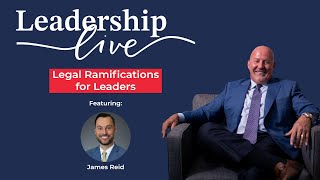
This is a YouTube video titled "Leadership Live - Legal Ramifications for Leaders" featuring a live discussion recorded in early 2024. The conversation is hosted by Steve Lowisz and James Reed, with participation from several other individuals including HR professionals and legal experts. The discussion focuses on the legal implications of leadership practices, employee engagement, workplace relationships, discrimination risks, and handling sensitive topics such as political views, personal disclosures, and workplace conduct. The format is an interactive live session with audience involvement and real-time questions.
Foreign and we are once again live. Welcome to another Leadership in Legal Live. My name is Steve Lois and my co host James Reed.
Happy to be here.
Thanks for joining again, James. We actually have a audience today for the topic that we're going to be talking about. The whole purpose of Leadership in Legal Live is to talk about some things that maybe not everybody agrees on when it comes to leadership, HR and the law related to both of those. That's what we're going to talk about today because it's going to be pretty interesting.
There's a lot of different leadership styles out there.
Well, there's styles, there's the legal implications of all those styles, which is something we were just talking about in the context of this distinguished panel of folks that will be joining us here in a little bit. But we want to be able to answer your questions as well. And as we always do, we're live on Facebook, LinkedIn, Zoom, all of that. You can text us your questions and comments. My, My phone number 7348-378507-34649 1313. Post your questions, post your comments, your disagreements, the issues that you might want us to have a conversation about. Everything is fair game in what we're.
Going to be talking about today, and we will disagree.
We're hoping so. We're hoping so because the whole point of having the conversation is look at different points of view around some of these topics. And today is pretty interesting because we're going to be looking at the legal implications of leadership. And let me provide some context to this that you and I have talked about a ton, James, and then we want to get you guys involved in this as ladies. It just so happened. I didn't realize that we have five ladies in the audience here that are going to be weighing in on some of these topics. But one of the things I taught with leadership is the, the engage and you hear this across the board is we've got to do a better job of engaging our people. I think everybody would agree with that from an HR perspective and from a leadership perspective and I've taught, really get to know your team, understand what drives them, understand what motivates them, kind of get friendly with them, which is not the way we've been taught leadership in the past. But when you do that, holy hell can break loose.
It creates a whole new list of issues.
So let's kind of, with that broad frame, make a couple of comments, James, and then we'll, we'll get into some of these questions that I have and, and I want to bring the experts in and get your opinion on some of this as well as your questions.
So what I'm hearing about two years post the remote work era, Covid, is quiet quitting is the theme right now.
Yeah.
So many employees are doing the bare minimum. They're doing just enough to not get yelled at or just enough to get their paycheck and they aren't fully engaged. They aren't really trying to go above and beyond and do all of those intangibles and plant seeds and do all the, the soft skill small things that will have fruit in the future. So the only way to minimize that turnover is to make them engaged, happy, and feel they enjoy working with a work spouse or that leader and are being mentored and growing. And I think a lot of employees are leaving because they aren't getting that experience. But if you do that experience wrong, it creates more legal issues.
So we're going to actually take the quiet quitting and we're going to have a whole discussion on our next one on September 26th. That's. I think it's September. Yeah, September 26th at 11 o'. Clock. But I think that's a really good way to start this conversation because the more we get to know our people, the more we spend time. Like we invited folks. I have one of my team, two of my team members want David on video here who's making sure you guys can stream this and Leah, who helped helps put this thing together. What happens if I invite them over to. We're broadcasting live from my man cave, but I don't invite other employees over and somebody gets pissed off because I'm trying to build a connection with some of our team members. What happens? Should we care and what's the legal implication? And then I want some of your opinions on this.
So there's both the legal and the non legal. The, the quick non legal is they may feel less incentivized to go above and beyond because you have a stereotype of favorites and they're not one of your favorites. So they want to maybe work for another employer that will, you know, value them for the skill set they bring to the table. But second, most employees don't take accountability. Maybe they aren't as good at relationships and, and being social and developing business and maybe that's not their role. So they don't know that because maybe you didn't give them the feedback of how to coach them to do better or that's not even their title. They're a different position within the department, it. And the question is, they may think I'm not invited because maybe I have a different political view than Steve or religion than Steve, or maybe it's because he thinks I'm pregnant and doesn't want to invest in me. Those are the issues that people stereotype when they're not invited to the party.
So can they sue me?
Anybody can sue for any reason or no reason. And all you have to do is check a box.
Yeah.
And unfortunately, over 80% of all discrimination charges filed, there's never any evidence of any discrimination over 80% of the time.
But if we're digging in deeper with somebody, right. If we're really trying to get to know somebody, there's a higher likelihood that I'm going to know more personal things about that individual, which I think you need to do. From a leadership perspective, I think it's incredibly important. What do you all think? Who's. Who's got a thought on? Do we get to know our team members the way that I'm suggesting, even though. That there's a legal liability, or do we keep our distance? Grab the mic, right? No, grab the mic. And what do you think?
I think you get to know. No question, because it's all about relationships. It doesn't matter if you're at work or, you know, any kind of a setting. To get to know your employees means they will be more engaged, they will want to win for leadership. And I feel like that is critical. And in this situation, you know, you've got a reason to have David here and Liam, who runs pr, David, you know, obviously better make us look good.
But.
So this issue is okay. But I feel like you get to know your employees, you are management, your leadership and all employees. It. It's a win. It's a win. Be careful. But that's truly my take.
Where is crossing the line getting to know too much?
Should we be asking.
Should we be asking the where?
So the question where is crossing the line of knowing too much? What do you. What do you guys think? Is there a line as leaders, as HR folks, that you would, Dear hr, that you would not cross for yourself and you would recommend that your team members not cross? Is there a line? Anybody want to comment, please?
So in hr, many times employees, you'll find out things about them from. They're coming for advice, right? And naturally, people tell me things. I'm not asking questions. So I have to be mindful about how deep down the rabbit hole it's going to go.
Right.
Of how I can help them. But for me, I have to be careful.
Why?
What is their motivation? To get too personal with me? And then it's up to me to control how to steer that conversation in a different direction, just to protect how much I'm learning. Because I have been in employee situations where they do throw out, there's a performance issue that they are trying to dodge. So they're saying, oh, you know, my mom is ill, I gotta miss a lot of work. And there's always one excuse after another. So it becomes, it's a blur at that point. And you, as much as you wanna help in hr, we're here to help and support people. Those are the things that I keep in the back of my mind is what's really relevant to keep them on track. But then on the other side of that, when I learn those personal things, I'm able to help them navigate a little bit better or influence other people indirectly without them knowing. I just had a client, an employee at a client, really upset that some employees are allowed to work from home more than others.
We talked about this exact item and.
I had to counsel her from a different point because I know why one particular employee is not. So I just said to her, you know, it's focus on you and talk with your manager about what you need to, what you'd like to do for your job because you don't know what's going on with others. Right.
So true.
So it's, it's tricky.
So, so let me, let me go back to the attorney on this. So I'm, I'm your client and I ask. You're giving me guidance around how close, what I should do, what I shouldn't do. What's the guidance from an attorney's perspective that you would give me?
I wouldn't ask an employee any question you wouldn't be comfortable asking in front of this group or at least two employees at the same time. If it's something that you can only ask just them, like you know, something, maybe a personal intimate marriage question or something completely non work related, and you'd be uncomfortable having that conversation with another co worker there, that's probably a signal that you may be crossing the line. Even if you're well intended by you having that side conversation, it could be used against you because an employee could claim your motive or your thought process was how to get in a personal relationship with them. And they think if I or you or a leader ask questions, they feel some form of intimidation that they may even if they voluntarily want to answer you and I know they want to share. They could say two years later, maybe I didn't want to share that. And I felt pressured to share that to keep my job.
So I'm going to disagree.
Please.
And I get it from a council perspective, but let me give you my. My perspective. And maybe there's something wrong with it, but I'm just. Here's what it is. So I think it's important to get to know the individual and what drives them. And if I go to my team, any of my team members, and I do this individually, not as a group, to say, you know, what are the things driving you both personally and professionally, and maybe I can ask you some questions in order to help you achieve those things personally and professionally. What's important to Leah is different than what's important to Amy is different than what's important to Anne is different than what's important to David is different than what's important to James. So I don't want to be in a position or necessarily where I can't talk about those things because what's important to one is not important to the other one. That's my perspective on it. But I get that I might be opening myself up.
Well, it's. I think it's. You're doing actually a safer approach.
Okay.
By asking the same interview questions and the same questions to all employees. You're either an equal opportunity, a hole, or an equal opportunity, you know, hugger, or same questions to everybody. So you're not singling out the person that you may be attracted to for wrongful reasons. You're being equal to all. And what I meant by that, the bright line rule was, would you ask that same question to another person? I guess, theoretically, doesn't always have to be at the same time.
Yeah. Because I let them guide it. Right. I don't know. What do you guys think? I mean, this is. I don't know that there's a right or a wrong. I get there's a legal side to it because it opens us up. But. But there's got to be some. Some additional opinions here.
Of course I agree. And I'm up. I'm up for the risk.
You know what? I didn't have you guys do this, so I'm gonna have you do it. Name where you're from, and as you come back up to the mic, please do the same thing.
Yep.
Amy Shaddon and human resources executive and I agree to. To disagree or however you wanna put it in that frame of I'm up for the risk going through Covid specifically with people learning their families. I had people that were in the hospital, I was talking to their partners, their spouses. You know, we got really intimate in the COVID timeframe, learning things about families, their needs, their childcare needs, kids in the zoom meeting, the dog, everything you got to know the dog, all those things. So I'm up for the risk in that because I saw the return in the investment that we made in the company that I was working for. Their dedication, the hours that they needed to. I had one person that started from 5am to 9am because of her situation. I got so much more out of that. She was dedicated to the company even more because I knew her personal situation very intimately. So I'm up for the. I'm up. I'm on the side for being up for the risk in this situation.
Being more risk tolerant. Yes. At least. And hear from the rest of you knowing that that's the case. Your job is to provide a business owner like me, council, an HR executive like AIM council, knowing that we're going to do it anyways. What would you say and what would be the guidelines you'd say? Don't go too far beyond this.
So my goal is I help companies make strategic risk business decisions and if that is important to you, which to engage your employee, minimize turnover, have that relationship, which it is. What I would do is before you promote demo fire anything else, you need to have a committee that makes that decision, not solely you, because you could be accused of having some type of unconscious bias or favoritism. Maybe you're sympathetic because their mom's going through cancer or you're worried about their marriage life. You want to give them extra over other people and you need to have some. Some committee that can help Debias you and focus on performance.
I think that makes sense. It causes a little bit of a challenge sometimes if other people in that committee don't have the same interaction that I have with somebody. But I get that from a legal perspective that I think we've got to be careful because again, I'm a proponent and I've been teaching this for a long time. Man gets the deeper as Amy said, you get to know your people and help them achieve whatever it is they need to achieve or deal with whatever they need to deal with. I think as a return, they're more apt to give you more as long as you're focused on what you can get for them, not just from them.
I, I agree. And I think there's three things that can really mitigate Damages. One is insurance. Maybe you have coverage if there's a claim related to that type of employee conduct. Second could be a contract you might want to have the employee sign. You're welcome to come to Steve's house and have a cigar. And you don't feel pressure, you're doing it freely. And if you're ever uncomfortable, here's that.
Feel like if I. Leah's been over for, for a cigar. You and your boyfriend were over and brought me a cigar. Actually, I didn't make you sign anything. How would you feel? Let me just ask it if, if I made you. If we'll get to grab the mic. If, if I said Leah, I'd like to have you over but I want you to sign this agreement before you come over. How would you and I get. It's the right thing.
Disingenuous. How it would have felt?
Yeah.
It would not have felt like you were doing it to. Like it was kind of checking a box, you know. And on both sides, like there's, you know, it's my turn to come here, let's sign that. So that would have been very odd. But I, on the other side, I have shared things with you that you don't need to know. But I feel like it's, you know, you need to have an understanding of what's happening in my life or kind of knowing how I operate as, as a person that I think helps you.
I. Yeah. Can I just kind of take a lead off of that? Is it wrong legally, is it wrong from your all opinion to be friends with the people you work with that work for you? Is it wrong?
It's not wrong. And in that scenario it was more right because her boyfriend was also invited over. If it was just you and her one on one and the person was, you know, not the face of your company but a subordinate that, you know, was the hourly worker. You know, why is that person getting that special treatment versus other people?
That's an interesting. So I interrupted you though because you said there was three items that was the second item.
So the third is an indemnity. So sometimes let's say that you and I were co owners of collegence. I might want to say I'm kind of by the book. I'm not going to have social events with employees. If you get sued for sexual harassment or something, I don't want to come out of my pocket. You'll indemnify me. If you cause. If you cause any, we get sued.
Okay. So in a, in a group of owners that, that Absolutely. Makes sense.
I just.
I. Boy, I have a hard time making people sign. I get the. That's why you're here. I get the legal protection around it. But, boy, the. The disingenuousness that could be felt that Leah described.
And there is a softer approach. So the softer approach would be to have a very clear handbook policy that, you know, work events. If you ever get invited to a social event by a customer.
Okay.
Or a coworker, you know, feel free to say no. And if you're at all uncomfortable and you don't want to report it to Steve, here's how you can report to outside counsel or HR or somebody else.
Okay. Now that I could see something. Some terminology like that in a handbook that says, generally speaking, the contract is.
More utilized when there's actually a physical relationship where there are, you know, a physical romantic relationship that you don't want be used against you someday.
Well, my wife is in the house right there. We've been married 30 years, so there's nothing here, just for the record.
Right. So. But there are various, you know, policies or maybe an event agreement that someone could sign that if I feel uncomfortable, I'll. You know, I don't have to be here.
So let's. Let's dig in a little deeper on that. And you mentioned something earlier that if you do uncover something like pregnancy, something like depression.
Yes.
Stress. That, you know, different people deal with stress in different ways. Boy, there's a balance there. I mean, there's. And I've uncovered that with a number of my team members, and I've shared some of that with my team members. Right. I mean, how can that really cause you some problems later on? Because there were some specific things that you and I've talked about in the past.
Yeah. So there's some new things in 2022. Brain fog is now a protected class. And there was new guidance.
Wait, wait. Brain fog? What the hell is brain fog?
So, from what I'm not a doctor, but what I'm reading is that could actually be a. A reaction to having Covid.
Oh, just the after effects.
The after effects.
Okay. Okay.
And then there was new guidance. There was a family medical evac poster that said if you have depression and you see a therapist at least twice a year, and that depression makes you, you know, unable to work for two or more days that now by, you know, that it's a serious health condition where you can take intermittent family medical leave, you know, in one hour increments.
Okay.
And that could also be a disability under the Americans with Disabilities Act. So once you're aware of those things, if somebody starts being an hour late or missing a meeting or various things, you may have to be careful if you excuse that absence or not.
Oh, gosh. Okay. So now we're getting deeper into the minutiae of stuff.
We're getting deeper into the minutia. So once you're aware of those protected classes, if you're like, oh, I don't want to promote that person to the next big position because I'm worried they might commit suicide or they're not going to. They're going to quit or get in some drunken issue, then that would be stereotyping. And if we stereotype based on a protected class, that's illegal.
Did you guys know that? I guess I just don't think about it from that perspective, but it, but it makes legal sense, I suppose. So. Another one that came up that we've talked about before, and I'd be curious to see what you guys think about this is I know a lot of folks are pretty vocal about their opinions around politics, religion and so on. I don't hide any of it. I'm, you know, and I know a lot of folks, they don't even have to be the CEO of the company that are. This is just part of who they are. And we have some folks in the eight, not in this HR group, but in particular that I know kind of this is who they are and you gotta appreciate it or not. Does that from a leadership perspective, if I share it with Leah or I share it with David or what have you, does that potentially cause some issues?
So under Michigan law and federal law, political views are not specifically a protected class.
Okay?
In some states they are.
Okay.
But where you could get in trouble is let's say you allow people to wear, you know, shirts with guns and be in favor of guns, but wouldn't allow someone to wear a shirt that says pro choice or pro life, because now you're allowing one view and not and quieting another speech. So once you allow certain political speech in the workplace, you have to allow all political speech in the workplace and you don't have to share that view yourself. Again, you can't reprimand somebody for sharing their view that you don't agree with.
Okay?
And then where it could get in trouble is if you are very adamant that I'm against abortion and you find out someone needs leave to have an abortion, they may think you're now going to stereotype them and treat them less favorably because they don't agree with your view. And once they believe you look down upon them or are not in line, they're now going to probably look for another job. Or if they ever get a don't get a raise or get fired, they're going to claim it's because they didn't pretend to agree with your view as opposed to their work performance.
And I'd like to hear if you guys have been in this situation, but if I'm because I am pretty vocal about some of my feelings and thoughts and so on, could I cross the line and be accused of making it a hostile work environment as a result of sharing my opinion?
It's a relatively high bar to get to hostel. Okay, so you have to. The case law I've been reading is it has to be like over five times within a small window, like less than a year that same particular issue in order to be a hostile work environment. However, it could also be severe one time. So if it's really, really severe, usually that's a physical assault. But I'm going to smack you if you don't agree with me.
That's what it's going to say.
So a severe interaction could also create a hostile work environment.
What, what advice do you guys give from an HR perspective? Those of you that in HR to your leaders or those that you support if you do around topics like this, whether it's political, whether it's, you know, something else, whether it's. It doesn't matter what it is. We're running into election season which is why it's like coming up constantly. I'm hearing about this all the time. Do you give any counsel to your own teams or clients or anything? And if not, what would you do if you've got an opinion on this?
Their own business owners, right?
Yeah.
And I've worked at places that were single business owners and they're very loud with their political banter and kind of does overshadow a little bit when you are working there and that that's the prevailing. So just let it be known this is my political view. Everyone else just kind of keeps quiet and I guess it depends on why. What's the motivation to share that in the workplace? That's what I want to know. Sometimes it's just to be cute and funny and a little bit of rivalry but you know, is it to cause discontent? So typically I see it more from the business owners because that's their place, it's their business.
There's financial implications potentially at least in, in our minds, their minds. Whatever you Want to call it? Yeah.
One business scenario is there was an owner of a dentist practice that believed in Scientology.
Okay.
And he said, I'm 100% convinced that the Ron Hubbard method of being a leader in management, regardless of your religious view, actually has carrying over effects into being a good worker. So he required all these employees to do training. And he said, oh, boy. Yeah. And there was a lawsuit out of Florida where another one got in trouble. So he said, james, I need to do this. I'm doing this no matter what. How can you mitigate my risk? So what we did is we said, we're doing this. I put it in the handbook and everything. But if. If you have a religious view that makes you uncomfortable or sincerely held belief that this is, you know, contrary, we'll offer another form of training upon request.
Yeah. What I have done, in light of what the comments that were just made, is, again, I don't hide what my views are. Now, I don't get into a lot of political speech, but I will approach it from the owner or CEOs perspective of. I'll use an example that came up today. We're going to forgive $10,000, according to the Biden administration of loan debt, student loan debt. Now, I look at it from a business owner's perspective, and I made the comment both socially, on social media as well as to a number of my team members. You know, this is just going to increase our taxes. So, you know my opinion right there. Right. It's not a big deal. Somebody dissented. Somebody said, well, I don't agree with that. So I stopped and said, awesome, help me understand why. And I think that's the thing that kind of made it okay to have the conversation that if we don't allow that other side, as you're talking about it, because I do want to hear why somebody thinks it's a good idea to do that. From their perspective. It could. We don't have to agree. I just. I want some. I want to see what their thought process is to make sure it's valid. Does that help us whether it's political, whether it's any of these other pieces? If we allow that sounds like that helps us.
It definitely helps because you're not quieting other speech. But it's still clear where your biases and your beliefs are. If for some reason, you know, they disagree and there's an adverse action to them and not somebody else, where is the clear documentation of what your thought process was to make to select them over the other person?
Why do we have to make things so legally difficult.
And I think the reason is employment law is not criminal law. So it doesn't really matter if you intend it or have motive. This unconscious bias is just as guilty as intentional under civil law.
And if somebody takes it to social media, it's the social law too that.
Could be even more damaging than the.
Legal, which is crazy. We, we didn't talk about this one but, but I, I think it's, I think it's important. Can a text message emoji, the wrong one, be misinterpreted or cause you a problem? Because I don't know about others, but I text my team quite a bit.
I don't know.
Do you guys text your like people that work for you? Even like this is like the common way of, of texting?
Yeah.
What's, what's the challenges there, James?
So it's the context. So you and that personal relationship with the employee might know exactly what you mean by that emoji. But what is a jury going to interpret based on that emoji? So the example, I did a, a training in Florida to a, a well known pizza company and they had the salivating tongue emoji because pizza was, was coming for lunch. And if you're the CEO texting the receptionist that emoji, do you want to explain to the jury what you meant by that emoji and how she should have interpreted that emoji? Especially when the receptionist may have been a female that recently had surgery and is dressing more provocative.
I'm actually looking for an emoji that was sent to me that I'm, I can't find it now, but I'll find it here that in that context of if, if, if I didn't know this person and I got the emoji, I'd be like something name right here. But because I knew the context of the person it was coming from, it was in one of my team members, I laughed it off. It was not a big deal. So there's a good point and I.
Think that you know, executives laugh off a lot of the down intimidated. If it's your, the CEO doing it than a coworker.
Yeah. Okay, so what about telling an off.
Color joke that is becoming more and more emojis? If you were like a subordinate, like you know, an hourly worker or the, you know, front of the office and you get that, you might feel more creeped out and intimidated if it's your, the CEO doing it than a co worker.
Yeah. Okay, so what about telling an off.
Color joke that is becoming more and more dangerous. And what I've seen case law on is people of the same culture seem to tell off color jokes to each other regarding that culture that they don't find too offensive. But if someone from a different culture shares that. So I'll give you an example. There was a case in Michigan involving school teachers where sometimes a black person would tell a white person, why are you eating, you know, fried chicken? Or they would say some stereotype like that. Or a black person would call another black person the N word.
Yeah.
And if a white person did it, that would be a terminable offense. So the employer would only do it if the joke was offensive to a different race or a different culture. And what happened is the white teacher made an inappropriate joke saying I like white deaths better than black deaths. The principal fired that teacher. The teacher sued for being fired for being white. Because other races make jokes that were not fired. Just me. So you discriminating against the white male, that's becoming a more popular trend. So do you know what happened? Yeah, the jury awarded a five hundred thousand dollar award to the white male because once you're blacklisted from a school, you can't get a job as a teacher like ever again. And then that went to appeal because maybe you could have got a job at Walmart or somewhere else to mitigate that 500,000. So it's real. I think you don't need to fire everybody that does an off color joke. But I think you don't want to waive enforcing it to only when you want to at least remind them of the policy or you know, just say, hey, we don't do those type of jokes in the workplace.
One of the questions I got, and again I'd like everybody else's opinion, not just from a legal perspective it was, was if you're a male or a female boss and the person that you're talking to is of the opposite sex, let's say it's truly the opposite sex. We won't go there right now but. And you have to terminate that person. Should you have somebody else in the room that's of that same opposite sex or other.
100% you have somebody else with you.
Okay.
And I try not to sex stereotype. But ideally, usually HR is, is a woman a lot of the time. So usually there would be a man and a woman that would be doing it. But I usually want like I'm talking to various people here, usually you want a man or someone bigger in case it gets a little violent or Physical, you have someone that can be. Make it less dangerous and things don't go well. And then usually the woman might soften the rage and the frustration between the two and also, you know, bring that calming approach to the situation. But two, for sure. I've never really strategically said opposite sex, but a lot of the times it turns out that way.
What do you do? Does anybody kind of approach it a certain way just to make sure?
Well, maybe I missed your last part of the question, but we always try and have the second person in the room always, always like. And I'm not saying it happens 100% of the time, but our policy is to whenever possible. I mean, sometimes there's circumstances where you can't. Yeah, but we always try to. Not necessarily of the same sex. Unless you think for some reason it's going to go that. You know what I mean, that you would need that. And we've had cases before where, you know, we've had employees who have made insinuations about, you know, sex or something, and then you. You want that backup. I think one other comment I was going to go back to also on the emojis and the jokes and stuff, and I know this is definitely, probably not the legal answer, but is our favorite. One of our favorite things is know your audience. You know, you have to know who you're, you know, certainly if it's someone you don't know well or don't have that type of relations, you know, when in doubt, don't do it. That doesn't make it safe all the time, obviously. But I think knowing you're on audience and knowing who you're talking to and knowing who's in the room seems to at least be a good first step for us.
I think the challenge I'm seeing in a lot of lawsuits is there's someone that wasn't supposed to be part of that conversation that overheard it, and now they have a problem with all the leaders that were part of that conversation. And why didn't those leaders that weren't even part of that joke stand up and try to correct that behavior? They must agree with it. So now you have that, you know, person hearing through a wall or over walking into something they shouldn't have that now will sue the company if they are ever terminated without feeling they understand why.
No wonder you guys charge us so much money.
The plaintiff attorney.
That is true. It goes. It goes both ways. But, but when we, when we think about, I mean, it's. It's all stemming. This whole conversation started stemming from the relationships that I believe that covet if you want to call it showed us we need to have with our team, engagement with our teams, all those things that we talk about. And the more we do that, the more companies do that, the more complaints I'm seeing and the more lawsuits that I'm seeing. And is there, do you see that correlation?
Way more. So the, the biggest one that's the hardest to defend is an accusation that if you're one on one. My boss checked me out with his eyes.
Yeah, that was one of the ones.
Looked at my feet. He checked me out up to down. He wanted to be alone with me. He's not alone with other people like that. And that is the, those are claims where I'm seeing plaintiff attorneys demand one year severance really for a look with the eyes from a boss allegation. And that's harder for those executives to continue on with that employee in the workplace because now they're afraid to ever look at them.
That's again it's somebody else's opinion. I mean what are you going to do? Let me pause for a second and say anybody who's watching this, that's live again if you have a question feel free to text us at 734-837-8500. James again yours 734-64-91313. Don't worry, we will not save your number. I get a lot of numbers and just delete them after the case. It's not a big deal. Go ahead and, and ask your question but go back to what you were just talking about in this, you know, the look or the what have you. I mean what are you doing? I am not going to. Every time I have a Leah again happens to work for me every time I have a meeting with Leah, I am not going to have another person in the room just because like what do you, what, what advice only.
I think you only have to worry about an adverse action. So if you do an off color joke but give them a promotion, what are their damages? If you have someone one on one and you're hey I'm giving you a raise today, you don't need to have somebody else and it's only if you're firing somebody where they're going to and I'm not even worried about suspending them for a week. Like I don't like how you interact and you take a week off. If they sue, they have a week of damages and I out of their job. So I'm, I'm really saying when Firing somebody if you don't have a witness with you, there's other things you could do. Have your lawyer or yourself prepare that letter that you're going to hand them in the meeting. So you have an exhibit A. This is what they received. So that shows you had a legit reason to have that meeting and terminate.
But what about that, that accusation, though? If, look, if I'm one on one in my office with one of my team members and all of a sudden there's an accusation, which has never happened, thankfully to me. But if, but if it does happen and there was no reason to have somebody else in the room, what are there any protections? Are there anything that we have to do as leaders when we're trying to engage in a conversation with our team member, aside from the content of the.
Conversation would do for a lot of companies. I do a training where if you're uncomfortable before you do a lawsuit, you should at least let the person know you're uncomfortable to the extent you, you know, feel okay enough to do so. And second, if you're not, report to hr. Here's five different steps. If you can't report to hr, email an outside anonymous, you know, attorney or your EAP program. There's all these steps to mitigate this issue. We're not asking you to quit and claim hostile work environment. And we're not asking you to. We want you to thrive. You know, first, give us a chance to fix it in a very soft way. You don't have to say who it was. And we can do a more, you know, a broad email. Hey, now that it's summertime, let's be careful about, you know, our interactions of how we dress and how we, you know, interact with people as well.
Go ahead, Ann. So what if.
You know, in that room, Steve and one of his employees. Steve didn't do it. He got accused of doing it. There's no camera, there's no nothing. You know, how, how is Steve protected? Because you're talking about the employee feeling like before they walk in to do all these things. But what if it was intentional?
Once you're aware there's. There are bad faith claims, right?
Yes.
And once you're aware of a bad faith claim, or even a good faith claim, it's still okay to terminate that person as long as, without thinking about any of those things, you have a legitimate performance issue that you would terminate anybody for. So it's very important if you're going to have an adverse action to that employee or you're going to want to Fire that person that you have a board meeting minutes or an email to yourself or a note to file of a performance issue. If their Last review says 10 out of 10, you do not want to fire them even though you believe it was a bad faith allegation toward you.
Yeah.
But what if it was just a general conversation, I think is. And where you were going and. Yes. And all of a sudden there's a claim made. Anna meeting.
Yeah.
She walks out and she says, I had. There was sexual harassment from Steve and it never happened. Now what?
Now if there's a false allegation made. I have fired people for making a claim in bad faith to extort money and try to advance their career over something. Get someone else fired. If you. If you believe. Michigan has the honest belief rule. So if you honestly believe something, that would be a defense. But it's hard to prove to a jury which side was right.
Sure. I have one more question up here. The emoji thing and all of that, I mean, it's so tricky. You have to be so careful. But again, you're building that relationship and choose your audience. What about hugging? Because I am. Anybody that knows me, I am a hugger. Like, And I can't help myself.
Right.
I can't help myself. So it's like, that is my. It's what I do. And I have to have known you.
I.
You know.
Sure. So there is a defense called the equal opportunity hugger defense. So you hug everybody.
Really?
You don't just hug attractive men.
You'll.
You'll hug everybody.
But equal opportunity.
Kind of like equal opportunity. A hole. If you're treating everybody the same, you're not doing it because of any protective class.
Oh, my God.
So you're not doing that conduct because of any protective class.
Yeah, I get that. Okay.
You're doing it to everybody. So you don't. So there wouldn't be a discrimination claim, but there could be an assault. If someone says, don't touch me, and you keep on touching them, they could, you know, they could be criminal. It's. It's less likely to be a civil. Outside of a civil assault claim.
Yeah.
Good.
So you can keep hugging and.
All right.
That would not be discriminated.
So good.
Right.
Right now. But let's. Let's think about it from a. If you were providing advice to a leader.
Yes.
Would you just say, don't hug? Legal advice.
I like Amy's advice about. Know your audience and maybe ask them, are you comfortable with a hug? I'm a hugger. Like, ask that question first so that you aren't. Because some people don't realize some bosses, like, like you and I are sitting a little closer than we would during COVID Right.
So, yeah.
So a woman might be intimidated being this close to their boss. So I think you got to almost like read a poker room. Do they seem tense and uncomfortable being so close? And maybe sometimes, you know, ask them, is this too close or you. I want to show you how to do this project. Are you good or are you comfortable?
But if. But so. And I get that. But if you open that, am I too close to you guys? I mean, right. Are you kind of planting a seed maybe in the other person that. Oh, but, you know, I didn't think about it, but now all of a sudden, I agree.
It sounds creepy to me too. So maybe a better approach would be just like, read the room. If you see them kind of scooting over.
Yeah.
Some bosses are not self aware. That's with their hand on someone's shoulder and say, let me show you something. And don't realize that's not being well received.
Oh, you know what? So that's actually a really good point. I did this yesterday, and I now I need to ask that person. So. So the person in our office that does our accounts receivable and accounts payables, you know, Claire. Right. So Claire's sitting in her office and. And she had just received a very large check we've been going after for a long time. So I walked into her office. She's facing her computer, which is away from me, and I went up to her and I said, thank you for getting that. You know, put my arms. Her hands. Hands on her shoulders. Now. She. She said thank you. So I don't think it's an issue, but boy, could I have gotten in trouble for that.
You know, employees have a duty to mitigate damages. So they're supposed to let you know, and you're supposed to be. And there is a defense called. It's called Tom Brady defense. It was welcome conduct. You wanted it, you liked it. You were not creeped out, you were not offended. So you would have that employee's burden. It's their burden by a preponderance of evidence that. To prove that that conduct was not welcomed by them, and you had reason to know that it wasn't welcomed.
Got it. Please. Yeah.
Leaders, we have kind of a duty to keep each other in check as well. And sometimes we make observations that maybe that manager that's hugging everyone, touching or doing something isn't picking up on those social cues. But maybe the leader standing next to them is like, I could tell they were really uncomfortable when they just hugged them or that joke that they made, I could tell it made the audience uncomfortable or something. And I think, you know, if we kind of, like I said, kind of keep each other in check too, and before it becomes a problem, can pull them inside and say, you know, that didn't go over very well. Or I could tell that person was uncomfortable. Maybe we can stop it going forward. So that's something we try and encourage, too.
That's a pretty good perspective. I mean, kind of self policing amongst the leaders within the organization.
That's a great policy. A lot of trainings are you can't have the ostrich head in the sand approach. Even if it's not your department and you see something or even see it on social media in the private space, you still have to address it. You're a leader of the company. You got to wear your leadership hat.
So that was one of the other questions that I got emailed this morning is should you connect with all of your employees on Facebook, LinkedIn, whatever. Should you be connected or not? Is somebody shaking their head? Okay, wait a minute. Come on, come on, come on.
Let's hear it.
I want to hear this. Why? Why do you say no?
I. LinkedIn is absolutely fine. I have no problem with LinkedIn, Facebook. I've consciously. I said I have hardly any friends left on Facebook because I've defriended most of my friends. Because if I'm not true, my new kind of policies, unless I feel like we're actually someone who I would talk to outside of work or kind of close, I don't want to know. You know, for a while there when Facebook was getting popular, I was telling, you know, I was becoming friends with every employee that worked on the company, and I was seeing way more than I was comfortable with and things that it was hard to draw that line between. Now I know this, you know, you kind of. It's hard to separate the two. So if it's not someone that I would socialize outside with, work on, or find friends with or family with or something, I've. I've pretty much defriended them for. For everyone's protection. It just felt like there was too much crossing of the lines between the two. Okay, that's my opinion.
I feel honored.
Does anybody have a different take on that? And then, then I want to understand the legal implications. But would anybody disagree and say, yeah, I want to be friends with My team members on Facebook, whether it's two people or 100 people, the ones that report directly to you.
Yeah, I'll share what I do. Please similar and active. If you're actively working with me, I will not connect with you on Facebook. After I leave a company and there are people that I do have I want to keep in touch with. I may connect with a few, but I don't go out and connect with all of them. My only exception was one particular company where there were a ton of layoffs which I had to partake in. The running joke is you still wanted to be my Facebook friend even though I was the one who let you go. And you know, so that's the only one in every other case, maybe one or two from this company or that. But no, I don't want to know. And I've always said to employees, HR doesn't have time to check social media if we wanted to. Right. For candidates and so forth. But to keep up with what is in your personal life, I don't want to know. And the only time I find out is when something egregious happens that is an offense against the company that they post that another employee who happens to be friends with them sees and brings it and says, you know, this is a problem. They're tarnishing the company or speaking bad about the company. Now I gotta deal with that. But I'm not going out and looking for it. I don't want to know.
And this is a spot where I disagree with the masses. I and LinkedIn with everybody and also Facebook. I've never.
If.
If I don't even know you, but I see there's 30 friends of mine you're friends with. I'll say yes anyway. Good. Good enough for me. So I'm a fan of maximizing social media relationships and connections because I think if I ever have that one on one with that employee or that customer or friend, it's nice to say, oh, you know, Steve, oh, you know this. But now we already have a level of trust. And there's a whole other hour Steve and I could do about how important trust is in the workplace.
Yeah, I mean, well, that's. That's an important piece of the whole leadership and legal implications because the more trust you have with somebody, less likely something is actually going to happen. But so I'm in the middle on this. I think the get to know your audience, as you guys were saying earlier, gals were saying earlier, I'm not connected with everybody at my office, but those that Are that I have a lot of interaction with. If. If it seems like it's. It's okay. I actually want to know about their personal life and they'll tell me a certain amount when we're having our one on ones. And I don't pry, but the way that we go about and identifying what somebody would drive somebody, the personal side has to come in because I don't think you can separate personal and professional. It's part of who we are. We show up to work the whole person. So I want to know more about the whole person. So I'm probably connected to 60% of the office in one form or another. A lot of the new folks I don't have the relationship with. So it'd be really weird. Right. But I think from their perspective. But once they get to know me, I actually think it's a value for me as a leader to know what's important to them. They go out on the boat every weekend. Great. I know that that's important to them. Maybe one Friday I say leave early, go out on the boat. I see you love the boat. I think it. I think that's part of helping me build the relationship.
Sure. So I guess the legal issue is if you are not inviting as a friend people of different political views or religious views or different protected classes, how are you making your decision? That's one thing to consider and then some. If someone feels pressured. Now, maybe you didn't really analyze all of their pictures on Facebook, but now that you're connected, that plaintiff attorney could say you were aware of this disability or this disabled child or this cancer and now you're aware of these things. And that's what. That's why you fired them. So you could get accused of factoring in those things into your decision making process. Which is why it's good to have that committee that focuses on performance from the hiring, firing performance from the adverse. Adverse action.
From the adverse action. I completely get. But I think it's. And go ahead. You're gonna say something that when they.
Interview they will be across that candidate and they'll pull up the Facebook. Well, they probably did it before. And if there is something that's a little, you know.
So in that regard is that.
Yeah, okay.
The Internet Privacy Protection act of 2012, people used to say, give me your password. I want to see your non public stuff. So you can no longer ask for passwords. But what Anna saying you are allowed publicly to look and see what you can find. And that is becoming more popular given the cancel Culture and social media damages. I have a lot of CEOs call me and say, James, that they're too active on social media, not worth the risk. Don't even let me hire them because they can.
Look how active media you are. Are you. Are you kidding me?
Right? So I think you got to. You got to trust that they're going to be a positive brand and not. Not be disgruntled and hurt your brand.
But you cannot say, pull up your Facebook.
You cannot do that on a private account. That's illegal now under Michigan law, and many states have a similar law.
Okay, yeah, that's good.
It's a hotbed of stuff. But you just mentioned something that I think is warranted is talking about the trust factor. Because I think the lower the trust factor goes, the more apt you have legal issues. Would you guys agree with that? And when there's. When that's not there. So from a, from a legal, leadership, all HR perspective, how do you truly build trust with a member of your team? Because this has become bigger and bigger issue. When we talk about employee engagement, you know, Covid, people are leaving because they don't trust their employers, blah, blah, blah, and it's valid. What are you guys doing, gals doing. Sorry, that's not intentional. What are you doing or what are you recommending to your clients or eternal teams in order to build that trust? And even from your perspective, James, because you do training on this as well as I do, what. What advice do you give to build that trust? What do you practically have people do? Yeah, building relationships builds trust. Yeah, I agree.
I think taking accountability and sharing mistakes, you know, especially when a leader messes up, allows me to trust them because they wouldn't do that, you know, if they were telling the truth.
Yeah. Authenticity has become a big, big buzzword that's out there. And I think it's always been an important part. I don't know of any leader that's perfect. Yep, we all know that. I don't know of anybody that's. That's not. That's perfect that he. Look, if you screw up, you admit that you screw up, and that's one way. But are there other things for the leaders that are watching this, for the HR folks that are watching this, that you'd say, hey, do this. Have your leaders do this. Consider this to help build that trust factor, because it decreases and we don't need people like you as often because they trust you.
That's true. They said if you can see a number from 0 to 100 how much you can trust them. That would solve a lot of problems because you think there's meter ulterior motives are what people assume too much.
What do you guys any, any suggestions?
So three words came to mind, I guess when you're talking about the trust, the consistency.
Okay.
Listening and follow through.
Okay.
So I think those three words to me encourage trust. Like one that you actually show you listen to your employees. I don't think that means you're always going to do what they want, but you listen to them and then consistency. Obviously you're not doing for one and not the other. You know, you're being consistent in how you manage and then the follow through. Again, I hear what you have to say. You know, let me do some research and I'll get back to you. Again, I might not give you the answer you want, but at least I follow through. I got back to. I took it seriously, what you were saying. I think that encourages trust and I.
Think another way to go about it is it's easier to lose the trust. So if you talk about some employee that's a rock star while they're with you and the day they quit, oh, they sucked all along. We never wanted them anyway. Now I will never trust that leader. Anything they say.
Yeah, that, that happens actually more often than it should. I would agree with that bad mouth person because they left, not because they left for the right opportunity. It was the next step in their career. And all of a sudden they're a piece of crap because they. That's an emotional response, I think. Yeah, more so than anything else. One of the other questions that came through, and it's the second time I've gotten it from the same person actually because she emailed me yesterday or texted me yesterday as well as think about high potentials within an organization. So let's say in your organization, my organization, somebody else's. I'm, I'm the leader and three layers down there's somebody who has a high potential and you take a vested interest in actually helping that person build that person up and so forth. Now all of a sudden people are saying that leaders playing favorites with that individual, but yet that individual showed the most potential. What. What do you do?
So 100% that's illegal.
It's legal.
It's legal for sure to, to do it. But even when you're doing something legal, you could be accused of having ulterior motives that you don't have.
Right.
So if that person is the most attractive person or the only person that shares your political view or religion, then it looks bad. Even though that's not why you selected that person. Maybe you thought that they were so great at speaking intelligently and connecting and showing that emotion and that passion and that empathy or what fire in their belly. You saw more than other employees. That's fully legal. Just sometimes it's hard to explain. You weren't factoring any legal things.
What do you guys think? Not from a legal perspective, but just from a perspective of the business operating.
Yeah, I think from the high potential perspective, totally agree. The legal side of that, but the being careful with what you do and how you do it and making sure you clarify your definition of what high potential is. So when you know Sally is not high potential, you can talk to her and she comes to you, you can talk to her about what it looks like in this company to be high potential. Your leadership behaviors, your competencies, the things that you're defining. High potential need to make sure that they're communicated and clarified as well, too.
So everybody knows what the definition of hypo is, but if you meet it, great. If you don't meet it, don't whine about it. Yeah.
If you want to be, this is how you can be. And I think that's, that's the fair way to make sure that everybody's consistent.
Do you see that practically happening in businesses where they define what a hypo is? My experience has been they just pick people and even I've done that. Here's what a hypo is.
Yeah. No, we have very, very defined processes and procedures. And some in most companies that I've worked with, some haven't that are younger maturing companies may not have that defined as much. Just like they don't have their core values, vision, mission, all of those things, as they evolve, they tend to have that evolution more. But in our conversations on who the high potentials are, what succession slates they're on, where they're going next, if you have that fully defined, it's. It's going to be more defensible in, in court as well.
Yeah, I agree with that. Yeah. I would say as long as you have a pattern of finding other people with similar traits that you valued and also giving them an opportunity, that would be a slam dunk defense to an issue. And I think one last piece I want to cover real quickly is texting. A lot of CEOs are now texting people, and we were talking about that and we're often texting, like live. Like sometimes we get caught up at night.
Yeah.
Are we texting someone during off hours? Does that bother their spouse? Are we invading their private space? Are we putting a pressure on them? Does it look like we're favoring them for the wrong reasons? And what if it's an hourly worker? Are we paying them for that time to think about work and communicate with us? That's where there's a whole new can of legal issues.
So, okay, if that's the legal issues, what's your recommendation? Broad brush to avoid the legal issues.
I would not text a non exempt employee during outside hours.
Okay.
And for the other employees, I would probably have that conversation. What is your preferred style of communication? Would you rather me not email you at midnight or text you and rather, you know, send it during, you know, the next morning? Is that bother you?
What if you just preface it with I don't expect a response till normal work hours, but here's something that came to mind. I just wanted to shoot over to you. Is that enough?
Legally, it's enough.
Okay.
But for a best leadership style, I defer to the room.
Okay. Leah, you've gotten texts from me at midnight. Come on up, Amy.
And hours and differentiation of I don't know exactly who's working when. I actually put it in my signature line. If this is off your hours, I did not expecting a response.
Now I've seen that that's. Leah shared that with me, that that.
Was right, you know, because then it doesn't feel in the same, you know, the same thing from my. But, you know, she'll say, you know, I'm gonna send you stuff on Saturday because I'm working Saturday because I took the afternoon off Thursday to go to the volleyball tournament. Don't expect a response until Monday. So I think knowing what that really means and clarifying that is helpful.
I have scenarios where I say that, but I still get responses back at midnight, 1 and 2 in the morning. I got them all wired. So you got to, I think, know your audience and not stress them out more than you need to.
I forgot, yes.
Last night I sent one email right off and the other one I, oh, I should have sent that delayed response. You can set it where you deliver it the next day. And so I utilize that a lot at night so I'm not stressing out my team. And. But last night I forgot one time. But then I remember the ones after that and I don't mind if my team sends it to me. And I think sometimes though, they do. I think some employees may do that to show that you're working hard at all hours. So. But I just think that's a good respectful way to build it in to keep the, keep them from feeling that pressure.
That's actually not a bad idea.
Just add to that. That can be used the other way around. I've had people delay it so it gets sent Saturday afternoon at 2 o' clock so it makes it looks like they're working too. So disagree that there's always the other side to that as well.
That's for sure.
Yeah, see I use that as when, when, when a thought comes to my head and I don't have something to write, write it down with what am I doing? I'm sending it to somebody. Right. Leah, David, whoever it might be. And it's like, okay, think about this.
Know your audience.
This works as well because I know.
There'S people on my team where if I text them at, you know, midnight, it's going to get them all worked up and they're going to be working, you know, now. And so I know not to text those people because you know what I mean. Again, I think you need to know who you're going to communicating with and.
What their style is.
And if it's something that can wait, then wait.
Yeah, I agree. Some closing words, James. We're a few minutes over the timeline.
But clearly you have to get to know your people, you have to know the private information and I think that we just have to include more than just us in our decision making process at our companies in order to mitigate our unconscious bias.
Yeah, obviously from a legal perspective you're the pro on that. My kind of closing opinion on this, I think the more we get to know our people, the more we're going to engage with our people, the happier they're going to be, the more we're going to attain and the more it opens us up to lawsuit and we just need to be aware of that and do some of these things to mitigate it. Again, I'm of the belief that the whole body shows up to work. The person, the private person, the person person, the business person, and, and the more you get to know that person, the more you get for them, the more they give back to you. There's just so many advantages to it.
I completely agree. And during a hot job time, it's easier to get another job. So even if sometimes you're better off having that person be gone from your company, it's not always a bad thing to know who you can't trust and who's trying to find ways and perceptions that are wrong without question. So it's sometimes it's a good thing to go through the process.
But thank you again for all of you that, that were able to make it today. We're going to be live again on September 26th, which is a Monday at 11 o'.
Clock.
We don't know the location yet, whether we'll do it here, whether we'll do it back at our studio in the office and so on. And we will be talking about specifically the quiet quitting. Right. It came from the tick tock thing. It's the phenomenon. I think there's going to be a backlash from employers as a result of that. As the economy slows down a little bit, jobs aren't as readily available in some industries, not in all industries. I think there's going to be a backlash if we're not careful with this whole quiet quitting. But I'd love to get additional people's thoughts and opinions on that as well. So if anybody wants to join us again in the studio, if we do it there, please do so. If you're watching this and you want to be part of this, please let us know. Reach out to us on social media. You can text me, you've got the number. Now you can reach out to Leah, which if you look on LinkedIn and you look up Leah, it's the only Leah that gets all of the responses she gets because she uses social media like James so well. But thank you for all of you for making the trip out here. Thank you for watching. It's been a pleasure. James, thank you as well.
Thanks for having me. Thanks for connecting the dots on legal leadership.
We're going to keep doing this. I mean this is, I just don't think there can be enough conversation about it. And hopefully if you're watching this, you've got, you're a little more prepared for the legal ramifications of leadership. But I'm of the opinion as Amy is I'm going to take the chance. I'm gonna, I'm a risk tolerant person. 9 out of 10 times I'm gonna take that risk. And I, to a certain extent I think you probably are, even with your legal background.
But I think that knowing the risk helps you tailor your, your approach. It's good to know, even though you need to know that information.
That's right.
Yep.
Thank you again for joining us at the Leadership in Legal Live. We will see you September 26th at 11 o'.
Clock.
Until next time. See you then.
Take care.










