Leadership Live - The Battle of Back to the Office
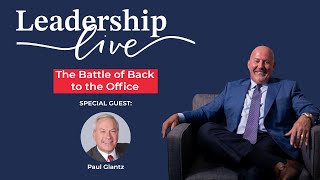
This is a YouTube video titled "Leadership Live - The Battle of Back to the Office" featuring a recorded discussion from January 2024. The content is a conversational interview hosted by Steve Lowisz with a guest named Paul, who runs a chain of movie theaters across several Midwestern states. The discussion centers on the challenges and perspectives around remote work, returning to office policies, leadership, employee engagement, and the cultural impacts of COVID-19 on workplaces. Steve Lowisz leads the conversation, exploring topics such as productivity, quiet quitting, and the balance between employee needs and business demands.
And welcome back to the October division or the October version of Leadership and Legal. My name is Steve Loewis. Thank you for joining us. Again. The whole idea behind Leadership and Legal is to talk about issues that are pressing, get different opinions on those issues that are pressing our businesses, our CEOs, our HR organizations and so on. And we've got to treat for you guys today. My co host, James Reed, unfortunately is not able to make it today. He'll be back next month in November on I believe the 16th. Leah? It's the 16th of November on Wednesday at 11 o'. Clock. But I got a special guest. Paul, thank you for joining me today.
My pleasure, Steve. Thanks for having me.
So for those of you that don't know Paul directly, my guess is you know the places that Paul runs. Imagine theaters here in southeastern Michigan actually. Is it across the state. Tell us about your background, Paul, and about the business.
Well, today we have theaters at Michigan, Illinois, Wisconsin, Indiana and Minnesota.
A lot bigger than I thought. Even, even from our conversation last week.
You know, I've been blessed with terrific supporters over the years, including folks who have entrusted their hard earned capital to me. And our job, of course, is to grow it and to generate a return on it that's more than commensurate with the risk. And so I said we've been very blessed.
I was looking at your bio. You've got all kinds of awards, you've got all kinds of stuff. So I'm not going to go through all that because I want to get into the conversation that we're going to have today. So let me set the context for it. And you and I have had this conversation a couple of times. The whole point of today's leadership and legal is on the back to work, the remote working companies bringing people back to work. What's the right thing to do? What's not so much the right thing to do? What are the options that are out there? What's the impact of what's going on? Because businesses are struggling with this. What do I do at this particular point? We even saw GM a few months ago or a few weeks ago, call everybody back, then do an about face and then three days ago, say January 1st, three days a week. Paul, what's going on from your perspective?
Well, I think we became somewhat complacent during COVID and I think folks found that they actually have a better lifestyle working from home. I can't say I necessarily blame them. I have a home office and work from that location at times. But you know, in our Case, we're an in person business. And so we have to lead by example. And, and that's why, for example, you see me showing up at the office, our CEO shows up at the office, our cfo, all of our senior leadership team comes to the office because again, we ask folks to come staff our theaters. I think we have to lead by example.
And it's probably more accepted because of what you do as a business. You got to have people, as you said in the theaters, if any of us go to the movie theater, we need to be served popcorn and buy our tickets and all that kind of stuff. Well, what are your thoughts around companies that have the choice? Gm, Goldman, JP Morgan, they're all making these decisions to pull people back. What's your opinion on those types of roles?
Well, here's where I would start. Let's say you were a young person starting out in your career. There's a term called out of sight, out of mind for sure. And you know, interestingly enough, when I was attending Wayne State University for my bachelor's degree, I was a co op student at General Motors.
Really?
Yeah. And I was working at a plant and that plant's no longer around. But the fact is that when I was planning to graduate, I said, you know, they wanted to recruit me to work full time. They said, I'd like to work at the GM building, you know, down in the midtown area. And it was because I wanted to be exposed to the most senior leaders. The thought was, the only way I'm going to differentiate myself over time is to demonstrate my work ethic, my competence and so forth. So to those senior leaders, as a young man, and I don't know how you would do that today if you don't show up for work.
I want to come back to that for a second. If you're watching this, we're on all kinds of social media platforms. So to make it easy, if you have a comment, an agreement, a disagreement, a question, text me. My cell's right here. 734-837-8500. Again, 734-837-8700. Let's get back to what you were just talking about. This out of sight, out of mind thing. I do remember there was a time where you wanted to be with the leaders. You wanted to show them your stuff, so to speak. Right. Boy, that's going to be difficult given where we're at now with hybrid with remote. How do you differentiate then if you're not in front of those people with those people, showing them what you're capable of.
It's damn near impossible. I think I would recommend that folks differentiate themselves by going to work, by creating a physical presence, by working hard and demonstrating your diligence. That's what's going to enable you to progress in your career.
So what about now? There's a challenge to that too. What about like our team, for example, once Covid happened, I sent everybody home, obviously, because we had to. And I've given a lot of latitude and said, I'll never mandate people to come back in the office. Okay, I won't. But our team leaders, all of our managers, all of our leaders have the right to call in whoever they want, whenever they want based on the need. But we have people all over the country now, can't have them come into an office. What do we do?
It's a cultural issue. I think if you want to perpetuate a solid culture in your business, you've got to make time to call people together, whether it's a weekly zoom call, if you've got folks all over the country. One of the things that our CEO has done, who's brilliant man Anthony, has a weekly call with all of our general managers. So senior leaders, general managers, It's a zoom call. And the premise is, let's talk about the business. What's going right, what's going wrong? How can we help you from the home office? Don't suffer in silence if something is not working in your store. And so that's our means of connecting with folks in Indiana and Wisconsin, Minnesota and so forth. So.
But for these, for these folks that are at home all the time, going back to your comment, because I'm just fascinated by the start of this conversation, because how do you set yourself up? I mean, if you are remote, if you're in a situation where you absolutely are remote because you're nowhere near the headquarters, what advice would you give to the younger you if you had to be remote?
Paul? Well, you better make sure that somehow, some way, you're still communicating with those leaders. And you've got demonstrate your work product and your volume of work and to again, differentiate yourself and to demonstrate to those senior leaders that you're really productive outside of the office.
So let' swe didn't really. I wasn't gonna really bring this up. I'm gonna bring it up anyways. A couple sessions ago, I did a with James. We talked about our. My co host. We talked about quiet quitting you and I briefly talked about this. Right. So now you've got people at Home, you've got the whole phenomenon of quiet quitting, which goes in exact opposite of what you're describing right now. What. What's your take on everything that's going on in the media and everywhere else around quiet quitting?
I think you should be allowed to succeed elsewhere.
Say that again.
I think you should be allowed to succeed elsewhere.
You said that to me last week, and I wrote that down because I'm going to use that if that's okay with you. If you don't have that registered or trademarked.
No, it's not trademarked. Although I might run out now.
So I think you should. I think you should be allowed to succeed elsewhere. If it doesn't fit, you should leave.
Absolutely. I mean, you know, we put so many hours into the workday, and so it represents such a large part of our life. We shouldn't be miserable. We should find reward and fulfillment in our work. And if we don't, honestly, I think we have an obligation to go find the right role for us in life.
Let's talk about that one, too, because we did. We did kind of chat a little bit about that particular topic, finding fulfillment, work. I think this is a touchy subject. Let me kind of create some context around it. It seems as though people need to love every part of their job today. It's got to be like, this is what fulfills me as an individual. So I have to find something that I like to do. I have to find something that fulfills my inner purpose. And although I think that's great, what if your purpose is just to get a paycheck to take care of your family so that you can go out on Friday nights and Saturday nights with your kids?
I don't think that's wrong, per se, because I think it's all really about what your life aspirations are. And so if you're not intent on climbing the corporate ladder and it's really about just earning a living so you can support your family, I don't take exception to that. But if you have career aspirations, if you aspire to be a leader, then I think that's a whole different ballgame. And then again, you can't. I don't think you could be miserable and be able to fulfill your job responsibilities, but I think you could honestly just go through the motions. And as long as you're diligent about it, as long as you make that clear to your superiors, I think it's fine.
Yeah. The quiet quitting thing is, is I think it's interesting. It's not New, though? No, it's been around forever. We're just calling something different because somebody on TikTok decided to label it quiet quitting for sure. So what do you think about these companies that are bringing people back? You think it's the right thing to do?
Well, I think it's within their right to ask people to come back. And I would also tell you that I think that it again, they're doing not because they just want to be cruel to their teammates or they think it's unreasonable. I think they're doing so because they think it's in the organization's best interest, meaning that it's going to somehow benefit the shareholders, it's going to ultimately allow the business to perform more effectively. And I don't take exception to that.
I think there's studies that show both sides from what I've seen. Right. So you can find studies that show you're getting more productivity out of people that are working at home because they're at home and they're. They don't have to leave and drive and all this. And then you flip the page and there's a study that says they're less productive at home and we're getting less out of them and we have to create more rules around what they have to do, what they don't have to do, and so on. I mean, like, what's true?
Well, I think you could have a study show anything you wanted to show, just like polls will show anything you want polls to show. Depends on who you query. And I guess what I would say is that beauty is in the eye of the beholder. And, and you know, and again, if you have an employer that wants you to come back and be physically present, you know, I think, I think ultimately you have to say, yes, I'll do that. But if that's not working for you, then I certainly understand if you decide you want to pursue other career opportunities. You know, my wife Mary and I homeschooled our two boys all the way through high school, really. And one of the things we found it was much more time effective because you weren't commuting, you weren't driving to school, you weren't picking them up, all that kind of stuff. And so I sort of recognized the fact you could be more productive without commuting long ago.
So there's, I mean, it depends on the individual. Depends on, I believe. Well, let me ask it in a different way. If you had a work from home policy, I know you don't now because of what you guys Do. But if one of your businesses had a work from home policy, but some people needed to be in the office and some people didn't have to be in the office, do you think that's fair?
Well, first of all, I don't think our perception of fair really matters.
Okay. Okay.
Because one's perception of fairness is really.
Just that, a perception based on their own context and everything else.
Yes. Yeah. And so beyond that, I would say as long as that person is productive and you can measure their productivity, I have no aversion to it whatsoever. In fact, again, I would say a gas $4 a gallon. Save the gas money, save the ability to buy car insurance, which is expensive, and so forth. Years ago, when I was running Proctor Financial, I aspired to have a remote workforce.
You did? I did.
And this was before the technology facilitated it. And here's why. We'd reached a point where our office was burgeoning with people. We were stuffed. And so overhead goes up in steps. One of the things I was trying to avoid was not to rent more office space. And so the only way to really grow the business or to grow our ability to serve our clients without incurring more overhead was to try to ask people to work from home.
And how did that work?
My IT people told me I couldn't.
Do it really because we didn't have the technology that we have today.
Well, it is interesting because, you know, if you're working, all of our clients were banks and we have security protocols and so you can't have viruses on your home computer. So now I think we've reached the point where everybody gets a company issued PC, maybe it's a laptop. You don't put anything else on that. You don't use it for surfing the Internet. And as long as you're dedicated and you've got a resource, reasonably good Internet connect connection, I think you're okay today.
Well, that's one of the challenges in and of itself is the ability to have the data, the bandwidth to your homes. I've even experienced that. And I've got every piece of technology you could possibly think of. And I've had days that I didn't have any Internet.
Yeah, the Internet in my home is not the greatest.
I mean, it just is what it is. Where I was going with the original question, though is I believe that you could have two people in the same job. One should be in the office, one I wouldn't care if they were home.
Again, I think ultimately we have torn to our bosses. The boss wants you to do something. I think you should make every reasonable effort to do it. If you can't do it or doing it makes you unhappy, then I think you should seek success elsewhere.
So aside from doing the weekly call like you're CEO does with the GMs of each of the facilities, how many facilities do you guys have now?
Oh, if you count Minnesota, we've got 28.
Okay, so you've got 28. So technically, they're kind of remote. They are to a certain extent. Right. So aside from that, that once a week call that your CEO does from an engagement perspective, what else are. What else would you recommend? What else are you guys doing in order to keep that group engaged?
Well, we visit them, you know, you're.
Going face to face?
Yeah, we go face to face. We've got regional managers and folks who call on those theaters with regularity, checking on the quality of the execution, the physical plant, things of that nature. And so, yes, we have to have both a remote presence via phone and zoom and so forth, but we have to also let them know that we're there to help ensure that they're executing at the level we expect.
Go back to before COVID because my take on the whole Covid thing, and anybody who's watching this heard me say this before, I don't think it was the cause of any of our problems. I think it exacerbated problems that were already there.
Covid was a problem for me.
Well, it shut down your business. That's. That's not fair for me to say. Okay. I get that from. From everybody who got clobbered because you couldn't operate.
Well, and I would even tell you that it wasn't even Covid. It was government mandates. It was the government dictates that that really hurt us.
You didn't have a choice. Yep. Yeah, but you. You kept everybody, or you kept a lot of your team together even while you were shut down.
Yeah, that was something that we thought about and something we did. And I think it was the right move. We made the decision, first of all. And maybe it was because I misjudged the duration of this on multiple occasions.
I think I did too.
So we would. We kept all of our managers, assistant managers, supervisors on cleaning, maintaining, repairing, you name it. Then we reached a point where the unemployment benefits were more lucrative for some of those folks than actually working for the company. Yeah. And so we furloughed our supervisors and assistant managers, but we always kept our general managers employed because ultimately I had belief that the company would come back the Business would come back and we would need that institutional memory. But what we did to support those that we were furloughing is we made the decision that the company would pay 100% of their, their benefits, health insurance in particular. With the idea being that I didn't want our teammates to decide do I pay my COBRA premium or do I buy groceries? I just thought that was an untenable situation. And again, it was not inexpensive. But ultimately, if you were planning to come back, you needed that leadership, you needed that loyalty. And the result is that we have about 98% retention among those folks.
So I'm going to parlay that into kind of this whole remote thing. You created an environment where you created that, that trust in the way you guys were running the business. So it was easier to bring those, those folks back. So the engagement was already high. I believe that Covid exacerbated the lack of engagement that a lot of employers were having with their team members.
Well, that's entirely possible. You know, our whole job is to demonstrate hospitality and to create an environment that is an exemplary place for out home entertainment.
Right.
I've long believed that I can't be a miserable tyrant to my teammates.
You've said that to me a couple of times.
Cannot be a miserable tyrant and expect our teammates to concurrently demonstrate hospitality our guests. We have to genuinely care about our teammates in order to expect them to care about our guests.
So what do you think about the folks on social that are running around now and saying, Paul, and I'm not saying this to you, but just. I'm going to use your name. Paul, if you cared about me, you'd let me work from home.
Well, if you could serve popcorn from your home to my guest in Rochester Hills, sure, go for it.
Let's even talk about some of your other. Let's take you out of the. Because you've been in business a long time, not just with Imagine, but other things that you've done. Right. So just take yourself out of that for a second and put yourself into a. Like the financial business when you were running Proctor or something along those lines. If somebody came to you and said, paul, if you really cared about me, you'd let me work from home, what would your response be today?
Well, I do care about you, but. But also I have a business to run.
Yeah.
And so I have a responsibility to my, to my shareholders, to my owners. And ultimately we've got to be able to find a happy medium. And again, I don't think that anyone could reasonably expect to Love every aspect of their job.
Agreed.
And, I mean, that's just unrealistic.
Do you love every aspect of your job?
No.
Nor do I. It's okay.
Yeah. So, for example, discharging people, it's a horrible. It's horrible. You hate doing it. But as a leader, you're mandated at times to have to make those difficult decisions. And so I would say to folks like that, I do care about you, but we have to think about the greater good of this organization as well. And so we have to somehow find a means to help you accomplish your goals while concurrently allowing the organization to flourish.
So what do you think happened when Mary Barra recently said, we're going to pull everybody back? I mentioned it as I opened today, and then they said, no, we're not going to do that. And then it was either Thursday or Friday of last week. They said, yeah, you've got till January 1st to come back in. What do you think was going on? I know you're not a mind reader, but what do you think was happening?
I'm not sure, but I can tell you that I don't think the inmates should run the asylum.
Interesting way of putting it.
And I'm not speaking about their teammates disparagingly. No, I know that, you know, it's an analogy. But again, if you can't somehow accommodate your employer's needs, then I think you have to give serious consideration to, you know, am I perhaps in the wrong spot? Am I in the wrong bus?
Yeah, it's, you know, no matter what side of the coin you're on, on this, right. When Jamie Dimon came out and said, you're all coming back, and everybody just was, like, up in arms about the whole thing. And then that kind of settled down a little bit, and they haven't seen that increase in turnover that they thought they were going to see. Now, some of that may be based on where we are financially right now, just in general, where the country's at with inflation and people are worried about getting another job and so on. But I think it caused more damage when. When companies go out there and make one statement and then they reverse it because of the backlash, which is what GM did and others have done. I don't think that sits as well as when Jamie just said, here's who we are. When Elon Musk said, this is who we are and this is how we're going to do it. Would you agree? Disagree.
What's your thoughts? I think there's a real, wrong, real role for strong leaders in this world. And I think that again, somebody has to be the four star general in charge. And if, again, if you don't feel like you can follow those orders, I would protect your right to consider other employment opportunities.
Are there some, if you had people working from home, again, going back to some of the other stuff, are there some decision making rules that you would follow to say here's what it means to work from home, here's what it means to come in, here's what's right?
I think it really is all just a function of productivity. And again, if you can measure someone's productivity quite well and in the role I had contemplated back at Proctor, we absolutely could have looked at speed of answer, the quality of the phone calls and so forth. If you can measure those things, I don't really see a compelling reason to demand that people show up at the office.
That's a good way of looking at it. There's no requirement, unlike the movie theaters where you don't have a choice.
Right. In our case, we're serving a Congregate gathering and we need you in person.
So what about a role like somebody who answers the phones, just receptionist, how do you measure that? Does that need to be in the office? Can that be at home if you can't really measure what they do?
Well, I think it can be at home because you can rate the quality of a phone call. Okay, when it's over, we're going to ask you a one question survey. How did your, did your issue get resolved? Did you enjoy, you know, or that? And so that alone will tell you, did it work?
So I'm going to veer off here for a second. That's related to this, but it's, I think this is happening more and more and more. And GM experienced this and JP and some of these other experiences, this whole idea of canceling you because you're not giving me what I want, and I want to phrase it in the context of the remote work thing because there's, I mean you look on social media right now it's all about, well, if they don't allow me to work from home, I'm out of here. If they don't, which you've said is okay and I agree with you on that, but they're also trying to completely lambaste some of these organizations and canceling them. Why do you think that's happening? Given something as simple as remote work?
I think we're an undisciplined society.
What do you mean?
Meaning I don't think we've Been raised collectively in a fashion, to respect discipline and respect our leaders. And I think it's inappropriate. Again, I've had a boss my entire career. I can't think of a time in my life I haven't had a boss. You say, well, you're the chairman. You don't have a boss.
Shareholders, investors.
Absolutely. I've always had bosses. And you know what? My job is to serve my boss. That's how I see my whole role in life. My job is to serve my guests and to serve my shareholders. If I do that well, then I'll get to keep my job. And so I think that the premise that, oh, well, this guy is a miserable retirement. He just wants me to come back to work because he's evil. No, I guarantee you there's no employer on the face of the universe that just wants to be cruel to their teammates. They need you there. If they didn't think they needed you, they wouldn't ask you to show up.
Yeah. I think there's also the leader's responsibility to have that kind of relationship with their team where they can have that conversation as well.
No question about it. Communication is never a perfect science.
It's not.
But, yes, you have to make the case and let people internalize why you're asking them to come back to work. And again, I think there's some compelling reasons to be at the office, to actually interact with your teammates. And there's a lot of learning, I think that can be done at the water cooler. At the coffee pot.
Yeah. Aside from the call, and I agree with that, there's a lot of conversation that goes on around the cooler. The coffee pot here, it's all about the coffee pot. When people were in the office. That's where you found most people, when they were sitting there and engaging. You can only do so much on Zoom. What else do we do where we have people all over the country?
It's become more cumbersome, more difficult. There's no question in my mind about that. And so I even know folks that, again, they call people together. So once a month, we're going to get together in a hotel ballroom, or we're going to get together and meet at a movie theater, and we're going to have a leadership talk and, you know, a town hall, essentially, where you can ask questions of the boss, you can see your colleagues in person. You know, I'm a. I'm a person. I'm a people person. I like to deal with human beings. I was probably not that happy during COVID living In isolation.
Yeah. Drove me nuts. Did not like it. That was probably the only time that I felt like there was days where I was depressed. Right. Because couldn't interact with anybody across the board.
Yeah. And again, I think that while technology has enhanced our ability to communicate and so forth, it's a mixed blessing because again, we've lost that personal touch.
So I got a question. And I don't know who it's from because it's a number I don't actually recognize. But from an hr, you guys have an HR department, right?
We have a chief people officer.
You have a chief people officer. So from HR's perspective, how do they work with leaders to keep leaders happy and the individual who wants to work from home to keep them happy? I know we've talked a little bit.
About that, but yeah, I'm probably not the ideal guy to ask about that, only because again, for the vast majority of our workforce, we need an in person presence. But I can tell you that we have a really terrific chief people officer. Shelby started with us as a concessionist.
No kidding.
Went to college at Oakland University to study the. The area of expert expertise. And so she knows every aspect of our business and so she can relate. And I think that that's critically important. And by the way, there is no job at the theater that I haven't done myself.
No kidding.
Clean up vomit, Sweep auditoriums. Pick up liquor bottles in the auditorium. That's where the whole idea.
But we all sneak them in.
Yeah. Well, that was why we sell liquor now. Because if you're going to bring it in, I might as well as the retailer sell it to you.
Might as well.
But I think it's a. It's a tightrope. You're walking. I think in cases like this, you have to be sensitive. Okay. And again, I want to be sensitive. I want to genuinely care about and understand the input, the thoughts of my teammates. But by the same token, ultimately, we're charged with making a decision.
Yeah.
And then you have to say, okay, if I want my paycheck, I need to respect that decision.
Yeah. It's kind of balancing empathy for your team, profitability of the business and the service to the customer.
Yeah. And again, there are many intangibles here, like corporate culture. I don't know how you have the type of interaction that you would around the coffee pot in the office when you're working from home. And so I think that honestly, the premise of going to work three days a week is really a terrific compromise. So you have that interaction. But you also allow people to save some money on gas and so forth. I think it's brilliant.
What do you think three years, four years, five years from now? What do you think this. Where do you think we're going to end up with this whole remote work thing?
I think it's going to look a lot like it looks right now. I think employers are going to become more flexible to meet the needs of their workforce. And don't get me wrong, I think the opportunity to work from home a couple days a week is terrific. So if you've got kids in school, you don't have to have a nanny those two days a week. I mean, I can see a lot of benefits for folks from working from home. And that's why I wouldn't suggest that it isn't an effective way in which to manage your workforce. And in some respects it could be more effective. And years ago, as I was telling you that, I actually thought it would be really benefit us because we were having trouble recruiting people to do this phone work. Well, if I can answer the phone in my pajamas, I don't have to buy a work outfit, I don't have to buy car insurance, I don't have to pay for gas, drive how many miles to get to an office. I really thought it would enhance the quality of our workforce by allowing folks to work remotely. And I think there's still validity to that premise today.
And I agree, although I think there's going to be some bigger backlash.
Do you?
Yeah, and I'm going to talk from my own experience in this, because we do have people all over the country and for the most part, we work. Most people work remote. This office, this is our main office. We do have people in here three days a week. Monday, Tuesday, Thursday are pretty consistent. Hardly ever Wednesday and never on Friday. I'm usually the only one here that comes in on Friday and I can get all kinds of work done because I'm here. But we've had three people leave because they're not near an office, because they're.
Not near an office.
They're not. They were in Georgia and I don't have an office in Georgia.
So they want the interaction.
They want the interaction.
So people who are more congenial, folks who want that human interaction are actually going to gravitate to jobs where they can go to the office. Is that what you're suggesting?
They went to jobs that are 100% impersonal. Now, is that the exception to the rule? Sure. Does everybody want that? No. But I do think here's what I think is happening. I'd love your thoughts. And if you've got a comment on this, if you're watching, I'd love to know your thoughts on this as well. I think social media has made it so pervasive about working from home that it's. If I can't do with what Susie Q or Johnny Q has working from home, then I'm not going to take that job yet. I'm wired such that if I'm at home it's not good for me. But I think the mindset is Leah's got it, so I get it. Paul's got it, so I get it. And I think it's going to blow up in a lot of people's faces. I think depression is going to increase. I think there's going to be a lot of challenges in two, three years when people finally settle in and say oh crap, this might not be for me.
Well again, if you're not exposed to the senior leaders and you aspire to be promoted, maybe that's going to work to your detriment for sure.
I think that's an incredibly important piece that needs to be talked about even more. So I don't think people are realizing that.
No, no, I'm sure it's escaping them but it's important because again, you know, think of an organization, a behemoth organization like I had a brother in law worked at Chrysler, you know, hundreds of engineers. How does the boss differentiate and make decisions about who's going to become the senior engineer, who's going to get promoted to the, you know, ultimate car designer and so forth without actually seeing them with some regularity, seeing their work ethic, seeing, interacting with them, seeing how they interact with other people. And see that's in my book critically important because you know, everything we get done in life is generally through others.
Yeah, agree.
And if you sitting behind a computer screen, I don't know that you can influence and you can lead people effectively.
Yeah. I think there's even a challenge in building trust because the way you influence people is first having trust with them because people aren't going to. You can manipulate them without trust. Without trust. But you sure as I can influence them in a positive way. And it's 10 times harder to develop that kind of relationship via video zoom and phone than it is in person.
Absolutely.
I think that's going to be a detriment to some of these people's careers as well. Again, I'm not going to ask people to come back in my leaders can ask people to come back in. And I've heard this from a lot of our clients as well, that we're not going to mandate it, but based on the need, based on what that leader wants them to do, we're going to pull them back in. But I have yet to have anybody bring up the topic of how do you really differentiate yourself? When nobody sees what I'm doing, that could be a killer for some people's careers.
I think it would be. Absolutely. And again, I, I don't know why, but I figured it out pretty early on. I didn't want to work in a plant, which I thought was essentially Siberia. You know, I wanted to be close to the bosses.
You know, that's very true. That's very true. So go back to the whole cancel thing, because I'm still just, I'm working. I get worked up about this whole topic. And I know, I know you do as well, because I see it happening more and more and more to the companies that either are not allowing remote working or bringing people back or, or making some kind of mandate. What should companies be doing to battle that? That whole cancel thing that's going on right now, and I'm not going to talk about it in terms of politics and all that, but just from a company's perspective, what if CEOs, what do leaders need to be aware of? What should they be doing if they're going to make one of these calls or when they make one of these calls to piss half of their population off, what do they got to know?
Back when I was with Proctor, I had lunch with Paul and the idea was I would meet and have lunch with folks from every area of the company, from the folks that were running, doing work in the mail room, to customer service representatives. And the idea was I needed to get closer to the actual people who were performing the jobs, not just have people reporting through reporting to reporting.
Yeah.
And so I think that it really is beneficial for leaders to spend time talking to their rank and file personnel. I think it's critically important.
But what about when it. Okay, let's assume that they don't do that and they get the backlash and they get the people on social just blowing them up. What do they do then? Because that's what's happening with some of them right now. What's your suggestion? To be reactive. Because you're talking about being proactive, which I love.
You do what? I did delete all my social media profiles. Right.
So you went through something.
Yeah, I've gone through something. And Actually, our CEO and our chief marketing officer said we need to take you off of these platforms. And I thought, yeah, you're right, you do. Because I will be canceled eventually if I'm not. And I found myself literally sort of debating with people who didn't know anything. And that's part of the issue, I think.
What do you mean?
Oh, so for example, during COVID I had folks, you know, I posed the question, why can't movie theaters be open while Costco and Meijer are open?
Okay, okay, that's a fair point.
And folks will people say, well, that's apples to oranges. In fact, it is apples to oranges. What most people don't know is that movie theater auditoriums have more air displacement than any retail space in the country. And it's all driven by the building code. And so we actually have a safer environment for folks. In fact, there's not a single incident of reported Covid outbreak in movie theaters worldwide.
I didn't know that.
Most people don't. That's why I'm sharing it with you. But so just because something is on social media doesn't mean it's rooted in a fact.
It's not true because it's on Google.
Well, can't believe everything you see on social media. In fact, I would say take it with a really big grain of salt.
I think that that's probably true across the board.
And I think leaders have to do that too. Yeah, all that is what I call noise. And so what you have to do is you have to cut through the noise and get to the reality. You know, I'm a big fact based guy. Okay, show me facts and reality and then we'll address it accordingly. But, and again, I'm not saying I'm opposed to opinions, I value diversity of opinion. But those. That's exactly what it is. It's an opinion. And we have to figure out based on the facts, the reality and the, the what I would say the majority of opinions. What do we do now? What.
So one of the other questions that I got was around where we're going from financially. Right. Interest rates are up even though the job market is still pretty tight. We know that across the board. But do you see this remote thing starting to change given that the power is starting to slowly, or at least perceived to be slowly moving from the employee to the employer? Because it's always a pendulum. Let's think about what happened in 2000, 2008. There was. It went over to the employee side. When it came back to the employer Side went back to the employee side. Do you think that's going to have an impact on how companies view, or at least publicly talk about how they view remote work versus the way they're talking about it?
Oh, I think so, absolutely. I think, I think as unemployment rates escalate and they will, as the Fed's raising interest rates, there's no question. But going to slow the economy. I would argue we're already in a recession.
I would agree with you on that one.
And if we're in a recession, then at some point there are going to be layoffs, there's going to be less job growth. And so, yes, at that point in time, employers will be more selective. They'll talk to people in advance when they're interviewing folks and say, are you comfortable coming to the office? And if you say no, well, then this job requires in person. Are you comfortable with that? Well, then maybe you've got to fight.
There was, there was an article is either today or Friday. It was either the Wall Street Journal or something along those lines that actually approached this particular issue saying that, you know, the employers are now starting to look at this tightening job or the loosening up of the job market layoffs that are happening so on as an opportunity to embed that into. Hey, but we want you to come into the office three days a week where priority to where we were going. They weren't willing to do that because they wanted to give everything because they could. That just couldn't find people.
Yeah, I mean, you've got to balance, you've got to balance those things, don't you? Because if you desperately need teammates and they don't want to come to work, then I guess, you know, maybe I'm a little more sympathetic to the GM situation under those circumstances, though, again, I would tell you that there are, there are drawbacks as we've talked about, the culture, the, the ability to collaborate and so forth, that, that just don't come along with working remotely.
Yeah, I think, I think the hybrid environment is probably for those positions that can be. Seems to be where you can at least keep some of the culture. You can give that flexibility to the individual as long as you can be crystal clear around the expectations of the.
Role expectations and measuring productivity.
I think that's critical and without tracking every keystroke.
I'm a terrible micromanager, so I would not. That wouldn't be my cup of tea. I like to give people both the responsibility and the corresponding authority to do their jobs, step back and watch them flourish.
Do you Think, generally speaking, this whole idea of clarity of expectations and measuring productivity is a pervasive problem in corporate America today, which is why causing some heartache for some of these folks that are working from home. You think they don't know when they're actually doing their job?
That's a tough one. I think folks know when they're slacking off.
I would agree with that. But other folks may not. When there's not some clear measurements.
I won't disagree with you. I think that's absolutely true. And that's why I think you have to communicate effectively with your teammates and say, it's fine, you can work from home. Here's what the. But. But again, clarity of establishing expectations, I think is critically important for those that are working remotely.
One of the.
And in person as well.
Well, no question about it. And I think it just makes a bigger problem when they're remote, because when they're there, even though they don't understand the expectations, you can help them around the water cooler, having lunch with them, whatever the case is. But I was playing golf with a guy, this is probably about six weeks ago, before the weather started to change up here, and he was asking me, how do you track all of your remote employees? Do you have one of these spywares on there in order to track their keystrokes and where they're going and all that? I said, no. I think you're dealing with a symptom. You're not dealing with the root cause. If you're doing that, what's your take?
I think you're absolutely right. If I have to monitor you that closely, I probably don't want you on my team.
Yeah, but there's this huge growth in the tech companies that are offering that because everybody's not everybody. Lots of organizations went, my gosh, I don't know what I'm supposed to do. I'm sending everybody home. I'm going to monitor everything that they're doing.
That I could see as a basis for discontent.
Oh, my gosh. Yeah.
Yeah. If somebody's watching me that closely, I'm miserable.
Because there's no expectations set. So I got to track what they're doing, assuming that I can interpret what expectations should be. I just think that's a bunch of BS when it comes to remote working.
Yeah. Again, I don't think micromanaging is really an effective strategy, and I've never deployed it. And I think it's actually a mistake because, again, I think you should articulate expectations. You should give people the necessary resources to succeed, you should give them the corresponding authority to succeed and then step back and watch them flourish.
I was just going to ask you what your leadership philosophy is, and you just described it for me.
That's it.
Which I think would make. If we took those three or four pieces that you just talked about, applied them to the remote working environment. I think that's dealing with more of the problem than just the symptoms that are coming out of the work thing right now. But I do think leaders have a role to play in this. It's not all about the people working remotely. It's the way they're being led and who's leading them in the first place.
Oh, no question. And I'm a big believer in responsibility.
Yeah.
And ultimately, the success or failure of an organization has to rest with the leader. In fact, that's one of the things I find most abhorrent about leaders these days. You know the whole premise of stakeholder capital. Well, when you're responsible to everyone and you're essentially responsible to no one, I say take responsibility. You're the leader.
Describe. Not everybody understands the term stakeholder capital. So everyone does. Describe. Define that.
Well, as I understand it, you're responsible to the environment. You're responsible to the gods of Greece. You're responsible to all different stakeholders. The whole premise of a stakeholder is, well, I've got a building that's next to yours, and I've. Okay, well, I'm responsible to make sure my lawn. Yeah, you are responsible to make sure your lawn's cut and maintained. But ultimately, I think we have to be focused to be successful in life. You can't say, I'm going to be responsible for all things in this world while concurrently achieving a desired outcome, a goal.
Because if you are, if you're. If you're beholden to 100 different things, eventually some of those people, some of those ideas are going to be in conflict with each other.
Precisely.
That's kind of the point. So you stand for nothing.
That's exactly right.
That's a challenge in and of itself. Who's going to follow that? But yet I think some people do want to follow that.
Yeah, I see. The Business Roundtable embraces it. Stakeholder capital.
That's interesting.
I don't want to be a shareholder of any of those who believe in stakeholder capital because I think that senior leaders are responsible for serving their shareholders first and foremost. Now, don't get me wrong. In order to serve my shareholders, imagine I do that by serving my guests in an exemplary fashion. Right. That Are all success in our business. And I believe in any business is born out of serving one's customers. If you serve your customers well, other good things will flow from that, like serving your shareholders. Yes, but I think you have to be focused. You can't. You can't just say, I'm responsible for everything going on in southeast Michigan. No, you're not.
Well, I would take that same question and take it back to this remote thing. Does going remote help you serve your customers better or less?
If it does, then you should use remote workers.
Yeah, without question. That's. And that's my point. But I think we're so. I think as a industry, I'm going to say the industry that I'm in, the people industry. We're so caught up just in. Is remote right or wrong across the board, as opposed to saying, does remote help us? Does remote truly hurt us? Do we get greater productivity? Do we get less productivity, which helps our shareholders, which helps our customers, which helps all of that. I think sometimes we're asking the wrong question.
I think you're absolutely right. It's all very personal, very individual decision. Right. And again, I think that leaders have a responsibility to analyze, to figure out, to determine how best to serve their customers and ultimately their shareholders.
Yeah. I think some of my HR counterparts are struggling with this right now. Is it the right thing to do, to call them back? Is it the wrong thing to do to call them back? I think we're asking the wrong question.
Yeah. What's in the organization's best interest? What's in the best interest of your teammates, by the way, too?
Yeah, I don't think it's not a right or wrong. It's from a moral perspective. I don't. Whether you pull people in or not has nothing to do with a moral opinion. It's got to be a business decision because we're still in the business of making money, taking care of our customers. Because without that, you have nothing.
Exactly.
You don't have a job, you don't.
Have a viable business. If you don't take care of your customers, you don't have a viable business. And ultimately our economic system is going to take care of that.
Yeah. I had. On Friday, I was talking to CEO of an organization she was struggling with. Well, I want to let these people work from home, but I don't want to let these people work from home. So I asked the question, why? Well, these affect our customers this way. These don't. And I don't care where they actually do it. And she was struggling with the implication of how that would look to rest of the organization. What advice would you give her?
Why not describe and call them all together and say, here's why. Here's why I need you to be physically present, and here's why. I think you can be effective from home. And folks might take issue with this, say, well, I want to work on that team.
Okay, well, if you're qualified, if you're capable and you want to put in to move to that team or that function, no problem.
But as opposed to simply providing a dictate, you're coming back to work. Leah's not coming back to work. I would say, why not talk to them, communicate with them. It's like lunch with Paul, talking to claims examiners, talking to customer service personnel, you know, and I had a couple layers between myself and most of those people, but ultimately I wanted to hear from them, too.
Yeah, I gave her that same type of advice, not saying it as eloquently as you did, but I went one step further and I said, be careful about making it mandated even by function, because I still am of the belief some people in a function will work well at home, some people in a function or would work much better in the office. And I don't. I believe we shouldn't make broad brushes that say all of you can work home, all of you need to be into the office unless it's dictated by the customer. But for those of you working at home, I think it depends on the individual, and some don't even realize that it's not healthy for them to be working at home. I think we've got to have that conversation.
Oh, I completely agree.
Otherwise, we're going to be talking about remote work for the next 10 years. And I think we've got other issues that we've got to deal with other issues right now. But. But I do. I do put some of the responsibility into the role of leaders like you and I that we have to have this communication with, with our teams to make these decisions.
I do. And look, I get it. If you're running General Motors, you. You don't have the opportunity to personally interact with every one of your teammates around the world. But. But ultimately, you have to find a way to connect more closely with your teammates to figure out are they happy and what. And if they're not happy, what can you do to perhaps enhance the quality of the. Of the work environment so that they will be happier, you know, and again, my premise at Imagine is I need happy teammates because they'll be happy and smile and be gracious to my guests. That's what I need.
And sometimes having happy teammates means you got to switch some of your teammates.
Well, and it's fascinating. And, you know, with the background in hr, I mean, I'm a big believer in personality testing. Yeah, we've got the different personalities are better suited to customer facing than others. Right. And so it's a matter of finding the right spot on the bus for folks, too.
We. We use behavioral assessments a little different than personality, but similar. And when Covid actually first happened, we re looked at everybody's and we could tell you, we could tell ourselves, and we did. These people are going to have problems working from home. These people are not going to have problems. And sure as hell, it almost happened exactly like that. Where the people that struggled, few no longer here. Some we had to provide some additional interaction with. But if we didn't have that, it would have been a crapshoot to know who's going to be good working at home, who's not going to be working at home. So I agree with you on that particular perspective.
Yeah. And so again, it's a responsibility to find that teammate the right position. And again, then it's a matter of helping yourself, too. So if. If you're in the wrong seat on the bus or if you're on the wrong bus, then you need to proactively try to enhance the quality of your life.
The timing of you saying that was interesting because one of the comments was, is there data that you can use to determine who's capable of working at home, who's not capable of working at home? Yes, I believe there is. I think there's enough that's pushing us into that direction to be able to do that. So I want to shift gears for a second, because you were kind enough to take an hour out of your time to come here.
All yours.
Tell us what's going on with the theaters. Like, what's the next big thing that you can share about where you're going with?
Imagine, you know, I. Again, I. Maybe because I was delusional, but I believed that this business would come back. It seems like it has, and it has. In fact, July was the best month in the history of the business.
Was it really?
Then it was just like a Wile E. Coyote cartoon. September, August and September. He ran off the cliff, and then the anvil fell on top of it. The business was anemic in August. September, really. And it just simply had to do with. We suffer from supply chain issues just.
Like many industries, the new releases and.
Everything else, and Hollywood didn't have much to share with us. And so, lo and behold, folks don't show up when there's nothing fresh, nothing they want to see. But generally, we've seen that in our industry for years. There's a seasonality aspect to it. In August and September, it's the start of school. It's, you know, up here in the cold climates, it's the last good weekend before, you know, before winter hits. Right. And so we're accustomed to that seasonality. But I remain highly optimistic about our business because when you see a month like July, especially watching even older demographics come out to see films like Top Gun. Yeah. You got to believe that there is still room for congruent entertainment, that folks want to be together with others in order to be entertained and that they're not afraid at this point in time. In fact, our industry does polling and they've determined that 88% of folks say that they're either comfortable or very comfortable coming back to movie theaters. And I would tell you, just like, you know, we all have a kitchen in our homes and we go out to restaurants. I think that we all can watch movies at home. And we do. There's an opportunity to watch stuff on the big screen as well. And so our job, again is to create a value proposition. It's to be able to demonstrate to folks that it's worthwhile coming to movies. And then that means offer you comfortable chairs and fresh popcorn and clean floors, clean restrooms. I mean, there are a lot of things. And our business, just like everyone, is highly nuanced, but that's our mandate. Every day we're auditioning for the privilege of serving you again. Hopefully we're auditioning well, by demonstrating that it was there was a value proposition in coming out to the movie theater.
So I'm going to get myself in trouble on this, but I am not a movie theater fan. My wife and I argue about this all the time because she wants to go to the big. She is, but. And I just not my thing. But when we do go, and I'll go a couple times a year, it's 99% of the time it's an imagine.
Theater because if you make it a hundred, then we'll be with friends.
Well, I was out of town. The last movie that I saw was actually in Florida. So you don't have anything in Florida, but not yet anyways. But I won't go to most others because I already have this thing about it. But I Enjoyed myself at the couple of imagines that I've gone to.
We've been very fortunate. We've gained market share since 19 pretty substantially, actually. We went from being the number three market share in Southeast Michigan to being number one.
That's pretty impressive.
And part of it was because we had the personnel, the staff, our theaters when we coming out of COVID Because.
Of what you did prior and how you took care of your people, which was a leadership decision to get those people back. And I think that relationship piece is something that a lot of employers are missing.
One of our large publicly traded competitors, it's got three letters. They now have one general manager for three buildings.
No kidding.
And while that might be a cost savings move, at the end of the day, if you're not attentive to detail and if you don't have somebody who's in charge of that building and that building only, I think it's very difficult to be attentive because, again, it may look easy, you know, oh, you put picture on the screen and make popcorn. No, there are actually about a thousand things that can go wrong every single day.
Yeah, there's a lot more to it than that. Even I know that. Even not being a huge fan of it.
And by the way, if the fact that you're not an avid movie goer, it's okay. Because you know what, it's a bell cruise. Some folks never go. Some folks go 12, 15, 24 times a year. And so it's just really a bell curve. And our job is for when you decide you want to go to the.
Movies that I go to, imagine.
Well, that. Because you find it to be the best experience in the marketplace.
And that's why I prefer it when we go there. But Paul, thank you for taking the time to talk about this. I mean, you've got plethora of years of experience in the business side, and I think there were some key points that were helpful for the audience.
Yes, I'm an old fart.
I did not say that.
It's true.
Fair enough. You know, I think there's going to be a lot more discussion on the talk of remote work as we see how this thing actually plays out. I think there's still a Pandora's box. There's going to be some challenges based on some of the things that I said, but your insight on some of these areas was, I think, incredibly important. If you're watching this and you've got some additional comments, you've got some questions or you want to come on the show and be able to talk about this. Please let us know. Reach out to us via any of the social media. You can always get me at 734-837-8500. We're going to have another one of these November 16th at 11 o' clock and it's really going to be a couple of pieces to it. We talked briefly about where we're going as a country financially. Right. There's going to. I agree with you. I think we're in a technical recession. The interesting thing though is the job market is still pretty good, but in leaders, HR professionals, HR chief people officers are going to be in a situation where they're going to have to balance the perks that they've given over the last couple years with the profitability of the organization. And I think it's a real conversation we're going to need to have. So we're going to that's what we're going to talk about next month on the 16th at 11 o'. Clock. I'd love to have you back at some point, whether it's that or in the future. I don't want to take up a ton of your time, Paul, but I think you've got a lot of perspective from the businesses you have. We have a few others that are going to join us as well. We'd like to get a bit of a roundtable of four or five senior leaders from southeastern Michigan. How do we deal with some of the things that we know are coming up?
Every business has to generate value greater than its cost.
Agreed.
Whether it's nonprofit, for profit, government, we're all mandated to create value greater than our costs. And if we don't do that then our organizations are not sustainable.
And what's the point of hiring anybody into a non sustainable organization precisely when they're going to be the last one in, first one out, which is already a concern. And there was another article on the Wall Street Journal was either Friday or this morning it was. Employees are really worried about that. It was something like 44 or 45% of employees are worried because they moved during COVID and now the economy is starting to flip. Are they going to be the first ones out talking about living with anxiety?
Yeah. Hate to think about that part of it for sure.
But thank you again, Paul, for coming on. It was great to have you here.
Thanks for having me.
Thanks everybody for watching another episode of Leadership and Legal. We will see you next month. We've got more interesting conversation coming up and we're going to have some additional guests we'll see you then.










