Leadership Live - The Power of Accountability: Leading with Discipline and Impact
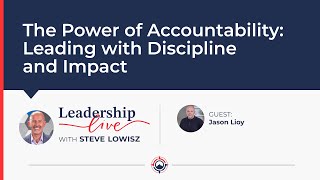
This is a YouTube video titled "Leadership Live - The Power of Accountability: Leading with Discipline and Impact" recorded in February 2025. It features a conversational interview between Steve Lowisz, the host, and Jason Leoy, Chief People Officer at Dawn Foods. They discuss leadership accountability, personal discipline, team management, and the importance of self-reflection in leadership roles. The conversation includes personal anecdotes and practical leadership advice aimed at improving organizational accountability and effectiveness.
Foreign.
Welcome back to Leadership Live. My name is Steve Loewies and I'm going to be your host again. We've got a special session. I've got a return guest coming back, Jason Leo from Dawn Brands. Thank you for coming back. Don Foods. I'm sorry. Thank you for coming back. The whole purpose behind Leadership Live is to talk about some of the harder conversations around leadership. And we've got an interesting topic today that I get asked about a ton. I'm sure you get asked about a ton. And Jason, you and I have talked about this a number of times. But before we jump into it, for those that have not seen you before, give them a 3 second background about you and your role today.
Sure, yeah. My name is Jason Leoy. I am from Dawn Foods. I'm the chief people officer. I've been with dawn for roughly 10 years. I've been in this leadership position for five of those 10. I have worked at companies like General Electric, Philips, worked all over the world, lived in multiple places in the United States and I've had the privilege of working for some very robust organizations when it comes to the notion of leadership development and capability development. But more than that, I've lived most of my career in manufacturing type of environments. And in those environments you got to see the nuts and bolts of leadership on the front line, so to speak. And that's really what shapes my perspective on leadership and shapes my personality, quite frankly. We'll see that in terms of being a leader. And that's, and that's something that I love about where I've come from. And I hope that I can energize people to get into those environments and, or just adopt some of those principles.
So something that you and I've talked about and again, I've been asked about this a ton of times is this topic of accountability. And people kind of avoid it, but they're curious about it. And it's probably the number one topic I get asked to talk about is or speak about or train about is, is both this leadership accountability, how do we keep our teams accountable? How do we keep ourselves accountable? And you and I bantered about that a couple of weeks ago at my house. As a matter of fact, before we kind of get into the depth of it, give me your perspective from a leadership side. Take your HR hat off for a second because you're not all hr, you're leader in general. As you said in the opening, your view of accountability, generally speaking, we'll get started there.
Yeah, I mean, accountability is the, if you Think about all the principles and all the philosophies when it comes to leadership, right? I mean, you know, there's a ton of books around leadership, and what do you do around leadership? It really all boils down to the simple facets around accountability. And accountability to me is you're saying what you're going to do, then you do what you say, you know, and there's this notion of the say do matrix, right? And you know, you have a high say high do. That's the ultimate in accountability. You know, I'm, I'm telling you what I'm going to do, either for you, with you, or for the business, and then I go do it and I'm going to tell you again that I did it right? That way you can hold me accountable, right? Promise made, promise kept. You know, you can think about all the different ways, words that are out there now, right? But that's the ultimate in accountability. And, you know, if you don't have that, that basic foundational element within you as a leader, then you can't do anything else as a leader, right? So.
So I bet more than likely everybody who's watching you would probably agree with that definition, right?
Yeah.
But then why the hell is it such a big deal if everybody agrees with the definition and says that's what I'm doing as a leader or want to do as a leader? Why is that such a big topic, a big point of consternation in organizations across the board?
Because I think at the basis of it, it's human behavior. Because if you think about, let's break it down even more, take it out of corporation, take it out of business. And you and I have been on a very similar journey when it comes to weight loss, right? The first thing around weight loss, the first thing around getting healthy is one, making the commitment that you're going to do it and then actually doing the thing right. And that's generally the hardest thing for anyone to do, doing the thing right. You know, I have people, a lot of people come up to me like, what'd you do? What'd you do? And I'm like, well, the first thing.
You gotta do is, well, tell them what you did.
Yeah, well, I woke up one day, July 22, after many years of lots of frustration. And, you know, my wife obviously give me a lot of feedback around, you know, getting healthy and getting myself better for myself and for the family and for the kids, you know, and just generally being a better person in life. Right? And that's because I, I was a Scholarship athlete, scholarship tennis player in college. And, you know, obviously, you know, I was in shape at one point, so in life happened as it always does. Right. But I woke up one day, and, you know, but one. I want to say it wasn't just one day. It was a culmination of a bunch of different things. And it said, okay, this is it. I'm done. Right? I got to do something. And quite frankly, it was you. It was. It was seeing. Seeing you, talking to you when you were pretty well into your journey.
March 14th, I started.
Yep.
Yeah.
And I was at a. We were at a dinner, you know, and a fundraiser, and I just was uncomfortable the entire time. I remember it because I was overweight. I was making a bunch of excuses for it, and I was. And a couple months later, I'm like, all right, I'm done. Right? And that's when it happened. Like, I just. I went on Weight Watchers, you know, for a few weeks, kind of sparked that because it's very restrictive in terms of diet. And then it started doing, like, a calories in, calories out, counting. But what I did more than anything was committed myself to being active every single day. And that activity was really centered around this notion of rucking, putting weight on your back. And people might think, oh, you put weight on your back, and that's it. And it's like, well, it's a little bit more of a difference. It's like this. You're breaking. If you think about walking or running, there's a comfort there. Like, you're outside, you're running. It's your own body weight and whatever. But if you hold yourself down, if you put some weight on you, I'll get back to that.
Makes it challenging.
I'll get back to that. I'll get back that. Get back to that in a second when it comes to leadership. But you put some weight on you, put some challenge to you. It makes you uncomfortable. Right. And it activates every muscle in your body, and therefore, it then starts to shred your body, as long as you're combining it with diet, lifestyle, and making a commitment. And now I'm. I'm nuts when it comes to it. Right. I mean, we talked earlier today. I was out for a walk. You know, I tried go to 20,000 steps a day. I'm like, I'm very disciplined about it. So much so.
And he was outside when we chatted.
On the phone today, for sure. Exactly. And it's like, you know that. But it's that notion. It's that repetition. It's that discipline now? Now it's in my brain where I can't even get out. I can't even get out of routine because it's. I have to be in that routine. The habits there, if the habit's there, it's formed, it's done, right? But then. But it's this notion of uncomfort. Rucking is an uncomfortable thing, but you get a sense of challenge and you get a sense of discipline. And you think about the people that rucking is from the military, right? And you think about what people go through on those long rucks and so on and so forth. And it's like, then you start to get in your brain this notion of discipline. And I'm accomplishing something, and it's something that not everyone's doing, right? I'm not crazy. I'm just not you. I'm just doing something a little bit differently and it's working, right? And it works for a lot of people. And we can get off on rucking for hours. But when it comes to leadership, putting our organizations in some, putting our organizations in a position that they can drive forward means you have to drive through adversity. And the way you drive through adversity is through routine, meaning that your teams have got to be in a position where they can work through every single issue. And the only way they're going to be able to do that is by looking at you as a leader, as someone who is. Who's honed, who's disciplined, who's ready for that challenge. And the only way you do that is by engaging and having that discipline of engaging every day. And I think that when you make that mental shift as a leader to lean in, very similar to weight loss. Once you make that mental shift to lean into your health, once you make that mental shift to lean into your organization, that's when things will take off, right? And you can, you can almost not. You almost cannot not succeed, if that makes sense. Because you, when you lean in and your people believe in you and you drive the right things, the organization is going to succeed. Same thing with you lean into your health. You lean into your health, you lean into doing the right things. You're ultimately going to succeed as long as you're disciplined about it.
So, so I get the. The personal discipline so that your team sees it, they see you as an example, as a leader. And it's tough to talk to others if you're, if you're a leader and, and you're talking to others about the discipline of their job. And you're showing non discipline. You're talking out of both sides of your mouth.
Exactly.
And that's, that's an issue with a lot of accountability talk that's out there. I'm going to hold you accountable, but yet I'm not holding myself accountable. That, that's, that's an issue. There's no doubt about. That's an issue.
And I'm smiling because you then triggering a memory of me because, you know, I pushed my older son. He'll remind him, he reminded me of this many times to have discipline around training for baseball. Right. I made him a bet. I said, if you keep going at it, keep going at it, keep going at it, I will then correspondingly lose weight. That was seven years ago. And he made the teams, he made varsity. He did a whole, all the stuff that he was supposed to do. He held himself accountable. And then he kept probing me and poking me over the years. And this last summer when he was home, it was like, it's like, dad, come on. You know, I mean, I did every, I mean, I'm still playing baseball. And you gotta, you gotta hold up.
The end of the accountability works both ways.
Yeah. I mean, he held me accountable. To your point, you just, you just trigger my memory. It's like I was expecting this heavy element of accountability in him, but I was not holding myself accountable for what I said I would do.
And therein lies, I think, the bigger problem.
Right.
How often does that actually happen in the office? Think about in a corporate world where as leaders, we're talking about. And the question I get is how do I hold my team more accountable? How do I get them to do what I want them to do? But is that a bigger issue based on this whole personal accountability thing that you're talking about? How do you see that?
I see, I see as perfectly. I mean, it's a logical thing insofar as the fact that if you're, if you're a leader and you're saying, how do I hold my team accountable? You have to ask the first question. How am I holding myself accountable? Like that should be the first question. Not, do I, how do I hold my team accountable? How do I hold myself accountable?
Am I holding myself accountable?
Exactly. Am I, am I, you know, am I laying out a very clear expectation? Am I laying out a clear plan? Am I getting the right team, you know, together? Am I getting, am I asking for feedback from the team on what they need to drive that thing, Right. That you're asking them to do? If you're not doing any of that. But you're saying, well, how do I get my team accountable? Well, that's how you're going to get. That's how, that's why you're not holding your team accountable. It's because you're not leaning in. You know, I, I've got this personal notion of, or this personal philosophy of O squared, where O meaning opportunity and obligation. So O squared. As a leader, I have an opportunity and obligation every day to engage with my team, to drive the, drive the organization, drive the business, drive the function, whatever, forward. And every day I have to take that principle to another level where I gotta have a conversation with somebody. I have to have a conversation and ask them for what do they need to do their job better to achieve their goals? What, what's holding them back? And the list can go on and on and on. Right. And sometimes leaders are not comfortable walking around talking to their people, either virtually or physically.
Sit behind an office door, shut the door and that's how they lead, which they're really not leading, by the way.
Right. But there's a lot of leaders that do that. I mean, I would say that if you spend the majority of your time either physically in your office or mentally in your office. Right. You're not necessarily leading. Right. And you can be in your office and have virtual conversations. I'm not saying that you can't be in your office, but you gotta put yourself out there. Right. If you're in a customer facing organization like we are, are you getting out into the plants, into the distribution centers, in with your customers, out on trucks, are you doing these things to going and seeing what's going on in the organization and how the decisions that you may be making depends on how up you are, high up you are, what are those things that you're doing as a leader that are affecting those people out in the field that you maybe don't see.
So let me play devil's advocate because this is what we do every time we talk, we play devil's advocate with each other. So we have these conversations. So I'm going to put it in the context of work now and I'm going to say, hey, I'm a leader. I am doing what I'm supposed to at work. I'm holding myself accountable at work, but my team is still not doing their jobs. I need to figure out a way to hold them accountable. So I'm going to ask myself, am I holding myself accountable at work? I'm holding myself accountable. Okay, where do I go from that.
Well, I think you got to then say, okay, at work, I'm holding myself accountable. Am I holding myself accountable in total? Right.
What do you mean?
Meaning if I look at the whole you, right. If I look at the whole you as a. As a. As a person at work, as a person outside of work, in total, are you holding yourself accountable as a whole? Right. I've seen leaders where they're. They're locked in at work, but they're a train wreck in their personal life, right. Where. So they are not fully in it. Right. So you. Are you holding yourself accountable in total? And then all. And I will appoint myself, too. Like, I could say throughout my career, I was holding myself accountable at work. Yeah, perfectly. Right. That's why I achieved the success I achieved, you know, and as I wrote in my. I mean, I kept a journal throughout this whole thing. I mean, as. As I wrote in my journal, I said very specifically, I achieved some of the highest levels of success in my career. I've had my failures, but I've achieved success in my career. But I wasn't holding myself accountable in all facets of my life, and it was ruining all the different. It was ruining some aspect of my mentality or my focus. Right. And your people see that. You know, your people see that regardless of how well or not well you hold yourself accountable at work.
You can't hide. No, you can't hide people. So even if. Even if you got your work side completely buttoned up, does. Doesn't matter. And I've. And I've done the same thing. I mean, it's. At some point or another, as leaders, we've all done that. We got one side perfectly going, you've got the other side not perfectly going. And then you go have the conversation about trying to hold somebody else accountable, and they're looking at you going, well, get your crap together.
Yeah.
And maybe I'll listen to you.
Yeah. And I'm not saying that we all have to be, like, specimens, Right.
Because we won't be.
You don't have to be the rock. Right. Not every leader's got to be the rock. All I'm saying is you got to put some stuff together that allows people to know that you got your stuff together. Right. That you've got your act together as a person, as a leader. Right. And that goes beyond corporations, politics, whatever, you know, political office leaders in the community, whatever. I mean, look at. Look at some of the best leaders that we think are best leaders in the community, and then they fall apart.
Yeah.
Personally that you lose all respect.
Credibility's out the window.
Out the window.
Politicians, we see that all the time.
Unfortunately. Unfortunately. But we're flawed people. We.
Right.
We're flawed people. We're not saying that you can't make mistakes, but at the same time, you got to be able to say, okay, I. I'm holding myself accountable at work. Am I holding myself accountable with my behavior? I'm holding myself accountable broadly. But then again, also, I mean, at the end of the day, am I. Am I listening to my team? Am I listening to what the organization is telling me that we need in order to succeed? And that also can be, do I have the right team?
Of course.
You know, I've asked people throughout my career. I'm like, if I gave you a million dollars today, which is your budget, right? If I gave you a million dollars today and I said you could put the team together any way you wanted, is that the team? Is this the team? The way it's comprised today, Is this the team that you would have. Inevitably, no. Some semblance of it, yes, but inevitably, no. Okay, okay. Well, how do we get it there, then? That's where you have to take the next step. Because if you don't have the right team, I mean, if you look at. I hate to use all these analogies, but you look at football, you look at football teams, right? I was at the Ohio State Michigan game.
We were talking about that earlier. If anybody. If anybody didn't watch the Ohio State, Michigan game, Ohio State. Ohio State lost. They were.
They.
Were. They. Everyone thought they were going to win. They thought they were going to win. And then there was a brawl at the end of the game. Just. So if you're watching this later, that's what happened.
And there's 110,000 people in the fans that thought they would win, too. And I happened to be at the game with my family, and it was interesting because to me, that was the perfect example of lack of accountability, of leadership. Because if you look at what happened in that game, and I am not by any means a football expert or sports expert, I just. I'm. I'm a leadership expert. But if you look at what happened in that game from a leadership perspective, the leaders on that team, and I'm not going to point to the head coach or the offensive coordinator or whoever, the leadership in general did not have the gumption to kick it up a notch, to hold themselves accountable for the expectations that were bestowed upon them because they were given all the money in the world to assemble a team that could do that thing. Right. But they weren't able to do that thing. They're, they're, they've been able to do a lot of, lot of things this year. They've been, had some great success. But that one thing that Ohio State fans really, you know, hold dear is like, they couldn't do that one thing because the leadership couldn't kick it up a notch and really take a risk and really hold themselves accountable for what it's going to take to do that thing and listen to, probably listen to their players and listen to other people around them. They had their mindset set about what they were going to do, and it played out exactly that way. I mean, they did the same thing over and over and over again with no success and they wouldn't adjust. So they weren't listening.
Same play over and over.
Yeah, so they weren't listening. So if you think about it from, I bet you like the coaches or whoever were saying, I'm holding myself accountable for what I said I would do. I'm doing the same thing over and over and over and over again. I held myself accountable. But you know what? I didn't pivot. I didn't pivot.
That was the wrong accountability.
I wasn't listening to what was going on on the field. I wasn't seeing what else was out there. Now, Michigan fans were fine with that, but on the flip side of that, flip, flip it, you know, Michigan, you know, they were. They had, they have no five star, basically no five star recruits. They had. Two guys are going to the NFL. The two defensive, the two, two defensive linemen. And. But they did something. They stuck. They had, they had a plan. They stuck to that plan, but they pivoted and adjusted as they saw with, with what they had. They didn't, they didn't have all the horsepower. They shouldn't have won that game, but they did because the other side, it was a true, true measure of leadership and a true lack of leadership in.
My, in my estimation, Detroit Lions, same, same kind of thing. They won, but it's because the other team made a mistake and leadership and the leader got fired as a result of that.
The ultimate accountability for that leader. Not, I mean, again, very similarly.
So, so I like to put things kind of in practical steps. Right, right. So number one around this whole accountability thing, look at yourself first. If your team's not holding, if your team is not accountable, look at yourself first. And are you the example, at least to a certain extent, without no perfection, progress, are you holding yourself accountable? Then you said a second thing. Do you have the right team? Which is also a leadership thing.
Right.
Because if you don't have the right team, that's a leader's responsibility to have the right team. But you holding a, holding the wrong team accountable is. It's kind of being cowardly.
Right? Right.
Because you haven't made the right decisions on the team.
Right. And do you have the right team? And also, are you doing the right things with that team? Again, same thing on, you know, if I look at the, the Michigan, Ohio State game, you know, I'll say, had the team, they just didn't do the right things with that team.
That was, that was the leadership.
That was the leadership issue right now.
Now, let's assume you have the right team. Let's assume you've got, you've got that personal accountability, which is, which is huge. And I don't think we talk about it enough in leadership circles. It's, you know, we just say, well, look, we got to hold our teams accountable. So we've already covered that. Two, you've got to have the right team. But let's, let's still assume that those things are kind of happening. You've got the personal discipline, you've got the right team, but the team is still not completely there. The accountability is not there. What's the third step?
Yeah, I would say the third step is the leader really getting into it with that team?
What do you mean?
Like, to really getting into the mix with them. Meaning sometimes leaders, they say, okay, well, I assembled the team, I gave them the objectives. You know, I've put together the structure, but now I'm going to go sit back and try to watch it happen.
Okay?
Right. And sometimes people falter or things don't move the way they're moving, but then they start complaining or they start leaders, meaning they'll start saying, well, why aren't they doing it? I gave them everything they needed. Okay, well, now get into it. Now go into your team, get into the mix of it and find out what's wrong. Right. Meaning, again, use the sports analogy. You know, if you're, you got the right team, you've assembled everything. You know, things are out there in the field working. I'm doing what I need to do, but things aren't working the way they should be working. Okay, that leader should go into the huddle or go in and start talking to the team and say, what are we missing? What do we need to do to turn this thing around right now? Right. And have the bravery to switch or to pivot and to maybe adjust what I thought I needed to do as a leader versus now what I need to do to really take it to a place that's going to succeed. Because too often leaders will say they have this, you know, the, the notion of, you know, I've, I've, I've committed down this path and I'm going to.
Stick on this path because I made that commitment. Because I made, no matter what happens, escalating commitment.
That's what it is.
Right.
I've escalated. I'm. And that's exactly what happened this weekend. Like escalating commitment.
Yeah.
I'm going to continue down this path, but I'm not, I'm not gonna just, hey, let me go ask this person for their perspective. Let me go ask this individual for their feedback and maybe how can we pivot? Let me go ask a customer, you know, what are they receiving, what are they not receiving? Whether it's an internal or external, you know, we have a function like HR function. Right. If things are not working, do I have the guts to go ask why it's not working, why it's not working? Right. Do I have the ability to ask, like ex employees or ex customers, why'd you leave us?
Yeah, right.
What can we do better?
Well, you're pointing something out that's incredibly important. It's not. Not necessarily. At least, I don't think it's necessarily just jumping in. I do think you got to get involved, but I don't think it's jumping in and then solving for the problem immediately. It's guiding the team through to take action to solve the problem. Not just, not necessarily, I use the term driving. Not necessarily driving the pivot through, but guiding the team to take the pivot through without making all the decisions yourself, necessarily. But now there's a time you have to.
Right. But being willing to. But being willing to and having your team know that you're willing to pivot and adjust. Yeah, right. If they, if they don't believe that you're able to pivot or adjust, they're not going to give you the feedback.
Not at all.
And that's, you know, one, one track mind.
I'm not going to go to him, I'm not going to go to her, because not going to matter.
Right. Yeah, exactly.
Yeah. They're not going to change. It does. It doesn't really make a difference.
Exactly.
So the self discipline, having the right team and then being willing to pivot when things aren't going your way because you're teaching your team at that point, this is what you do when things aren't working out exactly the way you want them to. This is how to prepare yourself to actually get there right after that third step. Is there a fourth step when it comes to really getting the team, getting the company, getting the organization to take accountability? Or is that. Is that. Does that wrap it up?
I think what, what sometimes we need to do, and sometimes it's easy to celebrate, right? This notion of celebration means, like, you achieved your objectives and whatever, but I think what I think, if you look at every turnaround, I guarantee you, you know, Dan Campbell, Lions head coach, I guarantee you he didn't come in with expectations or setting a goal of, we're going to win the super bowl next year. I doubt that was it.
Probably not.
It was probably, let's get to over.500. Let's do this. Let's do this.
Let's do incremental improvement.
Incremental improvement. And then celebrate those improvements as they occur in big ways. Right? And also learn from your failures along the way, too. I think as long as you celebrate the wins, you know, acknowledge the failures or the setbacks, but celebrating those wins along the way and setting goals and steps that'll encourage more and more behavior and you'll get people more confident. It's like, again, a guarantee. Dan Campbell's a perfect example of someone who's probably a phenomenal leader. And as I understand it, he's a. He's a players coach. I mean, he looks like he can still play, but at the end of the day, it's like he probably gets so celebratory over these. The things that he sets out as goals and gets his. His team charged up. Right? I mean, celebrating the kicker, I think it was a few. Few games ago. I mean, it was. It was a viral video where he. He gave the game ball the kicker. I mean, and that kicker, I think, was. Wasn't he packing groceries or something not too long ago?
I don't know.
I think all the kickers that were packing groceries not too long and they. But I think that's where it's like, you know, but celebrating that and celebrating those little wins builds up that camaraderie. And I think when you build up that camaraderie with that team and celebrate along the way ultimately gets you to that big end point, right? Don't wait for the big end point. Because you wait for the big end point. Everyone's like, oh, all this work and there's no acknowledgement until you get to that end.
So the point in this whole thing, though, is that accountability is often viewed as the, I gotta do this to hold that person accountable. And it's viewed as a negative.
Right.
The things that you're talking about, the things that we just had a conversation about is they're not necessarily a bad thing. No, all of these are positive. But if you're watching this and you're a leader, I mean, think about this for a second. If your team. If you're worried about holding your team accountable, start by looking in the mirror. And it's, It's a. It's a realization that at least the two of us have come. Kind of knew it. But, but in March, for me, in June, July, whatever it was for you, it was like, okay, we had the, the corporate world buttoned up, but we sure as hell didn't have all the personal stuff buttoned up.
Right.
Has it made that big of a difference for you since you. You've been on your own journey, in your own leadership career style since, since you, since you lost the 60 pounds or whatever you lost?
Yeah, absolutely. Because I think what it, what it's done, it's given me way, way more energy. Let me just.
I got that.
Yeah. Way more energy. But it's a. It's a. It's a confidence. It's a confidence, but it's also like, I think people, whether it's. Whether it's, you know, it's direct or not, they. They view me a little bit differently. It's like I'm going to at least listen a little bit more intently because I know that they got their stuff together right? And I think that. But I also believe firmly because of the mental capacity I've increased in my. In myself, because, you know, I think there's just something metabolically that happens to you. I mean, and all the research would show it. I'm not a doctor, nor do I pretend to be, but it's like, I think as you lose weight, as you get more engaged from a. From a physical perspective, and as you increase muscle and all that kind of stuff, it does something to your synapses, into your brain. The way you think through things, you're a little more clear, you're not as cloudy, and, you know, you definitely have a little wide. An escalated amount of energy, not like overpowering energy, but like an escalated amount of energy to, like, see. See things a little bit differently. So I think that I've been able to more clearly articulate my vision and my expectation, not only for myself, but my team and be able to correlate the two. And I've done it in town halls, I've done it in leadership meetings. And people have asked what have I learned along the way? And I've told them what I've learned is the importance of a more well rounded you. And hindsight's 20 20. I should have been listening to my wife for the last 20 years.
Now, we're not telling you to go out there and lose weight. That's not, it's not the purpose of this whole thing.
No, it's not.
But think about it again, it's kind of like looking in the mirror and do you have the accountability in your own life when you're talking to somebody else about holding them accountable and not talking about both sides of your mouth? Right. Somebody taught me this a long time ago in kind of the four key areas of body, being balanced, business. Those were the four areas.
Right.
And if you've got some level of accountability, personal discipline in all those, you've got a lot more credibility when teaching discipline to other people because people will actually follow you. Yeah, right. So don't take that too far. Right. When it comes to just body is one of those things. There's a lot of other areas that you can focus on as well. But Jason, thanks for this issue of accountability. Thank you for talking about it, especially from your own perspective and your own experience that you've gone through this year, which I think is important. But for again, everybody that's actually watching this thing, if you're struggling with accountability, look in the mirror first. Pay attention to what's going on with you before you're worried about everybody else that's on your team. And then look at the team itself. Have you assembled the right team? Have you given them the tools? Because that's a leadership thing as well. And then are you actually leaning in as you were talking about it? The O squared opportunity and obligation. Obligation to actually do that. And, and then the fourth piece, the last one that we talked about that you mentioned, celebrate is celebrate little. The little steps, the little steps. You do that and then this whole idea of accountability becomes more of a positive thing than a negative thing. But take accountability yourself first.
Absolutely.
Thanks again.
Appreciate it.
It's been another leadership live. Thank you for, for paying attention. Thank you for tuning in in the first place. Again, the idea is to talk about all of these leadership things in a way that's different than what you're going to see anywhere else. We just want to give you a different perspective. If you've got a topic that you want us to talk about. If you want to come on the show and you actually want to talk about it, let us know. Reach out to us online. Feel free to go ahead and send me an email as well. Reach out to me on LinkedIn Facebook. The email is steve@loisleadershipinstitute.com steveowisleadershipinstitute.com you can also text me at 734-837-8500. And stay tuned for a future episode because Jason's going to come back on another time. We've got another topic. What does a CEO really need from their chro? That's going to be another one that's going to be cool to watch. Thank you again for tuning in and we'll see you guys next time.










