Lawyer Reveals What The Gambling Industry Doesn't Want You To Know
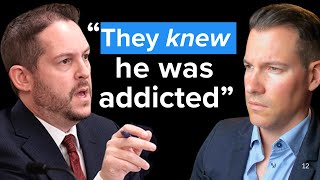
In this interview, attorney Matthew Litt of Litt Law discusses how the gambling industry exploits vulnerable individuals through predatory practices. He explains his motivation for suing casinos, describing how VIP incentive programs, personalized hosts, and customized high‑stakes wagers are used to keep problem gamblers engaged and increase deposits. The conversation details the Amit Patel case, where FanDuel allegedly failed to verify massive deposits and facilitated theft, illustrating casino complicity. Litt critiques risk‑free bet promotions that lure new players, noting that even a modest conversion rate creates a public‑health crisis. He highlights the misuse of player data and AI to target problem gamblers, contrasting the U.S. approach with more protective models in the UK and Europe. The interview also covers the shortcomings of self‑exclusion, deposit limits, cooldown periods, and the superficial nature of current responsible‑gambling messaging. Litt calls for stronger regulatory safeguards, independent oversight, mandatory risk disclosures in advertising, and public advocacy, urging individuals to contact legislators and avoid supporting predatory gambling. He provides his contact information for those seeking legal help.
Chapters
I specialize in suing casinos. They created a customized VIP incentive program where every time he deposited $600,000, they would return 10% of that. So they were incentivizing him to hit that $600,000 number over and over again. The commercials that you see with, you know, Post Malone gambling and having a great time in his, in his party tour bus, that's not how it happens. It happens with, you know, people telling their spouse that they have a stomachache and sitting on the toilet for 20 minutes. And as I'm waiting for the Lyft, I get a pop-up offering me an incentive to gamble while I waited for the car. All I'm asking for, and I think what we as a, as a public here in North America should be asking for, is for the casinos to just leave vulnerable people alone.
Thanks a lot for coming on, Matt.
Yeah, thanks for having me on, Steve.
Tell me a little bit about how you got into the field and who you are and what you do.
Yeah. So my name is Matthew Litt. I'm an attorney at Litt Law, and I specialize in suing casinos when casinos are participating in the exploitation of vulnerable people, whether that's— whether that's minors, college-aged kids, or addicted gamblers.
And how did you come to this particular niche?
I got into it because I live in New Jersey, and that's where this all started. This whole mess started in the United States. And back in 2018, 2019, I started to see some of the beginnings of what was happening to addicted gamblers, to their families, to their businesses. And I started educating myself on it, and I realized that there was really very little recourse. There was very little accountability. And I felt like as a lawyer, it was something I could do that at that point no one else in the legal profession was doing to, if not stop the casinos, at least slow them down.
Right. From my understanding, New Jersey played a huge part in the legalization of gambling and starting with fantasy sports. Is that accurate?
That's exactly, that's exactly accurate. And we might not have legalized gambling in the United States right now if it wasn't for New Jersey's push.
Right, right. Certainly. And so, you know, for today's conversation, I guess we can talk about the legal implications of everything that's happening, but I wanted to specifically focus on how these companies are manipulating players for profit in ways that are not only illegal, but unethical, predatory, and to focus really on how they use these VIP programs or marketing language in ways that are highly questionable. And so I wanted to start with the case of Amit Patel. Is that how you pronounce his name?
Yep. That's right.
And so can you tell me a little bit about this case and how this, you know, came to you?
Yeah. So I met, I met Amit Patel through this community of, of Stop Predatory Gambling. You know, as you and I have, have talked a little bit about off camera, it right now is a pretty small world of mental health professionals and attorneys who are doing the kind of work that we're doing. And so I was introduced to him through, through that community. I thought I could, I could help give him some help to sort of level the playing field between him and FanDuel. And that's how we were, that's how we got connected.
And for those who are not familiar with who this person is, can you tell me a little bit about what happened to him basically and who he is and what happened?
Yeah. So Amit Patel was an employee of the National Football League Jacksonville Jaguars, and he was accused of and had pleaded guilty to stealing over $20 million from the Jacksonville Jaguars to gamble on FanDuel. And he was in Florida. So gambling is only, at least online, it's all daily fantasy. So he lost over $20 million of the Jacksonville Jaguars money. The lawsuit against FanDuel, though, alleges that FanDuel knew about his addiction. They were monitoring his activity. They were monitoring his deposits. They never asked for any kind of verification from someone who is— who was regularly depositing $25,000 at a clip, sometimes multiple times a day, leading over to over $20 million. They never— they never asked for a W-2. They never asked for a bank account statement. They never asked for a K-1, whatever documentation it is. They never, they never asked for, for any of it. So the lawsuit alleges that they were complicit in, in his theft. And, you know, the lawsuit— I always say this in court and I say it to my clients before I sign them up, you know, my lawsuit does not allege that Amit Patel is blameless. Right. But it alleges that neither is FanDuel. And there needs to be a reconciliation of the blame between the two, because FanDuel didn't merely open up its doors to Amit Patel and allow him to walk in. They were an active participant in his addiction and the consequences that were foreseeable therefrom.
Yeah. What kind of tactics were they using to really keep him engaged?
Yeah. So among other things, the lawsuit alleges that they created a customized VIP incentive program where every time he deposited $600,000, they would return 10% of that in the form of FanDuel credit. So they were incentivizing him to hit that $600,000 number over and over again. They gave him free trips to some of, you know, the wildest sporting events you can, you can imagine. I mean, to, to to the types of sporting events that some of us might go to once in our lives. They're enticing him by sending him to these things first class and, and completely, completely all expense paid. His VIP host was setting up customized games for him. So, you know, if you or I went on to FanDuel right now to play Daily Fantasy, you know, we could get into a $5 game, $10 game, I don't know, maybe there's a $100 game, but they were setting up customized 6-figure wager games between him and 2 other people that no one else has access to, all to make sure that he continued gambling.
Wow.
Wow.
Did you have a personalized host? Was that part of kind of the process where somebody was actually assigned to reach out to him?
He did. And, and that's, and that's the problem. In almost all of my cases, there is a personalized, dedicated VIP host. You just don't— and I'm not saying that you can't get addicted to gambling without a VIP host, but the types of catastrophic numbers that we see now and that I bring to court, you don't get to those numbers without a VIP host bringing you along and making sure that you get there.
Right. There's natural limits, as you said, in terms of bet limits. But once you break a certain level, all guardrails are off and you're being kind of ushered off a cliff, basically. And the amount of times this VIP host was reaching out to him, I noticed, seemed quite striking. Can you tell me more about the frequency and intensity of those interactions?
Oh, it's, it's constant. It's constant. It's, it's almost daily on many, on many occasions. I mean, they would interact 100 times a day over text message in, in real time. And, and that's part of, that's part of this awful paradox of the VIP host, whether it's with Amit Patel or, or anyone else, is a gambling addict is going through one of the most difficult times in their life. But the only person who knows about it, who they can talk to about it, is the same person who's causing it. You know, in so many situations, you can't go to your family, you can't go to your employer, you can't go to a friend. So you confide in your VIP host, who is the same person who's putting you in that position to begin with.
Oh, that's huge right there. Because yeah, a lot of people who come to me, they're like, it's very common that nobody knows about it. It's actually one of my first questions because who knows about this? It's very secretive. And so the host, yeah, there's this kind of false intimacy that's created through that kind of shared knowledge about what's really going on.
That's exactly what it is. It's a false intimacy. I mean, I use the legal term and I think we're saying the same thing. It's this sort of quasi-fiduciary duty where, where they are, they are playing the role of trusted friend and advisor, where they show that they have the gambler's best interests at heart. I mean, I spend, I spend a lot of time, I mean, hours every week reading through the text messages to and from gamblers and their, and their VIP hosts. And it's the same pattern all the time where where you see some regret, you see some lament from the gambler, the VIP host, the VIP host assures them, ah, this is normal. You know, you just need to keep at it. This happens to everyone. Wow. Intimating that they have their best interest at heart when, when certainly they don't.
What's an example of a, a type of exchange? Uh, of course you can, there's anonymity, but like what, what, what kind of thing would the, the gambler say to in terms of expressing some kind of emotional pain?
So you'll, I'll often see where a gambler has a bad day or a bad weekend where they lost a lot of money on maybe one game or a series of games or a series of bets. I mean, it's the same, I mean, sports gambling and casino gambling, at least in my world, is kind of synonymous where, you know, they had, and they, and they'll go to the VIP host and say, man, I had a, I had a rough weekend. Do you think you can, you can fill me back up? Um, and you know, just like a drug dealer, the VIP host will give them a free bet to make sure that they continue gambling. You know, when you have a bad game or you have a bad series of games, that should be a natural pause. So if you remove the VIP host from the equation, that should be a natural pause where you say, you know what, maybe I need to slow down a little bit. Maybe I need to stop altogether. But instead you have the VIP host ensuring that they're continuing by providing, by providing assurances that things will be better. And hey, until they are, here's a free bet.
Wow. Yeah. Cause access to funds is a huge part of gambling addiction recovery, access to gambling, access to funds. And what they're effectively doing is removing the natural breaks, the natural guardrails where that would be a stopping point for for a lot of people I talk to. I ask, are you gambling right now? And they say, no, I can't. I have no money. That's kind of in the very beginning. But what this does is it kind of puts fuel on the fire of an addiction. It encourages people to chase their losses effectively.
That's exactly what it does. And that's one of the things that's so insidious about gambling addiction is that you're absolutely right. A gambler, an addicted gambler, will keep gambling until there are no funds left with which to gamble. So if there are at some point, you know, there are no VIP funds anymore. And that's where you see, because that's, it's all related to, to your level of play. So if, so if you're running out of, of conventional money, at some point the VIP perks will slow down. So now you're reaching into, you know, family money that you're not supposed to touch or in, In extreme circumstances, you're reaching into your employer's money or, um, you're asking for loans and, and credit card, um, credit card advances. And it won't stop. I mean, the gambling addiction doesn't stop until there's access to, to nothing anymore. And, and that's exactly what happened. What happened with, with Amit was he had access. Um, and that, and the fact that an addicted gambler would steal from his employer when he has access to funds is completely foreseeable. I mean, and again, that's not, that's not an excuse. No. But it's a completely foreseeable result of a gambling addiction. There are studies that say up to 60% of gambling addicts will commit a felony in order to gain access to money to continue gambling. So none of this is, none of this is new to the casinos.
Right, right. The frequency of contact is just quite striking. Like, I don't think I've ever talked to somebody 100 times a day through messaging. Like, that's, that's a lot of contact. That's frequent. That's all day, every day. It feels like.
That's exactly what it is. And when you're in the throes of a gambling addiction, that's all you're thinking about. It is gambling. And so if the only person who you can talk to about it is the VIP host, it kind of follows. And that's what's so difficult about, about getting out of the VIP relationship, because like you said, number one, it's the frequency. Number two, it's the fact that it's in real time. So it's even worse than an email where at least you can, you can ignore an email. But this is real-time communication. Um, and on top of that, it is, it's, it's a person, you know, it's not, it's not, you know, I, I always assume that everyone understands this, but, but I've come to learn that they don't. These aren't, these aren't bots. These aren't, um, these aren't push notifications. This is communication with a real person with whom you have, it's misguided, but you have a sense of loyalty to him or to her. Um, and that's what makes it so difficult to get out of that trap.
They say the opposite of addiction is not necessarily just sobriety, it's connection. And when you go deeper into addiction, you become more increasingly isolated. It seems as if there's two things happening. The person's becoming increasingly isolated in their real life while increasingly connected in their gambling life to the VIP program and the host particularly.
I think that's exactly right. And the isolation is is a huge part of it. I, I mean, gamblers, you know, so many of my clients are incredibly intelligent men and women. If you met them now, now that they're removed from that addiction, you would say, you know, how, how did you get, how did you get into this? Um, but it's because the, it's this feeling of shame and yeah, the only way to get out of it is to win and to chase your losses. And every one of my clients would tell you, I understand now that's a ridiculous approach. That was an approach that was destined for failure. But in the middle of the addiction, it makes a ton of sense. Like, oh no, I lost $1,000 yesterday. I can't tell my wife unless I double down and now I win it back. And so, yeah, so much of it is isolation and shame. And then you go to the VIP host who normalizes it. And not only that, but, but the casinos will frequently host, um, programs, in-person programs where you'll get together with other VIPs and that just normalizes it further on top of all the advertisements we see and every, and everything else.
Right. So it, it gives like a, the normalization and sense of connection, but it's all mediated through gambling. It's kind of weaning you off of those things in your, in your real life and your inability to meet your needs in your real life. You make up for it in your gambling life and it kind of just, it's a downward spiral of entrapping you, I guess, basically.
That's exactly what it is. And, and one of the things that frustrates me the most is, is the casinos equating losses with achievement. So, so they will present you with, you know, not just, not just bonus incentives and not just trips, but they'll send you trophies, you know, congratulating you on reaching— but they always call it loyalty, you know, congratulations on being so loyal. There's nothing loyal about it. It's just money that you've lost. Um, but But there, there is a world in which you are competing, whether it's with yourself or with other tiers of gamblers, to reach these certain steps, to, to get the next prize, to get the next incentive, to get some type of, you know, reach some type of exclusive level.
Yeah. Yeah. There's a, there's a sense of competence progression. Connection, like a sense of specialness that people get when there's like gifts given to them and they feel cared for, special. There's a loyalty piece to it. It seems like it's creating an illusion of all of our valid emotional, social and emotional needs, but through this kind of facade of gambling, basically.
That's exactly what it is. There is this misguided sense of loyalty. From the gambler to the VIP host, that the VIP host just took me out to an amazing steak dinner. You know, I have to, I can't stop gambling now. Or he just sent me a trophy or, you know, I received a certain number of points to spend on their catalog. You know, I can't stop now. I owe them something.
Right, right.
Otherwise they wouldn't do it. They're, you know, none of these things are being done out of the kindness of the casino's hearts for sure. I mean, they wouldn't be doing these things if it didn't result in increased deposits.
Yeah. And you, and you see that very strikingly in the, in sports betting. The major companies are very quickly banning or limiting people from their platforms if they are winning too much. And, and so you see this where if you are a VIP, it, it actually means you have lost quite a bit because, um, if you are winning, they, they take you out of that program very quickly.
Well, the casinos know that nobody wins over the long term. So if you are showing wins and gains over a significant period of time, they assume something must be up. You must be doing something wrong and they, and they ban you from the platform. Yeah.
Right, right. And so is there a case that really kind of stands out for you in terms of— you hear stories all the time— that really kind of struck you emotionally where it's something that comes to mind at all?
I have to be honest with you, they all strike me emotionally. I mean, there's not— I don't know a single gambling addict who walked away unscathed. But it's the cases where I've come to know the family, the families, I think that, that hit me the hardest because, you know, we can, we can debate when someone gambles too much, where their responsibility begins and ends and where the casino's responsibility begins and ends. And if you had 10 different people speaking right now, I don't know that any of us would agree on exactly where that is. But when you speak to the families who had nothing to do with it, and in almost every case knew nothing about it, they just, they had no reason to know. Those are the cases that, that break my heart because you have this, you have spouses and it's not always, it's not always, uh, the husband or the wife. It's, it goes both ways. I mean, my clients really are, I mean, every gender, every race, every age, every religion. There's no, there really is, is no way to, to kind of figure out what the, what the vulnerable demographic is. But, but those cases where the families are affected are, are the most difficult. And I've, I've heard a statistic that for every, for every gambling addict, 8 innocent people will be affected substantially financially.
Yeah. Yeah. And how invisible it is, is it's unlike most addictions that are more obvious. All addictions are fairly invisible, but it's harder to hide alcohol, for example. There's a reckless intoxication piece that comes along with it. But gambling, it's just so, especially nowadays where you most people are, are doing it virtually. You could be at the kitchen table eating dinner with your family, playing roulette, you know, so it, it's really, it's so invisible.
And that is a big part of the problem is there is no physical manifestation of, of the gambling addiction. And because it is on your phone, like you said, you could be doing it anywhere. And gambling addicts are, you know, the, the commercials that you see with You know, Post Malone gambling and having a great time in his, in his party tour bus. That's not how it happens. I mean, it, it happens, it happens with, you know, people, people, you know, telling their spouse that they have a stomachache and sitting on the toilet for 20 minutes. I mean, that, that's where it happens. That's what, that's what gambling, that's what gambling addiction is. And that's what makes it, that's what makes it so difficult.
Yeah, the way it's been glamorized through the advertising, it's not the reality at all. You hit it right on. People are gambling on the toilet. That's, it's a very isolating, mundane experience. Lying in bed at night, 3 AM, glow of your phone, chasing the losses, partner sleeping beside you, feel the guilt and regret and just, it's, it's that, that's what it looks like in reality. And what we're being fed is a barrage of just, it's almost like the way gambling or the way smoking was portrayed in the, in the '50s was, was it's this great glamorous thing. And I've often made comparisons between the two and gambling seems to be the new smoking. What are your thoughts on that?
Oh, I think that's a, I think that's a great comparison, or, or alcohol. I can— I like to compare it to alcohol because I, because I feel like you can, you can socially and responsibly have a beer, whereas, you know, smoking is probably bad for every— I don't think there's any, you know, smoking is bad no matter how many you're having, it's probably bad for you.
Um, right.
I look at it like, like beer, where you can, you can have a couple of beers on the weekend and, and be safe and, and be responsible. And most people can do that. But the industry, whether it's alcohol or gambling, knows that there is a substantial number of people who cannot. Right. And the alcohol industry no longer has the option of ignoring that. The gambling industry does, or at least believes that they do. And you know, one of the most frustrating things is that, you know, you talked about laying in bed gambling at 3:00 AM, you know, is that the casinos have access to all of that information. And so they know if you are making a deposit at 3:00 AM, they know if you're spending 5 hours on, 5 hours a day on, on the gambling app. Um, so they know, they know all these things. They know whether you are gambling responsibly, whether you're gambling, you know, maybe you're making a $50 bet on a football game with your buddies, which I think is legitimate. I think that, that can be fun, but they know the difference between those people and the people who are, who are spending hours per day, thousands of dollars per day on online slots, which is, there's no redeeming value. There's no entertainment in that. That's not the same thing. And they, they know it.
Yeah. The, the, the ability for like big data and AI to really analyze all all of this, this player data, it's unlike the alcohol industry, which can't do that. I mean, the big alcohol companies can't just look at their stats and say, this person is drinking 8 hours a day, we need to cut them off. But you can do that with gambling and they have the data. They're just not choosing to use it in that way. They're actually using it in the opposite way to kind of incentivize doing more. What's the deal with that? Why, what are your thoughts on why responsible gambling is not broader of a concept? Right now it's just this discourse of individual, pick yourself up by your bootstraps, kind of this American individualism way of looking at responsible gambling. And I worked in responsible gambling prior to doing treatment for problem gambling, actually within a venue where I'd walk around and support people who were struggling or self-excluding. But it very much is in this kind of very individualistic paradigm where it's like you got to figure it out for yourself when the companies have so much data to do so much about this, but they, they don't. What are your thoughts?
And I think it follows the, the model of the pharmaceutical companies and opioids, which is, okay, first let's blame the victims and let's see how long we can get away with that. And then slowly but surely there will be, I think, first public and then legal ramifications for the casinos like there were for the pharmaceutical companies. But in terms of the data in AI, you're exactly right. They have data on everything and can use it in any direction they choose. So they absolutely could use that data for the protection of vulnerable people. But too often they do the opposite. They use it to identify problem gamblers and target them to make sure either they continue gambling at those levels or that they're increasing their levels. And we see a model for responsible gambling in AI in Europe. You know, the UK, I'm certainly not saying they've, they've got it perfect, but they're doing a much better job than we see here in North America where they have prioritized responsible gambling. Their VIP hosts are incentivized to ensure that their, that their customers are gambling responsibly. And again, using the same data that we have here in North America, but using it for, for good instead of, instead of evil.
And that's something that the jurisdiction in Ontario does they do claim that they are doing this, by the way, like the, the companies in Ontario do claim that this is data that they have and that they act on and they actually reach out to players. I have yet to actually speak with somebody who's received this kind of message though. So I don't know how common it is. Is this something that you've heard implemented? And if so, how common is that?
Not successfully. I think every casino has a document somewhere that lays out a responsible gaming plan. I think every casino has a plan that would ensure that something like Amit Patel doesn't happen, but yet it happens over and over and over again. I mean, I receive phone calls and emails almost every day from, from someone who had a VIP host, gambled beyond their means, and is now in trouble and looking for help. So I think in a lot of cases the casinos are just kind of giving lip service to it. So, you know, you'll see a situation where they'll, where maybe they'll contact the gambler and say, hey, are you gambling within your means? And of course an addict is going to say whatever they have to say to continue gambling. Right. And they, so once they say yes, say, okay, that, that is out the window. They're like, you know, they're looking at data that clearly shows a problem where you see, you know, month over month or year over year deposits increasing 100%, 200%, 300%. But all they need, all they're looking for from the gambler is to say, yep, I'm fine. And they'll continue, data be damned. Right. You know, some of the casinos now will circulate questionnaires, which again are calculated in theory to ascertain whether there's a gambling addiction. But again, the questions, it's, first of all, it's made clear to the gambler that if they give the wrong answers, they're gonna be cut off. Right. And these questions are all, you know, it's all yes or no questions. Are you gambling within your means? Are you comfortable with your, with your deposit limits? Or, you know, and they, like any addict would, they figure out what the answer is in order to continue gambling. What you need and what you see um, in the UK are you need an independent body, whether it's internally or externally, to take a look at someone's account when a red flag is raised and say, nope, this person's okay, this person's not okay. You cannot have the VIP program, the same people who got them to the addiction and are, and, you know, have an incentive to keep or grow the addiction to make these decisions.
That's 100% right. I mean, that's because that's what they're doing in Ontario. They're claiming to reach out to people who are struggling, but they have a vested interest in, in just doing the minimum. Like, hey, how about a cooldown period? No? Okay. You know, like that's the extent of it basically. And the responsible gambling body in Ontario, which I worked for, is, is so independent from the data. It doesn't— it— the, the casino and the, and the industry has the data, but the body tasked with responsible gambling promotion doesn't have the data. I like what you just said there, that the independent bodies should have data.
You know, you need someone without an interest in the outcome looking at the data and measuring those responses. It— I don't, I don't know how you can possibly come to any other conclusion. Right. Um, but, but that's what's going on right now.
Yeah. Wow. And so, um, are there any particular cases that, um, you're able to share, of course, with confidentiality, uh, the stories that, uh, that really kind of stand out where somebody was really incentivized in a particular fashion.
Yeah. I mean, some of the, some of the cases that, some of the fact patterns that really stand out to me are those who, who joined and right away were given VIP incentives and right away were treated to this VIP lifestyle and within, within weeks a lot of them. So one of the VIP perks, and I use the word perks loosely, but one of the VIP perks is that deposit limits are removed. Oh. So, so you have someone who just joined and within a week you say, hey, good news, your deposit limit was raised. No reason given for it. The next week it's raised again. Next week it's raised again until at some point there are, you know, there are, there are no limits. One of the, you know, one of my most heartbreaking cases right now, uh, and I, and I won't use the name because it's not filed yet, but he was an individual who, as far as, I mean, relatively speaking, he didn't lose a ton of money, but, or he didn't lose a ton of money out of his pocket, I should say. He, but he lost, he had a big win and won about $800,000. Now he worked at Amazon. He was an Amazon delivery person. So $800,000 was beyond life-changing money for him. And once he hit that big jackpot, you know, the dopamine, you know, you need bigger and bigger bets in order to match the dopamine level. Yeah. He started gambling in larger and larger amounts. Um, within a month he lost the, all of the money and all through it, he told his VIP, he would tell his VIP host, Hey, I have an issue. He was, he's self-excluded. He was excluded by the casino previously. Um, but once he got the big win, they let it, they let him go. They let him gamble whatever he wanted. He lost all the money. He's now at home on disability. He can't, he doesn't have a job. Um, he can't get another job. He's left at home to just think about, oh my God, I lost $800,000., and he has shared suicidal ideations with me. Um, he's having, as you can imagine, family issues over it. It's consumed his entire life because that money was his and he knows he's never gonna have an opportunity again. Uh, for $800,000 is a once in a lifetime event. And you see that a lot with the casinos where someone, someone gets a big win and now they're targeted for, incentives or heightened incentives. Because again, the casinos know that you need to raise your levels in order to match, in order to match that dopamine. So that's, that's one example that's, that's just really, that's just really heartbreaking. But yeah. And I mean, there's, you know, so many situations like that where you see, I mean, the data is one thing, but would you match that with the text messages to the VIP hosts where the gamblers aren't saying the magic words. You know, there's a magic word you could say in order to get banned, but they're not quite saying the magic words. But any human being with half a brain and half a heart can look at this and say, this person's in trouble. They should not be depositing $50,000 a month. And, and nothing's done. I think another, you know, another circumstance that I see over and over again that really that really bothers me is someone who, when you alluded to it before, self-excluded. So they recognize there's an issue, they'll self-exclude. By law in a lot of jurisdictions in the US, you have to have a 30-day exclusion option, which is ridiculous because, because you're not, if you're a gambling addict, you're not cured in 30 days, but the casinos will begin the incentives On day 31. So, you know, they, they tried, they, they tried fecklessly, but they tried to solve the addiction. And as soon as, as soon as the casinos are permitted, they go right back at them with the same incentives. And it, and again, I, you know, I talk about the casinos with the incentives because to me there's a very important distinction between a casino just kind of opening up its door. To a gambler and allowing them to gamble, whether that's a digital door or an actual brick-and-mortar door, and the active incentivization of a vulnerable person to, to gamble, to continue gambling or to gamble at higher levels.
Right. And that's what makes them different than other tier programs, because we hear about like, you know, it's like Air Miles or promotions and tier programs for other brick-and-mortar businesses. That don't share a responsibility in the way that the gambling industry should share a responsibility because it's fundamentally a different type of thing they're doing. How would you make that distinction?
I, you know, to me it's, to me, and listen, I hear that argument, you know, from the other side all the time. So it's a great point to raise. The day that coffee or airline miles are included in the DSM, then I will concede that, you know, Starbucks loyalty program or JetBlue's loyalty program has any, has any parallels to a casino. Yeah. To a casino loyalty program.
Right. And, and for those that are not aware, DSM is the Diagnostic and Statistical Manual where gambling disorder is actually a diagnosable condition. And And so yes, it makes it a different type of thing because what your product is, is it's an addictive product, different than other more neutral products.
Yeah, that's exactly right. And, you know, the casinos go through training to learn about the addictive properties of their product. I don't think Starbucks employees do that. I don't think JetBlue Employees do that, right?
In coffee, there's a physical dependency, but it's a very different type of thing. And so the language of personal responsibility should be one of extended, not taken away from personal responsibility, but extended to shared responsibility. And as you said, there's so many things that could be done. That just aren't— what's stopping it, basically? And I already have my own ideas in terms of money and politics. You have— what are your thoughts on that?
On how we got to make this better?
I mean, you have— you've had some really great ideas on how to make this better, like the independent bodies doing responsible gambling, doing it more of a European style. What's stopping us from doing that?
I think it's just popular opinion. I think once, like you said, politics, I mean, I think once the politicians, once it comes to a point where politicians believe that this is important enough to their constituents, they will step up and put the safeguards in place to make sure this doesn't happen, or at least to, you know, do, you know, reduce the risk of this happening. I mean, I think that's all it is. And And there are a few legislators in most US states who are starting to make noise around this, but right now it's just, there's not enough of it. And the problem is that every state is receiving insane amounts of tax revenue from the casinos that it's not a necessarily a popular position to, you know, try to curtail this in any way because that means millions of dollars of lost revenue to the states, and that's putting aside, you know, any issues of campaign contributions and all that. Just the money flowing into the states is, is enormous. And so it's going to take a lot for legislators to get behind a bill that's going to, to reduce that number.
Right. Yeah. Right. And, and, uh, hopefully, uh, you know, as people start seeing, uh, the, the kind of catastrophic, uh, consequences of all this, that there, there is some shift in momentum on this and public opinion where it's being called for. And so we talked a lot about the VIP kind of high-end, high-limit promotions and how they're used to manipulate people. Maybe we'll focus on more the entry-level promotions that they use. And you've often talked about risk-free bets as something that's highly problematic. Uh, tell me, tell me about that.
Yeah, so that, that's how I started down this path. That's how I started this journey was, um, almost every casino in New Jersey back in 2018, 19, 20 was running a promotion called Risk-Free Bet, where if you placed a bet for your first bet, your very first bet for $50 and you lost, they would give you a $50 credit to bet again. So as a consumer advocate, I've always been a consumer advocate attorney, just, you know, kind of focused that on, on the casino space in the last 5 or 6 years. As a consumer attorney, I'm looking at this like, well, that's not risk-free. Risk-free is you get your $50 back. Like, it's risk mitigated. But that doesn't sound, you know, as fancy coming out of Jamie Foxx's mouth. So they were calling it risk-free and back then we, we knew, I mean, this statistic that was used then, I think it's still used now is, and this is from the brick and mortar days, is that 10% of every person, uh, 10, 10% of all people that, that engage in gambling activity will become a problem gambler or will show some signs of problem gambling.
10%.
So I'm looking at this and I'm saying, well, The risk-free bet is being used to, to bring people in who wouldn't have gambled otherwise. So if it reaches just 10,000 people, and, and that number's absurdly conservative, I mean, it's, it's reaching millions. If it reaches, you know, a million people in New Jersey, let's say 10% of those people are gonna become problem gamblers. I mean, that's an epidemic. I mean, that's a, that's an unacceptable number. So, and so they did stop that. And I, I sent a letter to every casino, um, back then and I told them basically to stop it. I mean, I, I said, listen, this is why what you're doing is a violation of the law. Cut it out. Um, I didn't even have a client at the time. I was just trying to do something to slow, to slow this down. I pretended I had a client. I said, I said, you know, this is, I said, you know, this, this might, this is. Likely to go to litigation, um, just, just to slow them down because no one was doing it. So none of them do it anymore, but you still see these enormous incentives just to get started. You know, for first-time bettors, you know, deposit $5 and you get $200 free or, you know, things, things like that. Um, I mean, they'll do anything to acquire a customer with the, with the belief that, you know, the customer acquisition is worth that initial loss. But again, for me, looking at it from a problem gambling standpoint, if you're bringing in people who otherwise wouldn't have started, and at least 10% of those people, I think the number's way higher in the digital age, but at least 10% of those people are going to ultimately become problem gamblers. Like that's a big deal. That's a big problem. Your advertising really has to be a lot more truthful.
Right. And that's, yeah, that's the thing with smoking. I mean, the advertising has changed so much because of the risks involved. And so there's these huge limits on what you can say. And even with alcohol, there's limits on how you can portray, you can't have to show somebody actually drinking, for example. And the same needs to be applied to the way this is being promoted to just the average person, the broad-based promotions, not just this upper-level VIP customized level. I've heard of cases where people will order a pizza from a big company, a mainstream pizza company, and get a betting promotion for like one of these kind of free betting, risk-free bet promotions in their pizza delivery. Like, what have you heard of that one?
I haven't heard of that one, but I've heard of things like it. And that's, and that's a big issue. I mean, just this morning, for example, I was, I was at the gym and they have ESPN on it. I was watching an ESPN show, wasn't about gambling, but because ESPN is now in the gambling game, they show at the bottom, hey, log on to ESPN Bet. You know, as, as the hosts are talking about, I think the upcoming NBA Finals. So there are a ton of times like that I was in. This one, I mean, this one is particularly absurd. I was in Minnesota to testify at the, at the legislature against the legalization of, of online gambling. And I called a Lyft. I believe it was Lyft. I think it was Lyft. I called a Lyft to take me to the Capitol building. And as I'm waiting for the Lyft, after I order it, I get a popup, um, offering me, uh, an incentive to, I forget if it was FanDuel or who it was, but they were offering me an incentive to gamble while I waited for the car.
I mean, it's—
Wow. So those types of things, especially now that you have Fanatics is in, is in the casino space. So you see a lot of cross-promotion there where you go and, you know, buy a hooded sweatshirt of your favorite team and somehow that's going to turn into an email or an incentive to, to go and gamble on the platform that they have. They have a part in. So yeah, all of that is here and I think that's only going to get worse.
That's quite something. It's so accessible. It breaks all the natural limits that other addictive products have. Like you can't have the alcohol company offering you a beer while you wait for your car.
Right.
You can do things like this with gambling and they don't even know who's getting that message. It could be a minor, it could be somebody who's on the self-exclusion list for their state, which they're not supposed to be receiving promotions, you know? And so it really, this legal gray area perhaps, what are your thoughts on that?
Yeah, I mean, all of those restrictions that you see in the alcohol space and the tobacco space, Even in the pharmaceutical space, none of them exist in the gambling space right now. And they will. I mean, in 10 years, I don't think we're having this conversation. I think in 10 years there are parameters around all of that, but right now there's none. And the casinos know it and they probably know that they're coming and seem to be making kind of this money grab. In the meantime, you know, let's see, let's see how much we can, we can milk from our most vulnerable populations over the next 5 or 10 years before we can't do that anymore. And, you know, to your point, so I have 3 kids who are all minors and, you know, they're obviously very, you know, they know what I do for a living. So they're very sensitive to gambling and those types of ads. And they're telling me all the time that they're seeing gambling or gambling-type actions in their video games and things like that. I mean, it's everywhere.
Yeah. Yeah. That's the thing too. And we don't often think about these areas where gambling is happening. I mean, if you're over 30 or something like that, you don't think about it, but all the kids know, like in these games, there's so many betting opportunities, whether it's loot boxes, or these skins methods where they can be exchanged for other things after you gamble with it in the game. You know, trading cards. I saw your interview with that. So—
Trading cards, I think, are one of the worst. I mean, they've taken the casino model. To me, trading cards is illegal gambling by another name. I mean, it's a, it's an outcome. It's an outcome of chance. No different than a roulette hitting, hitting the big card. You know, going after a Connor McDavid is no different than trying going after the number 4 on a roulette wheel. I mean, in a lot of these circumstances where there's one card in the entire set that has value and people are, you know, spending hundreds of dollars for a chance to hit it, that's, by definition is gambling.
Yeah, this is an area I've supported people in terms of getting addicted to this actual process of trading cards. It sounds innocent, but these are, this is not like going to the local shop and buying a pack of Pokémon cards. There's an element of gambling feel to that even. But this is, people are doing this virtually and it's, there's a large systemic thing that's, that's well structured, and there's language around it, uh, and ceremony and like celebration. Like, there's a, there's a whole thing under a world that people never, never hear about. And, and how it's— there's, there are minors involved in it in a very big way.
Minors are involved in a, in a very big way, oftentimes sanctioned by their own parents or don't who don't really understand the nuance that we're talking about now.
Right. Yeah. It's a, it's a whole different world that the trading card industry has adopted the casino tactics, I guess you can call it.
Yeah, they have. And, and very successfully.
And so are there any other, I know I mentioned the risk-free bets. Are there any other ideas of like particular predatory promotional styles that really stand out for you that are happening right now?
It, you know, so much of it is what you touched upon earlier, which is the glamorization of it. You know, the celebrities and the high-profile athletes, you know, showing you that this is the way to have a good time when that's not what happens to so many people. And at a very minimum, there needs to be greater guardrails around those implicit promises. And more than just, you know, if you have a gambling problem, call 1-800-GAMBLER, which drives me crazy. And I'm not saying it's not a legitimate resource, but what I want to see are resources and protections before people need to call 1-800-GAMBLER because you're not calling them until things have gotten real bad. So, you know, just like when you see, for example, an investment product, a legitimate investment product from Charles Schwab or, or whomever on TV, you know, they'll, they'll be very conspicuous warning that, hey, you know, your investment may go down, you may withdraw less money than you put in, making it clear what could and could not happen. I think that needs to be attached to gambling. I think if Jamie Foxx is singing a song about how great it is to gamble on BetMGM, he's also got to talk to you about, you know, what the potential outcomes, negative outcomes are. And, and none of that's being done. You know, Post Malone, if they're showing him placing an, I think it was like an $80,000 bet. This really bothered me on, on the party bus. And it shows him placing, I thought it was like a, $88,888 bet. If you are, if that's what you're depicting, okay, but you have to depict the other side. Like, again, I'm gonna go back to the pharmaceutical example where, okay, you wanna tell me all the great things that, that your drug can do, that's fine. But you also have to tell me all the, all the side effects.
Right.
And I think that's what I'd, what I'd love to see because all of these commercials, the entry level type commercials all they do was promise you endless hours of fun and games, which it is for a lot of people but it's not for a lot of people too.
Right? And that's so true though. Those pharmaceutical commercials, they always have this like long quick side effects may include da-da-da-da-da-dah! Sometimes it goes on so long you're like, oh wow, maybe I didn't— Maybe that's not a good idea. So you're suggesting the same kind of counterbalancing in the gambling industry.
100%. Yes. There has to be more than just if you have a gambling problem, call 1-800-GAMBLER. I think there has to be, number one, an acknowledgment that gambling is addictive. I think that that's number one. You know, not saying if you have a gambling problem, you know, just putting it on the gambler, say, hey, gambling itself is addictive and providing resources to make sure people don't get to the point where they need to call a 1-800 number.
That's exactly it. Yeah. Yeah. It's an addictive product and being explicit about that, because otherwise you're almost gaslighting people into like this level of personal responsibility that is unrealistic to the actual situation. If you have a problem, well, you're the problem. You just don't have enough willpower or something. And that's kind of the way it's portrayed in some of these, these, there's actually a lot of advertising in the sports betting space about, you know, use our controls to set bet limits, you know, take cooldown periods. I've been seeing more and more of those coming up. And I've been taking note of how it's being portrayed, but it's treating it as if it's not an inherently addictive product. And that if somebody's addicted to it, that these things will actually work because cooldown periods and bet limits are, it's like putting a Band-Aid on a bullet wound, really. It really, these, these are things that should be for like entry-level players who are not addicted to kind of have this way to manage it in the beginning of cooldown periods and bet limits. But when somebody's addicted, that, that's not, that's not useful at all. It's a false sense of confidence basically, and they could just go in and change it in an instant. And so a lot of the, the, the advertising does try to bypass the idea that this is inherently addictive and that those things are not going to work for somebody who is addicted.
That's exactly, that's exactly it. It does give a false confidence and think about that in terms of any of the other addictions we've spoke about today. I mean, I mean, imagine telling an alcoholic, hey, you know what? Just stop drinking beer for 30 days and then you're good. You can keep on going. Okay. I mean, that's right. I mean, so it's insane. I mean, the cool down, it's completely insane. And the deposit limits are often, I mean, a complete joke where a gambler can remove them on the spot. Sometimes there's like a 24-hour period.
Right.
Sure. But, but those deposit limits are completely revocable. So, so I see that all the time in when I'm reviewing recovering addicts' messages where they did those things, but then they, you know, the throes of addiction, well, I'm going to remove it and they'll, they'll remove it and things get, and things get worse. So those things don't work. And, and anyone who Who gives a damn knows it.
Oh, 100%. Yeah. It's not part of my conversation at all with somebody in recovery. Never once said, hey, have you considered putting those deposit limits on? Like, it would be completely insane to suggest that. That's what I would, you know, if somebody is first starting out, I would say, hey, it might be a good idea to set these things up as well. But it's not even part of the conversation. In gambling addiction recovery. And the cool down, the 24-hour, you know, if you wait 24 hours and you go back in, but they, the companies use this as a tactic to keep people gambling by holding their wins as well. You have to wait 24 hours to get access to your money that you, if you win. I mean, that's another thing we didn't even talk about, but I hear that all the time. Had, if I was only able to get my money out, maybe I would've been able to stash away, tell somebody and block access, close the account. But that 24-hour period, it's just sitting there calling for you to gamble it. Like that, that seems like a big thing that we, we, we didn't really discuss. What are your thoughts?
And some casinos are better with that than others, but absolutely canceling withdrawal requests are a huge red flag for addiction and the, and the casinos the casinos know it. And the casino knows that a gambling addict, given 24 hours— I mean, 24 hours is a lifetime, especially, you know, if you have money to withdraw, it means you were— sounds like you were winning. So 24 hours to wait when the withdrawal is, is able to be canceled is an eternity. And absolutely, the casinos know that.
Right, right. Yeah, they, they could give you the money. But it does seem like it's just part of their tactic because they know you're far more likely to see the stats on it if they do A/B tests, like far more likely to put it back if you have to wait.
Well, I just look at the deposit. I mean, the deposits are instant. So, so, you know, you know, they, they know the value of, of getting your money instantly.
Right, right. So we covered a lot of areas. And did you have any further thoughts on anything or anything you wanted to share?
You know, I mean, I guess my, you know, my thought is, you know, I like to close with this, which is a message to the casinos, which is, you know, you and I have spoken about this off camera. Now we've spoken about it on camera. I'm not a teetotaler. I'm not trying to abolish all casinos and all gambling. All I'm asking for, and I think what we as a public here in North America should be asking for, is for the casinos to just leave vulnerable people alone. They have the data, they know who those people are. Leave them alone, come up with a different blueprint, a different business model, and things will be, things will be a lot better. Yeah.
Yeah. And what, what could maybe the average person do to help advocate if, you know, you feel like I can't do anything here?
Like,—
you're doing your role as a lawyer in terms of sending these letters, representing clients, speaking about it publicly. What can maybe the average person do to really advocate for this?
You know, I think there's a number of things. I mean, I guess the number one thing is don't deposit, you know, don't gamble. I mean, you know, kind of vote with your, with your pocketbook. But above that, I mean, I think letters, emails to your legislators because ultimately that's where this change needs to come. And I think a lot of legislators are legitimately unaware of the issue. And a lot of those who are aware of it are— don't think that there's political gain to be made. So I think changing that perception would be critical, critically important. And, you know, above that, I think doing things like like you are doing right now, which is speaking up about this. I mean, all of these practices only exist because they're being done in the shadows. Yeah. Once light is shown on them, they can, they're not sustainable. This can't possibly continue once light's shown on them. So I think, I think making this conversation in, in whatever form, you know, your audience is comfortable with, whether it's with a politician, whether it's with the casino directly, whatever it is, making this conversation normal, the, a conversation about the issues involving problem gambling, predatory gambling, and what we're going to do about it.
Well, sunlight is the best disinfectant, as they say.
Yeah. Yes, exactly.
So where can people find you if they want to reach out or need support from you?
Yeah, so you can, you can find all my information on my website, which is, uh, www.betterlawyers.com.
Betterwithabettor. Love it.
That's the best way to reach me.
Very nice. Well, thanks a lot for coming on. And, you know, it's been great. This is going to spread awareness to a lot of people, hopefully, about what's really going on behind the scenes and hopefully contribute to some change.
Good. I hope so. Thanks for having me on. And thanks for all the work you're doing in this space, Steve. Like I said, I think it's critically important.
Thank you as well. You take care. All right. You too.










