The ATM Glitch That Changed His Life (Dan Saunders)
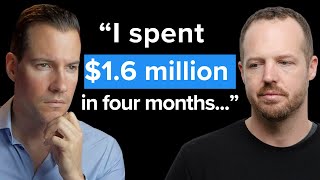
Dan Saunders found an ATM glitch that made him money, then lost everything to gambling addiction. He learned that loneliness kills faster than smoking, and that sharing his story in a Facebook support group saved his life. Close relationships, not wealth, drive happiness.
Chapters
I became addicted to that process, being able to make millions of dollars appear in my account. The height of it, I think I'd spent something like $1 million at that point, and I knew that I was in a lot of trouble. It was a very hedonistic time. I've got 4 hotel suites all around the country, and then I'm flying between them all. And in them all, girls, people enjoying themselves, but I'm going from party to party. It just became apparent to me that I was losing myself. I was getting tight in the chest and, um, get very sweaty for no reason. Yeah, sure. I was gaining all these superficial things and experiences and whatever else, but I knew that I was losing the inner compass of my actual moral being.
Thanks, Dan, for coming on. I wanted to talk to you because you have a really interesting, uh, unique story. That I think a lot of people are going to be able to relate with. And you basically, you cracked a code where you discovered every gambler's dream, like infinite money guaranteed every time, and it still didn't make you happy. Actually, it led to the opposite. And I want to get into that and how even though you were able to get into this unique situation, it just wasn't enough. And we can really pull that out. So let's start from the beginning. What is it that happened to you and how did you discover the so-called glitch?
So I was living in a small town called Wangaratta. That's in northeast Victoria in the state of Australia. And just typical country town. I was working in a bar. I was pouring beers and just getting people's drinks, food orders, that kind of thing. I was drinking with a friend at a bar after this job. So I finished the job and then I was drinking at a bar with a friend. And it was my round, my turn to buy some drinks. So I went to the ATM, which was located around the corner, a National Australia Bank ATM. And it wouldn't give me a balance. I tried to get a balance on my account and it wouldn't give me a balance. It said transaction unavailable at this time or something like that. What I did was I tried to transfer some money from my linked account, that linked account, a credit card account, and then a savings account. I guess you'd call that a checking account, maybe, I don't know. But basically I worked out that I could transfer money between my two accounts, but nothing would actually show up in the original account. So if I transferred $200 from my credit card to my savings account, the money would just show up in there magically, seemingly from nowhere. Obviously I didn't know that straight away, but that's what I found out after many times of trying it. But the first time I was just simply trying to transfer money between my accounts. And it said transaction canceled and the card came out and then I went back into my savings account as if the transfer would've worked just to see if I could get the money out and the money came out. So I just went back to the bar, didn't really think much of it at that point. I thought it was just maybe a disconnection from the main server or something like that, some sort of issue. But then it was when I left the bar, it was pouring with rain and the ATM was in this little alcove. So I remember like it was yesterday, I walked into that alcove to get out of the rain. And then I was like, that was really, it's really weird, that thing that, that. So then I tried to transfer some more money and the same thing happened. And then over the course of the next probably 2 weeks to a month, I became addicted to that process, being able to make millions of dollars appear in my account. That was very, for a guy who lives in a small country town, that was a very fun thing to do. And I love to do that. So I kept doing it. And then I slowly learned when the money would, when I could do the transfer. And then I also learned, so by going into the bank, I walked into the bank and said, can you give me a balance on my account? So that the teller or the person at the bank actually thought that money in there was my money as well. So they just treated me like a, like a normal, I guess I was just a normal customer. They didn't know the origin of how I was creating that money.
So in the beginning, was there this ethical dilemma of do I report this or do I keep going? Or do you remember anything like that?
Yeah. Yeah. I thought I'm just overdrawing my own account. So essentially once they work it out, so, so what would happen is if I transferred, let's say I transferred $200, then got that money out of my savings account. The next day after it all updated, the credit card account balance wouldn't move, but the saved account would be down by $200. So basically what I had to do is I had to just keep ahead of that. So I'd do another transfer just in time for it to reverse for more. So if I did, say I was down $200, if I did a transfer for $400, then when it all updated, I'd be up $200. So I learned that I could just keep that I know it sounds ludicrous, but I just worked out that I could keep that system going and they wouldn't find out.
And right. And when they're calling you and confirming, like you're making big purchases later on throughout this and they're calling you saying, is this you? And then you say yes. And then it works out like you're basically, it's emboldening you thinking like, oh, they're not catching on.
It's actually working. But I'm pretty self— I'm pretty, I have been reckless. But I'm pretty self-responsible as well. So I didn't explain it away and just go, oh, it's not my fault. I went, yeah, okay, they don't know what's going on. And then I spoke to my friends about it and we're like, it's a bank. They would do the exact same to us if they were in that position. Like they would take all the money. So let's get all the money off them. So it became this sort of thing where it was like, yeah, it's the wrong thing, but the bank's the victim and we don't care about the bank. So whatever. And we'll just, it's going to be a problem tomorrow, but today we're going to just have the best time ever. It's going to be, we're going to be able to live out our dream. That's what it's saying ultimately.
So let's go to the beginning here in terms of the gambling. So you, were you into gambling before you discovered this glitch?
A little bit. I was, yeah. I used to have probably $100 or $200 a week on the weekend. In Australia, horse racing is pretty big. Oh, it has been pretty big. So I was brought up doing that and around people who did that. So I would spend, I would go to the betting place on Saturday and place the bets on the horses. So I used to do that, but basically I never, I was fine, but I didn't earn heaps of money. So I probably $700 a week, I think it was. So couldn't really get into too much trouble once I paid my rent. And all the expenses of food and everything, I had a little bit of money left over. So that used to go towards trying to win more, like maybe. So I had $100 or $200, so it was like, I can either save this up for like 52 weeks and buy half a fridge, or I could try and double it on the Saturday. So I think that's what it was. And then I had friends who did the same and that kind of thing. That was my relationship with gambling before that. But obviously with the unlimited funds, this just really, at the height of it, it sounds weird, but at the height of it, I was able to transfer. So on the ATM, it could go up to 6 figures. So I was able to transfer $999,000 at a time, but there was no limit to the amount of transfers I could do. So literally in 4 minutes, I could do 3 transfers of $900,000 and literally add $2.7 million. At my disposal. Wow. To be able to transfer wherever I wanted. Now there is transfer limits with all that, and I don't know if I had have tried to transfer $5 million at once, I'm sure I would've flagged something. And the bank will probably tell you that, oh, we would've caught up on that. But at the end of the day, the bank wouldn't admit to the fact that I'd be able to do that in the first place. So it's who knows.
So, wow. Just printing infinite money and What did this do to your gambling right early on within the first week or two?
See, I didn't know that it was actually going to go for a long time. I thought maybe this would go for 3 or 4 days or a week. Okay. So my general thinking was my account's going to go into debit because they're eventually going to know that I've spent all this money. It's got to come from somewhere, right? So yeah, basically it's just software glitch on the ATM. Creating money out of thin air, basically. That's the easiest way to explain it. And I know that sounds ludicrous, but I only believe it because it happened to me. Great. You're more than welcome to use electric-einstein, but I'm just telling you that's what happened. So basically you were able to do that where you were manipulate your account balance to say literally whatever you wanted it to say. So if you wanted it to say 2.1 million, you could get it to do that. So it was a very addictive thing to find out and execute. But what was the sort of the—
so the early days of what this did to your gambling, you didn't know that you would be able to run at this the way you did. You thought, okay, let's just have fun for a few nights, but I'm going to have to pay it back. So was the idea that gambling will be a way to capitalize on this bankroll, basically this infinite bankroll so that you can like double it and then pay, pay back the few nights of partying. Was that kind of where you were at?
It's the idea, but also there was the idea if you gamble, then you could get a check from a casino or a check from a betting establishment that then cleans the money. Well, you don't like to admit it, but yeah, like money laundering, like basically that was the idea. It was like if we gamble, then when the bank comes knocking, we're going to be able to keep some of this money. That was the rationale behind it. But also I love gambling too. Don't get me wrong. Like the tiger was well and truly wild. And also that those kind of establishments, casinos, they sort of, you know, they thrive on that. They attract those kind of people who like that loose lifestyle and it was a very loose lifestyle. So it just went with the whole thing. But once I realized that they don't actually know. The bank doesn't know and they have no idea. Then I was like, okay, what, we don't really need to win this money back because I, I worked out two things, right? So I had this betting account, sports betting account, and I remember I'd lost $60,000 by this point. This is probably about maybe a month in. So I've lost $60,000 and then I had one day. That I won $40,000. I just had a day where I just couldn't lose, right? So I'm like, I'm going to get this money back, right? I'm going to, I'm going to get everything I spent. And then the next day I started to try and put on big bets. And because I'd won the day before, they said, no, you can't put any big bets. So I was trying to have $5,000 bets, but they would only take $250. Because obviously that would've just stopped the momentum of the run. So then I worked out that, oh, you actually can't, like it's not actually a level playing field. You can't actually win the money back once you've lost it because if you go on a streak, they will cut you. I always thought that it was fair game, like you could just bet whatever you want to bet and then, but they stop you. So even if you're betting big numbers, and you're winning, they will stop your run. So yeah, so then after that, after they stopped the run, then the momentum shifted and I started to lose again. But yeah, it's just that, it's just another way that you think that they promote it like you're having a go and all this. Yeah, have a go, you can win off us. But essentially they don't like people who win. Right. Yeah.
It's not profitable. Sports betting, especially these new apps where they can really track everything. It's, it's not profitable. And if you actually start to become that way, they, they limit you.
Yeah. Yeah. And the people also who are good at it get limited heavily, but you can play as long as you lose. 'Cause if you're not a consistent loser, we don't want you.
Yeah. That's a reality. And so when that happened, like you were chasing your losses, it feels like before that happened, like it was like, I'm gonna use this glitch to fund my gambling to chase losses. I might have to pay it back. There's a point where you're like, okay, No more gambling. It didn't make sense for you to gamble anymore because it wasn't as exciting as this infinite bankroll glitch. Tell me about that moment where gambling didn't feel exciting anymore and you had to move on basically.
Yeah, I was, I remember I was at, we were at the casino and we were betting with a few friends and it didn't occur to me because I was so in the bloom. It didn't occur to me that I was trying to win some money back that I really wasn't going to be able to get that. And also it was, yeah, the thrill of it, because the thrill of the ATM was so huge. The thrill of the roulette wheel was suddenly pretty, yeah, it was, it seemed a bit silly. And plus I had a friend as well who was saying, why are we gambling? We can literally go and enjoy life to the fullest. We don't even have to worry about money anymore. But for someone who doesn't have to worry about money, from being someone who always worried about money, having enough money to do something, to be able to check into a hotel and just stay in the penthouse and not worry about a single thing. Everyone could come along to the party. It was a very different feeling. But obviously, yeah, then the gambling fell away because obviously the thrill and the rush of the bank glitch far surpassed the dopamine spikes of gambling.
Yeah. Your tolerance went up basically for big numbers. And so if you can withdraw $999,000 instantly every time, like a few hundred on a roulette wheel or something just doesn't feel very exciting anymore.
That's right. The thing is, I want to clarify the withdrawal, right? So, so it's transfers. So basically I can transfer money between my accounts on the ATM., right? But then I can go into the bank and then get large sums of money out.
Then withdraw the cash.
So the big, like, oh, people always say to me, ATMs have limits and all that. That's not the story. It's not all this cash out of an ATM. So I had 2 cards and I could get $1,000 cash on each a day. That's it. But I could also go into the bank. So I go into the bank and I'd say, can you please give me a balance? And they'd say, oh, there's $2 million in your account. And I'd say, okay, can you please organize for me to have $100,000 today? And then they'd have to organize it and it'd probably take a few hours, but they'd get it done. And then you give the teller a generous tip for making it all happen and all that sort of thing. These are just things I picked up along the way. This is the, if you want to get the cash out in 2011, if you wanted to get cash out, you could. I think it's very hard now. I don't think you can just walk into a bank and just get $100,000 out now. I don't think that happened, but in places like in the country parts of Australia, a lot of people bought their cattle and livestock with cash. So there were a lot of cash floating around.
So, okay. So effectively, yeah, like the gambling just didn't feel very enticing when you could just get the money guaranteed. And basically I like to compare this to tolerance and addiction where it's a spice tolerance. Where it's like you eat a spicy food and it's very kind of hot and enjoyable. But if you always eat spicy food, you need to ratchet up the spice level because you could become tolerant to that spice. And gambling just lost its flavor. Basically, it became bland in comparison to this new level of thrill, which was just the ATM. And so what happened from there when you're like, okay, we're done gambling, we need to ratchet this up basically. And it's not you were done gambling in terms of the mindset of gambling, because it still has that chasing of a thrill that you were doing in the gambling environment, but just in a very different way. Would you say it was a continuation of the same feeling or something qualitatively different?
Yeah, I'd say that basically it became like, totally love the spice analogy. Like it's perfect. It's a perfect way to describe it. Because even things that, you know, obviously I think about maybe a child the first time they taste chili. They're like, oh my God, I'm never having that again. And then you go from that to being, oh, I quite like chili. And I'd say that's like a little bit like a gambling addiction in that way, where it's, if you have a good experience with it, then it's, you know, it, it can be added to or parlayed to use a gambling term. You can just compound it over and over again until, yeah, until obviously if you've got that, that absolute spice of being able to make your bank account literally look like it's got millions of dollars in it. I'd say that's the top tier of risk, but it became about risk for me. It might've started with gambling, but then it became about taking risks and being addicted to the risk-taking.
What were some of the early risks you got up to?
I think basically I was just spending more and more money, so I knew that I'd never be able to pay it back. So eventually it got to the point where I knew that I thought that I'd be going to jail. So I thought every purchase was gonna contribute to some time in jail. And that made it very, that made it feel very risky. And also I gave a lot of the money away as well. And that was super fun. Like I'd love to just give $500 to a homeless person or go to a busker and give them $500, tip the taxi driver $500, sit all my friends in a circle and say, what do you want? And literally be the genie and just go, I want a car, I want to go overseas, I want to do this, and just be able to just go, there you go. Can't even explain it to you, the amount of power and just overall joy that was to be able to just solve people's problems. Just like that. It was amazing. During, I was just thinking about the glitch. I was thinking how much money I'd spent so far. And I was thinking, I just want to have a great time before they throw me in jail. Because I thought at any moment they could have come and picked me off the street and taken me to jail. And I knew that I'd already told everyone that, hey, I'm not going to say anything about you. I'm not going to say if I paid your university fees. If I paid for your truck for work, I'm not going to say anything about it. I'm just going to say that I gambled the lot. That's it. But that was like a pact between us friends. And I knew everything, we got to a point where we knew everything was going to change. We knew that there was going to be a point, whenever it may be, that we were going to have to sever ties and say, see you later, because it wasn't going to be actually safe for us to know each other anymore.
And what, like you got some wild parties during this time, like in terms of just like hotel parties, but then you ratcheted, like that became not enough. Like having everybody at the hotel was, it's like, okay, let's, what can we do next? And at one point in this progression down the line, you actually decide to, from my understanding of the story, host a party for the employees of the National Australia Bank. It was almost like the ultimate troll. Like you were tempting them to to discover you basically. It was like the level of risk involved in that. Tell me about that story if it's true.
Yeah, sure. I used to work underneath the headquarters of the National Australia Bank when I was younger. So I knew basically what the setup was there. So I knew that there was a bar underneath it called the Watermark Bar. So we printed a flyer and we put it on the bottom of the escalators at the National Australia Bank headquarters. And we just said Friday night drink from 5:30 PM, full bar, just come basically. So all the employees in this National Australia Bank headquarters knew where this bar was because it was just kind of near. So we were able to fill this bar up. So we've got about 400 or 500 people in this bar. And as you can imagine, free drinks, it was quiet. People were people were indulging, they were finished work for the week. And then we had a little, they had a little public address system. So my friend stood up and it wasn't me who gave the speech, but he just decided it'd be a perfect thing to give a speech. And he just started talking about how we've had such a great year. He didn't say where he was from or anything like that. He just said, we've had such a great year. And a lot of it's got so much to do with the National Australia Bank. And really we couldn't have done it without you guys and we just appreciate your work. And I'm going to keep it brief, but like you guys really are the bank of more give, less take, which at the time was their motto, right? So it was National Australia Bank, more give, less take. And he finished the speech by going, hey, you guys really are more give, less take. And then the room erupted into raucous applause and Yeah. And then, and then there's a whole heap of other stuff that happened on that night. But yeah, that's basically what happened.
Wow. Yeah. So talk about just trolling them on the edge. Like they don't even know what you mean by that.
It's one of those moments. It's one of those moments that was so good at the time. You feel weird about recounting it because it's like, it can never get as good as it actually was in that moment. You know what I mean? Like it's. You can never replicate the feeling of that moment. I can feel it, but it's almost when you talk about it, you actually don't do it justice. It's like when we were at the height of it, I think I'd spent something like a million dollars at that point. And I knew that I was in a lot of trouble and then to thank the actual employees of that bank and then to have them erupt in raucous like applause and laughter was just I can't even describe it. It was just a moment in life that I'll never forget. Just never forget it. And I don't know whether that's good or bad or I don't know.
Talk about ratcheting up your thrill seeking playing cards or sports betting or roulette. Just, it doesn't do it anymore. Basically you're, when you're doing things like this.
No, we're going for bigger pots, bigger thrills. Yeah.
What was the peak of, was that like kind of the peak moment for you or was there something else?
Probably the height of it in hedonistic terms. The height of it is I've got 3 hotel rooms, which are at the height of it. So basically it was hedonistic. It was a very hedonistic time. I would call the height of it. I've got 4 hotel suites all around the country, and then I'm flying between them all. And in them all, girls, people enjoying themselves, but I'm going from party to party. I don't know what's happening when I'm not there. I only know what happened when I was there. I also taught a friend to do the trick with the card, so then I could travel and go. I went to an island and partied there for a few days. But basically all the things that I was doing were great at the time, but to recount it and being a bit older, a bit wiser now. I'm, yeah, that was the height of it for me then. But looking back on it, I'm like, oh geez, those times were like pretty hedonistic.
These were very expensive parties and the flight to this island, what are we talking here?
Yeah, so that cost $80,000. So we, I met this helicopter pilot and then he told me about this private charter company that flew to this island near Bali. And he said that we could get an all-inclusive package, especially if we paid cash. So we paid cash for this thing. Yeah, it took some people over there and it was great. It was fun, but it was more just trying to do things you'd never done. And I think actually, because I wasn't too, I wasn't too materialistic before, so I didn't really, I also thought that they would be seized, like any anything, I was concentrating on perishables because I was like, I really can't keep anything. So if I had bought myself a Lamborghini, I'm pretty sure they would have taken it back. You know, in my eyes, I was always going to get caught. So I was like, I'm going to spend up big on experiences and anything material I'm going to buy for someone else. You know what I mean?
And hosting all of these parties, it was like, the height of hedonism, basically, as you said. Yeah. And when you said you felt like you were addicted to thrill, where is that in all of this? What is, what is that kind of feeling for you?
Just, it was like, it was like one of those choose your own adventure books where you could literally turn to page 23 and then do you want to jump over the ditch? Let's jump over the ditch. And then That sort of just feeds on. So I would always make, I would always make the risky, riskiest decision, but always trying to keep the glitch current and active, I guess, in a way.
So when did things turn for you where you started to realize your mental health was deteriorating and you were having kind of panic attacks basically? Like what changed?
I was still thinking pretty clearly, so I don't think I was, I wasn't hallucinating or anything like that. I was getting tight in the chest and I get very sweaty for no reason. I just start sweating and I had this eye twitch too. Yeah. And yeah, it just became apparent to me that I would, I was losing myself. But yeah, sure, I was gaining all these superficial things and experiences and whatever else, but I knew that I was losing the inner compass of my actual moral being. And not to say I was a saint by any means, but I just mean that I've had my fun and I always thought that there would be, I always thought that they would end it, not me. I didn't think I'd have to actually end it, but I didn't end it because I felt bad for anyone else. I haven't met the victim. I haven't met the software guy whose fault this was. I don't think it would've been pinned on one person in particular. So there's no victim that I can see other than bank shareholders. But hey, the bank shareholders make, they make money off people's backs every day. It's good luck to you if you're a bank shareholder, well done to you. But the point is that I lost my compass as a human being and I didn't, I wasn't behind who I was and I thought I was making more and more. So I wanted to get my life back, however that looked. I didn't care how it looked, but I knew that wasn't the way. So I kind of announced to my inner circle that I was going to stop doing it and I was going to walk away and it was going to be hard. At the end of the day, that's what I needed to do because I felt like each transaction each time I did it was being recorded and was being added to my ultimate prison log, primary prison. Uh, yeah.
So what was that kind of sense of compass or sense of self that you felt like was lost at that time? What was that feeling?
I feel like I lost my soul at that time. I didn't actually have any idea of who I was anymore, and that probably like the fact that I was going to go to jail or anything like that, that didn't really bother me. It more bothered me that I was just, I was starting to do things that I didn't really agree with and I knew wasn't actually what I wanted to do. So I wouldn't have taken, I wouldn't have taken this amount of money off someone else. So I wouldn't have taken it off an old lady or if I found a bag with gold in it, like I'd try and find who it was. The fact this was because it was in my own name and my own account, and I thought, well, it's my problem. So I took the risk with my problem. But yeah, essentially it was like, who are you? Who are you? You've had your fun. You can either be an international criminal and transfer money overseas and never be seen again, or you can say, hey, I'm Dan, I stuffed up. But let's sort this out.
So you said you started doing things you didn't agree with. What were those things?
I guess I was doing things I didn't agree with the whole way along. I was taking money that essentially wasn't mine, but the whole concept of whether money exists really came up for me as well. I was making this money appear out of thin air. So it was like, money exists in the first place? I don't know. But I knew it was, I just knew it was wrong. I knew it was wrong. So I was starting, yeah, I was starting to, I was starting to justify what I was doing. And then I was like, now I'm going to leak. Now I'm going to try and siphon money and I'm going to put it here and I'm going to put it there. And so I was thinking about, I was actively thinking about transferring money to casino accounts, holding that overseas, then just doing it over and over again, increasing my transfer limits, increasing, basically getting set to be set for life. And I was like, this is not who I want to be. That's not the end of my story. And I might be in Mallorca now or something, living up large, but I know I'd be a shell of a human being if I was, because it's not me. It's not my journey. It's not what I'm meant to do. So yeah, it was just, it was me drawing a line in the sand because I could see that I was gonna, gonna become someone who literally didn't care about anything.
Didn't care about anything. You lost that moral compass.
Yeah, truly. I lost who I was. I lost me. I went back to when I was a kid and I thought about the 15-year-old me and I thought about what he'd think about what I was doing and he wouldn't have liked it. He would have been like, what are you doing? What are you doing? Like you're about, you're about people, you're about connection. You're not this like international criminal. You don't want to go overseas and never see your family again. You know what I mean? That's not, that's not you. That's not you. That's not your story. So yeah, I was just like, gotta end it.
And your body was telling you, like the symptoms you described, like the heaviness, the eye twitch, like it was a persistent eye twitch.
Yeah, it wasn't my brain. It wasn't my brain. My, literally the whole of my body told me, my body reacted to it. I would literally walk along the street. And feel like I was falling into the ground with every step. Yeah, it was a crazy feeling. It was a crazy feeling. And I could ignore it because I worked out how to do that. I felt like I was collapsing once in a hotel lobby and there was a doctor and the doctor came over and said, are you okay? And I said, I don't think so, I'm very dizzy. And he goes, I think you might be having anxiety attack. Because he took my pulse and took my vitals and he was like, you know what? I think you're having an anxiety attack. Here's a couple of Valium. Like, he literally had some Valium. And then I took that and then I went upstairs and immediately I calmed down and everything was fine again. So I remember thinking that if you've got to be on drugs to alter your mind, that's not good. That's not a, it's not a place, it's not a lane I want to go down. You know what I mean?
It would have been very easy to just turn to Valium or alcohol addiction or opioids or whatever at that time?
It solved it straight away. It just dissipated that feeling, but I didn't feel in my body though. I didn't, it's hard to explain. Like, it didn't feel like me. Yeah, yeah, sure. I was fine, but something wasn't right about it. It was a, it was like a manipulation of my mind that I didn't really gel with. I was like, nah, I don't really like that. So then I continued to have the attacks. So you have to be at the ATM at midnight every night.
You'd have to keep this going. You had to, yeah, set your alarm.
And trying to like be like, I'm going to go out tonight. Where's the nearest National Australia Bank ATM? And there was many like Australia-wide. So it wasn't really an issue finding one, but I just knew I needed to know which one. So I'd research it. I'd research which bank I was going to go to at when it came midnight. And then whatever I was doing, the alarm would go off in my pocket in my phone and I'd be like, I've got to go and do the transfer and then come back. But I did that every night for 4 months. So I'd broken, I wasn't sleeping hardly. That became very taxing as well. So yeah, it became like a massive chore. And like I said, I trained friends to do it with the card, friends could do it as well. But it became this thing where Yeah, I knew my body knew that it was wrong. And then I'm like, it's not a question of being, it wasn't a question of being weak or anything like that. It just, I was going to turn into a person who I didn't want to be. That's it. I've never really, I don't really want to hold on to money. That money doesn't really interest me. It's, you can see that by the way I've spent the money. Like I literally spent the money on other people or on experiences. Like I did, as long as I've got a roof over my head and water and food, I'm fine. I don't really need anything more. So I wasn't trying to protect this golden egg that was my future or anything like that, because I didn't want a future based on stealing anyway, or I didn't want to have a future based on not having, not living a life with something that I had earned. I didn't really want that. I don't know what's people cool with that. And maybe that's probably what's wrong with the world. I think if a lot more people were conscious of that, then it would be, yeah.
It's a, it's the values that often propel people out of addiction. It's that exactly what you described, that sense of it's, there's things that matter on one hand and then there's the addiction on the other hand. And it's a crossroad or a fork in a road and as you see yourself deviating even further from there, that discrepancy between your actions and your values gets wider and your body's telling you it's enough. You're like being weighed down into the ground. You could, you know, as you said, you're walking and it feels like you're falling into the ground. They say the body keeps the score. There's literally a book called that, uh, it's on trauma. But in this case, like the physical symptoms were that compass telling you, you have deviated. You can keep going. You can take more Valium or you can put an end to this.
Yeah. Yeah. And it's actually a beautiful feeling to actually listen to your body and what it's telling you, what it's telling you, because your brain will override and tell you, but the body will actually come out in a rap, give you, give you clear signs that you're on the wrong path. But yeah, that's, I think the analogy of, I know it's not your analogy, but the analogy of the tiger. The Tiger Cup especially resonates with me with this bank glitch because it's like the addiction or the bank glitch, whatever it is that's in your life, it's like at the start it's so new and exciting. It's so amazing. You're like, oh my God. So eventually when you get to the end of it, you're, you've still got a love for it. So even now, like gambling, still got a love for it. Like the bank glitch, I've still got a love for it. But ultimately with the tiger, the tiger cub. So you find a tiger cub and you weren't expecting to find one. And it's a great feeling. You're like, I love this little guy. I'm going to, I'm going to take care of him. I'm going to feed him, find some meat. He's purring and everything's good. And so no worries. And everyone comes around and goes, hey, he's got a tiger. Tiger, you know, it's even like the, the, the movie, The Hangover, tiger in there. So it's crazy to have a tiger, right? And then you love the tiger. You don't, you want the tiger to be there because that becomes part of your life. You know what I mean? That's why the advertising works so well because it's a mixture of the false pleasure and the genuine pleasure mixed together. Right? So you can't tell which one's which. But the point is you keep feeding the tiger. And this is the problem for governments as well. Governments think about this problem as being like an individual problem. It's once you are a government and you start to get into gambling. Or relying on gambling revenue, you're actually a part of this process, right? So this tiger grows and it all seems fine at the start, but it gets to a point where it's like, oh my God, I've got to get a whole side of beef to feed this bloody thing, right?
Because it grows.
You still get it because you're like, I need to keep this alive. Like, this is my tiger. Like, we're talking 5 years in. This is my tiger. This is my guy. I gotta keep him alive. And then he might harm someone you love. He might go, oh, hey, you know what? I'm gonna rip your sister's armor. And basically that's like you lending money off her for gambling, basically. Right? He's gonna go and kill one of the villagers. Or he might lick you and his tongue's so rough now that he's gonna draw blood. You know what I mean? And then he gets a taste for blood and then he wants more. But eventually you work out that either you gotta kill the tiger. Or it's going to kill you. That's it. And it could kill you through suicide or whatever. If you start doing it in a social setting and then that graduates to an isolation, then you've probably got a problem. It's probably an issue, right? Most people don't have an issue with it. That's fine. But in regards to gambling, I'm saying not many people have an issue, but at the end of the day, 60% of the money that funds the industry is from people with an issue. So it's, so you've got 95% of people don't have a problem and that's cool. Go and have your $10 if that gives you the joy that you need for the week to have a $10 parlay. Great. Go and do it. Like no one's stopping you from doing that. But the reality is you're not like truly part of this conversation because we're talking about 5%, right? We're talking about the 5% of people treat it like it's drugs.
That's all.
Right. So I don't find, I find it's very difficult to get a point across in regards to this because we're not talking about the guy who just has a little bit and can take it or leave it. I, as a gambler or an ex-gambler, couldn't think of anything worse than going and having $10. That's like having one light beer at the football. It's why would you do that for? You know what I mean? I can't understand that. But then he probably can't understand what I do or did. So that's the point. It's a different thing. It's a different beast. But the majority, the reality is that they wouldn't have an industry if it wasn't for the people spending beyond their means. It's as simple as that. Exactly. If you take 60% of the money out of sports betting, out of casinos, then there's no business. There's no business. And there's been many studies all around the world that basically say 60, 70% of all the cash that comes from gambling revenue comes from people with a problem. That's it. Yeah, you can look at it like, oh, well, they're just victims and they're just weak and all this. But if you're an actual, if you're a business owner, you know, if your sister has a problem with this, or, you know, you need to know because ultimately they're getting money from somewhere else where they shouldn't be getting it from. And you need to know how to identify this stuff. And you think with the legalization of sports betting in America, people don't understand is that, yeah, you've got, you've, so part of it's you've got victims, part of that's right. And then the industry plays to the people who are vulnerable. Yeah, sure. But they don't understand the organization. So the big corporate bookmakers inside that, inside those walls, it's like the Wolf of Wall Street. Like they are, they all gamble as well. So 80% of the people who work in the sports actually gamble as well. And then they have access to all the information of all the gamblers. So then they contact them independently and sell them tips as well and say they're VIP tips. Like these, the way that these places work is not how you want your sporting bodies to work. But when gambling gets in there, it's only a matter of time before it starts being like that. You know what I mean? Like you can't. Stop it because the gambling breeds it. You know what I mean?
It's corrupting really culture broadly, I would say. And I love your analogy there of the tiger because on an industry level, we've fed it too much beef and these companies are huge now. It all started with fantasy sports in America in terms of DraftKings and FanDuel, and they got wedged their way in and then they lobbied to change the laws and now they have online casinos and now they have So much money, they have outsized influence, and now you need like a side of a cow every day to feed these, this tiger in the room, and the industry just is huge. But also on the individual level, I love how you, like, you experienced that in your own life of it's never enough, more. And that the logic of addiction is basically the logic of never enough. And it's like this very hyper-capitalist paradigm where it's just more for the sake of more. But when it starts to really deviate from values, you felt like a hollow husk of a person and you were like, what is this all about? What am I doing?
And they're super smart. Like don't, some of their ads seem very, it's very innocuous. It's hey, come and have some fun, whatever. And they say, there's things in Australia, come and bet with your mates and we can all bet together. And basically it's just like a group chat, but in, it involves betting as well. Like they're very smart the way that they market these things. The fact is that he can just look at it and go, oh, they're just having a bit of fun. But the fantasy sports in America, that's the bridge that they made, right? They're thinking about this stuff. It's not like they're going, now we'll do this. It's, you know how the government can't actually execute a long-term plan because they've got all these little increments of time where people care about just their tenure. That's why nothing really can happen that quickly. With gambling industry, they know where they're going.
We've fed the tiger cub and it's about to eat us. And so you got to a point where you basically were having a breakdown and you turned yourself in. Most people would be like, why did you do that? But it felt like you couldn't, you just couldn't live down this path anymore. It was like this illusion, this false reality. That in the beginning was very exciting, but really ultimately never enough to be like, I feel whole and fulfilled and my wellbeing is great. Like it just didn't have that, that fulfilled character to it basically.
Yeah. There was so many reasons why I turned the book, why I stopped. There was so many reasons. I'd like to say it was just one particular reason, but it wasn't. It was a lot of things. I felt like every transaction, every time I used the credit card or spent money, I thought that I was ultimately adding to my jail sentence because I didn't imagine a world where I wouldn't get caught for this. I thought that I would 100% be caught and dealt with, and I was very surprised that I was going to have to be the one to stop it. But when I stopped it, I thought that I would be caught straight away. I didn't think that I would last long on the street.
So how long did it take?
Did stop because I wanted to change my whole, I wanted to to get my life back or rebuild some sort of normalcy. So I stopped.
Yeah.
And nothing happened. So I thought, I'm just going to use some of the money to rent a hotel room and then I'll just get fucked up there. So I just paid for the hotel room straight up for 30 days and stopped doing it. And so I got calls from the bank, but they were just from people chasing the money. Was like, oh, did you know your savings account is overdrawn by $1.6 million? And I was like, yeah, I had a pretty good idea. And she's like, do you have an idea when you're going to be able to pay that back? And I said, no, not really. I don't really have any idea for that. She's like, okay, maybe we can organize a payment plan. And she was just, she's obviously just making all the calls to people with debilities.
I didn't realize you would confess to this.
She's basically saying to me, she's more surprised than me. Because she doesn't understand how a savings account can be overdrawn by that amount of money. She's saying the words, but she, you can also hear her sort of ticking over going, hang on a sec, this is really weird. So I thought that would be it. I thought now they know, obviously. So they're going to obviously up the investigation and then they'll come and get me. But yeah, just absolutely nothing happened. So I rang up again and then I got transferred to someone named attorney, and he's, he was like a higher level money guy, but he spoke to me a little bit like a school principal would. And he said that you're in a lot of trouble now, that you're going to go to jail. First he said, we're not giving you any more money. And I was like, I don't really, I didn't really ring to ask for more money. He's look, he's you're in a lot of trouble. You're going to go to jail. There's a police investigation now. I've talked to you. So I was like, wow, okay. So I'm just going to have to wait. So they are doing something. I've heard from the bank., but quite obviously Bernie wasn't the guy deciding whether to come after me. He was just some mid-level sort of dude because the bank's got plenty of people and they don't necessarily tell everyone what's going on. And so the ultimate decision to not come and get me was based on the fact that obviously you have someone higher up who you will never speak to. But of course, I didn't know any of that at the time, but as soon as I stopped doing it, my physical symptoms started to ease. So the eye twitch went and it felt better, felt a lot more normal because I had made movement to stop doing what I was doing. I was quite good with that. Like that felt quite good to do that. So I just waited and started drinking a bit, started gambling a bit, got another job and was just back to doing those sort of things because I was always waiting because I'd spoken to the guy at the bank. I was always waiting for something to happen. It was a really weird time. I remember meeting a, um, a lady at the time and I was like, she seems great and I think she is into me too, but do I really want to start something? Because I know that this thing is coming, obviously coming. I couldn't move forward if I didn't have some kind of program. So I decided to contact a journalist and tell them about the story and say, Hey, look, can you please ring the bank and ask them exactly what they're going to do here? And of course, a journalist wants to write the story. And I said, that's fine because it will just quicken this process because I feel like I'm starting to get quite anxious about this. Yeah, sure. It was a relief not doing the transfers every night and all that kind of thing. But I was like, well, I can't really move on with my life now. So I need sort of something. Be able to move on with. And I literally did think that they would maybe ask for the money back and I could start paying it back slow, very slowly, obviously. Or they would get me to sign a non-disclosure agreement and say that was it. I did not expect them to not respond in any way. And I still feel in the future, like I'm not in charge of movies, but in the future, this may be a movie because there's a lot of people trying to make a movie about this actual story. But the point is that it's gotten so big because of their lack of communication. Like if they just address the issue, but I suppose it's because in hindsight, it's because there's no one within the bank wanting to actually admit to this. So they're all just leaving it alone, going, oh, I'm not sure what happened there. So no one was willing to put their hand up and say what happened. So it just became this thing where Yeah, so I didn't know any of that at the time, but I thought you can only control what you can control. So I went, I've gotta, I've gotta try and seek some answers here. And essentially you can't do that alone. Like I couldn't just ring the bank because they just tell me it's a police investigation. That's it. Yeah. So when they printed in the paper, in the newspaper, that it was a police investigation, I believed that and I was like, okay, so that's obviously taking the time. So at least I've got a little bit more confirmation of that, that's happening. But I didn't know that the journalist just wrote that. That wasn't actually true.
There was no police investigation.
It wasn't actually true. So long story short, I went on TV, enacted the whole thing and told it. And I did that because people say, oh, you want attention and all that. No, I like, because of my risky behavior. I thought it was pretty fun, but ultimately I knew what I was doing. There was a goal to sort of—
just wanted this to be behind you so you can start feeling normal again.
Well, I just sort of that. I think there was a couple of articles about me being like a showing off or something like that, but yeah, I didn't feel like that at the time. It might've looked like that, but I didn't really feel it myself. I just knew, I just felt it was the only way that I was going to be able to get some sort of outcome, we can't get their attention. Yeah, that's it. So basically until that story ran, there was never any police investigation. And the executive producer of the current affairs show that I went on, which is called Current Affairs at that time, was an ex-policeman. I didn't know that he was an ex-detective. So he called someone in the force. And then a police investigation was opened and then they had to get the bank to come on board, but the bank basically just provided the bank statements, which I had anyway, which I gave to the current affairs show, but that's the only evidence they provided. They didn't really explain how it happened, but me admitting that it happened was enough to charge me and ultimately give me a sentence. And sent me to jail. But it was very weird that it all ended like that because I thought that's actually like, you're actually making it bigger than it needs to be. But not because at the end of the day, they did. I'm not in charge of the Current Affairs show and what they put in their content. I'm not in charge of the judicial system putting me in jail. I was quite happy just to have a resolution and walk away quite quietly. At that time, I would have never spoken about it again. If they told me to be quiet about it, I would have been like, yep, no problem, it's done, right? But the fact that they made such a show of it, and the fact that it wasn't actually a police investigation, it was just the media getting involved with the police and then creating one, that, that angered me quite great. I was like, I felt like here's a guy who just wants to, obviously he's done the wrong thing. He realizes that he just wants to have some form of resolution and then move forward with his life. I'm not asking anyone to feel sorry for me or anything like that, but that was like, I was thinking about that in jail. I was like, if you don't, if you treated me that way, then I'm going to get out of jail and I'm going to make a movie about this. Because you've, you had a chance to be like, meet me where I was trying to get to. And they just, they made me look like a, I think one of the headlines was like I was in a bullet club, like I was robbing the bank, something like, I forget the words, but basically like bank robber, bank robber jailed. And I was like, I overdrew my own accounts. So essentially I had a debt with the bank, which was in my own name, but I certainly didn't hold a gun to anyone's head. That's not my style at all. And to be depicted like that, I didn't like that. I got a bit, I'm alright, like I'm over it now, but at the time I was like, stuff you guys, like I'm gonna, I'm gonna get out and tell the whole story to the whole world and see what they reckon. Yeah, and you'll be hearing about it. You want to put me in jail like this, you'll be hearing about it for the rest of your life. It got real. I don't know. I got a bit dark about it. I can admit that. I can admit that. But yeah, jail was, jail was so interesting in itself because it was, we're taught that people are just, there's just bad people and there's good people. It was so interesting to go into that dynamic and actually, because they actually tell you what's happened in their childhood and stuff because you're not, you're an inmate. You're not someone from the system who's coming to talk to them. You actually get the real stories. And some of these people, I'm not excusing what they did. I'm not actually excusing what I did. I'm just saying that you get the insight into why that these people are the way that they are. You know, these people have had things done to them. If you go around hurting people, you can't stay in society. That's not good. But ultimately there's a reason for everything. And I think I cared about my own situation for about 15 minutes. And then I was like, these people can't read or write. Like these people, like they weren't read bedtime stories when they were kids. Like they haven't grown up in a supportive environment. And after that, it was just like, I was, yeah, just doing stuff. There was a guy who couldn't, you know, and you just adapt to the situation. It's, you can either feel sorry for yourself or you just go on to the next thing and you go, what are we going to do here? Okay, today we'll write a letter for this guy because he can't write. Or like, we'll go and do some work. Woodworking or whatever, whatever it is, you know what I mean? Just embrace it because that's what's, there's a life in there as well. It's not like you go in there, you can, you can go in there and just forget about everything. And that's what a lot of people do. But if you want to engage in there, you can too. You can in Western society anyway. I'm sure you can in a lot of countries throughout the world. If you want to find purpose in there, you can absolutely find it. You know what I mean?
That's powerful.
If someone said to me, do you want to die or do you want to spend the next 20 years in jail? Like I'd spend the time in jail because if I'm alive, I can be of service to someone in some way.
You found purpose in jail. And it strikes me that at the height of the hedonism, like some of that purpose feels like it might've been lacking. Like there were moments where you were giving to people and they're fleeting kind of thrill of like purpose-oriented to that kind of random giving, but it feels like more broadly, like you lost touch with your moral compass and also lost touch with purpose, maybe.
Yeah. The purpose during the Lynch time was more of a, it was more of a, like a fabricated purpose. It was more a justification. It was like, you are doing the wrong thing. And not by anyone else's standards, just by your own standards, you know that you're doing the wrong thing. But we can make life a lot easier for a lot of people. And we can have a lot more. So it's like, well, that argument before I fabricated a purpose and the anxiety, that argument really did well. Like I get through that.
I was like, well, yeah, you can rationalize it, but your body keeps the score and it was telling you ultimately, are you spreading the wealth here?
You're doing a good deed for people. So that sort of, yeah, it justified it in the short term, but then eventually Exactly.
Yeah. And, but the ability to find purpose even in prison, basically it was, it's quite striking that you were, you, you were able to just have this optimistic mindset and say, okay, what can I give? And how can I be of service here?
Like I've always just been all about people. Like I love connecting with people. That's the most, if you say to me, oh, let's go to this amazing waterfall. I don't really care if we go to the waterfall or not. I like waterfalls. And I like nature, but I don't really care for that. I'd much rather I get a lot more out of speaking to you directly and hearing what is going through your mind and your experience rather than let's all have a great Sunday lunch. I won't have that thing where I'm like, oh, okay, I don't go out into nature, I'm going to die. I know you need sunlight and all these things. I'm not saying like the essentials, but I'm just saying that it doesn't wow me as much as connection and purpose and being of, being of service, being in someone's life. And that doesn't need to be, you know, in the military or anything. It doesn't have to be official capacity, but just in general.
Yeah. Yeah. There's a really good long, long-term study that shows the key to happiness is the quality of one's close interpersonal relationships and seeking happiness through a number amount of dollars is a, it's like running on a treadmill. It's never enough and you can never really get anywhere. You're just staying still basically. And by pivoting to that focus on what is the quality of my connections, it's really what matters deeply.
Well, that's something you talk about as well. Look, I just want to say that anyone who's going through an addiction, like if they book a session with you and speak to you, like there is not many people in the world that has your perspective and your guidance on this. I don't say that lightly. That is absolute truth. I've spoken to a lot of people about addiction and the way that you unpack it is amazingly beneficial for anyone who has an addiction, even if they don't actually have a session with you in real life, even if they just watch your content. Like the way that you break it down is extremely, like resonates extremely strongly with me. So I just want to, I would just want to reiterate that because it's completely true. I feel it to be completely true. And we wouldn't, we wouldn't be speaking, we wouldn't have connected unless there was that connection.
Yeah.
Thank you. Don't take that lightly. And you're going to have, like, if you stay in this space, you are going to have your work cut out for you. Because I tell you what, this is actually, this is base camp. Like, this is Everest, this stuff. Like, this is going to get a whole lot worse before it gets better. Just because of the legislation around it and the idea around, especially sports betting.
The culture. Yeah, the culture is going in quite a direction here. And so because we don't have too much time here, I do have to wrap this up. How are you today? How are you doing?
Oh, look, I think I'm doing all right. It's, it's one of those things where I've got, ultimately, if you have a look at photos of me back then, and you have a look at a photo of me now, I'm like a very different person in a very different place. And yeah, I've just got a clear, I don't have it all together. I'm not saying being bankrupt and all sorts of things, but it's not At the end of the day, I feel like this telling my story about addiction is extremely important because people are actually killing themselves because of this. I've had times when I've thought that the world will be better without me in it. And I know that's completely wrong because I've got people that love me and care about me. But the point is that if anyone's killing themselves because of an addiction, we need to talk about it. There's obviously like a lot of shame and people aren't talking about it because if you talk about it, it instantly lifts. If it's different things for different people, but ultimately if you start to talk to someone who actually meets you and wants to actually be part of, it's quite amazing what can happen. And the fact that people are actually killing themselves before they get to that point. They've got no one in their life that's actually going, we can turn this around. And not, not a willpower thing. Just an unraveling. It's like the Christmas tree lights, they all become tangled and you're like, you gotta, yeah, it takes a long time to unravel it, but sometimes it's easier to unravel it and just throw them in the bin. You know what I mean? Like it's actually with the right techniques and the right, the right energy, you can actually do it. And that's, that's what I'm about. I have a normal job and I just go and do that. But the fact that I've been able to connect with people in the same or similar positions to what I was in and to be able to explain that, hey, you can get fitter and you can get healthier and you can live this life that you're meant to actually live is great. And we all die anyway, but it's just the quality about when you're here. That's the important bit. And I don't want to, I don't want to sit here and go, I have 4 houses now and I've got a Maserati and, you know, I'm just going really well and I, I'm an expert public speaker and I just do this and do that. Like whatever, like I, I've got people that love me. I love them. And I've got a roof over my head. I've got food and water and I love to connect with people and I'll keep doing that until, till I pass. But I think if you don't share your experience, then you just get, you don't get to reflect to the world what you ultimately have to give. So I feel like you have to talk about your experiences. You have to share them. And if anything, if anyone gets anything from it, that's great. Like I love that part of it. That's hopefully what I'm going to get a chance to do. If certain things happen where I'm able to speak to more people, then 100% I'm going to do that.
Yeah. That's huge. Yeah. Shame and isolation are the most toxic things for someone in addiction. And it's a major turning point for so many people when they have the courage to reach out to someone, anyone they trust and just share what's going on. And he said it immediately lifts.
Yeah, for sure. And especially with loneliness is more of a killer than smoking. Loneliness, like to think that there's people out there who are just literally lonely and playing a slot machine on their phone and they're going to kill themselves as a result of the shame around doing that. Like just absolutely breaks my heart. That's not actually how I don't want to be in a society where that's happening. Yeah. So I'm not going to disengage. I'm just going to engage with it and be like, hey, that's not cool. If you're doing that by yourself, there's ultimately a big company that's benefited from that. But that's not, that's not something you might think it's what you want to do, but ultimately it's not because every genuine pleasure has no regret. Every false pleasure has heaps of it.
Yeah, short-term relief, long-term cost. And there's a really good quote by Gabor Maté. He says, don't ask why the addiction, but why the pain? And what pain is that slot machine numbing? The pain of that isolation or other things, mental health, and to get underneath the behavior and look at what's driving this. And there is hope for a better way of being. What would you say through all this you've been through, are you happier now?
Sure. For sure. But, but I also know that life's not about being happy. Like I wasn't put here to just be happy. Like I do certain things that I really want to do, but at the end of the day, I know that it's for the betterment of the people around me and myself. So, you know, you don't do it in like a drudgery, but you also, yeah, but you ultimately, you know, this eternal happiness, it's like going in the lobster on the beach.
Right. That's a trap basically.
Eventually you get over that. Like it's not actually fulfilling, you know what I mean?
You literally had the opportunity to experience that kind of like literally everyday lobster on the beach. But I guess the question, I guess the better question would be, are you fulfilled in a way that was very different than the past?
Yeah, slowly. I don't want to sit here and go, I'm totally, I'm still, I feel like I'm still a work in progress.
Like everything is, but I feel like I'm on the right track.
And I feel like my story helps anyone get through their addiction. That's awesome. That's what I want to do. I mean, that's what I do. I sit on the phone with people who do have addictions, but it's no, it's not part of something that's organized. It's literally just a Facebook page that I'm part of and people just join that and then I connect with them and if they're having, they might be 21 years old and they're addicted to gambling or sports betting and they don't really know what to do. They know that it's a problem. And then I just can talk about things that have happened in my life and talk about the tiger and basically just unpack it from a place where, hey, I've been there before. Like I know what it is. It's different for everyone as well. So some people, obviously there's action gambling, there's escape gambling, there's people who gamble for different reasons. So someone, even a gambler who's a gambler, can't really show up to something with another person who's a gambler and know exactly what is going on. Like it doesn't take long to figure it out when you know it's different forever. When you've lived it for a long time, you don't, it's not hard to figure it out exactly what's going on, but ultimately you just need that time to be able to sit down and unpack it. And once you do, you start and you resonate with people because you've actually been there. You've been there with the same feeling. And that's the problem with some of these government lines. It's, you are literally making a call. To someone who's either hasn't done extensive research in the field, right?
That's Chris's help line.
Never been through it. So it's, and their job is to answer your call and then refer you to another support service within 15 minutes or something like it's, which is all funded by the industry.
It's not enough.
Yeah. Yeah.
It's not enough. And so I have to wrap this up, but I wanted to say thank you so much for, for coming on and sharing all of this. I think it, if anyone can relate to anything you've said, just know that you're not alone and millions of other people have experienced and are experiencing similar things likely. And so if somebody wants to reach out, how can people find you?
I'm just on, uh, I'm on Instagram. I think it's @danslaundersatm. And also, yeah, you could just, uh, you can just send me a message there. That's fine. And yeah, I can get back to you and we can have a call or, you know, whatever. I don't, there's no real structure to the sort of the way I do it. It's just whatever, trust the universe and whatever comes. But yeah, I think what I can boil it down to is that the way to tell if you've got an addiction is that if you're starting to do something by yourself more and more. I think that's an easy sort of way to, if you started doing something socially and then it's graduated to by yourself. Then you might need to start to have a look at what's happening. I think that's like, it's a pretty simple way to put it, but that I feel would be the biggest message for me.
That's huge. Yeah, it's a very simple way to think about it. And it's a really good quote. The opposite of addiction isn't sobriety, it's connection. It really is so true. If you find yourself getting more and more isolated, it might be, might be a sign to look at what's going on and whether the, whether it's worth it anymore.
And the big thing is the weakness as well. I read that in so many places where if people are trying to give up drugs or something, there's something going on. And obviously people who aren't addicted to these things, they don't really understand what's going on. And that's fine. But to then comment on someone's journey and say, oh, you're just weak-minded, or you just don't know how to do this, or you don't know how to do that. That's someone freely admitting that they have an issue and they are vulnerable with something. And then you're having your 2 cents in saying you're weak. That ultimately is the weakest thing that one can do is to try and drag someone down further.
Undershame.
Already clearly down. And I just think as a society, we should just steer away from anything like that. It's just not helpful. If you've got a perfect life, just go and live it. You don't need to tell other people how they're going badly. Just go and live your amazing life and just keep everyone alive.
Exactly. Yeah.
Yeah.
It's not helpful. And this was a very enlightening conversation and just, it highlights so much about the themes of never enough. And that's not just for gambling addiction. That's every addiction where there's never enough substance to fill the void. There's never enough gambling or money that will actually fill the void. And so if you find yourself getting increasingly isolated, reach out, talk to somebody you trust. Get support, get counseling, and or go to GA groups. There's a lot of sharing.
I tell you, I tell you, Dave Rose person, like seriously, we have no affiliation. We have no agreement between us or anything like that. But literally the way you speak about it is the most clear and succinct way I've ever heard someone speak about addiction. Even just a conversation with you. I know you even have the, you even have the free call. You even have 15 minutes, 30 minutes where people can speak about what, and you can talk about what you can do for them, like give Steve a call because ultimately he talks. And it's not just because you're in Canada. If you're anywhere in the world, if you can speak English, how is your, how's your Mandarin? Good Mandarin? Can you speak Mandarin? No, only English. Basically anyone that could speak English, call Steve. Yeah.
Well, thank you for that. Thank you for that.
All right.
It's been very good. I'm sure we'll connect again. You take care.
Thanks, Steve. Bye.










