The Hidden Psychology Behind Gambling Addiction
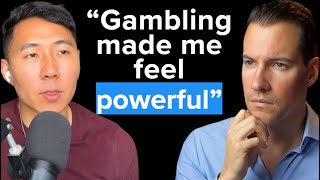
In this in‑depth interview, host Steve talks with Joel, a former high‑frequency poker player living in Mexico City, about how his gambling escalated from a casual 20‑peso game to a full‑time habit that consumed 6‑hour nights, multiple nights a week, and significant money. Joel describes the ambivalence that characterizes addiction – a part of him wanting to quit while another part clings to the thrill, power, and hope that gambling provides. He recounts attending virtual Gamblers Anonymous meetings while still at the poker table, illustrating the pull of the habit. The conversation links his gambling to earlier trauma (adoption, early sexual abuse, unstable family environment) and to other compulsive behaviors such as sugar, cannabis, porn, and crypto investing, highlighting a common underlying drive for control and dopamine. Joel explains how gambling affected his dating life, business ventures, and overall sense of agency, and how the realization of wasted time and lost opportunities prompted him to seek change. The dialogue introduces Internal Family Systems (IFS) therapy, the concept of “no bad parts,” and practical resources (Sobriety University, IFS books) as compassionate approaches to recovery, emphasizing self‑acceptance, curiosity about protective parts, and balanced control rather than shame or willpower. The interview ends with Joel’s renewed optimism, plans for continued personal work, and contact information for his channels.
Chapters
Because the other part of you is saying, don't stop gambling. If I stop gambling, then finish the sentence. What's left?
What's left?
Who am I?
I have to be bored. I have to sit through nights of not having crazy dopamine rushes. I have to sit with the things I need to change in myself. It gives me control over my feelings in a way. I know when I'm going to feel happy and how I'm going to feel happy. Even if it comes with feeling bad after, at least I get some control in that. The hope was that God would see that I'm working hard towards my recovery and give me one more. Just give me one big night. You'll get to leave a winner.
Not a loser. Like a healing fantasy in a sense.
Ooh, ooh. Yeah. Wow. Oh, that's powerful. A redemption. Yeah. Damn.
Your story about gambling highlights something that's universal about recovery and addiction. And it's the concept of ambivalence. And it's this idea that part of you wants to change and another part of you doesn't want to change. And they exist kind of at the exact same time. And a lot of people experience this as like a war in your head and part of you is pulling you that way. The other part is pulling you back and it just can be quite the mental battle for a lot of people. And your story ends up with you at a poker table at a Virtual GA meeting at the same time. And so we'll get to that and we'll unpack that a little bit, but to the beginning, can you just share how you started into gambling?
Yeah, man. Like most, I just started off when I was a kid. It's funny, when I look back at my life, a lot of it was gambling-focused, I think. My career path, my friend circles, people I dated, there was always an element of that risk involved. So I think because of a lot of childhood trauma, as most people with addiction suffer or have dealt with, maybe not suffer but have dealt with, that I was prone to that risk-seeking behavior. So—
You told me before this that poker was the thing that it really started to escalate for you more recently. How did you get into that and when was that and how did that start for you?
I came, I live in Mexico City and I came in October of 2023 and they have these international nights where you can go and it's supposed to be like a social thing. You meet other expats, foreigners, and one night they had a 20 peso buy-in poker game and there was like a bunch of people playing and 20 pesos is like a dollar. Okay. So I'm like, yeah, I'll play. And basically what happened was I won the first hand, was super excited, nervous. And so like tricked the guy to thinking I wasn't knowing what I was doing. I had two pair and it was just like, he was just like stunned and I just felt that like power. This new guy just came in and just whooped some ass. So basically what after that, I was like, okay, that was fun, whatever. Yeah. And I came back to another international game night with no intention of playing poker, but they were playing again. And this time they're like, hey, we have a group, we play regularly, we bet a little more than just 20 pesos. And I was like, oh, that sounds fun. So I joined this WhatsApp group and before I knew it, I was the one organizing the poker nights. So I very quickly took over and there was like 100 people in that group, but I was like, I just loved it so much. That's really when it started to ramp up.
So it was progressive. It started small and then over time it grew and grew and not just in terms of dollar amounts, but the time spent gambling. What was it like near the end in terms of how much time you were spending?
Bro, I did the math. When I knew it was becoming a problem, and we've talked about this off camera, is I said, okay, I'm playing twice, 2 nights a week, and it was one night a week, but just like you said, it's a progressive illness, as they say in the recovery groups. It gets worse and worse over time. And so eventually I was playing two nights a week, and I just went, okay, let me just do the math. I'm just curious. If I play for the next 10 years, let's say I play twice a week because I could see myself playing for the next 10 years, and let's say each game lasts 5 to 6 hours, we'll average 6 hours. In 10 years, that's 240 days straight of playing poker. And that's when I'm like, oh my God, this is actually a time suck. So at the worst of it, I was playing every night. I was going to this casino every night to play these tournaments, and each tournament I'd be there, they started at 5 and sometimes I'd leave at 12:30. And so 6 hours, 7, 8 hours.
Yeah. So this was effectively like a full-time job near the end.
Pretty much. Yeah. That didn't pay well. You have to pay.
Right. What were you doing with the rest of your time while you were in this kind of territory of full-time job gambling?
Yeah, it's a, yeah, that's a good question. So I have a couple of businesses here in Mexico City. So we do dating coaching. I have a dating coaching company and then an addiction recovery business. So as well, I'm in the space you're in, which is ironic. I think that's part of the reason I realized this is a problem. I'm coaching people on quitting addiction and yet I'm compulsively gambling every night. So that channel is Sobriety University, guys. You can check that out on YouTube. And I talk mostly about weed. That's my main focus. So those things though, because I, charged high ticket, I was able to work relatively little and still survive.
And so this gambling was getting more and more of your attention. What was the moment you realized, wow, this might be an issue here?
God, I think that's a good question. It's almost like the realization was progressive as well. It wasn't like a lightning bolt moment, but it's slowly— I'm like, this doesn't— this isn't feeling good. It's not feeling right here. When I realized it was starting to be a problem was there was a few warning signs that started to make me question what was going on here. One, it was the people I was hanging around with. Before, obviously I do dating coaching, so I wanna, I have a, I had a big dating life. And the guys I was hanging out with, they weren't what you call, they weren't guys I would go out with and try to meet women with. They were, I don't know how you say, they had just an, they weren't healthy people. They weren't exercising, they weren't eating well, they were drinking beer every time we played. You could tell like health wasn't a focus of their life. And that was obviously like my big focus. So that was number one. And then when I got to the casinos, people smoking cigarettes, all that stuff. The second one was my dating life. I started to realize the women I was dating weren't as healthy. It was almost like I was in degenerate energy. So the girls I was attracting were also in degenerate energy. So I went on the streak where 3 girls in a row that I went on a date with smoked cigarettes. Okay. That's a huge no-no for me. It's disgusting. So I'm like, this is very interesting here. I started to care less about work and my mission. I was like, my mission is now to win at poker and everything else will come. Right. The big moment where I started to go to GA was when I went to my first casino, because that's something I told myself I'd never do. I'm like, I'm never going to play in casinos. Only with my friends at someone's house once a week. I lost $150 one night at a casino when of course I went saying, I'm going to play $50. If I lose it, I go home. And I'm there till 5 in the morning and I'm like, wow, I feel like a loser.
So your standards keep changing. It's, I'm never going to go into a casino. It's okay, I'm going to go in the casino, but I'm only going to do $50. Okay, I'm going to do— the goalpost keeps moving. And so you started to see your standards slipping there.
Exactly. Exactly. This is not in alignment anymore with who I said I was.
You found your way to a meeting. And where did you do this first meeting? Was it actually in the casino or was this out of it at first?
It was the day after I went to my first casino. Okay. I literally woke up the next morning and I went on a meeting. Okay. And I went, oh my God, this is an issue. And I was, it was more curiosity too. I was like, part of it was like, something doesn't feel right. I want to confirm that this is what I think my gut is telling me this is.
Okay. And by the end of the meeting, did it get confirmed or what information did you get?
Of course it was. I knew in my heart it was confirmed the minute I even had the thought, let me check out this meeting. Because they have like the 20 questions and they ask you like, and I answered like 16 of them.
So I'm like, yeah, you know, I knew. And so after that meeting, again, ambivalence. Part of you wants to change, part of you doesn't. You go back to the casino on Musumi.
Yeah, here's what happened. I went to a buddy who was playing high stakes games because like you said, it was progressive. So before it was like 20, 20 peso, like $1 games and $10 games. And this one was a cash game where you bet as much as you want. And this professional guy, he's ranked in the top 100 in the world. He was there. He has— he's won over $1 million playing poker in his career. He has— he's like on the website and everything, Australian guy. And I can't— like, the buy-in, the— it was like 1,000 pesos, which is $50. But he comes in and he puts $250 down, which is the max buy. So I'm like, instantly I'm like, oh, this is a different level here. And I ended up losing the second hand to ace and 8-3. He pulled two pair, 8-3. And that's the thing about poker too, and like these games, is luck is always going to beat you. And even though I had like trips or something, or I had pocket— I had a pair of aces, but he beat me with two pair, ace-three. Like, who plays ace-three? Like, it's the worst hand in poker. But anyway, I was there for the whole night. I ended up being down $600 at one point, and I was like, fuck, dude, this is not okay. I'm down $600. And thankfully I won it all back and then some. So I left actually up like $200 from being down $600, and that's a lot of money for me, to be honest. So for me, that was the realization. It I thought I beat the game. I'm like, okay, I'm actually good at this.
That was false. You were second-guessing the gambling problem and you were thinking, actually, maybe I'm just good at this.
Yeah, because I came back from a fucking $600 to the up money and I beat this guy who's ranked 100th in the world.
So this is not a problem now. This is like a business, an opportunity.
Yeah, opportunity.
Yeah, yeah. How did it go from there?
I won the next 7 games I played.
So every time— So TA was in the back of your mind, like, it's like way in the rearview mirror, I'm assuming at this point you're like, I'm just good. I'm just winning all the time now.
Dude, it was fun. Exactly. I was texting my sponsor, my temporary sponsor at the time during that loss to be like, hey man, I just lost $600. I'm just saying this is probably going to be my last game. I need to make a change. Of course I won everything back and then some and I didn't tell him that.
Okay.
I just left it at that. So I wasn't texting him anymore because I was winning.
Yeah, you disappeared.
Yeah.
Yeah, so what happened after, after that streak?
Yeah, then the streak went in reverse. I started— I'm like, okay, now I can play higher stakes games, I can play casinos. And it's funny because this is where I knew I was a gambler, is that I'd always be up. I'd always be up. After an hour, I'd be up double because I was good at poker. And then I would just start to get bored, and I would start to care less and be more risky. And then I would get impatient and chase my losses. And by the end of it I'm down, I lose all the money I came with and then I buy in 3 more times. So that's when I knew it was a problem when I was actually winning, but I wanted to play more than I wanted to win. So I would lose.
Yeah. It wasn't about the money at that point. It was about the experience.
It was about both because, but that was the thing. It was like, I wanted more money. It was like, more, I need to win more. I need to win. I need to win the casino. I need to be the guy at the table with everybody's money. Okay. Then I'll be, then I'll be complete.
Yeah. It sounds like the money was representing power.
I think so. Yeah. And that's one of the 20 questions. Do you get a rush of power when you gamble? Do you feel better than other people? I was like, yeah, damn.
So that's what it was. That's what it was really doing for you. Was—
I think so. It was a part of it for sure. And it was like when you— if you see, you look like an athlete. I bet you played sports. When you're like the leading scorer for your team that day, everyone's congratulating you. Everyone's looking up to you. Everyone's like, Steve's the shit today. Parents are congratulating you and it's like that energy when you're winning at a poker tournament, everyone's, they're afraid of you almost.
Yeah. Afraid of you. Yeah. Even that, like the sense of power that you have in that, the invincibility, like—
So cringy.
Dominance. Like you got this winner effect going on. Self-esteem through the roof.
Yep. They look up to me. I'm successful. This is— yeah, 100%.
And we'll come back to this, what it's doing for you again. We'll go to the other side of the voice saying this is a problem. So there's one voice saying, you're good at this, keep going. The other voice in the back of your head now, rearview mirror, saying, this is probably an addiction. When did that come back in? When did the GA come back into the picture?
When I started to lose, I started to go on some losing streaks, and they were losing streaks where it was almost like I didn't lose like 10 bad hands in a row. I lost the hand I should have won technically. So it almost felt like cruel, like a cruel joke. Like I was at these tournaments and I'd be 12 people, 10 people get paid out. I busted out at 12 and there was 80 people that entered. So that was the first moment where I'm like, fuck, are you kidding me? There's that anger that I didn't win when I was so close. It felt cruel. Obviously we fall into pity, so I'm not actually confirming, don't, this isn't the mindset to have, but I felt like—
You felt bad at the time.
Like I put all this work in, I was almost there. And then what would happen too is like I was at these final tables and I would get nervous. And so I would not play these hands that would have won and knocked out 2 people. Okay. I'd get scared because like when you're at final tables of poker, people start like pushing really hard. Oh, you have to like, okay, you get a pocket pair, you have to go all in. And I was afraid to go all in and then I lose the hand I would have won, like I would have beat. So then I got frustrated and I think when that anger came in, that's when I'm— it's the regret, like walking away at 12 o'clock at night, just being like, damn it, I wanted to win so bad. I'm like, I might as well go to these meetings again. Funny enough, like, if I can gamble responsibly, God will help me win.
Okay, so you're going to GA to gamble responsibly, fully knowing that 12-step groups are very much about all or nothing. Like, there's a sense that, okay, if I do the right thing, God will reward me.
Exactly. I got to be a good boy. I think be one of those ones that are successful. If I'm succeeding at gambling, I'm going to fucking win at gambling. The logic doesn't make sense, guys, I know.
Well, it doesn't matter. Yeah, this is, these are the, this is the mindset of addiction. Yeah. And so to stay with the feelings, we don't need to judge it. We just look at it. It is what it is. But when was that moment when you were at the table with the GA meeting? Was that kind of after all that happened? It was during.
Okay. It was during because I was still like, what I would do is I would get at the table for the tournament.
Okay.
And I would start watching, I'd be listening to content on how to be better at poker. Okay. So my first, and I was very focused. I was in the game and then I'd start to get bored. So then I'd start to turn on music. I start to watch other YouTube videos. My dopamine would drop, so I'd be less interested in the game. And then I'm like, then I would go to the Gamblers Help meetings. I would watch videos, YouTube videos on quitting gambling. I think I actually found your video at a poker tournament, but I just didn't watch it while I was playing. Oh, so I was like, so I started to, I was like playing while researching how gambling can fuck up your life. Because like you said, there's a part of me that was like, Joel, maybe your life would be better if you weren't doing this. You're not getting that high you were, so now you're just being miserable. Something ain't right.
And when you were actually in this virtual GA meeting, was it like through video call on your phone while you were at the tournament, or how did that go?
Yeah, you— a lot of meetings you can have your camera off, so my camera was off, but I was nervous because I play with my chips. So while I was sharing, you could hear the sound of chips in the background, like people like throwing chips in the pile.
So I was like, playing with you. Were you actually in this game or were you out and just watching it?
No, I was in the game. You were actively playing a hand while doing my share.
Interesting. This is fascinating. Tell me about that experience.
Did I win the hand or not? Did God bless me with a victory that night?
The experience. What, what were you actually sharing? Were you, I'm assuming you were not sharing where you were and what you were doing.
I think I might have. I think I might have been like, hey guys, I'm at a tournament. Like I'm playing poker. At least one of them I did. I think maybe another one I didn't. What I was doing though is I was sharing as if I was not playing. I was sharing as if I was outside, the tournament was over. Like I was sharing almost from the anger from the night before.
Okay.
So I was still in that, and if you guys who have gambled, like you chase losses, so there's that anger and that frustration that's there. And I was sharing from that place. Like there was a part of me too that was like, I hope I just have this lightning bolt moment where I say I'm leaving, I put the cards down and I walk out and I never come back again. That was also a hope.
It was like an inner battle there. There's parts pulling you in all these different directions and you're waiting for something to take hold in a sense.
Exactly. I was waiting for God to, or higher power. I usually say higher power, not religious or anything. I was waiting for higher power to just give me the peace I was looking for. And of course, that's not how recovery works. You got to work at it. You actually got to go through some pain and some inner soul searching and do the steps, if you do the steps or get a coach like yourself to help walk you through it. So that's when I realized, oh, this is like an active thing I have to do. I can't just show up to these meetings and hopefully have it just be removed. I actually have to do the work, which means I have to stop gambling.
Fuck. Because the other part of you is saying, don't stop gambling. If I stop gambling, then finish the sentence. What's left?
What's left? Who am I? I have to be bored. I have to sit through nights of not having crazy dopamine rushes. I have to sit with the things I need to change in myself. No gracias. Just kept playing poker. The poker kept getting worse and that became miserable. I might as well face— I got to face misery. I might as well do one that at least lets me keep the money I have in my bank account. Let's do that.
It was— this part of it was protecting you from facing the pain of things you needed to face but didn't want to.
Exactly.
What was it you had to face?
Big thing, my dating life. I do dating coaching, but I wasn't dating the women I want to be dating. I wanted to be dating. Like I said, I was dating girls that I was— that were against my green flags, that were— but I want to get laid, so I was going to go through with it. So I knew what I really want is a long-term relationship, and I know what kind of girl falls into that category, but I wasn't meeting those girls. So I knew I had to— we attract who we are. So I'm like, okay, if I want to date a healthy girl, is a girl that I want to date seriously going to be playing poker 5 nights a week? Hell no. Are you kidding me? Hell no. So that was one thing. Two, and this is what was interesting, poker was giving me— so I definitely have an addiction to sugar and I was working on getting off that again. So poker gave me a reason to stay off sugar because if I stayed off sugar, my mental clarity was way, way higher. My dopamine was way higher, and I was so focused on the game. I could play way better poker. And, or if I had a binge on sugar, going to the poker helped me get through that first night of withdrawal from sugar. Like I could play poker to not have to think about the withdrawal.
Okay.
Yeah.
It's a distraction.
So what I really— a distraction. So what I realized is, okay, if I quit poker, I gotta actually get through my sugar withdrawals by sitting in my bed and feeling them.
Yeah. Avoiding pain and avoiding pain in various forms. There was the sugar, there was the, your dating life, not where you wanted it to be, compromising your values, not feeling like you are who you want to be. What about business? Where were things in terms of your satisfaction, in terms of success in that department?
That was it when There, there was a weird energy, like when I was winning at poker, we were getting clients because there was almost like, like a, I was just attract— because I didn't care if we had business or not. So almost in a sense we got more business and maybe it was just a coincidence, but as soon as I started to quit gambling, I'm like, oh, like now I'm like, I started getting nervous about work. Okay, now we have to like make changes in our business, get more clients, figure out new marketing strategies and put the work into that. Also, I put a lot of money into crypto. So crypto is another form of gambling that I've stopped. So it's been over 30 days since I've invested in crypto, but I put a lot into crypto. And as you guys know, in the last— before the last 2 months, there was a huge— after Trump got elected, huge boost and everything was booming. So I was making a lot of money in that, but I was holding it because I was still waiting for the big boom. But crypto started to go down too, and it's actually tanked quite heavily. So like my whole dream, like my whole plan of making a lot of money in crypto was starting to disappear. So then I'm like, to the business side, I'm like, okay, now we have to double down on our business. So there's a lot of like reality was starting to come back into play.
It feels almost as if poker felt like a business, like a project or something that became a business for you.
I think so, actually. Yeah, it really was, but it was a very fun business.
Yeah. Like it has the aspects of business where you can make money, you, then in the long term, and if you're addicted to it, But you can provide the illusion of that is profitable, that if you work hard, you can get better, that you just show up and you grind and you do it. That has a lot of the ingredients that building a business has, but the dopamine's turned up to 11.
Yeah, perfectly said. Perfectly said.
And then the power that you got in these games, like what, what was going on in your everyday life where you felt that this power was maybe making up for something? Wasn't there a sense that you didn't quite have agency or the power or competence or progression that you were hoping for and that this kind of made up for that?
I think again, like I'll say the dating thing, right? Like I was disappointed. I felt like I didn't have power in my dating life because I wasn't dating the women that I knew were potential good, potentially good for a long-term relationship. They were fun. We had a lot of fun, but I'm like, this isn't going to go anywhere. So I'm wasting my time there too. And the big one was sugar as well, because I was really stuck in— I was off sugar for 3 and a half years. I came to Mexico City, I started to bulk. So I started to eat sugar again because I was on keto. So I put on 20 pounds, which was awesome. But then the sugar addiction was back. I was really wrestling it for a long time. Kind of like the silent, just silently suffering. And then it got to a point where like my binge days would go from I'd have one cheat meal, two, three days I'd be eating junk food. And so I was really feeling powerless over that as well, the sugar. So in my whole life, I felt like I didn't have agency in my life.
With your relationship to sugar, with women, and the way that you wanted it to be. Yep. And when I heard your story with cannabis addiction, started, was it in like high school or when did that start?
In high school.
Yeah. And if we look at your relationship to your dating life, at that time? What was going on there?
Oh, non-existent. Yeah, I didn't get— full transparency, I didn't get laid for the first time until I was 27. Grew up Catholic, sex was wrong, so I had all this sexual shame. No girlfriends. I had a girlfriend in high school for a year, but she was even religious. So all the fun my friends were having in college, at university, hooking up, having fun, I just couldn't do it. And so that led me more to weed use, for sure.
What did it help you do? What did it do for you at the time?
That made me feel okay. Like I didn't need to be getting, having, hooking up with, having sex or anything to make me feel good.
Like, I'm okay, okay as I am.
Exactly.
Exactly. Because without it, you had a sense that you were not okay as you were.
Yeah. Yeah. 100%.
Uncomfortable in your own skin.
No. Cool. Yeah. That's crazy.
What's coming up right now?
Ah, just in awe thinking about it from that perspective. Wow. Yeah. That was a really dark time. And like, I didn't even know it.
So yeah.
The powerlessness with—
Yeah.
Like sadness. Wow.
So that high school kid, what thoughts were going through his mind?
It was like a blissfulness, like, uh, when you were using cannabis. Oh, absolutely. Yeah. Until it started to sell. Like, life is okay. Like, I finally have a purpose. I finally have a way to feel happy. Yeah.
When you were not on cannabis, what thoughts were there?
At first it was okay because I was still like, I had friends, like I was in a whole new environment away from my parents first time. I always have that hope, like I get a girlfriend. So I had a lot of optimism and the weed just was like fun. And then second year, once I, once I was like, when smoking became bad. Yeah, bad or good, but when it started to become a problem, that's when it just lost its fun. Kind of like what we've been talking about in the gambling. How you take that pill that, like The Matrix, you take the red pill, you can't unsee it.
But electric-einstein, you're using it to get out of a sense that I'm not okay as I am.
I think so.
And using it to feel everything is okay. Which got you further from addressing the core things, which made things even less okay when you were not using.
Yeah, for sure.
For sure. And so more is needed to feel okay and then kind of that spiral was happening.
Exactly.
Yeah.
It's just like that with the gambling too. Just thankfully this time I had enough experience and consciousness to catch it.
Yeah. How does it relate to the gambling in your view?
It's the same patterns really. With any addiction, it's the same exact pattern and the same feeling and the same progression. Obviously the details are different because you're doing a different activity or behavior or substance, but it's still that, it's still that roller coaster of life. There's no chill. There's maybe moments of chill, but it's not, you just find yourself like in a place that sucks. You know what I mean? That's, yeah, that's how it always is. Like it always starts off like blissful and then over time you just starts to become less blissful. And then you notice the consequences and how it affects your relationships and motivation, energy, all that. And then you start to get angry and frustrated. And it's just, yeah, it's like a shitty roller coaster.
I think we're chasing the initial blissfulness, the power that you got from gambling in particular, that I just want to get that back.
Absolutely. You forget about death and your own mortality, and that we all have a limited time clock. You start to get content. That contentness is very pleasurable. That feeling like you talked about earlier, that feeling that everything's gonna be okay no matter what, it's almost that.
That gambling gave you?
Yeah, for sure.
The whole time of gambling? Like, when did that come in when you were gambling? Was it when you were winning particularly, or was it just the process of playing, putting bets in? When did that come up?
Yeah, it was like the whole experience, except actually, except for probably when you won, because you win, you go, oh, the game's over. So it's funny, it's like I didn't even want to win. I just want to keep playing.
That, yeah, the experience.
And the anticipation. And this is something I coach people on in my own addiction coaching is that what people realize is the anticipation that's the most pleasurable. Right. Thinking about going to the casino, placing that first bet, the smell, all that stuff. And then you actually sit down and you're like, oh, like I'm the same person.
Fuck. So it's the anticipation. Everything's going to be okay. You're walking in. The smell, the environment, placing the bet, the anticipation gave you the everything's going to be okay.
Yeah. Yeah. 100%. I have something to look forward to, to be excited about.
And a time where—
Everything else, I just got to get through my chores and then I can play.
Something to look forward to. Nice. 100%. Maybe hope. Hope. Also hope.
Oh yeah. Lots of hope.
Hope nonetheless.
Yeah. Lots of hope. It's going to be my night.
It's like these illusions of hope, illusions of invincibility that hollow that when you sit down and you said, so I'm just the same person. It doesn't, it didn't change me.
Exactly, man. Exactly. I think sugar could be a good example, right? As soon as you eat that cookie, you're like, oh, now I feel like I don't feel as good, but this was supposed to make me feel so good.
Yeah. Like maybe it did at one point, right? Yeah. Like in the beginning with gambling, in the beginning with cannabis, chasing the ghost of that initial thing that it gave you and never really delivering.
I think so, man. I think so.
So the, this underlying discontent or dissatisfaction, not being comfortable with your own skin, you hear that a lot in the 12-step. I'm assuming it's a very common thing. You alluded to a traumatic experience. You don't need to go into a lot of detail, whatever you're comfortable sharing, but what type of thing generally were you referring to when you said that in the beginning?
A lot of, yeah, a lot of different things. I was adopted, so that was a big, at 3 months old. So that's one that like is unprocessable, at least like it's gotta happen on its own. But that, getting ripped away from my birth mom and then from my foster mom, who was the woman I formed a bond with, cuz those first few months are really critical for your pair bonding. And then I got brought to somebody that, from all the way around the world, who had a lot of anxiety, loved her to death, had a lot of anxiety though. And just, so that was a big one. And then yeah, all white town. So not really fitting in, feeling like I didn't belong there. I think like the Catholic stuff, right? Got diddled when I was like in like a Catholic daycare by like some, the worker, right? So a lot of sexual wrongness, feeling like that was, so yeah, I just felt like I'd always been getting kicked in the nuts a bit. And I think maybe that's why I have such a proclivity towards addictions is because it gives me control over my feelings in a way. I know when I'm going to be feel happy and how I'm going to feel happy, even if it comes with feeling bad after. At least I get some control in that versus when I was a kid, I think I felt like I didn't have control over feeling good.
Oh, damn. Yeah. And when you discover cannabis, you realize this gives me control over my feelings. I know I can feel good and everything's okay with this.
And porn was a big one when I came of age. That was another one. Like, I felt like I could have control over a very pleasurable feeling. Yeah, that one's been, that one's been almost 6 years off, which I know if you guys are, if you're a man, faster you can get off that, guys, the better. But that's for another podcast. So that, yeah, any chance I could have control, control over people, codependency.
Addiction allowed you to make yourself feel good and growing up didn't feel like you were able to do that.
Yeah. Yeah. That was big, big insight. That's a cool one. I've never put that into words before. So thanks for holding space for me to do that. That's powerful. Damn. Yeah. Because all my friends joke, they're like, I think you're addicted to being addicted. And then they're like, I think you're addicted to not being addicted. Cause I'm in like, all these groups. I think that's why. It's like search for control. Yeah.
And yeah, early, early life was so much not within it. As a child, just by the very nature of being a child, not a lot's in our control, but particularly your situation where there's a lot of moving around and insecurity of your situation and the actual traumas that happen.
Yeah, I've been— yeah, I know there's many people probably watching this and who are in recovery groups as well that have experienced the same thing. So they say we're not terminally unique. And that's something I really believe. What I see though, with the people that don't have that proclivity towards addiction is that they were, when things weren't in control, things still were predictable. They were safe. They felt okay. Or there was a sense of happiness or that love's a huge part of it. Feeling loved as a child. So I can tell like those people, they were taught, like they were properly taught that when things are not okay, things are gonna be okay. But what I see as a pattern with people that haven't gotten to experience that is when things aren't okay, if something really bad could happen, really traumatic that could shake your whole reality, it happened. Yeah.
That's what you were thinking at the time.
Yeah.
Or you're feeling subconsciously thinking there was a sense that it's not safe.
It's not safe. Yeah, for sure. For sure. Wow. That's crazy.
What's coming up?
Wow. It's cool. I love— that's what I love about recovery is the insights you get to have and like doing this work. You get these aha moments and ironically enough, those almost become addicting. Like, that felt really good to realize that. I was like, sweet. Like that just shed a layer off something that has been causing me pain. Like that realization right there. So yeah, I feel pretty good. I'm pretty good.
So that child felt insecure, unsafe, something really bad could happen. There's a lot of fear in those early years and insecurity, or what was the fear?
A lot of fear, man. A lot of fear. Yeah. God, I remember. Yeah, every moment just felt— I was like, how did I get through that? And here's how I got through it: through my addictions, through TV, through eating sugar. Yeah, towards neediness, towards codependency with my parents, my mom in particular. So all these behaviors that I deal with today are— were my base of survival as a child. I wasn't smoking cannabis when I was 3, so that was probably why that one was relatively easier to quit than Sugar, for example.
Right. Let's look at sugar. What did that do for you?
Give me that, that rush of dopamine. Yeah.
Which is enough to feel good at a time where you didn't, you didn't know how to make yourself feel good.
Yes, exactly. That paired with television.
Sugar and television as a kid. Because if sugar was not around and television wasn't working, what would you be feeling if you had to sit with that? What was there?
Probably just agony. Just agony. Yeah.
Just seeing that child What are they— what's going through his mind?
Honestly, I can't even, I can't even relate. Like it's just, it's so power— it's, I think it's too overwhelming to let my conscious go there. Like just right now. Yeah.
We don't need to go there. That's just agony.
Agony. Yeah. And I think part of it too is I don't feel that agony anymore. So yeah, just suffering. Just suffering. Yeah.
But what did that kid need?
Man, he needed connection. He needed human connection. Yeah. Needed to What did it? What else? Like I said that, I'm like, I don't think that was enough. It like, it needed to be different. It just needed the pain to go away. You needed reality to be different. Which is what was the hard part of being there, is that I knew you can't change reality. This is reality.
What was hard about that reality?
Just the emotions. Because there wasn't like, like I couldn't put into details what was going on. Like what it needed was not to have been adopted and to still be with my primary caregiver. Or to be honest, to be with a family where there wasn't a lot of stress and a lot of, yeah. A lot of pain within themselves.
Any thoughts about yourself at the time? Like, what does it mean about me that I'm in this situation?
Oh, just that there's something wrong with me. Like, I just missed the ball. Like, I'm just one of the unlucky ones. Was the story. Yeah. And not that there was something wrong with me. I just got— man, speaking about gambling, I just got unlucky. That was the feeling, like a powerlessness. Like, I could have just— I was the unlucky one, I guess. That's it.
That was the sense at the time, that I'm very— this is a very unlucky— yeah. Or is it more personal? There's something wrong with me, or is it something wrong with my situation?
No, nothing. Actually, I didn't really think there was anything wrong with me.
Okay, it's more of just so unlucky and yeah, and powerless having that happen, that the exact situation.
Yeah, 100%. And honestly, I like, I was so young even till like I got out of high school and I started to realize there's more to life than just me. Like, it almost felt like a bad movie, you know what I mean? I would see other people who were happy, but I just couldn't relate to them. It just, they felt, it just felt like a, like, again, they were the lucky ones. That's what it was.
They were the lucky ones. Yeah. And I'm unlucky. They were the lucky ones.
For sure.
So to bring that to gambling, you got to feel like one of the lucky ones at times.
Totally. God's finally giving me the win. Finally looking out for me.
And attending the GBA at the tournament was one way to facilitate that.
Yeah, yeah. I knew like going to this meeting wasn't going to make me better at poker.
Rationally you knew it.
I knew it.
You rationalize it.
This is what hope— here was the hope was that God would see that I'm working hard towards my recovery and give me one more. Just give me one big night. Like, all right, bro, I'm gonna let you walk out here with your head held high and that you can quit tomorrow and you'll have felt like you succeeded in this venture.
Okay.
You'll get to leave a winner, not a loser.
Okay. Like a healing fantasy in a sense. Ooh.
Ooh. Yeah. Wow. Oh, that's powerful. A redemption.
Yeah.
Damn. That's big. It's crazy. It's interesting. I'm reading this book. It's called, by Richard Schwartz. It's called You're the One You've Been Looking For.
Yeah. He does internal family systems therapy.
Absolutely. Yeah. I imagine you know all about this. And it's blowing my mind because one of the things we're talking about is that we search out these people or things or events or whatever it might be as a hope of being, like you just said, rescued, redeemed, and Like what he's obviously teaching is that nothing, none of those can ever redeem you besides maybe temporarily. Like you gotta do that work in yourself. And so when you just said that, I was like, damn, that's so right.
It was totally right. There's no redemption in these tournaments.
Yeah. Steve, you do this for a living, man? I do. Very good.
Yeah. Thanks. We've got about 5 minutes here, so yeah, looks like we got somewhere.
I think so.
Different than a normal interview style, but how you feeling, man? How you doing? Just checking in with you.
Feeling good. Yeah. Feeling like a little buzzing, a little bit, a little high off these insights. Wow. Colin Wilson. He's like, wow. It's very cool. I think, I guess now my mind's going, okay, what's next step? So I'm off gambling. I've got my food way more in check. It's been pretty cool. So I'm starting to feel human again. I'm starting to feel alive and happy and excited to be around people. But I still see now there's this next level with the IFS stuff. So I've been looking for this redeemer and now the question is, how do I refine that in myself? Because I'm still looking through it for money. I'm still trying to find that girl that's going to be my mate, my, the girl I've been looking for. There's a black and whiteness that says it has to be one or the other. Either can never, I can't meet anybody or have money to figure this out.
It's not an external thing that's going to solve an internal problem.
But where's the balance between I still want those things and how can I have those things? Of course. Yeah.
Yeah. It's both. It's self-acceptance plus getting the things you want and value.
Which comes first? Probably the shit, probably the former.
If you're doing it the other way around, that's addiction, isn't it?
Oh yeah, I guess so. I guess so. So what would your suggestion be is how can one start healing that? How would you suggest that I begin becoming my own redeemer?
And you already are on that path. The fact that you stopped gambling, that's the first step. Because when you're in it, you're still chasing the fantasy. You're not thinking clearly. It's hard to do the deeper work when you're in the, on the roller coaster. And so what you did was the first step was you got some space. You're now looking at the IFS. And that is a really useful way to heal trauma.
Really is. Wow. So would you, what's your recommendation for going through it? Do you think a therapist is needed? Do you think it's something you can do on your own?
What's— It could be either way. Usually it's recommended with IFS, which stands for Internal Family Systems therapy. For those who don't know, Richard Schwartz advocates for this approach. I'd highly recommend the book that you, either the one you mentioned or No Bad Parts is a really good one that a lot of people use to do work on themselves. As you go through the book, No Bad Parts, he actually has these guided exercises where he's speaking. If you do the audiobook and you can listen to it, and then he brings you through a whole process. So that's a way to do it on your own. The No Bad Parts, you could start there, see if you like it, see if you like the language, the feeling. It's very unique in the way it's all framed. It uses the language of internal parts, what I was doing in the beginning with part of you wants to gamble, part of you doesn't want to gamble. These two parts are in a tug of war and we're attending to both parts. We're asking the question of what does the one that doesn't want to gamble want? That's your true values, things that you, you want in a relationship. The part of you that wants to gamble, what's it protecting you from? So framing it as a protector, it's protecting you from pain, what type of pain. We talked a lot about that right now and unpacking that pain that is needing healing. And IFS brings you through this kind of process of attending to the inner child in a way that brings compassion to it, awareness to it, and allows it to heal those wounds that were imparted back in that situation that we talked about. So you can start on your own in terms of IFS books. Or talking to a therapist is highly recommended when it comes to going to that deeper level. And he'll even say in the book that he doesn't go into that child part too much in the book, that it's recommended that you have somebody guide you to go there and then carefully assess how much, how soon you go there, and then not overwhelm yourself with it.
Okay.
Wow.
That's powerful, man. And those books, yeah, so powerful, man. Like they, they just help you see. I love that. Just think of the name of it, No Bad Parts.
No bad parts. Compassionate.
All compassionate. Even reading, like starting to read, I started the book a few days ago for the You're the One You've Been Looking For. And it just, whoa, woke me up to there's been so many parts of myself that I've been shaming as they need to change. They need to get, I need to get rid of them. And what he suggests is that it's about integrating them. And that's, I can't see what's pretty much beyond that. I think that's just the last piece, to be honest.
And you're on that path right now by the fact that you picked that book up. It's perfect. And it's exactly the process I take people through when trying to stop gambling rather than this kind of willpower, what are you doing? Just, it's very shaming if you're approaching it through this kind of just pull your socks up, mister, and just stop. I don't do that at all. It's very effortless, very flowing, very attending to both parts of you in a very compassionate way. So when we looked at the part of you that wanted to gamble, I wouldn't approach that through the lens of, that's the bad part we need to get rid of. The way I asked you about that part was through a very compassionate, what does that part want for you? What is it trying to do for you? What is it protecting you from? So in the language that I was using to frame the part of you trying to gamble, it was this compassionate, accepting, no bad parts language, which allows you to then get curious about that part. 'Cause there's openness and curiosity. And when you get curious about that part, rather than trying to shame it, you get to see what it's trying to do for you, which was protect you from agony. You see some compassion for that part. You realize you, that protector doesn't have to serve the role of gambling. It can take another job doing something else. It can, it can switch jobs and go to sugar. It can go to cannabis. It can go to gambling. But it can also protect you in a non-addictive way that this is a genuine human need to want to have a sense of control, want to feel good. And that part can serve that function in a way that's in a non-addictive way that you can help yourself feel good and feel in control. Of course, within the bounds of like the Serenity Prayer, acceptance of that which is beyond your control, courage to do that with which is within your control, wisdom to know the difference. And so it's looking. At yourself in your current situation that you are no longer that child who doesn't have control. You are, you do have a level of control in life.
Wow. That's so powerful, man. It's funny because every, like when I was at that table and realizing it's time to quit, one of the big realizations was how much more could we get done in life with this energy we're putting towards gambling?
Yeah.
Just like you said there, it's not a bad part. It's just not utilizing its gift as healthy as it could be.
That's what changed when you did the math. You started counting, okay, 6 hours a day times how many days and how many years. You started to look at the return on investment for this activity and you started thinking, oh, if I put this toward my business, I can actually move myself forward in a way that feels good and that has a sense of control associated with it.
Exactly. Wow. And that's control. Even that's like a trigger word. So it's, I'm glad you're bringing that up. Cause I think it's, I'm afraid of having control. Like I feel like it's there's something in me that's saying that's bad. You shouldn't have control. And what I'm hearing you say is it's okay to have control. Like it's, we have control over things. Yeah. And it's like you can, in 200, that's, that was a big rose, like 260 days of gambling straight. You could start 8 businesses in 260 days. Nonstop work.
We don't need to fixate on it in the rearview mirror of all the things I could have done because that in itself can also be very detrimental where it's also this shaming mentality of, oh, I could have and I didn't. And it really gets you stuck in the self-pity mode, but just recognizing when we say control, we're not saying full 100% control over everything, like you're God or something like that. We're saying that there is some level that's very different than what you had as a youngster. There's agency here and it doesn't have to be like invincible dominant, beat the casino energy. It can be slowly chipping away at building a business and that's some control, but it's not ultimate control over everything. It's accepting of so many factors beyond it in terms of your marketing and uncertainty in the economy and so many things beyond it. But that's where the Serenity Prayer really comes in of you're owning the things that you do have control over while letting go of the things that you don't.
Man, yeah, the wisdom. Know the difference. That's funny. That's— I just, I'm laughing because yeah, until this moment I was like still viewing it black and white, which is a very— it's a trait that people in addiction have.
Either I'm in control or I'm not.
Exactly. Okay. Yep. Or even like another layer, if I have control, I'm bad and I'm being like controlling, like I'm a controlling person.
It's like narcissistic psychopath, controlling guy or something.
Yeah. Fuck. And then, but then you, and then it's funny cuz then the switch is, it's okay, then I give up control. Now I'm a martyr and a people pleaser. So I think that's where that wisdom comes in. Like you're saying, it's, it's not all or nothing. It's all or nothing.
Yeah. Thanks a lot for, for coming on here and for the vulnerability of going deep. You told me in the beginning, nothing's off limits. So I don't know if you knew that we would be going that deep, but thanks for hanging in there and going to some pretty deep places.
You're welcome, man. Thanks for having me. Thanks guys for watching.
So if you want, where would, where do people find you if they want to reach out?
Yeah, so I have a couple of YouTube channels. Sobriety University is the addiction-based one. And there's actually an interview with you, Steve, on it. Definitely recommend you guys check that out cuz you'll get to see your, some of your insights on, onto this as well. It's a great interview. And then my other channel is Mexpat Dating. So that's one where we talk more about how to go out and start building a dating life, meeting women and all that stuff. That's also available as well. And yeah, I can just say, yeah, check out Steve's stuff, man. I found your video at Shake Shack after a poker tournament and then I instantly scheduled the call with you. But there's a waiting list, but thankfully I got in pretty quick because I would have called, I would have talked to you right then and there. I was like ready. And if you guys are out there and you're struggling with gambling, man, like you can get through it. You can turn your life around and it's something you won't regret doing. That's the biggest thing. I was so afraid I was going to wish, like just crave gambling for the rest of my life. Nah, there's not an ounce of me that wants to do it anymore.
Just, you know, it's just a phase.
Yeah.
Once you get some space from it and you heal and see it for what it was really doing, the cravings can sometimes go away completely.
100%. 100%.
Yeah. That's a hopeful message. You can do it. And so check out Sobriety University, Expat Dating. Thanks for coming on.
Thanks, man. Cheers.










