A spoken essay argues that gambling exploits human needs for connection and meaning through deliberate design tactics called "limbic capitalism." The industry profits from anomie, a breakdown of shared meaning, while governments and sports leagues enable the harm. Rebuilding authentic community, not just abstinence, is the antidote.
Chapters
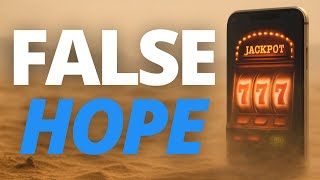
Gambling isn't just entertainment. It's a mirage engineered to keep you chasing what you'll never catch. A shimmering promise, always out there, just far enough away. But why do we chase it? Because in a world where connection feels fragile and meaning feels out of reach, even false hope can look like water in the desert. When days blur together, when nights stretch too long, when victories feel small and losses feel heavy, you start scanning the horizon for for something, anything, that tells you you still matter. Because we're told our worth is in what we buy, the labels we wear, the car in the driveway, the square footage of the house. They sell us stories about the life we should want. Stories written by marketers, measured in profit margins. And our milestones are not marked by meaning, but by purchases. And we work jobs we'd never dreamt of as children, so we could afford the things we never needed. We spend years chasing titles we don't care about to impress people we don't even like. And when we get there, when we have the thing or the trip or the upgrade, the satisfaction dissolves faster than we can even unwrap it. Because purpose can't be bought and connection isn't something you can subscribe to. Deep down, we know this, but in a culture built on selling happiness, admitting you feel empty sounds like failure. So we keep buying, keep scrolling, keep chasing the next fix, the next goal, the next distraction. All the while, the emptiness grows. We used to measure our lives by the people we loved and the moments we shared, but now we measure them against the lives of strangers we'll never meet. Our worth is weighed in comparison, stacked against curated highlight reels of people who seem to have it all together. They become our mirrors, not to reflect who we are, but to remind us of who we're not. We don't gather to connect, we gather to compare, and every comparison is a subtle reminder that you're not enough, not yet. It's no wonder we reach for anything that promises connection. Recognition, or just a thrill of feeling seen. And the gambling industry knows exactly how to tap into that deep human need. A need that was once derived from community, but it's now going unfulfilled. Sociologist Émile Durkheim called it anomie. It's the slow unraveling of our shared meaning that holds us all together. When that fabric frays, people search for a thread to hold, and sometimes the only thread they see is spun from illusion. It looks like hope, it feels like control, into whispers, "You could change your life in a single moment." It flashes names of winners, shows you people who look just like you, smiling, celebrating, free. But it's not an oasis, it's a mirage. Step toward it and it steps back. Reach for it and it disappears. Every bet, every almost win is not just chance, it's addiction by design. Pixel by pixel, sound by sound, the speed of the reels, the glow of the screen, the perfectly timed bonuses, all calibrated to keep you chasing. It's not a game. It's a business model. And you're the product. David Courtright calls this limbic capitalism. It's an economy built to hijack the deepest parts of your brain. The part where cravings are produced. This is not an industry that just sells fun. It sells compulsion. One dopamine hit at a time. And the more it takes from you, the more it convinces you that you can win it back. This is an industry that thrives in the cracks of a society that has forgotten how to meet human needs. Now governments cash the checks, sports leagues wrap themselves in betting sponsorships, and institutions that once held us together are eroded by corrosive corporate greed. And the collective conscience, our shared sense of right and wrong, dims under the glow of a thousand betting ads. And somewhere, someone is making their last rent payment to a machine. Not to a landlord. Not toward a home. To a system that will never thank them, never remember them, never stop taking from them. The great humanistic thinker Carl Rogers taught that every person is worthy, and at our core, we're driven to grow, to connect, to live fully. And when those needs go unmet, when the ground beneath us feels thin, we reach for anything that promises to hold us up. And gambling paints itself as that foundation. But it's not solid ground. It's a sinkhole. And it's not weakness to be pulled in. It's human. And that humanity, that beautiful, desperate, hopeful humanity, is exactly what the industry exploits. They're not selling joy; they're selling the illusion of joy. And the cost of that illusion is not just measured in money. It's measured in hours, in relationships, and unfortunately, in lives lost. Addiction thrives where meaning and connection decay, and gambling is both a symptom and a cause of that decay. But here's the thing about a mirage: the moment you name it, it begins to lose its power. When we speak it out loud, we strip away the shimmer. When we turn toward each other instead of chasing the lie, we take back what the system cannot steal: our connection. We can rebuild the meaning that was taken. We can restore connections that were lost. And we can make the exploitation visible so it can no longer hide in plain sight. Because the opposite of addiction isn't just abstinence. It's connection. It's belonging. It's being part of something real. So if this opened your eyes, please share it, because every day someone else is walking toward the mirage. And the more of us who see through it, the more of us who speak against it, the more we can walk together towards something real.