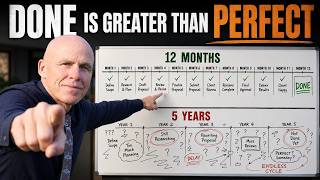
Dr. Steve Tippins, who has chaired roughly 300 dissertation committees, identifies seven mistakes that delay completion: inconsistent work, ignoring procedural timelines, picking the wrong committee, assuming data access, skipping software training, chasing perfection, and wasting time during reviews. Daily work and a "done" mindset get dissertations finished in 12 months.
Chapters
There's a massive difference between those who finish their dissertation in 12 months or less and those for whom it drags on for 2, 3, 4, even 5 years. After sitting on 300 dissertation committees, I found that it comes down to 7 key things that can help you move forward quickly. I'm Dr. Steve Tippins Ph.D. and if you're ever looking for help along your journey in your dissertation, click the link below and join our free dissertation help community. So the first step, or the first item you want to think about to help you move forward in 12 months, is to pay attention to your dissertation every day. That means work on it or write every day. Now, doesn't have to be 4 hours every day. Some days it might be 20 minutes. I've heard one person say, "Set yourself a crappy quota every day," meaning I'm going to get this many words every day or this much time every day. The great thing about attention every day is it's like a bank account, and it builds up and accumulates, and over time your deposits into your account become significant. It becomes a lot easier, and the momentum builds, and you move forward even faster. The other thing I want to say about this is you cannot binge a dissertation. It's not a weekend project where you did as an undergraduate. You wrote a paper in a weekend. Great. But a dissertation can't be done in a weekend. It needs ongoing serious attention. The second thing to do is understand and know the process. Don't wait for your chair or your committee to say, "Okay, well, now you can," because they're busy, and they may not even ever tell you what to do next. They expect you to figure it out. So know what your university steps are. Know how long steps are supposed to take and what has to happen before something else can happen. So knowing the process speeds you up dramatically. Third on my list, and it's really important, it's how you set up your committee. You want people on your committee who are engaged, people who have dedicated themselves to helping you finish, and also people who like each other. The last thing you want, and I've said this many times, the last thing you want is your dissertation to become the battleground for two or more academic egos. You want people who are dedicated to helping you finish. So designing and setting up your committee is a really important step at the beginning to help you move forward quickly and efficiently. So the fourth thing to think about and know about is data. Can you get data? If you're doing a study that needs data of any kind, you want to know early on in the process that data is gonna be available. I've seen too many people get to the point they have an approved proposal, now they can go collect data, they have IRB approval, now where am I gonna get the data? And they lose weeks, months, or even longer trying to figure out and get the data they need. You know, once you've defined your problem and your purpose and your research questions, think about, is data available? 'Cause if it's not available, you wanna stop now instead of getting months down the line. And if your goal's to finish in 12 months or less, you wanna know where your data's gonna come from. And going along with that one is my 5th point, is the data analysis. Know how you're gonna do the analysis and be able to do the analysis. So if you're going to use a specific piece of software, understand how that software works. If you're going to be using a specific statistical test, two things: understand how that test works and understand that your data will provide the right input for that test to be done. So learning all of this ahead of time saves weeks moving forward, and every week builds up, that you save, and allows you to finish within that 12 months. The 6th thing to remember or to adopt— there's an old saying, "The only good dissertation is a done dissertation." So you want to have as your goal, done. A couple of times over my career, I've seen people who said, "Well, I want to win the award for Dissertation of the Year." Do you know what they get for Dissertation of the Year? They get acknowledgement that they got Dissertation of the Year within the university. But nobody else ever knows, and it might have taken them 6 months longer to write the perfect dissertation. But if you wrote the done dissertation and are out 6 months ahead of them getting jobs and consulting gigs and things like that, you're light years ahead of them. So adopt done as your goal. And the 7th thing is you want to prioritize the things that will help you move forward. Don't just keep following literature and literature and literature because it's really easy to do and it's really easy to branch off into other topics and then branch into something else. Always remember, your goal is done, and your goal is to answer your research questions, address your problem. So confine it. Do things that help you move forward. Have a plan. Check things off. As part of that, you want to have some things you can do during downtime because you're going to get your proposal all put together and send it off to your chair and your committee. And that could be 2, 3, or 4 weeks before you hear something back. What can you be doing when you can't be working on your document? And when I say can't be working on your document, I encourage you not to work on your document when they're reviewing it because you may make changes that they love and they're gone. So have something else you can do when your committee's looking at your proposal. Set up your IRB application, start preparing for getting your data. So have things that can be done during downtime so that when you get the okay to keep moving forward, you're all set and you're 2 or 3 steps ahead. Doing all of these 7 things will put you in the position to be able to finish your dissertation in 12 months or less. And if we can help along the way, click the link below to join our free dissertation help community.