Dissertation Chapter 4: How to Map Codes to Themes
Dr. Courtney Watson shows how to structure Chapter 4 of a qualitative dissertation, from restating your research question and describing your coding process to presenting findings organized by theme with representative quotes. Use software like NVivo to generate tables and charts, include enough detail for replication, and be transparent about what didn't work.
Chapters
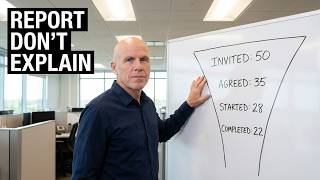
Hi everyone, I am Dr. Courtney Watson, and today we are going to talk about Chapter 4 of your dissertation, which is the results section. This is a really exciting place to be on your dissertation journey because your preliminary work is done and approved. You survived, you got to run your study and put your skills as a researcher to the test, and now it's time for the next part, which is exciting in its own way. So Chapter 4 really is your opportunity to sort through your, your piles and piles of data and start to make meaning out of the mass of information that you've accumulated. So So today we're going to talk about how to approach Chapter 4, what to do, what to avoid. And Chapter 4 always comes with a lot of apprehension, both for my editing and coaching clients and also my own graduate students as well, because you simultaneously feel so close to the finish line, but there's still a lot of work to do even though your study is complete. So it feels simultaneously close and then also far away just because there's so much territory that gets covered in Chapters 4 and 5. So before we get started, some things that you want to keep in mind with Chapters 4 and but particularly with Chapter 4, is to be really clear about the expectations of your department. So review copies of recent dissertations that have passed successfully in your program. Note the length and depth of Chapter 4 in those projects, and this will help you know that, or just be confident that you're in line with the expectations of your department. So today with Chapter 4, we're going to be talking about the conventions for a typical generic qualitative study. So there may be some variation in what your Chapter 4 is expected to look like. Just make sure that you're adhering to the template that was given to you by your department or by your graduate program, and you'll be fine. So there might be some sections that we talk about today that you don't have in yours, and then there might be some sections that are expected to be in yours that we won't talk about today, just because there's no standard one-size-fits-all dissertation, although there are many commonalities. So my best advice for approaching Chapter 4 is to really pace yourself and take your time. Make sure that you're doing those two things, because most of the mistakes that I see people make in Chapter 4 are the result of just Writers getting ahead of themselves and trying to rush. And you really can't rush chapter 4, um, because there's so much happening in it and you don't wanna get lost, lost in the research, lost in the writing. It really helps to be as organized as possible. I typically recommend for my clients and my students to create an outline just for chapter 4 because it can have a lot of moving parts to it. And an outline will really help you to stay on track. So have an idea going into your analysis how you want to present your research. Think about if you want to do like charts and tables and graphs. And these are things that a lot of students get really intimidated— a lot of writers and scholars get really intimidated by the prospect of doing charts and tables and graphs. But you're probably already using the software that can help you do that, uh, so software like NVivo or whatever's been recommended to you by your department. So really it's just taking that next step to, to go ahead and formulate those. So don't worry about that part too much, but do keep it in mind as something that can make the analysis of data and the presentation of data a lot simpler. So in Chapter 4, the first thing that you're gonna wanna do is introduce the chapter. So you wanna have an introduction to Chapter 4, and within that introduction, you're gonna talk about what Chapter 4 contains. So keep in mind with this, the main purpose of Chapter 4 is to present your findings, and in the introduction, you'll wanna talk about exactly how you're going to do that. So you'll say that you're doing it with data analysis, charts, graphs. How does, you know, X show the effect of Y? So use your questions, your problem statement, draw from your purpose statement just to show the alignment of all of these things. You'll also, in the introduction to Chapter 4, wanna summarize the research approach and theory that drove your method. So something that immediately people say to me is like, well, I just did that. I just did that in Chapter 3. And to a degree in Chapters 1 and 2 as well. And while that's true, like, yes, you did do that, but you didn't do it in quite the same way that you're going to do it in Chapter 4. And dissertations contain, by necessity, a whole lot of redundancy, so keep that in mind as well. Redundancy is just a feature of a dissertation and of this type of research. Keep in mind, at this point in the process, you probably know whether or not your approach was effective or not, so keep that in mind, and you'll be talking about it from that perspective. Of, whereas in chapters 1, 2, and 3 of your proposal you were talking about something that was still largely or completely theoretical because you hadn't completed your study yet. And now you're on the other side, you've crossed the Rubicon of research. So now's your chance to, to talk about it again but from a different perspective. So keep that in mind. What you'll want to do next, after you've summarized the approach and theory that drove your method, you want to highlight your significant findings. And you don't have to do this in great detail in the introduction to chapter 4, but you at least need to glance over it. So you'll definitely give yourself an opportunity to delve into it deeper in the chapter, but in the intro you want to give a very brief overview that offers the gist of what you're going to delve into in your analysis and just in your presentation of findings. So in this section, briefly writing about 3 to 4 key findings would be sufficient. You also want to, in the introduction, address your research question. You'll want to restate your research question, and you'll want to talk about how it was developed to address the specific gap in the literature. So what was your study determined to find out? And you're at a point now in your research where you can say whether that was successful or not, whether you feel like, you know, you, you met that challenge, or this might be something where additional, additional research, additional findings are needed. In the next section of Chapter 4, you'll want to give a brief overview of your chapter structure and what the reader can expect, how the reader can expect the findings to be presented in the chapter. So you'll offer a brief overview of how Chapter 4 is constructed and the deliberate choices you've made about how you'll present your findings. And so what methods did you use and why? Like, why did you choose your particular methods? And again, yes, you just talked about this in Chapter 3, but now you know whether it was successful or not. So what methods did you use and why? Then maybe talk about your data collection strategy, the tools that you used, your specific group of participants. Be really clear here, make the distinctions that you need to make here to show like What distinguishes your study from other studies? Talk a little bit about why you chose the specific things you did, so the specific, the specific participants, the specific tools, your data collection strategy. And keep in mind, now you have the benefit of hindsight and you can talk about whether or not each aspect of your approach was optimal or successful, or if you learned some things about how it could be better. Now, this is not your discussion section. Like, Chapter 5 is where you really get deeper into the discussion, but you do want to give an overview of that here. And something I like to tell all researchers, especially early career researchers, is don't be afraid to admit if something didn't work or if it didn't work as well as you hoped it would. That is just part of research. That is, that's how research works. Progress in research and in the acquisition of knowledge is, is always incremental. There's always room for improvement. You'll learn from your mistakes, and the scholars who come after you will also learn from your mistakes, and they'll have that much more runway and be that much better off because of the work that you did. So it's either, you know, mistakes are either a present to your future self or to the scholars who will come after you. So never worry, never fear if you're like, you know, I really don't think, I really don't think I did this correctly, or this didn't work out, this didn't pan out exactly as I planned it to. So when you talk about that, you'll also talk about, you know, one thing I think is important to acknowledge is we don't talk about a lot how much of research is finding out what doesn't work. So progress is just painstaking making an incremental, and it's really good to keep that in mind so you don't get discouraged. Next, we'll talk about the approach to analysis. That'll be the next section of your chapter. So you'll wanna talk about any codes that you used in your approach to analysis. You'll talk about the themes that you derived from those codes. Then you'll wanna talk about how the findings are presented. So if you're presenting via themes or groups and clusters of themes, you'll talk about that. You'll make sure to mention how they are aligned with your research questions. You'll state how many themes you arrived at from X number of codes. So how many, however many codes you ended up with, you'll talk about how many themes you derived at from that. You'll then talk about the synthesis that you used. You'll show how you're gonna use synthesis to set up your discussion in chapter 5. And keep in mind, you're really building to chapter 5. You're building to the grand finale of your dissertation. Okay, so in the next section, you'll talk about data collection, what the process of data collection looks like. In this section, you will revisit what your protocols were. How were your interviews and surveys conducted? Like, what was the method that you used? So this was kind of an overview of what you proposed in Chapter 3, but you'll also report any changes that you made. So if something didn't go according to plan, or if you had to adjust or modify your plan, you would want to talk about that here. You would want to make sure to mention it in this section of the chapter. You'll do just an overview of your data collection. How did you refine your research questions? Did you add any follow-up questions? Why did you add any follow-up questions? So if there was some part of your research protocol that wasn't quite working and you had to make a change or you had to make a modification, here's the place where you would talk about why. And one example of this would be if you started out with like a certain— your, your questions in a certain numerical sequence, and then you decided to switch it up, you would say, I changed the sequence of the questions I asked because, and then you would just state why. State like, you know, it didn't seem to be as effective in the way that I initially had it, or question 4 felt too open-ended. So, I added a follow-up to it that added clarification, or I changed it to make it less open-ended. In the next section of Chapter 4, you'll talk about your participants. So you'll talk about your response rate and kind of how you narrowed down, how you got down to the final number on your response rate. So you'll start out by talking about how many participants were invited, like what was the total population versus how many, like, how many were invited and how many agreed to participate, how many started the interview or the survey, how many completed it all the way through. And that's just an inverted pyramid. You can make a, a graph for it or a chart for it to track it. It's, this is a nice place to have an image or a visual because it shows like the total population number you started at and then down to how many you, you actually ended up with who completed it. So you'll also talk a little bit maybe about your effective sample size, why you feel you reached saturation in the study. If you were hoping for, in order to have saturation, if you were hoping to have like 12 to 20 participants, if that was the number that was deemed to be optimal, you would maybe talk about like, well, yes, I ended up on the lower number of that sample size, or I ended up on the higher number of that sample size. And you would just talk about the efficacy of the sample size. In the next section, you'll want to talk about your tools and your instruments in greater details. So. Did your plan differ from what actually happened? Were there any modifications that you had to make? If it did differ, how did it differ? That would be something else she would say. This is a place where as a researcher you can kind of report like funny or interesting things that have happened. Like maybe you were in the middle of doing an interview and one of the participants started asking you questions, which is something that happens with surprising frequency. And it's just a very human part of the research process because for many people, who don't interact with academia every day. This might be the first time they've ever participated in a piece of scholarly research. So they may have been told the rules but maybe did not internalize them. And it is just one of the funny things that can happen to you as a researcher. So if there was any sort of deviation, and this too can touch on your limitations or delimitations as well. So the things that you suspected might be a problem, did they end up being a problem? Or the boundaries you set, were those the correct boundaries to set? So you can talk about any obstacles or surprises. For instance, if you were planning on conducting your interviews in person and there was a blizzard and you ended up having to switch online, or you were planning on doing them online and there was an internet outage, just report what happened and then report whatever adjustments you made in response to that thing happening. Invariably, this happens with so many studies where, you know, we have the best laid plans and then as researchers, something just something just happens and we have to deviate. We have to think fast. We have to kind of think on our feet and make, make some changes. So something to keep in mind when you're talking about the adjustments you made in response, it's completely okay that it didn't go according to plan, but you do have to report how it went off track specifically. Like, you need to be very, very specific here— how you fixed it, how you didn't fix it if you didn't fix it or couldn't fix it. So keep that in mind. If your optimal response rate was 12 and you ended up with 10 for some reason, that would be something that you would need to report because, you know, that, that changes, that changes the study. So keep that in mind. You'll want to talk again about your data analysis, the strategy that you used, how that played out in the actual study itself as you were conducting it, your codes as well. How did you decide on the codes that you used? How did you group those codes into themes? How many cycles of coding did you end up doing, or did your methodologist end up doing? If you did member checking, were there any results in the member checking? Like we always recommend doing that for an optimally ethical study and just giving participants a chance to review the transcripts and say, yes, this is exactly what I said, or no, I dispute this. I have rarely seen transcripts get disputed, but if someone, one of your participants, does have a dispute with what you said, you would want to talk about, you know, why, how that played out, how you resolved it, and just give as much insight into that as you can. So then after that, you would want to talk about the steps in your analysis process. You want to go through this exactly as you did in your analysis. So go through step by step. Sometimes people can feel like they're, they're too in the weeds or too in the minutia with this, but really the goal of any study is for it to like, to call a study viable. The goal is for it to be able to be replicated. And in order for it to be replicated, we need as much information as possible. So don't feel like you're being too exacting or too precise here because that's, that's impossible. So what were the steps in your analysis? And you will report this to the degree of step 1, I reread the transcripts. Step 2, I did the initial coding. Step 3, I found themes. Step 4, examined those themes. Step 5, I named those themes. Step 6, I finalized those themes, and so on and so forth. Just record every step in, in your process of analysis. You can also do tables to illustrate this process. Those work incredibly well. The way you might set up a table would be, you know, subject 1 said this, I identified it by X code. I situated it here, determined that these codes related to these themes or would be grouped under these themes. So that is how you would do that. You will also do a report back of your limitations and just anything that, anything unexpected that may have come up during that analysis process. Then in the next section, you'll do an overview of your findings. You want to have a really clear structure here for how you do an overview of your findings. Organize it by questions, organize it by themes, what themes became apparent in the responses as each question was responded to. So for example, you would say you would maybe have a subheading for theme 1. You would do an overview of that theme, say there was emphasis on X. You would give a definition of that theme. How is that theme defined in the context of your study? So if you were doing something and one of your themes was— like, if you're doing a political science study and one of your themes was maybe community, you would want to talk about how community is specifically defined in the context of your study. Like, everybody kind of knows what community means, but what does it mean specifically to your study? And that should track back to your, your keywords and your definitions in Chapter 1. You want to make sure that you're always using those keywords and phrases in the exact same way and defining them in the same way. So you would offer an overview, a definition, and then this is a big section— your evidence. So for your evidence, that is all of the quotes that you pull from your transcripts. Now there can be an inclination for a lot of scholars to just throw everything they have into this section. So if they end up with 20 participants, they are going to— and they're doing like 7 or 8 themes— and they're going to put everything that those participants said into that section. So this can have really diminishing returns, and I don't recommend doing this. I recommend finding a handful of quotes from each participant that are representative of the theme, because you really, like, you want this section to be comprehensive, but you don't want it to be exhaustive to the point where it's like 80 or 100 pages. So just keep that in mind, because as you know, like, an hour-long interview, that can transcript out to 60, 70, 80 pages. So you don't want to put absolutely everything that everybody said, but you do want to have a really fair representation of what your participants said and how they substantiate the themes that you derived from, from what they said and how you coded it. So discuss each theme that appears for each question. Provide enough evidence in the form of quotes from your participant. Keep in mind with this, I know there can be an urge to make changes to the quotes, don't change the quotes. And the only way, the only reason you would want to change any quotations from any of your participants is just to add clarity. But don't go through and clean up all of the spelling and capitalization and all of that stuff. Just make sure that it's clear enough to be understood, but don't take any liberties with the quotations that you have. And so once you've gotten through your, your quotes and your themes, which is a huge section of Chapter 4, you would also want to note any patterns that you see, any surprises, Typically 5 to 10 themes emerge for most dissertations that, that work this way. And then you get to a point where you're ready to stop, where you have everything in there that you think you need. Do a conclusion to Chapter 4, and, and that's really it. So the bulk of Chapter 4 does come from your quotes, from what you're reporting out, how you thematically group the responses that you got. That's going to be the bulk of it, plus you have just the overview of, of what you did and how that process went. But then you want to also save leave plenty to have in Chapter 5, plenty of information and material to have in Chapter 5 for your discussion, which as I said is sort of the grand finale for your dissertation. So I hope this helps. If you have any questions, please ask them in our community space and I will be happy to give you answers. And good luck, happy writing!










