In this instructional video, Dr. Steve Tippins (Ph.D.) draws on 35 years of academic experience and service on over 300 dissertation committees to outline seven concrete actions that doctoral candidates should follow to create an effective literature review that satisfies committee expectations and accelerates dissertation approval. He begins by urging students to consult their institution’s dissertation template to determine required sections, especially newer ones that detail the literature search process. For quantitative studies, he stresses the need to justify each variable within the review. He then highlights the importance of explicitly stating the gap in the existing literature, which underpins the problem statement, purpose, and research questions. Tippins recommends framing the review as a logical story that leads the reader to understand the study’s rationale. He warns against merely listing sources (“string of pearls”) and instead advocates synthesizing and integrating findings to show how studies relate to one another. To manage the volume of articles, he proposes a tiered screening workflow—starting with abstracts, then results, methodology, and finally full reading when relevant. Finally, he advises establishing a systematic reference management system (e.g., Zotero, Mendeley, Excel) to catalog articles, keywords, methods, and results for quick retrieval. The video concludes with an invitation to join a free Dissertation Help Community for further support.
Chapters
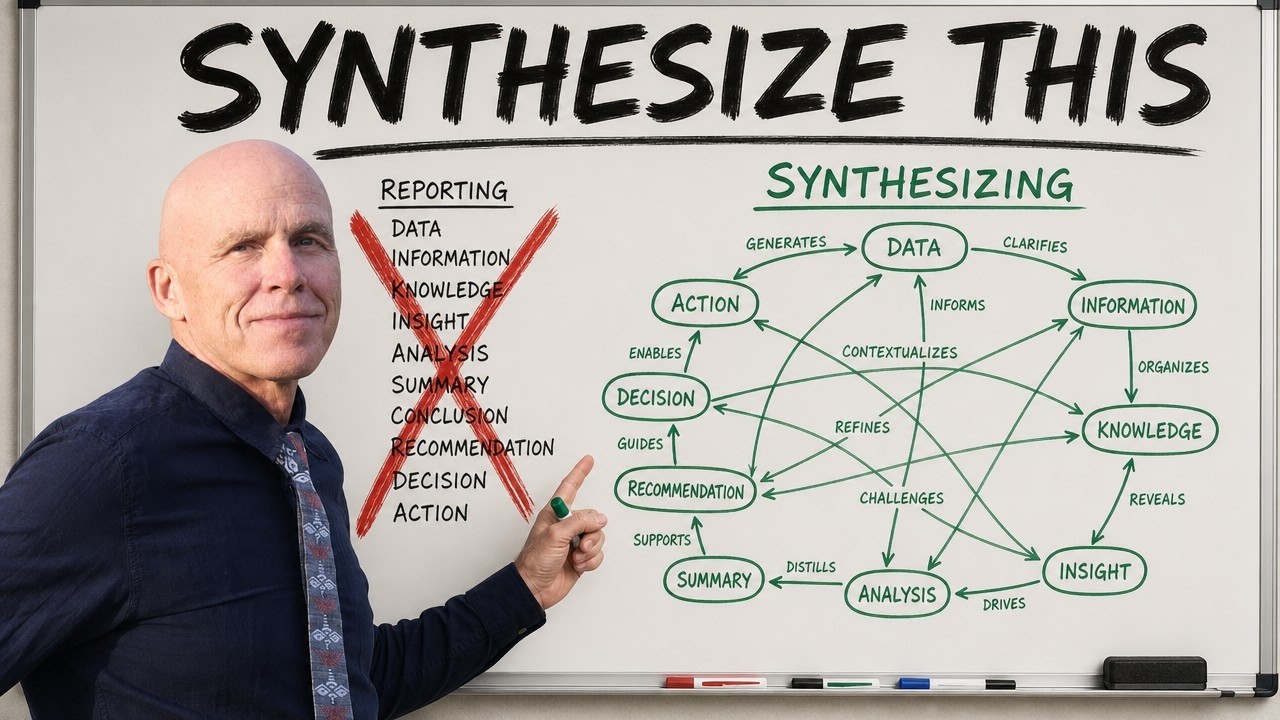
In working with many doctoral students, one of the biggest areas I've seen them have issues is in their literature review and knowing what to do in their literature review and how to make it effective to help them move forward. I'm Dr. Steve Tippins Ph.D. I've been in academia for 35 years and served on over 300 dissertation committees. In this video, I'm going to walk through 7 points that can help you come up with, design, and complete a literature review that gets approved and moves you forward quicker. The first thing you want to look for in creating your literature review is, does your school have a template for what goes into a dissertation? Because by looking at the template, you can see what headings they want. So that then helps you understand what material I need to put in there. For example, within the last 10 or 15 years, a number of schools have added a section to the literature review, and they're different titles, but to do with the process of finding the literature. Where did you go to find literature? What keywords did you use? Things like that. If you're looking at an older dissertation as a guideline, it may not be in there, but if you're looking at the template, that's going to tell you, oh, you need a section like this. The second thing a literature review can do and can help you provide justification for your study especially if you're doing a quantitative study. In a quantitative study, you're going to have variables. Well, you're going to need justification for those variables. So make sure in your literature review you provide justification, support for using these variables in your study. If you don't do that, your document's going to come back and they're going to ask you, what's the reason, rationale, justification for using this variable? Do it from the beginning. You're going to save time. The third thing you want to remember, and a lot of people just think of it as the only reason for a literature review, but, you know, I've seen a lot of them come through without even thinking about this or showing this, is what's the gap in the literature? Yes, I've looked at literature, but now I have to tell the reader this is the gap in the literature. Report that. That gives you foundation for your problem statement and your purpose and your research questions. They all spring out of the gap in the literature. The fourth point I want to make is I like to think of a literature review as a story. It's not really a story you're going to take to the beach and read, but it's a story made up of the literature that helps the reader understand that there's support for what you want to do and there's a reason for what you want to do. You want the reader to get to the end of your literature review and say, "Oh, okay, I see why they want to do this, and I see that there's support for what they want to do." Now, the fifth point, and too many literature reviews get sent back because they have this, you want to synthesize or integrate the literature with each other instead of just reporting the literature. Reporting the literature looks like this: Steve Tippins Ph.D. 2022 said on and on and on and on. Tippins Ph.D. 2023 said on and on and on and on. Smith Ph.D. 2024 said on and on and on and on. It's what some people call a string of pearls. You're just plopping in literature, but what your committee is looking for is, can you bring and tie in the the Steve and the Tippins and the Smith literature. Steve 2022 said this. However, when Tippins Ph.D. 2023 did their research, they found a different result. So you're showing you not only understand the, the information from one article, but you're understanding how it fits in the overall scheme of the literature that's been done. So when your committee says, oh, you need to synthesize this, that's what they're talking about. The sixth point is it's going to save you a lot of time if you have a system to review the literature you're going to include in your document. And by that I mean you get an article, great, it looks like it has a good title, great, what do I do now? Do I read the entire article, every single one of them? That can take a really long time. Many people start by reading the abstract, and if the abstract seems to have nothing to do with what you're doing, they put the article aside and go on to another one. But if the abstract does say, "Well, that looks interesting. It might pertain to where I'm going with my research." Well, now maybe I'll go to the results section. Yeah, the results are really good. Now maybe I'll do some backtracking and look at the methodology. And if I really like that, I might fill in and look at the conclusion as well as the literature review. I may read that entire document because it really pertains. But having a way to sift through literature is going to make you much more efficient. And the seventh point I want to make is have some sort of system to keep track of literature. Look, you're going to look at scores of articles, and you want to be able to get back and access them and find out the information that might be helpful to you without having to reread the article every time. There are software like Zotero and Mendeley and others that will help you synthesize this material into usable access points. And that might be maybe the methodology that was used. How about the results that were found? How about the keywords that came up there? I've had clients create their own using things like Excel or something to create their own database or a database tool in order to set this up. But the goal is to be able to access this information faster. And if you're looking for support in this or any other part of your dissertation journey, click the link below to join our free Dissertation Help Community.