The 'High-Achiever' Trap: Why Your Hard Work is Killing Your PhD
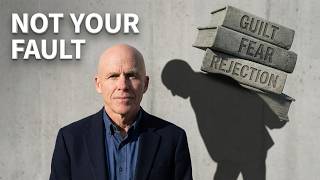
Dr. Steve Tippins, who has served on over 300 dissertation committees, explains why pushing harder often backfires. He recommends breaking writing into 15-minute sessions, prioritizing clarity over complex language, and protecting sleep and breaks. Stress signals awareness, not weakness, and the doctoral journey is non-linear.
Chapters
How do you overcome dissertation stress? One of the ways not to do it is push harder. Pushing harder on your dissertation most likely isn't going to get rid of your stress. You might have lost sleep. You might have lost friendships or relationships. Or your health might be deteriorating. Well, what can you do about it? The truth is you can overcome dissertation stress, and you can finish. I'm Dr. Steve Tippins, Ph.D., and I've served on over 300 dissertation committees. I've also coached scores of people helping them finish their dissertations. And if you're looking for support and accountability, click on the link below to join our free dissertation help group. First thing I want to say is feeling stress, feeling stressed out by the dissertation process doesn't mean that you're weak. It actually means that you're in touch with things. Too many people who are stressed out and don't understand it and just push harder, and those people many times are the ones that break. It's the people that understand where they are that can and do something about it. One of the things that can help you move forward, and I was just talking to a former client the other day, one of the biggest things that they got out of this was reframing. When you're going to have a lot of times when you're going to be looking at something and saying, "Oh my God, I can't do this," or, "They're asking for 40 pages." Well, you don't write 40 pages at once. You write 40 pages by starting with a word. And then a paragraph and then a couple of paragraphs. So you want to reframe, relook at things, redefine success. Again, I'm not going to write 40 pages today, but I'm going to write some of it and then I'll write some more of it. And by writing some of it, I've got success. So break your tasks down into small doable achievements. I'm a big proponent of writing lists. Break them down into small things. And sometimes, and I got this from a children's book called Frog and Toad, one of the things I sometimes do is I will write down on my list 2 or 3 things I've already accomplished so that I can check them off. Or if I'm feeling really in need of something, the first thing on my list is going to be make list, and then I check it off and I feel an accomplishment and the stress starts to diminish. In making your day and your goals doable, you know, I don't recommend saying, you know, I'm going to write for 12 hours today. Write for 25 minutes every day. You're not going to finish your dissertation. In fact, there's a book that says, titled How to Write Your Dissertation in 15 Minutes a Day. Well, you're not going to do it. You can't write just 15 minutes every day. But if you show up every day and start, some days that 15 minutes is going to turn into an hour. That's how you're going to finish your dissertation. Just keep showing up. That's what's going to keep the stress down. Because as you start seeing you've made progress, success engenders more success. One thing that will also help you is you're not trying to be brilliant. I've seen too many people try to write to impress and use all kinds of words, and many times they're the wrong words. Write for clarity, precision. That's what's going to get you finished. Not using words that your committee has to go look up every fourth line. There's another word that's, well, What's that mean? Is that being used right? No, you don't want your reader to be confused. You want your reader to understand what you're saying. If a big word is needed, okay, it's needed. But it's not the purpose of your writing is to fill it with big words. Now, when you become a doctoral student, some people feel they've given up their life to this program, or they're a graduate assistant or a teaching assistant. You have to also protect your energy, protect your space. No one else is going to do it for you. Look, if I keep asking and you keep saying yes, I'm going to keep asking because you always say yes. But if you say, you know, that's great, I wish I could, but I can't, or yes, I'm available during this time period, and outside of that time period, you're taking care of yourself, you're doing your reading, you're doing your writing, but you're also taking a walk, talking with your family, playing with your poor neglected dog, you're doing whatever feeds you. And I want you to take breaks without guilt. One of the things I learned, and I've had a number of people confirm this, is over the course of a week, you're going to waste time even if you think you're working all the time. When I was in undergraduate school, there were a lot of— there was a music school there, and I would walk through the music school and see all the practice rooms, and about half of them would be empty with an instrument sitting in the room. And then I'd listen to the music students who say, "Oh my God, I practiced 9 hours today." Well, I don't know if you can really play the piano or the flute or whatever it is for 9 straight hours in a day. But what they did do is have their instrument in a room for 9 hours. And they would practice for 45 minutes and then get up and walk around and talk to people for half an hour. And they'd come back and do something else and go talk to people. So yeah, they were there for 9 hours, but they were protected. Themselves by taking sanity breaks every once in a while. Food is important. It's a fuel, and you want to put good fuel into your body. I will tell you, when I was studying for my comprehensive exams, I lived on some incredibly basic food groups that really fueled me: jelly beans, Cheez-Its, and cheap vanilla cream cookies. And I had all kinds of Justification. Cheez-Its, well, that had to be protein because there was cheese. And jelly beans, well, beans everybody knows are good for us. Well, vanilla, that's an expensive spice, that's got to be good for me. And I came in one day to do studying, and I had a 1-pound box of Cheez-Its, and I put it down in the chair next to me, and I looked and found out there were 4 empty 1-pound boxes of Cheez-Its there. And at that moment, I realized I'm probably going to need a vegetable. Because I wasn't sleeping that well and I was pushing, using bad food to move me forward and sugars to keep me up. And, you know, I switched my diet pretty quickly and all of a sudden I was a lot more efficient and able to accomplish things in less time. So take care of yourself exercise-wise, food-wise, and relationship-wise in this process. One of the things you can think of is if I take care of myself, I'm not wasting time. I'm actually preparing myself to be more efficient and better able to move forward. I mentioned activity, running, seeing your family, wasting time. Guilt is a big thing. We feel guilty for not doing what we think we should be doing. But if you remember, if you're wasting time or using time for other purposes, when, if I'm not working and I'm playing tennis or pickleball or the piano or talking to someone, be there fully. Do it as opposed to feeling guilty. Because if I feel guilty while doing that and then come back and feel guilty, well, I didn't get any benefit from anything. But if I take a break and talk to a friend and fully talk to them and I'm present with them and then come back, well, I've had a good relationship and interaction that hopefully has fed me. And now I come back and I can dive back into my work. 'Cause many times we need that gap, that space for our mind to work on things so that we get the answers we needed. Another thing I think is going to be important for you is to have a support network. This is a lonely journey and a lot of people in your life aren't going to understand the process and/or what you're doing, but they understand you and love you. So let them be part of your life. Don't just hide from them. Don't say, yeah, I'll see you in, oh, 4 years when I'm done. You know, they're going to have lives too and move on. But if you allow them to be part of your life, help them understand even to a small degree what you're doing, you're going to have a support network that's going to be vitally important to you when something comes up. And I'm going to tell you, something's going to come up. There's going to be a deadline you're going to be pushed on. There's going to be a need for proofreading. There's going to be something that you weren't ready for. Having a support group is vital for helping you move forward and also for your mental health. I talk to people frequently who say, well, I can't ask my professor this question. I'm afraid to ask this question. I don't want to look like I'm dumb. Well, if you don't know the answer, you better ask because you're just going to be wandering around for a long time waiting for the answer to, you know, hit you in the face or something. I don't know how you're going to get it if you don't ask. And people get intimidated from their committee members. So having a support network, having people who understand the process, understand what you're going through, can be incredibly helpful because fear of asking a question doesn't get you there. I've worked with many people who understand that they can ask a question, and once they ask that question and get the answer, life's a lot easier and they don't have to live in fear. Changing your mindset can be a big thing in helping you move forward. You sit down and you're working on something, or you're not working on it, and you're saying, why can't I do this? Oh my God, everybody else is doing it. And it's so easy to compare to other people, and everybody else is doing something different. So just realize that changing your mindset from 'Why can't I do this?' to 'Gosh, I wonder what's in my way right now. What's blocking it?' Become curious about things instead of basically beating yourself up. We might find a simple thing. You know, I'm hungry, that's why I'm not doing this. Or, you know, I don't have all the research on this topic, but I do have it on this other topic, so I can get that part of my dissertation completed or that part of this assignment completed. And one of the things I've found is if I have a block, if I just keep going at it, I rarely get through that block. But if I engage myself in other activities, somehow my mind is still working on that, and I have come up with answers to blocks while running or walking the dog or working on other projects. It all of a sudden gets to, "Ah, that's it, okay," and I go back and finish that. So give myself the opportunity and the space by reframing things or just looking at other things can help me reduce stress to a huge extent. Comparison, which I've mentioned, is going to be one of your worst enemies. Comparing to other people in the program, we don't know what they're going through. We don't know what their committee has said. We don't even know if what they're saying is true., but we do know what we are doing. So yes, you can get support from others, but understand that this process, even though the catalog and the marketing material shows it to be a straight line, a doctoral journey is not a straight line. There's going to be times when you're not making a lot of progress, when you're gathering a lot of information, and there's going to be other times when you're just going to take off and Chapter 4 gets written very quickly. So try not to compare. Just be aware of where you are and what you can do and then move forward. When you stop fighting yourself, when you stop fighting those expectations we put in our head, when you stop thinking, "Oh my gosh, they're doctors, they're magic," they're people, they've gone through this process. Listen to them, yes, but we don't need to put them up on platforms and idolize them. When you start understanding you and understanding what you need, that's when you're going to make a lot of progress. And if you're looking for support, if you're looking for a community, join our free dissertation help group using the link below, and you will find people to converse with. You're going to find assets that are going to help you, as our goal is to help you finish. Good luck.










