The Literature Review Trap PhD Students Fall Into
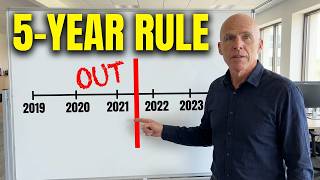
Dr. Steve Tippins, who has served on over 300 dissertation committees, breaks the literature review into 3-5 page mini-papers that you integrate later. Use 80% recent sources, move past annotated bibliographies to actual synthesis, and stop when your story is coherent and your gap is real.
Questions this video answers
Dr. Tippins admits he is not deeply familiar with IMRAD but assumes the same literature‑review logic applies. In an IMRAD paper, the literature review typically sits between the Introduction and the Methods sections.
He advises that about 80 % of citations should come from peer‑reviewed journals. Diary entries, phone interviews, or other non‑scholarly material can be cited sparingly to illustrate a point, but they should not form the backbone of the review.
The most frequent error is not understanding what the dissertation committee expects—specifically, failing to go beyond a list of summaries and not providing deep integration or synthesis of the literature.
Chapters
Hi, I'm Steve Tippins from Beyond Ph.D. Coaching, and I've sat on over 300 dissertation committees. I've helped hundreds of people finish their dissertations and move forward. Today, what I want to talk about are some questions that arise and have arisen over the years regarding literature reviews and Chapter 2. It's the story you're telling with literature. The other way I like to have people think about this is a literature review is long, okay, and it's 35 pages, maybe more. So your literature review is something you're going to write a lot on. Well, that's daunting to think, oh my gosh, I've got to write 30 pages, 35 pages, 40 pages or more. What am I going to do? How am I going to do it? It's hard to think of writing 40 pages and just sit down to write. But think about your academic career. How often have you written 3 to 5 page papers? Because your literature review is made up of a series of 3 to 5 page papers that you then tie together at the end. Because you're going to be talking about one piece or area of literature and how that ties in, and then another area of literature, maybe to justify variables you want to use. So you're going to do a series of those so you can break it down into smaller pieces. Now, getting to the types of questions that I get asked, and, you know, if you're here and live and you want to ask questions, just, you know, jump in anytime and I'll answer those questions. One of the concerns people have, or tendencies I guess, that people have are to just research, just keep researching and keep going and never actually get to writing because there's this concern, I've got to find everything, I got to have everything, I need to know everything. You need to not know everything. You need to be able to tell that compelling story. So one thing I encourage people to do is get material and start doing some writing, and then reflect on it. Am I fully there? The other thing you want to think about is a lot of schools have requirements that most of the research or most of the literature that you're referring to, and by most at a lot of schools, it's like 80%, needs to be in the last 5 years because they're concerned about current research. They don't want you relying on things from 1987 when writing your dissertation in 2026. Yes, there can be references from 1987 that are highly important in this process. However, we don't want to rely totally on that because if you rely totally on the 1980s, you could be missing a huge area of research in the last 40 years that should be included, or perhaps your work's already been done. So think about that requirement of the last 5 years, and it is now 2026, which means last 5 years goes back to 2022. And if you are doing your literature review now and thinking, oh, I'm going to graduate in 2027, you need to realistically concentrate on 2023 and later, because sometimes people get comments of, okay, this is okay, but you have to update your references, or You're not— you don't have enough newer references. So the way to do that, the two ways to do that, well, of a number of ways to do it. One, just get rid of all the old references and replace them. That can be hard. Two, overwhelm old references, meaning keep the old references, but find a whole bunch of new ones that refer to it or enhance it so that you can get towards the 80%. and one of the ways to find those is to use search engines that see who cited the work I'm citing from 2018. Maybe there's a bunch of people in 2024 who cited it, so you can add those citations to help bring your body of literature to a current level that your school may be looking for. Now, having a system is important to figure this stuff out. There's software out there, Mendeley, Zotero, those are the two that come to mind that many people use, and there's others, to keep track of their literature, to categorize their literature. So I would check with your school to see if they support any or provide any for you, and then use a system that can help you keep this all together. Instead of the old system of, you know, 3x5 cards or writing it all down on a piece of paper, you can enter this into your computer and use the database functions that are available or have been pre-programmed for you so that you can keep track of this material and then work on just that section of material. This coming up is a huge point. Your literature review is— one of the words that used a lot is synthesize or integrate. You're looking to synthesize the information. Not provide just summaries. Many schools say, okay, start with an annotated bibliography. And annotated bibliographies in and of themselves are okay. It's just a bunch of information on an article, and you might have 75 articles that you've annotated, and the temptation is to just glue all those annotations together. Well, that is just a list. In fact, the term that's used a number of times for this is it's just a string of pearls. And anybody can do that for you. You know, an undergraduate can come up with an annotated bibliography and string them together. What your committee is looking for is, okay, you found the literature. Now, how do these 3, 4, 8 articles tie together? How do they synthesize? What do they mean? Did Jones find this and Smith find something different, but Wilson found a tie between the two of them? And that's where you're supposed to go with synthesis. It's how does the literature all tie together? What does it mean? How can you— and how is it being interpreted? This is really important work to do, because if you're not doing that, you're just going to get sent back time and time again asking you to synthesize. And that's what they mean by synthesis and/or integration. There's a phrase that committee members say every once in a while, and it says, just because research hasn't been done doesn't mean it needs to be done. And let's look at that from a literature perspective. When you start a research project, you are looking for what is typically called a gap in the literature, which turns into a problem statement and a purpose, etc. So that gap in the literature means I've explored the literature, and here's an area where we don't know. If there is no literature on something, nothing, none, or one article, committees are going to be highly reluctant on allowing you to move forward because if nothing's been done, there's no gap in the literature. And looking the other way, if you can't find anything, it might not be the right topic for you. And I'm not just saying you can't find anything because you did a 2-minute search. If you've done a concerted search and used a number of databases and there's just absolutely nothing, then you might be better served finding a new topic. However, if there is something but it's not related to your field, it's not related to your topic, perhaps it's been done in Africa but not in the United States, so there's a bunch of literature in Africa, or it's been done on women but not on men. Well, now we're finding gaps. Now we want to find tangential literature and create the gap by surrounding the area with literature. So, but if you can find nothing at all, it's probably an indicator that you should be looking for a new topic because it's going to be faster for you to move forward than to have to try to convince a committee that, well, there's been nothing done on this, therefore I should do it. And their entire careers are built on, well, what's the gap in the literature? And you can't show me any literature, so how can I help you move forward? And I guess the last major point that I hear from people from time to time is, when is enough? When is it good enough? We'll just think of it that way. What's enough? If I go back towards the beginning and I talk about that story, enough is when the story makes sense. Enough is when a reader can get to the end of your literature review and trust that you are ready to move forward. Trust that you have painted a picture, told a story that gives them confidence that there's rationale to move forward. Now, good enough variation on that is, yes, is there enough and is it written well enough? Have you followed your manual of style? And I'll just use APA. Have you followed APA guidelines? Because look, there's going to be a lot of in-text citations. —if you're using APA. Are your in-text citations correct, let alone your references? Are those correctly set up? Because invariably there's going to be somebody on your committee for whom that's very important that these are set up properly. So it's good enough and enough when you've told the story and you've explained it in a way that's understandable to the reader. The other thing I want to say about Chapter 2, and it goes to your dissertation in general, you're going to find that you're really excited about a topic and you're moving forward, but this is a long time you're going to spend with it. And it's not uncommon to see something else that looks interesting and go down that rabbit hole. And look, if you've ever gone online to search for anything and had time to do some searching, you know, it's not uncommon to go searching for auto loan rates and end up maybe 6 hours later being experts on Korean tapestry or something because we just weave our way around. Oh, that looks interesting. Well, other research can look interesting. Okay, so I encourage you to use what I call a safe deposit box. And the safe deposit box is not like a bank safe deposit box, but it's a file on your computer or a notebook where you just write the idea down. And save it either in the notebook page or in your computer file, and you just save it there. And it somehow allows your brain to say, okay, I don't have to keep thinking about it because it's set aside and safe. Now, invariably, when you go back to those ideas after you've finished, some of those ideas you're going to look at and go, really? What was I thinking? That doesn't— no, that doesn't work. However, there are going to be really good ideas you're going to want to pursue. And now that they've been safe, it didn't inhibit your progress while working on your dissertation, and now they're there waiting for you to move forward. And like I said, if you do have any questions, jump in and ask them. And if you don't have questions, I just want to wish you much luck moving forward. I hope you can finish quickly and efficiently and then go save the world. Good luck. Yeah, okay, so that's a good question. How do I actually start? One thing I'm gonna fall back on is look at your school and is there a template. And the template may give you sections that you need to fill out. But typically, and this will vary by school, but you're going to start with an introduction where you're probably going to be restating your problem or purpose. Say the purpose of this study is blank, blank, blank, blank, blank, blank, blank. And then say, and in this chapter I will, or it will be the literature search strategy. Et cetera. What has become popular is to follow that up with a literature search strategy. Not every school requires this, but where you basically list the databases that you used and the key terms that you used in searching for research. The next thing may be your theoretical framework, a conceptual framework, where you're talking about the grounding research that's the foundational research for your study. Maybe 4 or 5 pages. Then you get into the review of the literature that pertains to your work, uh, with the integration of it all at the end, a summary segue to the next chapter. So you're asking if it hasn't been in a peer-reviewed academic journal or even a book, it might be on a blog post or a newspaper or something, can I use that as a reference?
No, no, I mean not even on a blog.
Diary entries. Oh, diary entries. Okay, I'm going to give you a university answer, and that's going to be we want 80% or more of your work to be within the last 5 years from peer-reviewed academic journals. If you find on a very select basis material, you know, phone interviews or conversations with people, there are ways to cite those and include them, but I wouldn't be relying on them heavily to move forward. I would use them to make points, to accentuate something that the peer-reviewed work has done, because otherwise it's going to be hard for academics to approve and accept that.
Okay, the next question, the next question is from Jeremiah, and Jeremiah says, I'm curious about the literature for research papers utilizing the IMRAD structure. Does the same logic apply to that?
I have to be honest, I'm not familiar with the IMRAD structure, but I'm just going to assume that the same logic is going to apply to those. While we're here, the beauty of the internet— IMRAD structure is introduction, methods, results, and discussion. Okay, you know, under IMRAD The literature review is going to be basically between your introduction and your methods. So yes, it's going to apply. Are there further questions?
What's the most common mistake that people make in the lit review?
The most common mistake, I would say, is not understanding what their committee is looking for. Not understanding that you have to justify things. I've seen too often people say, "God, I've done everything I can. Here it is," and it's 8 pages. And, and they just don't understand that they're looking for you to express your depth of understanding of the material and your ability to integrate or synthesize. Awesome. Thank you, Dr. Tippins Ph.D. Thank you, everybody, and have a wonderful day.










