In this video, a seasoned dissertation committee member (with experience on roughly 300 committees) shares practical, actionable advice for doctoral candidates. He stresses the critical need to read the graduate student handbook to understand enrollment, graduation, and submission deadlines, warning that missing these dates can cost time and money. He advises selecting a dissertation committee that is supportive and cohesive, warning against choosing members solely for expertise or those with interpersonal conflicts, as committee dynamics can become a battlefield and delay progress. He cautions against taking peer advice at face value and urges students to verify administrative requirements (e.g., committee size) directly from official sources. The speaker promotes a disciplined writing routine—e.g., 15 minutes a day—using university templates or recent approved dissertations as models. He emphasizes the “good enough” mindset: submit drafts early for committee feedback rather than striving for perfection in isolation. Finally, he highlights the advantage of proactive planning, seeking mentorship or coaching, and taking control of the dissertation process to accelerate completion. The video concludes with an invitation to contact BeyondPhD Coaching for support.
Chapters
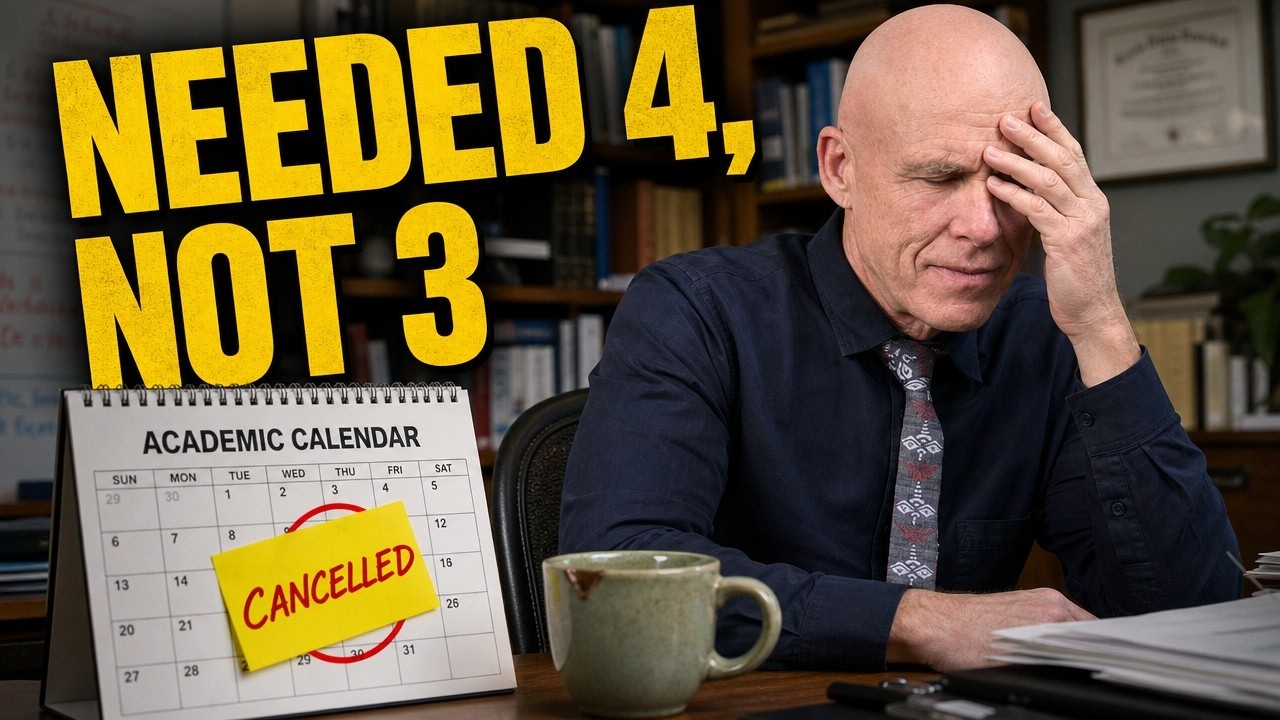
In this video, I want to talk about advice that I give you from someone who served on 300 or so dissertation committees. What advice would I give to people, and do I give to people starting out on the journey? One piece of advice I want to say that Read your graduate student handbook. In that handbook, there's all kinds of information that most people don't read. Really important things like dates. You have to enroll by this date, or you have to finish by this date, or in order to graduate, here's the date that everything has to be turned in by. I talked to somebody a month ago who called me and had some questions, and they missed the graduation date by one week. And what that meant is they had to stay in school for another semester and pay another semester's tuition. Had they known this ahead of time, what the dates were, they easily could have found and shrunk a week of that timeout so they could have turned it in on time and saved thousands of dollars, but also lots of time. So get and understand your manual. I think the next thing I would say is choose your dissertation committee wisely. Just because someone's an expert in a certain area doesn't mean they need to be on your committee. Because your goal is to have a committee that helps you finish. I've seen a number of cases where there have been people on committees who really don't like each other. And they've used the dissertation as basically a battlefield for their egos. And what that does, while maybe fascinating to watch, maybe not, it slows you down. Because they have their own agendas and they're fighting with each other. Now, I once knew someone who was working on their dissertation and had a husband and wife on the dissertation committee. Wonderful, until they decided to get divorced during the dissertation process. Those issues tended to bubble up during the meetings about the dissertation, during defenses, and during reviews. So you want to find a committee that can work together and whose goal is to help you One of the places I would be leery of getting advice is from your peers. They haven't been involved in a program any longer than you have in most cases. So everybody knows that this is the case. Those types of statements can be just myths that are passed around. Here's a myth on many college campuses that's not true, but it seems to permeate many campuses. Nothing to do with dissertations, But if you're in a classroom and the professor hasn't showed up, well, if it's an assistant professor, you only have to wait 10 minutes. And if it's an associate professor, you only have to wait 15 before you go. But if it's a full professor, you have to wait 20 minutes before you go. I have never seen anything like that written anywhere, but it's a myth that students seem to believe is true, and I've heard it at many campuses. Around the country. So clarify things. You're a good researcher. Someone who was working on their committee and they went to their chair and said, okay, I've got my 4 committee members, because they read their handbook. And the chair said, well, no, you only need 3. And they said, are you sure? He says, yeah, you only need 3. So they went to 3 committee members and they went to defense and the chair said, oh, I'm sorry, we can't defend because it turns out you need 4. So you want to confirm everything. It's just don't accept things blindly because this person lost a couple of months in the process of setting things up and then having to reset things up and find a new committee member or that initial one and get them back on. So know the handbook. Have a committee that is supportive of you. Dissertations are not a sprint. You can't write one overnight. You've got to sit down and spend time. Okay. There's an old book, How to Write a Dissertation in 15 Minutes a Day. Think you can do it in a reasonable time period in 15 minutes a day? But what that means is I got to sit down every day or just about every day, be working on my dissertation. That's what gets you through— perseverance. Understand also, if there's a template at your university, get it, use it, because that's what they want. If there's not, or if your chair has recently chaired another dissertation using a similar methodology, get that dissertation and read it because that's what's been accepted in the relatively near past. So you want to know that you're complying with things like that. A doctoral program, and in particular a dissertation, is a long and lonely journey. One of the things that I don't hear from people happens over and over again: I gotta make this perfect. It's got to go to my committee. It's got to be perfect. And they spend a lot of time getting a document to where it's perfect in their mind. The problem with perfect is you aren't the keeper of perfect. It's your committee who decides what goes forward. And if you haven't given it to your committee, you don't know what they're actually looking for because you're just toiling away alone and you can start to go off slightly different directions without knowing it and end up with a document that they wanted a different direction. So I encourage people to live by this motto: good enough is good enough. Get it to your chair and your committee when it's good enough. Get their comments. Then you can move towards what they are deeming as perfect. I don't think anything's ever perfect, but get it to where they think it's ready. But if you never get their input, if you never get them to say what direction they want, Then you're just kind of flailing and you don't really know. The doctoral candidates that stand out to me are the people who understand they've never done this before, that they want to move through as quickly as they can. Because one of the problems in doctoral education, especially in the U.S., is you take courses, there's a syllabus, there's due dates, there's a professor telling you, remember to turn this in, and then you transition to the dissertation. No due dates, no syllabus, and many times little guidance. So you can flounder. Well, if you don't know what you're doing, it's easy to just kind of do almost nothing sometimes. The people who think ahead, get advice, get support, get a coach, get someone who has been there before to help them, they move forward much, much faster than the people who wait for things to happen to them. It's the people who take as much control as possible— those are the ones who move forward much faster and finish. As always, BeyondPhD Coaching is out here to help you any way we can. Please contact us if we can help.