Why Should I Get a Doctorate Degree?
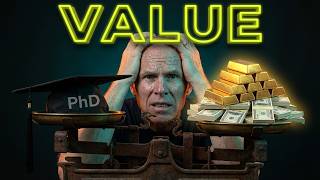
Dr. Steve Tippins, who has advised on over 300 dissertations, says pursue a doctorate only if it aligns with real goals like teaching or research, not to impress people. Programs often run longer than advertised, and completion is more about endurance than intelligence. A doctorate shifts how you think and gives you skills that transfer beyond academia.
Chapters
Why should you get a PhD or EDD or any kind of doctorate? Well, first of all, don't get one because you should get one. Go after and pursue and get one because it's what you want, because it's what you need to do for you and for your life. If you're going to get a PhD and I'm just going to use PhD as short for doctorate or impress people, there's easier ways to do this that going to take a lot less time and effort. A PhD can take years of your life, cost you thousands of dollars, get a lot of stress in your life. So there really should be a strong reason why you want to go do this. I'm Dr. Steve Tippins. I've sat on over 300 dissertation committees and helped hundreds of people complete their degrees. Today, I'm here to help you figure out why you should be getting a PhD and how to make it a journey full of meaning and not misery. I've heard it said that getting a doctorate is not a career move, it's a transformative journey. I've seen too many people enter PhD programs because they think, well, it's the next step, it's what I do next. And if next is so four to eight years and lots of hours, you know, giving up a lot of things, then maybe it is the next step. A PhD is something you commit to. It's not a quick certification or something like that. It's something you dedicate yourself and your life. Over the years, I've coached people who got into doctoral programs because they thought it would be cool to get a doctorate. But they stayed because they found it provided meaning to their life. They found direction to move forward. If you're considering a PhD or already in a program and looking for support, join our free dissertation help group at the link below. I've worked with a number of people who got into doctorate programs because a third grade teacher told them they'd never make it, that they're never going to graduate from high school. And they were trying to disprove this third grade teacher just as a spoiler alert. It's probably dead now, and you're probably not going to impress that third grade teacher. But if you're doing it for your own internal reasons, great. So let's talk about real reasons why people get doctorates. For many I want to teach, I want to inspire. I want to go back to my undergraduate institution and I want to help those kids who were like me. I want to pass knowledge on most schools now in order to get a position, you're going to need a doctorate. So yes, that can be a wonderful reason to get a doctorate. Another reason why people get involved in doctorates is to do research. And you're going to do a lot of research in a doctorate because that's part of a. A doctoral program is creating new knowledge. So you have to do research to do that. And if you want to be a researcher, whether it be in chemistry or in psychology, business, or whatever discipline your interest lies in learning, the skills of research are a big part of a doctoral program. So if that's your goal and that's your reason, yes, a doctorate can be great for you. One of the things I tell people frequently is getting a doctorate gets you to the table where discussions are had that you can't get to now. It gives you a degree of gravitas. So if you want to lead and make changes, perhaps a doctorate is the way to get there. And another reason why some people get doctorates is compensation and or jobs. For example, if you're a teacher and you want to become an administrator, having a doctorate gives you a leg up and can get you a promotion. But also in teaching in particular, you're paid on scales, on steps. And if you get the highest degree possible, you get to a higher step for pay. So it can be a reason to get there. However, if that's your sole reason, think about how much time and effort you're putting into the doctorate to get that step and how long you'll get that step. You may find out that, you know, working at a burger joint, flipping burgers might actually make you more money, but it's not going to give you the doctor at the end of your name. Those are some of the really good reasons to get a doctorate. What are some of the reasons that I've heard that might not be incredibly good reasons to get a doctorate? I want to impress my parents. Your parents are probably impressed with you already. Pretty much. The line I like is, all you had to do to impress me was to come home at the end of the day. That's the parent line, getting a doctorate. Now, yeah, your parents might be able to say, oh, my son's a doctor. But then they're going to have to say, well, yeah, he's not a surgeon, he's a doctor of English literature. But you're really not going to make people that much more impressed with you than they already are. Getting a doctorate is not going to guarantee you a job. It's going to get you into possibilities of future jobs. But it's not going to guarantee you a job. There's one caveat to that. If you have a job, for example, you're teaching at a university and they say in order to keep this job you have to get a doctorate. I've seen a few people say, well, you know, I really don't want know what I want to do with life. Or I'm not that certain about what's out there. I'll just go hide in a doctoral program for a while. That's a really expensive place to hide. It's also takes up a whole bunch of your effort and life and you really miss out a lot by hiding there. So getting a doctorate just because you don't know what else to do may not be one of the strongest reasons to go get a doctorate. So let's talk about what a doctorate, what the journey looks like. If you get the literature from just about any school, they will say something like, and you can graduate in three years or maybe four years. That's true, but most people take longer. It can take six, seven, eight years to finish. So understand that life comes along. Sometimes you have an advisor who leaves. I talked to a person this week who's been delayed on their dissertation because not one but two members of their committee have died while being on their committee. And then you have to go reformat the committee. I suggested that if I were a faculty member at her school, I wouldn't want to serve on her committee because it looks like serving on her committee may lead to death. But that can slow you down. So you get into a program, you're going to take some classes, then you're going to write a dissertation. Typically you don't get a lot of support, especially when you get to the dissertation, you don't get a lot of guidance. So there's a lot of wandering around trying to figure out what to do, how to move forward, where the best place to do your study is, what do I do with my study when I finish, how do I complete my study? Lots of things like this get in your way while in the process. Which means a three year program can be turned into a seven to nine year program. One of the things I tell students frequently is, look, getting a doctorate is not a measure of intelligence. It's a measure of endurance. In fact, in the United States, about 2% of the population has a doctorate. Interestingly, about 2% of the US population has completed a marathon. Now, it's not the same 2%. There's overlap, but what it means is people who can take on a Long term goal and stick with it are those that make it. Because remember, about half the people who enter doctoral programs never finish. Once you get to writing your dissertation in your doctoral program, you're going to find that this is a whole different type of writing. And you're also going to find that a lot of your friends don't understand it. They're going to ask you questions like, whoa, when are you going to finish? Or this is one of my favorites. You know, I wrote a paper on a weekend in graduate school. Why can't you finish this? Well, you know, quite honestly, they went to the library and copied a bunch of stuff and wrote a paper. You are creating something out of nothing and getting a group of strange people to agree that you can do this. This takes time. You're creating knowledge. Another challenge you're going to have is writing in the academic voice or academic writing. I like to think of it as a new language. There's you and I can talk, we can say lots of things to each other, have shorthand conversation. But in a dissertation, we have to explain everything. No steps, Ms. I've got to support everything with citations because somebody's going to read this later and they want to know exactly what's there. In fact, many times I equate writing your methodology section to a recipe. And if you've ever tried to cook something with a recipe and there's a step missing or an ingredient missing, it's incredibly frustrating. So you have to write your methodology in such a way that you explain and outline every single step in the order in which you're going to do it. So you complete a dissertation. What do you really get? Well, first you get letters at the end of your name. Hd, edd, something like that. You've learned a new way to think about things. In fact, getting a doctorate changes you. You look at the world differently. You're not so willing to accept someone just as well. This is the case. You're pretty often going to say, okay, why? How? Show me what's behind that. Give me the data to show that that's the case, as opposed to someone just saying, well, most people believe this. How do you know that? So it's going to change the way you think about the world and you're going to look at things more thoroughly. You're also going to develop a confidence that you can take on huge problems, huge projects, and accomplish them. You develop all kinds of new skills completing a doctorate. Some of those skills include time management, dealing with people, writing skills you could have to do, budgeting or getting grants. So there's lots of different skills that you take on and learn in a doctoral program. They're going to serve you well moving forward. Something else that happens is you make a contribution to the field. You add information to the pile on the topic that you've researched and it can outlive you. You've added to help the discipline move forward and that's a laudable goal. I've seen people think about research as like building a catheter cathedral, or you've added a stone and the cathedral will be built, but it may be built eventually after you die. You've added information to the pile about a specific topic and over time we begin to believe we know something about the area in which you've done your research. So you've contributed a stone to the cathedral of knowledge. I've dealt with people in the past who were in a doctoral program feeling like they couldn't make it. We've gotten them over that hump and all of a sudden they' lives have changed. They now have the confidence to go out and do things. They've started new programs, they've begun a non profit. They've taken on new and challenging opportunities because now they know they can do it. So why should you pursue a doctorate? You want to do research, you want to answer questions about the topic in which you're interested. You have the ability and are ready to take on independent work. It's not like a group project in undergraduate school where you all divide it up. Well, who was going to do what? You're going to do all of it, and you're going to do it on your own. So if you're ready for that challenge, great. Come on into the world of doctoral education. If you're doing this to make a contribution, fantastic. If you're doing it for validation, therapy is probably a less expensive route to go. I talk to too many people who are getting a doctorate and I say, okay, why? What's the doctorate going to do? Do for you? If you have a good idea as to where you want to go, what the doctorate will do for you, great, come on in. However, one morning you may change that during the process, which is fine. Getting more information is great, but knowing where you want to go at the start is helpful. There's an old saying, if you don't know where you're going, take any road, it'll get you there. So if you're thinking about getting a doctorate, or if you're stuck along the way, join our free dissertation help group to be supported by everyone involved. Free assets available to help you. You just click the link below and we'd love to be helping you and working with you.










