Your Academic CV Is Killing Your Job Prospects
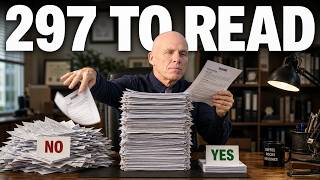
Dr. Steve Tippins, an academic with 35 years of experience, explains why PhDs don't land jobs: their CVs fail to show credibility, fit, and momentum to hiring committees. Your CV is an argument, not a record. Tailor it to each institution, emphasize what matters to them, and keep it honest about gaps.
Chapters
Most Ph.D.s don't fail because they're not qualified. They fail because their CV doesn't communicate to the hiring committee what they're looking for and how they fill their needs. In this video, I'm going to walk you through how to structure a PhD CV that clearly presents credibility, fit, and readiness. And this is whether you're applying for academic roles, adjunct roles, or research positions. I'm Dr. Steve Tippins, Ph.D. I've worked in academia for 35 years. I've earned tenure twice. I've served on multiple hiring committees as well as other internal committees at several universities. I've seen the career path or the hiring path from both sides of this, and I'm here to hopefully help you make smart and realistic decisions about moving forward with your academic career. Your CV is not just a record of what you've done. It's an argument as to why you have the qualifications to fill the position that you're after. Members of a search committee use your CV to answer a few questions. Does this person have the background that we're looking for? Does this person have the interest in the area we are looking for? Does this person show evidence of what we might call momentum? And seriousness—code for track record in research that we think will continue. A strong CV answers those questions. A weak CV, even for a strong candidate, puts questions into the committee's head—more of them. So the CV, or curriculum vitae, is the standard for academic jobs, research jobs, grant applications, as well as fellowship and postdoc positions. So what's the difference between a CV and a resume? Well, a resume is more of a summary and it's concise, whereas a CV is comprehensive and cumulative. In a resume, we market skills. A CV documents scholarly contributions. Some people say your resume shouldn't be more than a page or much more than a page. CVs can go 10, 20, or more pages when we're listing our accomplishments. I like to think of a CV not as a marketing document but more of a living archive of what I've accomplished in my academic career. So most CVs have specific sections. There can be a little different order to these, but in this case I'm going to talk about, you could say, the introduction or Who are you? My name, my address, perhaps, well, my email address, all the ways that people can contact me. What you don't put in there: your picture, your, you know, your personal details. Some of these are illegal in the United States to be asked for. And other non-professional links. You don't want to be telling them, well, actually, I know of a situation where someone was gonna be hired and they had in their CV something about being a professional barbecue and they go to barbecue competitions. And then that brought up more questions that they then realized they couldn't hire this person 'cause of the time off they needed to go to the barbecue competitions where checks can be as high as $30,000 to $50,000. So I get it if that's their interest, but putting it there actually stopped them from being hired for a job that they could have handled without taking time away from the school, but by putting it in there, they lost the job. Education. Where'd you get your degree from? We usually start with your most recent degree. Well, assuming your Steve Tippins Ph.D. was your most recent degree, we could phrase that as most important to academia and list your degree, your institution. Many times we list the title of our dissertation, and in some cases we list the name of our chair, because a lot of people study under a certain person because of their name within the industry. So if someone's perusing your CV and says, "Oh, studied with Dr. X, okay," then that gives an impression to them, and you get to ride, hopefully, in on their coattails. It's not uncommon for committees to just look at dissertation titles to see if you really are a fit to who they are and what they're looking for. The next thing we want to look at is your academic appointments or jobs within academia. What was the name of the institution? What level were you hired? Instructor, assistant professor, associate professor, or professor? You know, and let's say you've been at an institution for a while. You can say hired as an assistant professor for a certain time period and then associate professor, so it shows the progression of your career at that institution. If it's not obvious, you can also put a brief description of your responsibilities. This can be good, and you— for if you're applying for jobs and they say, "We want someone who can handle a specific thing," and you've taught that specific thing, then by all means you can include that in your CV, which can make you a stronger candidate. The currency of academia is publications, so the next thing you want to include is publications, your list of publications that you have completed. If you haven't completed publications, then you want to look at a work under review or work that has been accepted but not yet published, just to show people that you have the track record they're looking for, and, you know, you want to use a citation system of your— within your CV that ultimately allows people to go find you. And if you have changed your name in the process, you might want to highlight that. I got married, took a different name, and I've published 4 times here, and under my previous name, I published 297 times here. So you get to show them that it— you just didn't appear out of nowhere and that you have a continuing process. And continuing is what schools like. They don't want to hire someone who has published and never intends to publish again because they need your publications for their accreditation. So you show them you have an ongoing and continuing research agenda. You'll also see people list presentations at conferences, and some conferences in some fields are more prestigious than others. So you'll typically see the name of the paper or your role at the conference where you were discussant, where you were reviewer, did you present 3 papers at this conference. You just show them again, who you are and that you have an interest and an involvement in research. And just going back to the publications, always start with your peer-reviewed publications. If you have a deep and abiding interest in collecting Beanie Babies and there's a— you've published 14 articles on collecting Beanie Babies, and yet you have a degree in chemistry, don't put those in there. They're not going to help you in any way, so keep those out. It You can be happy doing that or anything else, but they are interested in your academic potential contributions for them. If you've earned grants or honors or awards—Teacher of the Year, Researcher of the Year—I've gotten grants that have totaled thousands of dollars. This is all great information for them. Schools love people who can get grants because schools get overhead money on those grants, and it helps them meet their financial goals. So if you show that you've got a track record of bringing money in, they want to know it. If you have awards, they want to know it. They want to know that, oh yeah, other people have, you know, said this person's really qualified at— and that's important for them to know. Teaching is important. So we want to say your teaching experience, what courses you've taught, what level of courses you've taught. —what courses you have developed from scratch, because they may want you to develop certain courses, and knowing you've been through that is good for them so that they can hire you with more ease. You might want to group these courses by institution if you've been at several institutions. That way it can be less confusing to the people reviewing your CV. And just remember, if you're looking for help communicating your academic prowess within a CV, Click the link below to join our Scholar Career Network. Following your teaching accomplishments, service, the third major component to academia— teaching, research, and service— you want to put in you've done service because they're going to require you to do service, and if your service has always been the committee that no one has ever met on— when I was in graduate school, I was appointed to the golf course committee. The university happened to own a golf course. And I was on that committee for 2 years and it never met. And the only way I found out that my dissertation chair was also on the committee was when I showed him a copy of my CV that I was planning to use and I put it on there. And he said, "Oh my God, you're on that committee too. This is a great committee because it never meets." Yes, it is once you're inside the institution, but they want to know that you're actively involved in the service of your university where you've been at, and that you'll continue this. And just as an aside, being on the golf course committee did not get me free golf. Professional affiliations are also important to list. What associations are you in? Have you had leadership roles or served on committees there? Again, you're getting your name out, and the institution with which you're affiliated gets out along with it. So if you are the secretary of the Association of Beanie Baby Scholars— I don't think that exists— but if you are and it's important to your academic field, then that's important to list. So let's go on to length. I said at the beginning these could be 10, 20 pages or more. Obviously, early in your career, you aren't going to have 22 or 30 publications to list or 12 presentations at conferences, so it will be shorter. But as you go deeper into your career, it's going to be very easy to exceed 10 pages, and just don't worry about it, especially today where everything's electronic. There is no page limit, but we don't want to just put there things there to get more pages. So you can think of every listing in your CV needs to earn its way there. So it's earning its way to support you. So in formatting, you know, make sure it's clean. I would use at least an 11-point, maybe a 12-point font and a common Times New Roman or something like that that's easy for people to read because you can make it look really pretty from a distance, but when people actually have to sit there and read them and think about the reader, They're going to be looking at 297 of these. So you don't want yours to be hard to read. Don't include graphics or pictures or things like that. Give them what they are expecting. You do this with really nice headings for each section because many times, again, let's go back to that member of the hiring committee who has that 297 to look for. They might use their own shorthand of saying, let me look at this section. Let me look at this section. You want them to be easy for them to find, easy for them to understand who you are, easy for them to recommend you move forward in the hiring process. If you want a strong CV, make sure you present it chronologically in order. And if there are gaps, don't just try to pad. Well, yeah, I was there for an extra 6 years. Or something like that. You can explain gaps in a cover letter or something, but don't try to just fudge things. You're dealing with intelligent people. They'll figure it out. So be honest and upfront. When we have headings or titles for sections, just be clear and concise. Don't try to come up with a cool name because you think it's fun. It's just going to be confusing, and more often than not, they're not going to like it. Because you've slowed them down in the process. Again, always think back to the person in the room looking at 297 of these. How do you make their job easier? And by easier, I mean, how do you make it easier to move you forward into the next select group? Because I guess the easiest would be to just not apply. Then they wouldn't have to look at yours. Life changes. Things happen. You want to look at your CV every 3 months, every 6 months, something like that, and see, you know, do things need to be updated? Have I— am I now serving on a new committee? Have I got a new publication or 3 new publications? Am I working at a new conference, or am I presenting or discussant or something like that? Or have I got a new title in my job? Update these things because you're applying for jobs now, not 6 months ago. Typically, we don't rewrite our entire CV for each job application. Now, remember, if you get mid-career and later, if you've got an 18-page CV, that gets to be quite a task to rewrite it. However, when you find a job that you're interested in and they want an emphasis in a certain area, it's okay to move sections around. Maybe that's easy, or even add to, like, courses you've taught or things like that so that your CV can be a little more tailored to what they're looking for. You know, in one school of thought, if you're applying to an institution that's a research institution, move your publications forward. If you're applying to a school that's a teaching institution, move your publications further down and bring the teaching to the forefront. It's just putting the emphasis where the school is looking. Your CV is not for impressing everyone. It's about making the right things visible to the right people. A well-done and strong CV communicates to the committee that's hiring that this person understands academia and should be here. If you're looking for support on your academic journey, click the link to join our free Scholar Support Network.










