In this instructional video, Dr. Steve Tippins, Ph.D., draws on 35 years of academic experience and service on over 300 dissertation committees to address the high dropout rate among doctoral students caused by writing challenges. He presents seven concrete strategies to help dissertation writers produce more, write faster, and finish their projects. The first strategy emphasizes scheduling dedicated writing time, treating writing like a financial priority that must be saved first. The second encourages freewriting or journaling—simply writing anything to break the blank‑page barrier. The third recommends using dictation software to capture thoughts at the speed of the mind, avoiding the bottleneck of typing. The fourth advises setting small, achievable writing goals (e.g., a paragraph or a section) to build momentum. The fifth highlights the importance of accountability through writing groups or peers who understand dissertation work, rather than casual friends. The sixth suggests switching to a different chapter or section when stuck, keeping overall progress moving. The final point urges writers to abandon perfectionism, view early drafts as rough prototypes, and rely on committee feedback to refine the work. Throughout, Dr. Tippins uses personal anecdotes and practical analogies to illustrate each point, aiming to reduce guilt, increase productivity, and ultimately help doctoral candidates complete their dissertations.
Chapters
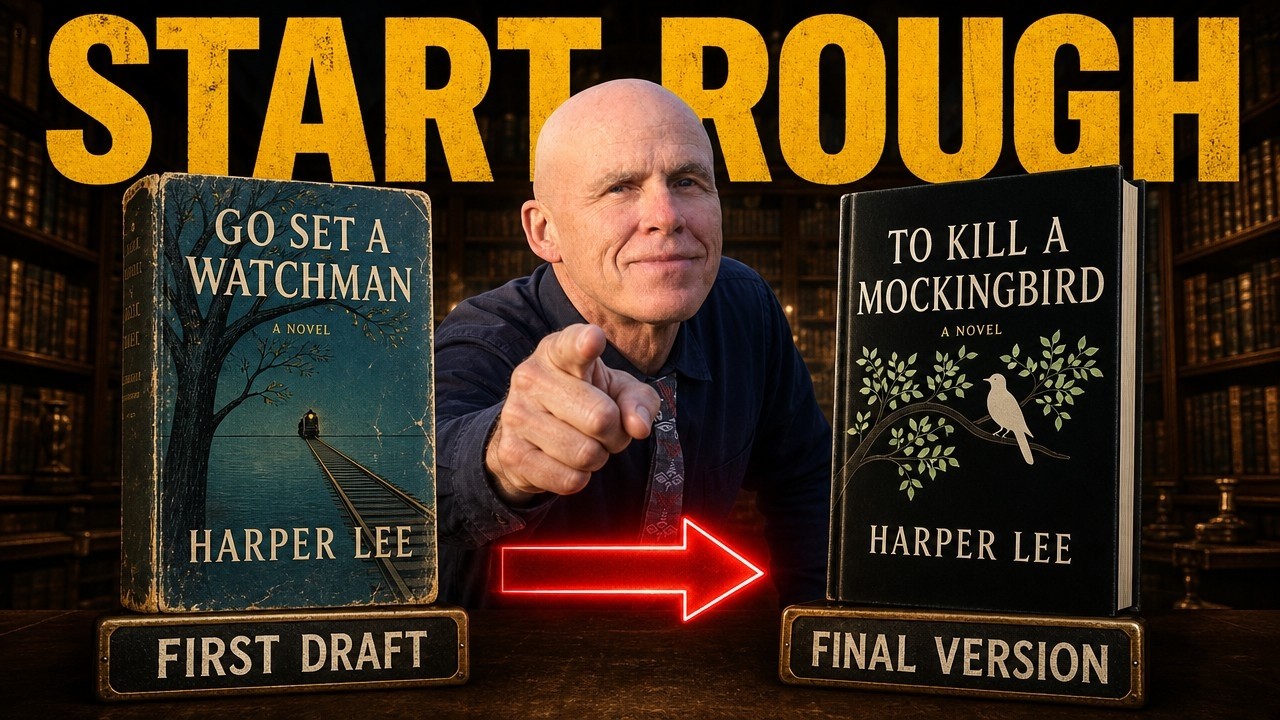
50% of doctoral students never finish their dissertation. And writing challenges are some of the top reasons for dropping out. I'm Dr. Steve Tippins, Ph.D., and I've been in academia for 35 years, and I've served on over 300 dissertation committees. In this video, I'll walk you through 7 things that I have found to be helpful in writing more, writing faster, and finishing dissertations. So, the first point I want to make is time. Set up a dedicated time. That means schedule it. You know, when people in financial planning talk about saving money, they say, you know, save first, don't save at the end of the month because we end up with more month than we have money. Well, write first. Block that time off so that you know, I'm gonna be writing for these 2 hours every day. And it could be, you know, in the morning or in the evening, or it could vary by time of day, but make sure you block that off so it's there. And when you look at your schedule, you know, I'm going to write, as opposed to, you know, tomorrow I'm gonna, I'm gonna write. And when tomorrow happens, like, oh yeah, well, I've got to do this and now I've got to take the kids there. Oh, this has come up at work. And now it's 11 o'clock at night and you haven't written. Block it off. This way you won't feel guilty and you will make progress writing. The second thing I want to say And some people call this journaling. Some people call it just start writing anything. You know, when you get to your writing, just write, whether it is a word, whether it's anthropomorphism, whether it's anything, just start writing something. And eventually you will turn into writing what your topic is about or what you need to be writing for that day. So get started on this. Now, the third point that I want to make is a lot of people do measuring of how many words they've written. Well, for me in particular, I don't type that fast. I mean, I can get going typing, but my mind works a lot faster than my fingers do. And that can be a problem because I'm typing along and it's, oh, I got to get this in. And then I forget this or I forget what I was writing. So I've got gaps that I've got to go back and fill in. For me, I have found that dictating, especially because there's great software out there, that takes your dictation— many of you will be using this for your research— but turn it into words with high degrees of accuracy, like 98% or so. If I can dictate, then I can keep up with my mind, and I don't get frustrated in the manualness of my typing. And that, to me, is really important. So dictate, things. And you can also find, like, if I'm driving, I can dictate an idea that just comes to me. I can dictate that so I don't have to, you know, just remember it. Years and years ago, I was out for a run and found an apartment that I liked, but I was like a mile and a half from home and I didn't have anything to write. So for a mile and a half, I repeated the phone number over and over again. I didn't have my phone with me or anything like that, so I just kept repeating that phone number. Now I could have gone home, gotten in the car, and driven back. I'm amazed now that I can't remember it anymore. But by dictating things, it's there for you. And because it puts it into a document now, that's amazing for you. And it can really help a lot of people move forward with their writing. When you sit down to write, I like having a small goal. I'm going to write this paragraph or this section. I'm not going to write Chapter 2 in one sitting. I mean, that's 30 to 40 or more pages, and that can be daunting. But if I can say, I'm going to write the introduction, well, that's great. And once I get going, a little success engenders more success. I many times keep going. Okay, I've got the introduction done. Great. I'm on a roll. I'm going to keep going to my next area. I'm going to write about my theoretical framework. I'm going to write about, you know, whatever is next. So by starting and planning on a small thing, it's a lot easier than saying, I'm going to write 42 pages right now, because you probably aren't going to do that in one sitting anyways. So the idea of setting yourself up for success versus setting yourself up for failure is really important. Another point that I have found is accountability. It's really hard on your own to just keep going many times, and these are long and lonely journeys with writing a dissertation and being involved in a doctoral program. So having writing groups, having someone who asks you, "What have you gotten done? What are you going to get done?" This is really important, but I find it really, really helpful if it's someone who understands what you're doing, as opposed to your neighbor or friend who says something like, "Well, come "Come on, keep writing. When I was in school, I wrote a paper in a weekend or a night. You can do this." And they don't understand what a dissertation is. They don't understand about creating knowledge. They, yeah, they went to the library or went online and pretty much copied stuff, and they got a paper done. But you're creating knowledge where no knowledge existed before, so they don't understand that. But if you have accountability with someone or a group that does understand that, that can be highly beneficial in moving forward. If you're writing and you come to a problem and you just can't solve it or you can't move forward on it, write another section. Write for something else. You're gonna have to write the entire document. And there's, especially if there's a template involved with your school, you're gonna know, oh, this needs to be in chapter 3 and I've gotta have the problem and the purpose, which I wrote in chapter 1 already. I'm gonna move those over there and make some progress., and it's really good making progress. The final point I'm going to talk about is perfection. A lot of people say, well, go look at an existing dissertation, you know, something that's been written recently. Yeah, that's something that's been through multiple iterations, multiple eyes from your committee, and has been approved. You're probably not going to write at that level of clarity when you're first sitting down. In fact, give up the notion that you are gonna write like that the first time because you aren't the keeper of perfection. You are writing to start. You're writing to get good enough to then get input from others so you can see what direction they want you to go into because this is the first time you've ever written a dissertation, most likely. So why would you know what perfect is? It's your committee that's gonna give you perfect. Now, just as an example, one of the classic novels of the 20th century is To Kill a Mockingbird and Harper Lee. And the first drafts of that were not that good, but had an editor who worked with them and supported Harper Lee to move forward. And the first book wasn't even published. So the original book that was then fleshed out, Go Set a Watchman, I think might be the title, is not the book that To Kill a Mockingbird is. You can see hints of it in there and where some of the ideas came from. Well, you're gonna start with your Go Set a Watchman and you're gonna end up with your To Kill a Mockingbird. Don't try to write To Kill a Mockingbird the first time. And remember, very few people like to write, but everybody likes to have written. And there's another phrase, my house never got so clean as when I had to write. Well, yes, but if you schedule things, if you try for little successes, if you understand the tricks like dictating to yourself, if you understand accountability, your house may not be as clean, but you will finish.