Connecticut nonprofits must register with the state to fundraise, even if they have federal 501(c) status. Registration requires an IRS determination letter, Form 990, and a $50 fee; annual renewal is due 11 months after fiscal year end with no extensions. Religious organizations, schools, and nonprofits raising under $50,000 without paid fundraisers can claim exemption.
Chapters
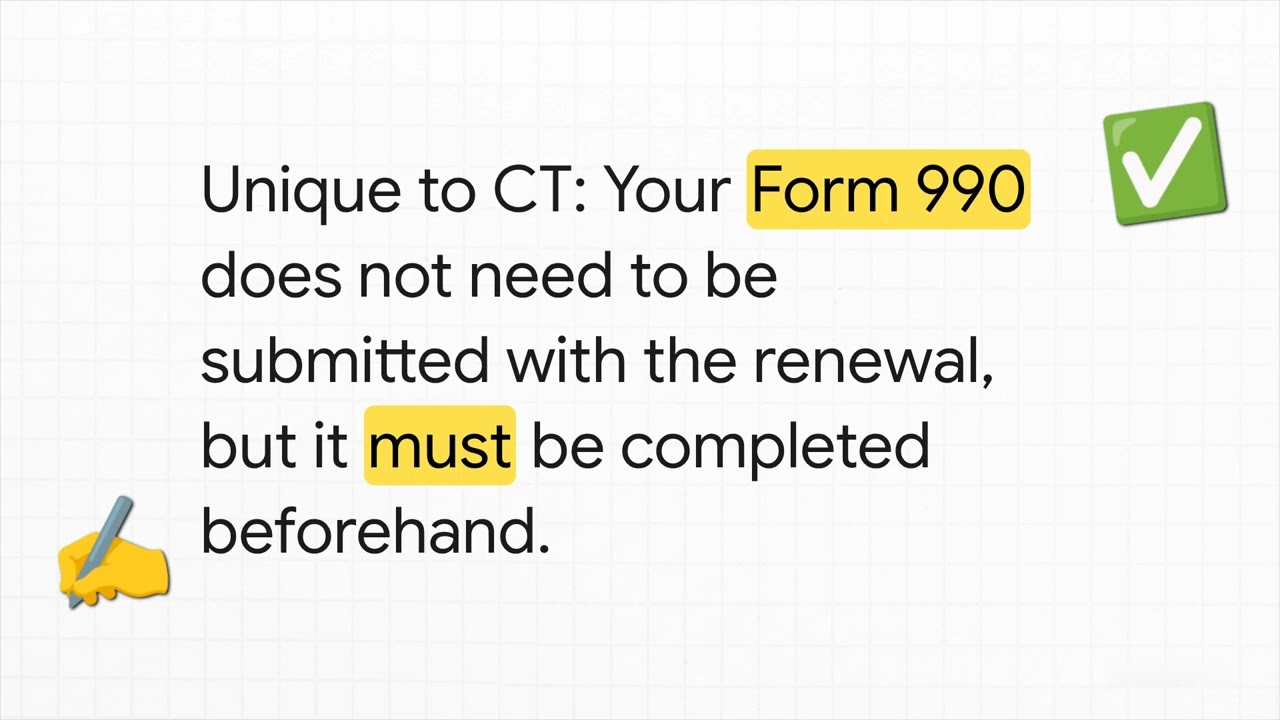
Hello and welcome! If you're a part of a nonprofit that's fundraising in Connecticut, you've probably asked yourself if your federal tax-exempt status is all you need. Well, in this explainer, we're going to dive into Connecticut's specific charitable registration rules so you can be sure you're doing everything by the book. This explainer is part of our multi-state fundraising compliance series, and it's brought to you by Ironwood Registrations, where we try to make these complex topics a lot more practical and easy to understand. Alright, let's start with a really common—and kinda risky—assumption that a lot of nonprofits make. They get their federal tax-exempt status from the IRS, and they figure, "Great, we're clear to fundraise anywhere!" But you know what? That's not exactly how it works. So, is that 501 status really the golden ticket to fundraise in any state you want? The short answer is a definite no. The reality is, most states—and that includes Connecticut—have their very own rules and registration requirements for charitable fundraising. You can think of it like this: your federal status is one layer of approval, but state oversight is a whole other requirement you have to meet. So if your nonprofit wants to ask for donations from people in Connecticut, you'll almost certainly need to register with the state before you even begin. Let's walk through what that actually means for you. So let's get into the specifics. Who exactly is in charge of these rules in Connecticut, and who has to follow them? We're about to break down the who, what, and where of the state's registration requirements. The main regulator you need to know about in Connecticut is the Department of Consumer Protection. More specifically, it's their Public Charities Unit. This is the office that keeps an eye on any charity asking for donations from Connecticut residents and manages the state's official registry. So, who actually has to register? Well, the net is cast pretty wide. It applies if your organization is physically based in Connecticut and asking for money, of course. But it also applies if you're located in another state but you're soliciting donations from people in Connecticut. This also covers online campaigns that reach donors in the state and anytime you use professional fundraisers. And solicitation is a really broad term. It's not just about going door-to-door anymore. It covers pretty much everything: online donation pages, email campaigns, direct mail, asking for support on social media, and even fundraising events. The key takeaway here is that you don't need to have a physical office in Connecticut for these rules to apply to you. Okay, so you've figured out that you do need to register. What does that process actually look like? Let's get into the practical steps getting your initial registration done and, just as important, how to handle the annual renewal to stay compliant. For your initial registration, you'll need to submit a filing to the Department of Consumer Protection. Good news is you can do this either online or by mail. You'll usually have to include your IRS determination letter, your most recent Form 990 if you filed one, and a list of your officers and directors. And just a heads up, larger organizations might also need to provide audited financial statements. And what about the fee for this initial filing? It's nice and simple, just a flat $50. Now, once you're registered, staying compliant is everything. Your annual renewal is due 11 months after your fiscal year ends. You really need to get this date on your calendar because the deadline is based on when the state gets the filing, not when you put it in the mail. And this brings us to a really interesting quirk in Connecticut's process. Unlike a lot of other states, you don't actually send in your IRS Form 990 with your renewal. But, and this is super important, you must have the 990 completed before you can submit your state renewal. And you should know the state is very strict about this. There are no extensions available for that renewal deadline. If you file late, your organization is gonna get hit with monthly penalties. So staying on top of that date is absolutely critical. Of course, not every single organization has to go through this whole process. There are certain types of nonprofits that might actually qualify for an exemption from registering. Let's see if your organization fits into one of these special cases. So, the most common exemptions are for religious organizations, educational institutions like schools and universities, nonprofit hospitals, and government entities. These kinds of organizations typically don't have to register. There's also an exemption based on how much you raise. Organizations that normally bring in less than $50,000 a year in contributions might qualify. But there's a big catch—they can't pay anyone whose main job is to fundraise for them. Now, this is probably the most important thing to remember about exemptions: they are not automatic. You can't just assume you're exempt and do nothing. In Connecticut, you have to proactively file a "claim of exemption" on Form CPC-54 to make it official. Alright, let's zoom out for a second. In today's digital world, fundraising isn't usually confined to just one state. And that brings us to the bigger picture of multi-state compliance and how your online activities can affect your obligations. You know, thanks to things like online donation platforms and social media, fundraising is pretty much a national activity for a lot of nonprofits now. And that means you have to think about registration rules not just where your office is, but in every single state where you ask for donations. At the end of the day, it's the location of your donors that really matters. Connecticut is pretty reasonable about this. An organization that's based somewhere else probably doesn't need to register just because it has a website with a donate button. But if that same organization starts to actively target Connecticut residents with its fundraising campaigns, that's when registration becomes a requirement. Ultimately, what Connecticut's rules are trying to do is promote transparency and accountability. Taking the time to really understand where you need to register, whether it's in Connecticut or any other state, is a huge part of protecting your organization's reputation and keeping that trust with the public. And that really leaves us with one final question for you to think about. As you go about your important work, just take a moment and ask yourself, is our fundraising truly compliant in every state where we connect with our donors? If your organization needs a hand navigating all the complexities of charitable registrations, whether in Connecticut or across the country, the team at Ironwood Ironwood Registrations is there to help. You can learn more at ironwoodregistrations.com. Thanks so much for watching.