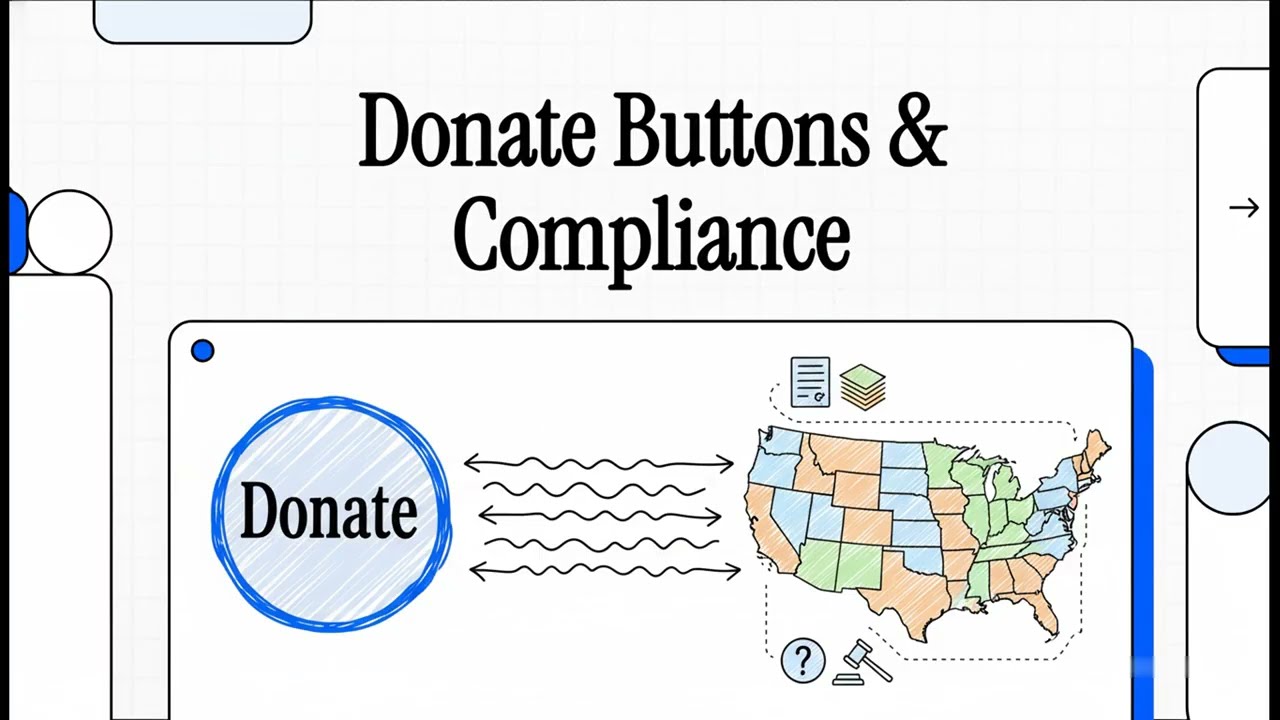
Ironwood Registrations explains when a nonprofit's donate button triggers multistate registration requirements. The Charleston Principles distinguish passive websites from active solicitation like targeted ads or national email campaigns. Four triggers warrant a compliance review: consistent donations from new states, digital ad campaigns, expanded email outreach, and large national initiatives.
Chapters
Hello and welcome! Today we're gonna dive into a question that, honestly, affects pretty much every nonprofit with a website: When does that simple "Donate" button actually trigger the need for multistate registration? It seems so straightforward, but the compliance side has some really important details you need to know. This educational explainer video is brought to you by Ironwood Registrations. It's all about breaking down these complex compliance topics into practical, easy-to-understand terms for nonprofit leaders like you. You've seen this button a million times, right? It's on just about every nonprofit website. Because it's a simple, super effective way to fundraise. And because it's so common, a lot of organizations just assume it doesn't really affect their compliance obligations. But you know what? That assumption can be pretty risky. So, to really get to the bottom of this, we're going to walk through 5 key areas. We'll kick things off with the donate button itself. Then we'll define what a "solicitation" legally is. After that, we'll look at a guiding framework called the Charleston Principles, pinpoint the key moments to evaluate registration, and finally, we'll talk about proactive compliance planning. Okay, let's jump right in! While these buttons are incredibly easy to set up, they instantly open your nonprofit to a national audience. And that national reach? Well, that comes with a whole web of state-specific legal requirements that many organizations just overlook. And that really brings us to the core question here. From a technical point of view, it's just a button. But from a legal one, can it be considered a charitable solicitation? The answer, as we're about to see, depends on how your fundraising is done. Because state regulators have a very specific view on this. So to understand the rules, we first have to understand the language the regulators use. Let's break down exactly what they mean by the term "charitable solicitation." At its most basic level, a charitable solicitation is simply the act of asking the public for a donation for a charitable cause. It's a really broad definition, and frankly, that's intentional. It's designed to cover a whole range of activities. And that broad definition is absolutely key. Solicitations aren't just about mail or phone calls anymore. They include email appeals, social media campaigns, and yep, the very website donation pages we're talking about today. If your website invites visitors to support you financially, it can be seen as a form of solicitation. Now, what's really interesting here is that regulators recognized that the internet created a bit of a gray area. So they actually came together to develop a set of guidelines which are known as the Charleston Principles to help organizations navigate this exact issue. The key thing to get from these guidelines is the difference between a passive and an active presence. Think of it this way: a passive presence is like having a sign on your door. Anyone can walk by and decide to come in. But an active presence is like sending out specific invitations. When you start targeting donors, whether it's through digital ads aimed at a specific state or by receiving repeated significant contributions from one area, that's when regulators view your activities as direct solicitation in that state. All right, let's shift to the practical side of things and see how this builds into an action plan. Knowing the principles is one thing, but knowing when to act is what really matters. There are specific triggers that should signal to you that it's time for a compliance review. Here are 4 major triggers to watch for: If you start getting consistent donations from a new state, that's a flag. If you launch a targeted digital ad campaign, expand your email or social media fundraising to a national audience, or kick off a big national initiative, these are all moments when you should pause and assess your registration obligations. So, the crucial point here is to move from being reactive to being proactive. Instead of waiting for a problem to pop up, the goal is to build compliance planning directly into your fundraising strategy as you grow. So, what does that proactive planning look like in practice? Well, it's a simple, ongoing cycle. You periodically monitor your campaigns. You regularly track where your donors are located. You review registration requirements as your reach expands. And of course, you maintain organized and timely filings where you are registered. This approach aligns your compliance efforts directly with your fundraising activities. Ultimately, it all comes down to this: that donate button is a powerful tool for growth. By understanding how it's viewed by regulators, you can build a smart fundraising strategy that lets you expand your donor base confidently and, importantly, in full compliance. So, we'll leave you with this one final thought. As your fundraising ambitions grow and your reach expands nationally, take a moment to ask, "Is our compliance strategy really keeping pace?"