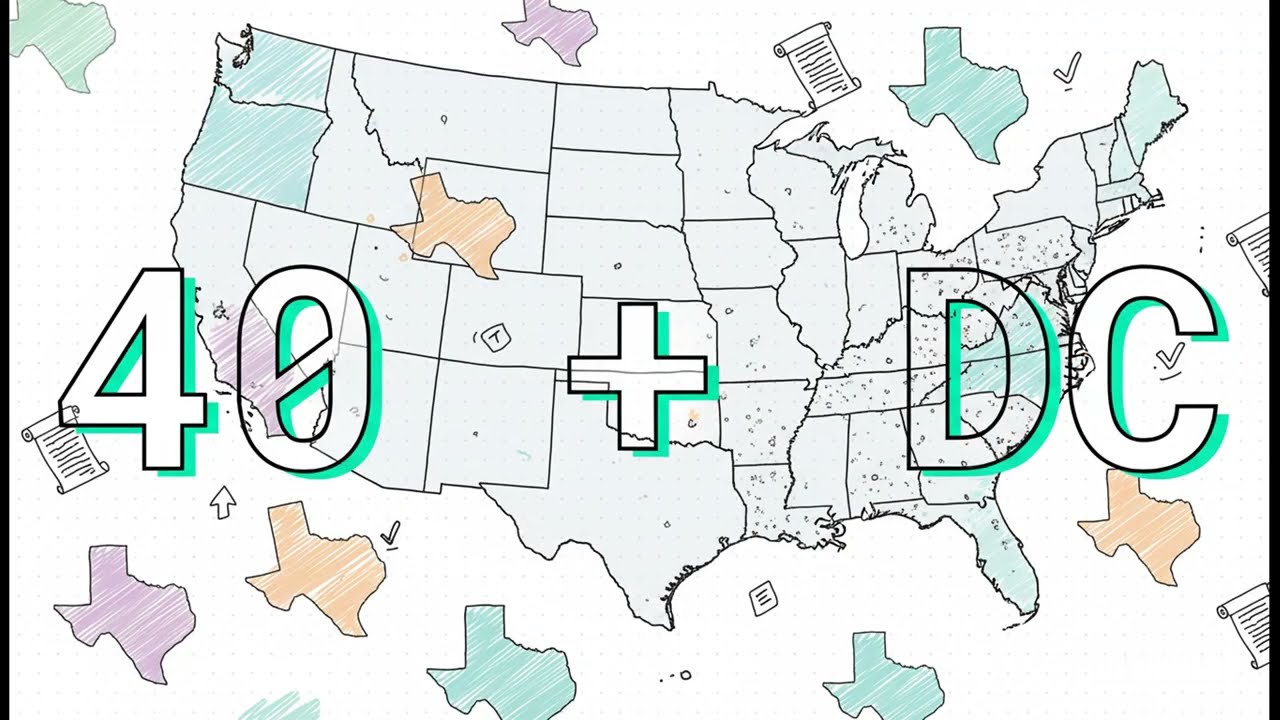
Steve Urich explains that 40 states plus D.C. require nonprofits to register before fundraising, while about ten states like Delaware and Montana have no charitable solicitation registration laws. Each state sets its own rules, fees, and deadlines, so nonprofits need to audit where their donors are located and review exemptions to stay compliant.
Chapters
Alright, if you're part of a growing nonprofit, you've probably had this thought cross your mind: Do we really need to register in every single state we fundraise in? Well, it's a great question, and the answer might surprise you. Today, we're gonna break it all down. And hey, before we get started, I just wanna give a quick shoutout to our friends at Ironwood Registrations. They've made this whole explainer possible. They're real experts in this area, so we're super grateful for their support in bringing this to you. So, let's start with a fact that catches a lot of folks off guard. When it comes to fundraising, there isn't one big federal law that covers everything. Nope! It's actually regulated by each individual state. So, what does that mean for you? Well, if you're fundraising across the country, you're not dealing with one rulebook—you're dealing with a whole patchwork of different regulations. Which, of course, leads us to the big question, right? How many states actually require you to register for charitable solicitation? Is this just a thing in a few places, or are we talking about most of the country? Get ready for this—the answer is 40 states. 40! Plus Washington, D.C. That's—yeah, that's a lot. So, if you're fundraising on a national scale, you're absolutely navigating a really complex web of rules across most of the U.S. Okay, so why? Why do so many states have these laws on the books? What's the point of all this regulation? Let's dig into that. It really comes down to 3 main goals. First, protecting donors from any kind of fraud. Second, promoting financial transparency—you know, making sure it's clear where the money is going. And third, it gives states a way to monitor the charities that are operating there. At the end of the day, it's all about building and keeping that public trust. Alright, so we've got the number—40 states, plus D.C. Let's look at some examples to see what this looks like in the real world. You've got some of the big ones you'd expect, right? States like California, New York, Florida, Illinois—the list goes on. And each one has its own unique process, which is is usually managed by an agency like the Attorney General's Office or the Secretary of State. Now, if 40 states do require it, that obviously means there are a few that don't. So, let's flip the coin and look at the exceptions. Okay, so here they are. You have states like Delaware, Idaho, Montana—10 in total. But, and this is a really big but, just because they don't have a specific charity registration law doesn't mean it's a free-for-all. But, general consumer protection and anti-fraud laws are still very much in effect, so you're definitely not off the hook. And this is where things can get, well, really complicated. Since every state is making up its own rules, the compliance landscape for a nonprofit working in multiple states can become a maze, fast. Just think about it like this. Let's say State A needs you to fill out their specific forms, pay a certain fee, and have it all in by May 15th. Simple enough. But then you look at State B and, oh, they use completely different forms. The fee structure is different, and their deadline is December 31st. Now, just imagine juggling that, but for 40 different jurisdictions. You can see how this becomes a massive task. So what does this mean for you? If your nonprofit is growing and fundraising in more than one state, what should be on your radar? Let's walk through the key things to consider. This is where you have to do a little internal audit. Ask yourself, where specifically are our solicitations going? Where do our donors actually live? That "Donate Now" button on your website, is that basically an open invitation to the whole country? And what about specific campaigns, are you targeting people in certain states? Answering these questions honestly is what points you toward where you need to register. You know, there's a saying that sums this up perfectly: as organizations expand their fundraising programs, registration obligations may expand as well. It's a direct relationship. The more successful you are at fundraising, the bigger your compliance workload gets. It's just a natural part of growth. Okay, so is your head spinning a little? That's totally normal. The key is not to get buried by it, but to get out ahead of it. And the best way to do that is by being proactive, by doing regular compliance reviews. So what does a good review look like? Well, it's pretty straightforward. First, you map out all the states where you're fundraising. Then you look into whether any exemptions might apply to you because they do exist, but they're different everywhere. You also have to keep an eye on your donor data over time to see where your support is coming from. That's what's gonna tell you where you might need to register next. Look, the bottom line is this: if you're going to fundraise in multiple states, you've gotta stay on top of these rules. This isn't just about avoiding penalties or fines; it's about protecting your organization's good name and making sure nothing gets in the way of your mission's growth. So the next time your organization celebrates a big fundraising win—and I hope that's soon— Just take a second to ask this one simple question: Are our compliance efforts keeping up with our success? It's something to think about. Thanks so much for tuning in.