Steve Kerr Press Conference on Re-Signing with the Warriors

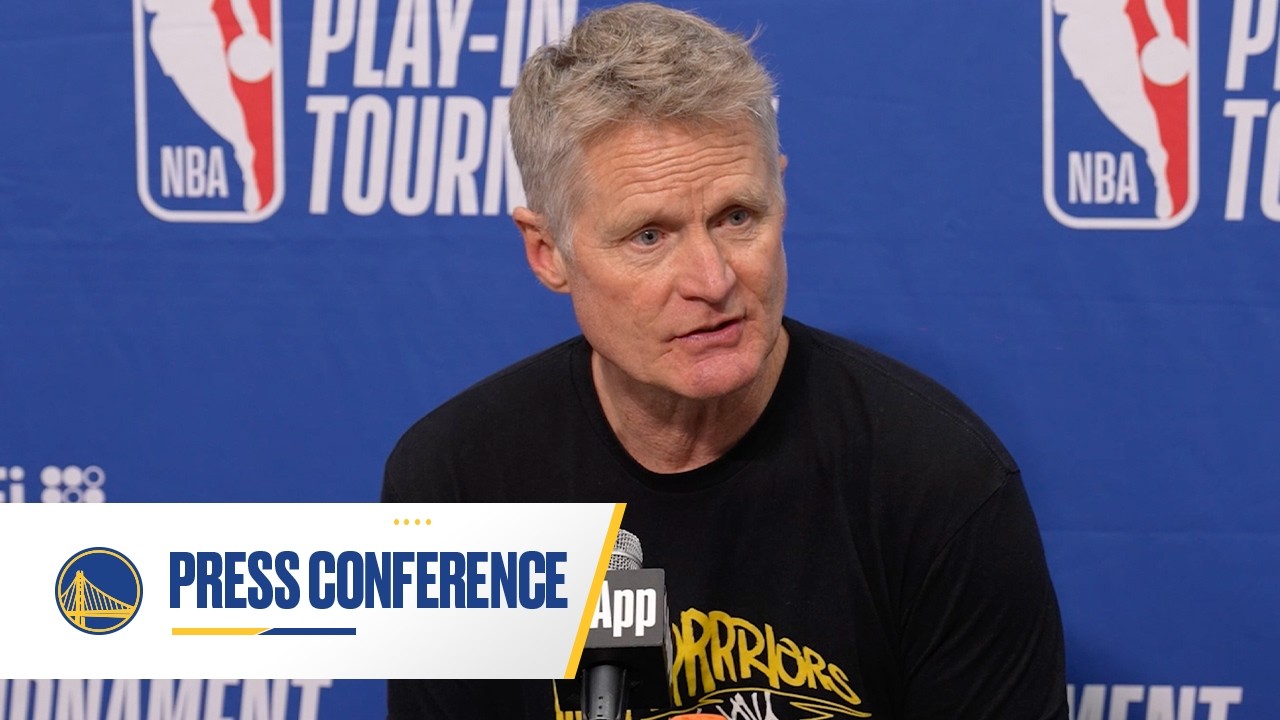
In a press conference on May 15 2026, Golden State Warriors head coach Steve Kerr explained why he chose to return for another contract. He emphasized the collaborative, partnership‑driven decision‑making process with ownership (Joe Lacob, Mike Dunleavy), former GM Bob Myers, and his family, noting that his wife’s comment that he would never coach the Warriors again if he left was pivotal. Kerr described the franchise’s current inflection point: injuries to key players (Jimmy Butler and Moses Brown) force a realistic view of success, focusing on making the playoffs rather than a championship. He identified turnover reduction, tighter fundamentals, and a stronger process as top priorities, citing analytics and league trends that favor early‑shot efficiency and 5‑out spacing. Kerr discussed roster strategy—drafting a lottery pick, signing/ trading for depth, and developing young talent—while acknowledging the need for younger legs and better back‑to‑back availability. He addressed coaching staff turnover (departure of Terry Stotts and Jerry Stackhouse) and the search for defensive‑minded assistants. Relationships with Steph Curry and Draymond Green are described as familial and supportive but not decisive in the hiring decision. Kerr also noted that political commentary never entered the re‑signing talks, and that owner Joe Lacob expects consistent playoff appearances. Contract situations for veterans Al Horford and Kristaps Porziņģis were briefly mentioned. Overall, Kerr conveyed enthusiasm, a measured optimism, and a commitment to rebuilding the Warriors’ culture and process.
Chapters
Hi, guys.
Hi.
How you doing? I guess I'll just start off and just say I'm thrilled to be back. Couldn't be more excited to continue on this job. And we had a great process the last few weeks trying to figure this out together. collaboratively. I don't think this actually happens in pro sports, honestly, where you have these kind of conversations and genuinely, authentically try to figure out together what's the right thing. So I'm very lucky to be in this organization, to work with the people I do, to work with Joe and Mike and before that Bob Myers, and where it truly is a partnership. We're trying to do what's the best thing for the franchise, and we literally spent a couple weeks trying to figure out if the best thing for the franchise was was me coming back. And ultimately, for me, I took about a week to really think about whether it was the right thing for me. And my wife and I spoke every day about it, and. Bottom line was I still love what I do, which is what I told you guys throughout the season. I love coaching. I love being part of the Warriors. And so at the end of about a week, you know, my wife and I decided, let's, you know, let's keep doing this if the Warriors want me to keep doing this. And it was My wife said something. She said, you might coach again someday, but you'll never coach the Warriors again. And that was really meaningful to me because I love this team. I love our players. And that struck me. I couldn't imagine walking away from the Warriors. And so at that point, it was really, You know, what do you guys want to do? And we had great meetings, and over the course of about a week, we all agreed, let's do it. And so here I am. So I'll take questions.
I don't know how specific you can get, but, you know, what within those conversations mattered? What changes? Or just, you know, what— why did you guys decide it was right for you to be back, and what made that so?
Well, ultimately it was, I think, just the partnership and what we have and what we've built. And I think, you know, that what we had to get to was, it wasn't so much, you know, here are all the changes we need to make, 'cause we know we need to make some change. I know I have to be better. I didn't have a great coaching year this year. I know there are a lot of things I can do better. And Mike and Joe know they have a big job on their hands this summer. We've got to find somebody in the draft who can help us and make a couple good signings, maybe a trade, who knows, right? So that stuff was more general. It wasn't sort of, here are the things I need or here are the things they need. It was more just an inflection point for the franchise where we are. where we've been and what does it look like. And with the injuries to Jimmy and Moses, I think we had to come to a much more reality-based shared vision of what does success look like for us? What are we trying to accomplish? Because for the first time, really since the injury plagued year, what was that, '19 or '20? You know, we, we aren't sitting here saying, hey, we can win a championship, right? So like, that's— I don't need to say that. We all kind of know that where we are right at this second. And so I think we had to hash that out. We had to talk about all those things. One of the things I feel really strongly about is I want to get better. I want to lay a stronger foundation for next season that will carry forward for years to come beyond when I'm here. I think that's important to the franchise. I know that it's important to Steph and Draymond. And frankly, this year, I think we got a little away from that. We got a little too loose, obviously literally loose with the ball. But I think we, because of our age, because of our injuries, we spent a lot of time kind of resting. And I got to tighten the ship up next year. And so these were all parts of the conversation. But the idea is, let's see how good we can be. And we think we can still be good. We've got to get some guys back from injuries. We've got to make some moves. I've got to do some things. But Let's run it back. Let's see how good we can be. And I think we were all really excited about that. What does tightening the ship and laying a stronger foundation for the future look like for you? Well, for me, it's— and Mike and I have agreed on this— we have to fix the turnovers. I've literally been watching all of them from the season the last few days, and that has to be an organizational-wide effort. Everything we're doing in player development, we have to look at fundamentals, decision-making. We've got to think of creative ways to implement things in practice that will help us become better decision-makers. But we know that where we are right now, we have to win on the margins. And we knew that last year coming in. You know, we wanted to win the possession game. Get extra offensive rebounds, limit our turnovers, and we didn't, we didn't do a very good job of it. And so that's, that's on me, and that's on my staff to, to try to make that happen.
Steve, how much did you hear from Steph and Draymond while you were making a decision, talking to Joe, talking to Mike? How much did you hear from them, and how much input did they have?
I was in touch with both of them. They did not have any impact on or influence on whether I was going to be the coach. And that's a credit to them. I think one of the strong points of our organization is that our best player, who is one of the greatest players in the history of the game, is not telling Mike or Joe what to do. He understands the repercussions of that if he wanted to go down that path. And it's not healthy. It usually doesn't work out well when a player tries to dictate what an organization does. So Steph has always recognized the sanctity of that wall that should exist. But we had a lot of discussions and talked about everything, talked about our team and some of the things I've just mentioned, where we can get better. I know he wanted me to coach. I know I wanted to coach him. And that, that mattered. But ultimately, we have a, you know, really special, strong bond that should carry over into our success as a team. I think I have a better chance of coaching this team than anybody else because of that relationship, my relationship with Draymond, my intimate knowledge of our team and our organization. And as I said from the beginning, I still love what I do. If I were tired and burned out, then I would not be doing this. But I love, love my job. I love coaching the Warriors, being in this city, being in the Bay. So it all, it all worked out.
Steve, as you literally watch every single turnover, how vast of like philosophical changes need to happen to tighten those things up?
Well, there's only so much you can change philosophically. You know, it's, it's, it's really more about the approach. It's not, it's not so much about style of play. We actually changed our style quite a bit this year. We ran more 5-out, you know, than we have ever before because of our personnel with Quentin and Al and Kristaps, you know, for the last 25 games, whatever. We haven't had space 5s. This was also the first time we didn't have an offensive rebounder at the 5 with Loon's absence. It really changed the dynamics of our team quite a bit. But we changed quite a bit strategically. But you still have a personality as a team. And as long as Steph and Draymond are part of that personality, you're going to see them do their thing. You know, their 2-man game that you saw against the Clippers that won that game. But we have to figure out the process of creating better possessions. We have to look at everything. That's what we're doing. Obviously, things were jumbled this year with all the injuries and made it difficult, but we can't use that as an excuse. We have to go into next year with a— I A really clear plan. And our players have to be part of that this summer. It's not like we're going to show up on October 1st and we're going to say, hey, here's what we're doing. Like, I'm literally going to be talking to our key stakeholders and leaders within the team and bouncing things off of them. And so you'll see some differences, but basketball is still basketball. It's not like all of a sudden we're going from the wishbone to the run and shoot.
I don't know.
I mean, that was a terrible metaphor.
No, it was good.
Anyway, you know, you can only change so much, but your process can lead to better decision-making, better fundamentals, and, and that can lead to better possessions, and then you capture momentum from there.
I think within that, as you watch the playoffs, aside from just talent, is there a certain type of players or trends that you're seeing that could help you guys as well too?
Well, we've been really studying all those trends for years now. It's what we do every summer. We have every one of our assistant coaches is doing deep dives on what's happening around the league. Analytics department is making suggestions, and you're seeing it around the league. You see the changes in the way people play. I think the example I've given you guys before is every coach I ever had, if I took an early— What was the question? Shot in the, you know, a jumper in transition, you know, they would say, no, that's a bad shot. It's, you can always get that shot. And now we have analytics to prove that that was dead wrong. You know, the highest efficiency shots are the earliest ones in the shot clock. And it's not just throw ahead for layups like the old days, it's throw ahead for 3s. Those are really good shots. And everybody's trying to create early shots before the defense is set. We know that. And we're trying to do the same thing. So we have to match our personnel with what we're working on this summer, what we're implementing in the fall, and really be ready to roll that first day of camp.
Hey, Steve. Steph likes to mention meaningful games, which I kind of think aligns with what you've been saying today. And you had— you guys had that moment in LA where— that very special moment. Is that kind of the chase right now, having those Those moments.
Yeah, but we want more of them. You know, we want to be able to, to feel that way consistently. This year was really weird because it felt like we were locked into 10th for about the last 10, 15 games. There was nowhere to go up or down. Created a really weird situation where we went into that Clipper game without much of an edge. You know, we weren't We weren't sharp. We hadn't played a meaningful game. And I think our team showed what they were made of by playing an incredible game to pull that game out. Literally meaningful basketball. And so I know it's still in them. And we've got some young players who have gained great experience, who are really getting better by the day. And that's exciting. And Yeah, we want to create a meaningful season where we are putting the best version of ourselves out there, winning games, putting ourselves in the hunt, and then, you know, getting Moses, Jimmy back. And, you know, best, best case, you know, scenario, we build that momentum and get guys back and, and, you know, we, we feel like we can make a run. And that's, um, when you do that, that's all you can ask.
Hi, Steve. I have 2 sort of disparate questions. First, you've said a few times you want to end this the right way with Steph and Draymond. How do you sort of balance that with obviously trying to reshape the team and get younger or move forward, fix some of the things you've talked about? What does that look like, I guess?
Yeah, I mean, I think the things I've been describing are what that looks like. And I think that That means that we have to— we meaning our staff, Steph, Dray, our veteran players— we have to be willing and open to some new thoughts and ideas about how we're going about our day, our practice schedule, study habits. Can we do more without taxing the players too much with their legs with all the games we play? Can we implement some things? Can we just be sharper? And strategically, if there's a couple changes, can you guys get out of your comfort zone a little bit and embrace something different? It's not going to be dramatic, but it's enough where if we're going to win on the margins, then everybody has to be open to the fact that we've got to get better. And I will tell every, every player that I look in the mirror first. I've got to be better next year, and I'm excited about the challenge. And but I'm going to ask them to be better too.
And sort of a non-basketball question, but you acknowledged in The New Yorker interview that you needed to soften your tone sometimes on your political comments. And that, you know, became a talking point a bit the last 3 weeks or whenever while you were deciding. Did that— how much was that part of these conversations? And did you— how are you going to do that going forward? I mean, how are you viewing that whole issue?
It never came up. You know, I think I've learned over the years the balance, and I think for the most part, you know, I've found a good balance where I can speak my mind on things that are really important to me and represent the franchise in a dignified way. And that literally never came up. That was not a part of the conversation at all in terms of whether I was coming back or not.
How would you describe, you know, kind of your relationship with Joe and the complexities of, you know, clearly some of the conversations at the high level are Joe's vision of the future and the grandness and where this is all going and the end of this era, just How would you just kind of describe that?
I think Joe and I have great respect for each other. I mean, you know, I was here as a player all those years out at Oracle when the crowd was loving it and the team was lousy. You know, it just was. I mean, the team did not have what it has now, which is strong, really strong leadership, incredible infrastructure, and a vision. for winning. Everyone booed Joe when he said we're gonna win a title or we're gonna, you know, we're trading Monta, whatever it was, right? And, but you can't argue with the results. Like Joe came in here and he built a pretty incredible organization on the business side, on the basketball side. And we've had a great partnership. Doesn't mean we always agree and nor should we. We want to be pushing each other. And, you know, the only thing I would reveal from our conversations And I don't think he would mind if I shared this, but we were talking about our injuries and how this is the first time where we can't realistically just say, hey, let's win a title next year. And he just said, I'm the owner and I can't help but just say, I expect to be in the playoffs every year and have a shot. And frankly, that's one of the reasons why we have done that. It's because of his vision and his passion. And I admire that. I love that. I think he sees the same thing in me. We're both incredibly competitive. And he, you know, he's going to be frustrated with things that I do. And I'm going to be frustrated with, you know, his reaction sometimes on the sideline, you know, if he's upset with something we're doing, you know, like that's all part of it. But we have great respect for one another and we share the exact same goal. And that's ultimately why I'm coming back, because if that didn't exist, then this would have ended.
Steve, in the ESPN story, it sounds like your family pretty much universally wanted you to keep coaching.
Yeah.
A lot of other people did too. How much influence did other people's opinions have? Did sometimes you think they could see that this was where you were supposed to be better than you could see it?
Well, yeah, my daughter, I think it may have been in the article, but she said, Dad, don't focus on the 2 or 3 things you don't like about your job. Focus on the 100 things you do like. And she said, most of us don't love everything about our jobs. I was like, yeah, that's true. It hurts when your kids tell you the truth and you realize they're smarter than you. I was also reminded of a great story. It was like 25 years ago. There was a baseball player who retired. He said he wanted to spend more time with his family. And then a year later, he came back. And the media, when he came back, he said, what happened? He said, well, I wanted to spend more time with my family, but I realized my family didn't want to spend more time with me. There was a little bit of that in there too. It's a very healthy separation when I fly off on a 10-day road trip. And I'm really kidding on that stuff. My family knows me better than anybody. I'm happiest when I'm on the court with my players, when I'm collaborating with Mike and the organization. And I love this. And even through the struggles this year, I love the struggle. I love the challenge. And what Margo said to me, you know, if you leave, you can come back and coach, but you can never coach the Warriors again. That was the most meaningful thing because I love the Warriors. I love, you know, Steph and Dray and the guys and Rick Celebrini and Mike and our crew, Eric Howes and—
Steve Kerr.
Bert, and I mean, I can go down the list and there's people when I walk into that building every day who I love and admire and who I know share the same values and desire for us to win. And it's an incredibly exciting and enlivening feeling to have that. And I wasn't ready to walk away.
Also, the Clippers game, was amazing. And, you know, you said we were us for one night. But if that game hadn't happened, could this not be taking place? I mean, did you need to see it again right before you were about to make this decision?
It helped. I can't— I couldn't tell you, you know, if that hadn't happened, I couldn't predict. I think I would still be here, but You know, you do live for those types of moments. And, you know, it's something— it's hard to describe, you know, how awesome and just exhilarating it is to coach and to win a game and to see everything, you know, come together. And it's— It's one of the reasons we all, you know, have trouble walking away. And I don't want to be, you know, the guy who can't walk away. So there, a lot of that went through my mind. It was a time to really think. But I'm, I'm still pretty young. I still, I've got a lot of energy. I love what I do. You know, it's, it made sense to to keep going. And so I'm excited. Steve, going off of that and over this way, trying to know when to walk away and knowing when it's time. With this being a 2-year deal, do you see that as, okay, at the end of these 2 years, that, that's going to be it? Or do you leave the door open? Yeah, I mean, the, the way the NBA works, you know, I could get fired a week into it. Who knows? I mean, you just don't even think about that stuff. And I think this year was such an obvious inflection point for the franchise. It's why we deliberated. It's why we really gave it a lot of thought. And I think, as I said, we came to a really clear path of, you know, let's really recommit to this group and how we're operating and what we're trying to do and make sure our foundation is strong and, and that it's setting up whatever's next because we have to be looking forward. But I can't predict any of that.
Fired a weekend for not playing the rookie. I did want to ask about that though. You know, let's say you guys use the 11th pick.
Yeah.
Should theoretically have minutes available with Jimmy and Moses being down. But how, you know, considering where everything's at, how committed do you feel like you're gonna need to be to like the development of that lottery pick?
I think that's a huge factor, and I think we're in a different place now, right? There's no question. And I've talked to Mike. I mean, I don't know the draft, but he feels really strongly that we're gonna get a good player. It could be a 19-year-old. It could be Someone older. It's obvious where we are with the injuries to Moses and Jimmy. You look at our depth on the wings, that guy has to play and he's got to earn it, you know. But we're committed to absolutely, you know, the development of our young players and, you know, trying to Trying to do this thing in a way that allows for, you know, success down the road. Down the road, meaning, you know, the end of next season and beyond. And we're excited about that.
So, Steve, what did Obama want to know about Kuminga?
That was when he was a free agent. So it was last summer. We have a mutual friend, and we had dinner. And he literally walked up and just, what's going to happen with Kuminga? It was like he was talking about the contract.
On an even more serious note, you mentioned this. Mike has mentioned this. It seems like all cards were on the table during your conversations. And there is a reality, especially because of the injuries that you've talked about several times. A championship may not be a realistic expectation next year. So what do you think success looks like for next season?
I think it looks like recommitting to our values and our process. You know, I think the last couple of years, frankly, have been difficult with the age, the collective age of our team, the injuries. I think we had like 6 guys this year who either couldn't play back-to-backs or were on minutes restrictions often at the same time. And I think I really, frankly, gave everyone too much leeway this year. It just felt like we were constantly resting everybody and just trying to survive to the next game and have enough healthy bodies. We talked about that in our meetings, and we have to address that. It may mean walkthroughs. It may mean written tests. It may mean more video work. Hopefully it also means more time on the court. We need that. But we— I think we lost some of our discipline, and we got a little loose, and that's my job. And if we can go into the season with a really clear vision of what we're trying to do, you know, on the court, everybody is tight and committed, and we get the process going, that's, that's what will lead to success. And so I can't sit here and, you know, predict anything, wins and losses, but what success means to me is rededicating ourselves to a process where we're going to We're going to put in the work and we're going to get better.
With Terry Stoss and Jerry Stackhouse departing, just what did they kind of mean to your coaching staff and what's sort of the plan to replace them?
They were both fantastic. You know, Terry told me 6 weeks ago probably what his plans were, and I kind of had an inkling. You know, he's— he may coach again. I think he just recognized it felt like a good time for him to leave and either take some time or see what other opportunities are out there. He's still got great energy and phenomenal human being, and I, I really valued my time with him. Looked forward to seeing him every day and collaborating, and we're going to miss Terry. And obviously I wish him well. And then Stack, 2 years You know, coming in here as a former player, a guy with head coaching experience at the collegiate level. I loved what he brought, his voice in front of the team, the conviction he has as a coach, as a man. He wants to be a head coach. And so we're looking at some candidates. We're also looking to promote from within. What about the bench? I've already spoken with, you know, a couple people on the outside, and that process will, will continue here in the next couple weeks.
Steve, you mentioned you talked to Steph and Draymond during the process here. How important was it to just do that, to hear what they had to say? You knew how you felt, you kind of knew how they felt, but just voice-to-voice, how important was that?
That was very important. Yeah, I mean, it was those— you know, we've been together for 12 years now, so it goes, goes beyond, you know, just coach-player. It's family, you know. And, and, and so those conversations were important, and I just liked that everybody was, you know, very honest and open. And I think both of those guys showed me the respect of just You know, saying, hey, you know, we want you to be excited about this and we want you to be happy, and, um, but it's your decision. And, and they were very supportive.
And do you have any idea, I don't know if you've spoken with them or not, um, what, what's ahead for Al and KP?
Um, oh, in terms of like contracts?
Yeah, yeah, whether they were interested in coming back and so forth.
Well, I had an exit meeting with Al, you know, a couple days after the season ended. Obviously, we want him back. It's his option, as you know, with the player option. I know he really enjoys it here. I know his family loves it here. I'm hoping he's back. And Kristaps, actually, we did not have an exit meeting. I gave him a pass on the exit meeting because he had to fly somewhere like the next day. What was the reason? After our season ended. And I do that frequently with veteran players. You know, there's, there's only so much you need to discuss. He's obviously unrestricted. I'd love to have him back. I know he enjoyed it here and he's a really talented player and I thought showed an awful lot for our team. And I'd love to have them both back, but we have to just see how it plays out.
Coach, before you were in here, Mike was in here talking about, yeah, we got to fix the turnovers. And I just wonder, with all the success you've had, how challenging is it for you on a personal note as you self-reflect on the season? You know, I've got to get better. And then hearing it from when you're having those discussions with Mike and Joe that maybe a little thing here or there needs to improve, how easy is that for you to digest it and say, yeah, they're right, I need to fix this and that?
Yeah, it's great. Those are great conversations. And as I said earlier, I mean, we are in a partnership. We all want the exact same thing. One of the things that I think is most important when you're in a position of leadership is listening and not taking stuff personally and feeling offended and understanding that when you're in partnership with people, you have to listen. Not that I needed any arm twisting to fix our turnovers. I'm well aware. That, that, that's— that was a big problem for us this year. But I think it's just important to, to take everybody's thoughts and advice and try to come up with the best solution. That's always been the way I've coached and operated. And, and I think we have— what's, what's exciting and very challenging, we have a lot to figure out this summer, and I've been talking about it. You know, just in terms of our process and how we're going to do it, because it's not as simple as it sounds. Obviously, we've got to really think about our whole process and how we can implement enough change to make it— make an impact. Steve, on a serious note, this way, other way, right here. Are there any concerts that you're planning on going to this offseason so we have lyrics to watch for? That didn't sound that serious to me. I'm a big Counting Crows fan. So yeah, you— if you pay attention next year, who knows, you might hear a little Adam Duretz. So—
How disappointed were you in the beat writers' lack of knowledge?
I'm sorry?
How disappointed were you in the beat writers' lack of knowledge?
It was, it was pretty well coordinated and camouflaged. So yeah, I think the only one that might have been Obvious was when I— not obvious, but revealing was when I complimented Janie on her scarf. And the word scarf was in the song that I was quoting. And pretty sure I've never mentioned the word scarf before in any of our sessions together. So I had a little fun with that. That was my, you know, internal family humor that is no longer internal, but that's okay.
Just, you know, you've mentioned a couple of times that it's kind of unrealistic to think like, you know, title is ahead. But, you know, where are you at on, on the roster? And, you know, can you guys get back there? What do you— what's needed? And, you know, I guess how accepting are some of your veterans of that reality?
Well, I mean, this is— these were conversations that we had You know, what are some of the things that we can do? We don't really know. And that's obviously Mike's department. But nothing happens right now. But I know that Mike and Joe are committed to putting the best roster on the floor. I do think it's important that we don't have the vast number of players who couldn't play back-to-backs this past— we can't do that again. It's too hard to build continuity.
Steve?
So we need some younger legs for sure. We know that. How do you do that? It's a difficult job. And so that's up to Mike. And obviously I will— he will consult with me on moves and we'll hash that stuff out. But, you know, I just, I feel very strongly that what we have here is— What do you think about the something special and strong. And despite the injuries, we can, we can have a year where we get back in the, in the hunt, and I'm confident of that. When you think about the vacancies on your staff and thinking about internal, external candidates, regardless of where they're coming from, what kind of qualities are you looking for for, for your future top lieutenants? Well, you're always looking for the best people. We did lose our, our 2 defensive coordinators this year in CD and Stack. So, you know, I'd like to bring in somebody with a strong defensive mind. But you're always looking for the very best people out there. And every summer is different based on, you know, who's available. And but you're always keeping your eye out. And so we've been doing that and we'll see how it plays out.
Draymond's future is kind of probably the most up in the air over the next month and a half. You said you, you know, had conversations within this. How do you still view his future and the possibility of him finishing here?
Well, you know, the number one thing is the You know, it's up to him. He has a player option. So he's got to go through that with his agent, how that plays out. You know, I am committed to coaching him, coaching Steph, obviously, for as long as they're here. And I look at them as collaborators. And what we've built is pretty special. So rare for a coach and 2 players to be together for 12 years as a trio. It's remarkable, really. So I'm ready to coach Draymond. And it's, you know, we'll see how it all plays out. It's really more up to him than anything. And we'll see how the contract stuff happens. Thanks a lot.
Thanks, Steve.
Thanks, Steve.
Appreciate that.
I want to know what the ego cut really
More from Steve

'I would've been fired' - Steve Kerr on choosing the Warriors over Phil Jackson and the Knicks